
Handbook on Maize (Corn) Processing and Manufacture of Maize Products
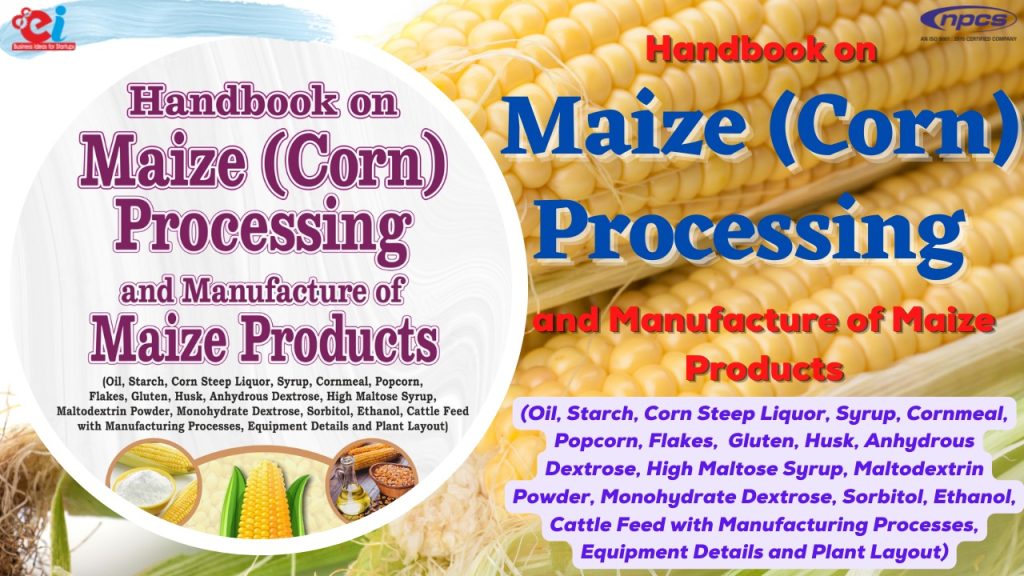
The corn & maize industry is a pillar of global food and industrial supply chains. Its importance spans across multiple sectors—from food production to pharmaceuticals, textiles to biofuels. In fact, the versatility of corn and maize makes them one of the most valuable crops in agricultural commerce today. For aspiring entrepreneurs and manufacturers, understanding the end-to-end manufacturing process is crucial for success. In this comprehensive handbook, we delve into the entire journey of corn & maize—from crop to commercial products—unraveling the science, equipment, processes, business models, profitability, and market trends associated with corn & maize manufacturing. Understanding the Fundamentals of Corn & Maize Corn and maize refer to the same grain, with “corn” being more common in North America and “maize” in other parts of the world. Scientifically known as Zea mays, it belongs to the grass family and is cultivated globally for its kernels, which are processed into food, industrial ingredients, and energy sources. Key Kernel Components Starch (60–70%): Primary component used in food, pharmaceuticals, adhesives, and biofuel. Protein (8–10%): Valuable for animal feed and industrial uses. Oil (3–5%): Extracted from the germ, refined into edible or industrial oil. Fiber & Hull: Used in feed, bioplastics, and construction materials. Types of Corn for Industrial Use Dent Corn: Rich in starch, best for industrial processing. Flint Corn: Harder kernel, used in grits and cereals. Sweet Corn: For direct human consumption. Popcorn: Specialty variety with explosive expansion quality. Waxy Corn: Almost pure amylopectin, ideal for unique starch-based applications. The Corn & Maize Processing Lifecycle Processing transforms raw corn into usable products. The lifecycle involves several crucial stages, and each determines the kind of end products generated. The two primary processing methods are dry milling and wet milling, with each offering unique benefits and outputs. Dry Milling Process A relatively simpler and more economical method used to produce: Cornmeal Corn grits Corn flour Steps in Dry Milling: Cleaning – Removing dust, stones, and foreign matter. Conditioning – Moistening the kernels for easy separation. Milling – Mechanical grinding into desired mesh sizes. Sifting & Packaging – Segregating fine flour, grits, or meal. Dry milling is energy-efficient and produces fewer by-products but does not extract starch or oil. Wet Milling Process This is a more sophisticated method used for large-scale production of: Starch Corn syrup Ethanol Corn oil Gluten feed Steps in Wet Milling: Steeping – Soaking corn in water and sulfur dioxide for up to 48 hours. Grinding – Separating kernel components post-soaking. Separation – Centrifugal separation of germ, fiber, protein, and starch. Refining – Further processing to isolate corn starch and oil. Wet milling produces more varied and valuable outputs but requires higher capital and energy inputs. Core Products Manufactured from Corn & Maize The real beauty of corn & maize lies in their multifunctional uses. From staple food to high-end bio-compounds, the list of derived products is vast. Food-Grade Products Corn Flour & Cornmeal – For tortillas, breads, snacks, and bakery items. Corn Grits – Used in cereals, snacks, and brewing. Corn Starch – Thickener in sauces, soups, custards, and baking. Corn Oil – For cooking, frying, and salad dressings. High-Fructose Corn Syrup (HFCS) – Widely used sweetener in beverages and processed foods. Beverage Applications Corn derivatives are used in alcoholic fermentation, like in beer and spirits. Dextrose from corn starch is key in soft drink production. Industrial Products Bioethanol – Clean fuel derived from fermented corn starch. Biodegradable Plastics – Made from PLA (Polylactic Acid) derived from corn. Corn Gluten Meal – High-protein animal feed. Corn-Based Adhesives & Binders – For textiles and paper industries. Pharmaceutical & Cosmetic Uses Modified starch in tablet binding and capsule formation. Corn alcohol as an ingredient in perfumes and antiseptics. Emulsifiers and carriers in lotions and creams. Starting a Corn & Maize Manufacturing Business Getting into corn & maize manufacturing involves strategic planning, technical infrastructure, and a deep understanding of market needs. Here’s what beginners must consider: Site Selection Proximity to corn farming regions reduces raw material cost and logistics burden. Regions like Punjab, Bihar, Madhya Pradesh, and Karnataka are key producers in India. Infrastructure & Machinery Invest in: Cleaning and sorting systems Milling machines (hammer mills, roller mills) Dryers and moisture control units Fermentation tanks and distillation units (for ethanol) Packaging and labeling systems Automation and modern equipment improve throughput and consistency. Licenses & Regulatory Compliance You’ll need: FSSAI license for food products Pollution control clearances MSME/Udyam registration ISO/GMP certifications for export and pharmaceutical-grade materials Labor & Workforce Train employees in: Equipment handling Hygiene and food safety Technical maintenance Quality control Business Models & Profitability There are various ways to enter the corn & maize market: Niche Manufacturing Specialize in one high-demand product, such as organic cornmeal or bioethanol, to target specific market gaps. Integrated Processing Units Handle everything from dry milling to packaging. While capital-intensive, they offer diversified income streams. Contract Manufacturing Process corn for other brands or exporters, reducing marketing and distribution expenses. Export-Oriented Units Focus on corn starch, corn oil, or grits for international buyers. Maintain high quality and traceability standards. Profit Margins Small-scale units: 10–20% profit margins Mid-sized ethanol plants: 25–35% margins due to high demand Export: 30–40% depending on volume and currency rates Sustainability & Environmental Impact Corn & maize manufacturing can be made highly sustainable by optimizing waste usage: Corn husk and cobs: Fuel briquettes, biochar, or compost Leftover fiber: Animal feed or raw material for bioplastics Steepwater from wet milling: Rich in nutrients, used in feed or fertilizer Green technologies such as anaerobic digesters and solar dryers help reduce the carbon footprint of the plant. Market Demand & Export Opportunities The demand for corn-based products is growing both domestically and globally. Key trends include: Rise in health-conscious products: Gluten-free flour and organic cornmeal. Biofuel mandates: Countries like the US, Brazil, and India increasing ethanol blending. Packaging industry demand: For biodegradable corn starch plastics. Export potential: India exports corn starch, corn oil, and maize flour to Southeast Asia, the Middle East, and Africa. Government incentives under
What is The Importance of Business Consulting Services?

In the ever-evolving world of entrepreneurship and competitive markets, business consulting services have emerged as a cornerstone of strategic and sustainable growth. Companies that aspire to excel need more than just capital and manpower—they require insight, agility, and expert guidance. Business consultants offer these crucial elements, transforming ambiguity into actionable strategies that fuel development. Driving Business Transformation through Expert Consulting A core reason why business consulting services matter for growth is their ability to transform vision into reality. Whether you’re a startup navigating initial challenges or an established enterprise striving for expansion, professional consultants bring unbiased, external perspectives grounded in data, experience, and best practices. This outside view enables businesses to identify inefficiencies, refine processes, and seize untapped opportunities. Strategic Planning and Execution One of the key benefits of working with seasoned consultants lies in strategic planning. They help define long-term objectives, craft measurable goals, and chart a roadmap that aligns with market trends. These strategies aren’t just theoretical—they come with executable plans, performance metrics, and risk mitigation strategies. In an increasingly volatile business environment, this structured planning is indispensable for sustainable growth. Enhancing Operational Efficiency Operational bottlenecks can silently erode profitability. Through a comprehensive audit of internal workflows, business consulting services can spot inefficiencies that may be invisible to internal teams. From supply chain optimization to lean management techniques, consultants recommend process improvements that boost productivity and reduce waste, ultimately enhancing the bottom line. Financial Management and Profitability Growth Financial health is the lifeblood of any business. Expert consultants delve deep into budgeting, cash flow, cost control, and pricing strategies to ensure maximum profitability. By creating customized financial models and performing regular audits, they help companies avoid pitfalls and ensure long-term fiscal discipline. Consultants also advise on mergers, acquisitions, investments, and capital raising—critical aspects for businesses in growth mode. This financial foresight enables companies to make informed decisions that align with their scalability objectives. Market Analysis and Competitive Advantage To thrive, businesses must understand their market thoroughly. This is where business consulting services add tremendous value by conducting in-depth market research, identifying target demographics, analyzing competitor behavior, and studying consumer trends. With such insight, businesses can reposition their offerings, refine branding, and optimize marketing strategies to gain a competitive edge. Whether entering a new market or launching a new product, data-backed consulting ensures precision and minimal risk. Digital Transformation and Innovation In the digital age, innovation is non-negotiable. Business consultants specialize in integrating digital transformation strategies—whether that means cloud migration, automation, CRM systems, or AI integration. They guide companies through tech adoption with minimal disruption, ensuring new systems support current goals while enabling scalability. Moreover, digital strategy consultants help build omnichannel customer experiences, harness the power of analytics, and streamline e-commerce operations, all of which are crucial for maintaining relevance in today’s fast-paced market. Human Capital Optimization No company grows without its people. Business consultants help optimize human resource strategies, from recruitment to retention, from leadership development to organizational structure. By introducing talent management frameworks, performance appraisal systems, and training programs, consultants align the workforce with the company’s vision. A motivated and well-directed team is one of the most powerful levers of growth, and consultants ensure that leadership and culture are aligned with performance goals. Risk Management and Compliance Navigating today’s regulatory and risk landscape is increasingly complex. Business consulting services are pivotal in establishing robust governance, ensuring compliance with laws and regulations, and preparing for potential crises. Consultants assess risk from multiple perspectives—financial, operational, reputational—and build contingency plans to minimize exposure. This allows businesses to operate with confidence and agility, even in uncertain times. Customized Solutions for Unique Business Challenges Every business is unique. Generic strategies rarely work in today’s highly specialized industries. That’s why business consulting services provide tailor-made solutions designed specifically for your goals, structure, and market. From boutique firms to multinational corporations, consultants customize frameworks that deliver measurable impact and real-time scalability. Fostering Leadership and Decision-Making Excellence One often-overlooked aspect of consulting is its effect on leadership. By providing executive coaching, strategic workshops, and decision-making frameworks, consultants cultivate leadership that’s resilient, visionary, and data-driven. Great decisions don’t just happen—they are crafted through analysis, experience, and timing. Business consultants ensure leadership teams are equipped to make bold moves with confidence and insight. Scaling Up with Confidence Growth often means scaling operations, entering new markets, and expanding product lines. But scaling can also be a risky endeavor. Business consultants serve as guides during this process, advising on infrastructure, staffing, supply chain logistics, and risk management. With their help, businesses can scale efficiently without compromising quality or culture. Global Expansion and Localization Strategy For businesses aiming to expand internationally, consultants offer guidance on everything from regulatory compliance and cultural adaptation to localization and partnerships. With their expertise, companies can avoid missteps, adapt faster, and connect with global audiences more effectively. The Power of Business Consulting Services in a Competitive Economy In today’s hypercompetitive economy, business consulting services are no longer optional—they are essential partners for growth. With their help, organizations can stay ahead of trends, manage complexity, and build resilient business models. Whether you’re a growing startup or an established enterprise, investing in professional consulting is an investment in your future. It’s the bridge between potential and performance, ideas and execution, goals and results. Conclusion In an ever-changing and competitive business environment, growth is not accidental—it’s strategic. Business consulting services offer the clarity, expertise, and guidance needed to navigate challenges, seize new opportunities, and achieve sustainable development. From streamlining operations and optimizing finances to embracing innovation and empowering leadership, consultants play a pivotal role at every stage of the business lifecycle. By partnering with experienced consultants, businesses gain a trusted ally committed to their success—an ally equipped with tools, insights, and strategies to turn ambition into achievement. As we move forward in a digitally driven world, the need for adaptive thinking, expert support, and customized solutions will only grow. That’s why business consulting services remain a vital asset for any company determined to thrive, not just survive.