
Start a Profitable Abrasive Grinding Wheels Manufacturing Business
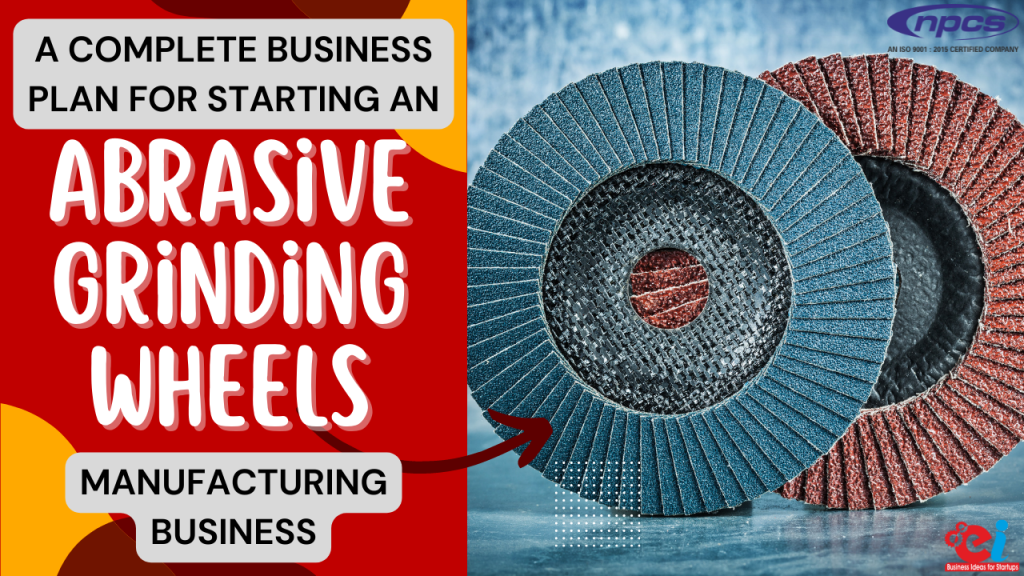
Abrasive grinding wheels are a cornerstone of the industrial and manufacturing sectors, offering indispensable support in cutting, grinding, shaping, and finishing applications. As demand surges in automotive, metal fabrication, aerospace, construction, and electronics industries, the opportunity to establish a lucrative abrasive grinding wheel business has never been stronger. This guide provides a complete roadmap, from market analysis to operations and financial planning. Market Demand for Abrasive Grinding Wheels in India and Globally The global market for abrasive grinding wheels is expected to grow significantly, driven by industrial automation, increasing infrastructure projects, and rapid modernization in sectors such as automotive manufacturing, aerospace, and metalworking. In India, the “Make in India” initiative has stimulated industrial growth, with the abrasives market projected to grow at over 6% CAGR in the coming years. Key demand contributors include: Automotive Sector: Precision grinding in gear and transmission production Construction Industry: Polishing, surface preparation, and finishing Tool Manufacturing: High-precision applications for cutting tools Electronics: Delicate and fine polishing of semiconductors Types of Abrasive Grinding Wheels and Their Applications Bonded Abrasive Wheels Bonded wheels are made from abrasive grains bonded with ceramic, resin, or rubber binders. They’re primarily used for precision applications in industrial setups. Popular Types: Straight Grinding Wheels – Used for cylindrical and surface grinding Cylindrical Wheels – Used in toolroom grinding and finishing Cut-off Wheels – Ideal for quick and clean cuts on metal surfaces Coated Abrasive Wheels These use abrasive materials adhered to a backing like paper or cloth. They’re common in finishing and polishing processes. Examples: Flap Discs Abrasive Belts Sanding Discs Super Abrasive Wheels Composed of industrial diamonds or cubic boron nitride (CBN), these wheels offer exceptional durability and precision for high-end applications like aerospace and advanced tooling. Investment and Machinery Requirements Initial Capital Requirements The startup capital will depend on the scale—small, medium, or large-scale unit. A medium-scale abrasive grinding wheels plant may require an investment of INR 25–50 lakhs (USD 30,000–60,000). Costs Breakdown: Land & Building: INR 5–10 lakhs Machinery & Equipment: INR 15–20 lakhs Raw Materials & Inventory: INR 5–10 lakhs Labor & Working Capital: INR 5–10 lakhs Required Machinery Mixing Machine Hydraulic Press Ovens and Kilns for Curing Balancing Machine Testing Equipment Packing Machines These machines ensure uniform bonding, curing, and quality assurance, making them critical for consistent product delivery. Raw Materials Used in Grinding Wheel Production To produce high-quality abrasive wheels, focus on reliable sourcing of raw materials: Abrasive Grains: Aluminum oxide, silicon carbide, CBN, diamond Binders: Vitrified (ceramic), resinoid (resin-based), rubber Filler Materials: Cryolite, iron pyrites Backing Material (for coated abrasives): Fiber, cloth, paper Additives: To improve strength, thermal resistance, and durability Quality raw material ensures longevity, speed, and performance of the wheels. Licensing and Legal Formalities To run your abrasive grinding wheels business legally and efficiently in India, the following registrations are essential: Company Registration (Proprietorship/LLP/Private Ltd.) GST Registration Factory License Pollution Control Clearance from SPCB BIS Certification (IS 1249) for bonded abrasives Udyam/MSME Registration for availing government subsidies Production Process of Abrasive Grinding Wheels The manufacturing process involves the following crucial steps: Mixing: Raw abrasive grains and bonding agents are mixed uniformly. Moulding: The mix is poured into molds and shaped under hydraulic pressure. Drying & Curing: Wheels are dried and heated in kilns to gain strength. Finishing: Edges are trimmed, and wheels are dressed to correct dimensions. Testing: Each wheel is tested for balance, crack detection, and speed tolerance. Packing: Labeled, shrink-wrapped, and sealed for market dispatch. Marketing Strategies for Abrasive Grinding Wheel Business B2B marketing is most effective in this sector. Here are powerful strategies to build a strong brand presence: Industrial Exhibitions: Participate in machinery expos and tool fairs Online Platforms: List on IndiaMART, TradeIndia, Alibaba, and Justdial Search Engine Optimization: Rank for keywords like “abrasive grinding wheels manufacturer in India” or “cutting wheels supplier” Corporate Tie-ups: Establish long-term supply contracts with automotive and construction companies Social Media & LinkedIn: Build thought leadership through technical content and product demos Profit Margin and ROI Analysis An established abrasive wheel business offers 30–50% profit margins, depending on efficiency and scale. Superabrasive segments (CBN & diamond) yi Sample Revenue Estimate (Medium-Scale Unit): eld higher margins due to specialized usage and limited competition. Monthly Production: 20,000 units Average Selling Price per Unit: INR 80 Monthly Revenue: INR 16,00,000 Operational Expenses: INR 10,00,000 Monthly Profit: INR 6,00,000 Break-even typically occurs within 12–18 months with consistent market penetration. Challenges and Risk Factors While lucrative, this business does have challenges: Raw material price fluctuations High precision requirements and quality control Regulatory compliance and safety standards International competition from Chinese and European manufacturers Address these risks through automation, quality assurance, and differentiation by specialty products like superabrasives or eco-friendly bonded wheels. Future Scope and Expansion Opportunities With increasing automation and high-speed machinery, demand for high-performance grinding wheels will expand. Business owners can scale operations by: Introducing CNC-compatible wheels Launching export-quality product lines Setting up distribution hubs across industrial zones Entering the aftermarket tool servicing space Government incentives under MSME and Startup India initiatives further support expansion and innovation. Benefits of Starting Abrasive Grinding Wheels business Start your own abrasive grinding wheel manufacturing company if you want to invest in a successful business. Abrasive is a significant natural resource made composed of minerals that have been moulded and created over millions of years and can be used in a range of applications. Starting an abrasive grinding wheel manufacturing company is one method to get your hands on these resources. This could be an excellent approach for you to have access to natural resources without prior knowledge. However, you’ll need to learn more about how to start such a firm, so keep reading for some helpful advice. The first step is to pick what type of grinding wheel you wish to make. There are numerous varieties available, each with its own set of purposes and qualities. Starting an abrasive sanding wheels manufacturing company, for example, could be excellent if you’re seeking for a straightforward business concept with cheap overheads. There’s