
Setting up a Plastics Material and Resin Manufacturing Business

Introduction to Plastics & Resin Manufacturing The plastics & resin manufacturing industry is one of the most lucrative and expanding sectors in the global economy today. Driven by rapid industrialization, urban development, and the ongoing demand for innovative materials, starting a plastics & resin manufacturing business offers an exceptional opportunity for entrepreneurs and investors to establish a strong and profitable enterprise. Plastics are used in virtually every industry—from automotive, construction, and electronics to packaging, textiles, and healthcare. Similarly, resins serve as critical components in adhesives, coatings, and composite materials, helping improve durability, flexibility, and performance. The beauty of this industry lies in its diversity and adaptability. Whether producing basic polyethylene products or specialty epoxy resins for aerospace applications, this field allows for deep customization, scalability, and consistent demand. With proper planning, technological integration, and a commitment to sustainability, a plastics & resin manufacturing business can thrive in both domestic and international markets. Understanding the Scope of Plastics & Resin Industry The plastics & resin industry encompasses a vast array of products and services. Plastics can be broadly classified into two categories: Thermoplastics, such as polyethylene (PE), polypropylene (PP), polyvinyl chloride (PVC), and polystyrene (PS), which can be melted and reshaped multiple times. Thermosetting plastics, like epoxy, phenolic, and melamine resins, which harden permanently after being molded once. Resins, on the other hand, are crucial for creating adhesives, paints, varnishes, and plastic composites. These materials are the backbone of several end-use industries including automotive, aerospace, consumer goods, medical devices, and more. The global plastics market is valued at over USD 600 billion and is projected to surpass USD 750 billion in the next five years. With innovations in biodegradable and recyclable plastics, the industry is pivoting toward greener solutions while maintaining a steady growth trajectory. Step-by-Step Guide to Launching a Plastics & Resin Manufacturing Business 1. Conduct Comprehensive Market Research To begin with, perform an in-depth market analysis. Key factors to study include: Global and regional trends Product demand and supply gaps Target customer segments Existing competitors and their market share Raw material sourcing opportunities Government regulations and subsidies Environmental impact and sustainability demands Studying these parameters helps in identifying profitable niches such as biodegradable plastics, medical-grade polymers, or industrial resins. 2. Choose the Right Product Niche Identifying the right product segment is vital. You can focus on: Commodity plastics: such as HDPE, LDPE, PP, and PVC, used in packaging, construction, and consumer goods. Specialty resins: including epoxy, alkyd, acrylics, and unsaturated polyesters for high-performance applications. Eco-friendly bioplastics: made from renewable resources such as corn starch or sugarcane. Define whether you want to serve as an OEM (Original Equipment Manufacturer), supply raw resins to processors, or offer custom-molded plastic products for specific industries. 3. Legal Setup, Certifications, and Licensing Set up a legal entity such as: Proprietorship Partnership firm Limited Liability Company (LLC) Private Limited Company You must obtain: Business registration Pollution Control Board (PCB) clearance Factory license Fire and safety certifications GST registration ISO certifications (ISO 9001, ISO 14001, etc.) In some regions, especially for export, certifications like CE and REACH may be required. 4. Factory Location and Infrastructure Planning Selecting the ideal location is critical. An industrial zone with proximity to raw material suppliers and distribution hubs reduces logistical costs and improves efficiency. Key infrastructure elements include: Manufacturing unit with proper layout and machinery Storage space for raw materials and finished goods Office for administrative functions Waste management and effluent treatment facilities Backup power supply and fire protection systems Ensure the factory meets all zoning and environmental guidelines to avoid legal complications. 5. Machinery and Equipment Setup Investment in high-quality machinery ensures smooth production and long-term durability. Common equipment includes: Extrusion machines Injection molding machines Blow molding and thermoforming equipment Polymerization reactors Mixing and blending units Quality control laboratories Granulators and shredders Packing and sealing machines Advanced automation and Industry 4.0 technologies like IoT, AI, and robotics are increasingly being adopted for real-time monitoring, predictive maintenance, and productivity optimization. 6. Raw Materials and Supplier Management Secure a consistent supply chain for essential raw materials: Petrochemical derivatives (naphtha, ethylene, propylene) Bio-based feedstocks (corn starch, cellulose, lactic acid) Additives (stabilizers, plasticizers, flame retardants, colorants) Fillers and reinforcements (glass fiber, calcium carbonate) Negotiate bulk procurement contracts to manage price volatility and ensure timely delivery. Building strong supplier relationships is crucial for a plastics & resin manufacturing business. 7. Hiring and Training Skilled Workforce Recruit skilled professionals, including: Chemical engineers and process technicians Production managers Maintenance engineers Safety and compliance officers Machine operators and packaging staff Provide regular training programs focused on: Equipment handling and safety Quality control and assurance Regulatory compliance Sustainable practices A competent team ensures smooth operations, fewer breakdowns, and higher product quality. 8. Compliance with Environmental and Safety Standards The plastics & resin industry faces intense scrutiny for environmental and health impacts. Ensure compliance with: Local environmental laws and pollution control norms International standards such as RoHS, REACH, and ISO 14000 Occupational safety regulations under OSHA or equivalent Set up effluent treatment plants (ETPs), air scrubbers, and recycling systems to minimize environmental damage. Promote responsible handling of hazardous materials and maintain transparent records. 9. Develop a Strong Sales and Distribution Network Explore multiple sales channels including: Direct B2B contracts with manufacturers Industrial distributors and wholesalers Online platforms and marketplaces Export to high-demand countries Participate in trade shows, expos, and industry forums to build visibility. Invest in a CRM system for lead management, customer engagement, and after-sales service. 10. Branding, Digital Marketing, and Business Development In today’s digital age, visibility equals viability. Establish a strong brand identity through: A professional website with product catalogs, datasheets, and certifications SEO-optimized content targeting keywords like plastics & resin manufacturing business LinkedIn and social media campaigns Google Ads and remarketing strategies E-newsletters, whitepapers, and product demos Focus on customer education through blogs, video content, and case studies to showcase expertise and innovation. Financial Planning and ROI Expectations Initial investment for setting up a plastics & resin manufacturing plant ranges from ?2 crore to
Calcium Propionate. It’s time to start your own Calcium Propanoate Manufacturing Business
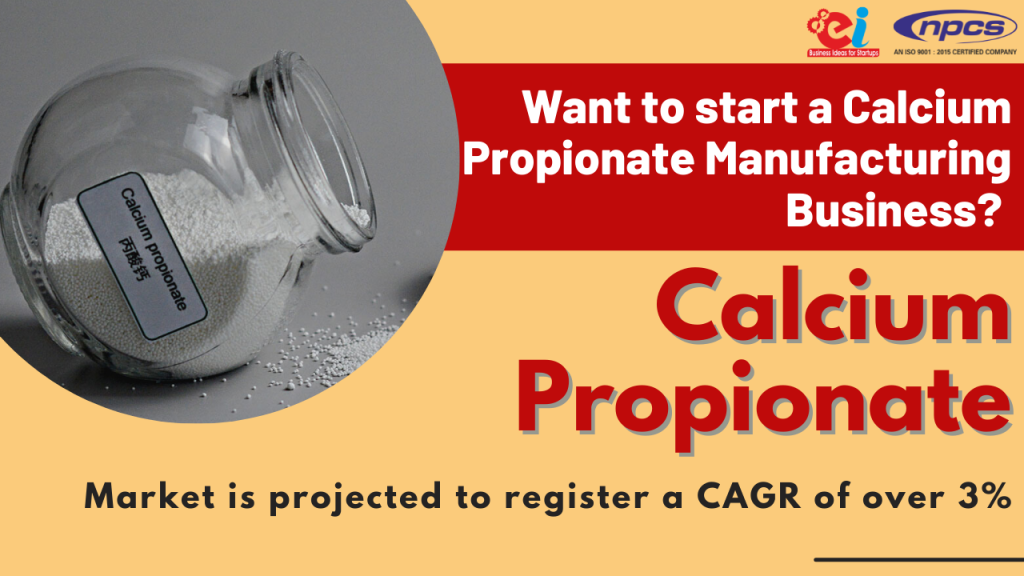
The Calcium Propionate industry is witnessing an increasing demand driven by its wide usage in the food preservation and animal feed sectors. As awareness grows regarding the prevention of mold and bacteria in perishable goods, the global market for Calcium Propionate continues to thrive. For entrepreneurs aiming to venture into a profitable manufacturing domain, establishing a Calcium Propionate manufacturing business is both a strategic and sustainable choice. What is Calcium Propionate? Calcium Propionate (chemical formula: Ca(C?H?COO)?) is a white, crystalline, odorless powder used widely as a food preservative, particularly in bakery products. It inhibits the growth of mold and other microorganisms, extending the shelf life of products. Its application extends to dairy, beverages, processed meat, and also animal feed as a mold inhibitor. Market Potential and Demand Analysis The global market for Calcium Propionate is experiencing robust growth. Factors contributing include: Rising demand for preservative-free yet long-lasting food products Growth in processed and packaged food industries Need for effective mold inhibitors in livestock feed Asia-Pacific, particularly India, is emerging as a key player due to increasing food safety awareness, making it an ideal geography to launch a Calcium Propionate manufacturing business. Licensing and Regulatory Approvals To set up a compliant manufacturing unit in India, the following steps are essential: FSSAI License: For food-grade Calcium Propionate Pollution Control Board Clearance: For managing chemical emissions Factory License and Local Municipality Approval GST Registration Drug and Cosmetic Act Certification (if supplying to pharma companies) ISO Certification for quality assurance (optional but recommended) Raw Materials Required The key raw materials for Calcium Propionate manufacturing include: Calcium Hydroxide (Ca(OH)?) Propionic Acid (CH?CH?COOH) Water These chemicals are readily available from domestic chemical suppliers. It’s advisable to partner with vendors offering bulk rates and reliable delivery timelines. Manufacturing Process of Calcium Propionate The Calcium Propionate production process involves a chemical reaction between Propionic Acid and Calcium Hydroxide. The standard procedure includes: Reacting StagePropionic acid is slowly added to a solution of calcium hydroxide in a stirred tank reactor. The reaction is exothermic and should be temperature-controlled (preferably below 30°C). Filtration and SeparationThe reaction mixture is filtered to remove any insoluble impurities. A clear calcium propionate solution is obtained. EvaporationWater is removed from the solution through vacuum evaporation. CrystallizationThe concentrated solution is cooled to crystallize Calcium Propionate. Drying and MillingCrystals are dried in tray or rotary dryers and then milled to a fine powder. PackagingFinal product is packed in HDPE bags with inner linings or paper bags for dispatch. Machinery and Equipment Required To set up a semi-automated or fully-automated plant, the following machinery is essential: Reactor vessel (SS304/SS316) Agitators and stirrers Filtration unit Crystallizer Dryer (tray or rotary) Pulverizer and milling unit Packaging machines (semi or fully automatic) Quality control laboratory setup Initial investment for a small to medium scale plant ranges between ?50 lakhs to ?1.5 crores depending on automation, capacity, and compliance standards. Location and Infrastructure A Calcium Propionate manufacturing business requires a pollution-compliant zone with: Access to water and electricity Proximity to chemical suppliers Good transportation infrastructure for logistics Availability of skilled labor A 5000–8000 sq. ft. industrial plot should suffice for a 5–10 ton/day capacity plant. Manpower Requirement A typical setup will need: Production Manager Chemical Engineers Machine Operators Quality Assurance Experts Packaging and Warehouse Staff Sales and Distribution Team Staffing should be optimized to balance operational efficiency and cost-effectiveness. Quality Standards and Testing Ensuring quality is non-negotiable. Key quality control tests include: Purity % by titration Moisture Content pH of 10% solution Heavy metal traces Microbial contamination (especially mold & bacteria) Adhering to international standards like FCC, USP, or EINECS ensures global acceptability of the product. Marketing and Distribution Strategy To successfully launch and grow your Calcium Propionate business, adopt the following strategies: B2B Marketing: Target food processing companies, bakeries, dairy manufacturers, and animal feed companies. Online Presence: Build a professional website, leverage platforms like IndiaMART, TradeIndia, Alibaba, etc. Partnerships: Collaborate with distributors, wholesalers, and chemical dealers. Export Potential: Register under DGFT for export license. Target markets like the Middle East, Southeast Asia, and Africa. Certifications: ISO 22000, FSSAI, and Kosher/Halal for enhanced credibility. Cost and Profitability Analysis Startup Capital: Land & Infrastructure: ?20–30 lakhs Machinery: ?25–50 lakhs Raw Material (Initial Stock): ?10–15 lakhs Labor & Working Capital: ?10–20 lakhs Licensing, Branding & Marketing: ?5–10 lakhs Operating Cost Per Kg (approx.): Raw Material: ?70–?90 Utilities & Labor: ?10–?15 Packaging & Miscellaneous: ?5–?10 Selling Price (2025 Market Avg): ?130–?180 per kg Gross Profit Margin: 30%–50% depending on scale and sourcing efficiency. Risks and Challenges Volatility in raw material pricing Strict compliance and regulatory checks Need for consistent product quality High competition from Chinese and European suppliers Mitigation strategies include long-term vendor contracts, automation to reduce errors, and continuous market analysis. Future Opportunities and Expansion With increasing demand for clean-label and long-lasting food, the Calcium Propionate market is set to expand further. Business expansion can include: Launching new preservative compounds (e.g., sodium propionate, potassium sorbate) White-label manufacturing Export-focused operations Vertical integration into food ingredients and additives By establishing a Calcium Propionate manufacturing business, entrepreneurs are not only tapping into a lucrative chemical segment but also contributing to safer and longer-lasting food systems globally. Visit the page Select and Choose the Right Business Startup for You for sorting out the questions arising in your mind before starting any business and know which start-up you can plan. We, at NPCS, endeavor to make business selection a simple and convenient step for any entrepreneur/startup. Our expert team, by capitalizing on its dexterity and decade’s long experience in the field, has created a list of profitable ventures for entrepreneurs who wish to diversify or venture. The list so mentioned is updated regularly to give you a regular dose of new emerging opportunities. Contact Us