
How to Make Pesticides, Insecticides, Fungicides, and Herbicides
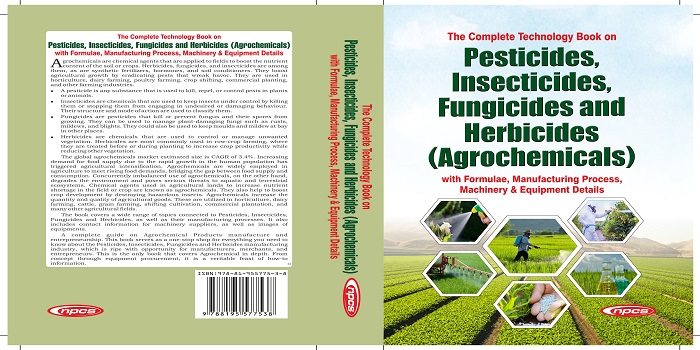
The pesticides and insecticides industry in India plays a vital role in the nation’s agricultural development by protecting crops and enhancing yields. India, being an agrarian economy, is heavily reliant on the effective use of crop protection chemicals to feed its growing population. With rising awareness among farmers, increasing demand for food, and government support for sustainable farming, the sector is witnessing consistent growth. India ranks among the top five global producers of pesticides and is also a major exporter to countries across Asia, Africa, and Latin America. The industry has evolved from basic chemical formulations to more eco-friendly, bio-based products, presenting opportunities for innovation and entrepreneurship. Read our Books Here: Agrochemicals Current Market Overview India is the fourth-largest producer of agrochemicals in the world and the second-largest in Asia. The Indian pesticides market was valued at over INR 50,000 crores (approx. USD 6 billion) in 2023 and is expected to grow at a CAGR of 8–10% over the next five years. This sector includes: Insecticides (largest market share) Herbicides Fungicides Bio-pesticides Plant growth regulators The major agricultural states like Punjab, Maharashtra, Uttar Pradesh, Andhra Pradesh, and Telangana form the core consumption markets. 1. Types of Pesticides and Their Usage a. Insecticides Insecticides are chemicals used to control or eliminate harmful insects that damage crops. Popular examples include: Chlorpyrifos Imidacloprid Cypermethrin These are extensively used in cotton, rice, sugarcane, and vegetables. b. Herbicides Used to control unwanted weeds and grasses, herbicides reduce manual labor and protect crop productivity. Examples include: Glyphosate Atrazine Pendimethalin Herbicide usage is rising due to labor shortages and demand for mechanized farming. c. Fungicides Fungicides prevent and treat diseases caused by fungi in crops like wheat, paddy, fruits, and vegetables. Common ones are: Mancozeb Carbendazim Tebuconazole d. Bio-pesticides Derived from natural materials like plants and microorganisms, bio-pesticides are gaining traction due to environmental safety and organic farming practices. Examples: Neem-based products Bacillus thuringiensis (Bt) Beauveria bassiana 2. Key Growth Drivers Several factors are contributing to the rapid expansion of the Indian pesticides and insecticides sector: Growing population and food demandMore food production necessitates higher yield per acre, increasing pesticide usage. Limited arable landWith shrinking farmland, farmers aim for maximum productivity using crop protection inputs. Government supportSubsidies on agrochemicals and initiatives like PM-KISAN, eNAM, and Soil Health Cards are improving farmer access and awareness. Export demandIndian agrochemical companies export to over 100 countries, making the industry globally competitive. Increasing pest resistanceClimate change and evolving pests have made modern and targeted pesticide solutions essential. 3. Major Players in the Indian Market The Indian market is dominated by both domestic and multinational companies such as: UPL Limited Bayer CropScience PI Industries Rallis India (Tata Group) Syngenta India Insecticides India Ltd. Sumitomo Chemical India These companies offer a wide range of products, invest in R&D, and have strong distribution networks across the country. 4. Export Opportunities India has emerged as a global hub for generic pesticide manufacturing due to its cost-effectiveness and strong chemical industry base. Export markets include: Latin America Southeast Asia Africa Middle East Pesticide exports from India reached INR 28,000 crores in FY2023, with potential to cross INR 40,000 crores by FY2026 with proper policy support. 5. Challenges in the Sector Despite the growth, the pesticides and insecticides industry in India faces several challenges: Counterfeit and substandard productsA major issue that affects farmer trust and yield. Excessive or improper usageLack of awareness among farmers often leads to overuse, affecting soil health and crop quality. Regulatory delaysSlow approval of new molecules and restrictions on existing ones pose barriers to innovation. Environmental concernsChemical residues in soil and water bodies have raised ecological red flags. 6. Shift Toward Sustainable Practices In response to environmental concerns and global organic farming trends, there is a gradual shift toward: Integrated Pest Management (IPM)A strategy combining cultural, biological, and chemical methods to minimize pesticide use. Organic and bio-pesticidesDemand for neem, garlic, and microbial-based pesticides is on the rise. Precision farmingUse of drones and sensors to apply minimal doses with accuracy. Public-private partnershipsCollaborations for farmer education, safe handling training, and innovation in crop protection. 7. Future Outlook and Investment Opportunities The Indian pesticides and insecticides sector offers immense opportunities in: R&D of next-generation molecules Contract manufacturing for global brands Development of biodegradable, nano, and green pesticides Building cold chain and storage infrastructure for safe pesticide handling Digital apps for advisory services and dosage recommendations Government initiatives like the Production Linked Incentive (PLI) Scheme and Ease of Doing Business reforms are expected to drive capital inflow in this space. Conclusion The pesticides and insecticides industry in India is critical to the country’s food security, agricultural productivity, and rural economy. With a diverse crop base, strong domestic demand, export potential, and policy support, the sector is poised for double-digit growth. However, sustainability, safety, and innovation must go hand in hand with expansion. Businesses, policymakers, and farmers need to collaborate to create a balanced ecosystem that protects crops without compromising health or the environment. Read Similar Articles: Agrochemicals See More Links: Start a Business in Asia Start a Business in Potential Countries for Doing Business Best Industry for Doing Business Business Ideas with Low, Medium & High Investment Looking for Most Demandable Business Ideas for Startups Start a Business in Africa Start a Business in India Start a Business in Middle East Related Videos Related Books Related Projects Related Market Research Reports NIIR PROJECT CONSULTANCY SERVICES, DELHI An ISO 9001:2015 Company ENTREPRENEUR INDIA 106-E, Kamla Nagar, Opp. Mall ST, New Delhi-110007, India. Email: npcs.ei@gmail.com info@entrepreneurindia.co Tel: +91-11-23843955, 23845654, 23845886 Mobile: +91-9097075054, 8800733955 Website: https://www.entrepreneurindia.co https://www.niir.org Contact Us
The Metals and Mining Industry in India: Growing Industries of the Future
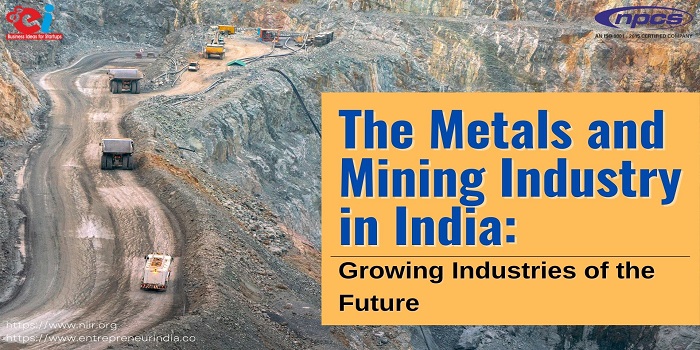
The Metals and Mining Industry in India is one of the most significant contributors to the country’s industrial and economic development. Rich in mineral resources and endowed with abundant reserves of coal, iron ore, bauxite, zinc, copper, and other key minerals, India is among the top global producers of many metallic and non-metallic minerals. The sector forms the backbone of core industries such as steel, cement, power, infrastructure, and automobiles. With government reforms, increasing FDI, automation, and focus on sustainable mining practices, the Indian mining sector is poised for accelerated growth and modernization. It plays a pivotal role in the Make in India and Atmanirbhar Bharat initiatives, fueling industrialization while generating rural employment and revenue. Visit this Page for More Information: Start a Business in Mining Industry Current Status of the Mining Sector India is the second-largest producer of coal, the third-largest producer of steel, and one of the top ten producers of several other metals. The mining industry contributes approximately 2.5% to the GDP directly and around 10% when including mineral-based industries. In FY 2023, the total mineral production in India was worth over INR 3.5 lakh crores, with a strong push towards self-reliance in key raw materials. Read Similar Articles: Minerals & Mineral Processing Industry 1. Key Minerals and Metal Resources a. Coal India has the fifth-largest coal reserves in the world, mainly in Jharkhand, Odisha, Chhattisgarh, and West Bengal. Coal India Limited (CIL), a public sector company, dominates production. Coal is mainly used for power generation, steel production, and industrial heating. b. Iron Ore Iron ore is a critical raw material for the steel industry. Major producing states include Odisha, Chhattisgarh, Karnataka, and Jharkhand. India exported 13 million tonnes of iron ore in FY 2023. c. Bauxite Used in aluminium production, bauxite reserves are abundant in Odisha, Gujarat, Maharashtra, and Madhya Pradesh. India’s alumina refining capacity is also growing rapidly. d. Copper India imports a significant amount of copper despite having reserves in Rajasthan and Jharkhand. Hindustan Copper Limited is the main domestic producer. e. Zinc and Lead India is the sixth-largest producer of zinc globally. Hindustan Zinc (a Vedanta Group company) leads production from mines in Rajasthan. Read our Books Here: Steel 2. Major Players in the Indian Mining Industry Coal India Ltd (CIL) Vedanta Resources National Mineral Development Corporation (NMDC) Hindustan Zinc Hindalco Industries Steel Authority of India Ltd (SAIL) JSW Steel Tata Steel These companies operate in both captive mining and commercial mining capacities, employing lakhs of workers directly and indirectly. Download PDF: The Metals and Mining Industry in India 3. Government Reforms and Policy Support To boost investment and output in the mining sector, the Indian government has implemented several key reforms: MMDR Amendment Act (2021)Opened up commercial mining, allowed auction of composite licenses, and removed restrictions on captive mines. National Mineral Policy (2019)Aims to increase mineral production by 200% over the next 7 years and improve exploration efficiency. Ease of Doing BusinessDigitalization of mining leases, faster environmental clearances, and GIS mapping have reduced red tape. FDI up to 100% allowed in mining and exploration of non-fuel minerals through the automatic route. 4. Sustainability and Green Mining Initiatives With growing environmental awareness, sustainable mining practices are being encouraged through: Mine closure and land reclamation guidelines Adoption of renewable energy for mine operations Use of drone technology, AI, and IoT for efficient resource utilization Waste management and zero-discharge processing plants Companies are investing in CSR projects, afforestation, water management, and community welfare in mining zones. 5. Challenges Facing the Metals and Mining Industry Despite immense potential, the Metals and Mining Industry in India faces various challenges: Delays in land acquisition and environmental clearances High logistics and transportation costs Regulatory uncertainty and multiple approvals Illegal mining and safety violations Volatile global commodity prices Addressing these bottlenecks through single-window clearances, better risk-sharing models, and investment in infrastructure is critical. 6. Emerging Trends and Opportunities The Indian mining sector is rapidly evolving with key trends such as: Commercial coal mining auctions opening the market to private players Battery metals demand like lithium, cobalt, and nickel creating new exploration targets Urban mining and recycling of metals from electronic waste International collaborations for critical minerals with Australia, Africa, and Latin America Technology adoption including autonomous vehicles, digital twins, and real-time monitoring systems 7. Metals Industry: Steel and Aluminium a. Steel Sector India is the second-largest steel producer globally with production crossing 125 million tonnes in FY 2024. The National Steel Policy 2017 aims for 300 million tonnes of capacity by 2030. Demand comes from infrastructure, construction, railways, defence, and real estate. b. Aluminium Sector India is a leading aluminium producer, with Hindalco and Vedanta Aluminium accounting for the majority of output. Aluminium is crucial for aviation, automotive, power, and packaging. 8. Export Potential India exports a wide range of minerals and metals to countries like China, Japan, UAE, and EU nations. The top exports include: Iron ore Bauxite Steel products Zinc and copper concentrates Granite and marble With value-added processing, India can increase its share in the global metals and minerals value chain. Conclusion The Metals and Mining Industry in India is on the cusp of a transformative decade. Rich natural resources, favourable policies, infrastructure growth, and increased domestic demand are pushing the industry into a new phase of expansion. From traditional coal and iron to future-critical minerals like lithium and rare earths, the sector is diversifying and modernizing rapidly. For investors, entrepreneurs, and technologists, the time is right to explore opportunities across exploration, production, equipment manufacturing, technology integration, and green mining solutions. With sustainable growth and digital innovation, India’s mining sector can emerge as a global powerhouse by 2030. Related Business Plans: Mining See More Links: Government Ministry/ Department Ministry of Steel Ministry of Mines Indian Bureau of Mines Ministry of Coal Industry Association Indian Steel Association India Stainless Steel Development Association Aluminum Association of India Coal Consumers Association of India Federation of Indian Mineral Industries Start a Business in Asia Start a Business in Potential Countries