
Top Emerging Technologies Revolutionizing Automotive Manufacturing in 2025
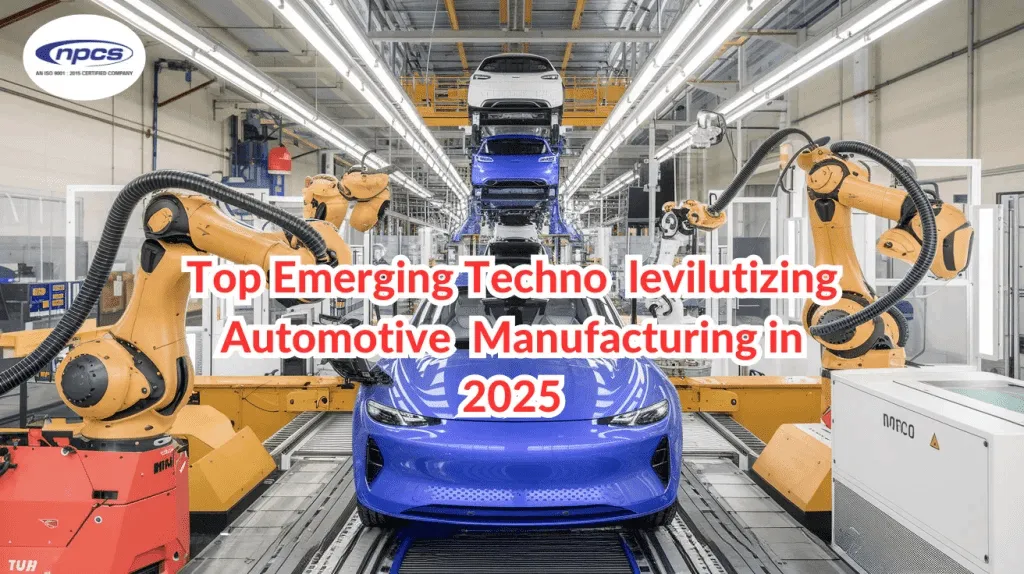
The automobile industry is getting a tremendous transfusion now with all the recent technologies promising new ways of manufacturing, improving efficiencies, and changing the design of vehicles. As we continue into 2025, several emerging technologies will also transform the automotive factory. This article lists the top technologies in the automobile industry and how they can impact its future. 1. Artificial Intelligence (AI) and Machine Learning AI is destined to become a revolutionary power in the automotive industry. By 2025, its application will not only include the independence of the vehicle but will be a driving force to optimize operations and improve quality control within production lines. AI will foresee possible issues in the manufacturing process before they arise, thus reducing downtime and waste. Manufacturers will use machine learning tools to analyze huge sets of production process-related information to improve decision-making, streamline supply chains, and even suggest design improvements. AI applications for predictive maintenance can enable manufacturers to catch their machines before they break down. This can thus save a considerable amount of money and have a more reliable, productive production system. Example: Tesla and BMW are already using applications to optimize their production processes and reduce errors at their manufacturing plants. These applications are expected to proliferate by 2025. Read Our Project Reports Auto Brake Pad and Auto Brake Shoe Production Business PLASTIC INJECTION MOULDING PLANT FOR AUTO PARTS: Manufacturing Plant, Detailed Project Report, Profile, Business Plan, Industry Trends, Market Research, Survey, Manufacturing Process, Machinery, Raw Materials, Feasibility Study, Investment Opportunities Helmet Manufacturing 2. 3D Printing in Automotive Manufacturing 3D printing has added value to automotive manufacture as well as produced parts of complex nature without waste. Traditional manufacturing methods usually involve removing material to thus develop an object, while 3D printing builds layer by layer, thereby being efficient and economical. 3D printing is now currently revolutionizing the manufacture of light, customized parts for vehicles in the year 2025. From prototypes to end use, this technology will radically impact the design and manufacture of automobile components. Rapid prototyping and time transformation from one design to engine use will cut across all barriers. Example: Companies like GM and Volkswagen have been investing in 3D printers with future plans of producing engine parts and interior features with this technology. Also Read: Automobile & Mechanical Industry Automative Lubricants-Growth in India 3. Robotics and Automation But the innovations of 2025 will take robotics and automation to a different level entirely. These family robots will have a character that focuses on applications of manufacturing where humans will spend time with machines to help improve efficiency by reducing their errors. Such robots work in factory operation with humans for better performance but never replace them. The AI enables such higher robots to understand and adapt themselves according to various tasks proving to be highly possible. Besides an assembly line, cobots may assist in quality control, sorting, and even transporting materials in the factory. Thus, this robotics is capable of increasing both speed and precision, thus further decreasing the production cost, and more so encourages better manufacturing efficiency. For example, Audi and Ford have implemented the use of cobots within their assembly lines, and this trend is going to be greatly accentuated in the year 2025. 4. Internet of Things (IoT) in Automotive Manufacturing The Internet of Things (IoT) is literally the net that links devices through the Internet to directly exchange data and commands without requiring further intervention by a human. It allows the whole industry to perceive the importance of huge amounts of real-time data collected and analyzed for production processes. It includes health monitoring of machinery, tracking parts and components within supply chains, and identifying flows not easily perceived. IoT is estimated to build “smart factories” by 2025; that is, every production process is interconnected to allow seamless operations. For instance, currently, companies such as Bosch and Siemens are extracting more from IoT in their manufacturing systems, thus promising much when the technology is implemented. Also Read: What Industry is Best in the Automotive Sector? Automobile Industry and Auto Components Sector 5. Augmented Reality (AR), Virtual Reality (VR) Augmented reality and virtual reality are also transforming the automotive manufacturing world, enabling improved design processes and training. With the use of these technologies, car designers will realize that there’s less error and enhanced design processes in bringing new models before physical prototypes are created. For the employees, real-time and hands-free instructions may be guided through complex assembly tasks through AR. In that manner, the chances of human errors are reduced and the time to train is shortened. Increasingly, VRs are used for training purposes, imitating real-world experiences and providing an indulgence and safe environment. Example: Like Mercedes-Benz, which has included AR glasses in the assembly task of technicians, Ford uses VR for training purposes. 6. Sustainable Manufacturing Technologies Ever since the year 2020, the automotive industry has slowly but steadily been moving towards sustainable manufacturing practices. By 2025, more and more manufacturers will have started employing technologies directed toward reducing the effect of their performance on the environment. These technologies are inclusive of the use of renewable energy, the implementation of eco-friendly materials, and processes that would conserve water. The most significant technology at this point is the reprocessor, whose input is recycled material to produce a vehicle. Innovations made possible by material science are bringing us closer to the prospect of recycling components such as plastics, aluminum, and steel with the same efficiency now. 7. Digital Twin Technology It is a new concept that allows organisations to create perfect copies of their entire production systems in a virtual environment. This digital model allows users to simulate and test various manufacturing scenarios, identify problems before they arise, and capture efficiencies. Using a digital twin, all manufacturing procedures may be improved, downtime reduced, and intelligent facilitation of incoming technologies assured. By 2025, this will integrate into the whole auto manufacturing process to make more efficient, responsive, and flexible systems of manufacturing. Example: Firms like Toyota
Exporting Auto Parts from India: Opportunities and Challenges
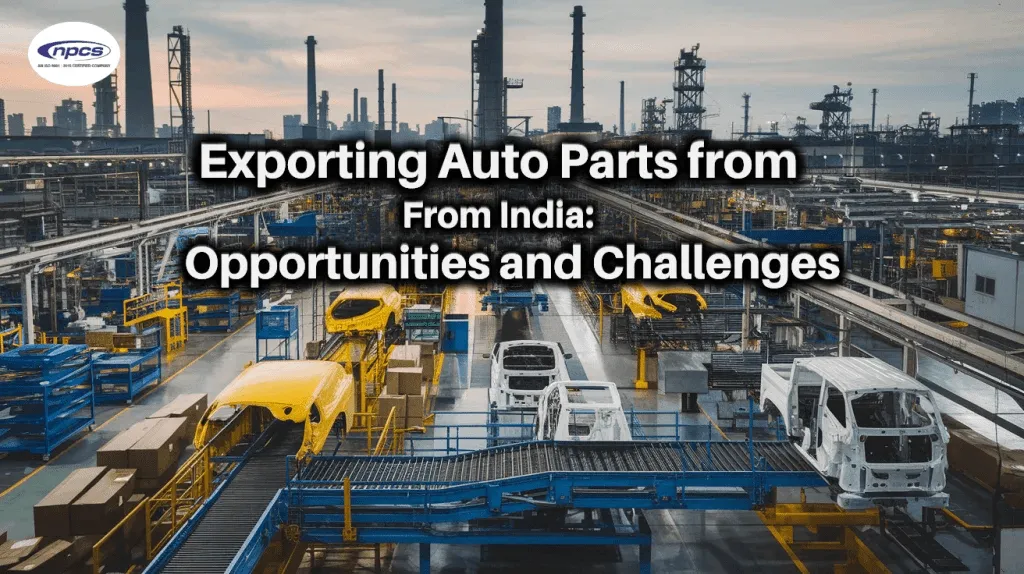
India ranks among the most powerful automotive markets in the world. The country has also emerged as a global manufacturing and export hub for various automobile parts and accessories components. Established as a cost-effective and reliable supply source for high-quality auto components, India is equipped with large-scale production capacity and has copious skilled workforce while the demand for vehicles is driving up. Though there exists immense possibility for auto parts and accessories export, several disadvantages or hindrances exist with which manufacturers must deal. This particular blog will discuss the major opportunities and challenges associated with exporting auto components and accessories from India and how businesses can position themselves toward success in the international market. 1. Opportunities for Exporting Auto Parts and Accessories from India By and large, the span of India’s automobile industry has grown leaps and bounds in the past few years. As a result, it has opened up various avenues for auto parts and accessories exports. It has already made India one of the fast-growing destinations for sourcing car components due to the increasing global demand for vehicles based mainly on performance, efficiency, and safety. Some of the major opportunities in this sector are: With the increasing growth of the Indian automotive industry, the expanse of opportunities for export into auto parts and accessories has also broadened. As cities demand vehicles with more of performance, efficiency, and safety, auto parts and accessories of the country are steadily gaining ground as destinations for sourcing. Here is a summary of some key opportunities in this sector: 1.1 A Solid Homegrown Manufacture Ecosystem The auto industry in India has a highly robust infrastructural development in the country to cater for many high-quality auto components. Prominent domestic companies Tata Motors, Mahindra & Mahindra and Maruti Suzuki have played a very important role in supplementing the supply chain for such facilities to enable Indian companies to scale their operations in export markets while maintaining strict quality standards. Low-cost labor and availability of cheap raw materials add another competitive advantage built in India. Thus, it results in Indian manufacturers being cheaper in production regarding auto parts than their counterpart manufacturing countries, making them very attractive before international customers in search of low-priced offerings. 1.2 Increasing Demand from Emerging Markets Among the emerging markets within Africa, Asia and parts of the Americas, Indian auto parts and accessories are gaining much interest as the number of vehicles continues to increase on the roadways of these developing economies, thus generating demand for the affordable yet trusted components. Being cost-effective as with other low-cost producers, yet with a reputation for delivering quality products, India becomes a natural address for such markets. The projection by the Automotive Component Manufacturers Association of India (ACMA) was about a 15% to a 20% increase in shipments of auto parts and accessories over the next few years. This represents a huge opportunity for Indian manufacturers to consolidate and enhance their status in the global arena. The automotive sector gains really great benefits from these edges when they are enhanced and polished, and then they will be sharpened to dominate the international auto components market. 1.3. Free Trade Agreements (FTAs) and Export Incentives India has entered into several FTAs with important markets, including the European Union, Japan, and the countries of ASEAN. These agreements have reduced tariffs and trade barriers on the one hand and made the export of auto parts and accessories much smoother on the other hand. Besides, there are also various incentives provided by the Indian government for exports including tax exemption and subsidies to promote the growth of the sector and export activities. The Atmanirbhar Bharat scheme launched by the government which makes India self-reliant in the manufacture of products is likely to add impetus to India’s efforts to emerge as a leading exporter of auto parts and accessories in the world. Also Read: How to Start Automobile & Mechanical Industry Automative Lubricants-Growth in India, Pattern and Forecast 2. Challenges in Exporting Auto Parts and Accessories from India While the potential for exporting auto parts and accessories from India is phenomenal, many challenges still lurk in the shadows, keeping businesses from successfully thriving in the global marketplace. 2.1. Compliance and Restrictions Relating To International Standards The biggest challenge associated with exports of auto parts and accessories from India is compliance with stringent regulatory standards and the very heavy quality control measures imposed by their governments. Every different country has a different requirement when it comes to safety environmental impact, and also product specification. Take for instance, the European Union, with its gymnastics around requirements, such as REACH (Registration, Evaluation, Authorization, and Restriction of Chemicals) which very much require that auto components must meet a certain level of environmental and safety standards. The non-compliance would lead to delays and fines or rejection of shipments which would grievously damage the reputation of Indian manufacturers. Irrespective of the high cost of certifications, Indian manufacturers essentially need to invest in quality certifications and practice internationally accepted best practices in production so that all their auto parts and accessories may compare favorably to the standards set internationally. Also Read: Auto Parts Manufacturing Industry. Production of Automobile Components. Profitable Automotive Spare Parts, Auto Component Industry. 2.2. Logistics and Supply Chain Issues With the development of logistics infrastructure in India, it is still far from being equipped with the facilities to ensure that auto part and accessory supplies reach international markets in a timely manner. Such ports, transport and warehousing problems lead to delays and increased costs. They also include customs procedures of international shipments. Efficient logistics and supply chain management systems are important to establish timely deliveries and cost-effective operations in all businesses intending to expand their export markets. Also Read: What Industry is Best in The Automotive Sector? Automobile Industry and Auto Components Sector 2.3 Currency Fluctuations and Payment Risks Currency fluctuations
How Startups Are Revolutionizing the Auto Accessories Market
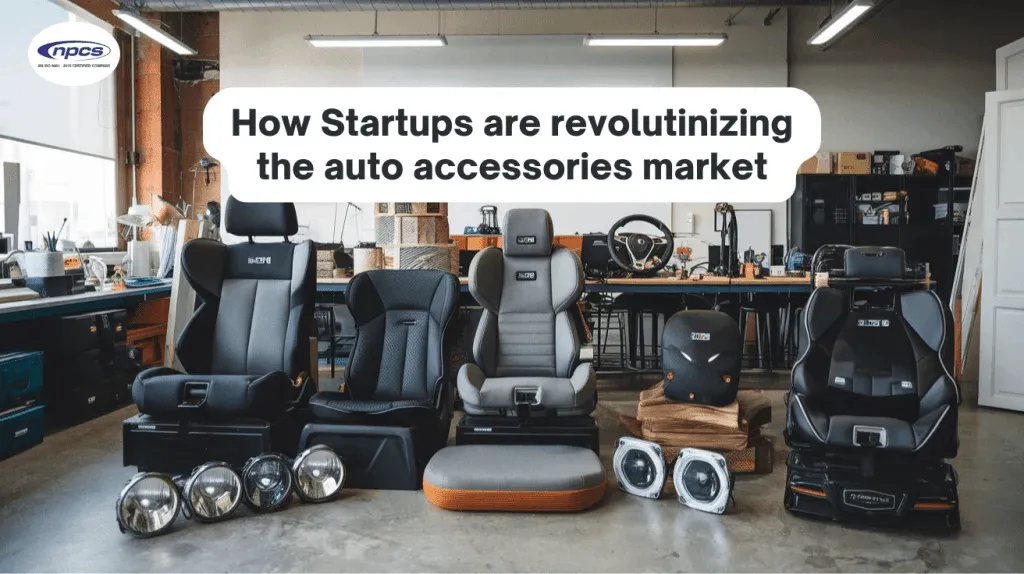
The automotive industry is changing very fast, and startups are disrupting most of the processes, especially in the auto parts and accessories sector. As customers demand more and more customization, innovation, and personalization from their cars, new startups come in to fill the gaps the industry has left. They bring new lenses, technologies, and solutions to the auto parts and accessories marketplace that usually disrupt established manufacturing and retailing models. This blog will talk about these startups and how they are redefining the entire auto industry and giving consumers an opportunity to have new ways of enhancing their vehicles. Read Our Project Reports Auto Brake Pad and Auto Brake Shoe Production Business PLASTIC INJECTION MOULDING PLANT FOR AUTO PARTS: Manufacturing Plant, Detailed Project Report, Profile, Business Plan, Industry Trends, Market Research, Survey, Manufacturing Process, Machinery, Raw Materials, Feasibility Study, Investment Opportunities Helmet Manufacturing 1. Embracing Innovation: How Startups Are Leading the Charge in Auto Accessories There have been a lot of startups in the automotive industry that have sprung up during the past decade and have come up with innovative auto parts and accessories. Unlike the large established companies, a startup can be very flexible in order to quickly adapt to changing demands by consumers and trends. High-tech features for eco-friendly produce will penetrate a whole new world of possibilities as they defy the limits in the realm of auto parts and accessories startups. Institutions are launching creations based on the latest times that are expected to be part of modern consumers-targeted smart features, beauty improvements, or even better functionalities. Wonderful improvements have been made, for instance, with auto parts and accessories now offering products like smart rear-view mirrors, AI-based car diagnostics, and bright illuminating solutions that are sophisticatedly safe as well as stylish. Leading Examples of Innovative Start-Ups in Auto Accessories BOLTON: A start-up company that will innovate smart and wireless auto parts and accessories such as diagnostic tools and performance enhancement. Moreover, their products can be seamlessly integrated into mobile apps, giving real-time insights into the performance of cars. CarX: It has changed the way the car owners thought of safety using the smart dashboard cam in combination with the monitoring system that allows for continuous surveillance of the vehicle when parked. So, this is what these start-ups have done: they have used technology very effectively and efficiently to provide safety and efficient riding but then customizable options, which were available only as part of very high-end models, for the average car user. 2. Customization: Tailoring Auto Parts and Accessories to Consumer Preferences One area where automotive startups have made the biggest impact is in the customization of cars. Modern car owners are considering other accessories that match their style, enhance comfort, and ultimately improve performance, seeking personal vehicles. This is actively facilitated by a healthy commercialization and provision of a comprehensive range of customizable auto parts and accessories that consumers can use to personalize their interior designs and external modifications. Auto startups, selling parts and accessories, understand the adage about a size not fitting all. Whether they are marketing personalized custom fit floor mats or maybe bespoke seat covers or personalized lighting systems, these companies are giving car owners unique ways with which to enhance their vehicles. Also Read: How to Start Automobile & Mechanical Industry Automative Lubricants-Growth in India, Pattern and Forecast The Role of E-Commerce and Direct-to-Consumer Models Such companies are also relying on e-commerce and direct-to-consumer models to sell customized parts and accessories directly to car owners. Instead of going through the traditional channels, the start-up companies are able to offer lower prices, much wider choice, and a more tailored shopping experience. Fitment and AutoUpgrades are two examples of these websites, where users can input their vehicle’s make, model, and year to receive personalized recommendations for products. Thus, all auto parts and accessories will match perfectly. 3. Sustainability in Auto Accessories: Eco-Friendly Solutions from Startups Sustainability really is the next big thing for startups in this area of their impacting industry—automobiles. Environmental concerns have become so great that there is a high demand by car consumers for eco-friendly auto parts and accessories for the greener planet. In response, startups have committed themselves to products derived from sustainable materials, from energy-efficient designs to recyclable components. Examples of such trends would include the development of products, such as organic fabric covers for seats, floor mats made of recycled materials, and cleaning products that nurture rather than harm the environment. Other startups are focused on making entirely biodegradable or recyclable auto parts and accessories, which dramatically reduces the environmental impacts of traditional manufacturing while reducing waste. Innovations in sustainable manufacturing Eco-Clean: creating a variety of car cleaning products, from spray cleaners based on botanicals to biodegradable wipes. Green Ride: A company that is widely known for its eco-friendly car seat covers, which are plant-based leather and recycled fabrics. Green Ride boasts a wide portfolio of eco-friendly interior accessories. These startups are proving that they can practice what they preach to the world’s big companies and hold them up as examples of how effective auto parts and accessories can be functional and green. Also read: Auto Parts Manufacturing Industry. Production of automobile components. Profitable Automotive Spare Parts, Auto Component Industry. 4. The Influence of Smart Technologies on Auto Accessories Smart and connected technologies have changed the landscape of several industries—automotive is one of them. Infotainment systems, smart parts, and other accessories have made consumers want their vehicles to be as connected as their smartphones. All of these are making startups tap into the trend and redefining businesses by integrating advanced technologies like the Internet of Things (IoT), artificial intelligence (AI), and machine learning into their products. Real-time traffic updates, weather forecasts, and sometimes even diagnostics of a vehicle are real-time updates provided directly to the driver via such instruments as smart rearview mirrors and heads-up displays. Moreover,
The Future of Auto Parts Manufacturing: Trends Driving Innovation in India
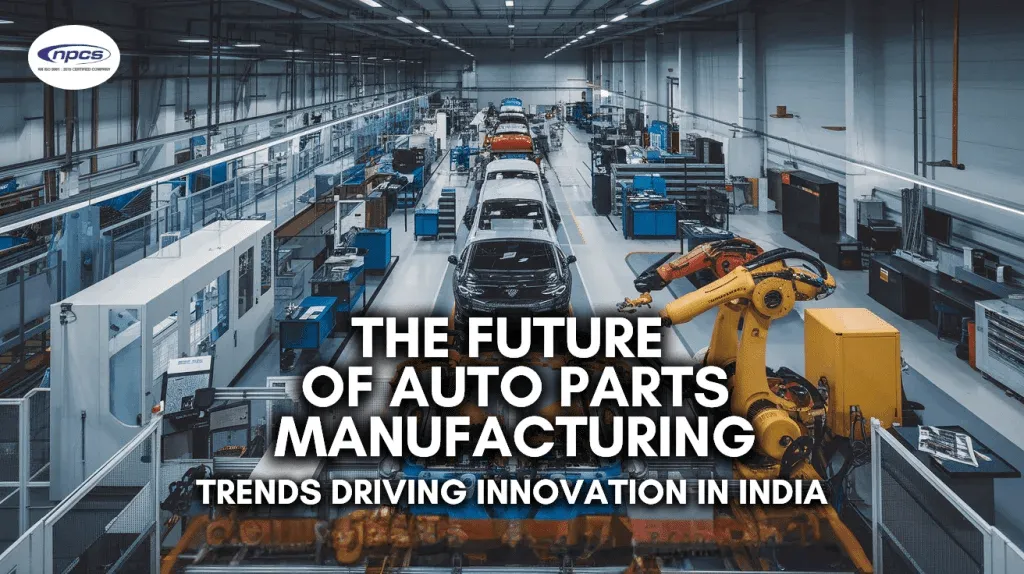
An Emerging Revolution in the Indian Automotive Industry: Modern Manufacturing Practices and Technologies Impacting Every Aspect of Motor Vehicle Production. To supply the ever-increasing demand for motor vehicles, more innovative auto parts and accessories are needed. Today, manufacturers develop many advanced components to cater to consumer wants and industry requirements for the making of motor vehicles. Indeed, it is an exciting time in the sector. As in this blog, we will walk you through the latest trends that create a wind of change in the manufacturing of auto parts and accessories in India. 1. Adoption of Automation and Industry 4.0 in Auto Parts Manufacturing Undeniably, one of the most pronounced trends in today’s automotive industry is that of increasing automated processes and turning towards Industry 4.0. Using smart technologies such as artificial intelligence (AI), machine learning (ML), and Internet of Things (IoT) for efficient manufacturing processes is termed Industry 4.0 in the automotive industry. The provision of automation for manufacture of all kinds of parts and accessories for automobiles works wonders in improving precision during the production process and really speeds up the production process, apart from causing overall reduction in production costs. An examination of the McKinsey & Company report states that Industry 4.0 when adopted by the automotive industry would lead to an increase in productivity by 25-30% and a decrease in costs by 10-15%. Automation offers manufacturers a minimum range of processes to make high-quality auto parts and accessories, thereby making auto parts more efficient and much safer to use. Read Our Project Reports Auto Brake Pad and Auto Brake Shoe Production Business PLASTIC INJECTION MOULDING PLANT FOR AUTO PARTS – Manufacturing Plant, Detailed Project Report, Profile, Business Plan, Industry Trends, Market Research, Survey, Manufacturing Process, Machinery, Raw Materials, Feasibility Study, Investment Opportunities Helmet Manufacturing How Automation is Shaping the Future of Manufacturing in India India’s automotive industry is swiftly going to accept automation technologies for winning the competition at global levels. The major players in the game- Tata Motors, Mahindra, and Maruti Suzuki- have incorporated robotics, AI, and IoT in their manufacturing units. This differentiation that demanded these technologies guarantees that product quality would be better, delivery much faster, and manufacture at a much lesser cost. An innovation in the way automotive parts and accessories are created is the contribution of automation to transformations. These would prove to be much more strength resistant along with newer designs and technologies. Read Our Books Handbook on Automobile & Allied Products (2nd Revised Edition)# The Complete Book on Production of Automobile Components & Allied Products ( Best Seller ) Handbook on Electric Vehicles Manufacturing 2. Electric Vehicles (EVs) and Their Impact on Auto Parts Manufacturing The new era of EV has really changed the automotive scenescape in India. The demands for auto components and accessories specific to EVs are steadily rising as more consumers turn to eco-friendly transport. All forms of development, such as electric drivetrains, lithium-ion batteries, charging systems, and regenerative braking systems, are now being developed by manufacturers for their vehicles. The government campaigns, such as FAME, are making EVs the most promising segment of the Indian automotive sector. The program that the Indian government is undertaking on electric mobility will speed up advancements in innovation in auto parts manufacture and attract more investment in R&D by companies for this developing market. Auto Parts and Accessories Related to Electric Vehicle As electric vehicles grow to be a household word, manufactures are revealing their plans for developing new auto parts and accessories that will be adjoined with pure electric vehicle applications. This would include items such as performance batteries, electric drivetrains, and lightweight materials. According to the report of NITI Aayog, by 2030, the electric vehicle market in India will be nearly 10 million units. Such exponential demand will definitely cast a net for more and more innovations in auto parts and accessories. Also Read: Auto Parts Manufacturing Industry. Production of Automobile Components. Profitable Automotive Spare Parts, Auto Component Industry. 3. Emphasis on Sustainability and Green Manufacturing Practices Automotive sustainability has been on a worldwide spree to conquer the world. India, too, is moving with the motion. As awareness about the environment and stricter government policies on carbon emissions are creating a buzz among manufacturers, thus they return to repair internal manufacturing processes that are greener in terms of sustainable materials, energy-efficient production techniques, and eco-friendly packaging at the shop floor level. The global automotive sector is trying to cut down its carbon footprints by as much as 30% by the year 2025 with India active in this transformation. There are several initiatives toward becoming environment-friendly along these lines, like integrating renewable energy in manufacturing units, waste reduction, and funding into green production technologies. Also Read: What Industry is Best in The Automotive Sector? Automobile Industry and Auto Components Sector Sustainable Materials for Auto Parts Manufacturing There is a growing trend in the auto industry to move increasingly to sustainable materials-such as recycled plastics, bioplastics, and natural fibers. Close on this, Indian manufacturers are gearing up to improve producing auto parts and accessories from recycled and eco-friendly sources. For instance, Mahindra & Mahindra appraised itself of using recycled plastics in car interiors, whereas Tata Motors explored the usage of bio-based materials during vehicle production. This is the foundation of a sustainable way forward, and in turn, it will also widen the horizon of competition for the manufacturers above all, as they will be appealing to customers’ need for an increasingly higher demand for eco-friendly products. 4. The Role of 3D Printing in Auto Parts Manufacturing 3D printing, better known as additive manufacturing, is another exciting development in the automobile industry. Companies use this technique to manufacture complex vehicle parts or accessories with very high precision and near zero wastage. Each new layer is added on the previously produced layer, and thus highly customized components are produced,
India’s Roadmap to Net Zero: Opportunities for Eco-Friendly Enterprises
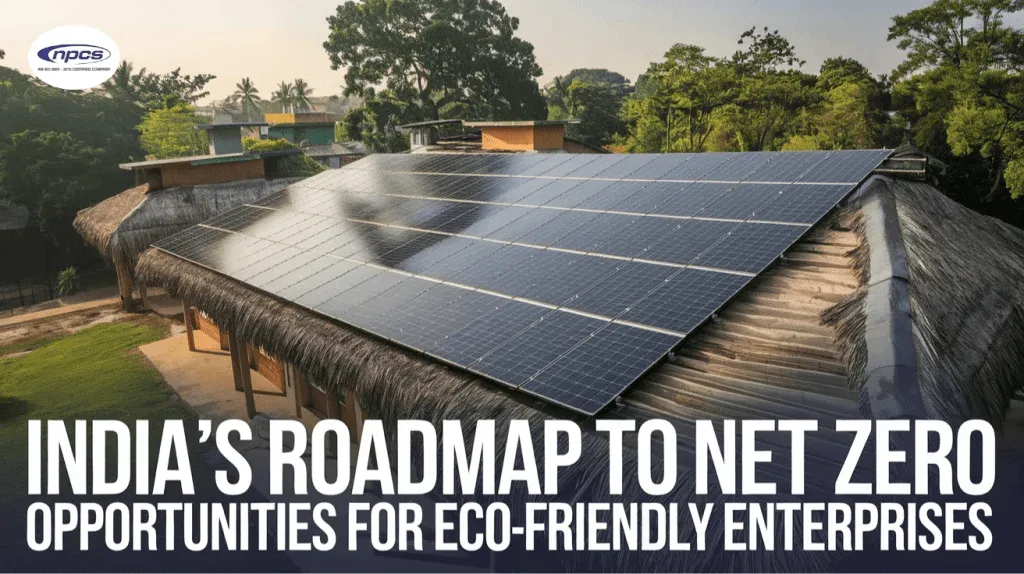
With the on-setting realities of climate change looming over the world, India walks towards a promising future – one that is entirely sustainable and one that perhaps symbolizes the clearest mark of India’s development. The promising and dynamic economy can be seen as throwing up environmental challenges against development. India’s commitment to making itself net-zero by 2070 is a significant step in taking positive strides to meet global environmental issues. Such a roadmap creates enormous opportunities in the development of green business ideas which will also boost the economy. It will scrutinize India’s approach while achieving that goal, as well as some of the opportunities available for companies to become successful in a green economy. Also Read: 50 Green Business Ideas for Aspiring Entrepreneurs India’s Commitment to Net Zero Emissions by 2070 During the summit in COP26, held back in November 2021, Prime Minister Narendra Modi declared that India would become a net-zero emitter by 2070. This is a specific commitment intended to match global efforts at fighting climate change and keeping temperature rises below 1.5°C. As an integral part of the commitment, India has made specific ambitious goals to: Reduce carbon intensity by 45% by 2030. Increase the proportion of non-fossil energy capacity by 50% by 2030. 500 GW renewable energy capacity by 2030. Reducing its carbon footprint is not merely an environmental goal for India; it is also an economic opportunity. Eco-friendly business ideas will not only provide avenues for green innovation but also offer fresh opportunities for sustainable growth for industries. Also Read: Best Eco-Friendly Products, Projects & Ideas for Startups Opportunities for Eco-Friendly Enterprises in India Green economy provides a boost to number of opportunities for businesses as green. Greener businesses will be in storage even through sustainable energies and sustainable agriculture. Let us see some of the critical subjects behind which eco-friendly business ideas can be some of the most possible ones. 1. Renewable Energy: Clean Future This actually happens to be one of the biggest providers of renewable energy across the globe-solar and wind. Its government is creating tremendous possibilities in this area as part of its strategy for its country to increase its share in renewables in the energy source. Opportunities in Renewable Energy: Solar energy: This, more importantly, is the most optimal geography for the generation of solar energy mainly due to the availability of sunlight in general throughout the year. Many schemes have already been undertaken by the Indian Government toward the encouragement of rooftop-based solar installations on a residential, commercial, and an industrial basis. Windy Energy: This is one of the top five countries if potential is to be weighed. Business opportunities include manufacturing and installation of wind turbines or maintenance. Energy Storage Solutions: As renewable energy sources start to expand, energy storage solutions such as batteries and smart grids will play a pivotal role in managing supply and demand for energy. Engaged in all this, eco-friendly businesses would be well-positioned to enable the government to achieve reduced carbon footprint of India and catch a rising market. 2. Electric Vehicles (EVs) and Green Mobility In India, transport sector is one of the most significant contributors to carbon emissions and transitioning to electric vehicles (EVs) brings on board a huge opportunity for green businesses. The government of India has introduced several efforts such as the Faster Adoption and Manufacture of Hybrid and Electric Vehicles (FAME) scheme to spread the use of EVs. Opportunities in the EV Segment: EV Manufacturing– Entrepreneurs can get into electric vehicle including two wheelers, three wheelers, and four wheelers for their enterprise venture. There is also scope for local manufacturing of EV batteries. EV Charging Infrastructure: The need for EV charging stations is rapidly increasing with the upsurge in EV usage. Establishing a wide network of electric vehicle charging stations across both urban and rural areas can be a very lucrative business opportunity. Battery Recycling: It is the most important part with minimal lifespan for batteries of EVs, reliable disposal, or recycling method is critical. Ideas and technologies must be investigated by entrepreneurs in battery recycling and its second-life applications. Also Read: Set-Up your own EV Charging Stations It is also a win-win for business and nature as the upcoming electric vehicle sector will decrease the carbon footprint and provide cleaner air to urban regions. 3. Sustainable Agriculture and Food Production Well, the agriculture sector contributes a great deal to enhancing the economy. Nonetheless, it also adds to the high level of greenhouse gases, mainly through fertilizer overuse, over-irrigation, and burning of crop residues. Sustainable developments in agriculture have ever-increasing opportunities for green businesses. Sustainable Agriculture Opportunities: Organic Farming: The market for organic food products has definitely increased in India, both within and outside the country. Enterprises can take advantage of this window of opportunity by offering inputs in organic farming, organic produce, and certification services. Agri-tech Solutions: Technology-enabled solutions like precision farming, AI-based crop monitoring, and water-efficient irrigation systems can cut down the carbon footprint of farm activities to a large extent. Agri-tech start-ups can help farmers shift toward sustainable agricultural practices while boosting productivity. Food Waste Management: The food industry, naturally, is one of the biggest messiest industries. It is an avenue that eco-friendly businesses can explore-the food waste recycling technology, composting, or creating value-added products from food waste. By adopting these practices, businesses will not only add their worth to India’s goals in reducing carbon footprints but will also contribute to the sustainability of the future farming community. Also Read: Jute Shopping Bags Manufacturing Business 4. Waste Management and Recycling Waste management is indeed one of the most critical challenges as far as our rapidly growing urban centers in India are concerned. In this country, every year millions of tons of waste is generated, out of which a major portion goes into landfills, further aggravating the pollution and degrading the environment.
Green Manufacturing: Technologies That Transform Industries for a Sustainable Future
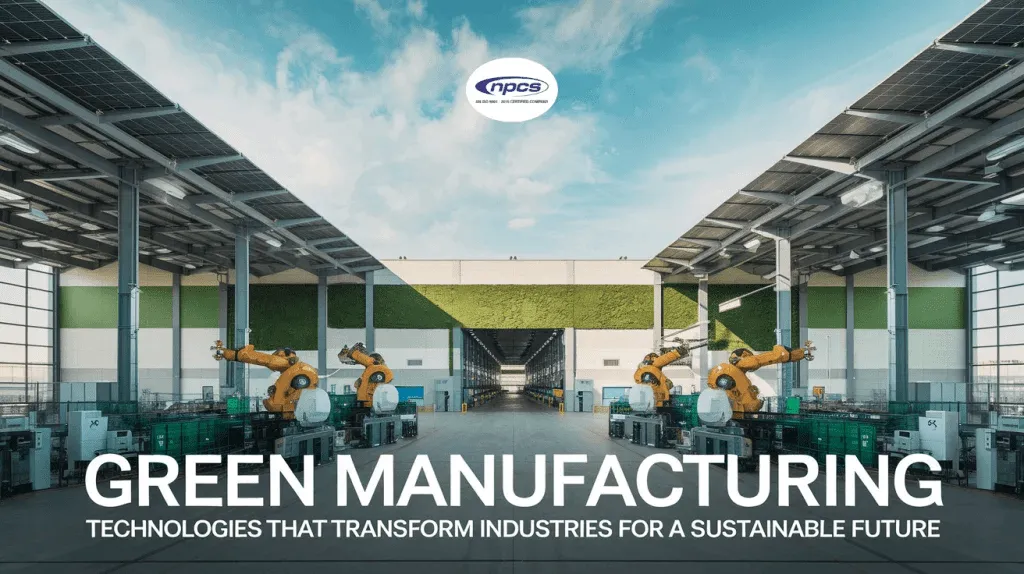
Green manufacturing has become more relevant as the world moves toward a sustainable future. Green business ideas willingly adapt industries so that they conserve carbon footprints while still maintaining productivity and profitability. Innovative technology ensures such changes are embedded within each step-from sourcing raw materials to disposal of manufactured products. The article discusses some of those state-of-the-art technologies that maket he revolution in manufacturing processes toward more sustainable future. The Importance of Green Manufacturing for a Sustainable Future Manufacturing is one of the major contributors to the efforts of the global world in reducing its carbon footprint. The flip side is that technology can migrate the energy divider from manufacturing companies as it strives to streamline efficiency while still achieving profitability. Green manufacturing would prove itself cost-efficient and thus add to its better reputation and make it possible before increasing environmental legislation compliance by all manufacturers. Let us then now consider some technologies that start to change industries into a more sustainable future. Also Read: Jute Shopping Bags Manufacturing Business 1. Additive Manufacturing (3D Printing) Additive manufacturing or, as we generally call it, 3D printing is one of the most innovative emerging technologies for green manufacturing. Unlike traditional forms of subtractive manufacturing, wherein raw materials are cut or sliced to form the shape of the desired object, such as carving an object out of a larger block, 3D printing fabricates objects layer by layer from the ground up. Consequently, it can greatly cut waste and energy consumption. Also Read: Starting a Profitable Printing Technology Business Key Benefits of Additive Manufacturing Waste Reduction: The amount of material utilized in 3D printing is simply that which is necessary to build the object, hence the waste is substantially reduced. Energy Efficiency: Energy use is significantly reduced compared with traditional manufacturing methods, reducing the overall carbon footprint. Customization: Manufacturers are able to develop these products and, quite efficiently, produce highly individualized products as there is no need to commit to mass production and excess stock, thereby creating a waste product that finds its way into landfill sites. Also Read: Set-Up your own EV Charging Stations 2. Renewable Energy Integration Using renewable sources of energy is another important step to take in the direction of carbon footprint reduction in manufacturing. Traditional manufacturing processes use fossil fuels intensively, which enhance greenhouse gas emissions. On the contrary renewable sources of energy include; solar, wind, and hydropower, which will reduce these emissions. Advantages Renewable Energy in Manufacturing: Reduced Operational Costs: Though an initial high investment could cause a challenge, the energy use cost in the future is reduced via renewable energy. Already, a large number of manufacturing industries get back their investments on renewable energy systems in five to ten years. Sustainability: Technologies like solar panels, wind turbines, and renewables permit a manufacturing company to think about making it move towards a resource-efficient, eco-friendly enterprise and global footprint reduction efforts. Less Reliance on Others: By developing their renewable outlets, companies will be able to create energy independence from the external providers, increasing their resilience against price fluctuations in the energy sphere. Such as, Tesla’s Gigafactory in Nevada, partially powered by solar energy, is a model followed by many other manufacturing giants. They will follow this direction in order to avoid carbon footprints and gain savings in the long run. 3. Circular Economy Technologies The use of new materials will be minimized, and their wastage will also be reduced. The conceptual approach from the traditional linear manufacturing, where raw materials are extracted, used, and discarded, is what a circular economy’s promise is. Its aims are to keep materials in use for as long as possible and avoid new resources. Read Our Books Startup Projects for Entrepreneurs: 50 Highly Profitable Small & Medium Industries Entrepreneur’s Start-Up Handbook: Manufacturing of Profitable Household (FMCG) Products with Process & Formulations (2nd Revised Edition) Some of the Key Technologies in Circular Manufacturing: Material Recycling: The advanced sorting systems and chemical recycling technologies allow manufacturers to recycle and reuse materials effectively. It minimizes the raw material requirement and lowers global warming potential for resource extraction. Product Life Extension: By extending the service life of products, manufacturers can avoid the need to replace them frequently, producing less waste. Technology for reparability, refurbishment, and remanufacturing enables companies to extent a product’s lifespan. Closed-Loop Systems: In principle, the closed-loop manufacturing system will have as an input one process undesirable waste from another, which will substantially reduce the consumption of materials and wastes. As an example, Patagonia has now closed the cyclical economy loop by incorporating recycled materials into its products and creating a take-back program for used clothing. In such ways, adopting the new rules of circular economies enables companies to reduce their carbon footprints while creating a supply chain that is more sustainable. Also Read: Best Eco-Friendly Products, Projects & Ideas for Startups 4. Smart Manufacturing and IoT Integration There is an intersection of smart manufacturing with the Internet of Things such that it holds a promising possibility to the industries in harnessing the use of resources, improving operational efficiency while cutting wastage. Real-time collaboration between machines through IoT devices provides better monitoring and control for production processes. This guarantees optimal functional efficiency for such machines. Advantages of Smart Manufacturing Energy Management: Consistently monitor energy consumption with IoT sensors as part of operational processes and automatically adjust as required to save energy waste. The result will be a substantial drop in the carbon footprint. Predictive Maintenance: The device will monitor the health of all machines from a distance. The process will be possible by using IoT technology. Manpower will be reduced in machine downtime and energy consumption due to prediction of failure before it occurs. Process Optimization: Smart manufacturing systems use data analytics to optimize production processes through waste reduction and material efficiency. Our Project Reports: A Business Plan for Bio-Degradable Plastic Polymer