
How to Create an Effective Market Research Report for Small Businesses

Perhaps one of the most informative and powerful tools that a small business can use to understand the market, conduct analysis on various industries, competitors, and consumer trends, and make data-driven decisions is the market research report. A precise and detailed report could mean success or failure for that investment project or business venture. Guidelines for writing a market research report useful for small business owners will also explore fundamental building blocks of such a report as well as tips to present the findings for an easier and clearer interpretation. Also Read: Small-Scale Manufacturing Business Ideas 30 Business Ideas to Start with an Investment of 1.25 Crore Importance of a Market Research Report to Small Businesses The small businesses have their stakes so high, as every decision is very critical. Be it the launch of a new product or the entry into a new market, credibly projecting and assessing the viability of an investment project requires accurate, reliable data. A market research report is a navigation tool meant to be used with competitive landscapes, customer behavior, and market trends. Effective market research will impart to you: A picture of consumer preference and behavior Market gaps Competitor strengths and weaknesses Future trends and opportunity forecasting Risks in investment projects minimized For small business owners, it pays a lot when you invest in market research. With that, you can be able to make some informed decisions. Also Read: Research before Entering a New Business Market Key Components of a Market Research Report To compose a well-rounded and pragmatic market research report, there are numerous components needed. Here is what every report should comprise of the most critical sections: Executive Summary It is most often a summation of the entire market research report, which also highlights the key findings and recommendations. Such a component should not be lengthy but would provide the whole summary purpose of the research, the method used to carry out the research, and the key conclusions derived from it. Objectives of the Research Herein, state clearly the objectives of prepared market research reports. Do you want to examine the feasibility of a possible investment project, get an idea of potential interest among consumers, or study competing companies? By establishing the objectives behind the research, it is ensured the research works in a focused and relevant way. Methodology Details the way of getting data; that would have been either the surveying, interviewing, focusing on groups, or using secondary research from online sources. Have a clear account of the way, as it lends credibility to your findings. Market Overview The market overview is that section where you give a vague description of the industry in which your small business operates. Include the major trends in the market, size, and prospects for growth. For example, if you deal with food and beverages, talk about the changing consumer buying trend from standardized to organic products. Competitor Analysis In fact, the entire small business understands its competitors; this should highlight strengths and weaknesses of main players in your market, which can further help you know opportunities or threats you would face. Any market research report must include a SWOT analysis of your competitors. Consumer Insights Understand your customers because knowing them can help your business. The consumer insights are a very important aspect of market research investigation, as they set into consideration the behavior, preferences, demographics, and buying patterns of consumers. This information comes in very handy when fine-tuning your product or service offerings. Findings and Recommendations This is, in essence, the core of your market research report. The information you have gathered can now be distilled down into your key findings for decision-makers, as well as recommendations regarding action steps to be taken as a result. These could be suggestions for pricing, product development, or marketing strategies. And for a small business, these insights can inform and transform a decision. Read Our Market Research Reports Feminine Hygiene Products India Emerging Business Opportunities Milk Processing & Dairy Products in India Market Research Report India Menthol Crystal Market How to Gather Data for Your Market Research Report Data constitute the bedrock of an excellent market research report. The greater accuracy of the data and relevance, the more insightful the report. Here are some ways you can collect your market information: Primary Research Primary research is a method by which you collect new data directly from your target audience. Some examples are as follows: Surveys and questionnaires One-on-one interviews Focus groups Observational studies Primary research is usually best for getting very detailed and specific explication that is most relevant to your investment project or small business goal. Secondary Research Secondary research, the other type of data collection, refers to analyzing data that have previously been published by others. Such sources may include: Industry reports Government publications Academic papers Market studies from reputed organizations Secondary research proves to be a very economical source for getting a complete view of the market. But make sure you are quoting credible sources for the quality. Online Tools A few online tools can be used to collect and analyze market data. For example, Google Trends, Statista, SEMrush, and many other tools to obtain insight into trends, consumer behavior, and competitive intelligence. Also Read: 5 Reasons Why Market Research is Vital for Start-ups Presenting Your Market Research Findings It’s time to show your work once all data has been collected. It’s an organized, systematic approach and easy to interpret, then what makes a market research report useful? Present your research: Clear, Visual Data Representation Graphs, charts, and tables are indeed the best visual tools for data visualization. Use them to present trends, comparisons, and findings plainly. For example, while a pie chart can show the market share managed by the competing organizations, a line graph can represent the changing consumer behavior. Stay Short and to the Point As much as you may be tempted to include as much information as possible, remember a market research report is a document that must
Sustainable Practices in the Automotive Industry
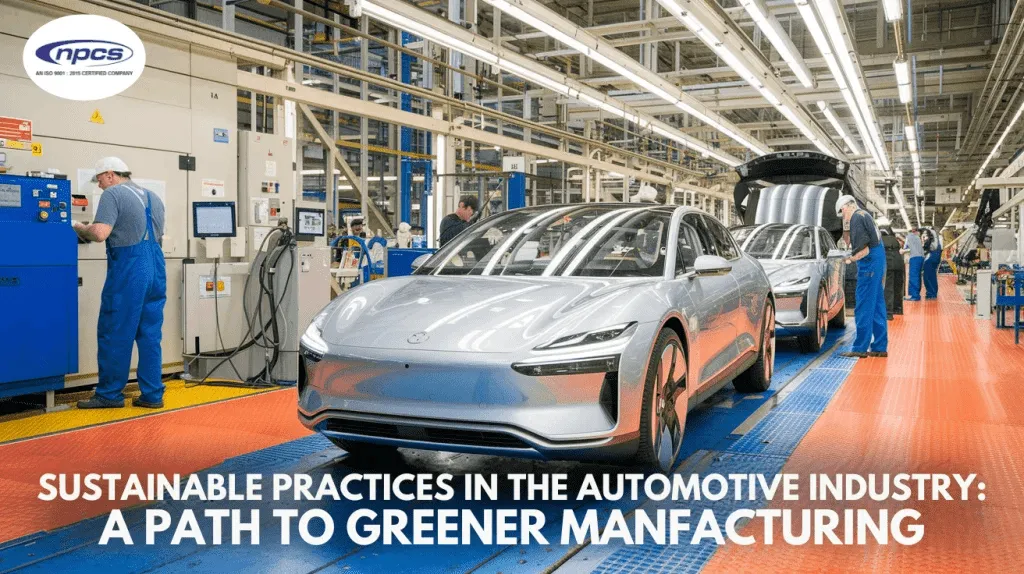
With global attention focused on environmental sustainability, managers across various sectors are working to reduce the carbon footprint of their manufacturing. The automotive industry is no exception, as companies actively explore long-term sustainable practices to address climate change and resource depletion. By implementing these strategies, the automotive industry not only helps preserve the environment but also stays competitive in the growing green market. Why Sustainability Matters in the Automotive Industry The automotive industry is one of the world’s most resource-intensive industries. The industry is also among those that contribute a large share of the greenhouse gases produced by the world. Negative impacts on the environment have always been associated with it-from the stages of raw materials extraction through the actual manufacturing process to the disposal of vehicles at the end of their life. In the recent past, however, even as these negative impacts continued to be felt, there was much increased momentum in the drive for sustainability, with many manufacturers beginning to acknowledge the need to integrate, in practice, greener processes. Also Read: How to Start the Automobile & Mechanical Industry Automotive Lubricants: Growth in India Several factors drive the transformation to sustainable automotive manufacturing: Regulatory pressures: Governments around the globe have been hitting the industry with more stringent environmental regulations in terms of emissions standards and reduction targets in wastes. Consumer demand: Environmentally concerned consumers more and more prefer companies that share their values, prompting automakers to implement sustainable practices. Cost savings: High energy use, large amounts of waste, and, consequently, high operation costs make a case for reduced consumption with going green. In this way, the automotive industry will enable environmental damage reduction while ensuring long-term business competitiveness/interests. Sustainable Practices in Automotive Manufacturing Green Manufacturing Technologies The automotive industry is among the most resource-consuming sectors in the world, and so, among sectors, it contributes largely to the greenhouse gases produced by the world. The environment has always affected it from the state of raw material extraction through the production process and finally to when a car has reached the end of its life. However, in the recent past, while the threats continued to be felt, the movement toward sustainability surged ahead, much increasing the number of manufacturers who realized that they had to integrate greener-working processes into the practice. Transformative forces for changing automotive manufacturing to sustainable include: Regulatory pressures: With emission standards and waste reduction targets tightening globally, countries are also tightening their regulations in that direction. Consumer demand: They go to greater lengths, buying from companies that share their values of being environmentally vibrant. Cost savings: High energy use, large amounts of waste, and, consequently, high operation expenses make a case for reduced consumption with going green. Read Our Project Reports Auto Brake Pad and Auto Brake Shoe Production Business PLASTIC INJECTION MOULDING PLANT FOR AUTO PARTS Helmet Manufacturing Sustainable Materials in Auto Parts Switching from conventional materials like steel and plastic to more environmentally friendly alternatives is embraced by all automakers: this is the much-acclaimed mark of the use of sustainable materials in automotive manufacturing, which significantly decreases the environmental burden of vehicles on the surface. Lightweight Materials: Aluminum and fiber-reinforced composites are becoming more widely used to lighten a vehicle and hence increase its fuel efficiency while lowering emissions. After all, such materials reduce the environmental impact during the resource extraction and manufacture because of their reduced need for raw materials and lesser energy. Recycled Materials: Many manufacturers are increasingly turning to such recycled inputs, such as steel, glass, and plastic, in order to create less environmentally damaging vehicles. Thus, BMW integrates recycled plastic bottles into its vehicle interiors as part of the recycling process. Bio-based Plastics: These are about developing biobased plastics through renewable sources like plants. Such principles will enable the automotive sector to realize major reductions in ecological footprints that are consistent with promise in a circular economy. Electric Vehicles (EVs) and Hybrid Vehicles The introduction of electric vehicles (EVs) and hybrid cars has probably made the most significant advancements in greening automobiles. These types of vehicles consume energy entirely from electricity (or from an internal combustion engine counterpart) and have lower emissions than traditional ICE vehicles. Battery Recycling: Increased use has triggered the requirement for advancement in battery technologies with respect to sustainability. Manufacturers are in the process of developing solutions for battery recycling, which will lessen the associated environmental footprint of developing and disposing of batteries. Charging Infrastructure: Complementary efforts play a key role in driving the adoption of EVs. To support this, governments and private companies are actively investing in building a widespread network of fast and efficient charging stations to accelerate electric vehicle growth. Again, the expansion of EVs and hybrid automobiles constitutes a major shift toward greening in the automotive industry in terms of reduced greenhouse gas emissions and drops of dependence on fossil fuels. Also Read: What Industry is Best in the Automotive Sector? Automobile Industry and Auto Components Sector Waste Reduction and Recycling Waste reduction is becoming very vital to sustainable automobile manufacturing. Today, most automobile manufacturers focus on transforming the waste created during the production process by using lean manufacturing techniques and recycled system improvements. For instance: Recycling Old Vehicles: This will be the other significant component in the sustainable automotive manufacturing process—how they will recycle their life vehicles toward the end. Companies are developing their dismantling and recycling processes to obtain metals and plastics and use them in new vehicles. The Future of Sustainable Automotive Manufacturing The development of sustainability is closely link to the future of the automotive industry, primarily due to consumer demand for eco-friendly products, heighten regulatory requirements, and technological innovation. The above factors will continue to accelerate the demands on the automotive manufacturing sector for the newer, safer, and flexible sustainable production. Key developments, such as electric vehicles or autonomous driving technologies, will continue to innovate. Importantly, multinational partnerships that bring together governments, manufacturers, and research institutions will optimally create opportunities to support cleaner manufacturing technologies. Sustainability will be more than