
How Building Materials Suppliers Are Shaping the Future of Sustainable Construction

Our current era demands high commitment to sustainability above all else. Our buildings generate substantial damage to the environment. Building materials suppliers take charge in this situation. They are changing how we build homes and offices. Improved building materials from these suppliers enable the development of sustainable and secure construction projects. We will show how building material suppliers make construction more sustainable. Also Read Is HPL Board Manufacturing Profitable? How to Setup Industrial Township The Increasing Demand for Manufacturing Business of Polycarboxylate Ether (PCE) What Are Building Materials Suppliers? Building materials suppliers help construction teams by offering construction supplies. Building material suppliers offer construction essentials including bricks cement steel wood among other materials. A material supplier delivers superior quality building products to construction professionals. The supplier keeps material stocks at levels needed to satisfy customer requirements. Today, these suppliers are not just sellers. They are leaders in building a greener future. Why Sustainability Matters in Construction In developing buildings the construction industry depends heavily on water supply as well as energy and natural materials. Our current methods hurt the environment. Building sustainably lowers how much waste and pollutants we create. It also saves resources for the future. Our environmental impact declines when we select sustainable materials for construction. The use of bamboo and recycled steel makes green construction possible. How Building Materials Suppliers Promote Green Construction Providing Eco-Friendly Building Materials Suppliers are offering new and eco-friendly building materials. These materials reduce pollution and waste. Examples include recycled concrete, green bricks, and low-energy glass. They are stronger, better, and safer for the planet. For example, recycled steel reduces energy use by 75%. Many building materials suppliers now focus on providing such quality products. Builders can use these materials for stronger buildings that last longer. Supporting Renewable Material Supply Sustainable construction needs renewable materials. These materials come from nature and are easy to replace. For instance, bamboo grows quickly and works as a great substitute for wood. Building materials suppliers ensure the material supply of such renewable resources. They source these materials responsibly. This helps builders use green materials without harming nature. Reducing Carbon Footprints The production of construction materials can produce a lot of carbon dioxide. For example, cement production is a big contributor. Today, many building materials suppliers are reducing their carbon footprints. They are improving production methods to lower emissions. For example, green cement uses less energy and emits less carbon. Also Read Construction Material Business Ideas Guide for Success in Construction Material Business Building Materials for Construction Innovative Trends Led by Building Materials Suppliers Use of Recycled Materials Building materials suppliers are pushing for recycled materials. For instance, recycled concrete can replace regular concrete. It saves resources and reduces waste. Recycled glass and plastic are also used in construction. These materials are strong, affordable, and eco-friendly. Smart Materials Smart materials are new, innovative products that improve building quality. These materials adapt to temperature, weather, and more. For example, self-healing concrete fixes cracks on its own. Many  Suppliers are investing in such quality products. These materials help build safer and longer-lasting buildings. Prefabricated Materials Prefabrication is a growing trend in India. These materials reduce waste and save time during construction. Many material suppliers now focus on this method. It makes construction easier and more sustainable. Focus on Energy Efficiency Energy-efficient materials help buildings save power. Examples include insulation products, energy-efficient glass, and solar tiles. Building materials suppliers are promoting these products. They make buildings cooler in summer and warmer in winter. This reduces energy bills and saves resources. Role of Building Materials Suppliers in India’s Green Future India is growing fast. The country needs homes, schools, and offices for its people. Sustainable construction is key to meeting these needs without harming the planet.  Suppliers are driving this change.Suppliers are helping builders use the right materials for this growth. They are creating a better balance between development and nature. Examples of Sustainable Materials Popular in India Bamboo: A renewable, strong, and eco-friendly material. Recycled Steel: Saves energy and reduces waste. Fly Ash Bricks: Made from industrial waste; reduces pollution. Green Cement: Produces fewer carbon emissions during production. Government Support and Industry Partnerships The Indian government promotes sustainable construction through policies. Programs like GRIHA and LEED certifications encourage green building. Many building materials suppliers work with the government to meet these goals. They provide builders with certified eco-friendly materials. Our Project Reports Iodine Granules from Iodine Powder Manufacturing: A Profitable Business Opportunity for Startups Start a Business of Particle Board From Rice Husk A Business Plan for Wood Plastic Composite (WPC) Challenges Faced by Building Materials Suppliers Even as green building expands companies face key limitations in this area. Getting environmentally safe materials comes with a high expense for suppliers. Suppliers must teach builders how to use new green products. A number of builders stick to traditional materials because they help save money. However, suppliers are solving these problems. The suppliers provide green building resources at low prices. They also train builders and contractors. The learning programs help people throughout the supply chain choose sustainable options. The Future of Sustainable Construction in India The future of construction is green. Building materials suppliers will play a key role in this future. By offering better material supply, they will help India grow responsibly. New materials and smart technology will make buildings safer and greener. Our Books The Complete Book on Construction Materials The Complete Book on Ferrous, Non-Ferrous Metals Conclusion: Partner with the Right Building Materials Suppliers Your sustainable construction project begins with choosing the best partner for the job. Building material suppliers are helping us create environmentally friendly construction solutions. They supply quality eco-friendly materials along with smart building products and renewable resources. Builders have options to select materials that will decrease pollution while protecting natural resources. As a builder or contractor begin progressing toward sustainability now. Explore NIIR Project Consultancy Services product offerings and services today. Our experts help you with superior methods to upgrade sustainability and efficiency in your
The Role of Textile Printing in Shaping the Future of Fashion and Interior Design
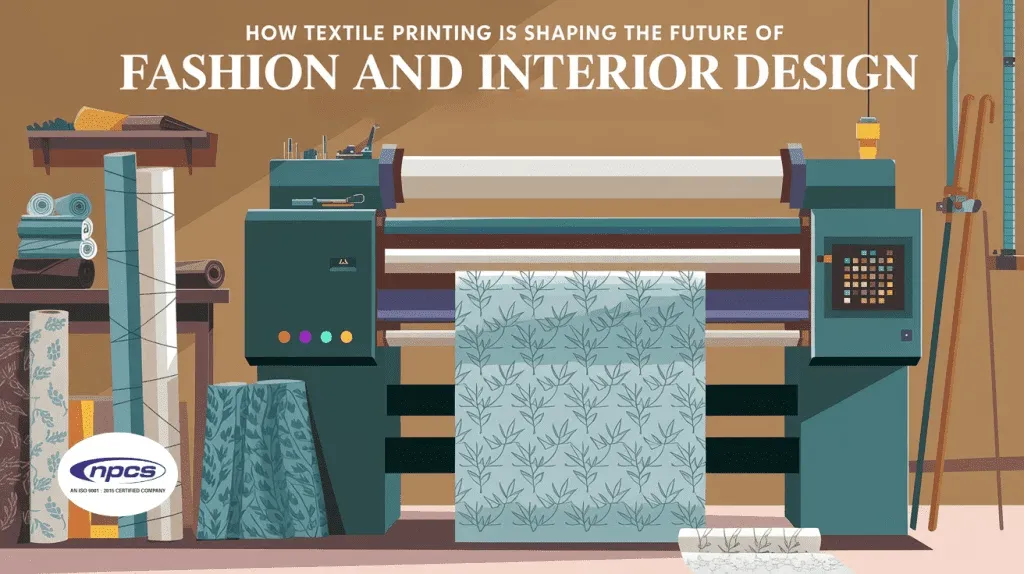
Textile printing is always vital to the fashion and interior design industries. In time, this technique has evolved to the modern-day methods of creativity. One of the roles that textile printing plays is in expressing style and innovation through the use of textiles in how they are used. In this blog, we’ explore how textile printing is redefining the boundaries of fashion and interior design. To help see how these techniques impact the worlds of fashion and printing, we’ explore some of the latest printing methods, like digital textile printing, screen printing, and block-printed fabrics. What is textile printing? Textile printing is the art of colouring fabric in some designs. Various techniques are used to design the fabric so that it is uniformly covered with the desired pattern. This art form has come a long way from ancient blocks used for block-printed fabrics to modern digital textile printing. Our main goal is to produce exciting and high-quality textiles for clothing, upholstery, and other design purposes. Today there are many printing methods for different needs. Screen printing, roller printing, and transfer printing are among these, all of which can produce unique effects on textile fabrics. One method is preferred for a certain fabric and other design requirements, and the other has its own set of advantages. What Popular Textile Printing Techniques Exist? Although a large number of textile printing techniques can be broadly categorised under traditional and modern techniques, some of the most popular ones will let’s take a closer look at. Screen Printing Screen printing is one of the oldest and one of the most reliable printing methods because it involves pressing ink through a screen onto the fabric. Many use it for bold designs, and it’s a favourite for the production of t-shirts and fashion accessories. The method is suitable for polyester fabric since the colour is vibrant and durable. Digital Textile Printing Digital textile printing has changed the industry. That’s its quick turnaround + high-quality print. Unlike traditional printing with leads on digital textile printing, it prints straight on fabric using a water-based ink. It is particularly well known as a method that, with little waste, makes intricate designs and thus is both environmentally friendly and economically viable in the long run. Roller Prints Engraved rollers are used in this technique of printing fabric. Roller prints are ideal for large-area fabric production because you can cover large areas of fabric quickly. However, roller printing is more prevalent in industrial settings, and for that reason, it provides a consistent, smooth finish that is extremely suitable as a mass-producible fashion item. Also Read Textile Industry. Cotton Fabric Manufacturing Business Uttar Pradesh’s Push Towards Textile and Apparel Industry Block-Printed Fabrics For centuries, artisans have been using wooden blocks to handprint fabric. With block printing, intricate and unique patterns are generated in this traditional technique. Block printing is a slower process, but it does allow for artistic exploration your machine would never be able to capture. Transfer Printing In the case of transfer printing, for example, designs are printed first on special paper using ink and transferred to fabric using heat. The technique works well with polyester fabric and fabricated other synthetics. Particularly used in fashion and sportswear for full-colour graphics, transfer printing is very popular. How Textile Printing Influences Fashion Textile printing is a game changer in the fashion industry. To be in style, designers do use various printing techniques to make fabrics. With digital textile printing, we can innovate in ways that were previously unavailable in fabric design. With traditional methods, designers could manipulate only simple patterns or gradients, but not photographic prints or complex pattern combinations, and now they have that possibility. Project Reports Manufacturing of Disposable Personal Protective Equipment (PPE) Kit HDPE PP Woven Sacks Spinning Mill Business | Most Profitable Textile Spinning Business Business Plan for Polyester Textured Yarn from Used Pet Bottle Fabric printing makes it possible for fashion brands to show their creativity; printing fabric allows them to bring out all their ideas on the paper. Today you can see most of the fashion collections with block prints, roller prints, and digital prints, which give extra glamour to the garment. A digital textile printing example would be to reproduce photographs or art onto fabric so that designers can explore the extent of boundary-pushing art that can be applied to fabric. Additionally, it provides smaller fashion brands with a cost-effective means to produce personalised designs in a low volume. These changes mean that all this, in turn, means fashion is becoming rather more personalised and diverse. Sustainability in Fashion In addition, Fabric production has increased use of cleaner, water-based ink and digital printing. These print processes used chemicals, and they consumed a lot of water, but the modern print process uses fewer chemicals and is so much easier to go green for brands. Textile Printing in Interior Design. Textile printing’s reach is far beyond fashion into interior design. There is a vast use of printed fabric in furniture, curtains, and home decor. These materials can be printed with intricate designs; therefore, interior designers can create customised, unique decor for clients. Of course, one of the popular trends is using textile printing to create statement upholstery pieces. Interior designers can express a certain style by working with printed fabric, from bold floral patterns to minimalist geometric designs. That plain polyester fabric can be turned into an eye-catching feature in any room by textile printing. Personalized Home Decor Textile printing is now bringing personalised home decor within reach of many more people. With digital textile printing, designers can print custom patterns or complete custom fabrics. That’s helped a lot with creating one-of-a-kind things: cushions, bed covers, and wallpaper. Also, it is used to generate eco-friendly products. Sustainability is now a given in interior design and in the printing of portfolios and books. Water-based ink and digital methods cut the amount of waste and chemicals used in traditional printing methods. Our Books Modern Technology of Textile Dyes &
The Evolution of Textile Printing: From Traditional Methods to Digital Innovation
Textile printing has progressed since its early history. Today, it has become one of the most important parts of the world textile industry and is used to make beautiful and functional designs for fables. A user increasingly conspired embroidery and systematically developed from natural techniques of textile printing to modern digital techniques. This transformation helps make the process faster, more efficient, and designs of higher quality. In this blog, we will discover the history of textile printing and how it has changed. In this, we will look at traditional printing methods, the birth of digital textile printing, and how they are changing the industry. Let’s dive in! What is textile printing? Textile printing is the art or technology of applying colour and designs to fabric using various principles. The aim is to make patterns or designs on textiles such as cotton, polyester, or silk. Hand printing with wooden blocks or rollers had traditionally been done by printing manually; however, with modern technology, these techniques have either been replaced or improved by machines. Today, textile printing is becoming common in fashion, home decor, and industrial products. The designs are uniformly over the fabric by using different printing methods. They can be simple or they can be complex, just based on the technique you use. Traditional textile printing methods: Textile printing was done by hand for centuries. In the following, we take a quick look at several of the traditional methods that helped to get us to where we are today, modern printing. Block Printing One of the oldest printing methods in history is block printing. In this technique, we cut designs on wooden blocks and press them on the fabric dipped in dye. The fabric is replicated in a repetitive manner with the design. Many times we see block-printed fabrics being used in traditional Indian clothing like sarees and scarves. The design runs very detailed; you can notice the handmade look of the fabric. Roller Prints Traditional printing is done by roller printing. Such a technique is using engraved rollers rather than wooden blocks. The engraved rollers are held in a central cylinder, and the design is transferred onto the fabric. The results can be produced faster than block printing, and continuous patterns can be produced, running the length of a long run of fabric. Commonly, rolled prints are used for the mass production of a printed fabric. Screen Printing There is another traditional method of textile printing—screen printing. In this technique, a stencil (or screen) is created with a desired pattern. That screen is then shoved through the ink (with a squeezer). This is a still-used technique for more intricate printing, and it is used particularly for printing on T-shirts, bags, and other things. Also Read Textile Industry. Cotton Fabric Manufacturing Business Uttar Pradesh’s Push Towards Textile and Apparel Industry Textiles: Project Opportunities in Gujarat The rise of digital textile printing The year is recent, and digital textile printing enters the stage to make the old textile industry born again. Digital textile printing is different from traditional methods, where water-based ink and advanced technology are used to print the designs on fabric directly. We’ll look at the benefits and its innovations. Precision and Detail One of the main advantages of digital textile printing is its accuracy. Unlike stencils or blocks, digital printing uses a computer to tell the printer what to do. This enables very detailed designs and intricate grey scales that can’t be achieved using other techniques. Digital printing is also more flexible. It can print in polyester fabric or cotton fabric without any additional tools and in any colour or design. Designers have the luxury of new and creative ideas by allowing this flexibility. Efficiency and Speed The digital textile printing is faster than other methods. You do not need to make screens, stencils, or engraved rollers. Directly onto the fabric, the printer saves time, and there is no waste. It is just perfect for small batch production or customised designs. Digital textile printing’s other advantage is that it uses water-based ink, which is a more eco-friendly ink than the inks used in traditional printing methods. It has consequently helped in reducing pollution and waste in the textile industry. Customization and Short Runs Digital textile printing makes it possible to print designs on demand. That is, customers can order small quantities of custom-designed fabrics. Large minimum orders are typical of traditional printing methods, while digital printing enables long runs—and even some limited quantity production. This opens up new opportunities for businesses and designers to make new and special products without large inventories. Reduced Environmental Impact With everyone focusing on sustainability, digital textile printing is an attractive option. It reduces water consumption, energy use, and chemical waste. It also gets rid of the need to print screens, stencils, and gum tragacanth, as with traditional methods. Our Books Modern Technology of Textile Dyes & Pigments (2nd Revised Edition) Handbook on Textile Auxiliaries, Dyes and Dye Intermediates Technology The Complete book on Natural Dyes & Pigments Modern Technology of Paints, Varnishes & Lacquers (3rd edition) Innovations in Textile Printing: What’s Next? Textile printing is becoming part of the world. So, let’s see some of the interesting developments in the industry that will definitely lead to the future of the industry. Dye Sublimation Printing done by dye sublimation is a technique through which cloth receives dye by heat. This process helps make the ink a gas and has it bond with the fibres of the fabric. Use for printing on polyester fabrics and dye sublimation often gives very bright, lasting colours. One of the best ways to print fabric is with this method because the prints are high quality, don’t bleed, and don’t fade easily, and it’s particularly popular for sportswear, flags, and banners. This vibrant colour and durability make it a good selection for the frequent use of repetition items. Also Read Start Flourishing Business of Manufacturing Readymade Garments (T-Shirt). How to start a clothing manufacturing business? The Textile and
The Evolution of Textile Printing: From Traditional Methods to Digital Innovation
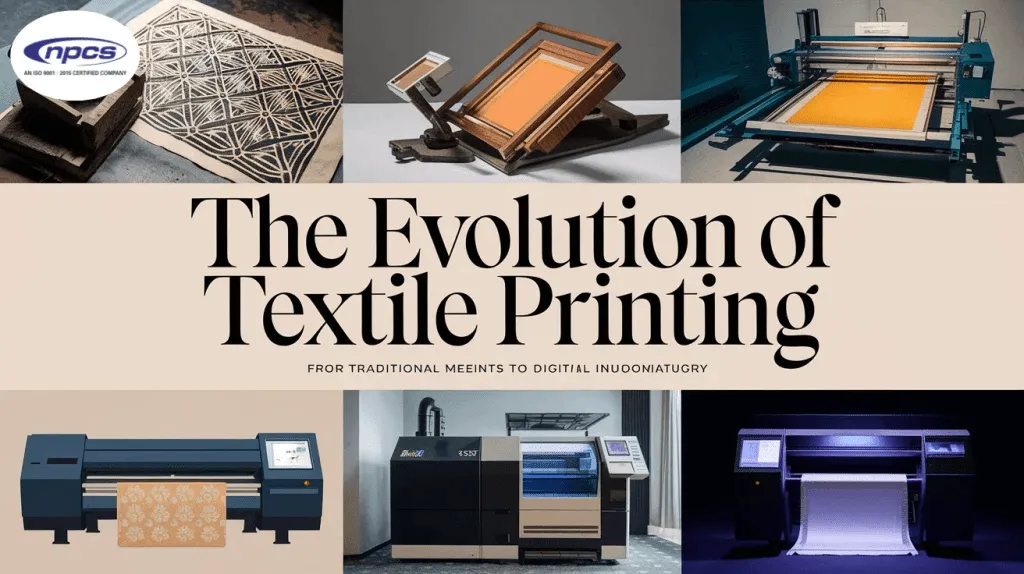
Textile printing has undergone a greater evolution than in its early days. Nowadays, this process is one of the industries’ most important parts; it helps make beautiful and convenient designs on fabrics. Textile printing has gone from the manual to another international aspect from these traditions. The process has become faster, more efficient, and capable of producing higher-quality designs. In this blog, we shall look into the history of textile printing. In this, we will be discussing the advantages of traditional printing methods, new digital textile printing, and its impact on the industry. Let’s dive in! What is textile printing? Textile printing is the application of colour or designs to fabric using many techniques. The aim is to produce patterns or designs on textiles such as cotton, polyester, or silk. Printing used to be done by hand with wooden blocks or rollers, but now we’ve replaced (or supercharged) that with machines. Textile printing has found its way in fashion, home décor, and as industrial products. There are designs covering the fabric that have different printing methods or ways of doing it. The technique used determines how simple these designs can be, or complex. Traditional textile printing methods Textile printing was done by hand for centuries. So let’s explore a glimpse of the traditional methods that marked the foundation of modern printing. Also Read Textile Industry. Cotton Fabric Manufacturing Business Uttar Pradesh’s Push Towards Textile and Apparel Industry Indian Textile Market and Business Scope for Entrepreneurs Top Opportunities in Technical Textile Sector Block Printing Block printing is one of the oldest printing methods known to history. The technique uses wooden carvings to drill designs onto, then dye them, and use the design as a frisket to ‘ink’ onto the fabric. The fabric is designed as a repetitive transfer of the design. Traditional Indian clothing sarees and scarves use block-printed fabrics. The design is usually extremely detailed and gives the fabric an incredibly handmade look. Roller Prints It is a more developed version of traditional printing. The technique uses engraved rollers instead of wooden blocks. Using a central cylinder providing the engraved rollers, the design is transferred onto the fabric. It is faster than block printing, and it can make continuous patterns along a long run of fabric. For the mass production of printed fabrics, roller prints are used very frequently. Our Books Modern Technology of Textile Dyes & Pigments (2nd Revised Edition) Handbook on Textile Auxiliaries, Dyes and Dye Intermediates Technology The Complete book on Natural Dyes & Pigments Modern Technology of Paints, Varnishes & Lacquers (3rd edition) Screen Printing Another traditional method of textile printing is screen printing. Another technique uses the stencil (or screen) to have the desired pattern. The squeegee pushes the ink through the screen and onto the fabric. Another print technique that offers more complex designs than block printing is this one and is still commonly used to print on T-shirts, bags, and the like. The Rise of Digital Textile Printing Recently, digital textile printing has significantly transformed the textile industry. Digital textile printing is different from traditional printing in that it uses water-based ink and advanced technology to directly print designs on to fabric. Now’s where we explore the benefits and innovation of that new approach. Precision and Detail Precision is one of the main advantages of digital textile printing. Unlike stencils or blocks, digital printing is controlled by a computer when information is sent to the printer. By letting you use very detailed designs and patterns, they also make it impossible for us to achieve with other methods. Digital printing is also more flexible. Without additional tools, it can print polyester fabric or cotton fabric in any colour or design. It is a great flexibility for designers to practice with new and creative ideas. Efficiency and Speed These methods of printing are faster than the traditional methods of printing. You don’t need to draw screens, stencils, or engraved rollers. It prints directly onto fabric so the bits of paper waste and wasted time are saved. Digital printing is ideal for small batch production or customised design since this makes printing kind. This digital textile printing is also a benefit because water-based ink is used instead of traditional inks, which are less eco-friendly. That’s why it reduces pollution and waste in the textile industry. Project Reports Manufacturing of Disposable Personal Protective Equipment (PPE) Kit Spinning Mill Business | Most Profitable Textile Spinning Business Business Plan for Polyester Textured Yarn from Used Pet Bottle Customization and Short Runs Digital textile printing enables the printing on demand. Small quantities of fabric customers can order is what this means. The digital printing, on the other hand, is more flexible since it has no minimum order required and allows you to print anything, as well as long runs or even single pieces. This has allowed new business and designer opportunities to open to create unique products without the requirement of keeping large inventories. Reduced Environmental Impact With the world’s stepped-up sustainability efforts, digital textile printing is an attractive way to replace traditional approaches. Digital printing cuts water use, energy, and waste generation. But it also does away with the need to print screens, stencils, and gumtragacanth that traditional methods rely on. Digital textile printing is an eco-friendly choice in fabric production due to these innovations. Innovations in Textile Printing: What’s Next? Textile printing is still evolving around the world. In fact, let’s look at some of the really innovative things that are making the industry come alive. Dye Sublimation This dye sublimation printing technique is a process of transferring dye to the fabric through heat. By allowing the ink to become a gas and then bond with the fibres of the fabric in the printing process, this enables it. Printing on polyester fabrics using dye sublimation is common and will result in vibrant, long lasting prints. This is a very popular method for sportswear, flags, and banners, as you get very good-quality prints that don’t fade easily. That
Challenges in Textile Exports: Overcoming Barriers and Increasing Competition
There are plenty of growth opportunities in this world of textile exports, and countries like India are doing very well. Despite so many challenges, exporters find it difficult to navigate this competitive and complex market. Indian textile companies must overcome these to thrive in the global marketplace. In this blog, I will explore some of the key challenges for textile exports and some strategies to overcome them. Key Challenges in Textile Exports High Production Costs and the Lack of Infrastructure The high cost of production is one of the biggest challenges that the textile exports sector of India is facing. All of these factors make the manufacturing even more expensive through expensive raw materials, labour costs, and a lack of advanced technology. Yet this is proving a downfall for Indian textile companies, as it is too difficult for them to take on other low-cost countries like China and Bangladesh. Furthermore, the Indian textile industry normally lacks the required infrastructure. Secondly, the production and delivery processes are slowed down by a lack of proper transport, storage, and supply chain systems in many regions. This translates directly to the ability to satisfy global buyer demands on time. Also Read Textile Industry. Cotton Fabric Manufacturing Business Uttar Pradesh’s Push Towards Textile and Apparel Industry Textiles: Project Opportunities in Gujarat Indian Textile Market and Business Scope for Entrepreneurs Top Opportunities in Technical Textile Sector Applicable complex export regulations and tariffs Regulatory hurdles also face Indian textile exports. Yet India is a big exporter of textiles and garments, and one that must contend with the advance of complex export regulation rules. The customs procedures, duty structures, and tariffs such countries impose must be known to exporters. If paperwork or documentation is miscalculated, it results in delays and delays in business relationships. In addition, global tariffs and traded barriers are a major obstacle in the way of Indian exporters. These tariffs make it more difficult for exporters to charge competitively for their products. Secondly, the benefits of free trade agreements (FTAs) between other countries to Indian textile and apparel exports may not always be the same. Quality Standards and Certification Indian textile exports have to meet the high quality standards as they are looking to make inroads into international markets. But there is an inconsistent quality control across regions. Poor standards and uniformity of production often mean that the Indian textiles produced are subpar and can damage the international reputation of them. For example, countries such as the U.S. and European Union have very strict ways of operating with the product and have certain guidelines, such as safe and ethical manufacturing of their products as well as sustainability. However, for these quality standards to be met consistently by Indian exporters to gain trust and grow their share in these markets, this needs to be done. Our Books Modern Technology of Textile Dyes & Pigments (2nd Revised Edition) Handbook on Textile Auxiliaries, Dyes and Dye Intermediates Technology The Complete book on Natural Dyes & Pigments Modern Technology of Paints, Varnishes & Lacquers (3rd edition) Competitors from Other Countries The textile sector was on a competitive basis. India competes very stiffly with other countries such as China, Bangladesh, and Vietnam, which are also key exporters of textiles and garments for India. But these countries provide lower production costs, advanced technologies, and better infrastructure than India. Indian exporters need to differentiate themselves to succeed. If they focus on premium quality, innovative design, and sustainable production, they can have a unique position in the global market. According to textile manufacturers, building a strong export strategy can be achieved through collaboration with organisations like the Export Promotion Council. Supply Chain Disruptions The supply chain is vital for the textile and apparel exports sector. Sadly, textile exports are poorly aligned with supply chain disruptions. The delivery schedule is often delayed due to factors like global supply chain, raw material shortage, and transportation delay. In the last few years, the COVID-19 pandemic highlighted the fragility of global supply chains. With India recovering from these effects of the pandemic, the textile industry has to adapt to it, meaning strengthening of the domestic supply chain and expanding of the supplier base. Project Reports Manufacturing of Disposable Personal Protective Equipment (PPE) Kit HDPE PP Woven Sacks Spinning Mill Business | Most Profitable Textile Spinning Business Business Plan for Polyester Textured Yarn from Used Pet Bottle Strategies to Overcome the Challenges in Textile Exports: Place a bet on Technology and Innovation Upgradation to new technologies can help Indian textile exporters in reducing cost & improving quality. Automation, digital printing, on the other hand, and artificial intelligence can be used to increase efficiency in manufacturing processes. A reduction in the impact of high labour costs on the competitiveness of the Indian textile companies is possible by increasing the efficiency of production. Finally, they are also growing in demand for a variety of technical textiles, including performance fabrics and smart textiles. However, to avail of these advantages, innovators, Indian exporters can embrace these innovations to create higher profit margins by tapping into new markets. Focus on regulatory process To overcome the challenge of complex export regulations, Indian textile exports must partner with the Confederation of Indian Textile Industry (CITI) and the Exports Promotion Council. Exports can also benefit from these organisations to help ensure that they remain on top of the regulations and know how to be compliant. The process will be made simpler to the extent that documentation, customs clearance, and export licensing will be eased. For example, countries like the U.S. and the EU need to be certified to have textiles meet specific environmental and labour standards. Indian exporters can also access high-value markets that want premium brands of products when they meet these requirements. Focus on Sustainability The global textile market is today largely governed by the idea of sustainability. More and more buyers from all over the world are searching for textiles based on eco-friendly and sustainable production. After all, Indian textile exporters can