
How to Set Up a Profitable Agro Processing Cluster
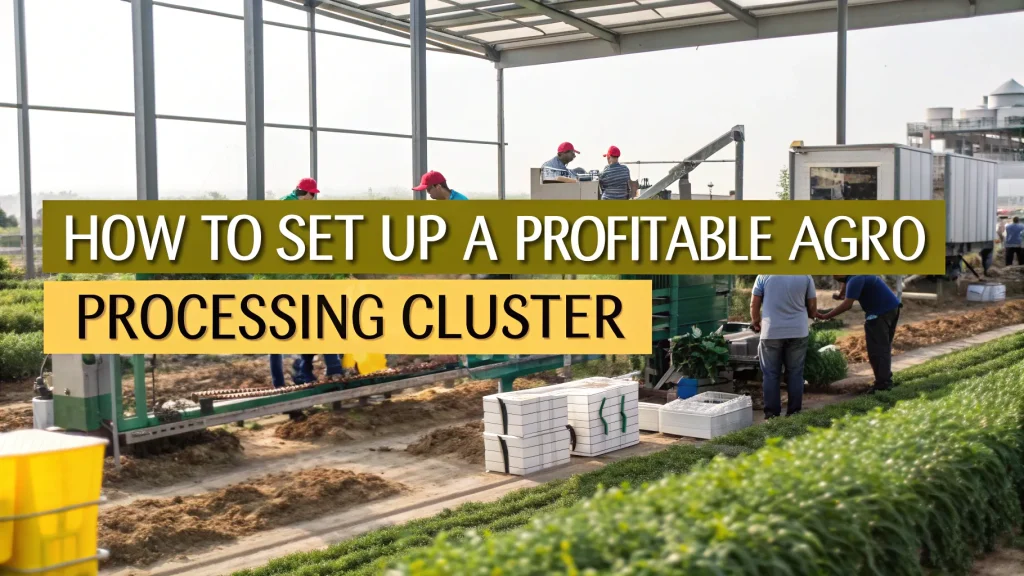
India’s agricultural economy is significant, yet some of the value-added potential is lost due to insufficient investment in agro processing infrastructure. Establishing a value-added agro-processing cluster can powerfully augment rural economies, reduce excess production, and substantially increase incomes for farmers. With proactive government policies, increasing domestic and international markets for processed foods, and improving logistics, the time is now for entrepreneurs to invest in this sector. This article discusses the most important building blocks of a successful agro-processing cluster and touches on the basic infrastructure and financing requirements, policies needed for support, and more. It is targeted towards the agro-industrial revolution prospective investors, MSMEs, and industrial startups in India. What is an Agro Processing Cluster? An agro-processing cluster is a zone which contains food processing units, primary processing, cold storage, and their supporting infrastructure, which are located geographically close to each other to facilitate and perform reasonable logistical costs. Key Features Common facilities for several units Integration of the entire value chain (from farming to packaging) Job creation for rural youth and women Connections with suppliers and markets for both purchasing and selling Agro-processing clusters are usually set up under the Pradhan Mantri Kisan SAMPADA Yojana (PMKSY), which is administered by the Ministry of Food Processing Industries (MoFPI). Related: Top 10 Government Schemes for Food Processing Startups in India Why Invest in an Agro-Processing Cluster? MoFPI Annual Report 2022-23 states: The Indian food processing industry stands at ?26.82 Lakh Crore (USD 407 Billion). It contributes 8.45% of GVA in agriculture. The food exports stood at USD 46.43 billion in 2023-24. Over 12 Lakh people have been provided employment through PMKSY schemes. These statistics provide strong agro-industrial growth potential. Forecasted CAGR for Food Processing Sector (2023–2027): 6.5% Forecasted CAGR for Value-Added Agri Exports: 7.3% A well-structured cluster model reduces raw material waste and establishes a self-sustaining profitable ecosystem. Steps to Establish a Profitable Agro-Processing Cluster 1. Identify the Area and Raw Material Resources Conduct an agri-resource survey of the region. Select areas with high potential for perishable or value addition crops such as mango, tomatoes, paddy, millets, etc. Be near the mandis and farm-gate for ease of access. 2. Choose the ODOP Product Under the PMFME and ODOP schemes, every district is assigned one focus crop or product. Some examples include: Chili in Guntur, Andhra Pradesh. Pineapple in Wayanad, Kerala. Mango in Ratnagiri, Maharashtra. Building the cluster around the ODOP ensures subsidy convergence and demand. 3. Determine the Required Infrastructure Primary Processing Centers: Sorting, grading, pulping Cold Chain Units: Connected ripening chambers, cold storage, refrigerated trucks Value Addition Units: Canning, bottling, and dehydration Common Facility Centers: Quality lab, packaging, effluent treatment, training room Related: The Agriculture Sector in India: Industry Overview and Business Opportunities for Agritech 4. Create a Special Purpose Vehicle (SPV) The cluster must be run by a registered SPV with private promoters, cooperative societies, FPOs, or SHGs. The SPV will: Maintain ownership and operation of the shared infrastructure Maintain communication and relations with government offices Oversee financing and company operations 5. Prepare a Techno-Economic Feasibility Report Analyze raw materials Determine product mix and processing capability Calculate investment cost and forecast ROI Design the layout and machinery setup for the plant Forecast demand for the market This step is critical to securing grant funds from the government and investment funding. Estimating Project Costs and Financial Layout Here’s a financial projection for a medium-sized fruit and vegetable agro-processing cluster. While the structure of cost for an agro-processing cluster varies by scale, this is an example structured around something more mid-tier: Component Estimated Cost (INR Crore) Land & Site Development 2.5 Building & Civil Construction 5.0 Plant & Machinery 8.0 Cold Chain & Logistics 4.0 Common Infrastructure 3.0 Working Capital (6 months) 2.0 Contingency & Misc. 0.5 Total Project Cost 25.0 Cr Capital grants of up to 35% of the eligible project cost and up to ?10 crore are available for common infrastructure under PMKSY. Employment and Economic Impact A mid-scale cluster has the ability to: Directly employ around 800–1000 people Support between 5000 to 20000 farmers Enhance farmer income by 40–50% through better price realization Promote women-led self-help groups and food micro-units Market Potential and Demand Forecast India is projected to reach a processed food market size of USD 535 billion by 2027. Availability of ready-to-eat foods, organically grown, ethnic cuisine is seeing unprecedented global demand, aiding export markets. Export Products from Agro Clusters: Mango pulp Frozen vegetables Pickles and chutneys Millets and ready mixes Spices and condiments Top International Markets: Middle East, ASEAN, USA, Europe, and Africa Challenges and Risk Mitigation Challenge Mitigation Strategy Seasonality of produce Contract farming and crop planning Infrastructure delays Phased execution with EPC contracts Market linkages Tie-ups with exporters and e-commerce platforms Quality compliance Establishing quality labs and certifications Government Support and Schemes PMKSY Agro Processing Cluster Schemes Capital grant up to 35% of cost with a maximum of INR 10 Cr Applicable for common facilities only Support for SPV-led models PMFME Micro Enterprises Credit-linked subsidy @35% for micro units Capacity building & seed capital for SHGs PLI Scheme for Food Processing Cash incentives for incremental sales and global branding NABARD Support Refinance food infrastructure projects Long-term loans for FPOs and rural enterprises Role of NPCS in Project Planning Niir Project Consultancy Services (NPCS) is a trusted name in preparing Market Survey cum Detailed Techno Economic Feasibility Reports which cover: Detailed manufacturing process Raw material sourcing Plant layout and infrastructure Cost estimation and financial modeling NPCS helps entrepreneurs assess the technical and commercial viability of agro-processing clusters and food units. Conclusion The Agro Processing Clusters hold great promise for the development of India’s food economy. They transform untapped rural resources into wealth, decrease food wastage, enhance exports, and create sustainable avenues of employment. Supported by ODOP synergies, government grants, and proper strategies, agro-based entrepreneurship can be both impactful and immensely profitable. With NPCS’s tailored strategies and mentorship, you can trust that venturing into