
Unlocking Growth in India’s Emerging High-Purity Nicotine Market: NPCS Launches Definitive Market Research Report on USP Grade Nicotine (2025–2034)
New Delhi, July 2025 — With increasing health awareness, regulatory changes, and booming demands for nicotine replacement therapy, India is poised to become a leader in the production of high-purity USP grade nicotine. Niir Project Consultancy Services has launched a comprehensive report based on data to address this potential opportunity. “India USP Grade Nicotine Market: Growth Rates, Size, Share and Drivers: Competitive Landscape and Forecast Up to 2034” This comprehensive market research report provides a strategic resource that is essential for manufacturers, investors, and healthcare companies. It also serves as a valuable tool for industry consultants, policymakers, and other stakeholders who are looking to gain clarity on a rapidly evolving niche. This report, based on primary and secondary research of extensive scope, identifies key market drivers, challenges, and opportunities in India’s multimillion-dollar pharmaceutical-grade nicotine market. A Market Overview of a Rapidly Growing Industry According to NPCS, the Indian USP Grade Nicotine Market was valued at USD 25.82 million in 2024. It is projected to grow with a robust growth rate of 7.70% to reach USD 52.14 million by 2034. This growth is driven by: What Makes This Report Unique? This report, unlike generic global market reviews, provides detailed, region-wise analyses of the Indian market. It also includes detailed projections for consumption, production, and growth across East, West, and Central India. Highlights of the Report: Why the Market Matters Nicotine USP meets United States Pharmacopeia standards. It is used widely in: India is one of the world’s largest tobacco producers and has a unique position to take advantage of its agricultural resources, technical expertise, and market knowledge to dominate this value-added sector. Until now, however, the lack of clear data and market insight has prevented many investors from investing confidently in this space. NPCS fills this gap with the most authoritative, practical, and useful guide for those interested in entering or expanding into this niche. Detailed Application Analysis The report offers actionable insights, such as: Each category includes trend graphs and data on consumption volumes, forecasts of value, and forecasts of future values. Geographic Hotspots: Regional Insights The study focuses on regional differences, including market performance, consumer patterns, and competitive dynamics. The supply chain capacity of each region, the production trends, and demand projections for that area are all meticulously described. View our Handbooks Industry Leaders and Competitive Landscape The report includes detailed profiles of India’s top USP Nicotine producers, including: The profiles include: This information is useful for anyone interested in the dynamics of partnership and competition, whether you are a buyer or a supplier. Regulatory, Export & Market Challenges NPCS provides a complete overview of: The reader is better prepared to make business decisions that are compliant with the data-backed analysis of policy and market dynamics. Who Should Read This Report? This report is a valuable resource for: Why NPCS? Niir Project Consultancy Services (NPCS) has over 20 years of experience in delivering high-quality market intelligence, feasibility reports, and DPRs for more than 10,000 projects. NPCS has an ISO 9001:2015 certification and a pan-India team of economists, technologists, and business analysts. NPCS has a track record of identifying emerging industry opportunities and empowering its clients with accurate data, reliable insights, and strategies that are ready for implementation. Order Your Copy Today The India USP Grade Nicotine Market Report 2025–2034 is now available in PDF format, featuring all tables, graphs, and company data. Contact: Email: info@niir.org Website: www.niir.org Buy our research report by clicking here Tap Into India’s Emerging Nicotine Opportunity This report is much more than just a report. It’s a launchpad for a pharmaceutical niche with high growth and little exploration. This NPCS report is a valuable resource for anyone seeking to establish a business that can thrive in the future. It covers everything from strategic planning to investment decisions.
How to Start a Profitable Vermicompost Business
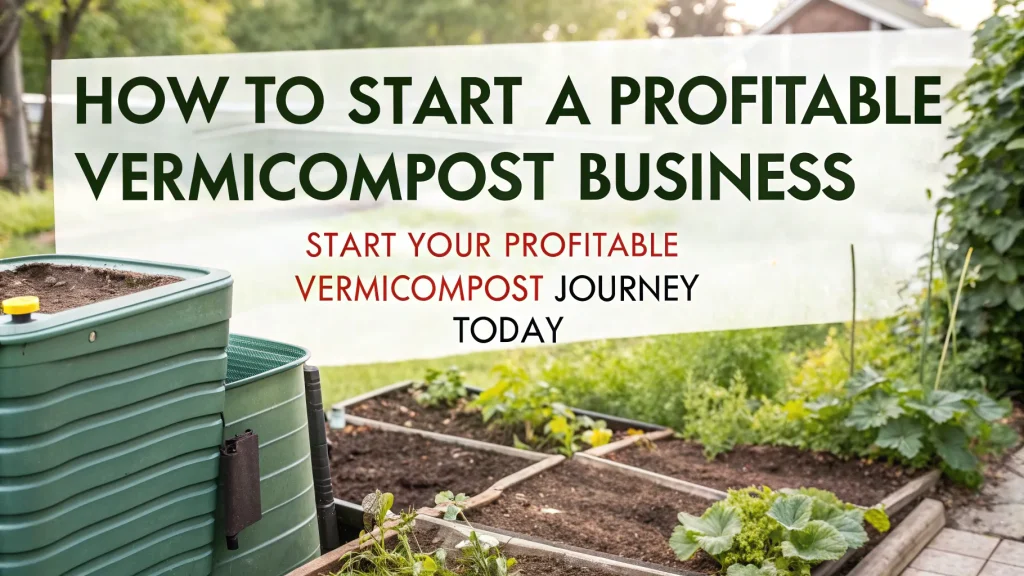
The international demand for sustainable agricultural methods, soil restoration, and waste recycling has accelerated the growth of the vermicompost business. Vermi composting used to be considered a low-tech rural venture, but it’s transforming into a scalable, organized business opportunity, especially in regions like India, where organic agriculture, horticulture, and waste management are national priorities. Entrepreneurs in the manufacturing or agri-input industry will make the most of establishing a vermi compost unit, not only for the return on investment but also because of its low entry barrier and alignment with climate-resilient practices. This guide provides critical industry trends and analyses, along with the production model, key raw materials, and their potential applications. Why Vermi Compost Is a Profitable Business in 2025 The use of compost and vermicompost in modern agriculture has been increasing along with the demand for organic inputs. Vermicomposting not only diverts organic waste but also provides nutrient-rich compost to farmers. In contrast, it’s much more effective in comparison to chemical fertilizers, which take a lot of time to break the soil and improve its structure, aeration, and water retention. The demand stems from three main forces: The organic farming boom – In India, the area of certified organic farming has increased vermi compost production tremendously over the past five years. Sustainable waste disposal – The use of decentralized organic waste processing systems funded by local governments is accelerating the use of vermicomposting. Export and horticulture sectors – Specifically, these sectors deal with high-value crops which include fruits, vegetables, and spices that need to be supplemented with premium-quality organic fertilizers to meet international standards for residues. Other than agriculture, vermicompost is gaining popularity for use in landscaping, urban gardening, and floriculture. This creates opportunities for industrial entrepreneurs to tap into numerous niche markets and at the same time aid in the environmental recovery. Related: How to Start a Profitable Vermicompost Business Market Demand, Growth Forecast, and Industry Outlook According to multiple agricultural and market intelligence reports, the Indian organic fertilizer market — of which vermi compost is a significant section — is forecasted to grow at a CAGR of 7–9% from 2025 to 2030. Furthermore, the rise in awareness in the farming community, along with government schemes under Paramparagat Krishi Vikas Yojana (PKVY) and the push towards Zero Budget Natural Farming (ZBNF), is increasing adoption on a holistic level. The market is also witnessing: Growing Interest from Urban Cooperatives and Eco-Villages Contract Farming Companies and FPOs (Farmer Producer Organizations) Shifting into Export-Oriented Horticulture and Spice Farms that are going organic Small-scale units in urban and peri-urban areas are selling packaged vermicompost to retail outlets for balcony gardens, nurseries, and organic food brands. These add-on segments are further diversifying the revenue streams for the producers. Why is Vermi Composting a Feasible Manufacturing Business Vermi composting is biologically driven, modular, and less complex. Unlike chemical fertilizers, which need heavy machinery, composting only needs organic material, composting organic waste, and certain species of worms, specifically Eisenia fetida or Eudrilus eugeniae. Both the compost feedstock and the market for vermicompost are scalable. The venture can start from a small modular setup of 1-2 acres, which can then be upgraded to a semi-automated production unit that has the capability to dry, sieve, and package. Continued agricultural waste supply (kitchen, garden, dairy, etc.) guarantees consistent production in output. This type of business also follows the principles of the circular economy by transforming waste into value-added resources, alleviating landfill burdens, and fostering sustainable agronomy. In agro-industrial areas, poultry, dairy, food processing, and even sugar mills offer ready streams of byproducts, which can be utilized as raw materials, thus lowering procurement expenses and improving margins. Manufacturing Process: Waste Transformation to Nutrient-Rich Compost Nutrient-rich humus can be obtained through the vermi composting process which involves the cultivation of earthworms on organic waste, which increases the value of the waste. 1. Pre-Treatment of Waste Cow dung, vegetable peels, and residue from crops, as well as leaves, are pre-processed by gathering and partially decomposed for around 10-15 days. This pre-emptive step yields compost that worms can consume. 2. Bedding and Layering Dried leaves and sand are also called coarse substrates and are important for enhancing the drainage as well as the aeration of the compost. Thus, a layer of this material is added as the base. On top of this, layer the pre-treated waste and earthworms. 3. Worm Processing and Composting To begin with, worms and their castings make up the main vermicompost feed dunked in 45–60 day cycles. They go through an aerobic stretching process that maintains a 60–70% moisture level. 4. Compost Extraction and Sieving When the compost reaches the desired dark granular structure, the earthworms can be extracted and reused through light or sieving techniques. Any lumps that have formed will be removed in the sieving step, and the finished product will be kept until packaging. 5. Product Packaging and Holding The finished product can be kept in bulk or 5-25kg bags until sent to retail stores and garden centers. Marking and labeling have a big impact on B2B customers. An additional value product can be made from the compost, called vermi-wash. This is a liquid extract enriched with bio-enzymes. Related: How to Start a Profitable Vermicompost Business Essential Features and Raw Material Sources Effectiveness can be improved by finding a place with direct access to composting agriculture or livestock zones. Consistent streams of organic waste products Labor and capital for manual sorting Effective road access for the inbound and outbound materials Valuable sources of raw materials may include: Dairy cow dung Organic materials from fruit and veggie mandis Poultry and agro-waste from sugarcane fields Sludge from food processing facilities (post-removal of non-organics) Key Operational and Regulatory Challenges and Solutions Focusing on the system failures of a specific vermi compost business can lead to a variety of opportunities. However, entrepreneurs should be aware of certain operational and regulatory hurdles. Inefficient Management of Waste Quality: However, churning organic waste