
India-Vietnam 13 MoUs: The Project Planning Framework Indian Entrepreneurs Need
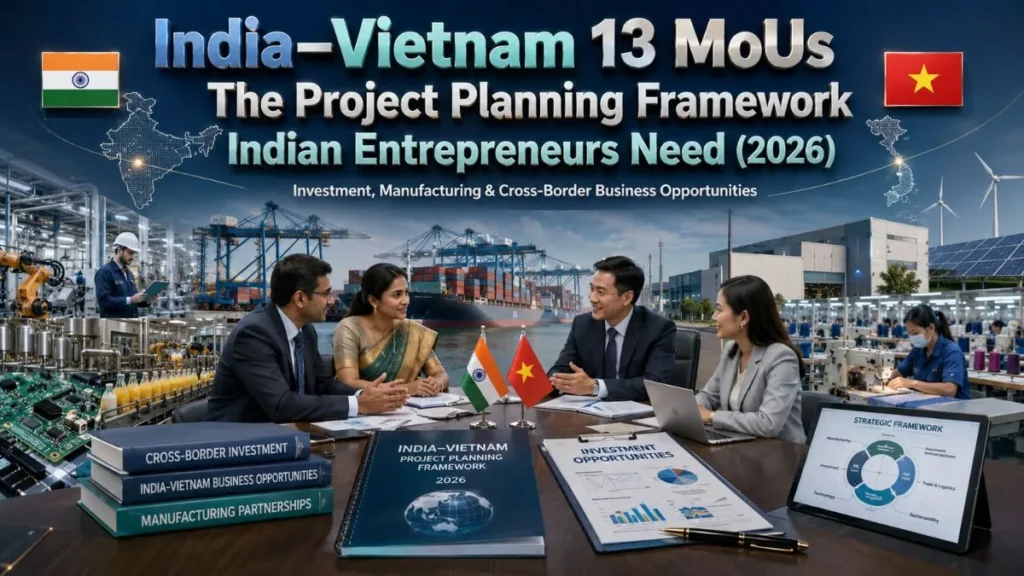
India Vietnam business opportunities The recent signing of 13 Memorandums of Understanding (MoUs) between India and Vietnam has been a great boost for Indian entrepreneurs to make a foothold in the fast-growing ASEAN markets. There are several industries open today from manufacturing to digital services, but not picking the industry that is popular this year will not bring success. Most entrepreneurs fall in failure due to the lack of proper evaluation, not due to the weakness of the opportunity. Structured planning techniques are very useful, such as NIIR Project Consultancy Services (NPCS). Related Article: India-Vietnam Trade Deal: 6 Manufacturing Projects Now Worth a Detailed Feasibility Study The Real Mistake Entrepreneurs Make The first thing you want to ask when you hear a trade deal is the question, “What business should I start?” That is a confusing question, it results in random searches and risky decisions. It probably would be better to ask, “Which opportunity is in my budget, location and skills?” This small change makes a huge difference! It makes you think practically, not emotionally. The majority of the projects that fail do so because of similar issues with them: Failing to identify the right trend to pursue due to a wrong sector selection. Too little capital investment and working capital Lacks of understanding of regulations No proper project documentation Typical errors occur at a later stage – when going for loans or when production begins. The Six Sectors: Where the Real Opportunities Are Six key sectors have been unlocked under the India–Vietnam agreement. There are varying degrees of risks and investments involved. Agri-processing is extensively regarded as the most approachable option. It is suitable for agricultural areas for entrepreneurs and is a steady demand. Rare earth processing is influenced by changes in the global supply chain and has a high export potential but needs a permit for the environmental processing. Pharmaceutical Production is a lucrative and complicated industry and it is so much required to be compliant. Renewables vs. Components for balanced growth with limited investment and, FinTech has a low cost, high scalability but strong competition. Defence manufacturing is at the top, and needs high capital investment and a long approval process. To make your life easier: Agri-processing: Best for beginners, stable demand Rare earth processing: High demand, moderate complexity Pharma manufacturing: High profit, high regulation Renewable components: Balanced growth opportunity FinTech: Low investment, high competition Defence manufacturing: High barrier, long-term returns Choosing the right sector depends less on hype and more on your situation. Get Detailed Insights from This Book: Drugs & Pharmaceutical Technology Handbook Why Proper Planning Matters More Than the Idea If you don’t plan an idea, it’s a risk. Many businessmen think that once they decide on a business, they will have success. But in truth execution is all. Through a proper evaluation, you can be sure that: All your raw materials are available Your location is conducive to logistics and exports. Your investment can help support early operations. All permissions and licenses are easy to deal with. That’s why it’s best to begin with a project report like this one to invest in someone’s expertise. These reports are created by organizations like NIIR Project Consultancy Services (NPCS) to minimize uncertainties. DPR vs Feasibility Study: Understanding the Difference You have to be sure of what you’re getting into before you invest and the best way to find out is with the proper paperwork. A Detailed Project Report (DPR) provides a comprehensive view of the industry. It provides an understanding of how the business operates, the costs associated with it and what to expect in terms of returns. This is the first and most critical step for most novices. A feasibility study delves further. Tailored for your strategy and can answer reasonable questions like ‘Is my position appropriate?’ and ‘Is my investment sufficient. In simple terms: You can learn about the business through the help of DPR if you are having problems. A feasibility study is used to validate your business. This step is frequently missed and results in future financial and operational issues. View Full Project Details: Renewable Energy Sector and Green Power Realistic Expectations: The Truth About Profits There are lots of entrepreneurs that start with a vision that is too great. They believe that they are able to grow quickly and make quick profits – something that is not common in manufacturing or exports. In reality: Businesses take time to reach full production Delays in payments, particularly in exports, can occur In the first couple of months, cash flow control is crucial. Better way to do it is to make a plan for gradual growth rather than immediate success. It’s more important to have stability during the first year than to expand aggressively. Common Mistakes That Lead to Failure Staggering opportunities are not being utilized because they are not being executed well. Here are some of the most frequent errors: Not accounting for working capital needs Overestimating first-year revenue Delaying regulatory approvals Choosing sectors without understanding operations The following are some of the pitfalls you should avoid to increase your odds of success. Choose the right startup backed by real market demand How NPCS Helps Entrepreneurs NIIR Project Consultancy Services (NPCS) has a rich experience of more than 45 years in providing assistance to the entrepreneurs for the planning and implementation of industrial project. Their support includes: Industry-specific project reports Techno-economic feasibility studies The participation of the bank in the financial planning and in the documentation of loans. Advice regarding equipment and standards These reports are a favorite of banks and financial institutions for funding and execution. A Simple Strategy to Choose the Right Sector Rather than over thinking, stick to a practical filtering approach: Use the amount of money that you have. Use the capital you have. Look at the advantages of your place. Think about place strengths. Evaluate your technical knowledge or experience This obviously limits your choices and enables you to concentrate on viable opportunities. Conclusion: Preparation Is