
Dairy and Milk Products Business Ideas: 5 Profitable Units to Start in India
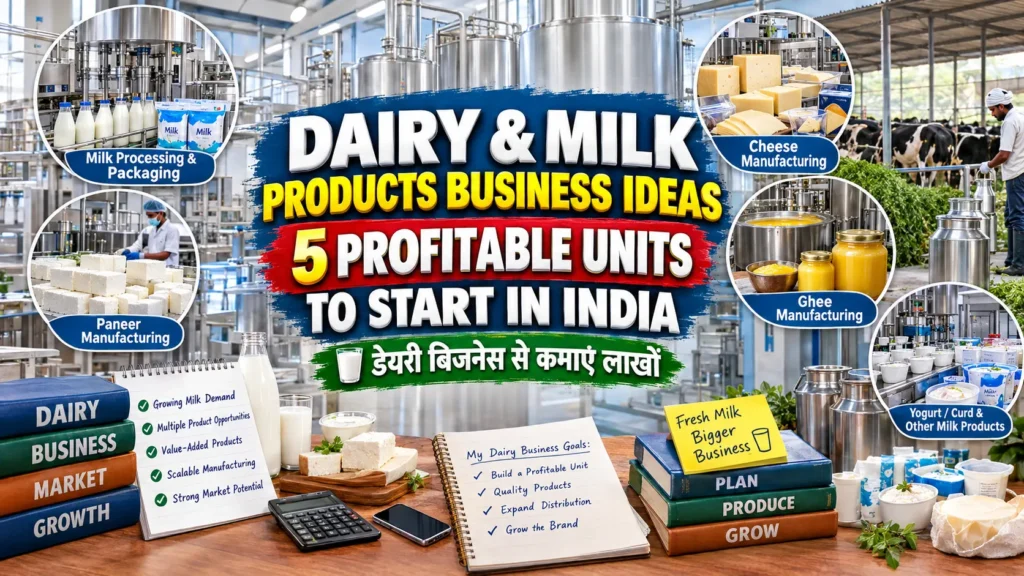
A consultant’s view of where India’s milk surplus meets rising value-added product demand. Dairy and Milk Products Business Ideas India produces more milk than any other country, yet a large portion of it is purchased as raw or minimally processed. The space in between is where dairy business ideas make the most economic sense. Rising incomes, awareness of nutrition, and export potential all drive demand for value-added dairy. A first-time founder, in particular, is rare to find such confluence. This article studies dairy as a feasibility consultant, weighing demand and real government support, plus five manufacturing routes, and charting trade openings and Indian success stories. Why Dairy Manufacturing Is a Reliable Business A Vast, Daily-Consumption Market Dairy products are consumed every day across every income group, making demand remarkably stable. Because the category spans milk, paneer, ghee, yoghurt, and ice cream, there are multiple entry points at varying price levels. Therefore, even a small unit can find a buyer segment quickly. Rising incomes skew consumption towards branded, value-added products, which has margins over raw milk. A founder processing milk into higher-value products captures this trend directly. Government and Cooperative Support Dairy is one of India’s most policy-supported sectors. The National Dairy Development Board (NDDB) and Ministry of Animal Husbandry, Dairying and Fisheries both provide scheme support, technical guidance, and market intelligence. Founders can tap into this ecosystem from day one. Government Policies and Incentives Multiple schemes back dairy investment, including the Animal Husbandry Infrastructure Development Fund (AHIDF) for long-term credit to dairy processing, and PM Kisan SAMPADA funding cold-chain and processing. MSME benefits flow through Udyam. States add their own support; for example, Rajasthan’s cooperative dairy federation helps small producers integrate into the supply chain. Quality and food safety compliance runs through FSSAI, and early licensing avoids operational delays. 5 Dairy and Milk Products Business Ideas for Startups Idea 1 — Paneer and Fresh Dairy Products Paneer is one of India’s most consumed dairy products, and its demand is rising in both households and food services. Because it is a daily kitchen staple, buyers reorder constantly. A founder producing fresh, consistent-quality paneer can get reliable, recurring revenue. Clean processing and cold chain are the core requirements. Starting out with local retail and foodservice distribution builds volume, and vacuum-packaging extends shelf-life and taps a bigger market. Furthermore, branded paneer commands a premium over loose product. A paneer unit that balances hygiene and consistency with smart local distribution can grow steadily in both urban and semi-urban markets. Idea 2 — Ghee Manufacturing Unit Ghee is a deeply trusted product with strong cultural and culinary roots across India. Demand is steady across income groups, and premium, authentic ghee commands significant pricing premiums. A founder producing pure, quality ghee can tap into both mass and premium markets. Consistent colour, aroma, and fat content drive buyer loyalty. Local sourcing of fresh cream or butter maintains raw material quality, and attractive, tamper-evident packaging lifts margins. Furthermore, export demand for Indian ghee is strong, especially in markets with large Indian diaspora populations. A ghee unit that combines authenticity with consistent quality builds a trusted brand with durable domestic and international demand. Idea 3 — Flavoured Milk and Beverages Flavoured milk and dairy beverages cater to a large, growing market of children and young adults. As packaged, ready-to-drink products, they fit modern retail and school distribution channels. A founder producing consistent-quality flavoured milk taps into both impulse and health-driven demand. Attractive flavours, clean packaging, and reliable cold chain are the core requirements. Starting with popular flavours builds volume, while premium and nutrition-enriched variants add margin. Furthermore, institutional supply to schools and canteens provides steady bulk orders. A flavoured milk unit that combines quality with wide cold-chain distribution grows quickly across urban and peri-urban consumer bases. Idea 4 — Milk Powder and Dairy Ingredients Milk powder and dairy ingredients cater to food manufacturers, bakeries, confectioneries, and export markets. Although raw milk supply fluctuates seasonally, powder stores well, stabilising margins. A founder drying surplus milk into powder creates value from a perishable and sells it year-round. Consistent composition and purity drive buyer trust. Starting with skimmed or whole milk powder builds volume, while specialty ingredients add margin. Additionally, export demand is strong, as Indian dairy powder competes well on quality and cost. A milk powder unit that combines reliable processing with good sourcing logistics builds durable domestic and international demand. Idea 5 — Yoghurt and Probiotic Products Yoghurt and probiotic dairy products are among the fastest-growing segments as health awareness rises. Because buyers seek gut-health and nutrition benefits, this premium category commands better margins. A founder producing consistent, quality yoghurt and probiotic drinks taps into a trend with strong, durable momentum. Clean cultures, precise fermentation, and reliable cold chain are the production essentials. Starting with plain and popular flavoured variants builds volume, while probiotic and functional products add margin. Furthermore, online and modern retail channels reach health-conscious buyers efficiently. A yoghurt and probiotic unit that pairs quality with clear health messaging grows quickly in this fast-evolving dairy segment. Import-Export Opportunity Analysis Dairy trade offers Indian founders clear export potential. Ghee, paneer, and milk powder all travel to diaspora markets and food manufacturers globally. Indian dairy is respected for quality and authenticity, giving genuine branding advantages. Export readiness requires meeting international food safety norms and cold-chain standards. Guidance from APEDA and FSSAI helps founders align early. Consequently, a unit designed for both domestic and export quality builds resilience. When one market softens, the other helps stabilise revenue. Indian MSME Success Stories Worth Studying Amul, built by the Gujarat Cooperative Milk Marketing Federation under Verghese Kurien, is one of India’s most celebrated business stories. Its cooperative model and quality focus turned farmer milk into a national brand. The lesson is that organised supply and trusted quality compound into extraordinary scale. Parag Milk Foods and Heritage Foods both scaled by expanding value-added product ranges and building modern dairy processing capacity. Many regional dairy MSMEs also built strong local brands. For new founders,