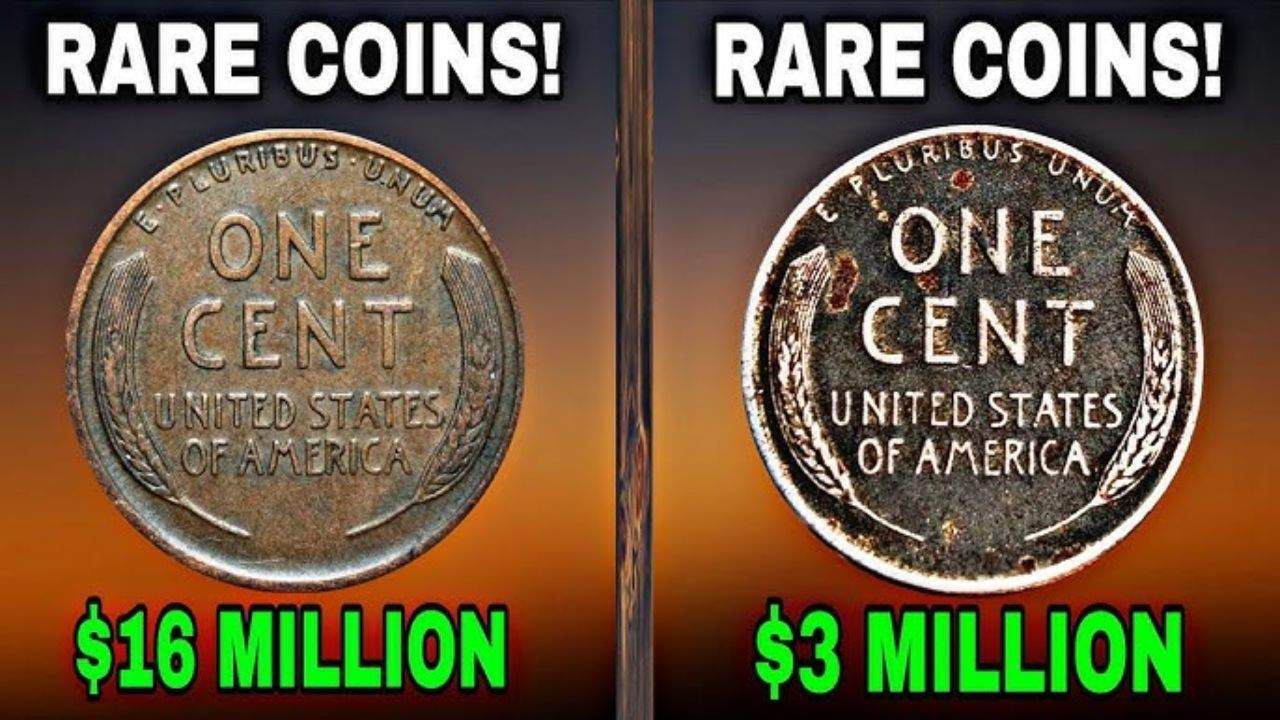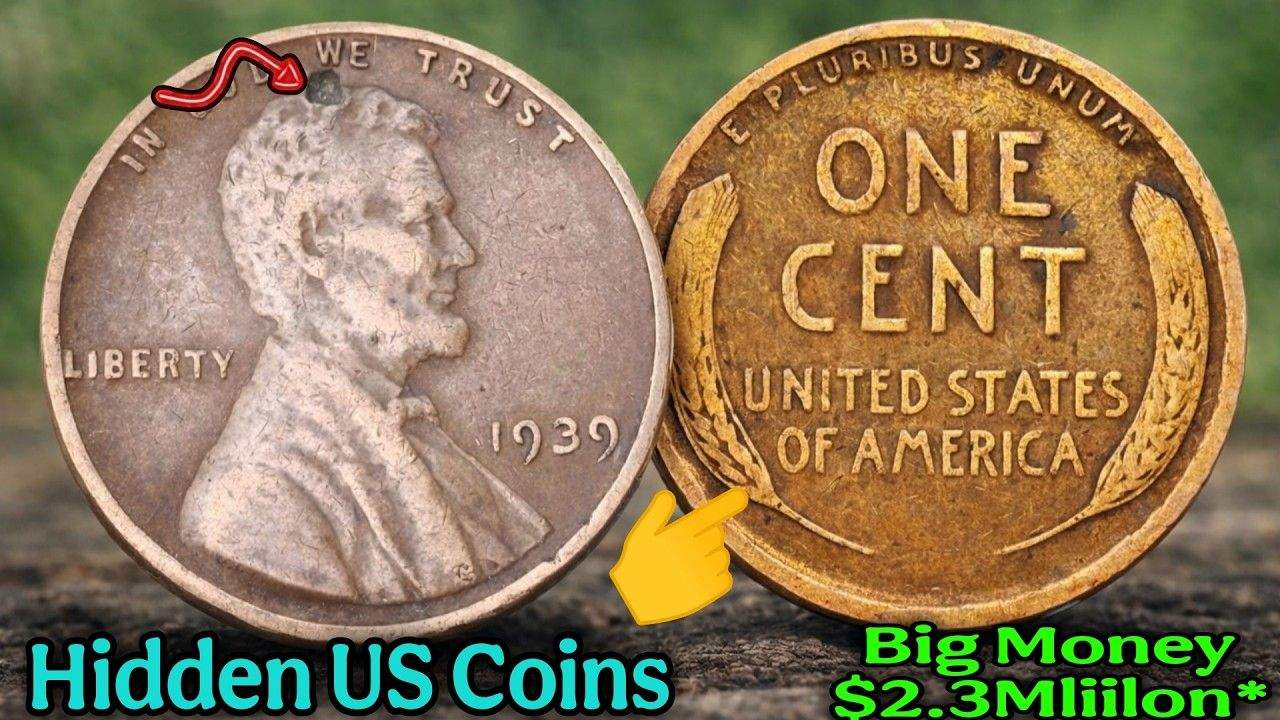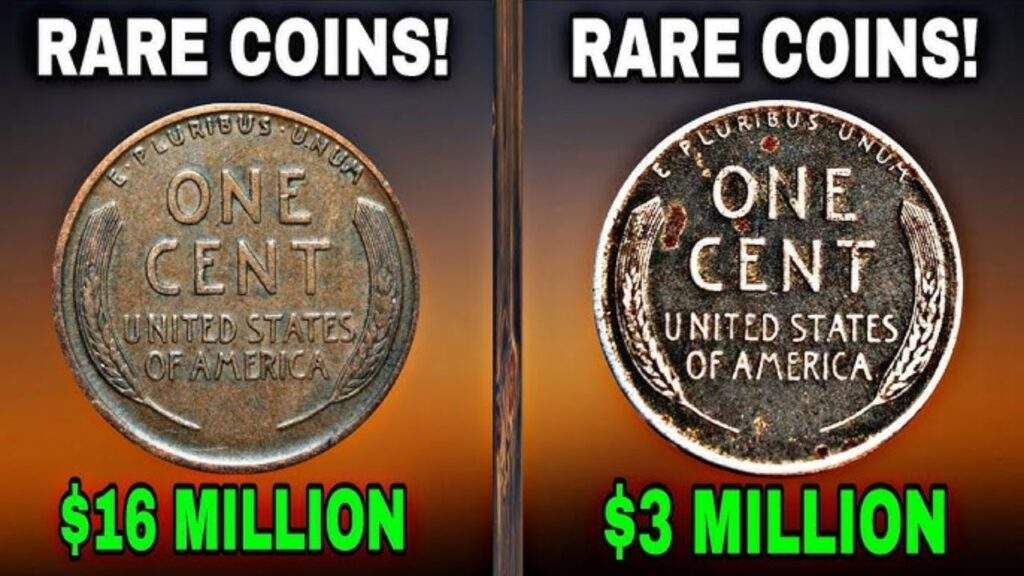

A penny is worth only one cent, right? Not always. Some rare pennies have sold for hundreds of thousands of dollars, while a few extraordinary examples have crossed the million-dollar mark.
The interesting part is that many of these coins do not look dramatically different from ordinary pennies. A small change in the date, mintmark, metal, or design can make an enormous difference. Some were created because of minting mistakes, while others are valuable simply because very few examples survived in excellent condition.
If you have old U.S. pennies at home, it can be worth checking the dates before putting them back into a jar.
Contents
- 1. 1. 1943-D Bronze Lincoln Penny
- 2. 2. 1944-S Steel Lincoln Penny
- 3. 3. 1958 Doubled Die Lincoln Penny
- 4. 4. 1943-S Bronze Lincoln Penny
- 5. 5. 1943 Bronze Lincoln Penny
- 6. 6. 1969-S Doubled Die Lincoln Penny
- 7. 7. 1955 Doubled Die Lincoln Penny
- 8. 8. 1909-S VDB Lincoln Penny
- 9. 9. 1922 No D Lincoln Penny
- 10. 10. 1914-D Lincoln Penny
- 11. 11. 1931-S Lincoln Penny
- 12. 12. 1909 VDB Matte Proof Lincoln Penny
- 13. 13. 1856 Flying Eagle Cent
- 14. 14. 1917 Doubled Die Lincoln Penny
- 15. 15. 1970-S Doubled Die Lincoln Penny
- 16. 16. 1972 Doubled Die Lincoln Penny
- 17. 17. 1995 Doubled Die Lincoln Penny
- 18. 18. 1992 Close AM Lincoln Penny
- 19. 19. 1999 Wide AM Lincoln Penny
- 20. 20. 1926-S Lincoln Penny
- 21. Top 20 Valuable Pennies at a Glance
- 22. What Makes a Penny Worth So Much?
- 23. Check the Date and Mintmark First
- 24. Look Closely for Doubled Letters and Numbers
- 25. Check the Metal on Wartime Pennies
- 26. Never Clean a Rare-Looking Penny
- 27. Condition Can Change Everything
- 28. Could One of These Pennies Make You a Millionaire?
- 29. Don’t Believe Every Online Penny Price
- 30. Thoughts
1. 1943-D Bronze Lincoln Penny
The 1943-D Bronze Lincoln penny is one of the most valuable pennies ever made. During 1943, the U.S. Mint normally produced Lincoln cents using zinc-coated steel because copper was needed for the war effort. A tiny number were accidentally struck on bronze planchets left over from the previous year.
The Denver example is especially rare, with only one known example. That extreme rarity has made the coin one of the biggest prizes in American coin collecting, with values potentially reaching well into the millions.
2. 1944-S Steel Lincoln Penny
The story changed in 1944 when the Mint returned to bronze for regular pennies. However, some leftover steel planchets from 1943 apparently ended up being used.
The 1944-S Steel penny is extremely rare, with only a very small number known. One high-grade example has sold for more than $400,000, while exceptional examples can command much more.
3. 1958 Doubled Die Lincoln Penny
The 1958 Doubled Die Lincoln penny is one of the rarest doubled-die pennies in existence. Only three examples are known, making it much rarer than many famous coin varieties.
The doubling is especially noticeable in parts of the lettering on the front of the coin. One exceptional example sold for $1,136,250 in 2023, making it the first Lincoln cent to break the million-dollar mark at auction.
4. 1943-S Bronze Lincoln Penny
The 1943-S Bronze penny is another wartime error that collectors dream about finding. Instead of being made from the normal steel planchet used that year, the rare examples were struck on bronze.
The San Francisco version is extremely scarce. A high-quality example has sold for more than $500,000, showing how much collectors are willing to pay for a genuine wartime wrong-metal penny.
5. 1943 Bronze Lincoln Penny
The regular 1943 Bronze Lincoln penny is also incredibly rare. A few examples from the Philadelphia Mint were struck on bronze planchets even though the standard 1943 cent was supposed to be steel.
These coins are among the most famous error pennies in the world. One high-grade example has sold for hundreds of thousands of dollars, and exceptional examples can be worth considerably more.
6. 1969-S Doubled Die Lincoln Penny
The 1969-S Doubled Die is one of the most valuable modern Lincoln pennies. The doubling can be seen on important parts of the date and lettering on the front.
Only a small number of genuine examples are known. One exceptional coin sold for $601,875, making this one of the most expensive regular-issue Lincoln cents ever sold.
7. 1955 Doubled Die Lincoln Penny
The 1955 Doubled Die is probably the most famous error penny among collectors. The doubling is easy to see on the date and lettering, especially when viewed closely.
Thousands of examples entered circulation, but finding one in excellent condition is much harder. A top-quality example has sold for hundreds of thousands of dollars, although circulated examples are worth considerably less.
8. 1909-S VDB Lincoln Penny
The 1909-S VDB is one of the most famous key-date Lincoln pennies. The coin was made at the San Francisco Mint and carries the initials VDB for designer Victor David Brenner.
Only 484,000 were produced with the S mintmark and VDB initials. High-grade examples can be extremely valuable, with one exceptional specimen selling for more than $345,000.
9. 1922 No D Lincoln Penny
The 1922 No D is one of the most interesting Lincoln penny varieties. No Lincoln cents were made at the Philadelphia Mint in 1922, so collectors expect a 1922 cent to have a Denver D mintmark.
Because of problems with the dies, some coins were produced with little or no visible D. Genuine examples can be worth thousands or tens of thousands of dollars, especially when the coin has strong details and excellent condition.
10. 1914-D Lincoln Penny
The 1914-D Lincoln penny is another major key date. The D indicates that it was produced at the Denver Mint, and only about 1.19 million were struck.
That number is small compared with many other Lincoln cents. Finding one in excellent condition is particularly difficult, which is why high-grade 1914-D pennies can command very high prices.
11. 1931-S Lincoln Penny
The 1931-S Lincoln penny is famous because only 866,000 were produced. That makes it one of the lowest-mintage regular Lincoln cents of the Wheat reverse period.
Many examples circulated heavily, so a well-preserved coin is much harder to find. A clean, original 1931-S with strong red color can be worth far more than an ordinary circulated example.
12. 1909 VDB Matte Proof Lincoln Penny
The 1909 VDB Matte Proof is different from the normal 1909 VDB penny because it was produced as a proof coin. Only a limited number were made.
The VDB initials and proof status make this coin especially desirable. A top example has sold for $258,500, placing it among the most valuable Lincoln pennies.
13. 1856 Flying Eagle Cent
The 1856 Flying Eagle cent came before the famous Indian Head penny and is an important part of early U.S. coin history.
It is much older than the Lincoln cent and was produced in relatively limited numbers. High-quality examples can be worth well over $100,000, although ordinary examples are worth much less.
14. 1917 Doubled Die Lincoln Penny
The 1917 Doubled Die is one of the important early doubled-die Lincoln cents. The doubling is visible in parts of the date and lettering.
Because the variety is relatively rare and the doubling can be identified when examined carefully, collectors actively search for it. High-grade examples can bring substantial prices.
15. 1970-S Doubled Die Lincoln Penny
The 1970-S Doubled Die is a valuable variety from the later Lincoln Memorial cent period. The doubling can be found on parts of the lettering and date.
Not every 1970-S penny is valuable, so the exact variety must be confirmed. A genuine doubled-die example in strong condition can be worth many times more than a normal 1970 penny.
16. 1972 Doubled Die Lincoln Penny
The 1972 Doubled Die is another popular variety that collectors look for. Strong doubling can appear on the date and lettering on the front.
The coin is much more valuable when the doubling is genuine and the condition is good. Machine doubling and ordinary wear can sometimes look similar, so careful examination is important.
17. 1995 Doubled Die Lincoln Penny
The 1995 Doubled Die is one of the better-known modern Lincoln penny varieties. The doubling is visible on parts of the lettering, particularly around “LIBERTY” and “IN GOD WE TRUST.”
Unlike the extremely rare wartime errors, this coin is more likely to be encountered by collectors. A normal 1995 penny is not automatically valuable, but a genuine doubled-die example can carry a significant premium.
18. 1992 Close AM Lincoln Penny
The 1992 Close AM is a fascinating modern variety. The important detail is on the reverse, where the letters A and M in “AMERICA” appear closer together than on the normal design.
Genuine examples are scarce, and high-grade specimens can be valuable. This is a coin where examining the small design details is much more important than simply looking at the date.
19. 1999 Wide AM Lincoln Penny
The 1999 Wide AM is another modern penny variety that collectors search for. The spacing between the A and M in “AMERICA” is the key feature.
Most 1999 pennies are ordinary coins, so finding the correct reverse variety is essential. A genuine example in excellent condition can be worth considerably more than its one-cent face value.
20. 1926-S Lincoln Penny
The 1926-S Lincoln penny is an important Wheat cent from the San Francisco Mint. Its original production was not extremely small compared with some famous error coins, but finding examples in very high condition is difficult.
A well-preserved 1926-S with strong original color can be worth a significant amount. This coin shows why condition can be just as important as the date itself when collectors determine value.
Top 20 Valuable Pennies at a Glance
| Rank | Penny | Main Reason for Value |
|---|---|---|
| 1 | 1943-D Bronze | Extremely rare wrong-metal error |
| 2 | 1944-S Steel | Rare wartime wrong-metal error |
| 3 | 1958 Doubled Die | Only three known examples |
| 4 | 1943-S Bronze | Rare wartime error |
| 5 | 1943 Bronze | Rare bronze planchet error |
| 6 | 1969-S Doubled Die | Extremely rare doubled die |
| 7 | 1955 Doubled Die | Famous major doubled die |
| 8 | 1909-S VDB | Key date and low mintage |
| 9 | 1922 No D | Missing mintmark variety |
| 10 | 1914-D | Important low-mintage key date |
| 11 | 1931-S | Very low mintage |
| 12 | 1909 VDB Matte Proof | Rare proof issue |
| 13 | 1856 Flying Eagle | Early and scarce U.S. cent |
| 14 | 1917 Doubled Die | Rare early doubled die |
| 15 | 1970-S Doubled Die | Scarce modern variety |
| 16 | 1972 Doubled Die | Major modern doubled die |
| 17 | 1995 Doubled Die | Valuable modern variety |
| 18 | 1992 Close AM | Rare reverse design |
| 19 | 1999 Wide AM | Scarce reverse variety |
| 20 | 1926-S | Scarce in high grade |
What Makes a Penny Worth So Much?
The age of a coin is only one part of the story. A penny can be more valuable because very few were made, because a minting mistake happened, or because most surviving examples are heavily worn.
The biggest factors usually include:
- Rarity and number of surviving examples
- Minting errors or unusual varieties
- Condition and original surface
- Date and mintmark
- Collector demand
A common penny from the same year may be worth only one cent, while a rare variety from that year could be worth thousands of dollars.
Check the Date and Mintmark First
If you have a collection of old pennies, start by checking the date. Then look for a small letter below the date or in another location depending on the coin’s design.
A “D” generally identifies the Denver Mint, while an “S” identifies San Francisco. A missing mintmark can sometimes be important, but it does not automatically mean the coin is rare.
For example, a 1922 penny with no visible D can be extremely interesting, while a modern penny with no mintmark may simply have been produced at Philadelphia.
Look Closely for Doubled Letters and Numbers
Doubled-die pennies are among the most exciting coins to find. The important thing is that true doubled dies show a specific type of doubling created during the die-making process.
It should not be confused with simple machine doubling, which can make letters or numbers appear slightly wider or flat. A genuine doubled-die variety needs to match the known characteristics of that specific coin.
This is particularly important for famous dates such as 1955, 1958, 1969-S, 1972 and 1995.
Check the Metal on Wartime Pennies
The 1943 and 1944 Lincoln cents deserve special attention because of their unusual wartime history.
Normal 1943 cents were made from zinc-coated steel, while normal 1944 cents returned to a bronze composition. A 1943 penny that appears bronze or a 1944 penny that appears steel should be examined carefully.
However, color alone is not enough to prove that a coin is rare. Coins can change color because of age, chemicals, environmental exposure, or damage.
Never Clean a Rare-Looking Penny
If you think you have discovered a valuable penny, do not clean it. Do not polish it, scratch it, scrape it, or try to make it shiny.
Collectors generally prefer original surfaces. Cleaning can leave permanent marks and may significantly reduce the value of a rare coin.
The safest approach is to keep the coin exactly as you found it until it can be properly examined.
Condition Can Change Everything
Two pennies with the same date and variety can have completely different values.
A worn coin may be worth hundreds or thousands, while an exceptionally preserved example can be worth tens or hundreds of thousands. Original red color is particularly important for many copper Lincoln cents.
This is why professional grading can be useful when a coin appears to be a genuine major rarity.
Could One of These Pennies Make You a Millionaire?
In extremely rare cases, yes. The 1958 Doubled Die Lincoln cent has already crossed the $1 million level at auction. The rare 1943-D Bronze cent is also considered one of the most valuable pennies in existence.
But finding a million-dollar penny in ordinary pocket change would be extraordinarily unlikely. Most old pennies are worth much less, even when they are collectible.
The exciting part is that some valuable varieties can still be found in old collections, inherited coin jars, estate collections, and rolls that have not been carefully searched.
Don’t Believe Every Online Penny Price
There are many exaggerated claims online about ordinary pennies supposedly being worth hundreds of thousands or millions of dollars. A coin is not valuable simply because it is old, copper-colored, or has a particular year printed on it.
The exact variety matters. The mintmark matters. The condition matters. Most importantly, the coin needs to be genuine.
A normal 1943 steel penny is completely different from a rare 1943 bronze penny. A normal 1958 penny is completely different from the extremely rare 1958 Doubled Die.
Thoughts
The most valuable pennies in the world prove that tiny details can create enormous differences in value. A rare minting error, unusual metal, missing mintmark, doubled design, low mintage, or exceptional condition can turn an ordinary-looking penny into a highly valuable collector’s item.
The 1943-D Bronze, 1944-S Steel, 1958 Doubled Die, 1943-S Bronze and 1969-S Doubled Die are among the most exciting examples. Some have reached extraordinary prices because so few genuine examples exist.
So before you throw an old penny into a jar or spend it without a second thought, check the date and mintmark. Look closely at the lettering, numbers, metal and overall condition. You may not discover a million-dollar treasure, but a rare penny could still be worth far more than its face value.