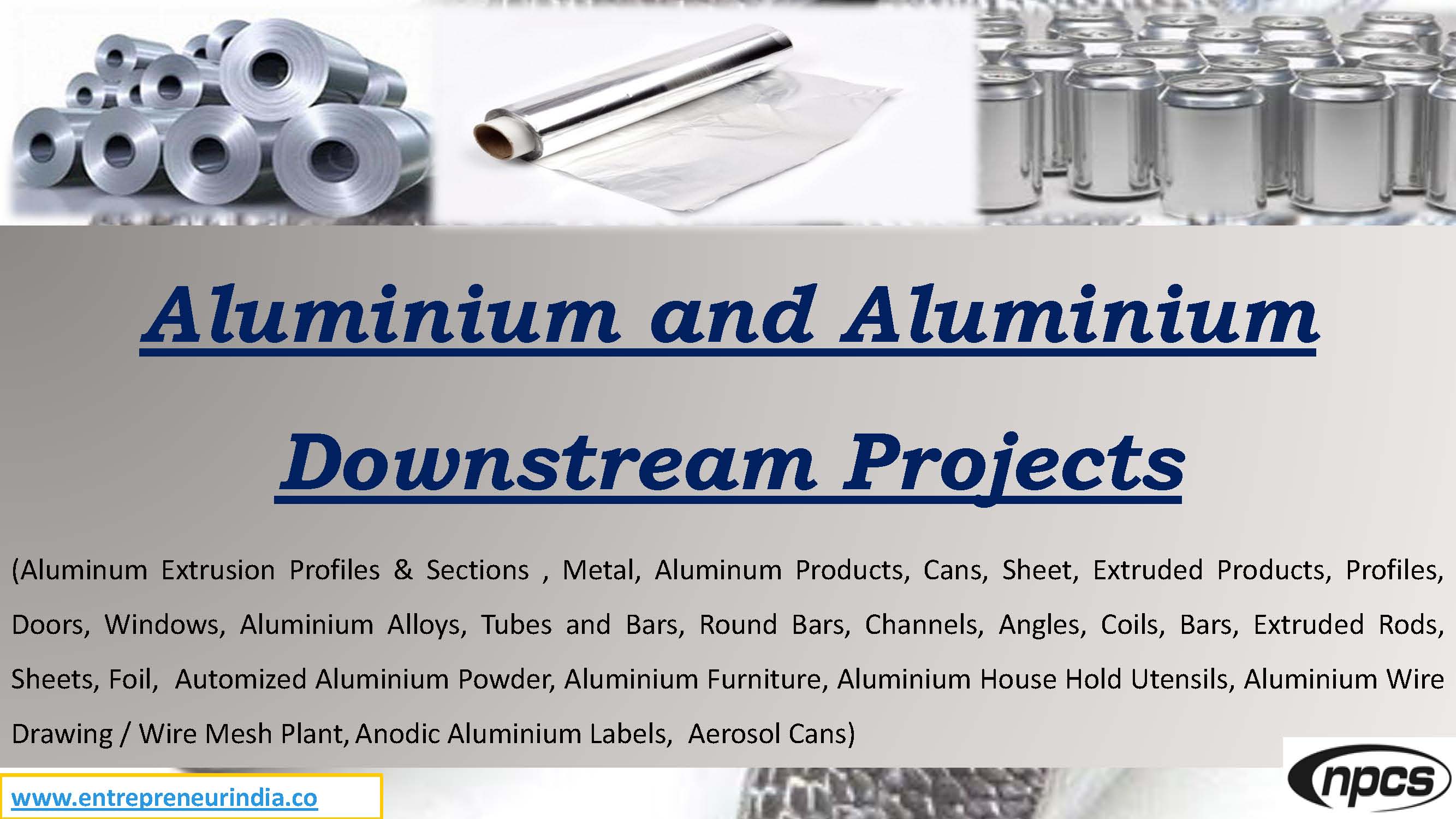
India’s growth in sectors like construction, automotive, electrical, aerospace, and packaging has created a high demand for aluminum-based products. This makes Aluminium Downstream Projects one of the most promising segments in the non-ferrous metals industry. These projects focus on converting primary aluminum into value-added products such as extrusions, rolled sheets, foils, castings, and specialty alloys. Moreover, India’s abundant bauxite reserves and increasing focus on indigenization provide a strong foundation for entrepreneurs looking to invest in the aluminum value chain.
Contents
- 1 Aluminium Downstream Projects | Profiles to Alloys
- 1.1 Types of Aluminium Downstream Projects
- 1.2 Raw Materials and Inputs
- 1.3 Machinery & Process Requirements
- 1.4 Investment & Profit Potential
- 1.5 Market Demand and Buyers
- 1.6 Export Potential
- 1.7 Regulatory Requirements
- 1.8 Technology Trends and Innovation
- 1.9 Government Incentives and Support
- 1.10 Conclusion
Aluminium Downstream Projects | Profiles to Alloys
Aluminium Downstream Projects refer to the secondary processing of aluminum metal into components and semi-finished goods for various industries. This includes rolling, extrusion, forging, casting, and fabrication operations that enhance the utility, shape, and application of aluminum. With rising environmental concerns, lightweighting trends, and electrification of vehicles, the downstream aluminum segment is experiencing robust demand both in India and globally. Moreover, aluminum’s 100% recyclability and corrosion resistance make it a sustainable and future-ready material.
Read Also :Cottage Industry
Types of Aluminium Downstream Projects
Entrepreneurs can explore a wide range of opportunities within downstream aluminum processing:
-
Aluminium Extrusion Profiles: For doors, windows, curtain walls, solar frames, railings, modular furniture, and industrial assemblies.
-
Rolled Products: Sheets, coils, and plates used in automotive panels, roofing, printing plates, and cookware.
-
Foils & Laminates: For food packaging, pharmaceutical blister packs, insulation, and cable wrap.
-
Castings & Foundry Alloys: For automotive parts, engine components, and industrial machinery.
-
Aluminium Alloy Production: Secondary alloys made by adding elements like silicon, magnesium, copper, and zinc for improved strength and machinability.
Moreover, specialty products like aluminum powder, composite panels, and heat exchangers have niche but high-margin markets.
Raw Materials and Inputs
Setting up Aluminium Downstream Projects requires steady access to:
-
Primary aluminum ingots or billets (procured from smelters)
-
Aluminium scrap (for alloy making and recycling units)
-
Alloying elements such as silicon, magnesium, and zinc
-
Lubricants, dies, and extrusion tools
-
Refractory and flux materials (for casting and melting)
Moreover, proximity to aluminum producers like NALCO, Vedanta, or Hindalco reduces logistics costs and ensures material consistency.
Machinery & Process Requirements
Depending on your product line, typical machinery and equipment include:
-
Billet heaters and extrusion presses (for profile manufacturing)
-
Hot and cold rolling mills (for coils and sheets)
-
Melting and holding furnaces (for casting and alloy making)
-
Foil rolling and slitting machines
-
Die casting machines (for components)
-
Heat treatment furnaces and CNC finishing tools
Moreover, automation and precision controls are essential to meet tight tolerances required by aerospace, EV, and defense sectors.
Investment & Profit Potential
The capital requirement varies based on capacity, technology, and product mix:
| Type of Unit | Investment (INR) | Monthly Profit Potential |
|---|---|---|
| Small extrusion plant (300–500 MT/yr) | ?75 lakhs – ?1.2 Cr | ?1 – ?2.5 lakhs |
| Alloy ingot foundry (1000 MT/yr) | ?1.5 – ?2.5 Cr | ?3 – ?5 lakhs |
| Rolling mill for sheets/foils | ?2 – ?4 Cr | ?5 – ?8 lakhs |
| Advanced casting/EV components unit | ?5 – ?10 Cr | ?10 – ?20 lakhs |
Moreover, recycling aluminum scrap into secondary alloys offers significant cost savings and environmental benefits.
Market Demand and Buyers
Aluminium Downstream Projects cater to a wide industrial base:
-
Construction & Infrastructure: Doors, window frames, cladding systems
-
Automotive: Wheels, body panels, engine blocks, battery housings
-
Electrical & Electronics: Busbars, heat sinks, enclosures
-
Consumer Goods: Luggage, kitchenware, appliances
-
Packaging: Foils for food, pharma, and industrial use
-
Renewables: Solar mounting structures, wind turbine parts
Moreover, aluminum is a preferred material in defense and aerospace applications due to its strength-to-weight ratio and machinability.
Export Potential
India has emerged as a global supplier of aluminum extrusions, foils, and components. Key export markets include:
-
USA
-
Germany
-
UAE
-
UK
-
Australia
-
Bangladesh
Moreover, complying with ISO, ASTM, and RoHS standards boosts export eligibility and brand trust internationally.
Regulatory Requirements
Starting an Aluminium Downstream Project requires:
-
Udyam registration (for MSME benefits)
-
Factory license and Fire safety NOC
-
Pollution Control Board clearance
-
GST registration
-
Import-Export Code (for exporters)
-
Bureau of Indian Standards (BIS) certification, if applicable
Moreover, industries must ensure environmental compliance, especially when operating foundries or melting units.
Technology Trends and Innovation
The downstream aluminum sector is experiencing rapid modernization:
-
Hydraulic and servo-controlled presses for precision extrusion
-
Online thickness and flatness control in rolling mills
-
3D printing with aluminum powders for custom parts
-
Robotics and AI in quality control
-
Green technology: Using solar energy and aluminum scrap recycling
Moreover, AI-driven product design and simulation tools help reduce production errors and speed up prototyping.
Government Incentives and Support
Central and state governments offer incentives for aluminum-based manufacturing units:
-
Capital subsidies under the Modified Industrial Infrastructure Scheme
-
PLI schemes (in select sectors using aluminum components)
-
Subsidized loans from SIDBI, NSIC, and State Financial Corporations
-
Import duty benefits on machinery
-
Export incentives under RoDTEP and SEIS schemes
Moreover, units in aluminum parks or SEZs enjoy infrastructure benefits, faster approvals, and logistics connectivity.
See Also :Fish Processing
Conclusion
Aluminium Downstream Projects offer immense potential across industries ranging from automotive and aerospace to construction and packaging. With India’s focus on manufacturing, Atmanirbhar Bharat, and green infrastructure, the demand for value-added aluminum products is only set to rise. Moreover, with scalable investment options, export potential, and recycling synergies, entrepreneurs can enter this space confidently. Whether you start with profiles, sheets, alloys, or castings, aluminum downstream is a durable and high-growth opportunity worth exploring.