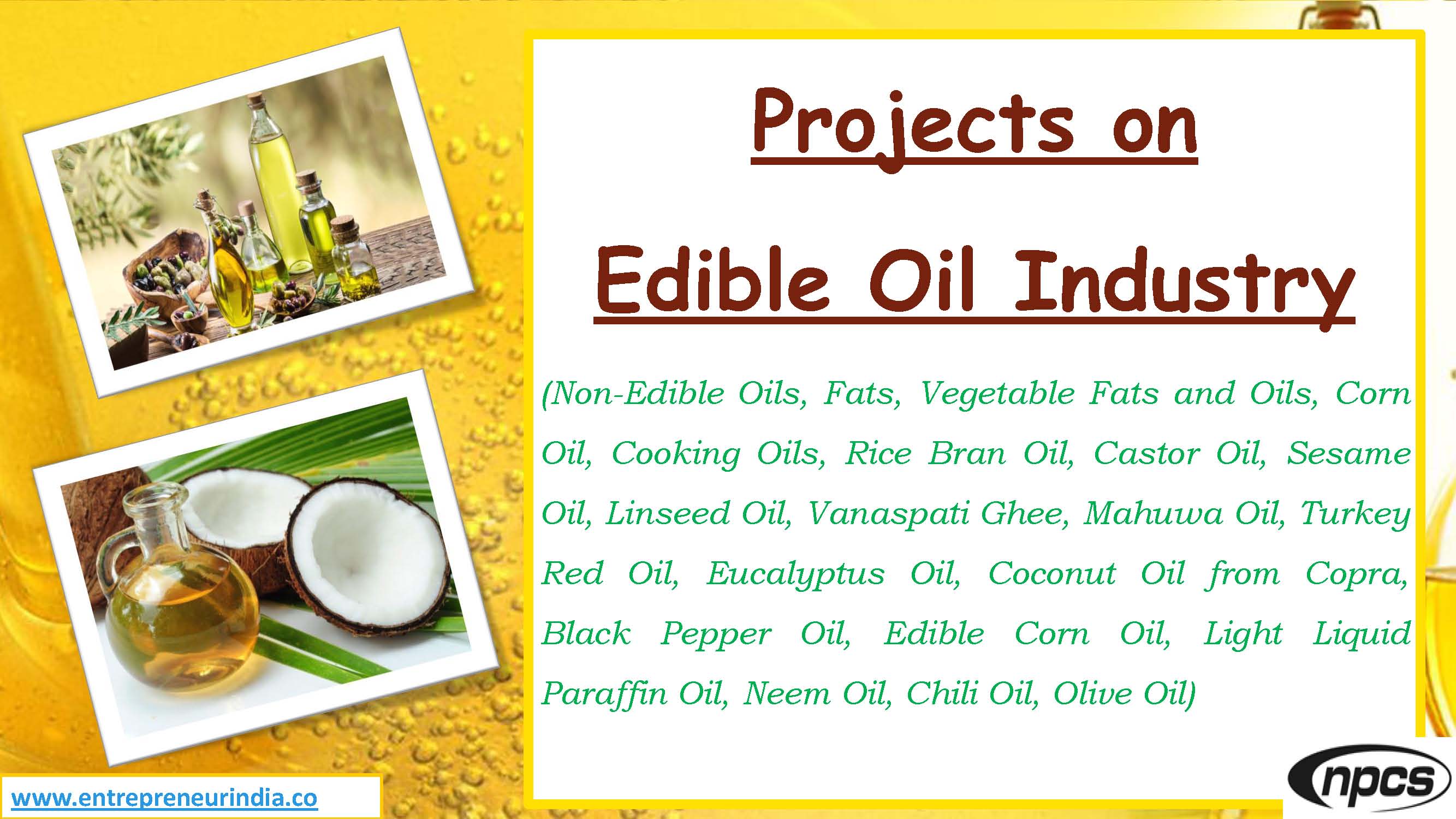
India is one of the largest producers and consumers of edible and industrial oils, making oil processing a promising and profitable business. With the rising demand for healthy cooking oils, biofuels, cosmetics, and lubricants, entrepreneurs have a broad range of opportunities in both the vegetable and industrial oil sectors. Moreover, evolving consumer preferences, increasing awareness of quality standards, and the push for import substitution have further expanded the scope of local oil processing businesses.
Vegetable & Industrial Oil Processing | Business Ideas
The oil processing industry involves extracting oil from oil-bearing seeds, nuts, or chemical sources for edible and non-edible purposes. In the case of vegetable oils, seeds such as mustard, soybean, sunflower, groundnut, cottonseed, and coconut are used to produce cooking oils. On the other hand, industrial oils include castor, neem, linseed, palm kernel, and jatropha, which are used in paint, lubricant, pharmaceutical, and biofuel applications. Moreover, advanced extraction and refining technologies now allow small- and medium-scale entrepreneurs to enter this field efficiently and competitively.
See Also :Small-Scale Business
Categories of Oil Processing Businesses
There are mainly two categories in this sector:
Edible oil processing: Used for human consumption—includes mustard, sunflower, groundnut, soybean, rice bran, and sesame oil
Industrial oil processing: Includes non-edible oils used in paints, lubricants, cosmetics, soaps, and biodiesel—such as castor oil, neem oil, linseed oil, and jatropha oil
Moreover, hybrid plants that process both edible and industrial oils are also gaining traction, especially in rural or semi-urban industrial zones.
Raw Materials and Sources
The key raw materials for oil processing are oilseeds or nuts, which are sourced from local farmers or agricultural mandis. Common options include:
Mustard seeds
Soybean
Groundnut
Sunflower seeds
Coconut (copra)
Castor seeds
Linseed
Neem kernels
Palm kernels
Rice bran (by-product from rice mills)
Moreover, the location of your unit should be near raw material sources to minimize transportation costs and ensure freshness.
Oil Extraction Methods
The oil processing technique depends on the type of oil and required purity levels. Common extraction methods include:
Mechanical pressing (cold pressing): Suitable for organic and small-scale edible oil production
Expeller pressing: Widely used for high-yield extraction from oilseeds
Solvent extraction: Common in industrial-scale oil processing for maximum yield
Enzyme-assisted extraction: Used for specialty or high-value oils
Supercritical CO? extraction: A premium method for essential and medicinal oils
Moreover, choosing the right technology impacts oil quality, yield, energy use, and profitability.
Refining and Processing Equipment
Once extracted, the crude oil often undergoes refining to improve color, odor, stability, and shelf life. Equipment required includes:
Seed cleaners and destoners
Oil expellers or solvent extractors
Filter press or centrifuge
Deodorizer, neutralizer, and bleacher units
Packaging machines
Boilers and ETPs (Effluent Treatment Plants)
Moreover, integrating automation and digital temperature controls helps maintain consistency in processing.
Setup Cost and Profitability
Investment varies based on production capacity, plant type, and machinery automation. Here’s an estimate:
| Type of Unit | Investment (INR) | Monthly Profit Potential |
|---|---|---|
| Mini oil mill (1–2 MT/day) | ?10–20 lakhs | ?50,000 – ?1.5 lakhs |
| Mid-size unit (5–10 MT/day) | ?40–75 lakhs | ?2 – ?4 lakhs |
| Large plant (25+ MT/day) | ?1.5–3 crores | ?6 – ?10 lakhs |
Value-Added Product Opportunities
To increase profits, oil processing units can also produce:
Flavored or fortified edible oils
Essential oils for aromatherapy or cosmetics
Soap and detergent raw materials
Lubricants and greases
Biofuels or biodiesel (especially from jatropha or used cooking oil)
Moreover, cold-pressed and organic oil brands command premium prices in urban markets.
Regulatory Requirements
To run an oil processing business legally, you need the following:
Udyam/MSME registration
FSSAI license (for edible oils)
GST registration
Pollution Control Board clearance
Factory license
Drug & Cosmetic license (for industrial or essential oils)
Moreover, BIS and AGMARK certifications can build credibility and improve market acceptance.
Market Demand and Buyer Segments
Your target customers will vary depending on the oil type:
Edible oils: Households, restaurants, hotels, food processors, wholesalers, retailers
Industrial oils: Paint companies, cosmetic manufacturers, soap producers, pharmaceutical firms
Export market: High-purity castor, linseed, neem, or coconut oils are in demand globally
Moreover, listing on platforms like IndiaMART, TradeIndia, and Amazon helps tap into bulk B2B and retail buyers.
Packaging and Branding Strategy
Packaging plays a vital role in market acceptance and shelf appeal. Use:
HDPE or PET bottles for edible oils
Tin containers for premium cold-pressed oils
Drums or IBC tanks for industrial oils
Eco-friendly pouches for organic oil lines
Moreover, invest in clean labeling, nutritional information, and certifications like “Cold Pressed,” “Organic,” or “Non-GMO” to target health-conscious consumers.
Government Support & Subsidies
Several schemes support oil processing units in India:
PMFME Scheme: For micro food enterprises
Agriculture Infrastructure Fund (AIF): Low-interest loans for oil mills
NABARD Subsidies: Capital subsidy for rural and agro-based units
NSIC: Support in machinery procurement and marketing
Moreover, SIDBI and other financial institutions offer customized loans to agro-processing entrepreneurs.
Read Also :Notebook Manufacturing
Conclusion
The oil processing sector presents a robust business opportunity in both edible and industrial segments. With rising domestic consumption, export potential, and diversified applications, oil manufacturing offers consistent demand and attractive returns. Moreover, government incentives, technological upgrades, and consumer health awareness make this a future-ready business for Indian entrepreneurs. Whether you’re starting small with cold-pressed oils or setting up a high-capacity solvent extraction unit, oil processing can turn into a sustainable, scalable, and profitable venture.