
NPCS: Ideal Business Plan of ISO Freight Containers Manufacturing
As global trade continues to grow exponentially, the demand for ISO freight containers manufacturing has never been higher. These standardized shipping containers play a vital role in the logistics and transportation industry, enabling efficient movement of goods across continents. Whether it’s for maritime, road, rail, or intermodal transport, ISO containers are indispensable. Given the increasing globalization of supply chains and booming e-commerce, setting up a manufacturing unit for ISO freight containers presents a highly profitable and scalable industrial opportunity. These containers are not just storage boxes; they are precision-engineered steel structures designed to meet strict international standards set by the International Organization for Standardization (ISO). From dry cargo containers to refrigerated and tank containers, the applications are vast and the market potential is immense. Manufacturers who enter this sector with the right knowledge, machinery, and certifications can secure consistent contracts from shipping companies, leasing firms, exporters, defense agencies, and more. Overview of the ISO Freight Container Manufacturing Industry ISO freight container manufacturing involves the production of steel boxes that comply with ISO 668 and ISO 6346 standards. These containers must be robust enough to withstand heavy loads, harsh marine environments, stacking pressures, and repeated handling. ISO containers are typically manufactured in the following sizes: 20 ft (TEU – Twenty-Foot Equivalent Unit) 40 ft (FEU – Forty-Foot Equivalent Unit) High Cube (9.5 ft height) The global container fleet surpasses 40 million TEUs, and with increased trade from Asia-Pacific, Europe, and North America, the demand for new containers continues to rise annually. Countries like India are emerging as alternative manufacturing hubs to China due to favorable policies like the PLI (Production Linked Incentive) scheme and “Make in India” initiatives. Visit this Page for More Information: Start a Business in Shipping Container Industry Types of ISO Freight Containers You Can Manufacture 1. Dry Cargo Containers (General Purpose) These are the most common types used for general goods, machinery, fabrics, electronics, and more. 2. Refrigerated Containers (Reefers) Used for transporting perishable items like fruits, meat, dairy, and pharmaceuticals. 3. Tank Containers Used for transporting liquids like chemicals, fuel, oil, and food-grade fluids. 4. Open Top Containers Ideal for cargo that cannot be easily loaded through the doors, such as heavy machinery or odd-sized items. 5. Flat Rack Containers Perfect for oversized cargo that does not fit into standard containers. By offering a range of containers, manufacturers can cater to multiple sectors like shipping, rail freight, oil & gas, food processing, defense, and chemical industries. Related Business Plan: ISO Freight Containers Key Raw Materials and Machinery Required Raw Materials: High-tensile Corten steel (weather-resistant steel) Marine-grade plywood flooring Zinc-rich primers and epoxy coatings Door seals and locking mechanisms Corner castings and lashing rings Machinery: Hydraulic shearing machines CNC laser cutting machines Welding stations with MIG/TIG systems Sandblasting booths and painting lines Container assembly fixtures and alignment jigs Container testing chambers for structural integrity Automation and precision are key to mass production. Investing in state-of-the-art robotic welding and plasma cutting machines enhances output and product quality. Read Similar Articles: IRON AND STEEL PROJECTS Manufacturing Process of ISO Freight Containers The ISO container manufacturing process involves multiple precision-driven steps: 1. Design & Engineering Container blueprints must adhere strictly to ISO and CSC (Convention for Safe Containers) standards. Load-bearing capacity, stacking limits, and climatic resistance must be integrated at this stage. 2. Cutting and Forming Steel sheets are cut using CNC plasma or laser cutters. Components like roof panels, side walls, and base frames are formed using bending machines. 3. Welding and Assembly Container parts are welded together using automated MIG/TIG welders. Robotic arms ensure consistent weld seams and alignment. 4. Flooring and Fittings Marine plywood floors are installed and secured. Ventilation openings, door seals, and locking gear are added. 5. Surface Treatment and Painting Each container is sandblasted to remove impurities. Anti-corrosive primer, epoxy coatings, and final paint are applied using automated spray systems. 6. Testing and Certification Every container is subjected to structural tests, watertight tests, and dimensional inspections. Certifications from authorities like IICL, DNV, or BV are mandatory. Download PDF: Business Plan of ISO Freight Containers Manufacturing Licensing, Certification, and Compliance To manufacture ISO freight containers, it is essential to comply with international and local certifications: ISO 9001 for quality management ISO 1496 / ISO 6346 for container dimension and code standards CSC Certification for safety compliance in shipping IICL Certification (Institute of International Container Lessors) Factory license, pollution control clearance, and fire safety certificates from local authorities Acquiring these certifications builds trust and helps secure deals with international shipping lines and leasing companies. Capital Investment and Setup Costs Setting up a standard ISO container manufacturing plant involves: Land and factory shed: ?5–10 crore (depending on location) Machinery and automation: ?15–25 crore Working capital: ?5–10 crore (for raw materials, labor, logistics) Certifications and compliance: ?1 crore approx. Total Estimated Investment: ?25–45 croreProfit margins in this sector can be upwards of 20–25% per container, especially for customized and high-volume orders. Related Feasibility Study Reports: Start Business Of Manufacturing Iso Freight Containers Market Demand and Export Opportunities The global shipping container market is project to reach $15+ billion by 2030, growing at a CAGR of over 5%. Major demand drivers include: Rise in cross-border e-commerce Increase in maritime trade routes Expansion of logistic parks and intermodal transport Growth in refrigerated supply chains (cold chain) Countries in Africa, Southeast Asia, and the Middle East import containers in large quantities. Indian manufacturers can tap into these markets due to lower production costs and favorable trade agreements. How to Market ISO Containers Domestically and Globally To ensure profitability in the ISO freight containers manufacturing business, manufacturers must establish a solid marketing and sales pipeline: Develop a professional B2B website showcasing your manufacturing unit, capacity, certifications, and container range Register on trade portals like Alibaba, IndiaMART, Global Sources Collaborate with logistic parks, port authorities, and shipping lines Attend international trade fairs and expos Use LinkedIn and digital platforms for B2B networking and client acquisition Bid for government and defense tenders requiring
Manufacturing Lithium-Ion and Lead-Acid Batteries
The global energy landscape is rapidly transforming, and battery manufacturing is at the heart of this evolution. Among all types of batteries, Lithium-Ion and Lead-Acid batteries dominate the market, fueling everything from electric vehicles to renewable energy storage and UPS systems. The rise in demand for efficient energy storage solutions has made battery manufacturing a lucrative and future-ready business opportunity for investors, entrepreneurs, and industrialists. Lithium-Ion and Lead-Acid Batteries Manufacturing Business India Lithium-Ion battery manufacturing involves advanced materials and automation to ensure compact, lightweight, and high-capacity power sources, ideal for EVs and mobile electronics. On the other hand, Lead-Acid batteries remain indispensable for applications such as automotive starter batteries, inverters, forklifts, and backup systems. Both segments have their unique market demand, manufacturing requirements, and regulatory considerations, making this sector a strategic blend of innovation, sustainability, and scalability. Understanding the Market Potential of Battery Manufacturing In recent years, the global battery industry has experienced explosive growth, especially with the surge in electric vehicle (EV) adoption, renewable energy expansion, and portable electronic devices. As governments push for green energy transitions, incentives, and bans on internal combustion engines, battery production is becoming a national priority in many countries. Key Market Drivers: EV Boom: The electric mobility wave is expected to drive Lithium-Ion battery demand to 3,000+ GWh by 2030. Energy Storage Systems (ESS): Renewable energy integration requires scalable and efficient battery solutions. Telecom and Backup Power: Industries and consumers increasingly rely on inverter and UPS systems, traditionally powered by Lead-Acid batteries. Smart Devices and IoT: Lithium-Ion technology powers modern gadgets, from smartphones to drones. India, with its Make-in-India initiative and support for battery manufacturing units, presents an excellent environment to invest in this growing sector. Visit this Page for More Information: Start a Business in Lithium-Ion Battery Production Types of Batteries and Their Industrial Applications 1. Lithium-Ion Batteries These are rechargeable batteries with high energy density, lightweight design, and long cycle life. Applications include: Electric vehicles (2W, 3W, 4W) Consumer electronics (laptops, phones, wearables) Solar and wind energy storage Power tools and drones 2. Lead-Acid Batteries These are time-tested, cost-effective, and reliable for: Automotive starter batteries Backup power (UPS and inverters) Industrial equipment (forklifts, cranes) Grid stabilization and emergency systems Related Business Plan: Battery Projects Step-by-Step Process of Battery Manufacturing 1. Lithium-Ion Battery Manufacturing Process Raw Materials: Cathode material: Lithium Cobalt Oxide (LCO), Lithium Iron Phosphate (LFP), or NMC Anode material: Graphite Electrolyte: Lithium salt in organic solvent Separator: Polyethylene or polypropylene Binder, conductive agents, and casing materials Read Similar Articles: See Our Battery Projects Manufacturing Steps: Electrode Preparation: Mixing active material, binder, and solvent to form slurry. Coated onto metal foils and dried. Cell Assembly: Stacked or wound electrodes with separators placed in casings. Electrolyte Filling: Filling the cell with a precise amount of electrolyte. Formation and Testing: Initial charging to activate materials, followed by performance testing. Battery Packaging: Cylindrical, pouch, or prismatic cell types sealed for final use. Automation, clean rooms, and strict environmental control are essential to ensure safety and quality. Related Feasibility Study Reports: Battery Projects 2. Lead-Acid Battery Manufacturing Process Raw Materials: Lead alloy for plates Dilute sulfuric acid (electrolyte) Separators (PVC or polyethylene) Battery containers and covers Manufacturing Steps: Grid Casting: Grids are formed using lead alloys. Pasting: Active material is pasted onto grids. Curing and Drying: Plates are dried and cured to strengthen material adhesion. Formation: Initial charging in sulfuric acid bath to activate plates. Battery Assembly: Plates inserted into containers, separators placed, electrolyte added. Charging and Testing: Final charging followed by load, discharge, and quality tests. Lead recycling and emission control systems are crucial due to the toxic nature of raw materials. Read our Books Here: Read Our Books & Databases Machinery and Equipment Required For Lithium-Ion Batteries: Electrode mixing and coating machines Slitting and calendaring equipment Pouch/cell winding and stacking units Electrolyte filling stations Vacuum drying ovens Battery testing systems Battery management system (BMS) integration For Lead-Acid Batteries: Grid casting machines Plate pasting and curing ovens Acid filling tanks Welding and sealing machines Formation tanks Battery testing and grading systems Investing in semi-automatic or fully automated lines enhances precision, safety, and output. Click here to send your queries/Contact Us Regulatory Compliance and Safety Standards Battery manufacturing involves chemicals and electrical hazards. Thus, adhering to the following standards is critical: ISO 9001 and ISO 14001 for quality and environmental management BIS certification for Indian market compliance Pollution Control Board clearance Factory Act regulations for worker safety International certifications (UL, CE, RoHS) for export viability Advanced fire control, explosion-proof systems, and waste management infrastructure must be implemented to maintain operational safety. Investment, ROI, and Profit Margins Setting up a battery manufacturing plant requires significant capital, but returns are equally promising. Estimated Costs: Lithium-Ion plant (small-scale): ?3–5 crore Lead-Acid battery plant (small-scale): ?1.5–2.5 crore Operating Costs: Raw materials, skilled labor, utility bills, maintenance, and licensing Profit Margins: Lithium-Ion: 20%–35% Lead-Acid: 15%–25% With a scalable model and consistent demand, ROI can be achieved in 2–3 years. Opportunities for Expansion and Export The government of India offers incentives under FAME II, PLI schemes, and State-level subsidies for setting up battery units. Export potential is strong in: Southeast Asia Africa Middle East European Union (with compliance certifications) Diversifying into Battery Pack Assembly, Battery Recycling, and Energy Storage Systems (ESS) can further multiply business revenue. Environmental and Sustainability Considerations Sustainable manufacturing practices are no longer optional. Here’s how you can align: Recycle lead from old batteries using eco-friendly methods Use water-based binders for lithium-ion battery slurry Install solar panels for plant operations Dispose of chemical waste responsibly Incorporate green logistics and carbon-neutral practices Consumers and international partners increasingly prefer environmentally conscious brands. Conclusion: Powering the Future with Battery Manufacturing The battery manufacturing business, particularly in Lithium-Ion and Lead-Acid technologies, offers a high-growth, future-proof, and scalable venture for new-age entrepreneurs. With growing energy demands, e-mobility trends, and green mandates, entering this sector now can establish a strong industrial foothold for decades to come. From energy independence to circular economy participation, the
What Are The High Demand Business Opportunities In Uttar Pradesh?
Uttar Pradesh, India’s most populous state, is emerging as a dynamic hub for business and entrepreneurship. With a rapidly growing economy, supportive government policies, vast consumer base, and expanding infrastructure, business opportunities in Uttar Pradesh are witnessing a surge in 2025. The state’s industrial corridors, smart city initiatives, and sector-specific development plans make it a fertile ground for startups, MSMEs, and large-scale enterprises. Whether you are an aspiring entrepreneur, an investor, or an established business owner looking to expand, Uttar Pradesh offers a wide array of profitable ventures across sectors such as manufacturing, agriculture, tourism, technology, retail, and services. Why Uttar Pradesh Is a Business Goldmine in 2025 Uttar Pradesh (UP) is not just rich in culture and heritage but also in economic potential. The state government’s efforts under “One District One Product (ODOP)”, Ease of Doing Business (EoDB) reforms, and the Uttar Pradesh Industrial Investment and Employment Promotion Policy have transformed the landscape for businesses. Here’s why starting a business in UP in 2025 is a smart move: Home to 240+ million consumers Well-connected infrastructure (expressways, airports, railways) Growing IT parks and SEZs in Noida, Greater Noida, Lucknow Supportive schemes for MSMEs and startups Abundant skilled and semi-skilled workforce Strategic location for logistics and export Let’s now explore some of the most promising and profitable business ideas in UP. Visit this Page for More Information:Start an Industry in Uttar Pradesh, India 1. Food Processing and Agro-Based Industries UP ranks among the top agricultural states in India. This makes agro-processing and food-based manufacturing one of the best business opportunities in Uttar Pradesh. Profitable Ideas: Fruit and Vegetable Processing Units Dairy Products (Paneer, Ghee, Milk) Packaged Spices and Masalas Cold Storage Chains and Warehousing Organic Farming and Produce Distribution Government incentives and the ODOP initiative further support food-based industries with market linkage, funding, and skill development. 2. Manufacturing Units in ODOP Sectors The One District One Product (ODOP) program has spotlighted traditional and unique products from each district. This initiative offers massive potential for those looking to start small-scale manufacturing in UP. Popular ODOP Products: Brassware (Moradabad) Perfumes (Kannauj) Chikankari (Lucknow) Leather Goods (Kanpur) Wooden Toys (Varanasi) Zari-Zardozi (Bareilly) Investing in these sectors with the help of technology, branding, and e-commerce can result in high returns. Related Business Plan: Best Business Opportunities in Uttar Pradesh 3. Tourism and Hospitality Services With cities like Varanasi, Agra, Mathura, and Ayodhya attracting domestic and international tourists, there is vast scope in tourism-based businesses. Business Ideas: Boutique Hotels and Homestays Heritage Tour Agencies Spiritual Tourism Packages Cultural Cafes and Restaurants Travel Photography and Souvenir Shops The government is heavily investing in heritage restoration and tourism infrastructure, creating a booming market for the hospitality sector. 4. E-Commerce and Online Retail Digital penetration is growing rapidly in UP, especially in tier-2 and tier-3 cities. This shift creates strong demand for online businesses and e-commerce platforms. Trending Niches: Hyperlocal Grocery Delivery Regional Handicrafts & Apparel Electronics and Mobile Accessories Health & Wellness Products Online Education Materials Establishing a dropshipping or warehousing-based e-commerce model targeting UP’s vast consumer base can be highly lucrative. Read Similar Articles: Read Our Project Reports & Profiles 5. Education and Coaching Institutes The state’s large student population offers endless possibilities in the education sector, both offline and online. Viable Ventures: Competitive Exam Coaching (UPSC, SSC, Banking) Skill Development and Vocational Training Coding and Robotics Classes English Speaking Institutes E-Learning Course Platforms Tier-2 cities like Allahabad, Gorakhpur, and Meerut show growing demand for affordable, tech-enabled learning solutions. 6. Solar Energy and Green Solutions UP has strong solar potential, and with increasing electricity demand and eco-consciousness, green energy startups are gaining momentum. Business Options: Solar Panel Installation & Maintenance Solar-Powered Pumps for Farmers Biofuel Production Energy Auditing Services LED Lighting Distribution Subsidies from the Ministry of New and Renewable Energy (MNRE) and state nodal agencies make solar a high-potential business in UP. Click here to send your queries/Contact Us 7. IT Services and Freelancing Hubs Cities like Noida, Lucknow, and Ghaziabad are rapidly becoming IT clusters. There’s scope to build tech startups or freelance service businesses with minimal capital. Services in Demand: Mobile App and Web Development Graphic Design and Digital Marketing Software-as-a-Service (SaaS) Tools Data Entry and BPO Services Online Freelancing Platforms The growing startup ecosystem and tech infrastructure are key drivers of this business model. Read our Books Here: Our Books and Database 8. Retail Franchise and Outlet Business With increased urbanization and income growth, retail and lifestyle businesses are booming in urban and semi-urban UP. Profitable Retail Ventures: Food and Beverage Franchises Apparel and Footwear Stores Pharmacy Chains Convenience and Supermarket Stores Mobile and Gadget Showrooms Partnering with an established brand ensures customer trust and quick market entry. 9. Healthcare and Diagnostic Centers Access to quality healthcare in non-metro towns is still limited, making affordable medical services a great business idea. Opportunities Include: Diagnostic Labs and Imaging Centers Telemedicine and Online Consultations Generic Medicine Stores Physiotherapy and Home Healthcare Rural Health Camps and Awareness Programs Low competition in small towns makes this sector highly scalable and impact-driven. 10. Transportation and Logistics Services With major expressways, highways, and industrial clusters, logistics and transport services are vital to UP’s economic activities. Business Possibilities: Courier and Last-Mile Delivery Services Warehousing and Inventory Management E-commerce Fulfillment Centers Intercity Trucking and Rental Services EV Fleet and Smart Transport Startups The upcoming Jewar Airport and freight corridors will further boost this sector. How to Start a Business in Uttar Pradesh To launch a successful business in UP, follow these steps: Choose a viable business model aligned with market trends Register the business entity (Sole Proprietor, LLP, Pvt Ltd) Obtain necessary licenses and GST registration Secure location and workforce depending on the scale Apply for government schemes or subsidies if eligible Invest in branding and digital marketing to gain visibility Leverage local platforms like GeM and ODOP Mart for sales Conclusion: Invest in the Future with UP’s Business Potential Uttar Pradesh is not just a land of tradition—it is
What Are The Business Opportunities For Investment In Andhra Pradesh?
Business investment in Andhra Pradesh is rapidly gaining momentum as the state positions itself as one of India’s most investor-friendly destinations. With a robust economic framework, strategic infrastructure development, and proactive government policies, Andhra Pradesh has created an enabling environment that attracts both domestic and international investors. The state’s focus on innovation, technology, manufacturing, agriculture, and services sectors offers diverse opportunities for investors looking to capitalize on India’s growth story. In 2025, Andhra Pradesh’s growth trajectory and its strategic initiatives such as the AP Industrial Development Policy, Digital Andhra, and ease of doing business reforms make it a top choice for new and expanding businesses. This article explores the key sectors, investment opportunities, and reasons why Andhra Pradesh stands out as a lucrative business destination. Visit this Page for More Information: Start an Industry in Andhra Pradesh (AP) npcsblogNPCS: Your Partner in Making Informed Project Investment Decisions NIIR Project Consultancy Services (NPCS) delivers the expertise and insights you need to successfully launch or expand your industrial project. We offer a comprehensive suite of services including: Detailed Project Reports (DPRs): Thorough outlines designed to guide your entire project, from concept to launch. Market Research and Feasibility Studies: Gain critical awareness of market trends, demand, and the competitive landscape. Business Planning and Investment Guidance: Ensure your plans and investments are supported by reliable data and analysis. Technical Support and Consulting: Receive expert advice on process selection, machinery, raw materials, and more. Why Choose NPCS for Your Project Needs? Reduce Risk, Maximize Potential: Our reports give you a clear picture of a project’s viability, helping you make smart decisions. Market-Driven Insights: Understand your customers, their needs, and the key factors that will drive the demand for your product or service. Financial Clarity: Get detailed forecasts and breakdowns of project costs, revenue projections, and profitability expectations. Actionable Data: Our reports translate complex information into clear recommendations, aiding your decision-making. What’s Included in a Typical NPCS Report? Product Overview: Key definitions, uses, and industry insights. Market Analysis: Current and future demand, import/export trends, and top players. Raw Materials and Suppliers: Detailed listings and requirements. Manufacturing Process: Step-by-step outlines and formulations. Project Financials: Plant capacity, investment breakdown, revenue, and profitability. Ready to Start Your Project? NPCS is here to assist you in making the best project choices for a successful future. Contact us today and let our expertise give your venture a decisive edge. www.niir.org/
Top 10 Super Profitable Business Ideas in Tamil Nadu for 2026
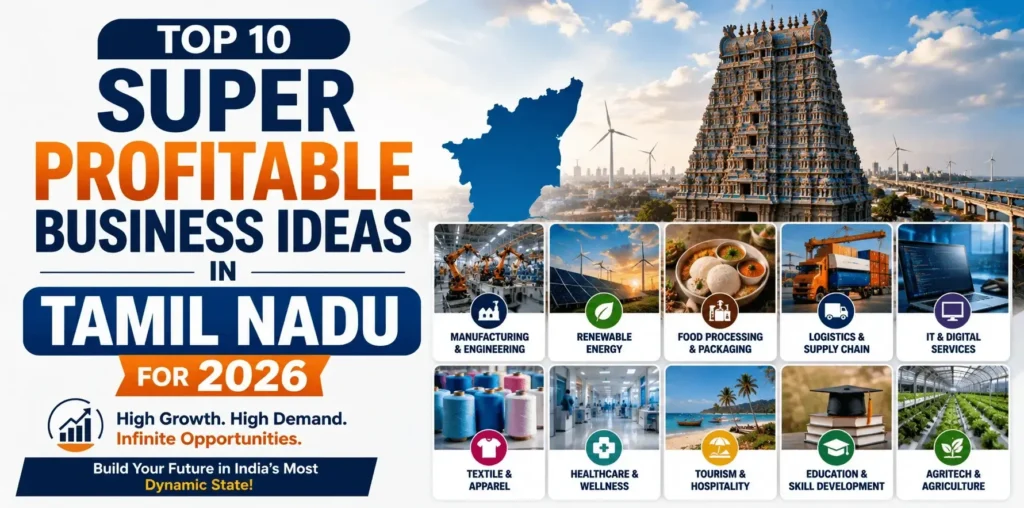
Tamil Nadu is one of India’s fastest-growing industrial states, offering several profitable business ideas in Tamil Nadu for entrepreneurs, startups, MSMEs, and investors. From textiles and automobile manufacturing to food processing, IT services, renewable energy, and tourism, the state provides a powerful ecosystem for launching successful ventures. With excellent infrastructure, skilled workforce, strong export connectivity, and government support for startups, many entrepreneurs are now searching for the most profitable business ideas in Tamil Nadu that require low investment and offer high returns. Why Profitable Business Ideas in Tamil Nadu Are Growing Rapidly? Some of the most profitable business ideas in Tamil Nadu include: Textile and apparel manufacturing Solar energy business Agro-processing units Food processing business IT and SaaS startups Automobile component manufacturing Tourism and hospitality ventures Logistics and warehousing services Organic farming Handicrafts eCommerce business In this detailed guide, we explore the top 10 super profitable business ideas in Tamil Nadu for 2026 that have strong market demand, scalable growth potential, and long-term profitability. Top 10 Profitable Business Ideas in Tamil Nadu In 2026 1. Textile and Apparel Manufacturing Business in Tamil Nadu With cities like Coimbatore, Erode, and Tiruppur at its helm, Tamil Nadu is the largest producer of cotton yarn in India. Entrepreneurs can tap into this thriving ecosystem by establishing garment manufacturing units, export houses, or fashion accessory businesses. Key Opportunities: Export-oriented ready-made garment production Knitting and dyeing units in Tiruppur Boutique stores focused on traditional weaves like Kanchipuram silk Why it works:Availability of raw materials, skilled labor, and government textile parks offer a seamless entry for investors. The Complete Technology Book on Textile Spinning, Weaving, Finishing and Printing 2. Solar Energy and Green Power Businesses Investing in Tamil Nadu’s Renewable Future Tamil Nadu is a frontrunner in renewable energy generation, particularly solar and wind power. Entrepreneurs can build businesses around solar panel distribution, installation services, or solar-powered rural solutions. Startup Ideas: Residential rooftop solar system services Solar street lighting in rural and urban areas Green consulting firms for factories and commercial buildings Why it works:Government subsidies, environmental demand, and low entry barriers make solar energy a prime business model. Solar PV Power and Solar Products Handbook 3. Agro-Processing and Organic Farming Turning Farm Output into Profitable Products Tamil Nadu’s agricultural belt grows rice, millets, coconut, banana, turmeric, and moringa. This provides a perfect foundation for agro-processing, organic farming, and value addition businesses. Popular Ideas: Cold-pressed oil mills Organic vegetable farming with local delivery Export units for spices, banana chips, and moringa powder Why it works:Consumer shift toward health-conscious products creates high-margin opportunities in both domestic and international markets. 4. IT and SaaS-Based Startups Digital Innovation from Chennai to Tier-2 Cities Tamil Nadu’s capital, Chennai, is a technology and IT outsourcing hub. With growing digital penetration, launching Software as a Service (SaaS) or tech startups is highly lucrative. Startup Ideas: Custom SaaS solutions for SMEs HRTech or EdTech platforms IT infrastructure and cybersecurity services Why it works:Skilled talent pool, access to funding, and a growing client base in India and abroad make IT a future-ready venture. 5. Tourism and Hospitality Ventures Tap Into Tamil Nadu’s Cultural and Scenic Wealth As India’s most visited tourist destination, Tamil Nadu boasts attractions like Mahabalipuram, Meenakshi Temple, Ooty, and Kodaikanal. Entrepreneurs can build boutique resorts, guided tour services, or eco-tourism packages. Business Ideas: Wellness retreats and spiritual tourism packages Luxury homestays in heritage buildings Online travel booking platforms focused on Tamil Nadu Why it works:A growing trend toward experiential travel and domestic tourism boom creates ripe opportunities for high-end and budget offerings alike. 6. Food Processing Business Ideas in Tamil Nadu Serve Tamil Nadu’s Culinary Richness to the World Tamil Nadu’s rich culinary tradition offers room for innovative food businesses like cloud kitchens, packaged snacks, and healthy meal subscriptions. Combining traditional recipes with modern delivery systems creates immense potential. Ideas to Explore: Millet-based snacks and breakfast mixes Filter coffee cafes or instant coffee powder brands Cloud kitchen focused on South Indian cuisine Why it works:Demand for health-focused and traditional food is rising, especially with the surge in online food delivery and exports. Handbook on Fruits, Vegetables & Food Processing with Canning & Preservation 7. Automobile and Auto Component Manufacturing Ride on Tamil Nadu’s Auto Industry Tamil Nadu, often called the Detroit of India, is home to major auto players like Hyundai, TVS, Ashok Leyland, and BMW. Entrepreneurs can launch auto ancillary units, spare part manufacturing, or EV servicing centers. Lucrative Niches: EV battery assembly and charging stations Manufacturing of plastic or metal components Two-wheeler accessories and smart gadgets Why it works:A strong supply chain, vendor ecosystem, and growing EV adoption offer long-term profitability and government support. The Complete Book on Production of Automobile Components & Allied Products 8. Education and Skill Development Build the Workforce of Tomorrow With one of the highest literacy rates in India, Tamil Nadu offers a strong foundation for educational startups, coaching centers, and vocational training institutes. Promising Ventures: Skill training for IT, digital marketing, and AI Language training for English, German, and Japanese Online learning platforms for school and college students Why it works:Demand for upskilling in rural and urban areas is soaring due to digitalization and the evolving job market. 9. Handicrafts and Traditional Arts E-commerce Revive and Scale Tamil Nadu’s Artistic Legacy From Tanjore paintings and bronze sculptures to Kanchipuram silk, Tamil Nadu’s arts are globally admired. Entrepreneurs can launch e-commerce brands, export houses, or artisan collectives. Ideas to Monetize: Online platforms for handmade sarees, paintings, and home décor Corporate gifting services with traditional crafts Export of antique-style idols and temple accessories Why it works:With digital marketplaces booming, traditional arts can reach new audiences worldwide with minimal investment. 10. Logistics and Supply Chain Services Leverage Tamil Nadu’s Strategic Connectivity With three major ports (Chennai, Tuticorin, Ennore), an expansive highway network, and e-commerce growth, logistics is one of the most promising sectors in Tamil Nadu. Business Models: Cold storage facilities for agri-products Last-mile delivery services in Tier-2 towns Third-party warehousing and inventory management for MSMEs
Top Business Opportunities to Invest in Gujarat
Introduction: Gujarat – India’s Powerhouse of Enterprise Gujarat, often referred to as the growth engine of India, is a state synonymous with prosperity, robust industrial infrastructure, and an ecosystem ripe for entrepreneurial success. Its unmatched policy framework, access to ports, skilled labor force, and thriving industrial corridors make it a premier destination for businesses of all scales. As the land that nurtured visionary entrepreneurs and global industrialists, Gujarat continues to present unmissable business opportunities for local and international investors alike. Why Gujarat is a Magnet for Investors Gujarat’s appeal lies not only in its economic fundamentals but in its governance model and forward-looking policies. The state contributes nearly 8% of India’s GDP, boasts 42 ports, and offers 24×7 uninterrupted power—a rare find in many Indian states. The Gujarat Industrial Policy 2020 emphasizes innovation, ease of doing business, and fast-track clearances that have made the state a preferred hub for business expansion. Top Sectors Thriving in Gujarat 1. Manufacturing and Engineering Gujarat accounts for more than 25% of India’s total manufacturing output. Cities like Rajkot, Vadodara, and Ahmedabad are industrial powerhouses with clusters specializing in automobile components, machinery, and tools manufacturing. With the presence of engineering giants and incentives like plug-and-play facilities, the sector is booming with opportunities for MSMEs and large-scale enterprises alike. 2. Renewable Energy and Green Tech With vast open lands and high solar irradiance, Gujarat is a leader in renewable energy. The state aims to produce over 30 GW of renewable energy by 2030, focusing on solar, wind, and hybrid power projects. The Dholera Special Investment Region (SIR) is emerging as a solar city with giga-scale potential, attracting investors and technology providers from around the globe. 3. Agro and Food Processing Industry As the largest producer of groundnuts and cotton, Gujarat has built a strong agri-based economy. The agro and food processing sector receives government support in the form of subsidies, cold storage chains, and logistics parks. Value-added products like ready-to-eat foods, spices, and edible oils see high demand, creating profitable ventures for agri-tech firms and exporters. 4. Textiles and Apparel Known as the Manchester of the East, Gujarat contributes nearly 12% of India’s total textile output. Surat and Ahmedabad remain vibrant hubs for textile processing, synthetic fabrics, and garment production. With dedicated textile parks, favorable GST policies, and export incentives, the sector presents massive potential for domestic brands and international players. 5. Chemicals and Petrochemicals Gujarat produces over 60% of India’s petrochemicals and 50% of its chemicals, making it the chemical capital of the nation. Dahej, Ankleshwar, and Vapi are globally recognized chemical clusters, supported by world-class infrastructure, effluent treatment systems, and port proximity. High returns await investors exploring specialty chemicals, polymers, and organic chemical segments. 6. Pharmaceutical and Life Sciences With over 30% of India’s pharma production coming from Gujarat, the state is a leader in formulations, generics, and bulk drugs. Ahmedabad and Vadodara are home to FDA-approved facilities, biotech research centers, and pharma parks. Startups in nutraceuticals, biotech, and diagnostics are seeing an upward trend, thanks to proactive policy backing. Emerging Investment Zones and Smart Cities Gujarat is pioneering integrated development zones like GIFT City in Gandhinagar—the country’s first operational smart city and international financial services center. It provides world-class infrastructure, tax incentives, and regulatory freedom for fintech, IT, and banking businesses. Similarly, the Dholera SIR is a game-changer for logistics, manufacturing, and real estate investments. Opportunities in Tourism, Wellness, and Handicrafts Beyond industry, Gujarat’s diverse landscape offers untapped opportunities in eco-tourism, medical tourism, wellness resorts, and heritage crafts. Places like Rann of Kutch, Gir National Park, and the Statue of Unity see heavy footfall, creating demand for boutique hotels, homestays, and wellness centers. Gujarat’s tribal and traditional crafts, supported by government schemes, can evolve into lucrative e-commerce exports with the right digital approach. Startups and Innovation Ecosystem The Gujarat Startup Policy 2021 fosters a vibrant startup culture through incubation support, grants, and mentorship networks. Cities like Ahmedabad and Gandhinagar have become breeding grounds for tech innovation, particularly in agritech, edtech, healthtech, and clean tech. The iCreate campus, supported by the Government of India, links startups with venture capital and international collaborations, offering a launchpad for disruptive entrepreneurs. Logistics and Export Potential Gujarat handles approximately 40% of India’s cargo throughput, making it the most logistically integrated state. With direct connectivity to major global markets, the state’s ports (like Mundra and Kandla) are vital for import-export business growth. Warehousing, cold chains, freight corridors, and digital customs clearances are well developed, reducing overhead and ensuring faster movement of goods. Government Policies and Incentives Fueling Growth Gujarat stands out for its pro-business policies, including: Capital Subsidy and Interest Subsidy for MSMEs Land Allotment at Concessional Rates in Industrial Parks Single-Window Clearance Systems for all approvals Export Incentives under SEZ and EPCG schemes Special Policies for Women and SC/ST Entrepreneurs These schemes reduce entry barriers and enhance profitability, making it easy to establish and scale businesses. Digital Gujarat: E-commerce and IT Sector Growth Digital infrastructure in Gujarat has seen massive investments under the Digital India and Smart Cities Mission. Tier-2 cities are now high-speed internet zones with skilled IT talent, allowing IT companies and e-commerce ventures to expand beyond metro cities. B2B marketplaces, logistics tech, SaaS platforms, and local D2C brands are seeing a surge in venture capital interest. Skilled Workforce and Industrial Training The Gujarat Skill Development Mission (GSDM) and vocational training institutes ensure a steady pipeline of trained labor across sectors. From engineers to machine operators, the talent availability is a major driver behind the state’s industrial stability. Programs in robotics, AI, and automation are also aligning with Industry 4.0 needs. Conclusion: Now is the Time to Invest in Gujarat Gujarat is not just a business destination; it is an accelerator for long-term growth. With infrastructure matching global standards, investor-friendly governance, and opportunities across traditional and new-age sectors, the state continues to lead India’s economic trajectory. Entrepreneurs, exporters, tech pioneers, and manufacturers all have one thing in common—they are betting on Gujarat’s limitless potential. Visit
What the Electric Vehicle Industry Could Look Like In 2030
The Electric Vehicle Industry is poised for transformative growth and innovation by 2030. With increasing global awareness about climate change, rising fuel prices, and government incentives promoting clean energy, electric vehicles (EVs) are rapidly gaining popularity worldwide. By 2030, the Electric Vehicle Industry is expected to dominate the automotive market, with EVs making up a significant percentage of new vehicle sales. Advances in battery technology, charging infrastructure, and renewable energy integration will make EVs more affordable, reliable, and convenient for consumers. Moreover, autonomous driving features and connected vehicle technology will be mainstream, further accelerating the adoption of electric cars, buses, and trucks. Leading automakers and startups alike are investing heavily in research and development to capture this lucrative market. As nations push for stringent emission regulations, the Electric Vehicle Industry will play a critical role in reducing carbon footprints and driving sustainable transportation solutions globally. Key Trends Shaping the Electric Vehicle Industry by 2030 Widespread Adoption and Market Penetration By 2030, electric vehicles are expected to account for more than 50% of new vehicle sales worldwide. Governments in Europe, North America, and parts of Asia have announced plans to phase out internal combustion engine vehicles within the next decade, creating strong demand for EVs. This shift will be supported by expanding charging networks and enhanced battery performance. Visit this Page for More Information: Start a Business in Electric Vehicle Industry Advanced Battery Technology Battery costs have dropped significantly over the past decade, and this trend will continue. The Electric Vehicle Industry will benefit from breakthroughs in solid-state batteries and improved lithium-ion technologies, offering higher energy densities, faster charging times, and longer lifespans. These innovations will reduce the overall cost of EVs and address range anxiety concerns among consumers. Read our Books Here: Handbook on Electric Vehicles Manufacturing Charging Infrastructure Expansion A robust and accessible charging infrastructure is crucial for EV adoption. By 2030, fast-charging stations will be ubiquitous in urban and rural areas, supported by smart grids and renewable energy sources such as solar and wind. Wireless charging technology may also become more common, allowing seamless and convenient energy replenishment for EVs. Related Business Plan: E- Vehicle, E-Rickshaw, Hybrid Electric Scooter, Battery Operated Vehicle Integration of Autonomous and Connected Technologies The future Electric Vehicle Industry will blend electric propulsion with autonomous driving systems and IoT connectivity. Self-driving electric cars and trucks will improve road safety, reduce congestion, and enable new business models like autonomous ride-sharing fleets. Connectivity will allow vehicles to communicate with infrastructure and other cars, optimizing energy use and traffic flow. Environmental and Economic Impact The growth of the Electric Vehicle Industry will significantly reduce greenhouse gas emissions and urban air pollution. Additionally, the demand for EVs will stimulate industries related to battery recycling, renewable energy production, and smart grid technologies. Job creation in manufacturing, software development, and infrastructure maintenance will boost economies worldwide. Read Similar Articles: E- VEHICLE PROJECTS Challenges and Opportunities Despite optimistic projections, the Electric Vehicle Industry faces challenges including raw material sourcing (like lithium and cobalt), battery recycling, and the need for consistent government policies. However, these challenges also present opportunities for innovation in sustainable mining, circular economy practices, and policy advocacy. Related Feasibility Study Reports: Hybrid Electric Scooter Assembling https://www.entrepreneurindia.co/project-identification Conclusion The Electric Vehicle Industry in 2030 will be marked by rapid growth, technological breakthroughs, and widespread consumer acceptance. EVs will no longer be niche products but rather the mainstream choice for personal and commercial transportation. With governments, manufacturers, and consumers aligned on sustainability goals, the industry will help shape a cleaner, smarter, and more efficient mobility future. Staying updated on these trends will be essential for investors, entrepreneurs, and policymakers looking to capitalize on the booming electric vehicle market. Niir Project Consultancy Services (NPCS) helps you to identify a profitable project for investing or diversifying into by throwing light on crucial areas like industry size, the market potential of the product, and reasons for investing in the product. The project reports by NPCS help you understand the viability of the project by disclosing details like machinery required, project costs, and a snapshot of other project financials. Click here to send your queries/Contact Us Reasons for Buying NIIR Report: Our research report helps you get a detailed picture of the industry by providing an overview of the industry along with the market structure and classification. Our report provides market analysis covering major growth driving factors for the industry, the latest market trends and the regulatory framework of the industry. Our Report provides an analysis and in-depth financial comparison of major Players / Competitors. Our Report provides indispensable buyers data with their company financials as well as the contact details, which can be an important tool in identifying the target customers. Our report provides forecasts of key parameters which help to anticipate the industry performance. We use reliable sources of information and databases. And information from such sources is processed by us and included in the report. See More Links: Contact Us npcsblogNPCS: Your Partner in Making Informed Project Investment Decisions NIIR Project Consultancy Services (NPCS) delivers the expertise and insights you need to successfully launch or expand your industrial project. We offer a comprehensive suite of services including: Detailed Project Reports (DPRs): Thorough outlines designed to guide your entire project, from concept to launch. Market Research and Feasibility Studies: Gain critical awareness of market trends, demand, and the competitive landscape. Business Planning and Investment Guidance: Ensure your plans and investments are supported by reliable data and analysis. Technical Support and Consulting: Receive expert advice on process selection, machinery, raw materials, and more. Why Choose NPCS for Your Project Needs? Reduce Risk, Maximize Potential: Our reports give you a clear picture of a project’s viability, helping you make smart decisions. Market-Driven Insights: Understand your customers, their needs, and the key factors that will drive the demand for your product or service. Financial Clarity: Get detailed forecasts and breakdowns of project costs, revenue projections, and profitability expectations. Actionable Data: Our reports translate complex information
Vision of Electric Vehicle Industry by 2030: A Vibrant and Sustainable Future
Electric Vehicle Industry by 2030: Transforming Global Transportation The Electric Vehicle Industry by 2030 is poised to revolutionize how the world moves, marking a significant shift from traditional fossil-fueled cars to cleaner, sustainable alternatives. Driven by advancements in battery technology, increasing government incentives, and rising consumer awareness about climate change, electric vehicles (EVs) are expected to dominate global transportation in the next decade. According to recent projections, EVs could account for over 50% of new car sales worldwide by 2030, signaling a massive surge in demand and investment. Automakers are ramping up production capacity, governments are setting ambitious emission reduction targets, and infrastructure for charging EVs is rapidly expanding. Together, these factors contribute to a thriving Electric Vehicle Industry by 2030 that promises to reduce greenhouse gas emissions, improve urban air quality, and redefine the future of mobility. Market Growth and Projections The Electric Vehicle Industry by 2030 is forecasted to grow at a compound annual growth rate (CAGR) exceeding 20%, driven by technological innovation and shifting regulatory landscapes. The global EV stock surpassed 16 million in 2023, with China, Europe, and the United States leading the adoption curve. By 2030, estimates suggest the global EV fleet could reach 200 million vehicles, supported by enhanced battery capacities and cost reductions. The International Energy Agency (IEA) emphasizes that declining battery prices—expected to fall below $100 per kilowatt-hour—will make EVs cost-competitive with internal combustion engine vehicles. This affordability will further accelerate consumer adoption, fueling the industry’s rapid expansion. Battery Technology Advancements Central to the Electric Vehicle Industry by 2030 is the evolution of battery technology. Lithium-ion batteries currently dominate EVs but face challenges such as resource limitations and environmental impact. Research and development efforts focus on solid-state batteries, which promise higher energy density, faster charging, and improved safety. Companies are also exploring alternative materials like silicon anodes and cobalt-free cathodes to reduce reliance on scarce metals. Breakthroughs in battery recycling and second-life applications will contribute to a circular economy, enhancing the sustainability of the industry. These innovations are crucial for meeting the growing demand while minimizing the ecological footprint of EV production. Government Policies and Incentives Government policies worldwide play a pivotal role in shaping the Electric Vehicle Industry by 2030. Many countries have announced bans on new gasoline and diesel car sales by 2030 or 2035, aligning with global climate goals under the Paris Agreement. Subsidies, tax rebates, and zero-emission vehicle mandates encourage both manufacturers and consumers to shift towards electric vehicles. Additionally, investments in charging infrastructure and smart grid technology are expanding to support widespread EV usage. For example, the European Union plans to install over 3 million public charging points by 2030, while the U.S. has allocated billions of dollars in infrastructure funding to accelerate EV adoption. These supportive policies create a favorable environment for the industry’s sustainable growth. Challenges and Opportunities Despite the promising outlook, the Electric Vehicle Industry by 2030 faces several challenges. The supply chain for critical minerals like lithium, nickel, and cobalt must scale sustainably to meet demand, posing risks of geopolitical tensions and environmental degradation. The charging infrastructure, especially in rural and developing areas, requires substantial expansion to eliminate range anxiety among users. Additionally, the integration of EVs into existing power grids calls for advanced energy management solutions to balance load and maintain stability. However, these challenges present opportunities for innovation and investment. Companies focusing on battery recycling, renewable energy integration, and fast-charging technologies are set to benefit from the industry’s growth trajectory. Impact on Environment and Economy The Electric Vehicle Industry by 2030 offers significant environmental benefits by reducing carbon emissions and air pollutants associated with traditional vehicles. Transportation contributes nearly 25% of global CO2 emissions, and widespread EV adoption could cut this substantially, aiding the fight against climate change. Economically, the EV sector will create millions of jobs in manufacturing, infrastructure development, and maintenance. It will also stimulate growth in related industries such as renewable energy, battery production, and smart grid technologies. However, to maximize positive outcomes, stakeholders must ensure responsible sourcing of materials and invest in workforce reskilling to transition from conventional automotive sectors. Future Trends Shaping the Industry Looking ahead, the Electric Vehicle Industry by 2030 will be influenced by emerging trends such as vehicle-to-grid (V2G) technology, autonomous driving, and shared mobility. V2G allows EVs to supply energy back to the grid, enhancing energy efficiency and supporting renewable integration. Autonomous EVs are expected to transform urban transportation by improving safety and reducing congestion. Furthermore, the rise of car-sharing and ride-hailing services will encourage the use of electric fleets, lowering overall emissions. These trends, combined with continuous technological improvements and policy support, will redefine how people commute, making the EV industry a cornerstone of future smart cities. Visit this Page for More Information: Start a Business in Electric Vehicle Industry Related Business Plan: E- Vehicle, E-Rickshaw Read Similar Articles: E- VEHICLE PROJECTS Click here to send your queries/Contact Us Related Feasibility Study Reports: Set Up Electric Vehicles Business Read our Books Here: Electric Vehicles Manufacturing Niir Project Consultancy Services (NPCS) provides detailed Project Report, Business Plan for Electric Vehicle Manufacturing Plant, Start-up Ideas, Business Ideas for Entrepreneurs, Start up Business Opportunities, entrepreneurship projects, Successful Business Plan, Industry Trends, Market Research, Manufacturing Process, Machinery, Raw Materials, project report, on various segments. A lot of engineers, project consultant & industrial consultancy firms in India and across the globe have taken benefit from the project report provided by NPCS. You can also get project report and books from the official website of NPCS. Click here to send your queries/Contact Us Reasons for Buying NIIR Report: Our research report helps you get a detailed picture of the industry by providing an overview of the industry along with the market structure and classification. Our report provides market analysis covering major growth driving factors for the industry, the latest market trends and the regulatory framework of the industry. Our Report provides an analysis and in-depth financial comparison of major Players / Competitors. Our Report provides indispensable buyers
The Bright Future of Electric Vehicles
The Bright Future of Electric Vehicles is shaping the global transportation landscape like never before. As concerns over climate change intensify, electric vehicles (EVs) are emerging as the sustainable alternative to traditional gasoline-powered cars. Advancements in battery technology, decreasing costs, and expanding infrastructure are driving consumer adoption at an unprecedented pace. Governments worldwide are implementing supportive policies and ambitious targets to accelerate the transition to electric mobility. The Bright Future of Electric Vehicles is not just about cleaner air and reduced carbon emissions—it also promises economic growth, innovation, and new job opportunities. By 2030, EVs are expected to dominate new vehicle sales, making them a cornerstone of future smart cities and sustainable living. This transformation will redefine how we think about transportation and energy use globally. Why the Bright Future of Electric Vehicles is Inevitable The Bright Future of Electric Vehicles is backed by rapid technological progress, policy support, and changing consumer preferences. Falling battery costs and longer ranges are making EVs increasingly accessible. Meanwhile, governments are phasing out fossil-fuel vehicles and investing heavily in charging infrastructure, paving the way for widespread adoption. Visit this Page for More Information: Start a Business in Electric Vehicle Industry Market Growth and Sales Trends The market for electric vehicles is experiencing explosive growth. In 2023 alone, global EV sales surpassed 10 million units, a number projected to more than double by 2030. China leads the pack as the largest EV market, followed by Europe and North America. As battery prices decline, the upfront cost of EVs is becoming competitive with traditional vehicles, helping drive adoption across various income groups. The Bright Future of Electric Vehicles is also supported by automakers launching hundreds of new electric models to meet demand, signaling a strong industry commitment. Related Business Plan: E- Vehicle, E-Rickshaw Breakthroughs in Battery Technology Battery innovation is central to the Bright Future of Electric Vehicles. Lithium-ion batteries continue to improve in energy density and charging speed, while research into solid-state batteries promises safer, longer-lasting power sources. These advancements will extend driving ranges and shorten charging times, addressing two of the biggest consumer concerns. Additionally, new recycling technologies are being developed to reclaim valuable materials, making EVs more sustainable. This ongoing evolution of battery technology ensures that the Bright Future of Electric Vehicles will be both efficient and environmentally friendly. Read Similar Articles: E- VEHICLE PROJECTS Government Incentives and Policy Initiatives Government policies around the world are accelerating the shift toward electric vehicles, underpinning the Bright Future of Electric Vehicles. Many countries have announced plans to ban new internal combustion engine vehicle sales by 2030 or 2035. Incentives such as tax credits, subsidies, and rebates reduce purchase costs for consumers. Moreover, investments in charging infrastructure are expanding rapidly, with millions of public charging stations planned worldwide by 2030. These policies not only encourage consumers to switch to EVs but also push manufacturers to accelerate electrification in their fleets. https://www.entrepreneurindia.co/project-identification Challenges on the Road Ahead Despite the promising outlook, the Bright Future of Electric Vehicles faces several hurdles. Supply chain issues for critical minerals like lithium and cobalt could slow production growth if not managed sustainably. The availability and convenience of charging infrastructure remain inconsistent, particularly in rural or underdeveloped areas. Furthermore, integrating large numbers of EVs into electrical grids requires smart energy management to prevent overloads. Public awareness and education about EV benefits and usage also need improvement. Addressing these challenges is vital to realizing the full potential of the Bright Future of Electric Vehicles. Related Feasibility Study Reports: E- Vehicle, E-Rickshaw Environmental and Economic Benefits The environmental advantages of the Bright Future of Electric Vehicles are substantial. EVs produce zero tailpipe emissions, significantly reducing air pollution in urban areas and lowering global greenhouse gas emissions. When powered by renewable energy, their carbon footprint shrinks further. Economically, the electric vehicle sector is creating millions of jobs in battery manufacturing, vehicle assembly, and infrastructure development. It also stimulates growth in allied sectors like renewable energy and smart grid technologies. However, ensuring responsible sourcing of raw materials and workforce training is essential for sustainable economic benefits. Read our Books Here: Handbook on Electric Vehicles Manufacturing Emerging Trends Shaping the Future Several exciting trends are shaping the Bright Future of Electric Vehicles. Vehicle-to-grid (V2G) technology enables EVs to feed electricity back to the grid, aiding energy storage and stability. Autonomous driving combined with electric powertrains promises safer, more efficient urban transport. Shared mobility platforms increasingly adopt EV fleets, reducing overall emissions in cities. Advances in digitalization and smart charging enhance user convenience and grid integration. These innovations position the electric vehicle industry as a key driver in building sustainable, smart urban environments in the coming decade. Click here to send your queries/Contact Us Reasons for Buying NIIR Report: Our research report helps you get a detailed picture of the industry by providing an overview of the industry along with the market structure and classification. Our report provides market analysis covering major growth driving factors for the industry, the latest market trends and the regulatory framework of the industry. Our Report provides an analysis and in-depth financial comparison of major Players / Competitors. Our Report provides indispensable buyers data with their company financials as well as the contact details, which can be an important tool in identifying the target customers. Our report provides forecasts of key parameters which help to anticipate the industry performance. We use reliable sources of information and databases. And information from such sources is processed by us and included in the report. See More Links: Contact Us npcsblogNPCS: Your Partner in Making Informed Project Investment Decisions NIIR Project Consultancy Services (NPCS) delivers the expertise and insights you need to successfully launch or expand your industrial project. We offer a comprehensive suite of services including: Detailed Project Reports (DPRs): Thorough outlines designed to guide your entire project, from concept to launch. Market Research and Feasibility Studies: Gain critical awareness of market trends, demand, and the competitive landscape. Business Planning and Investment Guidance: Ensure your
An EV Future: How Electric Vehicles Will Take Over by 2030
The EV Future is not a distant dream anymore—it’s already taking shape, reshaping transportation as we know it. Electric vehicles (EVs) are no longer limited to concept cars or luxury models; they’re fast becoming the standard mode of personal and commercial transportation. With increasing global concern over climate change, dependence on fossil fuels, and urban pollution, the world is embracing electric mobility at an accelerating pace. Major carmakers are pledging full electrification of their fleets, governments are offering policy support, and consumers are showing strong preference for cleaner alternatives. As infrastructure scales and battery technology evolves, the EV Future will dominate the automotive landscape by 2030. Experts predict that over half of all new vehicles sold globally will be electric by the end of this decade. This rapid transformation is not just a trend—it’s a fundamental shift that will redefine energy consumption, environmental impact, and economic growth around the world. Understanding the EV Future and Its Global Impact The EV Future refers to the global transition from internal combustion engine vehicles to electric vehicles, driven by sustainability goals, technological innovation, and policy reforms. By 2030, the EV market is projected to surpass 50 million units in annual sales, radically altering the automotive industry and reducing global carbon emissions significantly. Visit this Page for More Information: Start a Business in Electric Vehicle Industry The Rise of Global EV Sales The most tangible sign of the EV Future is the surge in global electric vehicle sales. According to the International Energy Agency (IEA), EV sales in 2023 exceeded 10 million units, with strong growth projected year-over-year. China, the European Union, and the United States continue to lead in adoption. With many countries announcing bans on new fossil-fuel vehicle sales between 2030 and 2035, automakers are rapidly scaling up their EV production. Brands like Tesla, BYD, Volkswagen, and Hyundai have committed billions of dollars toward electrification. These numbers confirm that the EV Future is not hypothetical—it’s becoming the new normal. Related Business Plan: E- Vehicle, E-Rickshaw Battery Innovation Driving the Future A key enabler of the EV Future is the continuous innovation in battery technology. Lithium-ion batteries have become cheaper and more efficient, with prices declining by nearly 89% over the past decade. Range anxiety is no longer a barrier, with many EVs now capable of driving over 400 kilometers on a single charge. By 2030, solid-state batteries—offering even higher energy density and faster charging—are expected to enter mass production. Moreover, investments in battery recycling and second-life use for energy storage are reducing the environmental footprint of battery manufacturing. These advancements are essential to making the EV Future not only accessible but also sustainable. Read Similar Articles: E- VEHICLE PROJECTS Charging Infrastructure and Urban Transformation To fully realize the EV Future, a reliable and widespread charging infrastructure is crucial. Governments and private companies are investing heavily in public and private charging solutions. For instance, the U.S. has pledged to build over 500,000 public charging stations by 2030. The EU and China have even more aggressive plans. Smart charging, solar-powered stations, and wireless charging are also emerging. In cities, the EV boom is prompting a redesign of parking spaces, fueling stations, and urban planning. As the charging ecosystem becomes more convenient and efficient, range anxiety will diminish, accelerating mass adoption of EVs. Click here to send your queries/Contact Us Policy Support and Global Commitments Governments around the world are playing a significant role in shaping the EV Future. Incentives such as subsidies, tax exemptions, and lower registration fees have made EVs more appealing to buyers. Regulatory mandates like CO2 emission targets and zero-emission vehicle (ZEV) quotas are pushing automakers to innovate and transition. Countries including Norway, the UK, and India have set clear targets to eliminate the sale of new internal combustion engine vehicles within this decade. These bold moves send a strong message to consumers and businesses alike: the EV Future is not optional—it’s inevitable. Related Feasibility Study Reports: Set Up Electric Vehicles Business Environmental Benefits of an EV World One of the strongest arguments in favor of the EV Future is its positive environmental impact. Road transportation contributes approximately 20–25% of global carbon emissions. Electric vehicles produce zero tailpipe emissions, significantly improving urban air quality. When powered by renewable energy sources, their carbon footprint can be close to zero. Noise pollution also reduces dramatically in EV-heavy cities. Moreover, as the electricity grid itself becomes greener, the long-term sustainability of EVs becomes even more viable. Thus, the EV Future is critical not only for mobility but also for global climate strategy. Economic Opportunities and Industry Disruption The shift to an EV Future brings enormous economic opportunities. The EV industry is expected to create over 10 million new jobs globally by 2030 in manufacturing, R&D, infrastructure, and after-sales services. However, it also poses challenges for traditional automotive suppliers and oil-dependent economies. Auto companies must invest in retraining their workforce and upgrading their supply chains. Meanwhile, new players—especially startups and clean-tech innovators—have the chance to thrive in this transforming market. The overall economic value of the EV Future could surpass $7 trillion by 2030, according to McKinsey & Co., making it one of the most valuable industrial shifts of our time. Future Trends Beyond 2030 Even as we approach 2030, the EV Future extends far beyond it. Trends such as vehicle-to-grid (V2G) integration, autonomous EVs, and shared electric mobility will redefine how we use vehicles. V2G technology allows EVs to serve as mobile power sources, stabilizing the grid during peak hours. Autonomous EVs, combined with AI and IoT, will revolutionize urban transport systems, making them safer and more efficient. In the long term, EVs will not just be about moving people but about powering entire ecosystems—smart homes, renewable energy grids, and connected cities. The EV Future is not just about changing how we drive—it’s about transforming how we live. We, at NPCS, endeavor to make business selection a simple and convenient step for any entrepreneur/startup. Our expert team, by capitalizing on its dexterity and