
How to Start Electroplating, Anodizing and Metal Polishing Business
Starting an electroplating & anodizing business can be a smart move for entrepreneurs interested in industrial services. These processes improve metal durability, prevent corrosion, and enhance the appearance of products. With industries like automotive, aerospace, electronics, and construction relying on surface treatment, the demand continues to grow steadily. See Also : Plastic Recycling Business Why the Electroplating & Anodizing Business Has Strong Growth Potential Electroplating involves coating one metal onto another using an electric current, while anodizing strengthens the natural oxide layer of metals like aluminum. Both are essential for improving metal performance and aesthetics. The increasing need for rust-resistant, high-performance, and visually appealing metal parts is driving global demand. Moreover, eco-friendly surface treatment solutions are gaining popularity. Many modern businesses are upgrading from older, inefficient methods to more advanced and safer technologies. This shift provides an opportunity for new businesses to enter the market with modern setups. Let’s now explore the essential steps to establish a profitable electroplating & anodizing business in India or anywhere in the world. Step 1: Conduct Market Research and Competitor Analysis Before investing capital, understand your target market. Identify industries that require surface treatments in your region. These may include auto parts manufacturers, hardware producers, kitchen equipment makers, or electronic device assemblers. Next, examine your competitors. Visit local businesses offering similar services. Understand their pricing, customer base, and machinery. This helps you identify gaps you can fill, whether in turnaround time, quality, or service range. Focus also on customer expectations. Industries today value compliance with environmental standards. So, providing eco-friendly surface treatments can become a strong unique selling point. Step 2: Decide on the Service Scope You must decide whether you want to offer electroplating, anodizing, or both. Each requires different chemical setups and equipment. For example: Electroplating is commonly used for zinc, nickel, chromium, silver, and gold coatings. Anodizing is mainly used for aluminum products, offering corrosion resistance and dyeing options. You can also choose niche segments like jewelry, consumer electronics, or automotive components. Specialization can lead to better branding and efficiency. Additionally, consider offering value-added services like polishing, cleaning, or powder coating. This makes your business more appealing to clients looking for one-stop metal finishing solutions. Step 3: Legal Registration and Certifications Start by choosing a business structure — Proprietorship, Partnership, LLP, or Private Limited Company. Each has different compliance and tax implications. Apply for the necessary government registrations: GST Registration Factory License (if operating on a larger scale) MSME Udyam Registration Pollution Control Board (PCB) Approval Fire Safety Clearance Surface treatment involves chemicals, so getting environmental clearance is mandatory. Your electroplating & anodizing business must follow local waste management norms to avoid penalties. Also, if you plan to export, apply for IEC (Import Export Code) and ISO certification. This boosts customer trust and credibility. Step 4: Choose a Suitable Location and Facility Your workspace should be located in an industrial or commercial zone. Ensure there is enough space for processing tanks, drying areas, chemical storage, and ventilation systems. A 1500–2500 sq. ft. area works well for a medium-sized unit. Ensure smooth logistics for raw material delivery and product dispatch. Easy access to water supply, drainage, and electricity is critical, as both electroplating and anodizing are energy and water-intensive processes. Invest in safety infrastructure — emergency exits, exhaust systems, personal protection gear, and spill management kits. This ensures compliance with factory safety rules and keeps your staff secure. Step 5: Purchase Equipment and Raw Materials Buy high-quality machinery to ensure consistency and safety. Common equipment includes: Plating/anodizing tanks (PP or SS) Rectifiers and transformers Temperature controllers Fume extractors and exhaust systems Water purification and filtration units Chemical storage drums Workbenches and hanging racks For raw materials, you’ll need: Electrolyte solutions (like sulfuric acid, nickel sulfate, chromic acid) Anode and cathode materials Cleaning solvents and degreasers Sealing and dyeing agents (for anodizing) Always source raw materials from certified vendors. Consistency in chemical purity ensures a reliable final finish. Step 6: Hire Skilled Workforce Hiring trained professionals is key to maintaining quality standards. You’ll need: Chemical handlers Plant operators Quality inspectors Maintenance staff Packing and delivery crew Offer training on chemical safety, operational procedures, and quality control. This not only improves output but also boosts workplace efficiency. Even a small electroplating & anodizing business should focus on internal safety and technical upskilling. Accidents or inconsistencies in coating can lead to product rejections and loss of business reputation. Step 7: Pricing and Financial Planning Prepare a detailed financial plan covering: Initial setup costs (Rs. 15–30 lakhs for small-medium units) Machinery and equipment Licensing and approvals Raw material stock Salaries and wages Electricity and water bills Marketing and operational costs Set competitive pricing based on process complexity, metal used, surface area, and volume. You can offer bulk discounts to large clients and higher charges for urgent services. Break-even typically happens within 2–3 years if you manage workflow and customer retention well. Step 8: Quality Control and Waste Management Quality inspection at every stage ensures consistent results. Use thickness gauges, adhesion testers, and visual checks. Document test results and share reports with clients for transparency. As both electroplating and anodizing involve toxic chemicals, waste management is a legal and ethical necessity. Install effluent treatment plants (ETPs) and ensure safe disposal. Recycling water, minimizing chemical use, and switching to low-toxicity formulas can also lower costs and appeal to eco-conscious customers. Step 9: Branding and Marketing Your Business Develop a strong brand identity with a professional logo and name. Create a website showcasing your services, process videos, certificates, and client testimonials. Other ways to market your electroplating & anodizing business include: Listing on B2B portals like IndiaMART, TradeIndia, and Justdial Running digital ads on Google and social media Attending trade expos and industrial events Connecting with OEM manufacturers and hardware suppliers Start by building local clients. Offer trial orders, competitive pricing, and fast delivery. Once you build trust, expand to other industrial hubs. Step 10: Focus on Innovation and Customer Satisfaction The metal finishing industry is evolving. Keep improving
How to Start Production of Ferroalloys
Starting a ferroalloy manufacturing business in 2025 can be a rewarding and strategic investment. Ferroalloys are critical in the production of steel and other alloys, making them an essential component of the global metallurgy industry. With increasing demand from infrastructure, automotive, and machinery sectors, this business has solid potential. If you want to capitalize on the expanding steel market, setting up a ferroalloy manufacturing plant is a viable and profitable idea. See Also : Dairy Farming & Milk Processing Understanding the Ferroalloy Manufacturing Industry The ferroalloy manufacturing industry produces iron-based alloys by combining iron with one or more chemical elements like manganese, silicon, or chromium. These alloys enhance specific properties in steel such as strength, resistance, and elasticity. Some commonly produced ferroalloys include ferrosilicon, ferromanganese, ferrochromium, and ferrotungsten. India, being one of the largest steel producers globally, has a strong demand for ferroalloys. The country also has an abundant supply of manganese ore and other minerals, which makes raw material sourcing easier and more cost-effective. Additionally, government initiatives supporting “Make in India” and industrial corridors promote investments in heavy industries like ferroalloy manufacturing. Let’s now explore the detailed process of setting up this business step-by-step. Conducting Market Research and Feasibility Analysis Before investing in ferroalloy manufacturing, perform a thorough market study. Understand the current demand-supply ratio, major consumers, pricing trends, and export potential. Analyze your target market—whether you’ll supply to domestic steel plants or aim for global exports. Conduct a detailed feasibility analysis that includes technical, financial, legal, and environmental evaluations. You must know the capacity of your plant, availability of resources, expected margins, and breakeven point. Without concrete research, even the best ideas can fail in execution. Choosing the Right Location The location of your ferroalloy manufacturing plant plays a crucial role in your operational efficiency and profitability. Ideally, choose an industrial zone close to sources of raw materials like manganese ore, coal, and quartzite. Being near railways or ports helps in reducing logistics costs for both raw material procurement and product delivery. States like Odisha, Jharkhand, Chhattisgarh, and Maharashtra offer excellent infrastructure and resource access for setting up such units. Moreover, some state governments offer capital subsidies, tax exemptions, and affordable land for industrial units, which can reduce your initial investment burden. Legal Compliance and Licensing To start your ferroalloy manufacturing unit legally, you must obtain several approvals and registrations. These include: Company Registration (Private Ltd, LLP, or Proprietorship) Factory License from the local labor department Consent to Establish and Operate from the State Pollution Control Board Udyam Registration (for MSME benefits) Import-Export Code if planning to export products GST Registration Ferroalloy manufacturing involves high-temperature operations and emissions. Therefore, you must comply with environmental guidelines. Install pollution control equipment and follow all safety norms to obtain a smooth clearance from authorities. Procuring Raw Materials and Machinery You will need a consistent supply of raw materials like iron ore, manganese, coke, and quartzite. Establish long-term contracts with reliable suppliers or participate in mineral auctions to ensure supply security. Additionally, energy consumption is high in this industry, so plan for uninterrupted electricity or set up a captive power plant if feasible. For machinery, invest in modern and energy-efficient equipment. Key machinery includes electric arc furnaces or submerged arc furnaces, crushers, conveyors, material handling units, and pollution control systems. Don’t compromise on safety and automation features, as they directly impact worker safety and product quality. Furnaces are the core of any ferroalloy manufacturing plant. You can choose between closed or open arc furnaces depending on your budget and target output. Closed furnaces are more efficient and environmentally friendly but require higher investment. Setting Up Infrastructure and Utilities Infrastructure planning should include land layout, storage areas, office space, furnaces, and loading bays. You must also consider utilities like water supply, drainage, compressed air, and internal roads. Install energy meters, safety devices, and waste disposal systems to comply with safety and environmental regulations. Additionally, plan your storage space for raw materials and finished goods to avoid congestion and wastage. Hiring Skilled Workforce Ferroalloy manufacturing is a skill-intensive process that requires qualified engineers, furnace operators, electricians, and safety officers. Invest in training your staff on handling high-temperature operations, furnace control, and safety protocols. A well-trained team ensures smoother operations, reduces downtimes, and enhances overall productivity. Labor laws mandate certain facilities for workers, including safety gear, clean drinking water, sanitation, and periodic medical check-ups. Taking care of these needs also improves employee retention and motivation. Production Process Overview The ferroalloy manufacturing process typically involves: Weighing and mixing the raw materials according to a defined ratio. Charging the mixture into a submerged electric arc furnace. Smelting under high temperature to reduce oxides and separate the alloy. Tapping the molten ferroalloy into molds or ladles. Cooling and crushing the solidified product. Packing and dispatching the final product. Each type of ferroalloy requires a slightly different process based on the chemical composition and end-use specifications. Continuous monitoring, sample testing, and process optimization are crucial for maintaining product quality and consistency. Marketing and Sales Strategy Once your production stabilizes, you must focus on building a strong customer base. Reach out to steel manufacturers, foundries, casting units, and export houses. Participate in trade fairs, exhibitions, and industrial conferences to network with buyers. Create a detailed product catalog highlighting specifications like carbon percentage, sizing, and chemical composition. Offer competitive pricing, consistent quality, and on-time delivery to build long-term relationships with clients. Digital marketing and B2B platforms like IndiaMART, TradeIndia, and Alibaba can also help you tap into wider markets. If exporting, comply with international packaging and quality norms to gain trust in foreign markets. Investment and Financial Planning Setting up a medium-scale ferroalloy manufacturing plant requires an investment ranging between ?10 crore to ?25 crore, depending on capacity and location. Major costs include land, machinery, raw material inventory, labor, utilities, and licenses. To manage this investment, consider combining personal funds with bank loans, venture capital, or government subsidy schemes. Prepare a solid business plan with projected income, expense break-up, and return
How to make Profits in Bakery Industry
Starting a bakery is one of the most rewarding business ventures, especially in a world where customers are constantly seeking fresh, delicious baked goods. From crisp biscuits and fluffy bread to moist muffins and beautifully designed cakes, bakeries offer products that appeal to all age groups and occasions. With the right planning, creativity, and customer-centric approach, this profitable bakery business guide can help you transform your love for baking into a sustainable and scalable venture. See Also : Formula & Manufacturing of Polishes Why This Profitable Bakery Business Guide Matters This profitable bakery business guide is designed to help aspiring entrepreneurs understand the step-by-step process of starting and running a successful bakery. Whether you want to start from home or open a full-scale bakery outlet, this guide provides practical insights, real-world tips, and strategies that lead to long-term growth. Choose the Right Bakery Model Before investing, decide the format of your bakery business. Each model comes with different investment requirements and operational strategies. 1. Home Bakery Ideal for beginners, home bakeries require low investment and are great for custom cake orders, muffins, or cookies. 2. Retail Bakery This model requires a shop or outlet in a high-footfall area. It works well for selling bread, pastries, and snacks. 3. Cloud Bakery or Online Delivery Kitchen Focused on online orders through Swiggy, Zomato, or your own website, cloud bakeries minimize infrastructure and maximize reach. Plan Your Product Range The heart of a bakery lies in its products. To make this profitable bakery business guide effective, start with a focused yet flexible menu. Bread: Offer a mix of white, brown, multigrain, and artisanal loaves. Muffins & Cupcakes: Popular among school-going kids and young adults. Cakes: From classic sponge to photo cakes and premium designer cakes, the market is huge. Biscuits & Cookies: Crispy treats with local flavors like jeera, butter, chocolate chip, or oats can attract a wide audience. Offer customized options like eggless, sugar-free, vegan, or gluten-free to cater to diverse dietary needs. Understand Legal and Regulatory Requirements Every bakery must operate legally. You’ll need the following registrations and licenses to get started: FSSAI License: Mandatory for food businesses in India. GST Registration: Required for tax compliance and invoicing. Shop & Establishment Act License Fire & Safety Clearance NOC from the local municipality These permits are essential for building customer trust and avoiding legal troubles. Choose the Right Location Location plays a critical role in determining footfall and revenue. A bakery should ideally be located: Near residential areas Close to schools, colleges, or offices Within shopping streets or market complexes If you’re running from home, invest in strong digital marketing to build an online presence. Procure Equipment and Ingredients Setting up a bakery requires a combination of essential equipment and reliable ingredient suppliers. Use this list as a guide: Key Equipment: Commercial ovens (convection or deck ovens) Dough mixers and beaters Display counters for cakes and pastries Cooling racks and refrigerators Baking trays, molds, and measuring tools Raw Materials: High-quality flour, sugar, yeast, milk, butter, and eggs Food-grade color, flavoring, and essence Frosting items like cream, fondant, or ganache Buy ingredients in bulk from wholesale vendors to reduce costs. Hire and Train Skilled Staff In this profitable bakery business guide, we must emphasize people management. Your team directly impacts product quality and customer satisfaction. Hire trained bakers or invest in training for yourself or your staff. Ensure all kitchen staff are aware of hygiene protocols. Hire a customer-friendly cashier or front desk person for retail stores. Assign delivery staff or tie up with logistics partners for smooth delivery. Consistency in service and product taste will keep customers coming back. Price Your Products Wisely Pricing plays a huge role in attracting and retaining customers. Here’s how to set competitive yet profitable prices: Calculate the total cost of ingredients, labor, packaging, electricity, and rent. Add your desired profit margin. Study competitor pricing and keep your prices in the acceptable range. Offer combo packs or festival discounts to increase average order value. Branding and Packaging: Create a Lasting Impression Your branding will determine how your bakery is remembered. Create a professional identity: Choose a catchy and meaningful bakery name. Use a memorable logo and consistent color scheme. Design elegant packaging that protects and promotes your products. Add thank-you notes or festive greetings to build emotional connections. In today’s world, good branding can make even a home bakery look premium. Go Digital – Marketing & Online Sales No profitable bakery business guide is complete without emphasizing online marketing. Your digital presence can help scale your bakery quickly. Online Marketing Strategies: Create business accounts on Instagram, Facebook, and WhatsApp. Post high-quality photos and videos of your products. Share customer reviews and behind-the-scenes baking content. Run geo-targeted ads during holidays or festivals. Sell Online: List your products on Zomato, Swiggy, and MagicPin. Build your own website for direct orders. Use payment gateways like Razorpay, Instamojo, or Google Pay. Offer doorstep delivery, quick responses, and proper packaging to ensure repeat orders. Festivals and Custom Orders – Boost Your Revenue During festive seasons, demand for cakes and sweets skyrockets. Plan early for: Diwali hampers and gift boxes Christmas plum cakes and cookies Valentine’s Day heart cakes and gift sets Raksha Bandhan and Holi specials Also, accept large orders for weddings, birthdays, and office parties. These bulk orders can significantly increase your profits. Add New Revenue Streams To make the most out of this profitable bakery business guide, diversify your income: Baking Classes: Host workshops or online baking courses. Subscription Boxes: Weekly deliveries of cookies, muffins, or bread. Corporate Gifting: Offer bulk packaging for companies during holidays. Pet Treats: Sell pet-safe biscuits or cakes. Manage Finances Smartly Tracking your cash flow is essential for business survival. Maintain: Daily sales and expense registers Inventory and wastage logs Monthly profit and loss statements Tax filings and license renewals Use simple software like Zoho Books, QuickBooks, or even Google Sheets to stay organized. Monitor Trends and Innovate Constantly Customers expect creativity. Always stay updated
How to Manufacture Herbal Cosmetics and Perfumes
The rising demand for organic, safe, and eco-friendly personal care products has transformed the global beauty industry. Today’s consumers prefer products free from harmful chemicals, artificial fragrances, and synthetic preservatives. This change in preference presents an excellent opportunity for entrepreneurs looking to manufacture herbal cosmetics & perfumes. These products use natural plant extracts, essential oils, and herbal ingredients to promote beauty, wellness, and sustainability. With the right approach, this business can be both profitable and ethically fulfilling. See Also : Production and Processing of Wax Step-by-Step Guide to Manufacture Herbal Cosmetics & Perfumes Manufacturing herbal cosmetics and perfumes requires a thoughtful and systematic process. From product conceptualization to formulation, testing, and packaging—each step must be carefully executed. Let’s explore each aspect in detail to understand how to enter this rewarding industry successfully. 1. Market Research and Product Selection Begin your journey by understanding the herbal cosmetics and perfume market. Identify what products are in demand. Common herbal cosmetics include face creams, shampoos, lotions, lip balms, soaps, and serums. Perfume options may include roll-ons, attars, body mists, and floral sprays made with essential oils. Study your target customers. Are they teenagers looking for acne solutions? Or are they adults seeking anti-aging creams and natural perfumes? Choose your product types based on this analysis. Also, analyze your competitors. Understand their formulations, pricing, marketing, and packaging. This helps you identify gaps and unique selling points (USPs) for your products. 2. Sourcing Herbal Ingredients The heart of this business lies in sourcing pure and high-quality natural ingredients. To manufacture herbal cosmetics & perfumes, you must use authentic herbs, essential oils, and plant extracts. Commonly used ingredients include: Aloe vera: For hydration and soothing Neem: For antibacterial properties Tulsi: Rich in antioxidants Sandalwood: Offers fragrance and skin benefits Rose petals and water: Used in perfumes Lavender oil: Soothes the skin and calms the mind Tea tree oil: Effective for acne-prone skin Work with certified suppliers or herbal farms that provide organic, cruelty-free, and sustainable ingredients. Always check for certifications like ISO, USDA Organic, or India Organic to maintain credibility and quality. 3. Product Formulation and Testing After gathering ingredients, the next step is formulation. This is where creativity meets science. You will need to mix various herbal extracts and oils in precise proportions to create effective and skin-safe products. For example, a herbal face cream may include aloe vera gel, turmeric extract, almond oil, beeswax, and rose water. A natural perfume might combine sandalwood oil, jasmine extract, and citrus peel oils in alcohol-free bases. Always conduct patch tests and dermatological trials. This helps avoid allergic reactions, skin irritation, or harmful effects. Make sure your final product has an appropriate pH balance, shelf life, and texture. Hiring or consulting an experienced cosmetic chemist can help perfect your formulations and ensure compliance with safety standards. 4. Manufacturing Setup and Equipment To manufacture herbal cosmetics & perfumes on a commercial scale, you will need a clean and organized production space. The facility should meet the requirements of Good Manufacturing Practices (GMP). Invest in basic equipment such as: Mixing and blending machines Homogenizers Boilers and distillation units (for extracting oils) Filling and sealing machines Labeling and packaging equipment Quality control lab tools Start with small batches initially. As your brand grows, upgrade machinery to meet higher production volumes. Make sure the working area is well-ventilated, sanitized, and has proper drainage. Separate raw material storage, processing, and packaging areas to avoid contamination. 5. Packaging and Labeling Packaging plays a vital role in consumer attraction and brand image. Choose eco-friendly and recyclable materials like glass jars, aluminum bottles, biodegradable plastics, or paper tubes. Design packaging that reflects your brand values—natural, clean, and ethical. Include key product details like: Ingredients list Batch number Date of manufacturing Expiry date Certifications (Organic, Vegan, etc.) Usage instructions Labeling must comply with the Drugs and Cosmetics Act in India. If you plan to export, follow the labeling norms of the respective country. 6. Legal Licenses and Approvals Before launching your products in the market, you need legal permissions. In India, to manufacture herbal cosmetics & perfumes, the following licenses are required: Cosmetic Manufacturing License from the State Drug Controller GST Registration Trade License from the municipal authority MSME/Udyam Registration (for small businesses) FSSAI License if any edible products like herbal lip balm are involved Trademark Registration for your brand name Follow the Drugs and Cosmetics Rules, 1945, and other regulatory norms to avoid legal troubles. You may also need approval from the AYUSH Ministry for ayurvedic/herbal health products. 7. Branding and Marketing Creating a strong brand identity helps in building trust and loyalty. Define what your brand stands for—purity, wellness, sustainability, or traditional healing. Build a professional website to showcase your product range. Include clear descriptions, testimonials, and certifications. Use SEO strategies to increase online visibility. Leverage social media platforms like Instagram, Pinterest, and YouTube. Share behind-the-scenes content, ingredient benefits, and skincare tips. Collaborate with influencers who promote clean beauty. Participate in herbal trade fairs, exhibitions, and wellness expos to increase offline reach. You can also list your products on platforms like Amazon, Flipkart, Nykaa, or even organic wellness stores. 8. Quality Control and Customer Feedback Quality control is essential in maintaining brand credibility. Test every batch for consistency, fragrance, shelf life, and skin compatibility. Keep detailed records of every process. Encourage customer feedback. Use reviews to improve formulations, packaging, or delivery. Respond to queries and complaints with professionalism. Offer sample packs, discounts, and loyalty programs to retain customers and build your community. 9. Scaling Up Your Herbal Cosmetics Business Once you achieve steady sales and brand recognition, consider scaling. You can expand your product line—add herbal shampoos, sunscreen, deodorants, or wellness kits. Start exporting to countries like the USA, UK, UAE, and Australia, where demand for Indian herbal cosmetics is growing. Get export licenses and register your products as per international regulations. You may also collaborate with spas, salons, ayurvedic centers, or yoga retreats to expand your reach. Another strategy is white labeling—manufacturing herbal cosmetics
Onion Processing and Onion Products
Starting an onion processing business is a smart move for entrepreneurs who want to invest in the growing agro-processing sector. Onions are among the most consumed vegetables worldwide, and their processed forms—dehydrated onion flakes, onion powder, onion paste, and pickled onions—are in high demand. With increasing demand from domestic and international markets, entering this sector offers long-term profitability and scalability. See Also : Leather Production & Tannery Business Why Start an Onion Processing Business? The onion processing business holds significant potential due to rising consumption patterns, year-round availability, and longer shelf life of processed products. India is one of the world’s largest onion producers, which makes sourcing raw materials affordable and easier. Besides, advancements in food processing technology have made this industry more organized and less labor-intensive. With proper planning and quality assurance, entrepreneurs can build a stable brand and tap into export opportunities. To succeed in the onion processing business, one must first understand market dynamics, customer preferences, and available value-added products. For instance, onion powder is widely used in instant food, ready-to-eat meals, snacks, and spice mixes. Dehydrated onion is demanded in the foodservice industry due to its long shelf life and easy storage. Such products reduce kitchen time and waste, making them ideal for households and commercial kitchens alike. Market Potential and Demand The global market for processed onions is growing steadily. Consumers prefer ready-to-use onion products because they are convenient and mess-free. Hotels, restaurants, and caterers form a huge chunk of bulk buyers. In addition, processed onion products are exported in large volumes to countries like the USA, UK, Japan, and the Middle East. With more international buyers sourcing from India, the onion processing business can be highly profitable for small and medium-scale entrepreneurs. The demand for organic and preservative-free products is also increasing. This opens up new opportunities for businesses focused on chemical-free processing. By offering clean-label products and sustainable packaging, you can create a strong brand image and appeal to health-conscious buyers. Steps to Start the Onion Processing Business Start by conducting thorough market research. Identify the products you want to process—onion paste, powder, flakes, or pickles. Understand customer needs and align your business offerings accordingly. A small-scale onion processing unit can be set up with moderate investment if you use cost-effective machinery and trained staff. Next, prepare a detailed business plan. Include production capacity, product mix, pricing strategy, and marketing plans. Secure the necessary licenses such as FSSAI registration, MSME Udyam registration, pollution control clearance, and local trade license. A well-documented project report will also help you secure financial support from banks or investors. Choose a location near onion-producing areas to reduce logistics costs. A 1000-1500 sq. ft. space can accommodate a small processing unit. Ensure the facility has access to clean water, electricity, and proper waste disposal systems. Install machinery such as peeling machines, dehydration units, pulverizers, and packaging machines. Hire skilled workers who can operate the machines efficiently and follow hygiene practices. Use standard operating procedures for cleaning, cutting, drying, and packaging. This ensures consistency in product quality. Always source fresh onions from reliable farmers or mandis. Grading and sorting should be done manually or with the help of machines before processing begins. Machinery and Equipment Needed The onion processing business requires different machinery depending on the final product. For dehydration, you’ll need a washing unit, peeling machine, slicer, tray dryer, and packaging unit. For making onion paste, you’ll require a pulper, boiling tank, sterilizer, and filling machine. Powder production includes grinding and sieving machines, along with proper moisture control systems. Invest in semi-automatic or fully automatic machinery based on your budget and expected output. Ensure all equipment is made from food-grade stainless steel. Regular maintenance of machines helps avoid breakdowns and ensures uninterrupted production. Cost Estimation and Profit Margins Setting up a small onion processing unit may cost between ?10 lakhs to ?25 lakhs, depending on capacity and automation level. Machinery, factory setup, labor wages, working capital, and marketing expenses are part of the total investment. Raw onion is available at competitive rates during harvest seasons, which helps reduce costs. Profit margins in this business are attractive due to low raw material prices and high value addition. For instance, one ton of fresh onions can yield 100-150 kg of dehydrated product, which sells at a much higher price per kg. With proper sales and distribution strategies, you can expect a 25-35% profit margin in the initial stages, and higher margins once you establish a brand and scale production. Marketing and Sales Strategy For your onion processing business to grow, a strong marketing plan is crucial. Create a brand that reflects quality and trust. Sell your products through wholesalers, retailers, supermarkets, and online platforms. Attend food expos and trade shows to build business relationships and explore B2B deals. Exporting offers excellent opportunities. You can register with APEDA and use their platform to find international buyers. Work with logistics partners who specialize in food-grade cargo. Highlight your quality standards, certifications, and packaging strength in your export proposals. Digital marketing plays a big role in today’s food industry. Use platforms like Instagram, Facebook, and LinkedIn to showcase your products, processing methods, and customer feedback. Share recipe videos and behind-the-scenes content to create engagement. Building a website with online ordering features can open up direct-to-consumer (D2C) sales. Quality Control and Certification Maintaining consistent quality is critical to the success of your onion processing business. Use food-grade packaging materials that prevent moisture and air exposure. Conduct regular lab tests to check for contaminants and nutritional values. Obtain FSSAI certification and comply with HACCP or ISO standards for food safety. Train your staff in hygiene practices and personal safety. Install CCTV cameras and monitoring systems in production areas to maintain transparency and traceability. Offer proper storage for raw and finished goods to avoid spoilage or contamination. Also, consider offering value-added products like garlic-onion blends, organic onion powder, or flavored onion chutneys. Diversifying your portfolio will help capture a larger market and reduce risk. Sustainability and Waste
Most Profitable FMCG Small Business Ideas to Start- Fast Moving Consumer Goods Scalable Production Business Plans
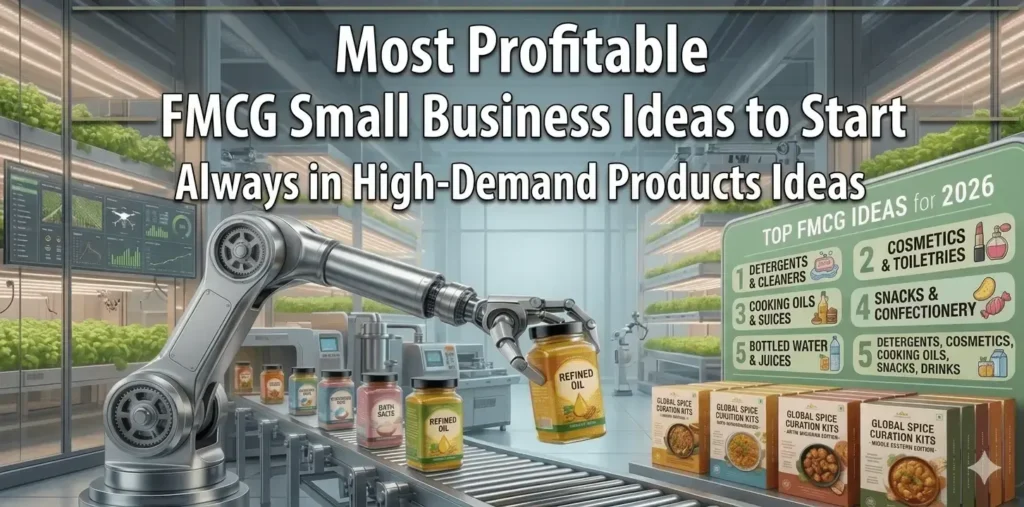
FMCG Small Business Ideas is the best choice of yours to start as it’s name itself speaks Fast-Moving Consumer Goods and it sells fast. Fast-Moving Consumer Goods (FMCG) products are essential, and always high demand products that people use regularly. This sector includes packaged foods, beverages, personal care items, and household goods. The demand for such products remains stable, regardless of economic conditions. As a result, starting a business in this sector offers promising returns, especially for entrepreneurs targeting rural and semi-urban areas. In 2026, with the rapid expansion of digital commerce and local manufacturing, many FMCG small business ideas can become profitable ventures with the right planning and strategy. With the right market entry strategy, many small business ideas can be scaled into highly profitable ventures. Let’s explore the top FMCG production opportunities primed for growth. See Also : Fevicol Type Adhesive Manufacturing Plant 15 Top Profitable FMCG Small Business Ideas for 2026 Let’s explore some of the most promising FMCG small business ideas that can help entrepreneurs build profitable ventures in the coming year. 1. Health-Conscious and Organic Food Products The post-pandemic trend for chemical-free, natural, and transparently sourced food is now a permanent market shift. Consumers are actively paying for a premium quality of Food Products. The demand for chemical-free, healthy, and organic food is growing steadily. Consumers are more conscious about what they eat and where it comes from. Launching a business that focuses on organic spices, pulses, grains, or ready-to-cook organic meals can generate consistent profits. You can source directly from farmers, build a brand, and sell through e-commerce platforms or your own store. By targeting health-conscious urban populations, your brand can earn customer trust quickly. 2. Herbal and Natural Personal Care Products India’s ancient tradition of Ayurveda and the global trend toward herbal solutions make this a profitable niche. Products like herbal soaps, shampoos, face packs, and oils are gaining popularity. You can manufacture these on a small scale using locally available herbs and oils. By focusing on quality and sustainable packaging, small businesses can tap into niche markets through online and offline retail channels. A well-branded FMCG small business ideas in this segment has strong potential to scale. 3. Packaged Snacks and Namkeen Indians love snacks, and the snacking habit is evolving rapidly. There is a growing demand for hygienically packed, innovative, and regional varieties of snacks. Starting a small-scale packaged namkeen or chips manufacturing unit requires moderate capital investment. You can experiment with millet-based snacks, baked chips, or low-oil varieties to attract the health-conscious audience. Attractive packaging and smart pricing can help your brand stand out in a competitive market. 4. Bottled Beverages – Flavored Water and Juices With rising temperatures and hectic lifestyles, ready-to-drink beverages are in high demand. Starting a small unit to produce natural fruit juices, flavored water, or health drinks is a viable option. Use locally available fruits and promote freshness and nutrition. You can sell through local grocery stores, vending machines, and food delivery platforms. This FMCG small business ideas works well when hygiene, taste, and convenience are combined effectively. 5. Homemade Pickles and Chutneys Traditional food items like pickles and chutneys are still in high demand, especially when made at home using authentic recipes. You can begin this business from your kitchen and gradually scale up. Use natural ingredients, attractive jars, and regional branding to connect with a wider audience. Offer variety such as mango, lime, mixed, and garlic pickles. With the right taste and packaging, even a small local brand can grow quickly in this FMCG category. 6. Detergents and Cleaning Products Household cleaning products like detergents, floor cleaners, and toilet cleaners are always in demand. This sector offers high-profit margins, and with proper formulations and licensing, you can launch your own brand. Focus on eco-friendly or skin-safe variants to attract health-conscious families. Low-cost packaging and regional distribution networks can help you build your brand quickly. It’s an excellent FMCG small business ideas for entrepreneurs in semi-urban or rural areas. 7. Bakery and Ready-to-Eat Packaged Food People prefer ready-to-eat items due to busy lifestyles. Starting a small bakery or packaged food brand that supplies bread, muffins, biscuits, or ready meals can be profitable. You can sell locally or tie up with cafes and supermarkets. Ensure your products have a good shelf life and proper food-grade packaging. Innovate with healthy ingredients like oats, millet, or multigrain. Customer satisfaction and consistent quality are key to long-term success in this space. 8. Personal Hygiene Products for Rural Markets There is rising awareness about hygiene in rural and semi-urban areas. Low-cost sanitary napkins, handwashes, and soaps are now reaching villages through government and NGO-led awareness campaigns. You can produce these products using basic machinery and distribute them through local retailers or health workers. It’s a scalable FMCG small business ideas with social impact as well as commercial potential. 9. Tea and Coffee Blends The tea and coffee market in India is evolving. Consumers want unique blends, flavored options, and premium packaging. You can launch a brand that offers artisanal tea, herbal infusions, or organic coffee blends. Begin with small batches and test your flavors in local markets. Use social media and influencers to grow brand awareness. Quality sourcing and aesthetic packaging will play a big role in making your brand successful. The Complete Book on Cultivation and Manufacture of Tea 10. Baby Care Products Parents today are more informed and willing to spend on safe and high-quality products for their children. Starting a line of baby care items like baby lotion, wipes, powders, and diapers can be lucrative. Focus on safety, dermatological testing, and natural ingredients. Since brand loyalty is high in this segment, you need strong branding and consistent quality to gain market share. 11. Pet Food and Grooming Essentials Pet ownership is rising, especially in urban regions. Starting a pet food brand or grooming products line like shampoos, wipes, or treats is a smart business idea. Use nutritional ingredients and highlight health benefits. Offer affordable pricing and
Herbal and Ayurvedic Medicines
Herbal and Ayurvedic medicines are deeply rooted in nature’s wisdom and human tradition. These ancient healing systems use natural herbs, plant extracts, and time-tested practices to restore health and well-being. With growing interest in chemical-free remedies and holistic wellness, these treatments are gaining popularity across the globe. They offer not just physical healing but emotional and spiritual balance too. See Also : Phenolic Resins Manufacturing Understanding the Philosophy of Herbal and Ayurvedic Medicines The core principle behind herbal and Ayurvedic medicines is balance. Ayurveda, which originated in India over 5,000 years ago, teaches that health is achieved by maintaining harmony among the body’s energies — Vata, Pitta, and Kapha. Herbs, diet, yoga, and lifestyle adjustments are used to manage this balance and prevent disease. Herbal medicine, on the other hand, spans across cultures — from Traditional Chinese Medicine to Native American healing. It uses specific plant-based compounds to treat ailments, strengthen immunity, and support natural body functions. These remedies are created from leaves, roots, seeds, flowers, and bark — all parts of a plant. Unlike synthetic medicines that often target symptoms, herbal and Ayurvedic systems focus on root causes. They promote long-term wellness, not just temporary relief. Historical Significance and Global Rise Ayurveda is one of the oldest documented medical systems in the world. Texts like the Charaka Samhita and Sushruta Samhita describe thousands of herbal formulations still used today. These texts classify plants based on taste, energy, effects, and how they interact with the body. In modern times, people are returning to these natural remedies. Concerns about side effects, chemical overload, and antibiotic resistance have led many to adopt herbal and Ayurvedic medicines. Globally, countries like the USA, Germany, and Japan are promoting herbal supplements and treatments. Wellness spas, organic product companies, and natural pharmacies are driving this demand. Core Herbs Used in Ayurvedic and Herbal Practices Several herbs are at the heart of herbal and Ayurvedic medicines. Each plant offers specific healing benefits. Here are a few commonly used herbs and their effects: Ashwagandha: Reduces stress, improves energy, and boosts immunity. Turmeric (Haldi): Fights inflammation, promotes digestion, and supports joint health. Brahmi: Enhances memory, concentration, and overall brain health. Neem: Purifies blood, fights infections, and supports skin health. Tulsi (Holy Basil): Boosts immunity, combats respiratory issues, and reduces oxidative stress. Triphala: A blend of three fruits that helps digestion, detoxification, and regular bowel movement. Guggul: Used to manage cholesterol, obesity, and arthritis. Herbs in these systems are often combined in formulations to create synergistic effects. This multi-herb approach reduces side effects and enhances overall efficacy. Methods of Preparation and Usage Herbal and Ayurvedic medicines are prepared using several traditional methods. These include decoctions, powders, tinctures, pastes, oils, and tablets. Some popular preparations are: Kashayam: Water-based decoctions taken for digestion, fever, and respiratory issues. Churnas: Herbal powders used internally or externally for various ailments. Arishtams and Asavas: Fermented liquids that act as tonics for different systems. Tailams: Medicated oils for massages, particularly in joint pains and nervous disorders. Usage is often tailored according to a person’s body constitution (Prakriti) and current imbalance (Vikriti). A qualified Ayurvedic practitioner designs treatments based on pulse diagnosis, symptoms, and lifestyle. Benefits of Herbal and Ayurvedic Medicines One of the main advantages of herbal and Ayurvedic medicines is the lack of harmful side effects when used correctly. Here are some key benefits that make them a trusted form of healing: Holistic Healing: Focuses on the root cause, not just the symptoms. Personalized Approach: Treatments are tailored to an individual’s body type, environment, and lifestyle. Sustainable and Natural: Sourced from nature, these medicines are eco-friendly and bio-compatible. Chronic Condition Support: Effective in managing long-term conditions like arthritis, asthma, diabetes, and insomnia. Improved Immunity: Most herbs act as adaptogens and immunity boosters. Affordable and Accessible: Herbs can often be grown at home or sourced locally at low cost. By adopting herbal and Ayurvedic systems, people can avoid dependency on modern medications for minor health concerns. Instead, they develop long-term vitality and resilience. Safety, Regulation, and Precautions While the benefits are numerous, it is important to follow safety guidelines while using herbal and Ayurvedic medicines. Overuse or incorrect usage can lead to complications. Consumers should: Consult Qualified Practitioners: Self-medication can be risky, especially with chronic diseases or existing prescriptions. Verify Product Quality: Always choose certified and well-reviewed brands that follow good manufacturing practices. Understand Herb Interactions: Some herbs may interfere with modern drugs, such as blood thinners or anti-diabetic medications. Monitor Dosages: Natural doesn’t always mean safe in all amounts. Correct dosage is key. Avoid During Pregnancy Without Advice: Pregnant or breastfeeding women should take herbs only under expert guidance. Government bodies like AYUSH (India), FDA (USA), and EMA (Europe) are working to standardize and regulate herbal medicines. Efforts are being made to improve transparency, labeling, and safety research. Integrating Ayurveda in Modern Lifestyles Incorporating herbal and Ayurvedic medicines into daily life doesn’t always require major changes. You can start with simple, consistent habits. Drink turmeric milk or ginger tea to support digestion and immunity. Use Triphala at night for gentle detox and bowel regulation. Practice oil pulling and Abhyanga (oil massage) for oral and skin health. Include herbs like Tulsi and Brahmi in teas or supplements to improve focus and reduce stress. Follow seasonal detox plans like Panchakarma under professional supervision. These daily rituals help maintain balance and prevent the onset of disease. They also reduce dependence on synthetic drugs and enhance the body’s self-healing abilities. Role of Diet and Lifestyle in Ayurvedic Healing In Ayurveda, food is considered medicine. Eating right is central to the success of any treatment. Depending on your body type, certain foods may be beneficial or harmful. For instance: Vata types benefit from warm, moist, and grounding foods. Pitta types need cooling, less spicy meals with more vegetables. Kapha types thrive on light, warm, and spicy foods. Ayurveda recommends eating seasonal, freshly cooked meals and avoiding processed foods. Alongside diet, lifestyle choices like adequate sleep, physical activity, stress reduction, and mindful
How to Manufacture Paints Varnishes and Lacquers
The demand for decorative and protective coatings is constantly rising across residential, commercial, and industrial sectors. Among these, Paints and Lacquers have established themselves as indispensable materials due to their protective, aesthetic, and functional properties. These products not only enhance appearance but also provide long-term durability against environmental effects. To meet the growing market demand, manufacturers must understand the detailed production steps and choose high-quality raw materials. See Also : Pharmaceutical Bulk Drugs Understanding the Manufacturing Process of Paints and Lacquers Before diving into the steps, it is important to differentiate between paints and lacquers. Paints are pigmented liquids that form a solid film after drying, while lacquers dry mainly through solvent evaporation, resulting in a hard, smooth, and glossy finish. Though they serve slightly different purposes, the fundamental manufacturing process for both involves a structured and technical approach. Selection and Preparation of Raw Materials Raw material selection is the foundation of quality in Paints and Lacquers. The key ingredients include pigments, resins, solvents, and additives. Pigments provide color and opacity, resins form the film, solvents adjust viscosity, and additives enhance performance. Manufacturers first test the raw materials for compatibility and quality. Impurities must be filtered, and solids must be properly ground to avoid uneven texture. Quality control at this stage prevents future issues in application or durability. Transitioning from material preparation, the next phase involves creating a homogeneous mixture by dispersing the solid components into the liquid base. Dispersion and Mixing Stage Proper dispersion ensures even distribution of pigments throughout the liquid medium. This step typically involves high-speed mixers, sand mills, or ball mills. The goal is to break down pigment clusters into fine particles and ensure uniform mixing. During this stage, the resin and solvents are added in a specific ratio. The mixing process is monitored closely, and viscosity is adjusted to meet the desired application properties. In Paints and Lacquers, achieving proper dispersion is crucial for color consistency, gloss level, and film strength. Once the mixture reaches optimal consistency, it moves to the next critical phase—milling. Milling and Grinding Process Milling helps achieve a uniform particle size and enhances paint stability. The mixture is passed through bead mills or triple roll mills, where grinding beads reduce particle size. This process improves pigment dispersion and gives a smooth texture to the final product. Grinding continues until the paint achieves required fineness and flow properties. Testing is done using grind gauges to ensure uniformity. For lacquers, extra care is taken to maintain clarity and glossiness, which are key performance attributes. After milling, the product is transferred to a storage tank for the thinning and let-down process. Let-down and Adjustment Phase In this step, furthermore, additional solvents, plasticizers, and additives are introduced to adjust the paint’s flow and finish. Consequently, the let-down process balances viscosity, flow rate, drying time, and surface finish. At this stage, custom formulations are carefully fine-tuned depending on the final application. Therefore, this step plays a crucial role in ensuring the paint meets specific performance standards. Whether you’re manufacturing wood coatings, industrial protective paints, or decorative wall finishes, this step ensures Paints and Lacquers meet user expectations. Additional agents like defoamers or UV stabilizers are also added based on the final product’s application. At this stage, the paint or lacquer is technically complete and ready for quality checks before packaging. Filtration and Quality Control Checks Filtration removes large particles and ensures a smooth consistency. For lacquers especially, this step is essential to maintain transparency and a glossy finish. Filtration units such as mesh filters or magnetic separators help remove contaminants and metallic particles. After filtration, multiple quality control tests are conducted. These include: Viscosity testing using viscometers Color consistency checks with spectrophotometers Drying time tests using drying racks or chambers Gloss and sheen measurement Adhesion and durability tests Only after meeting quality standards are the products cleared for packaging. Regular inspections reduce customer complaints and increase brand reliability. Packaging and Labeling Proper packaging ensures that Paints and Lacquers remain stable during storage and transport. The product is filled into containers of varying sizes—ranging from small tins to large drums—depending on customer needs. Cans are sealed using automated machines, and anti-leak measures are applied. Each container is labeled with product information, safety warnings, usage instructions, and batch numbers. Regulatory compliance and eco-labeling are also important, especially when exporting to countries with strict environmental norms. Packaging plays a crucial role in marketing as well. An attractive design and clearly printed label build trust with buyers and make your product stand out. Environmental Considerations and Waste Management Manufacturers must manage waste generated from solvents, pigments, and other chemicals. Therefore, treatment plants are installed to neutralize harmful substances before disposal. In addition, recovery units are used to reclaim solvents and reduce emissions. In recent years, eco-friendly Paints and Lacquers—such as water-based or low-VOC variants—have gained popularity. These days, these products reduce air pollution and meet green building requirements. Consequently, manufacturers investing in sustainable solutions also benefit from incentives and improved brand image. Latest Trends in Paints and Lacquers Manufacturing The industry is rapidly evolving with the help of technology and innovation. Some recent trends include: Nano-pigments for better durability and color brightness Smart coatings that react to temperature or light Self-healing paints for automotive and aerospace sectors Bio-based resins to reduce dependency on petrochemicals Digital color matching tools for faster and accurate color production These advancements make manufacturing more efficient and create new product categories that appeal to modern consumers. Challenges Faced in the Manufacturing Process Despite technological progress, certain challenges persist: Fluctuating raw material costs impact profit margins Strict environmental regulations require constant updates to production practices Skilled labor shortage affects quality consistency High competition in the market pushes brands to innovate continuously To overcome these issues, companies must invest in R&D, adopt automation, and train workers regularly. Also, establishing a strong supplier network helps stabilize material costs. See Also : NPCS March 2016 Final Thoughts The step-by-step process of manufacturing paints and lacquers demands precision, quality control, and a
Investment and Business Opportunities in Herbal and Ayurvedic Products Sector
India has always been a global hub for holistic healing and natural remedies. As we step into 2025, there is a renewed global interest in wellness and immunity. People are prioritizing natural over synthetic solutions. Amid this health-conscious wave, the Ayurvedic and herbal product industry is booming across the globe. Entrepreneurs looking for a profitable, sustainable, and impactful business opportunity should seriously consider this rapidly growing sector. See Also : Multispeciality Hospital A Booming Global Wellness Market The wellness industry is evolving faster than ever before. By 2025, the global wellness market is projected to surpass $7 trillion. This massive growth is driven by rising consumer awareness around lifestyle diseases, immunity, and mental well-being. More people are looking beyond allopathy for long-term wellness. This shift has led to an unprecedented demand for traditional health solutions, especially those rooted in Ayurveda and herbal science. Ayurvedic supplements, immunity-boosting tonics, herbal skincare, and detoxifying teas are becoming household essentials worldwide. Consumers want authenticity, minimal side effects, and preventive care—all of which are offered by the Ayurvedic and herbal product sector. Rising Preference for Natural and Sustainable Products Sustainability is no longer a luxury—it’s a priority. Modern consumers avoid synthetic chemicals and unsustainable practices. They now choose clean, green, and cruelty-free products. This trend perfectly aligns with Ayurvedic principles, which emphasize harmony between body and nature. Ayurvedic and herbal products are derived from natural ingredients like neem, ashwagandha, tulsi, and turmeric. These are not only effective but also safe for long-term use. Businesses that focus on biodegradable packaging and ethical sourcing find it easier to win consumer trust. Sustainability also becomes a key marketing point, especially among Gen Z and millennials. Government Support and Policy Backing India’s Ministry of AYUSH (Ayurveda, Yoga & Naturopathy, Unani, Siddha, and Homeopathy) has played a critical role in boosting the herbal industry. In 2025, multiple schemes support startups and MSMEs working in the Ayurvedic and herbal product sector. Policies provide financial assistance, quality certifications, export incentives, and funding for research. The government is also working to improve standardization and global recognition of Indian Ayurvedic products. These efforts make it easier for businesses to scale and expand globally. Ayurveda: A 5000-Year-Old Science with Modern Relevance Ayurveda isn’t a trend—it’s a time-tested science with over 5,000 years of documented healing. Its principles are based on balance and prevention. As modern lifestyles lead to stress, poor digestion, obesity, and hormonal imbalances, Ayurveda offers long-term, root-cause solutions. This ancient system fits beautifully into today’s holistic wellness movement. The growing interest in yoga, meditation, and mindfulness has further amplified the popularity of Ayurvedic and herbal products that complement these practices. From herbal teas to stress-relief capsules, the market is expanding rapidly. Digital Transformation in Ayurvedic Commerce E-commerce has revolutionized how Ayurvedic brands sell their products. Businesses no longer need large stores or expensive marketing. With platforms like Amazon, Flipkart, and niche D2C websites, anyone can build a profitable Ayurvedic brand with a focused digital strategy. Social media also plays a massive role. Educational content, product demonstrations, and wellness blogs help brands engage their audience. Influencers and health coaches are eager to collaborate with ethical, herbal brands that resonate with their followers. This digital shift reduces marketing costs, enables direct customer relationships, and allows data-driven product development. Entrepreneurs can test product ideas with smaller batches and scale up based on real-time feedback. Abundant Availability of Raw Materials India is blessed with rich biodiversity and thousands of medicinal plants. The Himalayan region, Western Ghats, and forests of central India are home to potent herbs used in Ayurvedic preparations. This abundance ensures a steady, cost-effective supply of raw materials for Ayurvedic and herbal product manufacturing. When brands source locally and responsibly, they support farmers, ensure freshness, and reduce their environmental impact. This backward integration also leads to better quality control. Low Investment, High Return Potential One of the biggest advantages of this business is its relatively low entry cost. Entrepreneurs don’t need to invest millions to start. With small-scale manufacturing units or contract manufacturing partners, they can launch quickly and expand gradually. Product development in Ayurveda does not require expensive R&D labs, as centuries of knowledge already exist. However, quality certifications and regulatory compliance are essential to maintain credibility. Once established, businesses enjoy high-profit margins due to low ingredient costs and premium retail pricing. Wide Range of Product Categories The Ayurvedic and herbal product industry is vast and diverse. Entrepreneurs can explore multiple segments based on their interests and market demand. Here are some profitable product categories: Herbal Skincare & Cosmetics: Face packs, oils, soaps, serums, and lotions made with Ayurvedic herbs. Health Supplements: Tablets, capsules, tonics for digestion, immunity, stress, and joint health. Herbal Beverages: Detox teas, tulsi infusions, turmeric lattes, and more. Baby and Mother Care: Ayurvedic massage oils, powders, and natural wellness kits. Pet Care: Herbal grooming and digestive products for animals—an emerging trend. Men’s Wellness: Ayurvedic formulations for stamina, hair, and beard care. This diversity enables seasonal promotions, combo packs, gifting options, and personalized wellness bundles—boosting customer retention. Global Export Opportunities Indian Ayurvedic and herbal products are trusted globally for their purity and heritage. With certifications like GMP, USDA Organic, and ISO, Indian brands are tapping into export markets successfully. The US, Europe, Southeast Asia, and the Middle East are key importers of herbal wellness goods. Ayurvedic teas, supplements, oils, and skincare items are particularly in high demand. With the right documentation and international branding, businesses can unlock major export revenue streams. Personalized Wellness and Custom Products The trend of personalized healthcare is growing. Consumers now seek products tailored to their unique body types, lifestyle, and health goals. Ayurveda, with its core philosophy of body constitution (Vata, Pitta, Kapha), offers ready-made personalization models. Entrepreneurs can offer online quizzes, expert consultations, and custom formulation services. This helps build a loyal customer base and adds value beyond the product. Subscription models and curated wellness kits can further enhance recurring revenue. Storytelling and Emotional Branding Customers today connect with stories and values. The Ayurvedic and
Business Opportunities for Women Entrepreneurs
In today’s dynamic and digitally connected world, women are breaking barriers and venturing into entrepreneurship like never before. With access to education, technology, and finance, women are not only dreaming big but also creating profitable ventures across industries. From tech startups and wellness brands to eco-friendly enterprises and content-driven businesses, the landscape is full of exciting prospects. Understanding the most promising business opportunities for women entrepreneurs can empower more women to take the leap confidently and build their own success stories. See Also : Medical College with Hospital Project Top Profitable Business Opportunities for Women Entrepreneurs To begin with, let’s explore the current market environment. The digital revolution has removed many traditional entry barriers for women. Now, a business can be run from home with a laptop and a strong internet connection. This has opened up a vast array of scalable business options. Whether it’s selling handmade crafts or launching a content creation platform, the possibilities are endless for driven individuals. Below are some of the most profitable and accessible business opportunities for women entrepreneurs today. 1. Online Boutique and Fashion Store Fashion is a powerful expression of creativity, and women have a natural edge in this field. With platforms like Shopify, Etsy, and Instagram, starting an online boutique has never been easier. From handmade jewellery and designer sarees to plus-size fashion and maternity wear, niche categories offer great profit potential. The low initial investment and high scalability make this a perfect venture. Strong branding, influencer marketing, and personalized service can help build customer loyalty. 2. Freelance Writing and Content Creation Content is king in the digital age. Women who possess writing or storytelling skills can capitalize on the high demand for content. Blogs, eBooks, social media posts, and website copy are in constant demand. With strong SEO knowledge and niche specialization, a freelance writer can earn handsomely while working remotely. Platforms like Upwork, Fiverr, and LinkedIn are great places to start networking and finding clients. This is one of the fastest-growing business opportunities for women entrepreneurs, especially for those with a background in literature, marketing, or journalism. 3. Health and Wellness Coaching Health, fitness, and wellness have taken center stage in recent years. Women with experience in yoga, nutrition, life coaching, or fitness training can start coaching online. Virtual classes, personalized diet plans, and group programs are high-value services. With certifications and a strong online presence, clients can be attracted through platforms like Instagram and YouTube. This field also allows flexibility and work-life balance, which is ideal for many women. 4. Handmade Crafts and Eco-Friendly Products Sustainability is not a trend—it’s a movement. Consumers now prefer handcrafted, biodegradable, and locally made products. If you’re good at creating candles, soaps, skincare items, bags, or home décor, this niche is for you. Platforms like Amazon Karigar, Etsy, and local trade fairs help showcase these products to a global audience. This is one of the finest business opportunities for women entrepreneurs who want to blend creativity with eco-conscious business practices. Additionally, the government of India and many NGOs offer training and funding for women-led handmade businesses. 5. Digital Marketing and Social Media Management Every business today needs a digital presence. If you have knowledge of SEO, advertising, social media strategies, or branding, you can help businesses grow. Many startups and small businesses cannot afford big agencies. Hence, they look for freelance or boutique service providers. You can start with zero investment, gain clients through networking, and even scale into a small agency. Tools like Canva, Buffer, and HubSpot help manage campaigns efficiently. Digital marketing has evolved into one of the most promising business opportunities for women entrepreneurs, especially for those looking to start small and grow gradually. 6. Online Tutoring and Education Services Education has become increasingly digital, with students looking for help in academics, language learning, or test preparation. Women with teaching backgrounds or strong subject knowledge can begin online tutoring. Platforms like Vedantu, Chegg, and WhiteHat Jr. provide a space to get started. Over time, you can create your own brand and even sell educational courses. This field requires minimal infrastructure and offers regular income. Parents trust female tutors for young children, which gives women an edge in this sector. It is a sustainable and impactful opportunity. 7. Food Business – Home-Based or Cloud Kitchen Food is an evergreen industry. Women who are passionate about cooking can turn their kitchen into a profitable venture. Options include tiffin services, home bakeries, packaged snacks, or cloud kitchens. With food delivery platforms like Swiggy and Zomato, reaching customers is easy. If managed well, the business can be scaled to multiple kitchens or outlets. Following food safety regulations and maintaining consistency is key. This is one of the most relatable business opportunities for women entrepreneurs because it leverages culinary skills and family recipes that are already proven. 8. Beauty Services and Skincare Brand The beauty and skincare industry is booming, and women are leading this space with innovation and style. You can start a beauty salon at home, offer mobile beauty services, or launch your own organic skincare brand. Customers now prefer chemical-free, handmade, and personalized products. Proper licensing, packaging, and marketing are essential for success. Beauty influencers and word-of-mouth referrals can grow the business rapidly. Combining traditional beauty knowledge with modern marketing makes this one of the fastest-growing business opportunities for women entrepreneurs globally. 9. Event Planning and Wedding Management If you love organizing, planning, and handling logistics, event planning can be a rewarding field. From birthday parties and corporate events to weddings and religious functions, the need for planners is constant. A well-executed event leaves a lasting impression and gets referrals. You can start with small gatherings and scale to big-budget weddings. Networking with vendors and maintaining strong client communication are crucial. This line of work also offers flexibility and creativity—two things that appeal to many female entrepreneurs. 10. Virtual Assistant and Remote Admin Services Many entrepreneurs and professionals need support with email management, data entry, travel bookings, and customer handling. Women