
6 Profitable Business Ideas for Making Money Fast
In today’s dynamic economy, identifying profitable business ideas that are quick to launch and easy to scale is more important than ever. Entrepreneurs are looking for ventures that offer high ROI, low startup costs, and flexible operation. Whether you’re starting out with a shoestring budget or are ready to invest in a scalable model, the following business ideas offer lucrative pathways to success in 2025. Why Choosing a Profitable Business Idea Matters Every successful business begins with a solid idea. However, not every idea translates into profitability. The difference lies in market demand, execution strategy, operational costs, and scalability. We believe that profitable business ideas should not only generate revenue but also offer room for growth, automation, and stability in changing markets. Let’s explore six of the most promising, fast-start business models you can begin working on today. 1. E-commerce Reselling: Start Your Digital Retail Empire With the booming digital economy, e-commerce reselling remains one of the most profitable business ideas globally. As a reseller, you don’t need to manufacture products or maintain huge inventories. You can either dropship items or purchase in bulk at low cost and resell at a markup. How to Get Started Choose a profitable niche (e.g., fitness gear, pet supplies, eco-friendly products). Set up an online store using Shopify or WooCommerce. List products from suppliers or manufacturers. Promote through digital ads and SEO. Smart branding, customer service, and SEO-optimized listings can quickly differentiate your store and accelerate revenue generation. 2. Digital Marketing Agency: Help Brands Grow & Earn Big As more businesses shift online, the need for digital visibility has skyrocketed. This makes starting a digital marketing agency one of the most viable and profitable business ideas. You don’t need a physical office to begin—just skills, strategy, and tools. Services You Can Offer SEO (Search Engine Optimization) PPC Campaigns (Google Ads, Facebook Ads) Social Media Marketing Video Editing & Content Creation Email Automation Campaigns Outsourcing technical tasks to freelancers or automation tools can keep your business lean while you focus on strategy and client acquisition. Monthly retainers and performance-based contracts help build consistent cash flow. 3. Food Truck Business: Cook, Move & Serve Profitably The food industry offers timeless value, and food trucks combine flexibility with customer engagement. A well-branded food truck with a unique menu can attract huge daily footfall. Steps to Launch Select a cuisine with local appeal and low ingredient cost. Acquire required licenses and a modified truck. Invest in marketing—think social media, events, and local SEO. Partner with food delivery apps for hybrid sales. With strategic parking spots and daily sales, a food truck can earn significantly more than a fixed-location restaurant with lower operating costs and faster ROI. 4. Niche Freelance Marketplace: Build the Next Big Platform The gig economy is surging. Instead of competing on platforms like Upwork, why not create your own? A niche-specific freelance marketplace can become a magnet for skilled professionals and businesses needing services. Potential Niches Virtual Assistants for Startups Legal & Compliance Freelancers Fitness & Nutrition Experts Local Tutors & Online Instructors The core idea is to build trust and convenience for both buyers and freelancers. Charging listing fees, commissions, and featured service promotions can turn this into a recurring income model—definitely a profitable business idea in 2025. 5. Affiliate Blogging: Monetize Your Passion for Writing Affiliate marketing through blogging remains an untapped goldmine for many. With the right SEO strategy, a blog can drive passive income through affiliate commissions, display ads, and sponsored content. Blog Monetization Tips Target long-tail keywords with high buyer intent. Use internal linking and structured schema for better SEO. Promote products through tutorials, reviews, and comparisons. Build email lists and use affiliate newsletters. Once your blog starts gaining organic traffic, your income scales without needing additional time or resources—a perfect profitable business idea for solopreneurs. 6. Online Coaching & Course Selling: Share Knowledge, Earn Respect E-learning is not just a trend; it’s the future. Platforms like Teachable, Kajabi, or Thinkific make it simple to build and launch your own courses. The key is to focus on high-demand skills and provide structured learning paths. Popular Niches for Online Courses Digital Marketing UI/UX Design Language Learning Yoga & Wellness Finance & Investment You can monetize via one-time course sales, memberships, or coaching packages. Building a strong personal brand on LinkedIn or YouTube enhances visibility and leads to more conversions. Additional Profitable Business Ideas Worth Exploring While the top 6 are already powerful, here are a few bonus ideas with fast ROI potential: Mobile Car Wash Services: High demand, low investment, and eco-friendly options available. Pet Grooming Business: Pet owners spend big on grooming—especially in urban areas. Social Media Influencer Agency: Represent local influencers and connect them with brands. Print-on-Demand Store: Sell custom t-shirts, mugs, and stationery without holding inventory. Each of these models caters to a growing niche, requires low overhead, and can be launched quickly with minimal infrastructure. Final Thoughts: Your Path to Business Success Starts Now Starting a business doesn’t require massive funding or a fancy office anymore. What matters is market demand, execution, and consistency. Whether you’re aiming to create a solo business or scale with a team, these profitable business ideas provide a strong foundation. Focus on solving real problems. Use digital tools to automate and scale. Keep testing and refining your business model. The sooner you act, the faster you can reach financial independence. There has never been a better time to begin. Visit the page Select and Choose the Right Business Startup for You for sorting out the questions arising in your mind before starting any business and know which start-up you can plan. We, at NPCS, endeavor to make business selection a simple and convenient step for any entrepreneur/startup. Our expert team, by capitalizing on its dexterity and decade’s long experience in the field, has created a list of profitable ventures for entrepreneurs who wish to diversify or venture. The list so mentioned is updated regularly to give you a regular dose of
Calcium Propionate. It’s time to start your own Calcium Propanoate Manufacturing Business
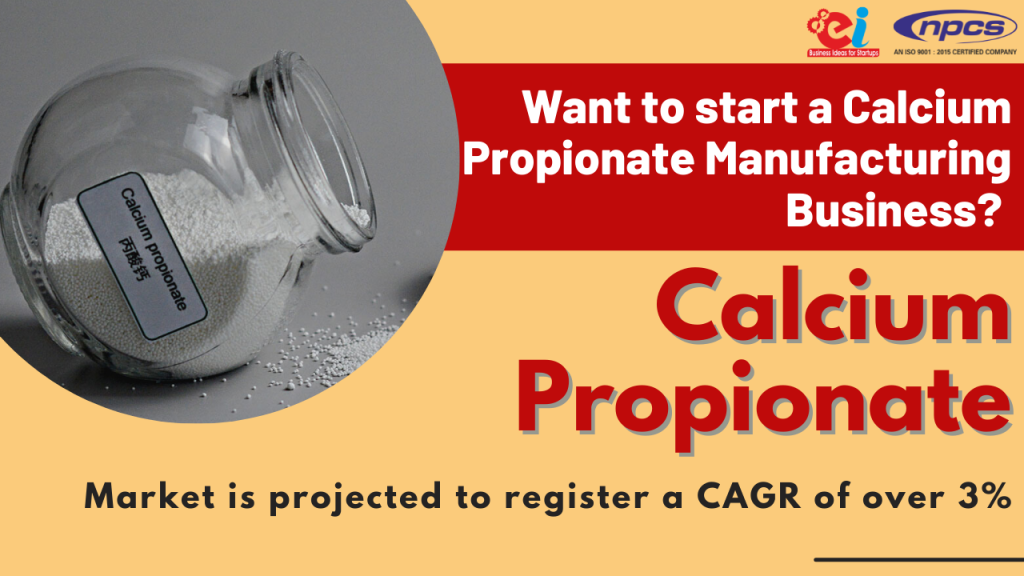
The Calcium Propionate industry is witnessing an increasing demand driven by its wide usage in the food preservation and animal feed sectors. As awareness grows regarding the prevention of mold and bacteria in perishable goods, the global market for Calcium Propionate continues to thrive. For entrepreneurs aiming to venture into a profitable manufacturing domain, establishing a Calcium Propionate manufacturing business is both a strategic and sustainable choice. What is Calcium Propionate? Calcium Propionate (chemical formula: Ca(C?H?COO)?) is a white, crystalline, odorless powder used widely as a food preservative, particularly in bakery products. It inhibits the growth of mold and other microorganisms, extending the shelf life of products. Its application extends to dairy, beverages, processed meat, and also animal feed as a mold inhibitor. Market Potential and Demand Analysis The global market for Calcium Propionate is experiencing robust growth. Factors contributing include: Rising demand for preservative-free yet long-lasting food products Growth in processed and packaged food industries Need for effective mold inhibitors in livestock feed Asia-Pacific, particularly India, is emerging as a key player due to increasing food safety awareness, making it an ideal geography to launch a Calcium Propionate manufacturing business. Licensing and Regulatory Approvals To set up a compliant manufacturing unit in India, the following steps are essential: FSSAI License: For food-grade Calcium Propionate Pollution Control Board Clearance: For managing chemical emissions Factory License and Local Municipality Approval GST Registration Drug and Cosmetic Act Certification (if supplying to pharma companies) ISO Certification for quality assurance (optional but recommended) Raw Materials Required The key raw materials for Calcium Propionate manufacturing include: Calcium Hydroxide (Ca(OH)?) Propionic Acid (CH?CH?COOH) Water These chemicals are readily available from domestic chemical suppliers. It’s advisable to partner with vendors offering bulk rates and reliable delivery timelines. Manufacturing Process of Calcium Propionate The Calcium Propionate production process involves a chemical reaction between Propionic Acid and Calcium Hydroxide. The standard procedure includes: Reacting StagePropionic acid is slowly added to a solution of calcium hydroxide in a stirred tank reactor. The reaction is exothermic and should be temperature-controlled (preferably below 30°C). Filtration and SeparationThe reaction mixture is filtered to remove any insoluble impurities. A clear calcium propionate solution is obtained. EvaporationWater is removed from the solution through vacuum evaporation. CrystallizationThe concentrated solution is cooled to crystallize Calcium Propionate. Drying and MillingCrystals are dried in tray or rotary dryers and then milled to a fine powder. PackagingFinal product is packed in HDPE bags with inner linings or paper bags for dispatch. Machinery and Equipment Required To set up a semi-automated or fully-automated plant, the following machinery is essential: Reactor vessel (SS304/SS316) Agitators and stirrers Filtration unit Crystallizer Dryer (tray or rotary) Pulverizer and milling unit Packaging machines (semi or fully automatic) Quality control laboratory setup Initial investment for a small to medium scale plant ranges between ?50 lakhs to ?1.5 crores depending on automation, capacity, and compliance standards. Location and Infrastructure A Calcium Propionate manufacturing business requires a pollution-compliant zone with: Access to water and electricity Proximity to chemical suppliers Good transportation infrastructure for logistics Availability of skilled labor A 5000–8000 sq. ft. industrial plot should suffice for a 5–10 ton/day capacity plant. Manpower Requirement A typical setup will need: Production Manager Chemical Engineers Machine Operators Quality Assurance Experts Packaging and Warehouse Staff Sales and Distribution Team Staffing should be optimized to balance operational efficiency and cost-effectiveness. Quality Standards and Testing Ensuring quality is non-negotiable. Key quality control tests include: Purity % by titration Moisture Content pH of 10% solution Heavy metal traces Microbial contamination (especially mold & bacteria) Adhering to international standards like FCC, USP, or EINECS ensures global acceptability of the product. Marketing and Distribution Strategy To successfully launch and grow your Calcium Propionate business, adopt the following strategies: B2B Marketing: Target food processing companies, bakeries, dairy manufacturers, and animal feed companies. Online Presence: Build a professional website, leverage platforms like IndiaMART, TradeIndia, Alibaba, etc. Partnerships: Collaborate with distributors, wholesalers, and chemical dealers. Export Potential: Register under DGFT for export license. Target markets like the Middle East, Southeast Asia, and Africa. Certifications: ISO 22000, FSSAI, and Kosher/Halal for enhanced credibility. Cost and Profitability Analysis Startup Capital: Land & Infrastructure: ?20–30 lakhs Machinery: ?25–50 lakhs Raw Material (Initial Stock): ?10–15 lakhs Labor & Working Capital: ?10–20 lakhs Licensing, Branding & Marketing: ?5–10 lakhs Operating Cost Per Kg (approx.): Raw Material: ?70–?90 Utilities & Labor: ?10–?15 Packaging & Miscellaneous: ?5–?10 Selling Price (2025 Market Avg): ?130–?180 per kg Gross Profit Margin: 30%–50% depending on scale and sourcing efficiency. Risks and Challenges Volatility in raw material pricing Strict compliance and regulatory checks Need for consistent product quality High competition from Chinese and European suppliers Mitigation strategies include long-term vendor contracts, automation to reduce errors, and continuous market analysis. Future Opportunities and Expansion With increasing demand for clean-label and long-lasting food, the Calcium Propionate market is set to expand further. Business expansion can include: Launching new preservative compounds (e.g., sodium propionate, potassium sorbate) White-label manufacturing Export-focused operations Vertical integration into food ingredients and additives By establishing a Calcium Propionate manufacturing business, entrepreneurs are not only tapping into a lucrative chemical segment but also contributing to safer and longer-lasting food systems globally. Visit the page Select and Choose the Right Business Startup for You for sorting out the questions arising in your mind before starting any business and know which start-up you can plan. We, at NPCS, endeavor to make business selection a simple and convenient step for any entrepreneur/startup. Our expert team, by capitalizing on its dexterity and decade’s long experience in the field, has created a list of profitable ventures for entrepreneurs who wish to diversify or venture. The list so mentioned is updated regularly to give you a regular dose of new emerging opportunities. Contact Us
5 Manufacturing Business Ideas for your Next Startup

In a rapidly evolving economy, manufacturing business ideas are opening doors to promising opportunities for aspiring entrepreneurs and seasoned investors alike. With technological advancement, increased demand for localized production, and a growing preference for sustainability and innovation, manufacturing has transformed into a highly dynamic and lucrative sector. Manufacturing plays a pivotal role in driving economic growth, creating employment opportunities, and supporting the rise of MSMEs. Entrepreneurs looking to establish a strong presence in the business world should seriously consider these five high-potential manufacturing business ideas to build wealth and scale sustainably. 1. Eco-Friendly Packaging Manufacturing Environmental consciousness is reshaping consumer behavior, pushing companies to shift towards sustainable practices. This change is fueling demand for eco-friendly packaging, making it one of the most viable and impactful manufacturing business ideas in the modern era. Why This Idea Stands Out Environmental regulations are banning single-use plastics globally. Large corporations are committing to sustainable supply chains. Consumers are increasingly supporting brands that align with green values. Investment and Setup To start this business, you’ll need: Automatic die-cutting and heat-sealing machines. Biodegradable raw materials such as bagasse, cornstarch, PLA, and recycled kraft paper. A medium-sized facility that complies with environmental safety standards. Growth Projections According to market research, the global green packaging industry is expected to reach $413 billion by 2032, growing at a CAGR of over 5%. This represents a massive opportunity for new entrants who can deliver quality and scalability. As companies continue to prioritize ESG (Environmental, Social, and Governance) goals, this manufacturing business idea will remain a profitable long-term play. 2. Custom Furniture Manufacturing Personalization is the future of retail. The demand for custom furniture is booming as customers increasingly prefer products that match their personal style, comfort, and functional needs. This is one of the best manufacturing business ideas for entrepreneurs with a flair for design and an understanding of consumer preferences. Market Drivers Surge in real estate and interior décor spending. Growth of remote work culture, increasing demand for ergonomic furniture. Rising influence of social media aesthetics and Pinterest-inspired homes. Startup Requirements Invest in CNC wood-cutting machines, upholstery units, and finishing tools. Hire skilled carpenters, designers, and upholsterers. Use 3D design software to visualize and create custom concepts before production. Sales Strategy Start with an online store or tie up with interior designers and architects. Online platforms like Etsy, Pepperfry, and Urban Ladder have made it easier than ever to enter this space and grow exponentially. With the right branding, this manufacturing business idea can transform into a sought-after interior lifestyle label. 3. Organic Skincare Product Manufacturing The clean beauty trend is here to stay. The market for organic skincare is expanding rapidly as more consumers become aware of the harmful effects of synthetic chemicals. Starting an organic skincare manufacturing unit is not only a profitable manufacturing business idea, but also one with a meaningful purpose. Popular Products to Manufacture Herbal face creams, sunscreens, and body lotions. Ayurvedic soaps and shampoos. Essential oils, serums, and facial scrubs. Raw Materials and Compliance To manufacture high-quality organic skincare products, you need: Natural ingredients like aloe vera, turmeric, neem, sandalwood, and rose water. Proper storage conditions and hygiene protocols. Licenses from the FSSAI, FDA, and certifications like GMP and ISO 22716. Revenue Channels Sell through: Health and wellness stores. Online marketplaces like Amazon and Nykaa. Exporting to organic-conscious countries in Europe and North America. With growing demand for chemical-free beauty, this manufacturing business idea can lead to a global wellness brand if scaled strategically. 4. Smart LED Lighting Manufacturing As cities transform into smart urban centers, the demand for smart LED lighting is skyrocketing. Energy efficiency, app control, and IoT integration are redefining home and office lighting systems. Market Dynamics Governments worldwide are offering subsidies to promote energy-efficient lighting. Builders and smart city planners are incorporating automation-ready lighting in new developments. LED technology is replacing incandescent bulbs at an exponential rate. Infrastructure and Equipment Investment in surface mount technology (SMT) lines for circuit boards. Procurement of LED drivers, resistors, and smart sensors. R&D department for continuous feature enhancements. Target Markets Real estate developers and interior designers. Retail chains, hospitals, malls, and co-working spaces. E-commerce platforms targeting tech-savvy customers. This manufacturing business idea benefits from high repeat demand, especially if you introduce energy-saving and customizable lighting features that appeal to both residential and commercial buyers. 5. Disposable Medical Supplies Manufacturing The pandemic underscored the need for self-reliance in medical supplies manufacturing. Gloves, syringes, face masks, PPE kits, and disposable gowns are now essentials in hospitals, dental clinics, labs, and even households. Why You Should Invest Health infrastructure development is a global priority. A growing middle class is seeking better hygiene and protection. Large scope for international exports, especially to developing countries. Setup Essentials A dust-free, sterile facility with Class 100,000 cleanroom certification. Fully automatic machinery for mask-making, gloves, and packaging. Quality control labs for bacterial filtration efficiency (BFE) and other certifications. Distribution Channels Direct contracts with hospitals and pharma chains. Government supply contracts through tenders. Exporting through authorized global medical supply networks. If you’re looking for a resilient and purpose-driven manufacturing business idea, this sector offers strong margins and growing demand with proper execution. How to Succeed in Manufacturing Business To thrive in the competitive manufacturing space, it’s essential to build operational excellence and customer trust from day one. 1. Streamline Production Adopt lean manufacturing techniques to minimize waste and optimize efficiency. Use Six Sigma or Kaizen for continuous improvement. 2. Build a Skilled Team Hire experienced professionals and train them in safety, quality control, and equipment handling. Happy employees ensure high product quality. 3. Digital Transformation Incorporate ERP, CRM, and marketing automation tools. Maintain an SEO-optimized website and sell through B2B portals and social media. 4. Product Differentiation Use high-quality materials and innovation to stand out from competitors. Create USPs around design, functionality, and sustainability. 5. Focus on Branding A strong brand voice builds trust and drives loyalty. Design attractive packaging and invest in storytelling through digital channels. Conclusion The future of
5 Business Ideas to start your own Business and Become an Entrepreneur

In today’s fast-paced and dynamic world, many individuals are turning toward entrepreneurship as a means of taking control of their financial destiny. Whether you’re fresh out of college, looking to escape the 9-to-5 grind, or simply dreaming of building something from the ground up, the journey of entrepreneurship can be incredibly rewarding. The key lies in selecting the right business idea that aligns with your skills, interests, and market demand. This article explores five powerful and practical business ideas that can kickstart your entrepreneurial journey. These ideas are designed to be accessible, profitable, and scalable — making them ideal for aspiring business owners. If you’re ready to embrace the spirit of entrepreneurship, then read on to discover the perfect launching pad for your success. Why Entrepreneurship Matters Today Entrepreneurship is more than just starting a company. It’s about solving problems, creating value, and bringing innovation to life. It’s what drives economic growth, opens up job opportunities, and transforms communities. In 2025, entrepreneurship is no longer limited to tech geniuses or billion-dollar investors — it’s for anyone with ambition, resilience, and a strong idea. With digital platforms, affordable tools, and global connectivity, launching a business has never been easier. Entrepreneurship empowers individuals to control their career paths and achieve financial independence on their terms. 1. Online Coaching or Consulting Business If you have professional experience or expertise in a specific area — be it marketing, business strategy, fitness, finance, or mental wellness — starting an online coaching or consulting business could be your golden ticket. Thanks to the digital era, you can connect with clients across the globe without leaving your home. Platforms like Zoom, Kajabi, and Thinkific allow entrepreneurs to package knowledge into services or courses that can be delivered virtually. Why this idea works for entrepreneurship: Low overhead and startup costs. Scalable with digital courses or group sessions. Positions you as a subject matter expert. This form of entrepreneurship thrives on reputation and results, so the more value you provide, the more your business can grow through referrals and testimonials. 2. E-commerce Store (Niche Products) E-commerce has exploded in recent years, and it continues to be a lucrative option for first-time entrepreneurs. Rather than trying to compete with big giants like Amazon or Flipkart, the secret lies in focusing on a niche — such as eco-friendly products, custom jewelry, or pet accessories. You can use platforms like Shopify, WooCommerce, or Etsy to set up your store and integrate dropshipping or in-house fulfillment strategies. Why this idea aligns with entrepreneurship: Unlimited market reach through the internet. Passive income potential with the right automation. Creative freedom in product design and branding. For those new to entrepreneurship, e-commerce offers hands-on experience with marketing, customer service, and supply chain management — all vital components of running a successful business. 3. Social Media Management Agency With millions of businesses going online, the demand for skilled social media managers is on the rise. If you have a knack for content creation, strategy, and analytics, launching a social media management agency can be a smart move. Start by managing social media profiles for local businesses, startups, or influencers. Over time, you can expand your services to include content creation, ad management, and influencer collaborations. Entrepreneurship potential in this field: High demand across industries. Recurring income through retainer clients. Ability to scale with a team or freelancers. Entrepreneurship in this sector lets you blend creativity with strategy, helping brands grow their online presence while building a reputable business for yourself. 4. Eco-Friendly Products Manufacturing Sustainability is no longer a trend — it’s a movement. Eco-conscious consumers are actively seeking alternatives to plastic, chemical-laden goods, and wasteful packaging. If you’re passionate about the environment, consider starting a business focused on eco-friendly products like bamboo toothbrushes, reusable bags, or biodegradable tableware. This form of entrepreneurship has long-term viability as more people and businesses aim to reduce their carbon footprint. Why this is a top business idea for entrepreneurship: Addresses a growing social and environmental issue. Potential for government grants or subsidies. High customer loyalty in the green market. With the right marketing strategy and transparent messaging, eco-businesses can quickly gain traction and dominate their niche. 5. Digital Content Creation (YouTube, Podcasts, Blogs) We’re living in the era of creators. If you love storytelling, teaching, or entertaining — digital content creation is a powerful form of entrepreneurship. Starting a YouTube channel, podcast, or blog requires consistency, creativity, and audience understanding, but it can lead to diverse monetization avenues. You can earn through ad revenue, affiliate marketing, sponsorships, paid subscriptions, and even merchandise. Entrepreneurship advantages in content creation: Freedom to express your voice and vision. Scalable income with minimal capital investment. Opportunities to build a loyal online community. This is one of the most accessible paths to entrepreneurship for individuals with limited startup funds but strong ideas and personality. How to Choose the Right Business Idea While all the above ideas offer strong potential, the success of your entrepreneurship journey depends on picking the right fit for you. Consider the following when evaluating your options: Passion and interest: Choose something you genuinely enjoy. Skills and experience: Leverage your existing strengths. Market demand: Make sure there’s a real need for your product or service. Scalability: Think long-term — can your business grow? Resources: Be realistic about your financial and time investment. The beauty of entrepreneurship lies in experimentation. Start small, test your idea, learn from failures, and iterate. Final Thoughts: The Future of Entrepreneurship The world is full of problems waiting to be solved — and entrepreneurship is the bridge between those problems and impactful solutions. As more people embrace innovation and autonomy, the ecosystem for new business ideas continues to thrive. The five ideas listed above are just starting points. With creativity, strategy, and persistence, you can build a business that not only generates income but also delivers purpose and pride. If you’re ready to take the first step toward entrepreneurship, don’t wait for the perfect moment — start where
Top 7 Manufacturing Business Ideas | Best Startup Businesses

The manufacturing industry plays a crucial role in economic development and job creation across the globe. In 2025, as entrepreneurs search for high-potential startup opportunities, manufacturing business ideas have emerged as some of the most lucrative and scalable ventures. With growing demand, access to better technology, and government support for small-scale industries, there has never been a better time to dive into the manufacturing sector. This article will explore the best 7 manufacturing business ideas for startups that promise excellent returns, long-term sustainability, and potential for innovation. Each idea is carefully chosen based on market trends, investment feasibility, and scalability. Whether you’re a first-time entrepreneur or an experienced investor, these ideas can guide you toward building a profitable manufacturing business in 2025. 1. Eco-Friendly Packaging Material Manufacturing As environmental consciousness rises worldwide, the need for eco-friendly packaging solutions is exploding. Governments are banning single-use plastics, and consumers are actively seeking sustainable alternatives. Starting a manufacturing business that focuses on biodegradable and recyclable packaging materials can be both profitable and impactful. What You Can Manufacture: Paper bags Cardboard cartons Biodegradable food containers Compostable pouches Why This Works: Eco-conscious brands, e-commerce platforms, restaurants, and retail businesses are increasingly replacing plastic with biodegradable options. The global sustainable packaging market is expected to surpass $500 billion by 2030. Startup Needs: Bag-making machines Paper roll feeders Heat press units Skilled labor and quality assurance This manufacturing business idea offers startup entrepreneurs the chance to create a brand aligned with the green economy, ensuring future growth and customer loyalty. 2. Organic Fertilizer Manufacturing The agricultural sector is witnessing a paradigm shift as farmers transition from chemical to organic farming methods. This shift is creating a massive demand for organic fertilizers, making it one of the best manufacturing business ideas in 2025. What You Can Manufacture: Vermicompost Cow dung-based compost Biofertilizers using natural microbes Liquid foliar sprays Why It’s Profitable: With a growing awareness of soil health and food safety, organic farming practices are being promoted by governments and NGOs alike. Organic fertilizer manufacturing is a low-cost, high-demand business that can scale with ease. Setup Essentials: Composting pits or mechanized composters Raw material collection system Packing and weighing units Local farming community network Starting this manufacturing business also offers potential to collaborate with agricultural co-operatives and retail chains to ensure wide distribution. 3. Candle Manufacturing Candle manufacturing is no longer just about creating sources of light; it has become a booming lifestyle industry. Scented, decorative, and therapeutic candles are in high demand, especially in the wellness, hospitality, and gifting sectors. Product Variants: Soy candles Beeswax aromatherapy candles Luxury jar candles with essential oils Festival-themed and customized candles Business Benefits: With the rise of online marketplaces and the popularity of homemade and artisanal goods, candle making is a low-investment, high-margin business. It’s perfect for small setups and home-based manufacturing units. Infrastructure Needs: Melting and pouring equipment Molds and containers Fragrances, dyes, and wicks Branding and packaging Among the best manufacturing business ideas, this one stands out for its creative flexibility, low operational cost, and strong market demand. 4. Paper Cup and Disposable Plate Manufacturing With environmental restrictions on plastic products, paper cup and disposable plate manufacturing is a booming business with rising domestic and commercial demand. From tea stalls to corporate offices, the use of disposable eco-friendly serving items is increasing. Target Customers: Caterers and event planners Food trucks and small restaurants Offices and schools FMCG product manufacturers Key Equipment: Paper cup and plate forming machines Hydraulic die machines Printing units (for branding) Raw materials (coated/uncoated paper rolls) This manufacturing business idea requires relatively low startup capital and can generate returns quickly due to the high turnover of disposable items. 5. Herbal and Ayurvedic Products Manufacturing The global wellness market is witnessing exponential growth, especially in herbal and ayurvedic products. With ancient remedies making a comeback and people turning to natural healing, this is one of the most promising manufacturing business ideas in 2025. Popular Product Lines: Herbal juices and tonics Organic skincare and haircare Ayurvedic tablets and powders Bath and body essentials Why It’s a Game-Changer: India, as a hub of Ayurveda, offers a rich supply of raw herbs and a favorable regulatory environment. With the right certifications, these products can be marketed both locally and internationally. Compliance Requirements: FSSAI License AYUSH certification GMP and ISO for quality control This startup manufacturing idea is ideal for health-focused entrepreneurs looking to enter a high-growth, export-friendly industry. 6. Detergent and Cleaning Products Manufacturing The demand for cleaning and hygiene products has witnessed a massive surge post-pandemic, and it continues to remain strong. The detergent manufacturing industry caters to homes, hospitals, hospitality, and industrial cleaning needs. Products to Manufacture: Washing powders and liquids Dishwashing gels Toilet cleaners Floor disinfectants Market Potential: The FMCG cleaning sector is growing at 8–10% annually. Entry-level startups can begin with a few basic products and expand with new formulations and scents. Setup Requirements: Mixing and blending machines Filling and sealing machines Labeling units Chemical handling safety protocols As a recurring-use product line, this manufacturing business idea ensures consistent demand and is ideal for startups focused on household essentials. 7. 3D Printing Manufacturing and Prototyping 3D printing is revolutionizing how businesses prototype, manufacture, and customize products. From dental implants to fashion accessories, this high-tech manufacturing business idea offers limitless potential. Profitable Applications: Prototyping for product developers Customized gifts and accessories Educational and architectural models Industrial components and machine parts Technology Requirements: Fused Deposition Modeling (FDM) 3D printers CAD software SLS or SLA printers for specialized materials Though capital-intensive, 3D printing allows for precision, customization, and small-batch production that is otherwise impossible with traditional methods. It’s ideal for tech-savvy entrepreneurs seeking futuristic growth. Additional Tips to Succeed in a Manufacturing Startup Starting a manufacturing venture isn’t just about machines and materials. Success depends on how well you plan and execute: Understand Your Market: Research your niche thoroughly. Identify customer pain points and solve them with your product. Focus on Quality: Never compromise on quality. Repeat customers
6 Most Profitable Manufacturing Business to Start

In today’s dynamic economy, starting a manufacturing business offers the perfect blend of growth, stability, and profit. Unlike service-based businesses, manufacturing allows you to produce tangible products with control over quality, branding, and scalability. If you’re considering launching a profitable manufacturing business, the time to act is now. Global demand for quality, locally-made products is surging, and with the right strategy, you can tap into a market that guarantees long-term sustainability and revenue. Below are six profitable manufacturing business ideas you can start now. These ideas are suitable for beginners and seasoned entrepreneurs alike. Each offers significant potential, requires manageable investment, and can be scaled quickly. 1. Candle Manufacturing Business The candle market is booming, with demand fueled by increasing use in home décor, aromatherapy, spas, and religious activities. Consumers are now looking beyond traditional utility and opting for aesthetic and fragrant options that enhance ambiance and well-being. Why It’s Profitable: Low startup capital: You can start a home-based operation with as little as ?50,000. Raw materials are cheap and easily available – wax (paraffin, soy, or beeswax), wicks, essential oils, molds, and dyes. Profit margins can exceed 50% for premium candles, especially in niches like luxury, organic, and personalized candles. Simple manufacturing process makes it easy to scale from a one-person setup to a full-scale workshop. With creative packaging and a strong brand story, this manufacturing business can thrive online via platforms like Etsy, Amazon, or even your own e-commerce store. 2. Paper Bag Manufacturing The global movement toward eco-friendly and sustainable products has turned paper bag manufacturing into one of the most promising and profitable manufacturing businesses today. Governments worldwide, including India, are phasing out plastic usage, driving massive demand for biodegradable alternatives. Why It’s Profitable: The initial investment is moderate – approximately ?2 to ?5 lakhs for a semi-automatic machine setup. Paper bags are in high demand across retail, grocery, food delivery, and fashion sectors. Paper, adhesives, and ink used in manufacturing are readily available. Production is scalable with minimal manpower requirements. By offering customization, logo printing, and catering to bulk B2B clients, your paper bag unit can become a key supplier to local and national businesses. 3. Agarbatti (Incense Stick) Manufacturing India has a deep-rooted cultural and religious association with incense sticks. With growing exports and daily domestic consumption, the agarbatti manufacturing business is a proven winner. Why It’s Profitable: Low-cost entry: Setup costs are as low as ?1 lakh, including machinery and raw materials. Requires bamboo sticks, fragrance oils, charcoal powder, and jigat powder. Machines can produce over 150-200 sticks per minute. High-profit margins, especially for premium or export-quality varieties. To boost your business, explore fragrance innovations such as sandalwood, lavender, and floral scents. A focus on eco-friendly, charcoal-free options can help attract premium buyers. 4. Disposable Paper Plate Manufacturing With rising hygiene consciousness and the ban on plastic disposables, paper plate manufacturing has emerged as a practical and high-demand venture. Disposable plates are a must-have at events, food stalls, corporate cafeterias, and more. Why It’s Profitable: Entry-level investment begins around ?75,000 to ?3 lakhs, depending on machine type. Basic raw materials include silver-coated paper, pulp board, or biodegradable materials. Production can be fully automated with high daily output. Steady and year-round demand, especially during festivals and wedding seasons. By producing a variety of sizes and designs, and targeting institutional clients, event managers, and wholesalers, you can establish a strong regional presence. 5. Detergent Powder Manufacturing A staple in every household, detergent powder manufacturing is one of the most consistent and recession-proof businesses. As hygiene and cleanliness become top priorities, demand continues to rise in urban and rural areas alike. Why It’s Profitable: Investment of ?2–?5 lakhs can launch a small-scale unit. Raw materials like acid slurry, soda ash, sodium tripolyphosphate, and perfume are easily sourced. The process involves blending, drying, and packaging, which can be semi-automated. Huge scope for private labeling, institutional supply, and white-label deals. Offering eco-friendly, skin-safe, and affordable products can differentiate your brand in this competitive manufacturing business sector. 6. Toy Manufacturing Driven by rising incomes, digital learning trends, and government incentives like “Make in India,” the toy manufacturing industry is expanding rapidly. Parents today are investing more in educational and sustainable toys that aid development. Why It’s Profitable: Investment starts from ?5–?20 lakhs depending on scale and product category. High demand for STEM toys, wooden toys, plush toys, and DIY kits. Ample opportunity in exports, school supplies, and e-commerce. Government schemes are supporting toy clusters and providing financial assistance to manufacturers. Focus on safety certifications (BIS/IS 9873), innovation, and eco-conscious designs to target conscious parents and international buyers. With branding and distribution, this can become a multi-crore manufacturing business. Essential Tips to Succeed in the Manufacturing Business A. Comprehensive Market Research Before you start any manufacturing business, understand the demand-supply gap, competitor pricing, and customer expectations. Use market surveys, industry reports, and test runs to validate your product. B. Invest in Quality and Efficiency While low-cost production is tempting, quality should never be compromised. Investing in reliable machinery, skilled labor, and quality control systems will reduce returns and build customer trust. C. Strong Branding and Packaging Your product’s appearance can make or break its market success. Eye-catching, informative, and eco-friendly packaging adds value and builds brand recognition. D. Embrace Digital Transformation List your products on e-commerce platforms, create your own website, and run digital ads. Combine it with SEO content marketing to boost organic visibility for your manufacturing business online. E. Ensure Legal Compliance Obtain necessary licenses, tax registrations, safety certifications, and environmental clearances. Compliance improves credibility and unlocks funding and export opportunities. Conclusion The manufacturing business landscape is brimming with opportunities for ambitious entrepreneurs. By choosing the right niche and implementing a solid plan, you can build a sustainable venture that generates long-term profits. From candles to toys, these six industries offer low-to-medium entry barriers with strong potential for ROI. Each idea discussed above can evolve from a modest setup to a full-fledged manufacturing empire with strategic scaling,
Need a Business Idea? Here Are 50 Highly Profitable Small & Medium Industries to start
The dream of starting a business and becoming your own boss is more achievable today than ever before. With the rise of technology, social media, and digital platforms, even the smallest idea can turn into a thriving venture. Whether you are looking to start something full-time or as a side hustle, there are plenty of small business ideas that can deliver high profits with relatively low investment. This article explores 50 of the best small business ideas that are perfect for beginners, professionals, homemakers, and anyone seeking financial independence. Why Start a Small Business? Starting a small business comes with multiple advantages: Low Startup Cost Flexibility of Work Creative Freedom High Profit Potential More importantly, you don’t always need an MBA or huge capital to succeed. All you need is a great idea, passion, and a willingness to work hard. Let’s explore the most profitable and trending small business ideas that you can start today. 1. Digital Marketing Services Offer SEO, social media, email, and ad campaign services to small companies looking to grow online. 2. Dropshipping Create an online store and sell products without keeping inventory. Suppliers handle shipping for you. 3. Blogging Start a blog on food, fashion, travel, or finance. Monetize through ads, affiliate links, or sponsored posts. 4. Freelance Writing Work as a content writer for websites, digital agencies, or publication houses. 5. Virtual Assistant Help businesses with emails, scheduling, data entry, and social media—remotely. 6. Handmade Crafts Make candles, jewelry, or resin art and sell on Etsy or local markets. 7. Meal Prep Services Provide homemade, healthy meals to working professionals and fitness-conscious people. 8. Social Media Influencer Create content, grow followers, and earn through brand collaborations. 9. Resume Writing Help job seekers craft professional resumes and LinkedIn profiles. 10. Affiliate Marketing Promote products online and earn a commission for each sale. Technology-Based Small Business Ideas 11. App Development Develop Android or iOS apps for businesses or consumer use. 12. Website Design Build websites for small businesses and individuals. 13. SaaS Startup Develop a software product that solves a specific business problem. 14. Tech Repair Services Offer mobile, computer, or gadget repair services from home or a shop. 15. Online Tech Support Assist individuals or companies with remote troubleshooting. Low-Cost Small Business Ideas 16. Print-on-Demand Design T-shirts, mugs, and tote bags, and let a third-party company print and ship them. 17. Mobile Recharge Store Start a kiosk for recharges, bill payments, and SIM cards. 18. YouTube Channel Create engaging videos in your niche and earn via ads, sponsors, and products. 19. Freelance Photography Do product shoots, wedding photography, or event coverage. 20. Voice-over Artist Use your voice for ads, audiobooks, and video narration projects. Home-Based Small Business Ideas 21. Daycare Service Provide childcare from home in a safe and nurturing environment. 22. Tiffin Service Deliver home-cooked meals to working professionals and students. 23. Tailoring Services Offer clothing alterations or custom stitching. 24. Homemade Beauty Products Make and sell organic skincare, soaps, and oils. 25. Pet Care Services Provide grooming, boarding, or pet walking services in your locality. Women-Focused Small Business Ideas 26. Boutique Clothing Start your own fashion label or curate ethnic/western wear. 27. Makeup Artist Offer bridal, party, and fashion makeup services. 28. Cooking Classes Teach baking, cooking, or specialty cuisines online or offline. 29. Jewelry Making Design and sell handmade or imitation jewelry. 30. Event Planning Organize birthdays, weddings, and corporate functions. Unique and Innovative Small Business Ideas 31. Subscription Boxes Curate and deliver niche products like snacks, books, or beauty items monthly. 32. Eco-Friendly Products Sell sustainable alternatives like bamboo brushes, reusable bags, or steel bottles. 33. Custom Gifting Create personalized gifts for birthdays, anniversaries, and festivals. 34. Drone Photography Capture aerial shots for real estate, weddings, and events. 35. Online Language Classes Teach English, Spanish, or any native language globally. Rural or Semi-Urban Small Business Ideas 36. Organic Farming Sell vegetables, fruits, and herbs grown without chemicals. 37. Dairy Products Produce and sell paneer, ghee, butter, or flavored milk. 38. Grocery Delivery Start a hyperlocal delivery service for essential products. 39. Tractor or Equipment Rentals Rent out tractors or machinery to local farmers. 40. Mobile Repair Training Center Teach basic skills in phone or appliance repair. High-Profit Margin Ideas 41. Digital Course Creation Create and sell online courses in your area of expertise. 42. Stock Market Consultancy Help individuals invest wisely in the stock market. 43. Real Estate Brokering Earn commissions by facilitating property sales and rentals. 44. Personal Fitness Trainer Guide people on workouts, diet, and fitness online or at home. 45. Coaching Center Start a coaching institute for school or competitive exams. Creative and Artsy Business Ideas 46. Podcasting Start a podcast and earn via sponsorships or crowdfunding. 47. Interior Design Help clients beautify their homes and offices. 48. Animation Services Create explainer videos and animations for businesses. 49. Music Classes Teach instruments or singing via live or recorded sessions. 50. Translation Services Translate documents and websites for clients worldwide. Final Thoughts Starting a business is no longer reserved for those with big budgets. These small business ideas prove that with the right mindset and a little creativity, anyone can step into the world of entrepreneurship. Choose an idea that aligns with your skills and passion. Test your market, create a business plan, and use online platforms to promote your offerings. Remember, the journey might be tough initially, but the reward of running your own successful venture makes it worthwhile. Whether you’re looking for a part-time gig or a full-time hustle, these small business ideas are perfect stepping stones toward financial independence and long-term success. Visit the page Select and Choose the Right Business Startup for You for sorting out the questions arising in your mind before starting any business and know which start-up you can plan. We, at NPCS, endeavor to make business selection a simple and convenient step for any entrepreneur/startup. Our expert team, by capitalizing on its dexterity and decade’s long experience in the field,
Your Complete Guide to Thinners and Solvents Industry.
Introduction to Thinners and Solvents Thinners and solvents are indispensable components across various industrial applications, particularly in the paint, coating, ink, adhesive, and chemical processing sectors. These substances primarily dissolve, dilute, or disperse other materials, enabling smooth application, ideal consistency, and proper chemical interaction in formulations. The increasing demand for versatile, high-performing, and eco-conscious chemical solutions is pushing the global thinners and solvents market to innovate and evolve. This comprehensive guide explores everything from the classification, applications, and manufacturing process to the safety protocols and market trends surrounding these essential chemicals. What are Thinners and Solvents? Solvents are substances—mostly in liquid form—that can dissolve or disperse other substances without altering their chemical structure. Thinners, on the other hand, form a subclass of solvents that specifically reduce the viscosity of products like paints, varnishes, and resins, making them easier to apply and quicker to dry. We manufacture thinners and solvents with a deep focus on performance, purity, and compliance. These materials play a key role in ensuring the efficiency and quality of countless industrial operations. Types of Solvents and Thinners Understanding the different types of thinners and solvents is key to selecting the right one for each application. They can be broadly categorized into the following: 1. Hydrocarbon-Based Solvents These include both aliphatic and aromatic hydrocarbons: Aliphatic solvents: Hexane, heptane, mineral spirits Aromatic solvents: Toluene, xylene, benzene (limited due to toxicity) These are widely used in the paint and automotive industries due to their high solvency and fast evaporation rates. 2. Oxygenated Solvents These include alcohols, ketones, esters, and glycol ethers: Alcohols: Ethanol, isopropanol (used in inks, cleaning agents) Ketones: Acetone, methyl ethyl ketone (used in adhesives, coatings) Esters: Butyl acetate, ethyl acetate (used in lacquers and fragrances) Glycol ethers: Versatile solvents used in water-based paints 3. Water-Based Solvents Water, often overlooked, is the safest and most environmentally friendly solvent, widely used in household products, water-based paints, and detergents. Applications of Thinners and Solvents Thinners and solvents are used in a multitude of industries, offering unique benefits tailored to each domain: Paints and Coatings: Thinners reduce viscosity for better flow and leveling during application. Printing Inks: Solvents ensure smooth transfer and controlled drying. Pharmaceuticals: Act as carriers in drug synthesis and extraction. Cosmetics and Perfumes: Alcohol-based solvents aid in fragrance dispersion. Industrial Cleaning: Solvents act as effective degreasers. Automotive: Thinners are used in spray paints and detailing. Raw Materials Used in Solvent Manufacturing The production of high-quality thinners and solvents begins with the careful selection of raw materials: Petroleum derivatives such as naphtha, reformate, and natural gas liquids Alcohols and ketones derived from chemical synthesis Renewable sources (increasingly popular for bio-based solvents) These raw materials are chosen based on their chemical stability, solvency, flash point, and environmental compatibility. Detailed Manufacturing Process of Thinners and Solvents 1. Feedstock Preparation We begin with refining and processing petrochemical feedstocks. Naphtha and other hydrocarbons undergo cracking and reforming to yield precursor compounds like benzene, toluene, and xylene. 2. Fractional Distillation The feedstocks are subjected to fractional distillation, separating components based on their boiling points. This is crucial for extracting specific solvent fractions with high purity. 3. Chemical Processing Depending on the required solvent, chemical reactions such as: Hydration Oxidation Alkylation Esterification Industries use them to synthesize compounds like acetone, ethanol, and ethyl acetate. 4. Blending and Formulation Manufacturers blend solvents to create specialty thinners with specific evaporation rates, solvency levels, and compatibility with resins. They develop custom formulations based on end-use requirements. 5. Stabilization and Additives To improve shelf life and performance, we incorporate inhibitors and stabilizers. These additives: Prevent oxidation Enhance drying time Reduce odor Improve flash point safety 6. Quality Control and Testing Our quality control labs conduct rigorous tests using: Gas Chromatography (GC) High-Performance Liquid Chromatography (HPLC) Viscometers Refractive Index and Density Testing Only batches that meet stringent ISO and ASTM standards move forward to packaging. 7. Packaging and Distribution Final products are packed in tamper-proof containers such as: Metal drums Plastic cans IBC tanks Labeling includes hazard information, safety instructions, and regulatory compliance marks. Logistics teams ensure safe and prompt delivery globally. Environmental and Regulatory Considerations We operate under a strict regulatory framework to reduce the environmental impact of solvents and thinners: Low-VOC formulations to reduce air pollution REACH and EPA compliance Solvent recycling and recovery units Waste management protocols for chemical disposal By integrating green chemistry principles, we are leading the transition toward eco-friendly solvents. Safety Protocols in Solvent Manufacturing Due to their flammability and volatility, handling solvents requires: Explosion-proof machinery Ventilated manufacturing environments Fire detection and suppression systems Employee safety training MSDS documentation for every product We equip all personnel with PPE and ensure they follow standard operating procedures (SOPs) to mitigate risks. Emerging Trends in Thinners and Solvents The global market is rapidly adapting to changing regulations and consumer preferences. Notable trends include: Bio-based Solvents: Derived from renewable sources like corn, sugarcane, and soybeans. Green Solvents: Featuring low toxicity and zero VOC emissions. Supercritical Fluids: Like supercritical CO?, used in precision extraction. Solvent-Free Technologies: Gaining momentum in coatings and adhesives. These innovations aim to maintain functionality while minimizing environmental impact. Grades of Solvents and Their Uses Solvents are produced in various purity levels for different sectors: Industrial Grade – Used in paints, adhesives, and degreasers. Analytical Grade – For laboratory testing and research. Pharmaceutical Grade – Complies with GMP standards for drug synthesis. Food Grade – Limited to safe solvents like ethanol for food processing. Each grade is backed by certificate of analysis (COA) ensuring compliance and traceability. Global Market Outlook and Opportunities The thinners and solvents market is projected to grow at CAGR of 4.5% over the next decade, driven by: Infrastructure development in emerging economies Automotive and aerospace industry expansion High demand for industrial paints and coatings Consumer awareness around clean, safe products India, China, and Southeast Asia present the most lucrative markets for export and expansion due to rising industrialization and urbanization. Conclusion: Excellence in Every Drop We are committed to producing high-performance, safe,
Zinc Stearate: Successful Manufacturing Business Ideas in Chemical Industry
Zinc stearate is a powerful compound with widespread industrial usage across plastics, rubber, pharmaceuticals, and cosmetics. Starting a zinc stearate business offers immense potential for profitability and scalability. As demand for specialized lubricants and release agents grows globally, venturing into the zinc stearate market can be a lucrative endeavor—provided you execute it strategically. In this comprehensive guide, we will cover how to start your zinc stearate chemical business from scratch, step-by-step, with real-world best practices, critical regulatory considerations, raw material sourcing, equipment needs, and key marketing strategies to ensure your business stands out in a competitive landscape. What is Zinc Stearate? Zinc stearate is a white, hydrophobic powder composed of zinc and stearic acid. It is widely known for its properties as a release agent, lubricant, and anti-caking additive. Commonly used in plastic processing, rubber production, cosmetics formulation, and pharmaceuticals, zinc stearate plays an essential role in both performance enhancement and product longevity. Its chemical stability, non-reactivity, and excellent thermal resistance make it an ideal choice in multiple industries, contributing significantly to product quality. Step 1: Conduct In-Depth Market Research Before starting your zinc stearate chemical business, begin by identifying the industries you want to cater to—plastics, rubber, paints, or pharmaceuticals. Analyze competitors in your region and globally. Pay attention to: Current price points and margins. Key buyers and distributors. Import/export data. Regulatory trends. Understanding supply chain dynamics and end-user needs will allow you to craft a business plan that’s both profitable and sustainable. Step 2: Choose the Right Business Model There are multiple ways to enter the zinc stearate market: Manufacturing – Full control over production quality, pricing, and branding. Trading/Distribution – Easier entry, minimal infrastructure, lower risks. Contract Manufacturing – Outsourcing production to established plants under your brand. While manufacturing offers the best margins, it requires high initial capital. Many entrepreneurs start as distributors and scale into production later. Step 3: Setup and Licensing Requirements To legally establish your zinc stearate chemical business, follow these steps: Register your company under the applicable legal structure (LLP, Pvt Ltd, etc.). Apply for a Pollution Control Board (PCB) license, as chemical production involves emissions. Obtain a Factory License and Drug License if targeting cosmetics or pharmaceuticals. File for GST registration to comply with taxation rules. Seek ISO Certification to boost trust and gain access to global markets. Engage a compliance consultant to help navigate local chemical safety and environmental laws efficiently. Step 4: Procure Raw Materials and Equipment Key raw materials required for zinc stearate production include: Zinc oxide Stearic acid Solvents (if using wet process) Common manufacturing methods include: Dry fusion process Precipitation (wet) method Choose based on your budget, scale, and environmental compliance readiness. Essential equipment: Reaction vessels with agitation systems. Cooling/heating jackets. Centrifuges or filtration systems. Dryers (rotary or tray). Pulverizers and packaging units. Ensure your machinery is corrosion-resistant and compliant with Good Manufacturing Practices (GMP). Step 5: Formulate the Product Zinc stearate must meet industry standards such as: Particle size (micro-fine for cosmetics). Purity (>98% typically). Moisture content (<1%). Color (white to off-white). Lab testing and third-party quality certifications help maintain consistency and attract high-quality buyers. Consider developing different grades based on the target industry: Technical grade for plastics and paints. Pharmaceutical grade for health and beauty products. Step 6: Branding and Packaging Professional packaging enhances product appeal and ensures safety during transportation. Invest in: Moisture-proof, anti-static bags or HDPE containers. Clear labeling with batch number, MFG & EXP dates, grade, and safety warnings. Create a strong brand name associated with zinc stearate reliability. Develop a professional website showcasing your plant, safety standards, product specifications, and certifications. Step 7: Marketing and Sales Strategy An effective marketing plan is essential to establish your zinc stearate chemical business in a competitive market. Offline marketing: Attend chemical expos and B2B trade fairs. Partner with plastic, rubber, and pharma associations. Reach out to manufacturers directly via phone or email. Online marketing: Launch a SEO-optimized website with product listings, blogs, and safety data sheets (SDS). List on B2B platforms like IndiaMART, TradeIndia, and Alibaba. Use keywords such as “zinc stearate supplier,” “buy zinc stearate,” “zinc stearate manufacturers in India”. Leverage LinkedIn for direct engagement with procurement managers and decision-makers. Step 8: Logistics and Distribution Timely and safe delivery of zinc stearate is crucial, especially when catering to pharmaceutical or export clients. Partner with logistics companies offering chemical transportation solutions. Maintain inventory in secure warehouses near key industrial hubs. Offer bulk and small packaging formats to cater to diverse client needs. If exporting, register with the Director General of Foreign Trade (DGFT) and acquire the Import Export Code (IEC). Step 9: Financial Planning and Funding Starting a small to medium-scale zinc stearate chemical business requires an investment between ?25 lakhs to ?2 crores, depending on capacity and automation. Breakdown: Machinery: ?10–25 lakhs Licenses & Compliance: ?2–5 lakhs Working Capital: ?5–20 lakhs Marketing: ?1–3 lakhs You can approach MSME loans, SIDBI schemes, or venture capital for funding. Maintain detailed financial projections to impress lenders and partners. Step 10: Scale and Diversify Once stable, expand your zinc stearate product line to include: Calcium stearate Magnesium stearate Sodium stearate You can also introduce custom blends for clients needing tailored specifications. Diversifying across industry verticals—such as cosmetics, textiles, and construction—protects your business from market volatility and increases revenue streams. Conclusion Launching a zinc stearate chemical business demands technical knowledge, rigorous quality control, and strategic marketing. However, the high demand and broad industrial usage make it an exceptionally rewarding venture. From sourcing raw materials to scaling production and marketing effectively, following a structured path will help you build a strong brand in the specialty chemical market. Zinc stearate is not just a chemical—it’s an opportunity for entrepreneurs to tap into an evergreen and expanding market. Visit the page Select and Choose the Right Business Startup for You for sorting out the questions arising in your mind before starting any business and know which start-up you can plan. We, at NPCS, endeavor to make business selection a simple
Glass Vials Manufacturing Business for a Range of Medicines, Cosmetic and other Injectable

Introduction to the Booming Glass Vials Manufacturing Sector The glass vials manufacturing industry has experienced rapid growth, driven by increasing demand across sectors such as pharmaceuticals, cosmetics, laboratories, and healthcare. As global health awareness and vaccine distribution surge, the need for high-quality, sterile, and durable glass vials has never been greater. At the forefront of packaging innovation, we are committed to meeting this critical demand with precision-engineered solutions. Understanding the Importance of Glass Vials Glass vials are small, cylindrical containers made from borosilicate or soda-lime glass, widely used for storing liquid or powdered drugs, essential oils, chemical reagents, and other sensitive substances. The inherent properties of glass — non-reactivity, transparency, impermeability, and chemical resistance — make it an ideal packaging material. These attributes ensure product integrity, enhance shelf life, and comply with stringent global standards. Types of Glass Used in Vial Manufacturing Our glass vials manufacturing process incorporates different glass types depending on the application: Type I (Borosilicate Glass): Offers the highest resistance to thermal shock and chemicals, ideal for pharmaceutical uses. Type II (Treated Soda-Lime Glass): Suitable for injectable solutions with moderate reactivity. Type III (Soda-Lime Glass): Used for non-injectable solutions or dry substances. The right selection of glass type is crucial for ensuring compliance with regulatory requirements and maintaining product efficacy. Key Applications Driving Market Demand 1. Pharmaceutical Industry The pharmaceutical sector is the primary consumer of glass vials, especially for vaccines, injectable drugs, and diagnostic kits. The global vaccine rollout, including COVID-19 vaccines, has substantially increased the demand for sterile and break-resistant vials. 2. Biotechnology and Laboratory Use In biotechnology research and clinical labs, glass vials are preferred for storing samples, reagents, and solutions. Their superior chemical resistance and precision manufacturing help prevent contamination and ensure repeatable results. 3. Cosmetics and Fragrances Luxury cosmetic brands choose glass vials for perfumes, serums, and essential oils due to their aesthetic appeal and inert nature, preserving the purity of organic ingredients. 4. Food and Beverage Additives Certain food-grade glass vials are used for storing colorants, extracts, and flavoring agents in concentrated forms, where chemical stability is essential. Glass Vials Manufacturing Process 1. Raw Material Selection The process begins with selecting high-purity raw materials such as silica sand, soda ash, limestone, and alumina. We ensure that all raw materials are free from contaminants to guarantee consistent quality in production. 2. Melting and Molding Materials are melted at high temperatures (around 1,500°C) in furnaces. The molten glass is then poured into precision molds using techniques like blow-blow or press-blow forming, creating uniform vials. 3. Annealing Post-molding, vials undergo annealing to remove internal stresses and improve durability. They are slowly cooled in controlled ovens called lehrs to enhance thermal shock resistance. 4. Surface Treatment and Coating Depending on usage, vials may receive inner or outer coatings to improve chemical resistance, prevent sticking, and enhance durability. This step is vital for pharmaceutical vials to ensure patient safety. 5. Inspection and Quality Control Every glass vial is subjected to rigorous quality control tests for dimensions, wall thickness, breakage resistance, and surface defects. Advanced vision systems and mechanical testing ensure zero-defect products. Advantages of Choosing High-Quality Glass Vials Chemical Inertness: Glass does not interact with contents, making it ideal for sensitive formulations. Eco-Friendly: Recyclable and sustainable, glass supports green packaging initiatives. Transparency: Easy to inspect contents without opening. Long Shelf Life: Maintains product stability over extended periods. Sterilizability: Suitable for autoclaving and other sterilization methods. Regulatory Compliance and Certifications Manufacturers must meet international standards including USP, EP, ISO 9001, ISO 15378, and cGMP guidelines. Our facilities are audited regularly and fully certified to manufacture pharmaceutical-grade vials in cleanroom environments. Market Trends and Growth Forecast According to industry analysts, the global glass vials manufacturing market is projected to exceed USD 20 billion by 2030, with a CAGR of over 6%. Factors fueling this growth include: Rise in chronic diseases and injectable therapies Expansion of biotech and research labs Increase in personalized medicine and small-dose drug packaging Demand for tamper-proof, sterile, and recyclable packaging Customization Options in Glass Vial Manufacturing We offer a range of customization features to cater to niche industry needs: Volume Range: From 1ml to 100ml and beyond Neck Styles: Screw neck, crimp neck, or snap-on Color Options: Amber, clear, cobalt blue Labeling and Printing: Custom logos, dosage lines, and serialization Closure Systems: Rubber stoppers, aluminum seals, and plastic caps These customizations help businesses achieve branding goals and ensure compatibility with automated filling lines. Challenges in Glass Vial Manufacturing While the glass vials manufacturing industry is lucrative, it also faces challenges such as: High initial investment in furnace infrastructure Energy-intensive production processes Supply chain disruptions in sourcing high-grade silica Regulatory hurdles for pharmaceutical-grade compliance By leveraging automation, sustainable practices, and robust quality systems, we overcome these challenges and maintain a competitive edge. Sustainability and Eco-Conscious Manufacturing Our commitment to sustainability reflects in every stage of our process. We use energy-efficient furnaces, recyclable materials, and water-saving systems. By minimizing emissions and adhering to ESG norms, we contribute positively to the environment while delivering world-class products. Why Partner With Us for Glass Vials Manufacturing? We are more than just manufacturers — we are your strategic packaging partner. Our advantages include: Decades of industry experience State-of-the-art production and cleanroom facilities End-to-end solution from design to delivery Global shipping and just-in-time inventory support Personalized service and post-sales support Conclusion: Invest in a Growing Industry As demand continues to rise, glass vials manufacturing remains a high-growth, high-reward sector. Whether you’re in pharma, research, cosmetics, or nutrition, partnering with a reliable manufacturer can ensure quality, compliance, and cost efficiency. Let us help you take your business forward with safe, sterile, and sustainable glass vial solutions. Visit the page Select and Choose the Right Business Startup for You for sorting out the questions arising in your mind before starting any business and know which start-up you can plan. We, at NPCS, endeavor to make business selection a simple and convenient step for any entrepreneur/startup. Our expert team, by capitalizing on its