
Food Processing Sector: Growth Opportunities
The food processing sector is one of the largest industries globally and plays a pivotal role in transforming raw agricultural produce into consumer-ready food products. From packaged snacks and frozen meals to dairy, beverages, and nutraceuticals, food processing not only adds value to farm output but also enhances shelf life, ensures food safety, and generates employment. India, with its vast agricultural base and increasing urban consumption, presents significant growth opportunities in the food processing sector. This industry is set to reach new heights, driven by rising demand for convenient and healthy foods, government support, improved logistics, and growing export potential. Read Similar Articles: FOOD PROCESSING AND AGRICULTURE PROJECTS What is Food Processing? Food processing involves converting raw ingredients into consumable food products through mechanical, chemical, or biological means. It includes various categories like: Primary processing: cleaning, grading, and packaging Secondary processing: producing ready-to-cook or ready-to-eat items Tertiary processing: making high-value products like nutraceuticals, fortified foods, and beverages Processing helps reduce wastage, improve nutritional content, and meet consumer expectations for hygiene and taste. Download PDF: Food Processing Sector 1. Current Market Landscape of Food Processing India’s food processing sector is the fifth-largest globally, contributing around 10% to the manufacturing GDP and employing over 12% of the workforce. As per recent government data: The Indian food processing industry is expected to reach USD 535 billion by 2025. The sector attracted FDI of over $10 billion in the last decade. Over 60% of food exports include processed foods such as rice, seafood, meat products, and spices. States like Maharashtra, Punjab, Andhra Pradesh, Uttar Pradesh, and Tamil Nadu lead in food processing units and investments. 2. Key Segments Driving Growth The food processing sector spans various high-potential segments, each showing consistent or exponential growth: a. Dairy Processing India is the world’s largest milk producer. Growth in packaged dairy products like cheese, yogurt, flavored milk, and ghee is phenomenal, especially in urban centers. b. Fruits and Vegetable Processing This includes juices, sauces, jams, pickles, frozen vegetables, and dehydrated products. The rise of quick-service restaurants (QSRs) and ready-to-cook kits is accelerating this segment. c. Meat and Poultry With increasing non-veg consumption in metro cities, processed meats, frozen kebabs, and ready-to-fry chicken nuggets are gaining popularity. d. Snacks and Convenience Foods Instant noodles, namkeen, chips, and breakfast cereals are being driven by changing lifestyles and the youth demographic. e. Beverages Packaged water, fruit juices, milkshakes, cold brews, and health drinks are rapidly growing, supported by modern trade and e-commerce. f. Bakery and Confectionery Processed bread, cookies, cakes, and chocolates are essential products with high consumer loyalty. Read our Books Here: Food Processing, Food Industry 3. Opportunities for Entrepreneurs and Startups There are immense growth opportunities in the food processing sector for small-scale businesses and new-age startups: Healthy and Organic Foods: Demand for chemical-free, organic, and clean-label products is booming. Ethnic and Regional Cuisine: Ready-to-eat regional specialties like biryani, dal makhani, or idli-dosa batters are winning global appeal. Plant-Based Alternatives: Vegan meat, dairy-free beverages, and gluten-free baked goods offer a modern twist on traditional food. Export-Quality Spices and Pickles: Indian-origin products have huge demand in the US, UAE, and European markets. Food Packaging Innovation: Biodegradable and smart packaging are gaining traction for both hygiene and environmental reasons. 4. Government Initiatives Supporting Growth The Indian government has launched multiple schemes to boost the food processing industry: a. Pradhan Mantri Kisan SAMPADA Yojana (PMKSY) This flagship scheme aims to reduce agri-wastage and improve cold chain infrastructure. b. Production Linked Incentive (PLI) Scheme Provides financial incentives to companies investing in processing and branding of Indian food products. c. Mega Food Parks A cluster-based approach offering state-of-the-art infrastructure, common facilities, and logistics to food processors. d. One District One Product (ODOP) Encourages local processing of unique food products across districts to promote self-reliance and export-readiness. e. Ease of Doing Business Reforms Faster FSSAI approvals, digitized licenses, and tax exemptions are making it easier to start food-based businesses. 5. Technology Trends in Food Processing Modern technology is transforming the food processing sector into a more efficient, safe, and innovation-driven industry: Cold Chain and Warehousing Tech: Ensures product freshness and extends shelf life Automation & Robotics: Increases production speed and precision Food Safety Analytics: Real-time tracking of microbial levels and contaminants AI and IoT Integration: Smart kitchens, automated inventory, and waste control Packaging Innovations: Vacuum sealing, MAP (Modified Atmosphere Packaging), and edible films Startups leveraging food-tech platforms, cloud kitchens, and D2C delivery models are reshaping the value chain. 6. Export Potential and Global Opportunities Indian processed food products are in high demand across the world, especially in: Middle East: Basmati rice, pickles, frozen parathas, and snacks USA & Canada: Organic pulses, dairy, spices, ready-to-eat meals Europe: Specialty flours, vegan items, spice blends, sweets The government supports food exports through Agri Export Zones, APEDA subsidies, and global food expos. To tap these markets, food processors must meet international quality certifications like: FSSC 22000 HACCP ISO 22000 FDA and Halal certifications 7. Challenges to Be Addressed Despite its potential, the sector faces hurdles: Fragmented Supply Chains: Leads to inefficiency and higher costs Food Wastage: Over 30% of produce is wasted due to poor logistics and storage Skilled Labor Shortage: Limited trained manpower in food technology Quality Control: Adulteration and lack of standardized processing hurt brand trust Low R&D Investment: Minimal innovation in indigenous processing techniques These issues present investment opportunities in logistics, automation, skill development, and safety compliance. 8. Future Outlook of the Food Processing Sector India’s food processing industry is poised for explosive growth over the next decade due to: Changing consumption patterns Growth of tier-2 and tier-3 markets Expanding retail and e-commerce Greater health and wellness awareness Government’s push for “Make in India” and “Vocal for Local” By 2030, India is projected to become a global hub for food processing, innovation, and exports. Conclusion The food processing sector is not just an extension of agriculture—it is the backbone of food security, economic development, and global competitiveness. With increasing investment, favorable government policies, and
Renewable Energy Industry in India: A Clean Energy Revolution is taking Place across India Energy Sector
India, the world’s third-largest energy consumer, is undergoing a significant transition toward sustainable power sources. The renewable energy sector in India is emerging as a global leader, driven by technological advancements, government initiatives, and growing environmental awareness. As the country aims to achieve net-zero emissions by 2070, renewable energy will play a central role in transforming its power landscape. Government Policy and Strategic Framework National Goals and International Commitments India has set an ambitious target of achieving 500 GW of non-fossil fuel capacity by 2030. As of 2025, over 125 GW has already been installed from renewable energy sources, including solar, wind, biomass, and small hydro. These steps align with India’s pledge under the Paris Agreement to reduce the emissions intensity of GDP by 33-35% from 2005 levels. Major Government Programs National Solar Mission: Aims to achieve 280 GW of solar power by 2030. It encourages rooftop installations and large-scale solar parks. Production Linked Incentive (PLI) Scheme: Offers financial incentives to boost domestic manufacturing of solar photovoltaic (PV) modules. Green Energy Corridor: Facilitates transmission infrastructure for renewable energy projects, ensuring efficient grid integration. Renewable Energy Segments in Focus Solar Energy: The Powerhouse of Growth India is witnessing massive growth in the solar energy sector, contributing over 55% to its renewable energy mix. States like Rajasthan, Gujarat, and Tamil Nadu lead the way due to high solar irradiance. Solar rooftop installations in urban residential and commercial buildings are increasing rapidly due to cost efficiency and favorable policies. Key Trends in Solar Energy Floating solar plants: Emerging in water-scarce regions to optimize space utilization. Hybrid solar-wind systems: Enhance grid reliability and optimize power generation. Wind Energy: A Mature and Expanding Sector Wind power continues to be a strong pillar in India’s renewable energy portfolio. With a potential capacity of over 300 GW (onshore and offshore), India has tapped approximately 45 GW so far. Regional Leaders in Wind Energy Tamil Nadu Karnataka Maharashtra Gujarat Offshore wind is set to see significant investments, particularly in Gujarat and Tamil Nadu, with pilot projects expected to launch by late 2025. Biomass and Small Hydro Power Biomass contributes around 10 GW to the grid, utilizing agricultural residues and industrial waste. The government is actively promoting biomass co-firing in thermal plants to reduce carbon emissions. Small hydro projects (less than 25 MW) are also gaining attention in hilly regions like Himachal Pradesh and Uttarakhand due to their low environmental impact and reliability. Emerging Technologies and Innovations Green Hydrogen: Future of Clean Energy India is investing in green hydrogen as a renewable energy carrier, especially for industrial sectors like fertilizers, steel, and refining. The National Green Hydrogen Mission aims to produce 5 million metric tonnes annually by 2030. Battery Storage and Smart Grids Energy storage technologies are evolving rapidly to address the intermittency of renewable sources. Battery Energy Storage Systems (BESS) and pumped hydro storage are becoming integral to grid stability. Smart grids equipped with AI and IoT are enabling real-time monitoring, predictive maintenance, and efficient energy distribution. Investment Landscape and Private Sector Participation Foreign Direct Investment (FDI) Trends India’s renewable energy industry has attracted over $10 billion in FDI between 2014 and 2024. Global investors such as BlackRock, Brookfield, and TotalEnergies are actively investing in Indian green energy projects. Leading Indian Companies in the Sector Adani Green Energy Tata Power Renewable Energy ReNew Power JSW Energy NTPC Renewable Energy Private players are not only focusing on capacity expansion but also on vertical integration—spanning manufacturing, EPC services, and O&M operations. Job Creation and Economic Impact The renewable energy industry is a significant employment generator. According to IRENA, the sector supported nearly 100,000 direct and indirect jobs in India in 2024. This number is expected to rise sharply with increased investments in solar manufacturing, project development, and R&D. Women’s participation in the renewable energy workforce is also on the rise, particularly in training, installation, and policy development roles. Environmental Benefits and Sustainability Reduction in Carbon Emissions The transition to renewable energy helps India cut millions of tonnes of CO? annually. Solar and wind energy not only reduce dependence on coal but also mitigate air and water pollution. Conservation of Natural Resources Renewable technologies such as solar and wind use minimal water, unlike coal and nuclear power plants. This contributes significantly to conserving water in arid and drought-prone areas. Regional and Rural Development Rural electrification through decentralized renewable energy systems has enhanced the quality of life in remote areas. Solar-powered cold storage units, irrigation pumps, and microgrids are boosting agricultural productivity and reducing diesel dependence. Challenges and Road Ahead Key Challenges Land acquisition issues Financing and high upfront costs Grid integration and variability of power Import dependence for solar module components Solutions and Future Outlook To overcome these barriers, the government is: Encouraging public-private partnerships (PPPs) Expanding indigenous manufacturing under “Make in India” Promoting R&D in energy storage and forecasting Developing green bonds and climate finance instruments By 2025, India is expected to add another 35-40 GW of renewable energy capacity, accelerating its journey toward a cleaner, greener future. Conclusion The renewable energy industry in India is on a transformative path in 2025, driven by innovation, policy support, and global climate commitments. With solar and wind leading the charge and technologies like green hydrogen and battery storage coming of age, India is poised to become a global leader in sustainable energy. The commitment to clean energy not only ensures economic resilience and job creation but also secures a healthier environment for future generations. By continuing to support policy innovation, public-private collaboration, and cutting-edge technology adoption, the renewable energy sector in India will remain a cornerstone of the nation’s sustainable development agenda. Visit the page Select and Choose the Right Business Startup for You for sorting out the questions arising in your mind before starting any business and know which start-up you can plan. We, at NPCS, endeavor to make business selection a simple and convenient step for any entrepreneur/startup. Our expert team, by capitalizing on its dexterity and decade’s long
Start your own Industry of Pre-Engineered Buildings: Startup Business Idea
The construction industry is experiencing a transformative shift with the increasing adoption of Pre-Engineered Buildings (PEBs). These structures are not only cost-effective and efficient but also versatile across sectors such as manufacturing, logistics, agriculture, and even retail. Starting a Pre-Engineered Buildings Startup can be a lucrative business opportunity if executed with the right strategy, technical understanding, and market approach. This guide aims to walk you through a comprehensive, actionable roadmap to successfully launch and scale a PEB startup from scratch. Understanding the Scope of Pre-Engineered Buildings What Are Pre-Engineered Buildings? Pre-Engineered Buildings are steel structures designed and fabricated in a factory, then assembled at the construction site. Unlike traditional buildings, which require on-site cutting and welding, PEBs are pre-fabricated, making them quicker to build and more precise in structural integrity. Why Invest in a Pre-Engineered Buildings Startup? The demand for PEBs is growing exponentially, especially in emerging economies where infrastructure development is a priority. Industries such as logistics, agriculture, warehousing, e-commerce, retail, and public infrastructure are increasingly adopting PEBs due to benefits like: Reduced construction time Lower costs Recyclability and environmental sustainability Custom design and modular expansions As urbanization and industrialization expand, this market will see consistent growth for the next few decades. Developing a Strong Business Plan for Your Startup Conduct Comprehensive Market Research Before investing capital, it’s essential to analyze: Local and global demand for PEBs Preferred industries and customer segments Key competitors and their offerings Pricing strategies in your target geography Regulatory challenges and construction norms A solid understanding of market dynamics will guide product design, pricing, and marketing decisions effectively. Define the Core Offerings of Your Startup A Pre-Engineered Buildings Startup should clearly outline its service suite. Common offerings include: Custom structural engineering and design In-house or outsourced steel fabrication On-site assembly and installation Turnkey project delivery AMC (Annual Maintenance Contracts) Retrofitting and expansion services By presenting ourselves as a full-solution provider, we can differentiate from small-scale fabricators and contract-based builders. Legal Structure and Regulatory Approvals Choosing the Right Business Model You can register your company as: Private Limited Company Limited Liability Partnership (LLP) Sole Proprietorship (not recommended for scaling) Mandatory Registrations and Certifications To operate legally and build trust with clients, obtain: Company Registration under MCA Goods and Services Tax (GST) number Factory license (if setting up a fabrication unit) Pollution Control Board certification Labour law compliance and safety registrations BIS/ISO certifications to meet international standards Legal compliance is not just a formality—it significantly affects your credibility, especially while bidding for government or industrial projects. Set Up Your Infrastructure Factory and Workshop Setup If you choose in-house manufacturing, you’ll need: A strategically located plot with proper access roads Heavy machinery: CNC cutting machines, welding stations, galvanization units Storage units for raw materials and finished components Safety equipment, power backup, and quality control labs Or Build a Network of Outsourced Fabricators For those with limited capital, outsourcing the fabrication while focusing on design, marketing, and project management is a feasible route. Build contracts with: Steel manufacturers Cut and bend service providers Coating and galvanization units In either case, quality control is key—conduct regular inspections to ensure client satisfaction and structural reliability. Build a Skilled Team for Execution and Growth Essential Departments Your startup will need professionals across: Engineering: Civil, structural, and mechanical engineers Design: CAD experts using Tekla, STAAD Pro, AutoCAD Procurement: Raw material planning and vendor management Site Operations: Erection supervisors, safety officers, QC inspectors Sales & Client Servicing: Proposal preparation, lead nurturing, CRM handling Training and Development Since PEBs involve evolving technologies, invest in regular training and certifications. Partner with software providers or engineering institutes for team upskilling. Design and Engineering Excellence The backbone of any pre-engineered buildings startup is its design efficiency and accuracy. Design Tools and Technologies Building Information Modeling (BIM) for 3D modeling Finite Element Analysis to simulate load behavior CAD/CAM systems for digital precision ERP systems for seamless inventory and workflow management Value Engineering Optimize the use of steel and fabrication techniques to reduce weight and cost without compromising on strength or durability. Offering cost-effective alternatives while meeting compliance will set us apart from competition. Launch an Effective Sales and Marketing Strategy Digital Strategy Build a professional website showcasing: Portfolio of past PEB projects Engineering capability and design tools Industry certifications Contact forms and downloadable brochures Implement SEO around the keyword “pre-engineered buildings startup” to attract organic traffic. Other tactics include: Content marketing (blogs, case studies, how-to guides) Google Ads and LinkedIn campaigns targeting procurement heads and project consultants Email automation and remarketing ads Offline Strategy Attend construction expos and trade events Organize workshops for builders and contractors Print marketing in industry magazines Cold-call and follow-up with industrial estate developers and government tenders Operations and Project Execution Framework Project Lifecycle A successful pre-engineered buildings startup follows a structured approach: Client Requirement Briefing Preliminary Design & Budgeting Final Design Approval Procurement of Raw Materials Fabrication & QA Checks Delivery and On-site Erection Final Handover and Documentation Quality Control and Safety Ensure every stage—from material selection to installation—is documented and certified by a QA team. On-site safety measures must meet ISO and OSHA standards to avoid litigation and delays. Funding and Financial Sustainability Startups often need external funding to scale. Funding Options MSME Loans from banks and NBFCs Angel Investors or infrastructure-focused VCs Government Subsidies under schemes like PMEGP or Credit Guarantee Fund Vendor Credit Terms to reduce upfront capital needs Financial Projections Your financial plan must account for: Raw material price fluctuations Project cycle timelines Credit periods offered to clients Monthly operational overheads Buffer for R&D and product diversification Smart cash flow management is critical for long-term growth and survival in this sector. Scaling and Diversifying Your Pre-Engineered Buildings Startup Once initial projects succeed, growth opportunities are massive. 1. Expand Geographically Move into new industrial clusters, special economic zones, and smart cities. 2. Diversify Offerings Modular buildings Multi-level steel structures Steel bridges Solar rooftop-ready buildings 3. Enter the Export Market Countries in Africa, South Asia, and the Middle East are
Start your own Industry of Silica Extraction: Startup Manufacturing Business Ideas
The silica extraction industry is rapidly growing, with demand driven by its crucial role in glass manufacturing, semiconductors, construction, cosmetics, and more. If you’re looking for a high-potential, raw material-based enterprise, starting a silica extraction business can be a profitable and sustainable venture. This guide outlines the steps, costs, and strategies involved in establishing a silica-focused business in today’s competitive market. Understanding Silica and Its Industrial Importance Silica, also known as silicon dioxide (SiO?), is found abundantly in nature as quartz, sand, and other minerals. Its unique properties—such as high melting point, hardness, and chemical inertness—make it indispensable in many industrial applications. Key Industries Using Silica: Glass and Ceramics: Primary ingredient for making transparent, durable glass. Construction: Used in cement, mortars, and other building materials. Electronics: Crucial in producing semiconductors and solar panels. Cosmetics and Pharmaceuticals: Used as an anti-caking agent and filler. Water Filtration: Acts as a natural filtration medium. The widespread application of silica makes silica extraction a valuable opportunity. Market Research and Feasibility Analysis Before launching the business, conduct comprehensive market research to evaluate demand, competitors, and pricing structures. Steps to Conduct Market Research: Identify Target Markets: Understand which industries are most active in your region. Assess Competition: Study current silica producers and their pricing strategies. Forecast Demand Trends: Analyze reports from construction, electronics, and glass sectors. Evaluate Profit Margins: Determine if raw extraction or refined silica provides better ROI. This stage will validate whether your silica extraction venture is feasible and sustainable. Legal Requirements and Licensing Obtaining the appropriate licenses and environmental clearances is critical when dealing with mineral resources. Essential Legal Steps: Environmental Impact Assessment (EIA): Required in many regions for mining operations. Mining Lease or Permit: Issued by state or national authorities. Business Registration: Form a legal entity (LLP, Private Limited Company, etc.). GST and Taxation Registration: Ensure compliance with financial regulations. Land Acquisition: Secure access to land rich in silica deposits. Consult a legal advisor familiar with mining laws to navigate the regulatory environment. Choosing the Right Location Location plays a vital role in the success of your silica extraction business. Location Selection Criteria: Proximity to Silica Deposits: Choose a site with proven reserves. Transportation Access: Ensure road or rail connectivity for transporting materials. Utility Availability: Access to water, electricity, and workforce is crucial. Low Environmental Conflict: Avoid ecologically sensitive zones to reduce complications. A strategic location helps in lowering costs and improving efficiency. Equipment and Technology Requirements To start silica mining and processing, the following machinery is generally needed: Equipment for Silica Extraction: Drilling and Blasting Tools: For breaking rock and quartz veins. Excavators and Loaders: For removing overburden and silica-rich soil. Crushing Machines: To reduce large rocks to fine particles. Screening Equipment: Separates different sizes for varied applications. Washing Units: Clean silica from dirt and organic impurities. For refined applications (electronics or pharmaceuticals), you’ll also need drying kilns and advanced chemical processing units. Manpower and Hiring Strategy A skilled and semi-skilled workforce is needed to run the operation safely and efficiently. Key Personnel to Hire: Mining Engineers: Oversee operations and ensure safety. Equipment Operators: Handle machinery and vehicles. Geologists: Evaluate site composition and resource quality. Laborers: Assist with extraction and logistics. Compliance Officer: Ensure adherence to environmental and legal norms. Invest in training programs and safety workshops to keep your workforce competent and compliant. Estimating Investment and Operating Costs Capital investment varies depending on the scale of the project, but initial outlay can be broken down into: Initial Investment Breakdown: Land Acquisition: ?10 – ?50 lakhs (depending on region) Equipment & Machinery: ?30 – ?70 lakhs Licensing and Permits: ?5 – ?10 lakhs Infrastructure (sheds, roads, storage): ?15 – ?25 lakhs Working Capital: ?10 – ?20 lakhs For small-scale operations, a starting budget of ?70 lakhs to ?1.5 crore is typical. Operating Costs Include: Fuel and Electricity Labor Salaries Equipment Maintenance Water Supply Environmental Monitoring Proper budgeting ensures uninterrupted operations and helps scale the business strategically. Marketing and Sales Strategy Selling your extracted silica efficiently determines how quickly you reach profitability. Sales Channels: Bulk Supply Contracts: Partner with glass or construction companies. Online Platforms: List products on industrial marketplaces. Distributors and Brokers: Engage third-party sellers for faster distribution. Direct B2B Sales: Target local manufacturing industries directly. Branding Tips: Use terms like “high-purity,” “low-iron,” and “industrial-grade” to attract niche markets. Highlight your silica extraction process quality and certifications in marketing materials. Building a strong supply chain relationship is key to long-term success. Environmental Management and Sustainability Mining and extraction can impact ecosystems, so integrating sustainable practices is essential. Sustainability Practices: Land Reclamation: Restore mined land for agriculture or forestry. Dust Suppression Systems: Reduce air pollution during excavation. Water Recycling: Reuse water from washing and processing units. Noise Control: Use modern equipment with low-noise technology. These actions not only comply with regulations but also build goodwill in local communities and among eco-conscious buyers. Challenges in Silica Extraction Business Despite its potential, this industry has its hurdles. Common Challenges: High capital requirements Environmental and legal barriers Skilled labor shortages Logistics and transport issues Fluctuating market demand With a solid risk mitigation plan, most of these can be overcome with time and smart management. Tips for Success in Silica Extraction Here are some final pointers to boost your chances of success: Start Small, Scale Gradually: Begin with limited output and reinvest profits to expand. Focus on Purity and Quality: Industries pay premium for high-grade silica. Keep Up With Technology: Invest in modern equipment for cost and quality efficiency. Build Strong Vendor Networks: Reliable buyers ensure consistent revenue. Stay Compliant: Regular audits and permits renewals are vital. A professional and informed approach will position your silica extraction business as a leader in the market. Conclusion Starting a silica extraction business involves a complex blend of geology, engineering, legal compliance, and business acumen. From identifying rich silica deposits to marketing your product, every step must be executed with precision. If approached with thorough research and a long-term vision, this industry holds excellent potential for profitability and
The Indian Pharmaceuticals Sector: Investment Opportunities in Drugs, Medicines, Active Pharma Ingredients (APIs) Industry
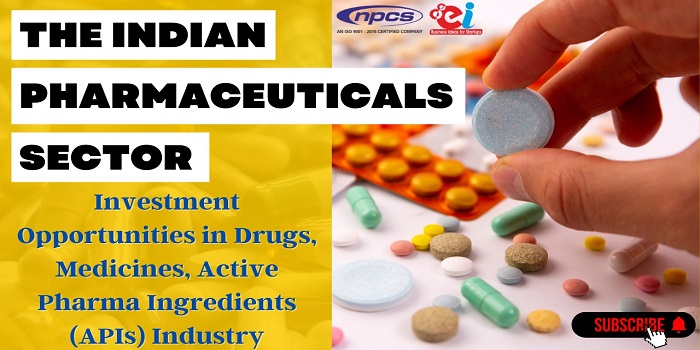
Understanding the Potential of the Indian Pharmaceutical Sector India has carved out a dominant position in the global pharmaceutical industry, establishing itself as a leader in the production of Active Pharmaceutical Ingredients (APIs) and generic drugs. The country’s unmatched manufacturing capabilities, cost-efficiency, and skilled workforce have played a pivotal role in transforming it into the “Pharmacy of the World.” This article serves as a comprehensive guide for those seeking to understand the depth and breadth of opportunities within the Indian API & drug sector, particularly from an investment perspective. The Indian pharmaceutical market is currently valued at over USD 50 billion, and with continuous growth expected, it is projected to reach USD 130 billion by 2030. This significant expansion is largely being driven by the surge in domestic demand, export growth, healthcare reforms, and the increasing need for affordable medications globally. For investors, both foreign and domestic, the Indian API & drug ecosystem offers a diverse array of profitable avenues. India’s API Industry: The Critical Pillar of Drug Manufacturing What Are APIs and Why Are They Crucial? Active Pharmaceutical Ingredients (APIs) are the biologically active components in medicines that yield the desired therapeutic effects. They are the foundation of any drug formulation, whether it’s an over-the-counter painkiller or a specialized treatment for chronic diseases. Without APIs, medicines would be chemically inert and ineffective. India has historically been a key player in the global API market. Its ability to manufacture high-quality, low-cost APIs gives it a competitive edge, particularly as pharmaceutical companies across the world aim to reduce costs without compromising on quality. Currently, India supplies approximately 30% of the global API demand, and this figure is expected to grow as the world diversifies away from overreliance on a few countries for pharmaceutical raw materials. The Evolution of India’s API Capabilities Earlier, India imported nearly 70% of its bulk drug and API requirements from China. However, recent geopolitical concerns and pandemic-related supply chain disruptions have catalyzed the country’s ambition to become self-reliant in API production. The Government of India has implemented several strategic initiatives such as: The Production Linked Incentive (PLI) Scheme for key APIs and bulk drugs. Development of three Bulk Drug Parks across states with subsidized utilities and infrastructure. Promotion of domestic manufacturing of Key Starting Materials (KSMs) and intermediates. These actions are shifting the paradigm and enhancing India’s resilience and independence in the global API landscape. Key Drivers Fueling API & Drug Investments in India Robust Government Support and Policy Framework The Indian government has provided a solid framework to encourage both domestic and international investments in the API & drug sector: 100% FDI permitted under the automatic route for greenfield projects in the pharmaceutical space. Streamlined environmental and industrial clearances to ease the process of setting up new manufacturing units. Tax incentives, capital subsidies, and interest subvention schemes designed to promote local production of pharmaceuticals. These initiatives provide the much-needed push for large-scale infrastructure development, technological innovation, and increased production capacity, further attracting investors to the Indian API & drug industry. Cost Advantage and Economies of Scale India’s ability to produce APIs and formulations at 60–70% lower costs compared to developed nations is a major factor that makes the country a favorable destination for investment. The key elements contributing to this cost-efficiency include: Low labor and operational costs Abundant availability of raw materials Economies of scale due to large production volumes Proximity to global shipping routes through major ports like Mumbai, Chennai, and Vizag These factors help companies produce competitively priced drugs while maintaining stringent quality standards, making India a lucrative API & drug investment destination. Global Trust and Certification Recognition India’s pharmaceutical facilities are among the most certified and audited in the world. Over 600 Indian pharma plants are approved by USFDA, WHO-GMP, EU-GMP, and other stringent global regulatory bodies. This underscores India’s commitment to quality, safety, and regulatory compliance, which further boosts investor confidence. India’s pharmaceuticals are exported to over 200 countries, including the United States, Canada, Japan, Australia, and the European Union. The ability to meet rigorous international standards makes Indian APIs and drugs more acceptable in foreign markets, opening doors for high-margin exports and strategic global partnerships. Exploring Lucrative Segments in API & Drug Investment Generic Drug Manufacturing India accounts for 20% of the global supply of generic medicines. With an increasing number of patent expirations in the global pharmaceutical industry, the demand for cost-effective generics is soaring. Indian companies are capitalizing on this trend by ramping up production and exporting to regulated markets. Generic drug production is highly attractive to investors due to: Lower development costs Shorter time to market High global demand for affordable therapeutics Biosimilars and Biopharmaceuticals India is rapidly making strides in the biosimilars market, with companies like Biocon, Dr. Reddy’s, and Intas developing world-class products. As healthcare systems globally look for alternatives to expensive biologics, the demand for biosimilars is projected to skyrocket, making this a high-growth vertical within the API & drug segment. Contract Manufacturing and Outsourcing India has become a hub for contract manufacturing and contract research, offering services to global pharmaceutical giants. CMOs and CROs in India provide end-to-end support, from R&D and formulation to packaging and logistics, at significantly reduced costs. This offers excellent investment opportunities for those seeking long-term and scalable returns. Top Investment Clusters for API & Drug Projects in India Telangana & Andhra Pradesh Home to Genome Valley and Pharma City, these states offer: Dedicated industrial zones for pharma Plug-and-play facilities with common infrastructure Access to a large pool of trained professionals Gujarat & Maharashtra With well-established pharma parks in Ahmedabad, Vadodara, and Mumbai, these states provide: Strong backward linkages in chemicals and bulk drugs Proximity to ports for export logistics A mature ecosystem of suppliers and service providers These clusters collectively account for more than 70% of India’s total pharmaceutical output, making them ideal regions for API & drug investments. Challenges and Strategic Interventions While India’s pharmaceutical sector is on a promising trajectory, some challenges remain: Over-dependence on imported
Start your own Manufacturing Business of Ascorbic Acid (Powder) from Sorbitol
Starting a Profitable Ascorbic Acid Powder Business from Sorbitol The global nutraceutical and pharmaceutical markets are booming, and Ascorbic Acid Powder, or Vitamin C, stands at the forefront of this demand wave. As a critical component in food fortification, supplements, and cosmetics, its business potential continues to rise. With sorbitol as a widely accepted and cost-effective raw material, entrepreneurs now have the opportunity to enter this high-potential market with scientifically backed processes and proven demand channels. Starting a business based on the conversion of sorbitol to ascorbic acid powder is not only technically feasible but also highly scalable and profitable when done right. This guide provides an in-depth look into setting up a Ascorbic Acid Powder business from scratch using sorbitol, outlining every crucial aspect from production and licensing to marketing and expansion. Understanding the Power of Ascorbic Acid Powder Ascorbic Acid Powder is a water-soluble form of Vitamin C that plays a key role in the human body. It functions as a powerful antioxidant, helps in collagen synthesis, boosts the immune system, and supports iron absorption. Its industrial applications include: Fortification in beverages and food products Essential ingredient in nutritional supplements Antioxidant in skincare and cosmetic formulations Preservative in processed foods Animal health products Because of its diverse applications, the demand for ascorbic acid powder spans several industries, making it a highly sustainable business option with multiple revenue streams. Why Sorbitol is Ideal for Ascorbic Acid Production Sorbitol, a sugar alcohol derived from glucose, is a stable, inexpensive, and widely available compound. In the Reichstein Process, a classical method of Vitamin C production, sorbitol acts as the starting material. Through a series of fermentation, oxidation, and chemical conversion steps, sorbitol is transformed into high-purity Ascorbic Acid Powder. This process has stood the test of time and still serves as a blueprint in industrial production today. Detailed Manufacturing Process of Ascorbic Acid Powder from Sorbitol 1. Hydrogenation of Glucose to Produce Sorbitol The first step is the catalytic hydrogenation of glucose to sorbitol. This reaction is typically carried out in a high-pressure reactor using nickel as a catalyst. The temperature and pressure must be tightly controlled to ensure a high yield. The reaction is as follows: C6H12O6 (glucose) + H2 ? C6H14O6 (sorbitol) 2. Fermentation of Sorbitol to L-Sorbose Using microbial fermentation, sorbitol is converted to L-sorbose. This is achieved by adding Acetobacter suboxydans bacteria in aerobic conditions. The pH, aeration, temperature, and sugar concentration are monitored continuously to ensure optimal microbial activity. 3. Oxidation to 2-Keto-L-Gulonic Acid (2-KLG) The L-sorbose undergoes oxidation using suitable agents like hypochlorous acid or catalytic methods to convert it into 2-KLG. This intermediate is the immediate precursor to ascorbic acid. Purity of the product is ensured by filtration, neutralization, and removal of residual catalysts. 4. Cyclization and Crystallization 2-KLG is then subjected to acidification and heating to induce cyclization into ascorbic acid. The resulting solution is filtered, cooled, and passed through crystallizers to obtain pure Ascorbic Acid Powder. The crystals are then dried and milled into fine powder form suitable for commercial use. Licensing, Legal, and Regulatory Compliance To manufacture and sell Ascorbic Acid Powder, you must meet strict industry standards and legal protocols. 1. Business Formation Register your business entity under appropriate laws such as LLP, Pvt Ltd, or Proprietorship depending on your business structure. Choose a name that reflects credibility and scientific trust. 2. Drug Manufacturing License Apply for a drug manufacturing license through your local FDA or equivalent authority. This includes facility inspections, documentation of procedures, and validation of your production process. 3. FSSAI Certification (India) / FDA Approval (U.S.) Since Ascorbic Acid Powder is used in food and health products, you’ll need safety and compliance certifications such as FSSAI (India) or FDA (U.S.) to legally distribute your product. 4. Pollution Control and EHS Approval Install proper waste management systems and get clearance from local Pollution Control Boards. Safety and environmental sustainability will play a major role in operational permissions. Capital Investment and Equipment Needed Initial Capital Estimate The cost to start a medium-scale Ascorbic Acid Powder plant ranges from ?1.2 crore to ?2.5 crore ($150,000–$300,000). The major capital investments include: Plant & land lease or purchase Machinery & automation Licensing and legal compliance Working capital and raw material procurement Quality control setup Essential Plant Machinery Hydrogenation reactors Fermenters with aeration control Centrifuges Crystallization tanks Fluid bed dryers Industrial filtration units Milling and packaging units Water purification and effluent treatment system Each piece of equipment must be GMP-certified and suitable for pharmaceutical-grade production. Raw Material and Procurement Strategy Major Raw Materials Sorbitol (can be purchased or produced in-house from glucose) Catalysts (e.g., Nickel) Fermentation cultures Chemicals like HOCl, NaOH, H2SO4 Water, solvents, and reagents Sourcing Strategy Develop partnerships with trusted vendors offering bulk discounts Ensure supply chain redundancy by working with multiple suppliers Conduct regular quality audits and raw material testing to maintain consistency Human Resources and Staff Requirements Team Structure Production Head (Chemical Engineer) Microbiologist (for fermentation process) Lab Technicians Quality Control Officers Skilled Machine Operators Maintenance and Utility Staff Procurement and Logistics Team Training & SOPs Conduct training on SOPs, GMP, safety compliance, and cleanroom protocols Train all staff on emergency response, chemical handling, and contamination control Packaging and Labeling Use moisture-proof, airtight HDPE or fiber drums for packaging Label according to industry norms including product name, batch number, expiry date, purity, and usage instructions Offer custom labeling and bulk packaging for B2B clients Marketing Strategy for Ascorbic Acid Powder Identifying the Target Market Nutraceutical companies Pharmaceutical manufacturers Cosmetic brands Animal feed producers Food and beverage brands Brand Positioning Highlight features like: 99%+ purity Non-GMO, vegan, and allergen-free certification ISO, GMP, and HACCP compliance Bulk availability with consistent batch quality Promotional Channels Build an SEO-optimized website with technical datasheets Use LinkedIn and trade portals like IndiaMART, Alibaba, ThomasNet Participate in pharmaceutical and food ingredient expos Partner with international distributors Export and Global Trade Opportunities The export potential of Ascorbic Acid Powder is significant, especially in health-conscious regions like
Construction Industry in India- Overview and Business Opportunities
The construction industry in India stands at a pivotal juncture, poised for accelerated expansion and unprecedented transformation. As we move through 2025, the sector is expected to continue its upward trajectory, fueled by ambitious infrastructure projects, strong governmental support, and increasing private sector participation. With urbanization, digital innovation, and sustainable development guiding its path, India’s construction ecosystem offers a wealth of growth and investment opportunities. Economic Impact of the Indian Construction Industry The construction industry in India is the second-largest employment generator after agriculture, contributing over 9% to the nation’s GDP. With an estimated market size of USD 639 billion by 2025, the sector plays a pivotal role in shaping the physical and economic landscape of the country. Employment Generation: The industry employs over 60 million people and is expected to generate 20 million new jobs by 2025. Urban Infrastructure Expansion: Cities like Delhi, Mumbai, Hyderabad, and Bengaluru are undergoing rapid infrastructural transformations, ranging from metro expansions to smart city developments. Boost from Government Initiatives: Flagship programs such as PM Gati Shakti, Smart Cities Mission, and the National Infrastructure Pipeline (NIP) are infusing billions into infrastructure development, propelling the sector forward. Key Growth Drivers in 2025 Government Infrastructure Investments The Indian government has committed over INR 111 lakh crore (USD 1.5 trillion) under the National Infrastructure Pipeline to be invested by 2025. This investment spans roads, railways, airports, ports, water infrastructure, and energy, creating a substantial demand surge across construction segments. Smart Cities & Urban Planning With more than 100 smart cities under development, India’s focus on creating technologically advanced, sustainable urban spaces is a game-changer for the construction industry in India. These cities are being designed to integrate cutting-edge digital infrastructure, efficient transportation systems, and green buildings, resulting in a surge of demand for skilled labor, innovative materials, and advanced construction technologies. Affordable Housing & PMAY The Pradhan Mantri Awas Yojana (PMAY) aims to construct over 20 million affordable homes by 2025. This ambitious goal supports mass housing development across tier-2 and tier-3 cities, offering lucrative opportunities for builders, developers, and material suppliers. Rural Infrastructure Development Beyond urban areas, the construction industry in India is also witnessing significant growth in rural sectors. Programs like the PMGSY (Pradhan Mantri Gram Sadak Yojana) are improving rural road connectivity, while irrigation, sanitation, and electrification projects are further stimulating demand. Emerging Trends in the Indian Construction Sector Green Construction & Sustainability Sustainability has emerged as a crucial pillar for the future. Green construction practices are gaining momentum, with builders increasingly opting for: Eco-friendly materials Energy-efficient designs LEED and GRIHA certifications India is targeting a 30-35% reduction in emissions by 2030, and the construction industry in India plays a central role in achieving this through sustainable building practices. Technology Integration Digital transformation is reshaping traditional construction. The integration of Building Information Modeling (BIM), AI-powered project management, 3D printing, and IoT-enabled machinery is enhancing efficiency, safety, and productivity across project lifecycles. Prefabrication and Modular Construction Prefabricated building components are reducing construction time and labor costs while improving quality. As urban housing demand rises, prefabrication will grow significantly across both residential and commercial sectors in India. Challenges Faced by the Construction Industry in India Despite strong growth prospects, several challenges persist: Regulatory Hurdles: Lengthy approval processes and land acquisition bottlenecks delay projects. Skilled Labor Shortage: Although labor is abundant, there is a shortage of skilled workers trained in modern construction techniques. Rising Input Costs: Volatility in prices of raw materials like steel, cement, and petroleum can impact profitability. Delays in Financing: Access to timely financing remains a critical challenge, especially for small and mid-size contractors. Investment Opportunities and FDI Inflows India permits 100% FDI in construction development projects under the automatic route. With liberalized norms and a stable economic environment, global investors are eyeing: Commercial real estate Urban infrastructure High-speed rail projects Renewable energy infrastructure In 2024 alone, FDI in construction development surged by over 18%, reaffirming global investor confidence in the construction industry in India. Regional Development Hotspots Western Region: Maharashtra and Gujarat These states lead in industrial corridor development, port connectivity, and logistics infrastructure. Projects such as the Mumbai-Ahmedabad High-Speed Rail and Delhi-Mumbai Industrial Corridor are major growth drivers. Southern Region: Tamil Nadu, Karnataka, Telangana With major IT hubs and startup ecosystems, these states are experiencing an unprecedented boom in commercial real estate and metro rail networks. Northern Region: Delhi NCR and Uttar Pradesh The upcoming Noida International Airport, along with multiple expressways, is transforming this region into a massive construction hub. Future Outlook of the Construction Industry in India By 2025, India aims to become a $5 trillion economy, with infrastructure being the cornerstone of this growth. The construction sector is expected to: Witness a CAGR of over 7% through 2025. Generate immense employment across allied industries like steel, cement, equipment manufacturing, and real estate. Become one of the top 3 construction markets globally. Conclusion: Tapping into India’s Construction Potential The future of the construction industry in India is not just about cement, steel, and labor—it is about creating smart, resilient, and inclusive communities. Robust policy support, rising urbanization, and technological breakthroughs are redefining India’s development story. Businesses, investors, and stakeholders who align their strategies with sustainability, innovation, and regional growth trends stand to benefit immensely. As we move deeper into 2025, now is the time to seize the vast and varied opportunities offered by India’s construction revolution. Visit the page Select and Choose the Right Business Startup for You for sorting out the questions arising in your mind before starting any business and know which start-up you can plan. We, at NPCS, endeavor to make business selection a simple and convenient step for any entrepreneur/startup. Our expert team, by capitalizing on its dexterity and decade’s long experience in the field, has created a list of profitable ventures for entrepreneurs who wish to diversify or venture. The list so mentioned is updated regularly to give you a regular dose of new emerging opportunities. Contact Us
Startup Manufacturing Business of PVC Edge Banding Tape
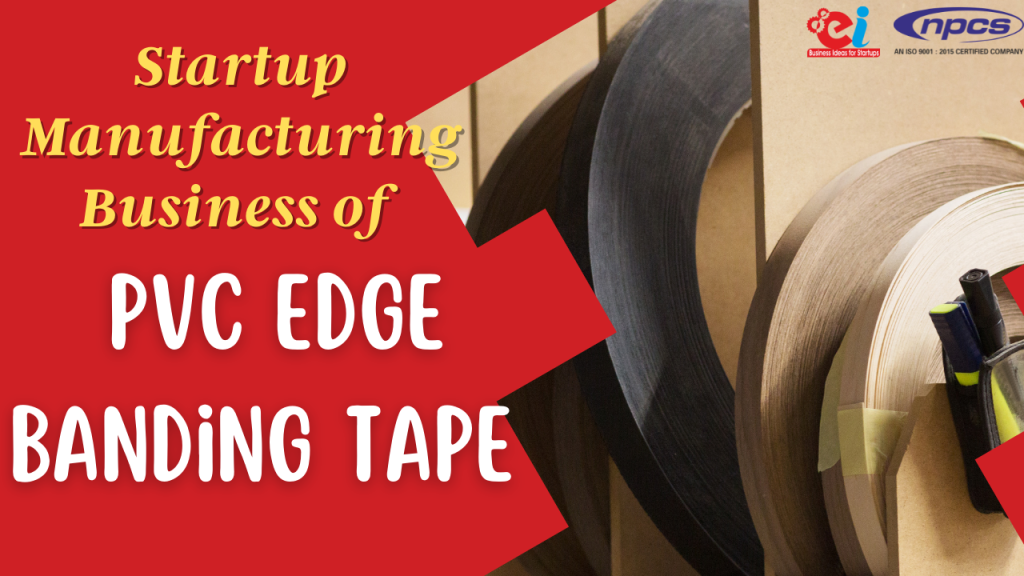
Starting a PVC Edge Banding Tape business can be a highly profitable and sustainable venture in today’s fast-evolving interior design and modular furniture industry. As the demand for aesthetic yet durable furniture products continues to grow, PVC edge banding becomes indispensable for furniture manufacturers. In this in-depth guide, we explore every facet of setting up a successful PVC edge banding tape business, from market analysis to manufacturing and marketing strategies. Understanding the PVC Edge Banding Tape Industry What is PVC Edge Banding Tape and Why It Matters PVC edge banding tape is a thermoplastic strip applied to the raw edges of furniture made from MDF, plywood, or particle board. It acts as both a functional and decorative layer, protecting the furniture from moisture, dust, and chipping while enhancing its appearance. Available in various textures such as wood grain, high gloss, and matte, PVC edge banding is used extensively in the production of office furniture, modular kitchens, wardrobes, and shop interiors. The tape is generally made from polyvinyl chloride (PVC) and is processed with additives like plasticizers, lubricants, stabilizers, and colorants to achieve desired flexibility, adhesion, and finish. Why the Market for PVC Edge Banding Tape is Growing Rapidly The PVC edge banding industry has witnessed exponential growth due to: Surge in modular furniture adoption Expanding urban population and real estate sector Increased consumer spending on home and office decor Export demand from countries in the Middle East, Africa, and Southeast Asia According to industry estimates, the global edge banding materials market is projected to grow at a CAGR of over 7% in the next five years, presenting vast opportunities for new players entering the market. Steps to Start a Successful PVC Edge Banding Tape Business Step 1: Market Research and Competitor Analysis Start by conducting detailed market research on your target regions, product demand, pricing models, and competitors. Evaluate customer preferences such as the thickness (0.45mm to 2mm), width (12mm to 54mm), finishes, and colors. Survey existing PVC edge banding tape sellers to understand supply gaps and value-added services you can offer, such as custom shades or faster deliveries. Step 2: Prepare a Comprehensive Business Plan A strong business plan will act as a roadmap for success. Your business plan should include: Market insights and goals Budget breakdown (machinery, labor, materials) Product range Funding sources SWOT analysis Break-even analysis Risk management plan This document is also essential for presenting to banks and investors when applying for loans or venture capital. Step 3: Legal Compliance and Business Registration To operate legally, register your business under an appropriate entity such as Proprietorship, LLP, or Private Limited Company. Obtain the following licenses: GST Registration MSME/Udyam Registration Pollution Control Certification Factory License (if manufacturing) Import Export Code (IEC) if planning to export These licenses are crucial to avoid legal hassles and to apply for government subsidies. Step 4: Choose Your Business Model – Trading or Manufacturing You can either trade or manufacture PVC edge banding tape: Trading: You source tape from manufacturers and supply to furniture makers or distributors. Lower investment, faster ROI. Manufacturing: You produce edge banding from raw materials. Higher profit margin, brand control, scalable. Many entrepreneurs begin with trading and transition into manufacturing once they understand the market and have built a client base. Step 5: Set Up Your Manufacturing Plant If you choose manufacturing, setting up a well-planned production facility is vital. Essential machinery includes: PVC Extruder Machine: For melting and shaping the tape Printing Machine: For applying wood grain and textured finishes Calibrating Machine: To maintain exact thickness Cooling Line: Ensures consistency Slitting and Cutting Machines: For precision finishing Packing Machine: To roll and seal the product Install all equipment following industrial safety standards. Maintain proper air ventilation, waste disposal, and fire safety equipment. Step 6: Source High-Quality Raw Materials Key materials required: PVC Resin (Base material) Plasticizers (Improve flexibility) Heat stabilizers (Increase thermal stability) Color masterbatches (Add color) Lubricants (Enhance processing) Printing inks (For textured patterns) Establish contracts with multiple reliable suppliers to ensure consistent production. Step 7: Hire and Train Your Workforce To run your unit efficiently, hire: Plant Manager Machine Operators Quality Inspectors Warehouse & Logistics Staff Sales and Admin Staff Train your team on safety protocols, machine handling, and quality assurance. Efficient Production Process for Quality Edge Banding Maintaining High Standards of Quality Control Quality control is crucial for market reputation. Key parameters to monitor: Tape thickness uniformity Accurate color matching Bonding strength with substrate Surface smoothness Roll length and weight Regular inspections and sample testing help reduce defects and maintain consistency. Packaging and Logistics Neatly packaged rolls ensure product safety during transit. Use waterproof, tear-resistant materials and print your brand logo and product details on the labels. Offer customization in roll lengths for larger orders. Establish distribution points in major cities to reduce delivery times. Marketing and Scaling Your PVC Edge Banding Tape Business Develop a Strong Distribution Network Approach: Furniture factories Interior designers Carpenters and contractors Modular kitchen manufacturers Hardware and plywood shops Offer volume-based pricing, free samples, and credit periods to gain trust. Boost Your Online Presence Create a professional website showcasing your PVC edge banding tape range with HD product images, downloadable catalogs, and client testimonials. Optimize for SEO using relevant keywords such as: PVC edge banding tape manufacturer PVC edge banding tape suppliers in India Edge banding for modular furniture Leverage social media platforms like LinkedIn, Instagram, and Facebook. List your products on B2B platforms like IndiaMART, TradeIndia, and Alibaba for global exposure. Participate in Industry Exhibitions Trade fairs such as: DelhiWood IndiaWood Acetech Interzum (Germany) offer excellent opportunities to network, find bulk buyers, and stay updated on the latest trends in PVC edge banding tape technology. Financial Planning and Profitability Cost Breakdown and ROI Initial Investment: ?30–?50 lakhs (for manufacturing) Machinery: ?20–?30 lakhs Raw materials: ?5–?10 lakhs (monthly) Labor & utilities: ?1–?2 lakhs/month Break-even: 12–18 months (average) With strategic planning, manufacturers can expect profit margins of 20–30%, while traders may earn 10–15% based on volumes and market penetration.
5 Best Startup Business Ideas You Can Start

As we transition into a more digitally connected, sustainability-focused, and convenience-driven economy, the landscape for starting a new business has never been more exciting or accessible. The year 2025 is expected to bring forward a new wave of innovation, driven by changing consumer behaviors, rapid advancements in technology, and an increased emphasis on health, wellness, and environmental impact. If you’re looking to capitalize on this momentum, exploring the best startup business ideas can put you on the path to success. In this detailed guide, we unveil the top 5 startup business ideas that are primed for profitability, scalability, and relevance in 2025. Each idea is supported by current market trends, consumer demand, and technological enablers that make them easier and cheaper to launch than ever before. Top Startup Business Ideas to Launch in 2025 1. Eco-Friendly Packaging Solutions: Sustainable & Scalable Environmental concerns have pushed businesses and consumers alike to re-evaluate the way products are packaged and delivered. As a result, eco-friendly packaging is no longer just a trend—it is a necessity. Starting a company that focuses on biodegradable, recyclable, or compostable packaging materials is not only environmentally impactful but highly lucrative. Market Insights According to reports, the global sustainable packaging market is expected to reach over $470 billion by 2027. With governments imposing strict regulations against single-use plastic and brands aiming to achieve sustainability targets, this industry presents one of the most promising startup business ideas. What You Need to Start Access to manufacturers of biodegradable materials such as kraft paper, cornstarch, PLA (polylactic acid), or mushroom packaging. Certifications like ISO 14001 or FSC. Branding and marketing that highlights your product’s sustainability. Revenue Streams Selling to ecommerce businesses. Subscription-based packaging supply services. White labeling your products for other eco-brands. Why It Works The conscious consumer is here to stay. Offering green alternatives can help businesses meet regulatory standards while enhancing their brand image. This makes eco-packaging startups essential in 2025 and beyond. 2. AI-Powered Virtual Assistant Agency: Automate the Future Artificial Intelligence has matured rapidly, and its integration into everyday business operations is no longer optional but necessary. A startup offering AI-powered virtual assistant services can meet the growing need for productivity, automation, and cost-efficiency. Business Model Explained Start by recruiting skilled virtual assistants and equipping them with AI tools such as ChatGPT, Jasper, or Copy.ai. These assistants can then handle repetitive tasks, customer service, email management, and lead generation for small and medium enterprises (SMEs). Initial Investment Requirements Licensing for AI tools and CRM platforms. Training modules for onboarding VAs. A sleek website and a client onboarding system. Scalability & Income You can create tiered subscription plans based on services offered, including: Basic admin support. Content creation using AI. Sales funnel and CRM automation. The 2025 Opportunity With remote work becoming normalized, virtual support is a necessity. Combine it with AI and you create one of the most forward-thinking startup business ideas for tech-savvy entrepreneurs. 3. Personalized Health & Wellness Coaching: Health is Wealth Post-pandemic lifestyles have propelled health and wellness to the top of personal and professional priorities. People are now seeking personalized wellness solutions—from fitness routines and meal planning to stress management and sleep optimization. Why the Market is Hot Health-conscious consumers are moving away from generic advice. They want data-driven, customized plans that fit their bodies, goals, and lifestyles. This demand is fueling a multibillion-dollar global wellness market. Business Possibilities One-on-one virtual coaching. Selling tailored wellness kits. Creating mobile apps offering personalized advice. Offering virtual consultations with nutritionists, fitness coaches, and therapists. Tools for Success Integration with wearables (Fitbit, Garmin, Apple Watch) Wellness platforms like Trainerize or MyFitnessPal Creating content for social platforms to build community Revenue Streams Paid memberships. eBooks, downloadable guides, and wellness product sales. Affiliate links for supplements and fitness gear. This niche presents one of the most meaningful and impact-driven startup business ideas you can pursue in 2025. 4. Hyperlocal Delivery Services: Serve Your Neighborhood Today’s consumers want their products delivered faster and more conveniently than ever before. By 2025, launching a hyperlocal delivery service focused on essential and niche products will give you a solid edge in urban and semi-urban markets. Service Areas You Can Cover Groceries and fresh produce Pet supplies Medicines and wellness products Specialty foods (organic, vegan, gluten-free) Technology Stack A geo-location-enabled mobile app Real-time order tracking Integration with digital payment platforms How to Monetize Delivery fees (flat or distance-based) Monthly subscription for unlimited deliveries B2B partnerships with local businesses Competitive Advantage You’re not competing with Amazon—you’re offering speed, familiarity, and reliability. By being community-focused, you build trust, which translates into customer loyalty. Hyperlocal logistics is among the most accessible startup business ideas for first-time founders with a low barrier to entry. 5. EdTech Microlearning Platforms: Knowledge in Minutes The traditional education system is being replaced by microlearning — short, focused, and highly engaging content designed for busy professionals and learners. In 2025, education will continue to decentralize, and platforms that offer bite-sized lessons will see explosive growth. Platform Features Courses that last 5–15 minutes Gamification to enhance learning retention AI-based tutoring and progress tracking Mobile-first design to engage smartphone users Subjects You Can Focus On Coding & Software Development Business Skills & Entrepreneurship Soft Skills (communication, leadership) Test Prep (IELTS, CAT, GMAT) Monetization Models Free courses with paid certifications Subscription-based content Corporate training partnerships White labeling your platform for educational institutions Why Microlearning Works Shorter attention spans and packed schedules mean that learners prefer engaging, quick, and digestible content. The low cost of content creation and the potential for virality make it one of the smartest startup business ideas for digital entrepreneurs. Conclusion: Your Future Begins Now The year 2025 brings a golden window for innovation and entrepreneurship. From sustainability and automation to health and education, these startup business ideas cater to the evolving demands of consumers and businesses alike. The key is to find a problem you’re passionate about solving, start lean, validate quickly, and scale smartly. Each of the five ideas outlined here
6 Profitable Business Ideas for Making Money Fast
In today’s dynamic economy, identifying profitable business ideas that are quick to launch and easy to scale is more important than ever. Entrepreneurs are looking for ventures that offer high ROI, low startup costs, and flexible operation. Whether you’re starting out with a shoestring budget or are ready to invest in a scalable model, the following business ideas offer lucrative pathways to success in 2025. Why Choosing a Profitable Business Idea Matters Every successful business begins with a solid idea. However, not every idea translates into profitability. The difference lies in market demand, execution strategy, operational costs, and scalability. We believe that profitable business ideas should not only generate revenue but also offer room for growth, automation, and stability in changing markets. Let’s explore six of the most promising, fast-start business models you can begin working on today. 1. E-commerce Reselling: Start Your Digital Retail Empire With the booming digital economy, e-commerce reselling remains one of the most profitable business ideas globally. As a reseller, you don’t need to manufacture products or maintain huge inventories. You can either dropship items or purchase in bulk at low cost and resell at a markup. How to Get Started Choose a profitable niche (e.g., fitness gear, pet supplies, eco-friendly products). Set up an online store using Shopify or WooCommerce. List products from suppliers or manufacturers. Promote through digital ads and SEO. Smart branding, customer service, and SEO-optimized listings can quickly differentiate your store and accelerate revenue generation. 2. Digital Marketing Agency: Help Brands Grow & Earn Big As more businesses shift online, the need for digital visibility has skyrocketed. This makes starting a digital marketing agency one of the most viable and profitable business ideas. You don’t need a physical office to begin—just skills, strategy, and tools. Services You Can Offer SEO (Search Engine Optimization) PPC Campaigns (Google Ads, Facebook Ads) Social Media Marketing Video Editing & Content Creation Email Automation Campaigns Outsourcing technical tasks to freelancers or automation tools can keep your business lean while you focus on strategy and client acquisition. Monthly retainers and performance-based contracts help build consistent cash flow. 3. Food Truck Business: Cook, Move & Serve Profitably The food industry offers timeless value, and food trucks combine flexibility with customer engagement. A well-branded food truck with a unique menu can attract huge daily footfall. Steps to Launch Select a cuisine with local appeal and low ingredient cost. Acquire required licenses and a modified truck. Invest in marketing—think social media, events, and local SEO. Partner with food delivery apps for hybrid sales. With strategic parking spots and daily sales, a food truck can earn significantly more than a fixed-location restaurant with lower operating costs and faster ROI. 4. Niche Freelance Marketplace: Build the Next Big Platform The gig economy is surging. Instead of competing on platforms like Upwork, why not create your own? A niche-specific freelance marketplace can become a magnet for skilled professionals and businesses needing services. Potential Niches Virtual Assistants for Startups Legal & Compliance Freelancers Fitness & Nutrition Experts Local Tutors & Online Instructors The core idea is to build trust and convenience for both buyers and freelancers. Charging listing fees, commissions, and featured service promotions can turn this into a recurring income model—definitely a profitable business idea in 2025. 5. Affiliate Blogging: Monetize Your Passion for Writing Affiliate marketing through blogging remains an untapped goldmine for many. With the right SEO strategy, a blog can drive passive income through affiliate commissions, display ads, and sponsored content. Blog Monetization Tips Target long-tail keywords with high buyer intent. Use internal linking and structured schema for better SEO. Promote products through tutorials, reviews, and comparisons. Build email lists and use affiliate newsletters. Once your blog starts gaining organic traffic, your income scales without needing additional time or resources—a perfect profitable business idea for solopreneurs. 6. Online Coaching & Course Selling: Share Knowledge, Earn Respect E-learning is not just a trend; it’s the future. Platforms like Teachable, Kajabi, or Thinkific make it simple to build and launch your own courses. The key is to focus on high-demand skills and provide structured learning paths. Popular Niches for Online Courses Digital Marketing UI/UX Design Language Learning Yoga & Wellness Finance & Investment You can monetize via one-time course sales, memberships, or coaching packages. Building a strong personal brand on LinkedIn or YouTube enhances visibility and leads to more conversions. Additional Profitable Business Ideas Worth Exploring While the top 6 are already powerful, here are a few bonus ideas with fast ROI potential: Mobile Car Wash Services: High demand, low investment, and eco-friendly options available. Pet Grooming Business: Pet owners spend big on grooming—especially in urban areas. Social Media Influencer Agency: Represent local influencers and connect them with brands. Print-on-Demand Store: Sell custom t-shirts, mugs, and stationery without holding inventory. Each of these models caters to a growing niche, requires low overhead, and can be launched quickly with minimal infrastructure. Final Thoughts: Your Path to Business Success Starts Now Starting a business doesn’t require massive funding or a fancy office anymore. What matters is market demand, execution, and consistency. Whether you’re aiming to create a solo business or scale with a team, these profitable business ideas provide a strong foundation. Focus on solving real problems. Use digital tools to automate and scale. Keep testing and refining your business model. The sooner you act, the faster you can reach financial independence. There has never been a better time to begin. Visit the page Select and Choose the Right Business Startup for You for sorting out the questions arising in your mind before starting any business and know which start-up you can plan. We, at NPCS, endeavor to make business selection a simple and convenient step for any entrepreneur/startup. Our expert team, by capitalizing on its dexterity and decade’s long experience in the field, has created a list of profitable ventures for entrepreneurs who wish to diversify or venture. The list so mentioned is updated regularly to give you a regular dose of