
Setup a Private Hospital , Investment Opportunities in Healthcare Sector.
Setting up a private hospital in India is an ambitious and rewarding venture. It requires strategic planning, deep knowledge of healthcare regulations, a significant investment, and a passion for delivering quality medical care. In a country where private healthcare plays a vital role in complementing public infrastructure, launching a private hospital can make a lasting impact while also being financially viable. Step-by-Step Guide to Establishing a Private Hospital in India 1. Understanding the Scope and Market Feasibility Before laying the foundation for a private hospital, it is critical to analyze the market demand and feasibility in the desired location. Perform demographic research, assess the local healthcare needs, and identify the competition. Understand whether the area needs a multi-specialty hospital, a super-specialty clinic, or a nursing home. These factors will define the size, type, and services offered by your facility. Key considerations include: Population density and age distribution Existing healthcare facilities Socio-economic status of the region Availability of skilled medical professionals 2. Legal Structure and Registrations Formulating the hospital’s legal identity is a fundamental step. You can choose between various entities such as Private Limited Company, Public Limited Company, Partnership Firm, or Trust/Society (especially for non-profit hospitals). Registrations and licenses needed: Company Incorporation under the Companies Act PAN, TAN, GST Registration Shops & Establishments Act registration NOC from Fire Department Environmental Clearance Biomedical Waste Management Registration Registration with Clinical Establishments Act (if applicable) Drug License from the State Drug Controller ISO Certification (optional but recommended) Accreditation from NABH or JCI (to boost credibility) 3. Capital Investment and Funding Setting up a private hospital in India requires considerable investment, depending on the scale and services provided. A small to mid-size hospital may need an investment between ?5 crore to ?15 crore, while a multi-specialty hospital can exceed ?50 crore. Funding options include: Self-financing Loans from banks or NBFCs Private equity investors Healthcare venture capital Government subsidies for rural or EWS-focused hospitals You must also create a business plan covering projected revenue, operational costs, manpower, equipment, and marketing expenses. 4. Site Selection and Infrastructure Development The location of your hospital is crucial to its success. It should be accessible, ideally near urban centers or highways, and comply with zoning laws. The land should have legal clearance and proper documentation. Infrastructure must include: Emergency services and OPD rooms Diagnostic centers and laboratories Operating theatres ICUs and post-operative care Pharmacy In-patient wards and private rooms Cafeteria and waiting areas Sewage, power backup, lifts, and waste disposal systems The building must comply with the National Building Code, incorporate fire safety systems, and follow accessibility guidelines for disabled individuals. 5. Procurement of Equipment and Technology A fully functional hospital requires the latest medical equipment, IT infrastructure, and hospital management software (HMS). Procurements should align with your chosen specializations—whether cardiology, oncology, orthopedics, or gynecology. Essential equipment: Imaging systems (X-ray, CT, MRI, Ultrasound) Laboratory diagnostic machines Surgical tools ICU and OT monitoring equipment Ventilators and dialysis machines Hospital beds, wheelchairs, stretchers Additionally, implementing Electronic Medical Records (EMR) and digital billing enhances operational efficiency and patient satisfaction. 6. Recruitment of Medical and Administrative Staff A successful private hospital relies heavily on qualified and experienced personnel. Your recruitment plan should encompass both clinical and non-clinical staff. Key hires include: Doctors and surgeons (full-time/visiting consultants) Nursing staff and paramedics Lab technicians and radiologists Pharmacists HR, finance, and legal executives Marketing and operations managers Front-desk and support staff Offer competitive salaries and performance-based incentives to attract top talent. Regular training and workshops ensure staff stay updated with medical advancements. 7. Hospital Branding and Marketing Strategy Building a reputable private hospital in India involves aggressive branding, networking, and digital marketing. Start with a recognizable logo and brand identity. Register with insurance providers, TPAs, and government health schemes like Ayushman Bharat. Marketing tactics: Local newspaper and radio ads Online presence via SEO-optimized website Social media marketing on platforms like Facebook and Instagram Health camps, webinars, and community outreach Listing on online directories like Practo, Justdial, and Google My Business A dedicated patient support team and excellent service experience will fuel word-of-mouth referrals and long-term loyalty. 8. Compliance, Quality Assurance & Insurance Tie-ups Maintaining regulatory compliance is non-negotiable. Stay updated with government regulations, maintain proper documentation, and conduct internal audits. Apply for NABH (National Accreditation Board for Hospitals) certification for better patient trust and empanelment with major health insurers. Tie-ups and partnerships: Private and public health insurance providers Corporate health programs and annual check-up tie-ups Diagnostic laboratories and specialty clinics for referrals Additionally, adopt Standard Operating Procedures (SOPs) for all departments to ensure smooth operations, clinical efficiency, and quality control. 9. Technology Integration and Telemedicine With digital transformation accelerating across healthcare, integrating technology in your hospital can differentiate your services. Telemedicine and virtual consultations allow patient access beyond physical boundaries. Technological advancements to consider: AI-assisted diagnostics Cloud-based EMR systems Robotic surgery (for super-specialty hospitals) IoT-enabled health monitoring devices Patient apps for booking, prescription, and reports Investing in cybersecurity and data privacy measures ensures your hospital complies with the upcoming Digital Personal Data Protection (DPDP) laws in India. 10. Launch and Operational Readiness Once the facility is built, equipment is installed, and staff is hired, prepare for a soft launch. Run trials for systems, workflows, and service delivery. Invite local dignitaries, healthcare professionals, and media for the grand opening. Post-launch strategy includes: Feedback collection from initial patients Continuous improvement based on insights CRM systems to retain patient relationships Expansion planning based on performance Setting up a private hospital in India is a long-term commitment. It combines healthcare service excellence, operational expertise, and strategic foresight. By staying compliant, tech-savvy, and patient-centric, your hospital can become a benchmark of quality healthcare. Visit the page Select and Choose the Right Business Startup for You for sorting out the questions arising in your mind before starting any business and know which start-up you can plan. We, at NPCS, endeavor to make business selection a simple and convenient step for any entrepreneur/startup. Our expert team, by capitalizing on its dexterity and
Manufacturing of Lemon-Lime Flavoured Soft Drink (Nimbu Pani) with Lemon Juice.
Starting a lemon lime soft drink business is an exciting and profitable venture, especially in a country like India where refreshing beverages like Nimbu Pani have high demand throughout the year. This business combines traditional flavors with modern bottling and branding techniques, offering great opportunities in both rural and urban markets. With rising temperatures and increasing health consciousness, people are shifting towards natural, citrus-based drinks, making this a timely opportunity for entrepreneurs. Why Start a Lemon Lime Soft Drink Business? The lemon lime soft drink market has seen tremendous growth over the last few years. Consumers are increasingly choosing flavored beverages over aerated sodas, and lemon-based drinks provide a tangy, hydrating alternative. The drink, often seen as a packaged version of India’s traditional Nimbu Pani, can be marketed as a natural thirst-quencher and health-friendly choice. Some advantages of starting this business include: Low initial investment compared to other manufacturing setups. High demand throughout the year, especially in hot climates. Possibility to scale up quickly by targeting local retailers and online marketplaces. Flexibility to offer multiple packaging options—PET bottles, glass bottles, cans, or tetra packs. Opportunity to create a brand identity based on “desi flavor with a modern twist.” Market Potential for Lemon Lime Soft Drink The Indian beverage industry is estimated to be worth over $30 billion and continues to grow rapidly. The lemon lime soft drink category is a significant contributor to this market, with both local and multinational brands competing. Despite competition, there’s always room for innovative players offering something unique, such as preservative-free drinks, organic lemons, or unique packaging formats. Cities, towns, and even villages welcome new soft drink options, especially during summers and festive seasons. If you can ensure quality, taste consistency, and attractive pricing, there’s a solid chance to grab market share. Step-by-Step Guide to Start the Business 1. Business Planning Before diving in, create a comprehensive business plan that outlines your: Target market Startup cost Pricing strategy Distribution model Revenue forecast Licensing and legal framework This roadmap will serve as your guide and help secure funding if needed. 2. Product Formulation (Nimbu Pani Formula) The heart of a lemon lime soft drink business is its formula. A typical Nimbu Pani drink includes: Lemon juice concentrate or fresh lemon extract Lime essence Sugar or low-calorie sweeteners Salt (optional for tangy taste) Carbonated or non-carbonated water Natural preservatives like citric acid Stabilizers and flavor enhancers (all FSSAI approved) Make sure to balance taste, acidity, and sweetness. It is advisable to work with a food technologist to finalize the formula and ensure shelf life. 3. Required Licenses and Registrations To start your lemon lime soft drink unit, you’ll need: FSSAI License (Food Safety and Standards Authority of India) GST Registration Trade License from the local municipality BIS Certification if producing under ISI standard Pollution Control NOC (for medium to large-scale units) Factory License (if employing 10+ workers) Adhering to hygiene and quality standards is critical in the food and beverage industry. 4. Infrastructure and Machinery For a small-scale unit, the following machinery and setup are required: Water treatment plant (RO system) Mixing tanks (SS316 grade) Carbonation unit (if making fizzy drinks) Syrup mixing unit Bottle filling and sealing machine Labeling and packaging machine Cold storage (optional for storage of lemon extract or concentrates) You can start with semi-automatic machines and upgrade to fully automatic systems as your business grows. 5. Raw Materials Needed Key ingredients include: Lemon/lime concentrate Sugar or stevia Citric acid and other food-grade preservatives Filtered water CO? cylinders (for carbonated versions) PET or glass bottles Caps, labels, cartons Establish reliable vendor relationships to ensure continuous supply and negotiate bulk pricing for cost efficiency. 6. Branding and Packaging Packaging plays a huge role in customer appeal. Keep the design: Fresh and vibrant with lemon/lime visuals Easy to handle with tamper-proof sealing Available in multiple sizes: 200 ml, 500 ml, 1 L Your brand name should evoke freshness and be memorable. Examples: “ZestyLime,” “CoolPani,” or “NimbooGo.” Also, emphasize USPs like: “No added colors” “Low sugar” “Traditional Indian flavor” “Preservative-free” 7. Distribution Channels You can distribute your lemon lime soft drink through: General retail stores Cold drink and juice shops School and college canteens Hotels, restaurants, dhabas Online marketplaces like Amazon or BigBasket Tie-ups with food delivery apps for bundled combos Create attractive schemes and introductory offers to boost initial sales. Provide free samples to retailers for trial and consumer feedback. 8. Marketing Strategy Promote your drink using both traditional and digital methods: Local newspaper ads and FM radio Social media campaigns using reels and influencer marketing Posters and in-store branding Seasonal promotions like “Beat the Heat with NimbooGo” Offer referral discounts or loyalty points Also, educate consumers about health benefits—rich in vitamin C, refreshing in summer, good for hydration, etc. Use the keyword lemon lime soft drink consistently in your online content, product descriptions, blog articles, and press releases to help improve search visibility. 9. Cost and Profit Analysis Initial Investment (for small scale unit): ?5–10 lakhs Machinery: ?3–5 lakhs Raw materials: ?50,000–?1 lakh Packaging: ?50,000 Branding and marketing: ?1–2 lakhs Licenses and admin costs: ?50,000 Production Cost per 200 ml bottle: ?5–7 (approx.) Market Selling Price: ?10–15 per bottle Profit Margin: 30–50% depending on scale and distribution If you sell even 5,000 bottles a day, you can generate revenue of ?50,000 to ?75,000 daily, with significant net profits after operational costs. 10. Challenges to Watch Out For Seasonal variation in lemon supply and prices Competitor price wars and market saturation Maintaining taste consistency Logistics and shelf life management Regulatory inspections and compliance A strong supply chain and consistent quality can help you stand out even in a crowded market. Conclusion Starting a lemon lime soft drink business based on the Nimbu Pani formula can be a refreshing way to enter the thriving beverage industry. With the right strategy, quality control, and marketing approach, you can build a scalable brand that caters to both health-conscious and taste-loving consumers. Whether you’re targeting your local city or
Best Businesses to Start with ?3.5 Crores Investment in Plant & Machinery
In today’s rapidly growing industrial economy, investing in the Plant & Machinery sector has become a profitable and sustainable opportunity for entrepreneurs. With an investment of around ?3.5 crore, aspiring business owners can tap into various segments of manufacturing, automation, and heavy engineering. India, with its Make in India initiative, PLI schemes, and growing demand for localized production, offers fertile ground for such ventures. This capital level allows for the establishment of mid-scale to large-scale production units with proper infrastructure, high-end machinery, and skilled workforce. Profitable Plant & Machinery Business Ideas in India With ?3.5 crore in hand, it’s important to identify business models that offer high ROI, sustainable demand, and scalability. Here are several high-potential Plant & Machinery business ideas you can explore: 1. Plastic Recycling Plant Plastic waste is one of the biggest environmental challenges today. Starting a plastic recycling plant & machinery setup can serve dual purposes—environmental sustainability and profit-making. With the allocated investment, you can acquire advanced sorting, washing, and shredding machines, along with extrusion and pelletizing units. Profit Potential: HighRequired Space: 10,000 to 15,000 sq. ft.Market Demand: Increasing across packaging, textiles, and construction industries. 2. Mini Cement Plant Cement is a critical component in infrastructure development. With ?3.5 crore, you can establish a mini cement manufacturing plant. This involves procuring crushers, rotary kilns, grinding units, and bagging machinery. Key Requirements: Limestone source, electricity supply, and regulatory approvals.Growth Scope: High, especially in Tier II & Tier III cities where construction is booming.Main Keyword Use: A mini cement plant falls under the core scope of a plant & machinery investment, delivering long-term returns. 3. Flour Mill with Packaging Unit Food processing is an evergreen industry. Starting a large-scale flour mill with an automatic packaging unit can cater to both domestic and export markets. Investment can be used to buy roller mills, sifters, grading machines, and automated packaging systems. Target Market: Supermarkets, bakeries, FMCG companies.Technology Advantage: Automation reduces manpower needs and increases consistency.Profit Margin: Moderate to high depending on scale and branding. 4. Sanitary Napkin Manufacturing Plant With growing awareness around menstrual hygiene, this sector offers immense potential. Your investment can fund automated pad manufacturing machinery, sterilization units, packing machines, and branding. Market Demand: Strong support from NGOs, CSR programs, and government.Regulatory Compliance: Need to follow health safety standards.Main Keyword Use: Establishing a sanitary napkin unit requires precision-engineered plant & machinery for quality output. 5. Solar Panel Assembly Plant India’s focus on renewable energy makes solar panel manufacturing a lucrative opportunity. You can use your ?3.5 crore investment to set up an assembly line for PV modules, including tabbing and stringing machines, lamination machines, framing equipment, and testing setups. Industry Growth: Government subsidies and rising demand.Skill Requirement: Need for trained technicians and engineers.Environmental Impact: Positive; adds to your brand’s CSR reputation. 6. Bottled Water Production Unit Packaged drinking water is in high demand across urban and rural areas. This business requires blow molding machines, RO purification units, bottle rinsers, fillers, cappers, and labelers. Branding Opportunity: High with proper quality and hygiene measures.Licensing: BIS certification, FSSAI, and pollution control clearance.Main Keyword Use: A water bottling plant is a solid choice when investing in plant & machinery with fast turnover. 7. AAC Block Manufacturing Plant Autoclaved Aerated Concrete (AAC) blocks are replacing traditional bricks in modern construction due to their lightweight and insulation properties. Setting up an AAC block plant & machinery unit involves autoclave units, mixers, molders, and cutting machines. Construction Sector Need: Preferred by builders and developers.Government Push: Often included in green building initiatives.Profit Projection: 20–30% ROI per year after stabilization. 8. Pharmaceutical Formulation Unit With pharma exports on the rise, setting up a small-scale formulation unit (tablets, syrups, or capsules) is highly promising. ?3.5 crore allows investment in blending machines, coating pans, capsule fillers, blister packaging, and cleanroom setups. Quality Assurance: Adherence to WHO-GMP, ISO standards.Market Scope: Domestic retail + export.Main Keyword Use: A pharmaceutical unit is an excellent example of a high-value plant & machinery business model. 9. Agro Machinery Manufacturing Unit You can venture into manufacturing agri-equipment like power tillers, weeders, and harvesters. This involves casting, forging, assembling, and painting machinery lines. Target Audience: Farmers, agri-startups, state cooperatives.Innovation Potential: High scope for indigenizing and reducing import reliance.Investment Justification: ?3.5 crore helps set up a workshop with CNC machines, hydraulics, and test labs. 10. Paper Bag Manufacturing Plant In the eco-conscious era, paper bag demand is surging. With semi-automatic and fully automatic paper bag machines, printing units, and cutting machines, you can start a high-capacity plant. Client Base: Malls, food outlets, garment stores.Production Scale: 25,000–50,000 bags/day possible.Main Keyword Use: A paper bag unit qualifies as light-duty plant & machinery investment with fast breakeven. Things to Consider Before Starting a Plant & Machinery Business Location: Ensure good connectivity for raw material procurement and product distribution. Industrial zones with subsidies or SEZs offer advantages. Licensing & Compliance: Every sector—whether food, pharma, or construction—requires specific regulatory clearances. Technology Upgradation: Invest in automation and quality control tools to reduce production cost and human error. Workforce: Train and retain skilled operators, technicians, and engineers to ensure quality output and minimal downtime. Raw Material Source: Secure a reliable and consistent raw material chain. Prefer local sources to reduce logistics costs. Market Research: Understand your target market size, pricing models, and competitors before launching. Scalability: Choose a business idea that allows for vertical or horizontal expansion over time. Why ?3.5 Crore is the Ideal Starting Capital A ?3.5 crore investment places you in a sweet spot between micro-units and large-scale enterprises. It allows: Purchase of quality plant & machinery Setup of proper infrastructure (land, power, water) Working capital for 6–12 months Hiring of skilled staff and marketing Compliance and certifications Unlike smaller budgets that limit automation and expansion, this capital gives you the leverage to compete effectively and establish a scalable model. Final Thoughts Starting a plant & machinery business with a ?3.5 crore investment can pave the way to a successful industrial enterprise. The key is to choose a segment aligned
Geotextiles (for Road Construction) Manufacturing Plant
The rapid growth in infrastructure and highway construction in India and across the world has boosted demand for geotextiles—specially engineered fabrics used to improve road durability and performance. If you’re an entrepreneur looking to tap into this high-growth industry, starting a Geotextiles Plant for road projects can be a highly profitable venture. However, like any manufacturing business, it demands meticulous planning, capital investment, and regulatory compliance. Understanding the Role of Geotextiles in Road Projects Geotextiles are synthetic or natural permeable fabrics that are used in civil engineering projects, particularly in road construction, to enhance soil stabilization, filtration, separation, drainage, and reinforcement. These textiles are essential in increasing the lifespan and strength of roads, especially in areas prone to soil erosion, waterlogging, and load-bearing stress. With increased government focus on infrastructure development, especially through initiatives like India’s Bharatmala and Smart Cities programs, the use of geotextiles in road construction is expected to surge. This makes the Geotextiles Plant a strategically important investment for manufacturers and infrastructure investors. Step-by-Step Guide to Starting a Geotextiles Plant 1. Conduct Market Research and Feasibility Study Before setting up your Geotextiles Plant, begin by understanding the market dynamics: Identify target customers such as government contractors, infrastructure companies, and road project developers. Study regional demand trends, especially in states with ongoing or upcoming highway projects. Analyze competitor pricing, quality, and distribution channels. Assess the feasibility of your plant location based on proximity to raw materials and end users. A detailed feasibility study will also help you assess expected ROI, demand-supply gaps, and growth opportunities. 2. Choose the Right Type of Geotextiles to Produce There are two main types of geotextiles: Woven Geotextiles: Manufactured by weaving polypropylene or polyester yarns. These are known for high tensile strength and are suitable for road reinforcement. Non-Woven Geotextiles: Made using needle punching or heat bonding techniques. These are ideal for filtration, separation, and drainage applications. Your decision should depend on: Market demand in your region. Capital availability (non-woven manufacturing typically requires higher investment). Available technology and skilled labor. 3. Location and Infrastructure Setup The ideal Geotextiles Plant location should meet these criteria: Close to raw material suppliers (polypropylene, polyester, etc.). Well-connected to transport routes like highways, rail, and ports. Availability of industrial infrastructure like water, electricity, and waste disposal. Set up your facility in an industrial zone to benefit from subsidies, easier environmental clearances, and access to skilled labor. Ensure your plant has dedicated sections for raw material storage, production, quality control, finished goods, and administrative offices. 4. Machinery and Equipment Requirements The success of your Geotextiles Plant depends on high-quality and reliable machinery. Essential equipment includes: Extrusion lines (for yarn or fiber production) Weaving or needle punching machines Heat bonding units (for non-woven types) Fabric winding and cutting machines Quality testing labs with tensile strength testers, permeability testers, etc. When selecting machinery, opt for automated or semi-automated systems to improve efficiency and reduce operational costs. Consider sourcing from reputed Indian or global manufacturers. 5. Licensing, Registration, and Compliance To legally operate a Geotextiles Plant, you need several licenses and permits: Business Registration (as Pvt Ltd, LLP, etc.) Factory License under the Factories Act GST Registration Pollution Control Certificate from the State Pollution Control Board Fire and Safety Compliance BIS Certification for product quality if supplying to government projects Additionally, geotextiles used in government road projects must comply with standards set by Indian Roads Congress (IRC) or international equivalents. 6. Raw Materials and Suppliers The primary raw materials for geotextiles include: Polypropylene granules Polyester granules Additives and stabilizers Ensure long-term contracts with trusted suppliers to guarantee uninterrupted production and stable pricing. It’s also advisable to explore recycled polymer options to meet sustainable manufacturing goals. 7. Hiring Skilled Workforce A well-trained workforce is crucial for smooth Geotextiles Plant operations. Required personnel include: Plant manager and supervisors Technicians and machine operators Quality assurance experts Procurement and logistics staff Administrative and HR professionals Organize regular training programs and safety drills to keep employees updated on operating procedures and safety standards. 8. Product Testing and Quality Assurance Quality plays a significant role in the adoption of geotextiles for road projects. Implement stringent QA practices, including: Raw material testing In-process testing for consistency Final product testing for tensile strength, permeability, elongation, and UV resistance Certification from NABL-accredited labs will enhance the credibility of your product in the infrastructure market. 9. Marketing and Sales Strategy For your Geotextiles Plant to succeed, a robust marketing and sales strategy is essential: Register as a vendor with government agencies like NHAI, PWD, and BRO. Build partnerships with EPC contractors, civil consultants, and construction firms. Participate in infrastructure expos and exhibitions. Create a strong digital presence through a professional website, SEO, and LinkedIn marketing. Offer customized solutions based on road conditions and project needs. Building trust and delivering consistent quality will help you earn repeat orders and long-term contracts. 10. Cost Estimates and Funding Options Starting a Geotextiles Plant requires substantial capital investment. Here’s a rough cost estimate: Land and Building: ?1–2 crore (varies by location) Machinery and Equipment: ?2–5 crore Licensing and Setup: ?10–25 lakh Raw Material Stock: ?50 lakh Working Capital: ?25–50 lakh To fund your plant, you can explore: Bank term loans under the CGTMSE scheme MSME business loans Venture capital or private equity for expansion Government subsidies under the National Technical Textile Mission 11. Sustainability and Waste Management Modern infrastructure demands eco-friendly solutions. Adopt sustainable practices in your Geotextiles Plant by: Using recycled polymers Reducing water and energy consumption Implementing zero-waste manufacturing systems Recycling edge trim and production waste Proper waste management ensures regulatory compliance and improves your brand image. Benefits of Starting a Geotextiles Plant Starting a Geotextiles Plant comes with several advantages: High Demand: Strong government push for infrastructure development ensures constant demand. Low Competition: Specialized product category with fewer players in India. Diverse Applications: Apart from roads, geotextiles are used in railways, landfills, drainage systems, and erosion control. Export Potential: Growing demand in Africa, Middle East, and Southeast Asia for Indian geotextiles. Government
Production of Urea Formaldehyde Concentrate UF85
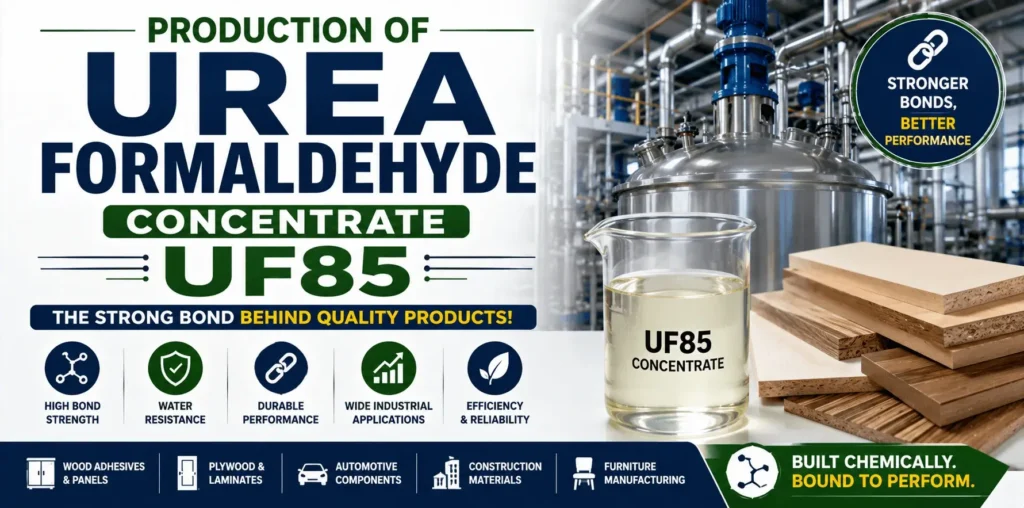
The production of Urea Formaldehyde Concentrate UF85 typically involves a controlled chemical reaction between urea and formaldehyde in the presence of a catalyst. This process is executed under precise conditions of temperature, pH, and reaction time to achieve the desired molecular weight and physical characteristics of UF85 resin. Growing demand from furniture manufacturing, construction materials, and industrial resin sectors continues to drive the global UF85 market. Urea Formaldehyde Concentrate UF85 is one of the most commonly used thermosetting resins, widely used in the production of thermosetting resins, adhesives, plywood, particle boards, MDF boards, laminates, textile finishing chemicals, and fertilizer additives. Due to its excellent bonding strength, high solid content, and cost-effectiveness, UF85 has become one of the most commonly used resin intermediates in the wood-processing and chemical industries. It has extensive use in industrial and commercial applications, understanding the production process of Urea Formaldehyde UF85 is crucial for manufacturers, engineers, and researchers in the field of polymer chemistry. What is Urea Formaldehyde Concentrate UF85? Urea Formaldehyde Concentrate UF85 is a viscous liquid intermediate containing approximately: 60% formaldehyde 25% urea 15% water It is commonly used as a raw material for manufacturing urea formaldehyde resins, adhesives, laminates, and slow-release fertilizers. UF85 is valued for its high reactivity, long storage stability, and strong bonding characteristics in industrial manufacturing applications. Production Process of Urea Formaldehyde Concentrate UF85 Let’s break down the steps involved in producing Urea Formaldehyde UF85. Step 1: Selection and Preparation of Raw Materials The two key raw materials required for manufacturing Urea Formaldehyde UF85 are: Urea (CO(NH?)?): A colorless, crystalline organic compound widely used as a nitrogen-release fertilizer and a base for resins. Formaldehyde (CH?O): A pungent-smelling, colorless gas that is commercially available in aqueous solution (formalin). A typical molar ratio used in the process is between 1:1.6 to 1:2 (urea to formaldehyde). This excess of formaldehyde ensures better cross-linking during polymerization and enhances the resin’s bonding properties. Step 2: Initial Methylolation Reaction The first chemical reaction in the production of Urea Formaldehyde UF85 is methylolation. This step involves mixing urea with formaldehyde at a temperature of about 50–60°C and an alkaline pH (typically 7.5 to 9). A base catalyst like sodium hydroxide (NaOH) is added to initiate the reaction. During methylolation, hydroxymethyl ureas are formed: Urea + Formaldehyde ? Mono-, Di-, and Tri-methylolureas These hydroxymethyl derivatives serve as intermediates for further polymerization. The concentration and time of the reaction at this stage determine the number of methylol groups, which directly influence the curing speed and final resin properties of UF85. Step 3: Condensation Reaction (Polymerization) Once methylolation is complete, the pH is adjusted to acidic conditions (typically pH 4.0 to 5.0) using formic acid or acetic acid, and the temperature is raised to 80–90°C. Under these conditions, the hydroxymethyl groups undergo a condensation reaction, forming methylene and dimethylene ether bridges. Condensation reaction: Hydroxymethylureas ? Linear and Branched Oligomers ? Crosslinked Polymer This step transforms the liquid monomers into a viscous polymeric resin. The degree of polymerization is closely monitored to achieve the specific viscosity and molecular structure characteristic of Urea Formaldehyde UF85. The timing is critical; if the reaction proceeds too far, the resin becomes too thick and unusable. Step 4: Stabilization and pH Adjustment After the desired level of polymerization is achieved, the reaction is stopped by neutralizing the pH back to 7–7.5 using sodium hydroxide or ammonia. This halts the condensation process and stabilizes the resin. At this point, stabilizers and modifiers may also be added to improve shelf life, reduce free formaldehyde content, and fine-tune the resin properties for different applications. Stabilization ensures that Urea Formaldehyde UF85 maintains its performance over time, especially during storage and transportation. Step 5: Concentration and Filtration The UF85 resin is then concentrated to the required solids content, typically 60–65%, through vacuum evaporation or distillation. Filtration is performed to remove any impurities or unreacted materials, ensuring a clean and consistent final product. The resulting viscous liquid is the commercial-grade Urea Formaldehyde UF85. Some manufacturers may further dry the resin into a powdered form depending on the end-use application. Step 6: Quality Testing and Packaging Once the resin is ready, it undergoes stringent quality control tests including: Viscosity Solids content Free formaldehyde content Gel time pH The manufacturer packages the Urea Formaldehyde UF85 resin into drums or containers only after it meets all specified standards, then delivers it to industries like wood panel production, textile finishes, and automotive interior manufacturing. Machinery Used in UF85 Production Major equipment used in the production of Urea Formaldehyde Concentrate UF85 includes: stainless steel reactors condensers vacuum evaporators agitators cooling systems filtration units storage tanks pH control systems packaging machines Modern automated process-control systems help maintain product consistency, quality, and production efficiency. Applications of Urea Formaldehyde UF85 Urea Formaldehyde UF85 is used in numerous applications across various industries: Wood adhesives: For particle board, MDF, and plywood Molded objects: Electrical fittings, buttons, and kitchenware Textiles: As a finishing agent to enhance wrinkle resistance Paper industry: For surface strengthening and gloss The choice of UF85 over other resins is often due to its cost-effectiveness, high reactivity, and favorable mechanical properties. Advantages of UF85 Some of the notable benefits of using Urea Formaldehyde UF85 include: High bond strength Fast curing time Economical production Low color and odor Customizable viscosity and solids content These features make UF85 a preferred material for large-scale industrial applications requiring reliable and consistent resin performance. Environmental and Safety Considerations Despite its advantages, Urea Formaldehyde UF85 does present environmental and health concerns primarily due to the release of formaldehyde gas. To mitigate this: Manufacturers add formaldehyde scavengers such as urea, melamine, or ammonia to reduce free formaldehyde levels. Manufacturers use closed reactor systems and maintain efficient ventilation during production. Workers must follow safety protocols and use personal protective equipment (PPE) during handling and processing. Manufacturers also focus on developing low-emission UF85 variants that comply with environmental regulations such as CARB (California Air Resources Board) and E1 European standards. Global Market Trends and Innovations The demand for
Biodegradable Sanitary Pad/Napkin Industry. Production of Compostable and Eco-Friendly Sanitary Pads/Napkin.
The growing awareness about environmental pollution and plastic waste has significantly increased the demand for sustainable alternatives across industries, including the menstrual hygiene sector. Traditional sanitary napkins are composed of plastics and synthetic materials that can take hundreds of years to decompose, contributing to serious ecological issues. As a result, biodegradable sanitary napkins have emerged as a promising and eco-friendly alternative. These napkins are not only safe for the environment but are also better for the skin, reducing the risk of rashes and infections caused by synthetic materials. Why Switch to Biodegradable Sanitary Napkins? The need for biodegradable sanitary napkins stems from the environmental damage caused by conventional pads. On average, a woman uses more than 10,000 sanitary pads in her lifetime. If each of these pads is made of plastic, the cumulative waste becomes alarming. Regular sanitary napkins consist of up to 90% plastic and take 500–800 years to degrade. These products often end up in landfills or are incinerated, both of which harm the environment. On the other hand, biodegradable sanitary napkins are made using natural, organic, and compostable materials. They decompose much faster—usually within 6 months to 1 year—and cause no harm to the soil, water, or air. Moreover, they are chemical-free, making them safer for intimate use. Key Materials Required Creating biodegradable sanitary napkins involves using materials that are safe, absorbent, and environment-friendly. Here are the main components: Absorbent Core Banana fiber: Derived from banana plants, this is a highly absorbent and renewable material. Bamboo fiber: Soft, antibacterial, and extremely absorbent. Cotton: Organic cotton is preferred for its softness and breathability. Top Sheet (the layer in contact with the skin) Non-woven organic cotton or bamboo fabric. Cornstarch-based film can also be used to enhance comfort. Back Sheet (leak-proof layer) Made from biodegradable bio-plastic or cornstarch film. Must be water-resistant but compostable. Adhesives Natural, non-toxic glue or plant-based gum for holding the layers together. Packaging Recycled paper or biodegradable plastic wrappers. Step-by-Step Process to Make Biodegradable Sanitary Napkins Step 1: Collect and Prepare Materials Ensure that all raw materials, especially cotton or banana fiber, are clean and free from any harmful substances. If you are using natural fibers like banana or bamboo, they need to be dried and processed into soft, fluffy fiber. Step 2: Form the Absorbent Core Card the fibers (like banana, bamboo, or cotton) into a consistent sheet using a fiber carding machine or manually. The thickness of the sheet will determine the absorbency level. The sheet should be thick enough to absorb menstrual flow effectively. Step 3: Layering Layer the absorbent core between a soft top sheet and a waterproof biodegradable back sheet. Ensure all layers align properly and there are no gaps. This step is crucial for maintaining the structure and functionality of the biodegradable sanitary napkins. Step 4: Shaping and Cutting Using a template, cut the layered sheets into the desired shape and size. Typically, sanitary napkins are around 240 mm in length. Different sizes can be made to suit varying flow levels. Step 5: Sealing the Edges Use heat or pressure sealing (if you have the equipment) or stitch the edges with biodegradable thread. This step helps hold the pad together and prevents leakage. Step 6: Adding Adhesive Apply non-toxic, plant-based adhesive on the back sheet to help the pad stick to the underwear. Allow it to dry completely before packaging. Step 7: Sterilization This step ensures hygiene and safety. Sterilize the pads using UV light or steam. This eliminates any bacteria or microbes that may be present. Step 8: Packaging Pack each pad individually using biodegradable paper or plastic. Proper labeling can also include manufacturing date, expiry date, and disposal instructions. Advantages of Making Biodegradable Sanitary Napkins Eco-FriendlyThese pads reduce landfill waste and pollution. They decompose naturally, contributing to a healthier planet. Safe for HealthMade from organic and chemical-free materials, they reduce the risk of rashes, infections, and allergies. Entrepreneurial OpportunityThere is growing market demand, especially in rural and semi-urban areas. Low-cost production units can be set up with minimal investment. Support for Women’s HealthCommunity-based production of biodegradable sanitary napkins empowers local women by providing jobs and promoting menstrual hygiene awareness. Government and NGO SupportMany governments and NGOs provide subsidies and support to initiatives that promote eco-friendly menstrual hygiene products. Market Potential and Demand The global biodegradable sanitary napkin market is growing rapidly, driven by increased awareness and environmental regulations. In countries like India, where the government actively promotes menstrual hygiene programs, the potential is huge. Urban consumers are also shifting toward sustainable living and are willing to pay a premium for eco-friendly products. Moreover, bulk orders from schools, offices, and NGOs provide a stable business opportunity. Challenges in Production Despite the benefits, there are some challenges in the production of biodegradable sanitary napkins: Raw Material Sourcing: Quality organic materials can be hard to find in some regions. Short Shelf Life: Being natural, the pads have a limited shelf life and may degrade faster in humid conditions. Cost: Initial production cost may be higher compared to conventional pads, although this is gradually reducing with scale. Consumer Awareness: Many consumers are unaware of the advantages of biodegradable products, which necessitates ongoing education and marketing efforts. Tips for Starting a Small-Scale Unit Conduct Market Research: Understand the demand, competition, and customer preferences in your area. Choose the Right Equipment: Semi-automatic machines are ideal for small units and can produce 1,000–2,000 pads per day. Train Your Staff: Ensure your team understands hygiene, quality control, and sustainability standards. Branding and Marketing: Create a strong brand identity highlighting the eco-friendly and health-safe aspects of your product. Get Certifications: Obtain eco-certifications and health approvals to gain consumer trust. Environmental and Social Impact Producing and using biodegradable sanitary napkins contributes to multiple Sustainable Development Goals (SDGs), including gender equality, good health and well-being, and responsible consumption. It addresses environmental degradation while also empowering women with employment and hygienic menstrual practices. Conclusion The future of menstrual hygiene lies in sustainability, and biodegradable sanitary napkins are a
Best Business Ideas with Investment of 30 Million
Starting a business with a $30 million investment opens doors to a wide range of high-potential ventures. With this level of capital, entrepreneurs are not only equipped to build a business from scratch but can also explore diversified opportunities in emerging industries, cutting-edge technologies, and sustainable enterprises. The key to maximizing returns lies in smart allocation, detailed market research, scalability, and innovation. Top 10 Business Ideas to Start with a $30 Million Investment With careful strategy, a $30 million investment can be used to establish world-class enterprises. Let’s explore ten profitable business ideas where such capital can be applied effectively: 1. Green Energy Infrastructure Company One of the most promising areas today is renewable energy. With increasing global focus on sustainability, investing in solar farms, wind turbine production, or hydro energy solutions can generate substantial long-term profits. A $30 million investment allows you to acquire land, build production facilities, and invest in R&D. Governments and global organizations often provide subsidies and incentives, making this industry even more attractive. Moreover, green energy is a vital sector for the future, and businesses in this space benefit from strong brand perception and environmental impact. You can also diversify into energy storage and smart grid technologies over time. 2. Luxury Real Estate Development Luxury residential or commercial real estate in high-demand urban centers or coastal areas is another strong contender for investment. With $30 million, you can acquire premium land parcels, design high-end villas, apartments, or office spaces, and employ top-tier architects and construction teams. In regions like Dubai, New York, Singapore, or Mumbai, high-net-worth individuals seek exclusive homes or office spaces, providing a ready market. You could also develop eco-luxury communities that cater to the growing segment of affluent buyers looking for sustainability. 3. Technology Startup Incubator Use the capital to create an innovation hub for startups in sectors like AI, blockchain, fintech, or health tech. By offering funding, infrastructure, and mentorship to budding entrepreneurs, your incubator can earn equity stakes in multiple promising ventures. A $30 million investment can support a portfolio of 30 to 50 startups over 3–5 years. This strategy not only spreads your risk but also gives you a strong foothold in cutting-edge technological ecosystems. Partnering with universities and research centers can further strengthen your business pipeline. 4. Private Label Consumer Goods Brand Whether it’s organic food, sustainable fashion, or beauty products, building a private label brand gives you full control over quality, marketing, and distribution. You can invest in manufacturing facilities, e-commerce platforms, and global logistics. With rising consumer demand for authenticity, health, and eco-friendliness, this business model is ideal for capturing modern market trends. A $30 million investment enables you to establish strong supply chains, conduct global marketing campaigns, and enter international markets effectively. 5. Healthcare Facility or Specialized Hospital The healthcare industry is recession-proof and rapidly evolving. You can use your $30 million investment to build a specialized hospital or multi-specialty healthcare facility in urban or underserved areas. Focusing on areas like oncology, fertility, geriatrics, or cosmetic surgery can help you stand out. Advanced technology, skilled professionals, and international certifications can enhance credibility. Additionally, you can integrate telemedicine, diagnostics labs, and medical tourism to scale operations. 6. Film Production Studio or Streaming Platform If you’re inclined toward media and entertainment, consider investing in a high-quality film studio or a niche streaming platform. The global audience for original content is expanding rapidly, and streaming services are overtaking traditional TV. You can either fund original films, documentaries, or web series, or build a platform focusing on regional or theme-specific content (e.g., horror, anime, or children’s programming). A $30 million investment gives you the ability to hire talent, buy technology, and market aggressively. 7. Premium Education and Training Institute There is a booming market for upskilling and professional certification, especially in fields like data science, AI, cybersecurity, and business management. You can establish a premium education institution offering both online and offline programs. By partnering with international universities or creating your own curriculum, your institute can attract students globally. Use the $30 million investment to build modern campuses, hire expert faculty, develop cutting-edge e-learning platforms, and market your programs. You could also consider setting up a specialized school focusing on early education, arts, sports, or STEAM education, depending on regional demand. 8. Smart Agriculture or Vertical Farming Business Agriculture is undergoing a technological revolution. Smart farming, hydroponics, aquaponics, and vertical farming are gaining traction due to their efficiency and sustainability. A $30 million investment allows you to build a state-of-the-art controlled environment farm that produces high-quality crops year-round with minimal resources. These businesses cater to luxury hotels, health-conscious customers, and export markets. Moreover, they reduce dependency on climate and allow for food production in urban centers. With the right tech and data analytics, you can increase yields while minimizing waste. 9. Franchise Expansion of a Global Brand Another low-risk, high-reward use of your $30 million investment is to acquire a master franchise or multiple franchises of well-known global brands in sectors like fast food, coffee chains, gyms, or retail. Franchise businesses offer tested business models, brand recognition, and ongoing support. You can use your capital to open several outlets across regions, hire trained staff, and localize operations for specific markets. This approach allows for quick scalability and predictable cash flow. 10. Luxury Hospitality and Resort Chain High-end resorts in tourist-friendly destinations are always in demand, particularly if they offer unique experiences such as eco-tourism, wellness, and adventure sports. You can either build new resorts or acquire and renovate existing properties. Use your $30 million investment to create a distinct brand that caters to global travelers. You can blend this with online booking platforms, exclusive membership services, or even host destination events to drive revenues year-round. Such businesses can also qualify for government tourism incentives and benefit from long-term appreciation of land and property assets. Smart Allocation of a $30 Million Investment While choosing a single business venture is viable, a diversified portfolio approach could be wiser. For example:
Manufacturing of Agricultural Battery Sprayer
Starting a manufacturing business in the agricultural sector presents a profitable opportunity, especially when it involves innovative products like the Agricultural Battery Sprayer. As the demand for efficient and cost-effective farming solutions increases across India and other agrarian economies, the market for battery-operated sprayers is on the rise. These devices help farmers apply fertilizers and pesticides more uniformly, improving crop yields while reducing manual labor. This article provides a comprehensive guide to starting an Agricultural Battery Sprayer manufacturing business. Why Invest in Agricultural Battery Sprayer Manufacturing? The farming industry is undergoing rapid modernization. Manual sprayers are slowly becoming outdated due to the labor and time involved in operating them. The Agricultural Battery Sprayer has emerged as a highly sought-after product for its ease of use, uniform spraying capabilities, and long-lasting battery life. With government subsidies and agricultural reforms supporting small and medium farming tools, the scope for a manufacturing business in this segment is immense. Market Research and Demand Analysis Before setting up your Agricultural Battery Sprayer manufacturing unit, start with in-depth market research. Identify your potential customers—primarily farmers, agri-product distributors, cooperatives, and agricultural service providers. Evaluate which features they prioritize: tank capacity, spray distance, battery duration, and portability. Study competitors, both local and international. Understand pricing, product range, distribution models, and branding strategies. The global agricultural sprayer market is expected to grow significantly, and battery sprayers form a major part of that segment. This presents an excellent opportunity to capture a sizable market share. Business Registration and Licensing To operate legally, you must register your business. Choose a suitable business structure—sole proprietorship, partnership, LLP, or private limited company. For manufacturing, especially when dealing with electronic components and plastics, you may require several licenses: Udyam Registration (for MSME benefits) Factory License GST Registration Pollution Control Board Clearance BIS Certification for battery and electrical components ISO Certification (recommended for quality assurance) Ensure compliance with labor laws and workplace safety regulations to avoid legal complications in the future. Location and Factory Setup Choosing the right location for your factory is essential. Consider setting up your unit in semi-urban or rural industrial zones to reduce land and labor costs. Also, make sure there’s easy access to transportation for inbound raw materials and outbound finished goods. Your facility should include: Manufacturing Area Quality Control Lab Packaging Section Storage Area Office/Admin Section Invest in essential infrastructure such as power backup, water supply, and safety systems like fire alarms and first-aid stations. Machinery and Equipment To start manufacturing Agricultural Battery Sprayers, you will need a mix of manual and semi-automated machinery. The key equipment includes: Plastic Injection Molding Machine (for tank and parts) Battery Assembly Tools Ultrasonic Welding Machines Spray Nozzle Calibration Systems Packaging Machines Quality Testing Equipment If you’re starting on a small or medium scale, you can opt for leasing certain machinery or outsourcing specific parts like the motor or battery packs initially. Raw Material Sourcing To produce quality Agricultural Battery Sprayer units, you’ll need to source reliable raw materials such as: High-density polyethylene (HDPE) or polycarbonate for the tank Lead-acid or lithium-ion batteries Motors and micro-pumps Sprayer nozzles and lances Switches, wiring, and connectors Shoulder straps and ergonomic grips Printed circuit boards (PCB) for control Build strong relationships with trustworthy suppliers. Having more than one vendor per material ensures that you’re not stuck if a supplier fails to deliver. Workforce and Hiring Initially, a small team can manage operations. You’ll require: Mechanical Engineers Machine Operators Quality Control Inspectors Assembly Line Workers Packaging Staff Sales and Admin Executives Training staff is crucial, especially for quality control and safety. Since Agricultural Battery Sprayer performance depends heavily on precision, even minor faults can affect brand reputation. Product Design and Innovation Creating a product that appeals to the farmer is your competitive edge. Focus on: Lightweight, durable tanks (12–20 liters) Long-lasting batteries (minimum 6–8 hours per charge) Adjustable spray settings Ergonomic design to reduce strain LED indicators for battery and pump status Innovate by offering dual-spray nozzles, solar charging options, or AI-enabled sprayers for smart farming. These features can set your brand apart in a saturated market. Branding and Packaging Your brand identity is a powerful tool in the agricultural tools market. Choose a brand name that resonates with your target audience. Design attractive, informative, and durable packaging that highlights features like battery life, tank capacity, and warranty. Offer user manuals in multiple regional languages. Include safety instructions, maintenance tips, and customer service information. Quality Control and Certification Quality control is essential in ensuring safety and effectiveness. Your Agricultural Battery Sprayer must pass durability, pressure consistency, leakage, battery safety, and charging cycle tests. Getting certifications like ISI or ISO adds credibility and helps during government tenders and export opportunities. Maintain strict quality documentation to track performance and complaints. Marketing and Distribution Once your product is ready, begin aggressive marketing. Strategies include: Tying up with agricultural cooperatives Attending trade fairs and expos Partnering with government rural development schemes Running regional social media campaigns Using influencer farmers and YouTube agri-channels Offer bulk deals to agri-stores and distributors. You can also sell directly via e-commerce platforms like Amazon, Flipkart, or your own website. Cost and Investment Estimation Starting a small to medium scale Agricultural Battery Sprayer unit can require ?25 lakh to ?1 crore, depending on the scale and location. Here’s a rough breakup: Land and Building: ?10–25 lakh (if leased, less) Machinery and Equipment: ?10–20 lakh Raw Materials (initial): ?5–10 lakh Licenses and Setup: ?2–3 lakh Staff Salaries (6 months): ?4–6 lakh Marketing and Branding: ?2–5 lakh A return on investment (ROI) can be expected within 1.5 to 2 years if scaled properly. Challenges and Solutions Agricultural Battery Sprayer manufacturing does come with challenges like: Battery safety and overheating issues – use BIS-certified batteries Price wars – mitigate with product features and quality Rural outreach – partner with agri-service providers for demonstrations Seasonal demand – stock up and diversify product line during off-season Being proactive with product feedback and after-sales service helps build long-term customer trust. Government Schemes
Boiler Suits Manufacturing. Production of Coverall (Boiler Suit).
Boiler suits, also known as coveralls, are one-piece protective garments commonly used in industrial environments to safeguard workers from hazards such as heat, sparks, dust, and chemicals. As the demand for durable and functional workwear continues to rise globally, boiler suits manufacturing has emerged as a highly profitable business opportunity in the safety garment sector. Understanding the Boiler Suits Manufacturing Process Boiler suits manufacturing involves a structured production cycle beginning from raw material procurement to the final quality assurance checks before shipment. We, as a seasoned manufacturer, understand the critical stages that ensure both efficiency and excellence. 1. Market Research and Business Planning Before setting up a boiler suits manufacturing unit, detailed market research is crucial. We analyze: Target industries: oil & gas, construction, chemical plants, mechanical workshops, food processing units. Regulatory requirements: adherence to ISO and OSHA safety garment standards. Competitor landscape: identifying local and international suppliers to position ourselves effectively. Pricing strategy: balancing quality and affordability to attract bulk buyers and tenders. 2. Material Selection and Fabric Sourcing High-quality materials are essential for safety and comfort. The most commonly used fabrics include: Cotton Twill – Known for breathability and strength. Poly-cotton Blends – Offers durability and wrinkle resistance. Flame Retardant Fabric – For high-risk environments. Antistatic Fabric – Ideal for electronics and chemical sectors. We source fabrics from reliable mills that meet global compliance and can handle customization like reflective tapes, waterproof coatings, or reinforced panels. 3. Boiler Suits Design and Pattern Development Functional design is the backbone of a competitive product. Our design team develops ergonomic patterns that include: Multiple pockets for tools and accessories. Elasticized waists and adjustable cuffs for comfort. Front zipper closures for easy wear. Knee pad inserts and reinforced stitching in high-stress areas. Each pattern is carefully digitized and tested through prototypes for mobility and resilience. 4. Cutting and Stitching Process Precision cutting ensures optimal use of fabric and reduces wastage. We use automatic cutting machines integrated with CAD software to maintain uniformity in bulk production. The stitching department is equipped with: Double-needle lock stitch machines Overlock and flatlock machines Bar tack machines for reinforcements Skilled tailors ensure the integrity of each stitch, and every piece undergoes inspection before moving to the next phase. 5. Customization and Branding Clients often seek personalized boiler suits manufacturing options. We offer: Embroidery or screen printing of logos. Color-coded suits by department or hazard level. Reflective tapes for night visibility. Special sizing for different body types. Our customization process adds brand value and promotes client identity. 6. Quality Assurance and Testing Our QA department rigorously tests every batch for: Fabric strength and tear resistance. Colorfastness after repeated washes. Stitch durability and seam strength. Compliance with EN and ASTM standards. Random batch inspections, stress tests, and wearing trials ensure the suits perform reliably in field conditions. 7. Packaging and Dispatch We pack boiler suits in moisture-proof, size-labeled polybags and corrugated boxes for bulk orders. Bulk exports are containerized with required documentation including: Packing list Commercial invoice Certificate of origin Inspection reports (if applicable) We also cater to urgent turnkey projects with time-sensitive production and dispatch protocols. 8. Machinery Required for Production To streamline the boiler suits manufacturing process, we invest in state-of-the-art machinery such as: Industrial sewing machines (Juki, Brother, Singer) Button and eyelet attaching machines Heat transfer and logo printing machines Fabric fusing and finishing systems Ironing and vacuum finishing tables Regular maintenance and skilled operators ensure smooth operations and timely order execution. 9. Manpower and Skilled Labor A medium-scale unit requires: Pattern Masters and Designers Sewing machine operators Tailors and finishers QA and Inspection team Packaging and logistic staff Our HR department ensures each worker is trained and aligned with the latest quality protocols and safety measures. 10. Compliance, Certification & Legalities To operate legitimately and meet industry benchmarks, we acquire: Factory license and GST registration ISO 9001 certification CE/EN certifications for exports Labor welfare compliance Regular audits help us maintain global compliance and client trust. 11. Marketing and Sales Strategy Our sales team actively targets: Government tenders and PSU contracts Private sector companies in industrial zones International B2B platforms like Alibaba, TradeIndia, Indiamart Participation in textile and safety expos We also maintain a digital footprint via SEO-optimized websites, product catalogs, and email campaigns to reach clients worldwide. 12. Profitability and ROI A standard boiler suits manufacturing unit with a monthly production of 5,000 pieces can expect: Cost per unit: ?250–?400 (depending on fabric and customization) Selling price: ?500–?900 (retail or bulk) Gross profit margin: 40%–60% Break-even period: 12–18 months Seasonal demands from monsoon and winter contracts further boost revenue. 13. Future Trends in Coverall Production The industry is witnessing a shift toward: Eco-friendly fabrics like organic cotton and recycled polyester. Smart garments with embedded sensors for temperature, fatigue, and hazard alerts. AI-integrated quality control and automated production lines. Staying ahead of trends ensures long-term sustainability and market leadership. Conclusion Boiler suits manufacturing is not just a protective gear business—it’s a growing industrial necessity that touches nearly every sector. With strategic investment, focus on quality, and a strong sales network, this venture offers scalable returns and international market access. As safety and compliance become non-negotiable across industries, demand for durable and well-designed boiler suits will only surge. Visit the page Select and Choose the Right Business Startup for You for sorting out the questions arising in your mind before starting any business and know which start-up you can plan. We, at NPCS, endeavor to make business selection a simple and convenient step for any entrepreneur/startup. Our expert team, by capitalizing on its dexterity and decade’s long experience in the field, has created a list of profitable ventures for entrepreneurs who wish to diversify or venture. The list so mentioned is updated regularly to give you a regular dose of new emerging opportunities. Contact Us
Production of Glacial Acetic Acid. Investment Opportunities in Chemical Industry.
Glacial acetic acid, a colorless liquid organic compound with a strong and distinct sour odor, plays a vital role in various industries worldwide. It is the pure, water-free (anhydrous) form of acetic acid and is known for its corrosive properties and versatile applications. From chemical manufacturing to food processing, glacial acetic acid has become an indispensable raw material. As demand for industrial chemicals rises globally, the production of glacial acetic acid is emerging as a lucrative business opportunity for investors and entrepreneurs alike. The Growing Demand for Glacial Acetic Acid The global demand for glacial acetic acid is driven by its extensive usage in industries such as textiles, plastics, pharmaceuticals, and food processing. One of its primary uses is in the production of vinyl acetate monomer (VAM), which serves as a building block for adhesives, paints, and coatings. Other applications include the manufacture of acetic anhydride (used in aspirin production), ester solvents, and synthetic fibers. As the industrial and manufacturing sectors continue to grow, so does the requirement for glacial acetic acid. The market for glacial acetic acid is expected to witness significant growth in Asia-Pacific regions, particularly in China and India. With rising industrialization and urbanization, countries in this region are experiencing a surge in demand for VAM and other derivatives, which in turn boosts the need for glacial acetic acid. Moreover, government policies supporting chemical manufacturing and environmental regulations mandating cleaner and safer production methods further contribute to its market expansion. Why Invest in Glacial Acetic Acid Production? 1. High Market Potential The global glacial acetic acid market was valued at several billion USD and is projected to grow at a CAGR of more than 5% over the next five years. This steady growth trajectory indicates a healthy and promising industry landscape. As end-user industries expand, investment in production facilities can offer substantial returns. 2. Diverse End-Use Applications From household vinegar to industrial solvents, glacial acetic acid’s wide array of applications makes it a strategic commodity. Investors gain access to multiple downstream markets including pharmaceuticals, agrochemicals, and paints. The food-grade version is used as an acidity regulator (E260) in food and beverages, while its industrial-grade version finds use in the synthesis of chemicals. 3. Export Opportunities Countries like India can become export hubs for glacial acetic acid due to lower manufacturing costs and growing chemical expertise. As Western nations look for cost-effective sourcing partners, setting up production in emerging markets offers a competitive edge in the global supply chain. 4. Eco-Friendly Production Trends The industry is increasingly shifting toward bio-based glacial acetic acid to meet environmental norms. This opens opportunities for green startups and eco-conscious investors to explore innovative, sustainable production methods such as fermentation or biomass-derived acetic acid. 5. Government Support and Incentives In many countries, especially India and Southeast Asia, the chemical manufacturing sector enjoys government incentives such as subsidies, reduced import duties on capital equipment, and faster environmental clearances. These benefits significantly reduce startup costs and improve profitability. Key Production Technologies Several methods are employed to produce glacial acetic acid. The most common include: Methanol Carbonylation: This is the predominant method used worldwide, involving the reaction of methanol with carbon monoxide in the presence of a catalyst (typically rhodium or iridium-based) to produce acetic acid. Acetaldehyde Oxidation: This older method involves oxidizing acetaldehyde using a manganese or cobalt catalyst, though it is less efficient than carbonylation. Butane or Naphtha Oxidation: In this process, hydrocarbons are oxidized directly to produce acetic acid. This method is more capital intensive. Fermentation: A renewable and eco-friendly approach, this method is gaining traction for producing bio-based glacial acetic acid using acetic acid bacteria acting on sugars or ethanol. Each of these methods varies in terms of cost, environmental impact, scalability, and purity of the final product. Investors should consider the local availability of feedstock and technological infrastructure when choosing the optimal method for glacial acetic acid production. Plant Setup and Investment Insights Starting a glacial acetic acid manufacturing facility involves careful planning and a significant initial investment. The following factors must be considered: 1. Land and Location Prefer industrial zones with chemical cluster proximity. Ensure access to transportation, utilities, and waste disposal facilities. 2. Equipment and Machinery Reactor systems, distillation columns, storage tanks, scrubbers, and safety systems are essential. Choose automated systems to enhance precision and reduce manual errors. 3. Compliance and Safety Adherence to chemical manufacturing norms, hazardous chemical handling protocols, and pollution control board approvals is mandatory. Install emission control systems and maintain rigorous worker safety standards. 4. Skilled Workforce Chemical engineers, safety officers, and trained plant operators are crucial for efficient operations. 5. Raw Materials and Logistics Ensure stable supply chains for feedstock like methanol or acetic acid bacteria (for bio-based methods). Develop partnerships with logistics providers for timely distribution. ROI and Break-Even Analysis Although the initial capital investment for glacial acetic acid production can range from $5 million to $20 million depending on the scale, the return on investment (ROI) is attractive. With proper planning, a plant can break even within 3 to 5 years. Margins improve significantly when value-added products like VAM or acetic anhydride are integrated into the production line. Moreover, vertical integration and by-product utilization can further enhance profitability. For instance, CO2 emissions from the process can be captured and sold, while the heat generated can be used in ancillary processes or sold to neighboring industries. Sustainability and Environmental Benefits With increasing awareness about sustainability, businesses are shifting toward environmentally responsible production. Glacial acetic acid can be produced through bio-based routes, offering reduced carbon emissions and fewer pollutants. Companies investing in green chemistry not only contribute to environmental goals but also enjoy goodwill and government subsidies. Additionally, waste minimization techniques like recycling water, reusing solvents, and using renewable energy sources can enhance both sustainability and cost-efficiency. These practices are not only ethical but also commercially advantageous in today’s eco-conscious market. Challenges and Risk Management Like any industrial venture, glacial acetic acid production comes with challenges: Volatility in raw material prices (especially methanol)