
Bleaching Powder Manufacturing Business
India, with its expanding industrial and sanitation sectors, presents a promising landscape for entrepreneurs venturing into chemical manufacturing. One such viable business idea is Bleaching Powder Manufacturing, which plays a crucial role in water purification, sanitation, textile processing, and as a disinfectant in various sectors. Given the rising awareness around hygiene and the demand for clean water, the bleaching powder industry in India has witnessed steady growth. Starting a bleaching powder manufacturing business requires understanding of chemical processes, investment planning, and strict adherence to safety and regulatory guidelines. Why Bleaching Powder Manufacturing is a Profitable Venture in India Bleaching powder, also known as calcium hypochlorite, is widely used in municipal water treatment, sanitation services, and industries like textiles and paper manufacturing. The demand for this chemical compound remains high due to its effectiveness and low cost. In rural areas and urban local bodies, bleaching powder is a staple for disinfection. Additionally, the Indian government’s Swachh Bharat Abhiyan and Jal Jeevan Mission have further amplified the need for disinfectants and water purifiers, boosting demand for bleaching powder. Starting a Bleaching Powder Manufacturing unit can be an excellent business opportunity due to the consistent market need, relatively low raw material cost, and the scope for expansion in both domestic and export markets. With appropriate licenses, a safe facility, and the right marketing strategy, entrepreneurs can carve a niche in this evergreen industry. Market Potential and Scope India produces thousands of tons of bleaching powder annually. Key consumers include: Municipal corporations Hospitals and clinics Dairy and poultry farms Textile and paper industries Households for sanitation purposes The market is expanding due to health and hygiene awareness, growth in population, and rapid urbanization. Entrepreneurs who can offer quality products at competitive prices will find significant growth opportunities in both rural and urban markets. Raw Materials Required To start a Bleaching Powder Manufacturing unit, the following raw materials are primarily required: Lime (Calcium hydroxide) Chlorine gas Water The availability of raw materials is widespread across India. Lime is available from limestone mines, and chlorine can be sourced from caustic soda production units or chemical suppliers. These materials are cost-effective and easily transportable, making the procurement process smooth for manufacturers. Manufacturing Process Overview The manufacturing of bleaching powder involves a straightforward yet controlled chemical process: Slaking of Lime: Quicklime (CaO) is mixed with water to produce slaked lime (Ca(OH)?). Drying and Pulverizing: The slaked lime is dried and ground into a fine powder. Chlorination: The slaked lime is then exposed to chlorine gas under controlled conditions in a chlorination chamber or tower. Collection and Packaging: The resultant bleaching powder is collected, screened, and packed in moisture-proof bags or containers. Proper ventilation, gas monitoring systems, and personal protective equipment (PPE) are essential to ensure safety during production. Machinery and Equipment Investing in the right machinery is vital for quality and efficiency. The key equipment required includes: Lime slaker Pulverizer Chlorination chamber/tower Storage tanks Dust collectors Packing machines Additionally, a laboratory setup is recommended for quality testing. The cost of machinery varies depending on the production capacity, ranging from ?10 lakhs to ?50 lakhs for a small to medium-scale unit. Factory Setup and Infrastructure The ideal location for a Bleaching Powder Manufacturing unit should be away from residential areas due to the emission of chlorine gas. The factory should have: Sufficient space for machinery, raw materials, and finished goods Proper ventilation and exhaust systems Fire safety measures and gas leak detectors Easy access to water, electricity, and transportation Typically, a small-scale unit may require around 5,000 to 10,000 sq. ft. of space. Licensing and Regulatory Requirements Since bleaching powder is a chemical product, several licenses and approvals are necessary: Factory License from the local authority Pollution Control Board NOC Explosive and hazardous substance handling license GST registration Trade license BIS certification (for product quality standards) It is advisable to consult with a legal expert or compliance consultant to ensure all statutory norms are met before starting operations. Manpower Requirements For a small unit, a workforce of around 10–15 people is sufficient. This includes: Chemical engineers or plant supervisors Skilled and semi-skilled workers Machine operators Quality control personnel Marketing and administrative staff Proper training should be provided, especially in safety and emergency handling procedures. Investment and Financial Planning The initial investment for a Bleaching Powder Manufacturing unit can vary depending on the scale of operations. Approximate cost breakdown: Land and building: ?20–30 lakhs (if purchased) Machinery and equipment: ?10–50 lakhs Raw materials (initial stock): ?2–5 lakhs Labor and utilities: ?1–2 lakhs/month Licensing and marketing: ?2–3 lakhs Total estimated investment: ?35–90 lakhs for a small to medium-sized unit. Profit margins range between 15% to 25% based on efficiency, scale, and market reach. Quality Control and Safety Measures As bleaching powder is a chemical with strong oxidizing properties, quality and safety are non-negotiable. Regular batch testing should be conducted to ensure: Proper chlorine content (30–35%) Free from impurities Moisture control to avoid degradation Safety measures include: PPE for all workers Gas leak alarms Emergency showers and eye-wash stations Fire extinguishers and safety training Strict adherence to safety protocols minimizes risks and enhances the credibility of the business. Marketing and Distribution Strategies To establish a successful Bleaching Powder Manufacturing business, strong distribution channels and branding are essential. Some effective marketing strategies include: Partnering with sanitation departments and municipal bodies Supplying to industrial clients directly Collaborating with retailers and wholesalers in rural markets Listing products on B2B platforms like IndiaMART, TradeIndia Participating in industry expos and government tenders Brand recognition and consistent product quality will help retain long-term customers. Environmental and Sustainability Considerations While manufacturing bleaching powder, it is important to address environmental concerns. Chlorine gas poses hazards, so industries must control emissions using proper scrubbing systems. They must also treat effluent and waste before disposal. Incorporating sustainable practices not only meets regulatory norms but also appeals to environmentally conscious clients. Using solar power, reducing waste, and adopting closed-loop water systems can further enhance the unit’s green credentials. Conclusion Starting a Bleaching
Iron Powder Production from Mill Scale Scra
In the rapidly evolving world of metallurgy and materials engineering, iron powder has emerged as an indispensable component across numerous industrial applications. One of the most efficient and cost-effective methods to produce iron powder is from mill scale scrap. Mill scale, a flaky by-product generated during the hot rolling of steel, was once considered waste. However, modern techniques have transformed this material into a valuable resource. As industries push towards sustainability and zero waste, converting mill scale into iron powder not only addresses environmental concerns but also reduces production costs and dependency on iron ore. Converting Mill Scale Scrap into Valuable Iron Powder The generation of mill scale happens naturally during steel production. It forms on the surface of steel billets and sheets during hot rolling and is composed mostly of iron oxides such as FeO, Fe?O?, and Fe?O?. This oxide layer flakes off and accumulates as waste. Traditionally discarded or sold cheaply, mill scale is now gaining attention as a raw material for producing iron powder, especially in powder metallurgy industries. Composition and Characteristics of Mill Scale Mill scale typically contains around 70% iron, making it an attractive alternative to iron ore for powder production. Its other constituents include silica, alumina, and traces of other metals, depending on the steel source. Because it’s already partially oxidized, processing mill scale to extract pure iron powder involves reducing these oxides back into metallic iron through controlled chemical reactions. Process Overview: Iron Powder from Mill Scale The manufacturing of iron powder from mill scale involves multiple steps, each crucial to the quality and purity of the final product. 1. Collection and Preparation Mill scale is collected from steel plants, usually in bulk. It is then dried and crushed to uniform particle size to improve reaction efficiency. Magnetic separation may be used to remove non-ferrous contaminants. 2. Reduction Process The most commonly used method to reduce mill scale is the hydrogen reduction or coal-based reduction process: Hydrogen Reduction: In this process, mill scale is heated in a hydrogen-rich atmosphere at temperatures between 500°C and 900°C. The hydrogen reacts with iron oxides to form metallic iron and water vapor. Fe2O3+3H2?2Fe+3H2OFe_2O_3 + 3H_2 ? 2Fe + 3H_2OFe2?O3?+3H2??2Fe+3H2?O Coal or Coke-Based Reduction: Here, finely ground mill scale is mixed with carbon (from coal or coke) and heated in a rotary kiln. The carbon reduces the iron oxides, forming sponge iron that is later ground into powder. 3. Cooling and Milling After reduction, technicians cool the metallic iron (also called sponge iron) in a controlled environment to prevent re-oxidation. They then grind it into fine iron powder using ball mills or jet mills to meet the desired particle size specifications. 4. Sieving and Quality Control Technicians sieve the final powder to remove oversized particles and ensure uniformity. They carry out rigorous quality control checks to test for purity, particle size distribution, and chemical composition, ensuring the iron powder meets industrial standards. Applications of Iron Powder in Various Industries The versatility of iron powder makes it a critical material in several industrial sectors: 1. Powder Metallurgy One of the largest consumers of iron powder is the powder metallurgy sector. It is used to manufacture sintered components like gears, bearings, and bushings. These components are pressed into shape and sintered at high temperatures, offering excellent mechanical properties and material efficiency. 2. Soft Magnetic Components Iron powder’s magnetic properties make it ideal for producing soft magnetic parts used in electromagnetic devices, transformers, and inductors. 3. Friction Materials Brake pads and clutch plates often include iron powder to improve wear resistance and performance. Its controlled particle size ensures consistent frictional properties. 4. Chemical and Food Industries In the chemical industry, iron powder acts as a reducing agent in several reactions. It’s also used in water treatment processes to remove contaminants. Surprisingly, fine-grade iron powder is added to food products to fortify them with iron, especially in developing countries. 5. Printing and Additive Manufacturing The rise of 3D printing has led manufacturers to use iron-based powders in metal additive manufacturing processes like Binder Jetting and Selective Laser Melting, offering cost-effective solutions for prototyping and small batch production. Environmental and Economic Benefits Utilizing mill scale for iron powder production offers significant environmental and economic advantages: Waste Minimization: Converting a waste by-product into a valuable raw material reduces the burden on landfills and promotes circular economy principles. Lower Raw Material Costs: Mill scale is less expensive than iron ore, bringing down overall production costs. Energy Efficiency: Optimizing reduction processes lowers energy consumption compared to traditional smelting methods. Carbon Footprint Reduction: Avoiding full-scale ore mining and beneficiation reduces greenhouse gas emissions. Market Trends and Future Potential The global demand for iron powder is growing steadily due to increasing adoption of powder metallurgy and sustainable production methods. Countries like India, China, and the USA are leading producers, with several small and medium enterprises exploring mill scale-based production as a viable business model. In India, the growing steel industry ensures a continuous supply of mill scale, while supportive government policies encourage recycling and sustainable manufacturing. Entrepreneurs can enter this market with moderate capital investment, focusing on technology partnerships and quality control to gain competitive advantage. Moreover, research into improving the purity of iron powder and developing composite powders is driving innovation. For example, alloying iron with elements like copper or nickel during the powder stage can enhance mechanical properties for specific applications. Challenges in Iron Powder Production from Mill Scale Despite its benefits, challenges still remain to be addressed. Contamination Control: Mill scale often contains impurities that can affect the quality of the final iron powder. Advanced cleaning and separation techniques are essential. Process Optimization: Maintaining consistent temperature and reducing atmosphere is crucial for effective oxide reduction. Storage and Handling: Iron powder is highly reactive and needs careful storage to prevent oxidation and fire hazards. Conclusion Producing iron powder from mill scale scrap is a remarkable example of turning industrial waste into a valuable resource. With increasing emphasis on sustainability and cost-efficiency, this method offers a
How to Start Banana Powder Manufacturing Business Unit
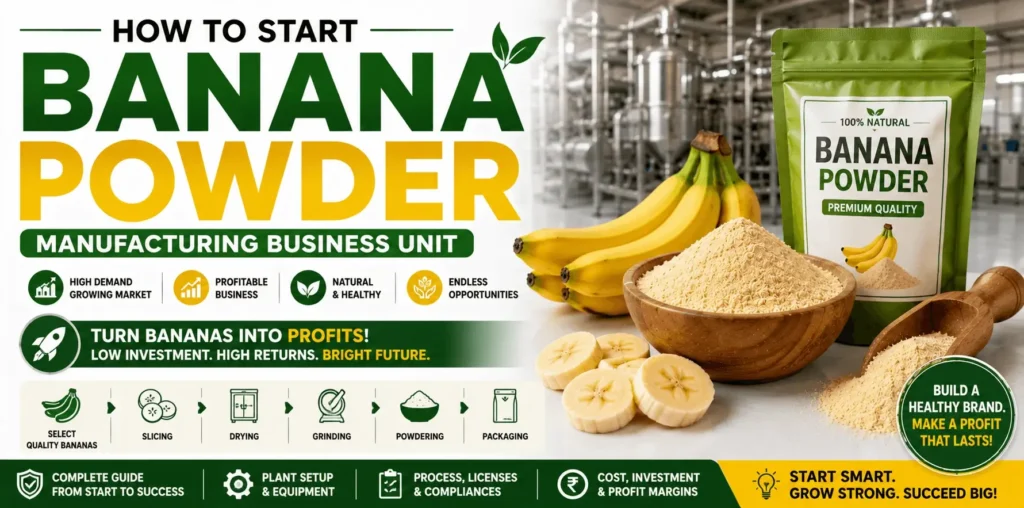
Banana powder is a versatile product with growing demand in the food processing, baby food, bakery, and pharmaceutical industries. Derived from processed bananas, it serves as an excellent natural flavoring and nutritional enhancer. Entrepreneurs looking to enter the agro-processing industry will find banana powder manufacturing business a lucrative opportunity, especially in banana-producing regions. This article offers a complete guide on how to set up a banana powder manufacturing business unit, covering everything from raw material procurement to market strategy. Understanding the Banana Powder Manufacturing Business India is one of the largest producers of bananas globally, making it a natural hub for banana powder manufacturing business. The industry benefits from abundant raw material availability, government support for agro-based industries, and a steadily increasing demand in both domestic and export markets. The manufacturing process involves cleaning, slicing, drying, milling, and packaging bananas in powdered form, which retains much of the fruit’s nutritional value and taste. Market Potential and Applications Banana powder is widely used in baby food, bakery products, ice creams, milkshakes, health supplements, and as a natural sweetener. Its long shelf life, easy transportability, and high nutritional content make it ideal for both B2B and B2C segments. With increasing awareness around health foods and the shift toward natural additives in food products, the global demand for banana powder is expected to rise. The product also sees export demand from countries in the Middle East, Europe, and Africa. The key market drivers include convenience, affordability, and the growing popularity of organic and plant-based food products. Key Steps to Set Up a Banana Powder Manufacturing Business Unit 1. Market Research and Business Plan Begin with in-depth market research. Analyze demand trends, competitor analysis, pricing strategy, and customer expectations. A well-researched business plan should include production capacity, investment outlay, machinery and technology needs, financial projections, and a marketing roadmap. 2. Location and Infrastructure The ideal location for a banana powder manufacturing unit is near banana-growing regions to minimize transportation costs and ensure the freshness of raw materials. The infrastructure should include: Space for processing unit and storage Water supply and power backup Waste disposal system Good connectivity to markets You’ll need about 1,500–2,000 sq. ft. of space for a small-scale setup. 3. Legal and Regulatory Requirements Register the business as an MSME or under any other suitable business entity. Obtain the following: GST registration FSSAI license (Food Safety and Standards Authority of India) Pollution Control Board clearance Factory license from the state government Trademark for branding (optional but recommended) Compliance with food safety regulations is critical for building trust and expanding your reach. 4. Procurement of Raw Materials Procure fully ripe and blemish-free bananas directly from farmers or wholesalers. It’s best to develop long-term relationships with reliable suppliers to ensure year-round availability. Organic bananas are in high demand, so sourcing certified organic produce can help cater to premium markets. Additional raw materials include: Food-grade packaging materials Preservatives (optional and based on regulatory standards) Cleaning and sterilizing agents 5. Machinery and Equipment For a small to medium-scale banana powder manufacturing business unit, you will need the following equipment: Banana peeler Slicer or cutter Blanching tank (optional) Dryer or dehydrator (solar or electric) Pulverizer or grinder Sieving machine Packaging machine Weighing scale Machinery should meet food-grade standards. Automation can significantly increase efficiency and output. 6. Manufacturing Process The production process typically follows these steps: Sorting and Cleaning – Select and clean the bananas thoroughly to remove dust, dirt, and surface contaminants. Peeling and Slicing – Peel and cut the bananas into uniform slices to ensure even drying. Drying – Dry the slices using solar, hot air, or freeze drying methods. This step is crucial for shelf life and product quality. Grinding – Dried slices are ground into fine powder using a pulverizer. Sieving – The powder is sieved to remove coarse particles and ensure uniformity. Packaging – The final product is packaged in moisture-proof and food-grade containers. Strict quality control at every stage ensures the consistency, flavor, and safety of the product. 7. Manpower Requirement For a small unit, 6–10 employees are sufficient. This includes machine operators, quality controllers, packaging staff, and administrative personnel. Trained workers improve efficiency and reduce waste. 8. Investment and Profitability Setting up a small-scale banana powder manufacturing business unit may require an investment of ?10–20 lakhs depending on scale and automation level. The cost breakdown includes: Machinery: ?5–10 lakhs Infrastructure: ?3–5 lakhs Raw materials and working capital: ?2–5 lakhs Profit margins range between 20%–35%. With consistent quality and strong market demand, breakeven is possible within 1–2 years. 9. Branding and Packaging Effective branding plays a major role in attracting customers, especially for retail sales. Focus on: Eye-catching logo and packaging design Nutritional information and usage instructions Eco-friendly packaging materials Retail packs of 100g, 250g, 500g, and 1kg are popular. Bulk packaging (25kg, 50kg) is used for industrial customers. Marketing Strategy and Distribution A robust marketing strategy helps you penetrate the market and build a loyal customer base. Target the following: B2B Segment Food processing companies Bakeries Ice cream manufacturers Baby food brands Exporters and traders B2C Segment Health food stores Supermarkets and online retailers Organic and natural product outlets Direct-to-consumer (via website or marketplaces) Use digital marketing, SEO, social media, and product sampling to build awareness. Participation in food expos and industry events boosts visibility and networking. Government Support and Schemes The Indian government offers several schemes for agro-based and food processing industries, including: PMFME (Pradhan Mantri Formalization of Micro Food Processing Enterprises) NABARD subsidies and low-interest loans Stand-Up India Scheme for SC/ST and women entrepreneurs NSIC and MSME support for machinery procurement Leverage these schemes for funding, training, and infrastructure development. Challenges and Solutions Banana powder manufacturing business comes with its own set of challenges, including: Raw material perishability – Tie-ups with local farmers and cold chain logistics can minimize waste. Price fluctuations – Long-term procurement contracts and buffer stock help maintain cost stability. Quality control – Invest in testing equipment and follow standard operating procedures to maintain consistency.
Peanut Oil Manufacturing Industry
Peanut oil, often regarded for its mild flavor and high smoking point, is gaining popularity as a healthy edible oil option across the globe. As health consciousness among consumers rises and demand for plant-based oils grows, peanut oil manufacturing is poised to become a profitable sector in 2025. India, China, and the United States are the key producers and consumers of peanut oil, contributing significantly to global production. With evolving food habits, urbanization, and the rise of processed food industries, the peanut oil manufacturing industry is expected to witness remarkable growth. Current Market Scenario and Trends The peanut oil manufacturing sector is experiencing steady growth due to the rising demand for high-quality edible oils that offer health benefits. Peanut oil, also known as groundnut oil, is rich in monounsaturated fats and antioxidants, making it a preferred choice for cooking. In 2025, health-conscious consumers are increasingly opting for cold-pressed and organic oils, giving rise to niche peanut oil manufacturing units that focus on premium quality. The global market size for peanut oil is projected to grow at a CAGR of over 5% during 2023–2028. Factors such as rising disposable incomes, urban population growth, and increased awareness about healthy cooking oils are driving this upward trend. Additionally, advancements in extraction technologies such as expeller pressing and solvent extraction have enhanced production efficiency and oil yield. Demand Drivers A significant driver of the peanut oil manufacturing industry is the increased consumption of edible oils in households, restaurants, and food processing units. The growing popularity of fried and processed foods, particularly in urban markets, has expanded the demand for oils with a high smoke point like peanut oil. Its ability to retain flavor and nutritional value at high temperatures makes it ideal for deep frying and commercial cooking. Moreover, consumers are gravitating towards non-GMO and chemical-free oils, prompting manufacturers to invest in organic peanut oil manufacturing. Peanut oil also finds application in personal care products and pharmaceuticals, further diversifying its market scope. Manufacturing Process The peanut oil manufacturing process begins with the procurement of high-quality groundnuts. The steps typically involve: Cleaning and De-shelling – Removing dirt, stones, and shells to obtain clean kernels. Roasting (Optional) – Enhancing flavor in the case of roasted peanut oil. Crushing/Expelling – Using mechanical expellers or cold-pressing techniques to extract oil. Solvent Extraction – In large-scale operations, residual oil in the seed cake is extracted using food-grade solvents. Filtration and Refining – Removing impurities, free fatty acids, and color using filtration and neutralization processes. Packaging – The final product is packed in PET bottles, tins, or pouches and labeled for retail or wholesale markets. The choice between cold-pressed and refined oil production depends on the target market. Cold-pressed peanut oil manufacturing is more suitable for health-oriented consumers, while refined peanut oil is widely used in bulk for cooking and industrial purposes. Investment and Infrastructure Setting up a peanut oil manufacturing plant in 2025 requires strategic planning, moderate capital investment, and compliance with regulatory standards. The required infrastructure includes: Land and building for processing and storage Oil expeller machines or solvent extraction units Filters and refining equipment Packaging machinery Utilities like water, electricity, and fire safety systems Depending on the scale—small, medium, or large—the investment ranges from ?20 lakhs for a small unit to ?5 crores for an automated large-scale plant in India. Entrepreneurs may also consider government subsidies and MSME schemes to ease initial capital burdens. Key Market Players Some of the prominent players in the peanut oil manufacturing industry include Adani Wilmar, Cargill Inc., Archer Daniels Midland, Marico Limited, and Gujarat Ambuja Exports. These companies have wide distribution networks and brand recognition, especially in countries like India, China, and the U.S. Local manufacturers and startups are entering the market with organic and cold-pressed peanut oil offerings, targeting health-conscious and premium consumers. Challenges in the Industry While the peanut oil manufacturing industry is lucrative, it is not without challenges: Raw Material Availability – Seasonal fluctuations in groundnut cultivation affect oilseed availability and cost. Price Volatility – Global market dynamics and climatic changes lead to price instability. Regulatory Compliance – Manufacturers must adhere to food safety and FSSAI regulations in India or equivalent international standards for exports. Competition – The presence of alternative oils like sunflower, mustard, and soybean oil intensifies market competition. To address these challenges, manufacturers must adopt sustainable sourcing practices, invest in quality assurance, and diversify their product range. Opportunities in 2025 The peanut oil manufacturing industry is poised for innovation and expansion in 2025. Opportunities include: Organic and Premium Oils – With rising consumer interest in organic food products, organic peanut oil has vast potential. Exports – Countries in Africa, Europe, and Southeast Asia offer strong export opportunities due to rising demand for healthy oils. Private Labeling – Retailers are increasingly sourcing peanut oil under private labels, allowing manufacturers to increase volume without investing in branding. E-commerce Distribution – Selling through digital platforms offers direct-to-consumer access, reducing dependency on traditional retail chains. Additionally, value-added products such as flavored peanut oils (garlic-infused, chili-infused) and cosmetic-grade peanut oil are expanding the market further. Sustainability and Innovation In 2025, sustainability is a key focus for peanut oil manufacturing units. From sourcing non-GMO groundnuts to reducing carbon emissions and managing waste, manufacturers are adopting environmentally responsible practices. Innovations in energy-efficient machinery, zero-waste processing, and biodegradable packaging are aligning the industry with global sustainability goals. Waste byproducts like peanut cake (leftover after oil extraction) are also finding use in animal feed, fertilizer, and biomass fuel, creating an additional income stream for manufacturers. Government Support and Policies Governments in major peanut-producing countries are encouraging oilseed cultivation and edible oil manufacturing through various schemes. In India, the PMFME (Pradhan Mantri Formalization of Micro Food Processing Enterprises) Scheme, NABARD funding, and FSSAI support are helping small-scale peanut oil manufacturing units grow. Moreover, policies around agricultural subsidies, minimum support price (MSP) for groundnuts, and the promotion of Agri-clusters are strengthening the raw material supply chain. Future Outlook The future of peanut oil manufacturing looks
15 Investment Opportunities & Business Plans for Entrepreneurs
In today’s fast-paced global economy, entrepreneurs are constantly on the lookout for the best ways to grow their capital while reducing risk. Investment is not just about putting money into a business or venture — it’s a strategic decision to maximize returns. With emerging markets, digital transformation, and changing consumer behavior, there are several lucrative paths to explore. The key is to identify industries and business models that align with future trends and evolving customer needs. Top 15 Investment Opportunities for Entrepreneurs in 2025 Finding the right investment is crucial for long-term success. Below is a curated list of 15 investment opportunities that have the potential to generate sustainable profits while also addressing market demands. 1. Renewable Energy Projects With global awareness of climate change and government incentives for green energy, investing in solar farms, wind energy, and biomass power is gaining traction. Entrepreneurs can either develop their own renewable energy plant or invest in startups focused on clean technology. These ventures promise long-term ROI as energy costs decrease and demand increases. 2. E-commerce Niche Stores E-commerce continues to thrive post-pandemic, especially niche online stores that cater to specific audiences. Whether it’s eco-friendly products, pet supplies, or DIY tools, entrepreneurs can leverage dropshipping or private labeling. These types of 15 investment opportunities are scalable, and low-cost digital marketing makes them highly accessible. 3. Health & Wellness Startups From fitness apps to nutritional supplements and mental health platforms, the health sector is booming. Entrepreneurs can invest in technology-driven wellness startups, online therapy platforms, or organic food products. This sector combines profitability with purpose. 4. EdTech Platforms Online learning has become a norm across all age groups. Investment in EdTech platforms—offering language learning, skill development, or exam preparation—is proving to be one of the smartest 15 investment opportunities today. It’s scalable, technology-driven, and enjoys recurring revenue through subscriptions. 5. Real Estate & REITs Although traditional, real estate remains a solid investment. Entrepreneurs can either invest directly in rental properties or diversify through Real Estate Investment Trusts (REITs). With urbanization and population growth, demand for housing and commercial space continues to rise. 6. Franchise Ownership Buying into a successful franchise offers a structured, proven business model. From food chains to retail outlets, this model reduces startup risk. Entrepreneurs looking for safer 15 investment opportunities often choose franchising due to strong brand recognition and operational support. 7. Artificial Intelligence & Automation AI and automation are revolutionizing every industry—from customer service to manufacturing. Entrepreneurs can invest in AI startups or companies offering robotic process automation (RPA) solutions. These are future-proof sectors that promise exponential growth. 8. FinTech Solutions Financial technology is disrupting traditional banking. Mobile payment apps, peer-to-peer lending, and blockchain-based platforms are some of the hottest investment destinations. Entrepreneurs investing in FinTech gain access to innovation and high adoption rates, especially in emerging economies. 9. Digital Marketing Agencies As businesses rush to establish an online presence, the demand for digital marketing is at an all-time high. Entrepreneurs can either start their own agency or invest in existing firms. Services like SEO, PPC, social media management, and content creation are now essentials for modern businesses. 10. Food Processing & Packaging The growing demand for ready-to-eat and packaged food items presents a strong opportunity. Investing in food processing units or sustainable packaging solutions is one of the more traditional yet profitable 15 investment opportunities. Government support and export potential further sweeten the deal. 11. SaaS Products Software as a Service (SaaS) is a favorite among tech-savvy entrepreneurs. These products are cloud-based and offer recurring revenue through subscription models. From CRM systems to project management tools, the opportunities are vast and highly scalable. 12. Green Construction & Sustainable Materials As environmental concerns rise, the construction industry is shifting to green technologies. Entrepreneurs can invest in startups that offer eco-friendly building materials, modular housing, or sustainable architecture services. This combines environmental impact with investment returns. 13. Biotechnology & Healthcare Innovation The post-pandemic era has renewed focus on healthcare innovation. Entrepreneurs can invest in biotech firms focusing on gene therapy, diagnostics, or personalized medicine. These high-risk ventures can bring very high rewards, especially if aligned with global health priorities. 14. Mobile App Development With smartphones becoming an integral part of life, mobile apps offer endless possibilities—from gaming and productivity to health monitoring and online retail. Entrepreneurs with an eye on 15 investment opportunities in the digital space can either fund app development startups or co-create apps that solve real-world problems. 15. Tourism and Experiential Travel As travel rebounds globally, the demand for personalized and eco-friendly travel experiences is rising. Entrepreneurs can invest in travel tech platforms, boutique travel agencies, or eco-resorts. Unique travel experiences are highly profitable and cater to modern tourist demands. Final Thoughts In today’s entrepreneurial landscape, opportunities are not confined to one domain. The best 15 investment opportunities cover a range of industries—each with its own potential, risks, and scalability. Whether you’re a tech enthusiast, a sustainability advocate, or a service industry professional, there’s something for everyone. To succeed, one must: Research extensively before making a move Understand market dynamics and regulations Diversify your investment portfolio Have a long-term vision Investment is not a one-size-fits-all approach. It’s essential to align your choice with your expertise, interest, and the market trends. As an entrepreneur, combining innovation with strategic investment can lead to substantial growth and financial freedom. In conclusion, identifying and acting on these 15 investment opportunities can pave the way for a thriving and rewarding entrepreneurial journey. Choose wisely, start smart, and let your capital work for you. Visit the page Select and Choose the Right Business Startup for You for sorting out the questions arising in your mind before starting any business and know which start-up you can plan. We, at NPCS, endeavor to make business selection a simple and convenient step for any entrepreneur/startup. Our expert team, by capitalizing on its dexterity and decade’s long experience in the field, has created a list of profitable ventures for entrepreneurs who wish to diversify or
Empty Hard Gelatin Capsules Manufacturing Industry
The global pharmaceutical industry has witnessed a significant rise in the demand for gelatin capsules, especially for dietary supplements and medications that require precise dosage delivery. Among various capsule types, empty gelatin capsules are particularly favored due to their natural origin, ease of digestion, and excellent compatibility with both solid and liquid fill materials. As a result, setting up an empty gelatin capsules manufacturing business has become a lucrative venture for industrialists and entrepreneurs. Understanding the Basics of Gelatin Capsules Manufacturing Empty gelatin capsules are composed primarily of gelatin, a protein derived from collagen found in animal bones and connective tissues. These capsules are available in various sizes, colors, and formulations, catering to pharmaceutical, nutraceutical, and herbal industries. In this guide, we outline the comprehensive step-by-step process of gelatin capsules manufacturing, including raw materials, machinery, production stages, quality control, and compliance standards. Raw Materials Required for Manufacturing The quality of your product largely depends on the purity of your raw materials. The primary materials used in gelatin capsules manufacturing include: Gelatin (Type A or Type B): Derived from pig skin (Type A) or bovine hides and bones (Type B). Plasticizers: Such as glycerin or sorbitol, which impart flexibility and elasticity. Purified Water: Acts as a solvent and helps in gelatin dissolution. Colorants and Opacifiers: Titanium dioxide is often used as an opacifier; food-grade dyes for coloration. Preservatives (optional): To improve shelf life under specific climatic conditions. Each of these ingredients must meet the pharmacopeial standards of purity and safety, ensuring that the final gelatin capsules are suitable for human consumption. Machinery and Equipment Required Establishing a gelatin capsules manufacturing facility involves significant investment in automated equipment. The critical machines include: Gelatin Melting Tank: For dissolving and mixing gelatin with water and plasticizers. Capsule Dip Molding Machine: Stainless steel mold pins are dipped into gelatin solution to form capsule shells. Drying System: Hot air tunnels or drying chambers are used to solidify the gelatin film. Trimming and Joining Equipment: This system trims the capsule ends and joins the body and cap together. Sorting Machine: Ensures uniform capsule sizes and eliminates defective ones. Polishing Machine: Polishes capsules to give a clean and shiny finish. Packaging Unit: For blister packing or bottle filling, depending on market requirements. Step-by-Step Manufacturing Process The production of empty gelatin capsules can be divided into multiple key steps: 1. Gelatin Solution Preparation Operators heat and mix gelatin, plasticizers, and purified water in the gelatin melting tank to create a homogenous solution, then filter the mixture to remove any impurities. 2. Dipping Process The operator dips stainless steel pins, arranged in a mold plate, into the gelatin solution.The dipping depth and time depend on the desired capsule thickness and size. Then, the pins slowly lift to allow the gelatin film to adhere uniformly. 3. Drying The coated pins pass through drying tunnels where controlled temperature and humidity remove moisture from the gelatin coating. This process solidifies the capsule shell. 4. Stripping and Trimming Once dried, the capsule shells are stripped off the pins. The cap and body sections are trimmed to ensure uniform length and diameter. 5. Joining and Inspection Semi-automatic or fully automated machines align and join the caps and bodies. Operators then inspect the joined capsules for defects such as cracks, uneven surfaces, or discoloration. 6. Polishing and Packaging Workers clean and polish the finished empty gelatin capsules using soft brushes and a polishing compound. They then count, sort, and pack the capsules in airtight containers or blisters. Types and Sizes of Gelatin Capsules Empty gelatin capsules are available in a variety of sizes to meet specific dosage requirements. Standard sizes include: Size 000 – Largest, used for high-dose medication. Size 00 – Popular for supplements and powders. Size 0, 1, 2 – Commonly used in pharmaceuticals. Size 3, 4, 5 – Smallest sizes, often used for pediatric or geriatric medicines. Capsules can be transparent, colored, or opaque. Custom branding and printing options are also available for brand identification and dosage labeling. Quality Control and Compliance Maintaining consistent quality is critical in gelatin capsules manufacturing. Key quality parameters include: Moisture Content: Should range between 12–15% for optimal shelf life. Disintegration Time: Capsules must disintegrate within 10–15 minutes in water at 37°C. Shell Thickness: Uniform shell thickness ensures consistent strength and performance. Microbial Limits: Must comply with USP/BP/EP standards to ensure safety. Manufacturers must follow Good Manufacturing Practices (GMP). The facility should be ISO 9001 and WHO-GMP certified. Regular audits, batch documentation, and traceability protocols should be in place. Market Demand and Business Potential Rising demand for dietary supplements, a growing geriatric population, and a shift toward oral dosage forms are driving significant growth in the global gelatin capsules market. Major market players operate in North America, Europe, India, and China, with India emerging as a cost-effective manufacturing hub. Opportunities are available in: Third-party manufacturing for pharmaceutical companies. Private label capsule production for nutraceutical brands. Bulk supply to exporters and B2B buyers. Licensing and Legal Requirements To start a gelatin capsules manufacturing unit, businesses must obtain: Drug Manufacturing License from the local FDA. FSSAI Certification (if catering to food supplement sector). Import-Export Code (IEC) for international trade. Factory License, GST Registration, and Pollution Clearance. Additional certifications like Halal, Kosher, and Vegetarian capsule variants can help cater to specific markets. Environmental Considerations Although gelatin capsules are biodegradable, manufacturing units must implement waste treatment systems for effluent and gelatin scraps. Reusing or recycling unused material reduces waste and improves cost-efficiency. Conclusion Setting up a gelatin capsules manufacturing unit is a rewarding venture in the ever-growing pharmaceutical and nutraceutical markets. By following strict quality standards, investing in the right equipment, and understanding regulatory requirements, businesses can establish a strong foothold in this lucrative domain. Visit the page Select and Choose the Right Business Startup for You for sorting out the questions arising in your mind before starting any business and know which start-up you can plan. We, at NPCS, endeavor to make business selection a simple and convenient step for
June 2019 Entrepreneur India Monthly Magazine
In an ever-evolving world of business and innovation, Entrepreneur India Magazine continues to stand as a beacon for aspiring leaders, visionary startups, and established industry giants. The June 2019 Edition of Entrepreneur India Magazine marked a significant milestone, presenting transformative ideas, success blueprints, and futuristic outlooks from across the spectrum of Indian and global entrepreneurship. Reimagining Entrepreneurship in India – The June 2019 Perspective The Entrepreneur India Magazine June 2019 Edition was more than just a monthly release; it was a celebration of transformation and tenacity. With its sharp editorial insights, engaging feature stories, and actionable business strategies, this issue connected the dots between innovation, execution, and market relevance. This edition spotlighted key entrepreneurs who have not only disrupted their industries but have also laid the foundation for future generations. From tech startups revolutionizing the digital space to eco-conscious ventures prioritizing sustainability, the Entrepreneur India Magazine June release captured a mosaic of the Indian startup spirit in 2019. Exclusive Interviews That Define Success One of the highlights of the June 2019 Edition was the exclusive interviews with business trailblazers. These in-depth conversations offered readers a rare glimpse into the thought processes, challenges, and victories of top entrepreneurs. Each dialogue was more than inspiration—it was a lesson in leadership, resilience, and adaptability. Notable personalities featured included founders of unicorn startups, venture capitalists, women entrepreneurs, and grassroots innovators who have redefined what it means to build and scale businesses in the Indian context. Their stories were raw, authentic, and packed with insights every reader could act upon. Sector Spotlights and Market Trends The Entrepreneur India Magazine June 2019 Edition provided a comprehensive analysis of emerging sectors. It covered domains such as: Fintech and Blockchain: Insights into how Indian startups were leveraging decentralization and digital finance to disrupt traditional banking models. Green Tech and Sustainability: Featuring ventures focused on renewable energy, waste management, and sustainable agriculture. HealthTech and Wellness: The rise of health-driven apps, AI-powered diagnostics, and personalized care platforms that were transforming the Indian healthcare landscape. EdTech Evolution: Spotlighting the transition from traditional learning to immersive, tech-enabled education. Each sector analysis was backed by data-driven insights, case studies, and expert commentary, making this edition a practical guide for entrepreneurs looking to enter or expand in these high-growth industries. Startup Success Stories That Inspire Perhaps the most engaging section of the Entrepreneur India Magazine June 2019 Edition was its featured success stories. These weren’t just narratives of business wins but chronicles of grit, risk, and relentless pursuit of excellence. For example, the journey of a Delhi-based AI startup that pivoted its product mid-course and achieved Series A funding highlighted the importance of resilience and market alignment. Similarly, a feature on a women-led social enterprise from Rajasthan showcased how local solutions could have national and even global impact. These stories served as blueprints for aspiring entrepreneurs—offering not just motivation, but real strategies and pitfalls to avoid. Funding & Investment Insights Understanding the pulse of the investor community was another strong point of this edition. The Entrepreneur India Magazine June 2019 Edition featured analysis on: VC trends and preferred sectors Insights from top angel investors Crowdfunding case studies Common mistakes founders make during pitches How to prepare an investor-ready business model With India being a hotspot for venture capital in 2019, this section offered readers invaluable intelligence on how to navigate the funding ecosystem. Thought Leadership and Editorial Excellence The editorials in this edition reflected the magazine’s deep commitment to thought leadership. Articles on disruptive innovation, design thinking, AI integration, and future-of-work scenarios made this edition a forward-thinking masterpiece. A particularly compelling editorial piece was titled “India’s Decade of Disruption”, which forecasted how businesses would need to evolve over the next ten years in order to stay relevant in a rapidly digitizing economy. Entrepreneur India Magazine and Its Impact on Business Thinking With every edition, Entrepreneur India Magazine does more than report; it shapes entrepreneurial thinking. The June 2019 Edition pushed boundaries by presenting real-world insights with unmatched editorial clarity. It acted as a catalyst for innovation, motivating business owners and startup founders to step out of their comfort zones and envision big. The magazine’s strategic blend of storytelling, data, and expert advice helped entrepreneurs make informed decisions while nurturing a mindset for long-term success. Legacy and Longevity of the June 2019 Edition Even years after its publication, the Entrepreneur India Magazine June 2019 Edition remains relevant. Its themes of agility, innovation, sustainability, and resilience are timeless. Entrepreneurs continue to refer back to its strategies and stories for guidance in navigating the ever-changing market dynamics. Whether you are just starting out or scaling an enterprise, this edition offers insights that can accelerate growth, drive transformation, and empower informed decision-making. Why the June 2019 Edition Still Matters Today In 2025 and beyond, entrepreneurs are still facing uncertainties, from global economic shifts to evolving tech landscapes. The Entrepreneur India Magazine June 2019 Edition serves as a strategic guide in this context, bridging past lessons with future visions. Its impact is visible in how startups approach funding, talent, marketing, and innovation today. It has become a reference point—a historical benchmark—for how entrepreneurship in India found its voice and direction at a critical inflection point. Conclusion The Entrepreneur India Magazine June 2019 Edition is a cornerstone publication in the Indian startup ecosystem. Its forward-looking insights, practical business wisdom, and compelling stories of entrepreneurial triumph have cemented its place as a must-read for visionaries. As we continue to navigate new challenges and opportunities, the principles and strategies encapsulated in this edition serve as both compass and catalyst for entrepreneurial success. Visit the page Select and Choose the Right Business Startup for You for sorting out the questions arising in your mind before starting any business and know which start-up you can plan. We, at NPCS, endeavor to make business selection a simple and convenient step for any entrepreneur/startup. Our expert team, by capitalizing on its dexterity and decade’s long experience in the field, has created a list of profitable
Turmeric Powder, Coriander Powder and Chilli Powder Processing Industry
India, known as the land of spices, holds a dominant position in global spice production and export. Spices are deeply rooted in Indian cuisine and culture, and the demand for spice powder continues to surge due to changing consumer preferences, increasing health consciousness, and the growth of the packaged food industry. Starting a spice powder processing business in India offers immense potential, especially when planned and executed with strategic precision. Why Starting a Spice Powder Processing Business is a Lucrative Opportunity The Indian spice market is expected to grow significantly due to factors such as rising consumption, export opportunities, and urbanization-driven demand for packaged and ready-to-use spices. The shift from raw spices to powdered forms for convenience has opened the floodgates for entrepreneurs looking to enter this sector. With moderate investment and proper planning, establishing a spice powder processing unit can be both rewarding and sustainable. Market Potential and Demand Analysis India produces more than 75 types of spices and holds over 48% of the global spice market. The domestic consumption of spice powder is booming as more households and restaurants are relying on ready-made masalas. Additionally, the international appetite for Indian spices, especially in countries like the USA, UAE, Malaysia, and UK, has increased export opportunities. Major spice powders in demand include: Turmeric Powder Chili Powder Coriander Powder Cumin Powder Garam Masala Black Pepper Powder The growing preference for organic and hygienically packed spice powders adds further scope for innovation and premium pricing. Legal Requirements and Licensing Before starting a spice powder business in India, it is essential to comply with regulatory requirements. Here is a checklist of necessary licenses and registrations: Company Registration (Private Limited, LLP, or Proprietorship) FSSAI License (Food Safety and Standards Authority of India) GST Registration Trade License from the local municipal authority MSME/Udyam Registration for availing subsidies and government schemes Import-Export Code (IEC) if planning to export Compliance with FSSAI norms ensures credibility and builds customer trust. Spice Powder Manufacturing Process The manufacturing process of spice powder involves several steps. Here’s a simplified overview of the complete flow: Procurement of Raw Spices: High-quality whole spices are sourced from reliable farmers or suppliers. Cleaning and Drying: Raw spices are cleaned to remove dust, stones, and foreign materials. They are then sun-dried or machine-dried to reduce moisture content. Roasting: Some spices are dry roasted to enhance flavor and aroma. Grinding: The dried spices are ground using pulverizers or grinders into fine powder. Sieving: The ground spice is sieved to achieve uniform texture. Blending: Different spices may be blended to create customized masala powders. Packaging: Spice powders are packed in air-tight, food-grade packaging to maintain freshness. Labeling: Proper labeling with nutritional information, FSSAI license number, and manufacturing/expiry dates. Machinery and Equipment Required Depending on the scale of your unit (small, medium, or large), the machinery required includes: Spice Grinder / Pulverizer Roasting Machine Drying Equipment Sieving Machine Blending Machine Packaging Machine Weighing Scale Sealing Machine Ensure all equipment is made of stainless steel and compliant with food-grade standards. Semi-automatic machines can help reduce labor and increase production efficiency. Raw Material Sourcing and Supplier Management The quality of your spice powder depends primarily on the raw materials. Establish relationships with trusted spice growers or wholesale markets like: Guntur (Chili) Erode (Turmeric) Unjha (Cumin and Fennel) Khari Baoli, Delhi (Bulk spice market) Purchase in bulk to reduce cost and ensure consistent supply. Packaging and Branding for Market Success Packaging plays a critical role in the spice powder business. Invest in attractive, moisture-proof, and tamper-evident packaging. Use different pack sizes – 50gm, 100gm, 200gm, 500gm, and 1kg – to cater to various customer segments. Key branding tips: Create a memorable brand name and logo. Highlight USPs like “100% Pure”, “No Preservatives”, “Stone Ground”, or “Organic”. Emphasize certifications like FSSAI and ISO. Build a compelling story around your brand for better customer engagement. Distribution Channels and Sales Strategy To ensure strong market penetration, adopt a multi-channel distribution strategy: Retail Stores: Tie up with grocery stores, supermarkets, and kirana outlets. Online Platforms: Sell through your own e-commerce website and marketplaces like Amazon, Flipkart, and BigBasket. Wholesale Supply: Partner with bulk buyers, restaurants, and food service businesses. Export Market: Register with APEDA and explore international markets with high Indian diaspora presence. Leverage digital marketing, influencer promotions, and food blogs to build visibility and drive sales. Investment Required and Profit Margin Setting up a small-scale spice powder manufacturing unit may require an initial investment of ?5 to ?10 lakhs. This includes: Machinery & Equipment: ?2.5 – ?4 lakhs Raw Material Stock: ?1 – ?2 lakhs Packaging: ?0.5 – ?1 lakh Licensing and Admin: ?50,000 Marketing & Branding: ?1 – ?2 lakhs On average, a well-managed spice business can yield profit margins between 20% to 30%, depending on production scale, product quality, and market demand. Quality Control and Safety Measures Quality is non-negotiable in the spice powder business. Follow these practices: Regular quality checks for microbial contamination and moisture content. Maintain hygiene in the production area and follow GMP (Good Manufacturing Practices). Batch-wise lab testing to ensure consistent flavor and safety. Store spices in clean, dry, pest-free environments. Certification from ISO 22000, AGMARK, or HACCP adds extra credibility and helps in export compliance. Challenges and Risk Mitigation Some common challenges in the spice powder business include: Raw material price fluctuation Seasonality affecting availability Quality control issues Competition from established brands To mitigate these risks: Establish long-term contracts with suppliers Diversify spice offerings to hedge demand shifts Focus on niche markets like organic or Ayurvedic spice blends Keep R&D and customer feedback at the core of product development Sustainability and Future Trends With increasing environmental awareness, eco-friendly practices are gaining importance: Use biodegradable or recyclable packaging Minimize energy usage through efficient machinery Promote local sourcing to reduce carbon footprint Trends like clean-label products, Ayurvedic spice blends, and gourmet spice kits can open new revenue streams. Conclusion Starting a spice powder processing business in India can be a game-changing entrepreneurial venture. With the right mix of
Biodegradable Plates Production from Areca Nuts Tree Leaf, Barks and Bamboo
The global need for sustainable alternatives to plastic and Styrofoam has never been more urgent. As environmental concerns rise, biodegradable plates made from natural materials like Areca palm leaves and bamboo are gaining immense popularity. These eco-friendly solutions not only reduce plastic pollution but also offer a business opportunity with a low ecological footprint. In this comprehensive guide, we will explore how to make biodegradable plates from Areca and bamboo, the processes involved, and key benefits of this green innovation. Understanding the Production of Biodegradable Plates from Areca & Bamboo Making biodegradable plates from Areca and bamboo involves a series of meticulous steps that transform raw, natural resources into sturdy, disposable dishware. These plates are not only compostable but also non-toxic, microwave-safe, and stylish — making them perfect for sustainable catering and eco-conscious consumers. Sourcing Raw Materials: Areca Leaves and Bamboo To begin with, sourcing quality raw materials is vital. Areca palm leaves are typically collected after naturally falling from the tree, which means there is no deforestation involved. The leaves are usually gathered from regions rich in Areca cultivation like Southern India, Sri Lanka, and parts of Southeast Asia. Bamboo, on the other hand, is one of the fastest-growing renewable resources on the planet. Unlike hardwood trees, it matures in 3–5 years and can be harvested without killing the plant, making it highly sustainable. Bamboo culms selected for plate manufacturing are typically 3–4 years old for optimal flexibility and strength. Cleaning and Preparation of Areca Leaves Once collected, Areca leaves are cleaned thoroughly with water to remove dirt, dust, or mold. They are sun-dried for several hours to eliminate moisture, ensuring longer shelf life and quality. After drying, the leaves are stacked and stored in a clean, dry environment to prevent contamination. The quality of the final biodegradable plate highly depends on this cleaning process. Any impurities left on the leaves can affect the aesthetics and hygiene of the plates. Plate Molding and Shaping Process At the heart of biodegradable plate manufacturing lies the molding stage. Once dried, the Areca leaves or thin bamboo sheets are then placed into hydraulic press machines, where molds of varying shapes and sizes — round, square, compartmental, or custom designs — are used to shape the final product. For Areca: The leaf is steamed or moistened slightly before being compressed in a heated mold at temperatures ranging from 120°C to 160°C. This process, lasting 30 to 60 seconds, ensures the plate retains its shape and gains its final strength. For Bamboo: Thin sheets of bamboo are similarly softened and then laminated using natural adhesives (such as starch-based or resin-free glues) before pressing. The formed plates are then cooled, trimmed, and stacked. Unlike plastic production, no harmful chemicals or additives are used, making these plates completely biodegradable and food-safe. Drying and Quality Check Post-molding, the plates undergo further sun-drying or hot-air drying to ensure they are moisture-free. They are then passed through a quality control check to verify durability, shape accuracy, and cleanliness. Plates failing to meet standards are recycled or reprocessed. To ensure the highest quality, each batch is tested for: Moisture content Resistance to hot/cold liquids Microwave compatibility Biodegradability under composting conditions Packaging and Distribution After quality approval, the plates are packaged in biodegradable wrapping or recyclable cardboard boxes. Moreover, manufacturers often brand the plates with eco-friendly labels, highlighting their natural origin and compostability. These biodegradable plates are shipped locally and globally, catering to eco-conscious restaurants, caterers, event planners, and households. Benefits of Areca & Bamboo Biodegradable Plates 100% Compostable: Decomposes naturally within 60 days in composting conditions. Non-Toxic: No chemicals, bleaches, or synthetic polymers are used. Sturdy & Leak-Proof: Suitable for serving both dry and wet foods. Renewable Resources: Harvesting Areca leaves and bamboo doesn’t harm the environment. Elegant Design: Natural texture and rustic appearance appeal to environmentally aware consumers. Cost of Setting Up a Biodegradable Plate Manufacturing Unit Setting up a small-scale unit involves several components: Hydraulic press machine: ?60,000–?2,50,000 depending on automation Raw materials (Areca/Bamboo): ?20,000–?50,000 monthly Electricity & maintenance: ?5,000–?10,000/month Labor: ?10,000–?30,000/month for 2–4 workers With the increasing global demand, especially in export markets, many entrepreneurs are turning to biodegradable plate manufacturing as a profitable and sustainable business model. Regulations and Certifications While these plates are naturally safe, businesses must comply with local and international guidelines: ISO 9001 for quality management FDA approval or Food-grade Certification Compostability standards like ASTM D6400 or EN13432 (for export) Proper labeling and certification build trust and ensure acceptance in global eco-markets. Market Trends and Future Scope The global biodegradable plate market is expected to grow exponentially as regulatory bodies worldwide move towards banning single-use plastics. According to recent industry reports, the eco-friendly disposable tableware sector is expected to cross $6 billion in value by 2030. With consumer awareness increasing and sustainability becoming a business priority, Areca and bamboo-based products are set to dominate both local and international markets. Conclusion Manufacturing biodegradable plates from Areca and bamboo is not only a smart business opportunity but a crucial step towards protecting our planet. These plates offer an elegant, sustainable alternative to plastic with zero ecological guilt. Whether you are an eco-entrepreneur, a green brand, or just a conscious consumer, embracing this solution is a powerful contribution to a better future. Visit the page Select and Choose the Right Business Startup for You for sorting out the questions arising in your mind before starting any business and know which start-up you can plan. We, at NPCS, endeavor to make business selection a simple and convenient step for any entrepreneur/startup. Our expert team, by capitalizing on its dexterity and decade’s long experience in the field, has created a list of profitable ventures for entrepreneurs who wish to diversify or venture. The list so mentioned is updated regularly to give you a regular dose of new emerging opportunities. Contact Us
PVC Wire and Cable Manufacturing Industry
In today’s rapidly evolving electrical and electronics industry, PVC wire & cable manufacturing holds a pivotal role. As the world becomes increasingly electrified and digitalized, the demand for insulated, durable, and cost-effective wiring solutions has skyrocketed. Polyvinyl Chloride (PVC) stands out as one of the most widely used insulating materials, credited for its excellent thermal resistance, flame retardance, and cost-effectiveness. The PVC wire & cable manufacturing sector serves multiple verticals including power distribution, construction, automotive, telecommunications, and consumer electronics. Understanding the Landscape of PVC Wire & Cable Manufacturing PVC wire & cable manufacturing is a multi-billion-dollar global industry that supports infrastructure, energy, and communication networks across continents. With increasing urbanization and industrialization in developing countries, the market is expected to expand steadily. This growth is further fueled by government-led electrification programs, smart city developments, and a rising focus on renewable energy integration. The manufacturing process is technically intensive and requires a precise combination of raw materials, engineering expertise, and quality control. The end products are utilized in both low-voltage and high-voltage applications, depending on specifications such as insulation thickness, conductor material, and environmental resistance. Key Components in PVC Wire & Cable Manufacturing To achieve premium-grade cables and wires, manufacturers adhere to stringent engineering standards. The process generally involves the following: 1. Conductor Preparation:High-purity copper or aluminum rods are drawn and annealed for flexibility. The size and stranding depend on the cable’s application. 2. Insulation with PVC:The extrusion process coats the conductor by applying molten PVC evenly around the conductor core. Consequently, the temperature and pressure must be tightly regulated to maintain uniform insulation. 3. Cooling and Sizing:The insulated wires pass through a cooling trough to solidify the PVC coating. Proper sizing tools ensure dimensional accuracy. 4. Jacketing and Sheathing:Additional PVC layers are applied for multi-core cables or for applications needing enhanced mechanical strength and environmental protection. 5. Testing and Quality Control:Each batch undergoes rigorous testing including dielectric tests, flame tests, and tensile strength measurements to ensure compliance with safety standards like IS, BS, UL, and IEC. Applications of PVC Wires and Cables PVC wire & cable manufacturing caters to a vast array of industries: Power Distribution: Ideal for residential, commercial, and industrial power networks due to PVC’s superior insulation properties. Telecommunications: Used in signal and control cables that demand minimal signal loss. Construction & Real Estate: Embedded in walls, conduits, and electrical panels. Automotive Sector: Used for internal wiring harnesses in vehicles, given their flexibility and heat resistance. Appliance Manufacturing: PVC cables are embedded into everyday appliances like refrigerators, air conditioners, and televisions. Advantages of PVC in Wire and Cable Insulation Manufacturers prefer PVC due to its several technical and commercial advantages. Cost-Effective: PVC is significantly cheaper than other insulating materials like rubber or XLPE. Chemical & Water Resistance: Highly resistant to oils, acids, and moisture, making it ideal for underground and outdoor applications. Flame Retardant: Slows down fire propagation, improving the safety index. UV Stability: Maintains integrity in sunlit environments. Flexibility: Enhances ease of installation and handling, especially in tight spaces. Regulatory and Environmental Considerations Modern PVC wire and cable manufacturers follow strict environmental and regulatory standards.Producers must ensure compliance with RoHS (Restriction of Hazardous Substances), REACH (Registration, Evaluation, Authorisation and Restriction of Chemicals), and ISO 9001 standards. Manufacturers are increasingly exploring eco-friendly alternatives such as lead-free PVC compounds and recycling initiatives. Moreover, automation and energy-efficient processes are being integrated to minimize carbon footprints. Global Market Trends and Growth Forecasts The global PVC cable market surpassed USD 100 billion in 2023 and is expected to grow at a CAGR of 5–6% through 2030. China and India are driving rapid growth in the Asia-Pacific region, fueled by infrastructure booms and rural electrification initiatives. Key trends influencing growth include: Rise in Electric Vehicles (EVs): Increasing demand for specialized wires and harnesses. Smart Grid Implementation: Surge in fiber-optic and control cables. Industrial Automation: Requirement for cables with higher bandwidth and electromagnetic shielding. Setting Up a PVC Wire & Cable Manufacturing Unit Entrepreneurs planning to enter this sector must account for several operational and financial considerations: 1. Land and Building:A medium-scale unit requires approx. 10,000–15,000 sq. ft. of space for machinery, storage, and operations. 2. Machinery Investment:Key machines include wire drawing machines, extrusion lines, stranding machines, armoring units, and high-voltage testers. Total investment can range between ?2–5 Crores ($250,000–$650,000). 3. Raw Materials:Copper/Aluminum rods, PVC resins, plasticizers, stabilizers, pigments, and packaging materials. 4. Manpower:Skilled engineers, technicians, machine operators, and quality control professionals are essential for smooth production. 5. Licensing and Certifications:Mandatory registrations include BIS certification, Pollution Control Board approval, and factory licenses. Challenges in PVC Wire & Cable Manufacturing Despite its promising outlook, the industry also faces certain challenges: Raw Material Volatility: Price fluctuations in copper and PVC resin can impact margins. Counterfeit Products: Substandard wires are a threat to brand reputation and safety. Intense Competition: Local and global manufacturers compete on pricing and quality. Regulatory Compliance: Constantly evolving safety and environmental standards require frequent upgrades in machinery and processes. Innovations and Future Outlook Advancements in PVC wire & cable manufacturing focus on: Nano-compounded PVC for improved insulation strength. Hybrid PVC compositions that merge fire-retardant and anti-rodent properties. Digital Manufacturing (Industry 4.0) tools for automated quality checks and predictive maintenance. Customization & Miniaturization to serve consumer electronics and IoT applications. With the rising integration of electricity in renewable energy, smart infrastructure, and digital devices, the demand for innovative cable solutions is, consequently, bound to rise. This puts the PVC cable industry at the heart of modern technological evolution. Conclusion The PVC wire & cable manufacturing industry is a cornerstone of modern infrastructure development, offering wide-ranging applications from homes to high-voltage power grids. Its cost efficiency, durability, and regulatory compliance make it a go-to solution in various domains. As technology and innovation continue to drive the industry forward, businesses that embrace quality, sustainability, and automation will thrive in this expanding market. Visit the page Select and Choose the Right Business Startup for You for sorting out the questions arising in your mind before starting