
List of Profitable Business Ideas in Wire and Wire Products Manufacturing Industry.
In the rapidly evolving industrial landscape of 2025, the wire manufacturing business has emerged as one of the most lucrative and stable sectors. With the expansion of industries such as construction, automotive, telecommunication, electronics, and renewable energy, the demand for various types of wires—copper, aluminum, steel, fiber optic, and specialty cables—is at an all-time high. Entrepreneurs and investors seeking a high-potential venture will find wire production both scalable and rewarding. The growing dependency on power infrastructure and smart devices adds further momentum to this market. Exploring the Scope of Wire Manufacturing Business in 2025 The wire manufacturing business isn’t just about producing metal strands; it’s about creating the veins through which power, data, and communication flow in modern society. The success of this business lies in its diversity—ranging from household electrical wiring to sophisticated fiber optics used in high-speed internet networks. With governments around the world increasing investments in infrastructure and smart cities, the need for high-quality, durable, and technologically advanced wires continues to grow. Let’s explore the most profitable wire manufacturing business ideas in 2025: 1. Copper Wire Manufacturing Copper wire remains the backbone of the electrical and electronics industry. Known for its high conductivity and flexibility, copper is indispensable for power generation and distribution. Starting a copper wire unit can serve sectors such as construction, motor manufacturing, transformers, appliances, and switchgear. Key Requirements: Copper rod drawing machines Annealing and bunching machines PVC coating units Skilled technicians and quality control systems Due to copper’s recyclable nature and growing eco-consciousness, many businesses are also investing in recycling-based copper wire manufacturing. 2. Aluminum Wire Manufacturing Aluminum wires are lightweight, cost-effective, and corrosion-resistant, making them a strong alternative to copper in power distribution, overhead transmission lines, and electronics. The booming electric vehicle (EV) sector prefers aluminum wiring due to its lighter weight, which helps improve fuel efficiency. Starting an aluminum wire manufacturing business is more economical in terms of raw material cost. With a rise in renewable energy projects, solar farms, and modern infrastructure, the demand for aluminum wires is poised to increase significantly in 2025. 3. Fiber Optic Cable Manufacturing As data becomes the new electricity, fiber optic cables are crucial in providing high-speed internet and communication. With 5G rollout, IoT (Internet of Things) expansion, and the digital transformation of businesses, fiber optic demand is surging globally. This segment of the wire manufacturing business involves high-precision machinery and cleanroom environments but offers high returns. Entrepreneurs can start with a focus on regional broadband networks, telecom providers, and data centers. Government incentives for digital infrastructure projects can significantly support such ventures. 4. Welding Wire Production Industries like shipbuilding, automotive, construction, and fabrication rely heavily on welding wire. There’s a growing trend toward automated welding systems, which require consistent and high-quality wire spools. This manufacturing idea requires: Wire drawing and spooling machines Surface finishing systems Quality testing labs With global infrastructure investment rebounding in 2025, a wire manufacturing business in welding wires has excellent export potential. 5. Magnet Wire (Enameled Copper/Aluminum Wire) Manufacturing Magnet wires are used in motors, transformers, inductors, and other electrical components. The rise in electric vehicles, renewable energy equipment, and smart appliances boosts demand for these wires. This niche in the wire manufacturing business is highly technical but extremely profitable due to its role in advanced electronics and energy-efficient devices. It’s suitable for entrepreneurs with an engineering background or those willing to collaborate with technical experts. 6. Steel Wire and Wire Mesh Production Steel wire is used across construction (binding and structural reinforcement), fencing, springs, fasteners, and mechanical cables. Its strength and durability make it essential in heavy industries. Wire mesh, a related product, is in high demand for safety barriers, enclosures, and filters. Setting up a steel wire manufacturing business involves rolling mills, wire drawing equipment, and galvanization units. A special focus on corrosion-resistant coatings and customized sizes can cater to niche demands in construction and defense sectors. 7. PVC and Insulated Wire Manufacturing Used extensively in households and commercial electrical wiring, insulated wires are a staple for residential and industrial buildings. This wire manufacturing business idea is relatively low in investment and perfect for small-scale or medium entrepreneurs. With growing awareness around fire safety and energy efficiency, insulated wire manufacturers focusing on eco-friendly and high-durability materials will see substantial growth. Compliance with BIS and IEC standards ensures market credibility and helps secure government and private contracts. Factors Driving Growth in the Wire Manufacturing Industry in 2025 Several macro trends and technological developments are making 2025 a golden year for the wire manufacturing business: Smart City Projects: Countries across the globe are rolling out smart infrastructure requiring extensive networking and electrical systems. Electric Vehicle Boom: EVs use significantly more wiring than conventional vehicles. Renewable Energy: Wind and solar projects depend on large volumes of specialty cables. 5G and Data Centers: These digital systems require high-bandwidth, reliable cabling systems. Tips to Start a Profitable Wire Manufacturing Business If you’re planning to enter the wire manufacturing business, here are some essential tips: Choose the Right Niche: Based on capital, expertise, and market demand, select a product category—copper, fiber, steel, or insulated wire. Get Necessary Certifications: BIS, ISO, RoHS, or CE certifications are essential for quality assurance and export potential. Invest in Automation: Automation improves productivity, ensures consistency, and reduces wastage. Focus on R&D: Innovation in insulation, flexibility, strength, and conductivity can help you stand out. Sustainable Practices: Recycled metals, eco-friendly coatings, and energy-efficient processes are increasingly in demand. Market Effectively: Develop strong B2B channels, participate in industry expos, and establish digital marketing channels. Estimated Investment & Profit Margins The initial investment in a small to medium-sized wire manufacturing business ranges from ?25 lakhs to ?2 crores (or $30,000 to $250,000 USD), depending on the scale, type of wire, and level of automation. Profit margins typically range between 10% to 30%, with higher returns on specialized wires like fiber optic and magnet wires. Once established with bulk orders and consistent quality, businesses can scale rapidly or diversify into cable assemblies
List of Profitable Business Ideas in Mosquito Repellent and Insect Repellent Industry.
In today’s world, the demand for health-conscious and eco-friendly products is soaring, and one segment that continues to show impressive growth is the mosquito repellent industry. As mosquito-borne diseases like dengue, malaria, chikungunya, and Zika continue to threaten lives, the need for reliable mosquito protection is more important than ever. Launching your own mosquito repellent brand can be both a socially impactful and financially rewarding venture. Why You Should Start a Mosquito Repellent Brand The global market for mosquito repellents is projected to cross billions in revenue by the end of the decade. This is driven by increasing consumer awareness, government health campaigns, and the demand for natural, DEET-free alternatives. Moreover, many areas in Asia, Africa, and Latin America are seeing rising mosquito-borne illnesses due to climate change and urbanization, creating a consistent need for effective repellents. Starting a mosquito repellent brand gives you the opportunity to build a business that directly contributes to public health while capitalizing on a recession-proof industry. You also have the option to innovate – whether by offering herbal formulas, stylish wearable repellents, or advanced smart devices that combine tech with protection. Best Mosquito Repellent Product Ideas to Launch Let’s explore some high-potential products you can introduce under your mosquito repellent brand: 1. Herbal Mosquito Repellent Creams and Lotions These are among the most popular choices in the market today, especially among families with kids. Consumers are shifting away from chemical-heavy products in favor of natural solutions. Formulas containing citronella, eucalyptus oil, lemongrass, lavender, and neem are highly effective.Your mosquito repellent brand can focus on creating non-sticky, skin-safe creams that double as moisturizers. 2. Mosquito Repellent Spray for Skin & Clothes Sprays offer convenience, portability, and fast application. Consider launching both skin-safe and fabric-only variants. The latter is especially useful for travelers and those working outdoors. Make sure your spray is tested for efficacy and skin sensitivity. Offering travel-size spray bottles will increase impulse purchases at pharmacies, airports, and convenience stores. 3. Mosquito Repellent Patches These small adhesive patches stick to clothing or personal items and slowly release essential oils over several hours. They’re perfect for children and babies, eliminating the need to apply anything directly to the skin.A patch-based mosquito repellent brand can market heavily to schools, maternity hospitals, daycare centers, and parenting stores. 4. Mosquito Repellent Bracelets & Wearables Fashion meets functionality in this product category. Bracelets, anklets, or clip-on badges made from silicone or cloth can be infused with repellent oils. They’re reusable and trendy – ideal for outdoor activities like trekking, camping, and sports.This can be a unique identity for your mosquito repellent brand – combining protection with lifestyle and convenience. 5. Indoor Mosquito Repellent Vaporizers Electric vaporizers or plug-in diffusers work well in bedrooms and offices. They slowly release repellent into the air, keeping spaces mosquito-free. Modern innovations also include ultrasonic sound repellents and LED diffusers that combine lighting with mosquito control.To differentiate your product, you can offer refillable cartridges, automatic timers, or eco-friendly packaging. 6. Mosquito Repellent Incense Sticks (Agarbattis) These are extremely popular in India and Southeast Asia. They’re affordable and effective in semi-open spaces like verandas and courtyards. Adding herbal oils instead of harsh chemicals can help your mosquito repellent brand stand out. You can also innovate with longer-lasting sticks and unique fragrances like sandalwood or patchouli. 7. Mosquito Repellent Candles Perfect for indoor ambiance or outdoor dining setups. These candles offer a dual benefit – mood lighting and insect protection. Using soy wax with citronella or rosemary oils can appeal to eco-conscious customers. You can market them as a premium lifestyle product and even offer gifting packs. 8. Mosquito Repellent Baby Care Products Parents are extremely cautious about what they use on their children. Launching baby-safe repellents like creams, gels, body mists, or wipes can be a profitable niche. Use pediatrician-tested, toxin-free formulations.A mosquito repellent brand focused entirely on children’s products can earn trust and long-term customer loyalty. 9. Mosquito Repellent Laundry Additives This is a relatively new concept gaining traction. These are liquid additives used while washing clothes that provide up to a week of mosquito protection. Ideal for school uniforms, military gear, or workwear. This category can be a game-changer if you’re looking to offer a truly unique product. 10. Mosquito Repellent Home Cleaners Multipurpose cleaners with mosquito-repelling properties are a brilliant crossover product. They keep homes clean while preventing mosquito breeding. You can also launch floor cleaners or toilet disinfectants with repellent oils.Such dual-function products give your mosquito repellent brand an edge in household segments. Packaging & Branding Tips Use Eco-Friendly Materials: Sustainable packaging (glass, recycled plastic, kraft paper) adds brand value and appeals to environmentally conscious buyers. Simple, Bold Design: Use clear labels, a strong brand logo, and icons to show safety, longevity, and effectiveness. Certifications: Highlight any dermatological testing, organic certifications, or approvals from health departments. Marketing Strategies for Your Mosquito Repellent Brand Targeted Digital Advertising: Focus on health forums, parenting blogs, and travel websites. Use paid ads on Facebook, Instagram, and Google to drive traffic. Retail Partnerships: Tie up with pharmacies, grocery stores, baby product retailers, and general stores. Influencer Campaigns: Collaborate with mom bloggers, outdoor adventurers, and doctors to promote your products. Awareness Campaigns: Run educational posts on preventing mosquito breeding and protecting families. It boosts engagement and positions your mosquito repellent brand as a responsible brand. Bundle Offers: Sell travel packs, family combos, or seasonal hampers to increase average order value. Subscription Plans: Offer monthly delivery of essential repellents (like vaporizer refills, creams, or sprays). Legal & Compliance Essentials Licensing: Depending on your region, mosquito repellents may fall under cosmetics, pesticides, or pharmaceutical categories. Register your products accordingly. Lab Testing: Ensure your products are tested for safety and effectiveness by certified labs. Labeling: Comply with local regulations regarding ingredient listing, usage instructions, expiry date, and caution notes. Cost Considerations Here are the key costs you must factor in: Product formulation and R&D Packaging and labeling Manufacturing (own unit or third-party) Marketing and distribution Legal & testing fees
Want to Start Business in Qatar, Middle East?
Qatar, one of the wealthiest nations in the world, has rapidly evolved into a global business hub, especially after hosting the FIFA World Cup in 2022. With a stable government, high GDP per capita, world-class infrastructure, and an investor-friendly environment, the country presents immense opportunities for entrepreneurs and startups. The rise of non-oil sectors like tourism, education, fintech, and logistics has further expanded the scope for starting a successful business in Qatar. Whether you’re a local or a foreign investor, the strategic location, tax advantages, and supportive policies make Qatar an attractive destination for business ventures. Why Start a Business in Qatar? Qatar’s Vision 2030 aims to diversify the economy beyond hydrocarbons, which means the government is heavily promoting private sector participation. The country offers free zones, low corporate tax rates (as low as 10%), and easy access to regional and global markets. Moreover, Qatar allows 100% foreign ownership in many sectors and has introduced several reforms to simplify the process of starting and operating a business. 1. Tourism and Travel Agency The tourism sector is booming, especially after the global spotlight from the FIFA World Cup. Qatar is investing billions into tourism infrastructure like hotels, resorts, museums, and entertainment venues. A travel and tourism agency can cater to incoming tourists by offering curated travel packages, desert safaris, dhow cruises, and cultural tours. You can even focus on luxury tourism or medical tourism, given the country’s high standards in healthcare and hospitality. This business in Qatar can be very profitable if marketed well, especially targeting tourists from Europe, Asia, and GCC countries. 2. Food and Beverage (F&B) Business The restaurant and cafe culture in Qatar is growing rapidly. People love dining out, and there’s an appetite for international cuisines. Opening a fast-food joint, a themed cafe, or a fine-dining restaurant can be highly lucrative. You could also consider launching a cloud kitchen to serve via delivery apps like Talabat or Snoonu. With a growing expatriate population, the demand for Indian, Filipino, Lebanese, and Western food is high. Focusing on quality, hygiene, and a unique experience can help your F&B business in Qatar stand out from the crowd. 3. E-commerce and Online Retail E-commerce is on the rise in Qatar, driven by tech-savvy youth and the demand for convenience. Launching an online store that sells fashion, electronics, groceries, or home essentials can be a smart move. The key is to offer reliable delivery, competitive pricing, and a user-friendly website or app. You can also consider niche markets like organic products, health supplements, or baby items. Pairing this business in Qatar with social media marketing and influencers can help you grow quickly in a digitally connected society. 4. Construction and Real Estate Services With constant development in housing, commercial buildings, and public infrastructure, Qatar’s construction sector offers vast opportunities. You can start a contracting company, an interior design studio, or a real estate consultancy. The demand for property management services is also rising. Whether it’s helping expats find apartments or assisting locals with investment properties, there’s strong potential in this business in Qatar, especially with urban expansion in cities like Lusail and The Pearl. 5. IT and Software Solutions Qatar is embracing digital transformation. Businesses need websites, mobile apps, cybersecurity, and cloud-based systems. Starting an IT firm that offers custom software development, enterprise solutions, or cybersecurity services can be highly profitable. Additionally, offering e-learning platforms, virtual event tools, or digital marketing services aligns with the country’s push towards a knowledge-based economy. This business in Qatar not only serves the local market but can scale across the region. 6. Logistics and Transportation Given Qatar’s strategic location and world-class seaports and airports, logistics is a booming industry. Startups in last-mile delivery, freight forwarding, or warehousing services can thrive in this ecosystem. There’s also increasing demand for eco-friendly transportation solutions like electric vehicle rentals and app-based taxi services. The government is keen on reducing emissions, making green transportation a future-oriented business in Qatar. 7. Health and Wellness Centers As people become more health-conscious, businesses focused on fitness, nutrition, and mental well-being are gaining traction. Opening a yoga studio, gym, physiotherapy clinic, or wellness spa can attract both locals and expats. Qatar’s high standard of living means people are willing to pay a premium for quality services. Offering memberships, customized training programs, or nutrition plans can enhance customer retention and profitability in this business in Qatar. 8. Educational and Training Institutes There is always a need for high-quality education and training in Qatar. Whether it’s tutoring services, skill development courses, language training, or professional certifications, education is a recession-proof sector. You could even launch an online learning platform or corporate training consultancy. With Qatar hosting international universities and schools, there’s scope to partner with institutions or offer support services, making this a sustainable business in Qatar. 9. Green and Sustainable Businesses Sustainability is a key focus of Qatar’s development agenda. Starting a business that promotes recycling, renewable energy, organic farming, or eco-friendly packaging aligns well with national goals. For instance, a business that sells biodegradable products or solar-powered appliances can tap into both B2B and B2C markets. Government grants and incentives further make green entrepreneurship a viable business in Qatar. 10. Fashion and Personal Care The fashion and beauty industry is thriving in Qatar, especially among youth and influencers. Starting a boutique, beauty salon, or personal grooming service can be highly rewarding. You could also launch your own fashion label or skincare brand. Men’s grooming, bridal makeup, and organic skincare are niche areas with strong demand. Leveraging Instagram and influencer collaborations can give your business in Qatar a powerful boost. Legal and Practical Tips to Start a Business in Qatar Choose the Right Business Structure: Options include Limited Liability Company (LLC), Free Zone Company, or a branch office. Many investors prefer Qatar Free Zones for 100% ownership and customs exemptions. Register Your Business: Go through the Ministry of Commerce and Industry (MOCI) for commercial registration. You’ll also need a trade license and immigration approvals. Partner
Want to Start Business in Mexico, North America?
Mexico, a country rich in culture, resources, and a growing consumer base, has steadily become one of the most attractive destinations for entrepreneurs worldwide. Its geographical advantage, being close to the United States, and participation in trade agreements like USMCA (United States-Mexico-Canada Agreement), provide immense opportunities for startups. With its improving infrastructure, tech-savvy youth, and investor-friendly policies, now is the right time to consider starting a business in Mexico. Whether you’re a local or a foreign investor, the scope of industries is wide and lucrative. Why Mexico is a Strategic Place to Start a Business Mexico’s economic development is supported by its diversified economy. From manufacturing to technology, tourism to agriculture, every sector presents potential. The government actively promotes entrepreneurship through subsidies, loans, and training programs. Low labor costs, skilled workforce, and relaxed regulatory frameworks add to the appeal of starting a business in Mexico. Let’s explore some of the best project ideas that can help you establish a successful business in Mexico, catering to local demand and international markets alike. 1. Eco-Friendly Packaging Business With a global shift towards sustainability, eco-friendly packaging is one of the fastest-growing industries. In Mexico, awareness of plastic pollution is rising. Starting a business in Mexico that produces biodegradable or reusable packaging materials, especially for agriculture and food industries, can be highly profitable. You can use local resources such as agave fibers, corn husks, or recycled paper to manufacture eco-safe bags, containers, and wraps. 2. Smart Agriculture Solutions Agriculture contributes significantly to Mexico’s GDP, yet small farmers often lack access to technology. Providing smart farming solutions—like soil sensors, automated irrigation systems, and crop analytics software—can transform the sector. If you have experience in agri-tech or wish to partner with global innovators, this could be a pioneering business in Mexico that brings both impact and income. 3. Organic Farming and Export There is an increasing demand for organic produce in North America and Europe. Mexico’s favorable climate allows year-round farming of fruits, vegetables, and herbs. Launching an organic farm with a focus on exports—avocados, berries, chili peppers—can open up international business avenues. Certification and proper supply chain planning are essential, but the returns are worth the effort. 4. Digital Marketing and Branding Agency The digital transformation of Mexican businesses has accelerated post-pandemic. Many SMEs now require social media management, search engine optimization, content creation, and branding services. If you have a background in digital marketing, starting a consultancy or full-service digital agency is a viable business in Mexico, especially in metropolitan hubs like Mexico City, Guadalajara, and Monterrey. 5. Tourism-Based Ventures Mexico is among the top global tourist destinations. While Cancun and Playa del Carmen are already saturated, lesser-known places like Oaxaca, Chiapas, and San Luis Potosí are opening up to eco-tourism, cultural experiences, and adventure sports. Opening a boutique hostel, tour company, or local crafts marketplace can tap into this tourism boom. 6. E-commerce Fulfillment and Last-Mile Delivery With rising internet penetration and consumer demand, e-commerce is booming in Mexico. However, efficient logistics and delivery are still a challenge, especially in rural areas. Setting up a logistics company focusing on e-commerce fulfillment, warehousing, and last-mile delivery could solve a critical problem and grow rapidly. Partner with platforms like Mercado Libre, Amazon Mexico, or local online sellers. 7. Food Truck and Street Food Business Mexican street food is globally loved. Starting a hygienic, mobile, and modernized food truck in urban locations can be a hit with both locals and tourists. Focus on authentic dishes like tacos, tamales, quesadillas—or even fusion food with global flavors. A franchise model with a unique theme and consistent quality can make this a scalable business in Mexico. 8. Mobile Payment and Fintech Services Millions of Mexicans still do not have access to banking services. Fintech startups that offer easy mobile payments, micro-loans, and digital wallets are revolutionizing the landscape. You can launch a secure, localized fintech app tailored to underserved communities. Ensuring regulatory compliance and robust technology is vital, but the user base is massive. 9. Health and Wellness Centers Post-pandemic, there’s heightened awareness about wellness and immunity. Opening a health center offering yoga, meditation, nutrition guidance, and natural therapies can draw a wide audience. Combining traditional Mexican healing practices with modern techniques will set your brand apart in this growing niche of business in Mexico. 10. Education and Skill Development With unemployment being a concern for the youth, there’s high demand for vocational training centers. Courses in coding, graphic design, English language, hospitality, and accounting are particularly valued. An edtech platform or offline skill center that provides affordable, practical education can attract government partnerships and social investors. Tips to Succeed in Business in Mexico: Understand Local Culture: Business negotiations and operations are influenced by Mexican values, relationships, and traditions. Legal Structure: Choose a suitable legal entity (e.g., Sociedad Anónima or Sociedad de Responsabilidad Limitada) and comply with local registration and tax laws. Bilingual Communication: While English is commonly used in business hubs, fluency in Spanish is an advantage. Networking: Join chambers of commerce, trade shows, and business associations for better visibility and connections. Technology Integration: Use digital tools to manage operations, reach customers, and ensure data-driven decisions. Key Sectors with Future Growth Renewable Energy: Mexico has abundant sunlight and wind, making solar and wind energy projects attractive investments. Real Estate and Construction: Urban expansion and tourism fuel demand for commercial and residential infrastructure. Recycling and Waste Management: With growing waste problems, businesses that focus on recycling, composting, and waste-to-energy can gain traction. Online Learning Platforms: Education is shifting online. E-learning apps, virtual tutoring, and upskilling platforms are booming. Pet Products and Services: As pet ownership rises, demand for grooming, pet food, and veterinary care is growing fast. Final Thoughts Starting a business in Mexico comes with challenges, but the rewards can be substantial. Its strategic location, demographic dividend, and evolving markets create fertile ground for innovative entrepreneurs. From traditional industries to modern tech-driven startups, the opportunity spectrum is wide. Whether your focus is sustainability, technology, tourism, or education,
Want to Start Business in Saudi Arabia, Middle East?
Saudi Arabia has emerged as one of the most attractive destinations for entrepreneurs and investors looking to tap into a rapidly modernizing economy. With its Vision 2030 initiative, the Kingdom is focusing on diversification beyond oil, fostering a business-friendly climate, and encouraging private-sector participation across a wide range of industries. The government is providing substantial support through tax incentives, regulatory reforms, and strategic infrastructure projects. If you’re planning to start a business in Saudi Arabia, now is the right time to explore profitable project ideas that align with the country’s evolving market demands. Best Project Ideas to Start a Business in Saudi Arabia 1. Renewable Energy Solutions Saudi Arabia is investing billions in renewable energy, especially solar and wind power. The country receives high solar radiation throughout the year, making it ideal for solar farm setups and solar panel manufacturing. Starting a solar panel distribution company or a renewable energy consultancy could be highly lucrative. Entrepreneurs who start a business in Saudi Arabia focused on green energy can align with national goals while securing long-term growth. 2. Tourism and Hospitality Ventures With the opening of tourist visas and mega-projects like NEOM and the Red Sea Development, the tourism industry is booming. You can consider hotel development, boutique resorts, cultural tour agencies, or desert safari services. The government aims to host 100 million visitors annually by 2030. By establishing a business in tourism, investors can become part of one of the fastest-growing non-oil sectors. 3. E-commerce and Logistics Startups Saudi Arabia has a high internet penetration rate and a tech-savvy population. The e-commerce market is growing rapidly, supported by digital payments and mobile shopping trends. You can start a business in Saudi Arabia in the form of an online marketplace, last-mile delivery service, or a logistics management app. Offering localized and efficient delivery models can give you an edge in this competitive sector. 4. Smart Agriculture and Hydroponics Given the desert climate, Saudi Arabia is actively investing in innovative agriculture technologies. Starting a smart farming or hydroponic vegetable production business is ideal for areas where traditional farming isn’t viable. These ventures reduce water usage and can supply fresh produce to urban centers. Entrepreneurs can even export high-quality herbs and vegetables to GCC countries. 5. IT Services and Software Development The tech landscape in Saudi Arabia is growing with government-led digital transformation efforts. Tech-savvy entrepreneurs can explore web and app development, cloud services, AI integration, and cybersecurity services. Fintech is another emerging segment with opportunities for mobile banking, payment gateways, and insurance tech solutions. If you’re planning to start a business in Saudi Arabia, establishing a software development firm can serve both public and private sectors. 6. Education and E-Learning Platforms With a young population and a focus on upskilling, the education sector offers diverse opportunities. English learning centers, coding bootcamps, and STEM-based e-learning platforms are in demand. Moreover, creating educational content tailored to Saudi students can be a smart move. Blended learning models combining physical centers and online apps are gaining traction across major cities. 7. Food and Beverage Businesses The Kingdom has a dynamic food culture, and international as well as fusion cuisine is becoming popular. Setting up a restaurant, healthy café, or a cloud kitchen can bring quick returns. There’s also room in the halal organic food segment, functional beverages, and specialized bakeries. Investors looking to start a business in Saudi Arabia in the F&B industry can benefit from flexible licensing laws and strong urban demand. 8. Healthcare and Medical Equipment Supply The healthcare industry is expanding with new hospitals, clinics, and wellness centers being developed. There’s a demand for diagnostic labs, physiotherapy centers, dental clinics, and rehabilitation services. Alternatively, you can import and supply medical devices, surgical tools, or healthcare software systems. Government support for private healthcare projects further improves the potential for success. 9. Waste Management and Recycling Units Saudi Arabia generates large volumes of municipal and industrial waste. The government is focusing on sustainability, and recycling is an underutilized sector with significant scope. You can consider starting a plastic recycling plant, electronic waste collection service, or a zero-waste consultancy. These projects not only help in environmental preservation but also qualify for green financing and grants. 10. Construction and Real Estate Services Construction remains a cornerstone of the Saudi economy with infrastructure megaprojects underway. Opportunities exist in residential buildings, commercial complexes, smart city development, and construction materials supply. Real estate brokerage and property management services are also in demand due to increased urbanization. If you plan to start a business in Saudi Arabia, tapping into the real estate boom could be a smart investment. 11. Beauty and Wellness Centers The beauty industry in Saudi Arabia is witnessing a boom, especially with increasing participation from women entrepreneurs. From luxury salons to organic skincare brands, there’s ample room for innovation. You could also offer mobile spa services or beauty tech apps for personalized skincare routines. With rising disposable incomes, consumers are willing to pay for premium beauty experiences. 12. Entertainment and Creative Media The lifting of the cinema ban and expansion of cultural events has opened up the entertainment market. Film production, animation studios, gaming startups, and AR/VR experience centers are gaining popularity. Organizing concerts, film festivals, or digital storytelling platforms are other promising areas. The government’s General Entertainment Authority provides licenses and support for new ventures. 13. Pet Care and Veterinary Clinics Pet ownership is rising among young Saudis, especially in urban areas. You can start a business in Saudi Arabia by opening a pet grooming salon, veterinary clinic, or launching an online pet supplies store. Specialty services like pet training, pet-friendly cafés, and mobile vet services are also gaining traction. 14. Franchise Opportunities Global and regional brands are expanding their footprint in the Kingdom. Entrepreneurs can acquire master or unit franchises in sectors like fast food, fashion retail, fitness, or education. Franchising offers a lower-risk business model with established branding and support. The Saudi Franchise Law protects franchisors and franchisees, encouraging healthy partnerships. 15. Women-Centric Enterprises
April 2018 Entrepreneur India Monthly Magazine
Entrepreneurship in India has witnessed a significant transformation over the years, and the April 2018 Entrepreneur India magazine issue is a reflection of this dynamic shift. With stories of innovation, challenges, and triumphs, the issue stands out as an important publication for budding entrepreneurs, investors, business strategists, and corporate leaders. The April 2018 Entrepreneur India issue brings a fresh perspective on how Indian startups and MSMEs are shaping the future economy with bold ideas and digital disruption. A Deep Dive into the April 2018 Entrepreneur India Edition The April 2018 Entrepreneur India magazine features a wide array of themes — from small business growth to groundbreaking startups, from disruptive business models to government policy insights. It focuses on both the challenges faced by entrepreneurs and the solutions they create to overcome them. The issue serves as a playbook for business development in a fast-paced and ever-evolving economy like India. The Rise of Smart Startups One of the core themes of the April 2018 Entrepreneur India edition is the emergence of smart startups. It profiles several young companies leveraging artificial intelligence, blockchain, and machine learning to create scalable business models. From health tech platforms that automate patient diagnostics to agritech ventures helping farmers through predictive analytics, the issue highlights how technology is now central to entrepreneurship. What stands out in this issue is the detailing of how these startups are born — often from modest beginnings, a single laptop, or even a college dorm room. The magazine presents real-life case studies that make it easier for readers to connect with the entrepreneurial journey and visualize the steps needed to scale. Focus on Women Entrepreneurs A special feature in the April 2018 Entrepreneur India magazine is dedicated to women-led enterprises. It celebrates the achievements of female founders who have disrupted traditional industries such as logistics, manufacturing, finance, and wellness. These stories go beyond business growth — they showcase societal change. From a mother-of-two running a successful organic skincare brand from home to a tech graduate launching a fintech platform with millions in funding, these narratives are deeply inspiring. The magazine places strong emphasis on gender inclusivity in business, acknowledging the increasing number of women in leadership roles. Sector Spotlights and Trends The issue gives particular attention to industries that are poised for growth in 2018 and beyond. These include: Food Processing and Packaged Foods: With changing lifestyles and increased health awareness, packaged organic foods and ready-to-eat meals are booming. The April 2018 Entrepreneur India magazine discusses startups leading this wave. E-commerce & D2C Brands: With rising internet penetration and mobile usage, e-commerce continues to evolve. Direct-to-consumer (D2C) brands are cutting out middlemen and creating strong consumer connections. Sustainable Businesses: Startups focusing on eco-friendly products, recycling, and green manufacturing are covered in detail. This reflects a global shift toward sustainability, and the Indian entrepreneurial ecosystem is quickly adapting. Digital Education Platforms: EdTech is growing rapidly, and the issue highlights how Indian companies are not just solving local problems but reaching global audiences with their content. Government and Startup India Movement The April 2018 Entrepreneur India magazine also explores how government initiatives like “Startup India,” “Digital India,” and “Make in India” are boosting the startup ecosystem. The policy environment has become more supportive, with improved access to funding, simplified compliance procedures, and tax incentives for new ventures. One particular article examines how states like Karnataka, Maharashtra, and Telangana are creating startup-friendly environments. It offers a comparative analysis of incubation hubs, co-working spaces, startup policies, and innovation clusters. Investor Insights and Capital Trends An insightful segment of the April 2018 Entrepreneur India issue is dedicated to funding and investment trends. Angel investors and venture capitalists share their thoughts on where the market is heading. Some of the highlights include: Increasing interest in B2B SaaS startups A cautious but growing focus on fintech innovations The rising influence of impact investors seeking both financial and social returns The issue also features interviews with seasoned investors who offer advice for first-time founders on preparing for funding rounds, building pitch decks, and managing valuations wisely. The Culture of Hustle Entrepreneurship is not just about innovation; it’s about persistence. The April 2018 Entrepreneur India magazine delves into the mindset of successful entrepreneurs. Articles explore the “hustle culture” — the long nights, the failures, the experiments, and the grit needed to stay afloat in a competitive landscape. Motivational columns and thought leadership articles add a personal touch, making the issue not only informative but emotionally resonant. From overcoming burnout to creating work-life balance, the magazine touches on human aspects often overlooked in business discussions. Global Indian Entrepreneurs The issue also features stories of Indians making their mark on the global stage. Whether it’s a tech entrepreneur in Silicon Valley or a fashion founder in London, the global success stories are a source of inspiration and strategic insight. These profiles serve as a roadmap for Indian businesses looking to expand internationally. By detailing how these entrepreneurs navigated different markets, adapted to consumer behavior, and managed cross-cultural challenges, the April 2018 Entrepreneur India edition equips readers with global business wisdom. Expert Columns and Business Tools To provide practical value, the issue includes expert-written columns on legal compliance, marketing strategies, brand building, and HR management. It also features DIY business tools, including: Templates for business planning Branding checklists Guides for managing cash flow SEO and digital marketing tips for beginners These resources are immensely valuable for readers who are in the early stages of their entrepreneurial journey or looking to optimize existing operations. Conclusion: A Must-Read for Change-Makers The April 2018 Entrepreneur India magazine is more than a monthly publication — it’s a manual for action. It captures the spirit of Indian entrepreneurship in 2018 — fast, fearless, and forward-thinking. Whether you’re a first-time founder, a seasoned entrepreneur, or a student dreaming of starting your own venture, this issue provides the insights, inspiration, and information you need. By showcasing real stories, expert tips, and future trends, the April 2018 Entrepreneur India edition positions
22 Most Profitable Manufacturing Business to Start.
The NPCS April 2018 Newsletter highlighted a dynamic shift in India’s entrepreneurial environment, especially in the manufacturing sector. With startup culture taking strong root in the economy, aspiring entrepreneurs were looking beyond traditional service industries and turning toward small and medium-scale manufacturing businesses. These ventures promise scalability, profitability, and employment generation. The NPCS (Niir Project Consultancy Services) curated a list of hot manufacturing startup ideas tailored for Indian conditions, market trends, and resource availability. This newsletter became an important resource for business planners, project developers, and industry newcomers seeking feasible and future-proof ideas. Exploring Manufacturing Potential: Startup Opportunities Unveiled The NPCS April 2018 Newsletter delves into numerous manufacturing startup ideas that blend innovation with market demand. Among the sectors highlighted, food processing, herbal products, plastic recycling, electronics assembly, and biodegradable packaging emerged as strong contenders. These industries not only present profitable opportunities but also align with sustainable and eco-friendly development goals. Let’s break down some of the key insights and startup ideas featured in the newsletter: 1. Food Processing Units India’s vast agricultural base provides a natural advantage for food processing startups. From packaged snacks to organic fruit pulp and cold-pressed oils, the segment is experiencing explosive growth. Startups in this sector benefit from both domestic consumption and export demand. The newsletter noted ideas like vacuum-packed ready-to-eat meals, frozen vegetables, and herbal tea manufacturing — all of which tap into the health-conscious and convenience-driven consumer behavior. 2. Herbal and Ayurvedic Products With the resurgence of traditional wellness systems, the herbal product industry is thriving. The NPCS April 2018 Newsletter emphasized projects like aloe vera gel extraction, herbal cosmetics, and essential oil distillation. These startups require moderate capital but have high market appeal, especially in the beauty, wellness, and pharmaceutical sectors. Entrepreneurs can also explore herbal toothpaste, shampoos, and immunity-boosting supplements. 3. Plastic Waste Recycling and Biodegradable Alternatives Environmental awareness has triggered a wave of demand for eco-friendly products. The newsletter recommended startups that focus on plastic recycling, PET bottle reuse, and the creation of biodegradable carry bags and packaging materials. These businesses not only contribute to waste management solutions but are also incentivized by government subsidies and pollution control policies. 4. Electronics Assembly and Repair Units With rising smartphone penetration and electronic consumption, there’s a growing market for electronic component assembly and repair units. The NPCS April 2018 Newsletter listed manufacturing of LED lights, mobile chargers, power banks, and electronic toys as high-potential ideas. India’s “Make in India” initiative gives further support to such ventures by easing regulations and encouraging domestic manufacturing. 5. Agro-Based Industries Agriculture-based manufacturing ideas such as flour milling, jaggery production, and spice grinding also found space in the newsletter. These ideas are especially feasible in rural or semi-urban areas where raw material availability is high. Furthermore, such ventures contribute directly to rural employment and reduce post-harvest losses. 6. Chemical and Paint Manufacturing The chemical industry in India is vast and diverse. Small-scale manufacturing units producing wall putty, synthetic adhesives, industrial cleaning solutions, and eco-friendly paints can generate significant profits. The NPCS April 2018 Newsletter highlighted these opportunities, noting that with proper safety standards and compliance, chemical manufacturing could be a robust business segment for entrepreneurs. 7. Sanitary Products and Personal Hygiene Post-2014, after the Swachh Bharat Abhiyan was launched, demand for hygiene-related products surged. Projects like sanitary napkin production, baby diapers, and liquid hand soaps were strongly recommended by NPCS. These startups serve critical health needs while also holding immense market growth potential. Benefits of Following NPCS Recommendations One of the major advantages of using insights from the NPCS April 2018 Newsletter is the thorough feasibility study provided for each project idea. These include cost estimation, raw material sourcing, market analysis, project profitability, and return on investment. For first-time entrepreneurs, this structured data can significantly reduce risks and uncertainties. Moreover, the projects suggested are scalable and suitable for both urban and semi-urban settings. Whether someone has a small investment or is looking to partner with private investors, the NPCS guide serves as a reliable starting point. Trends Supporting Manufacturing Startups in 2018 and Beyond Government Incentives: With schemes like Startup India, MUDRA loans, and the PMEGP (Prime Minister’s Employment Generation Programme), small manufacturers are supported with easier loans, tax benefits, and skill development support. Digital Penetration: Access to online platforms and e-commerce has made it easier to market and sell manufactured goods, especially niche and handmade items. Growing Middle Class: A burgeoning middle class with disposable income increases the demand for diverse manufactured products — from organic soaps to home decor. Export Potential: Many small Indian manufacturers are now exporting their goods to the USA, Middle East, Africa, and Europe due to competitive pricing and high-quality production. Practical Steps to Start Your Manufacturing Venture If you’re inspired by the NPCS April 2018 Newsletter, here’s how you can start: Choose Your Niche: Select a sector that aligns with your passion, expertise, and the local demand. Study the Market: Do a feasibility analysis. NPCS reports are a good place to start. Create a Business Plan: Include capital requirements, expected returns, target market, and a risk mitigation plan. Set Up Infrastructure: Find the right location for production, procure equipment, and recruit staff. Register Your Business: Complete necessary formalities like GST registration, MSME certification, and pollution control compliance. Marketing & Distribution: Use both traditional distribution channels and online marketplaces to reach your target audience. A Few Emerging Ideas from the Newsletter Worth Exploring Detergent Powder and Liquid Manufacturing Paper Plate and Disposable Cup Making Mineral Water Bottling Incense Stick (Agarbatti) Production Solar Panel Assembly for Rural Electrification Final Thoughts The NPCS April 2018 Newsletter was more than just a publication; it was a roadmap for India’s next generation of manufacturers. By presenting practical, well-researched, and trend-aligned startup ideas, it empowered entrepreneurs to dream big and act smart. As India continues its journey toward becoming a global manufacturing hub, newsletters like these provide the clarity and courage needed to take the first step. If you’re considering starting a manufacturing venture,
55 Most Profitable Food & Agri Startup Ideas for Micro, Small, Medium Scale Food Processing (Processed Food)
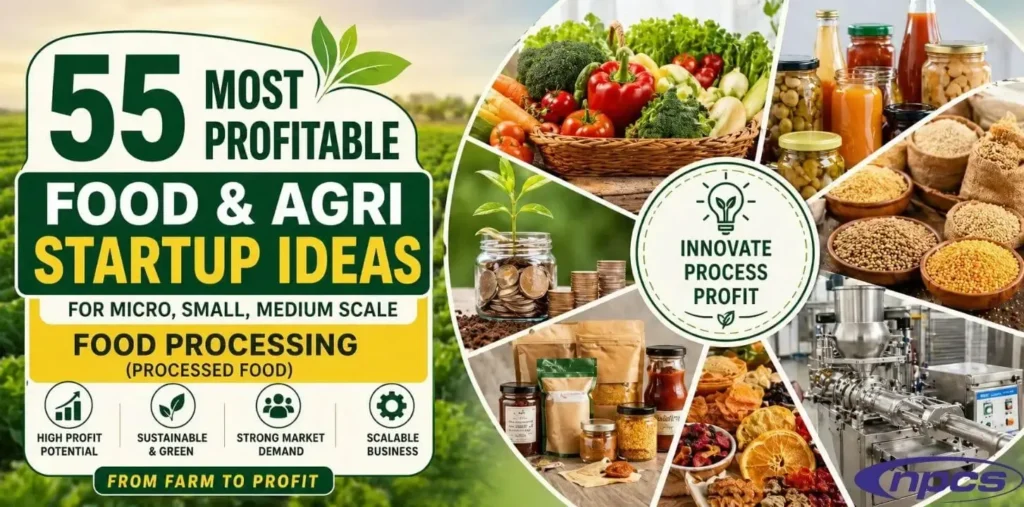
India, with its rich agricultural heritage and booming food sector, offers vast opportunities for small and medium-sized enterprises (MSMEs). Entrepreneurs are increasingly exploring food & agri startup ideas that promise both profitability and sustainability. With growing consumer demand for healthier options, organic produce, and innovative food services, this sector is ripe for innovation. From farm to fork, there are countless niches in Food & Agri Startup Ideas waiting to be tapped by creative minds who want to make a difference and build scalable businesses. Exploring the Best Food & Agri Startup Ideas for MSME 2026 The 2026 market is defined by three pillars: Transparency, Technology, and Taste. Today, food & agri startup ideas aren’t just limited to traditional farming or food stall, they include value-added products, agri-tech platforms, supply chain optimization, and export-focused manufacturing units. Consumers now demand to know exactly where their food comes from and how it was processed. This shift has expanded the scope of Food & Agri Startup Ideas beyond the field and into agri-tech platforms, eco-friendly manufacturing, and hyper-local supply chains. Below is a curated list of 55 high-impact ideas designed to inspire the next generation of Indian entrepreneurs. 1. Category 1: Modern Agricultural Farming & Precision Agriculture , 1. Organic Vegetable Farming High demand from urban consumers makes organic farming a profitable idea. Use compost-based fertilizers and cater to local organic stores and supermarkets. 2. Hydroponic Farming A modern technique where plants grow without soil, hydroponics is ideal for space-constrained urban areas and yields faster crops. 3. Mushroom Cultivation Low investment and high returns define this niche. Oyster and button mushrooms are especially popular in restaurants and homes. 4. Vertical Farming Utilize small urban spaces efficiently by growing crops in vertical layers. A great solution to the lack of farming land. 5. Beekeeping and Honey Production Natural honey is always in demand. Beekeeping is sustainable and helps in crop pollination, boosting the ecosystem. 6. Fish Farming (Aquaculture) Fish like Rohu and Catla are widely consumed in India. With proper setup and care, this business offers excellent returns. 7. Goat Farming Goat meat has a steady market. Start with a small herd and scale based on demand and grazing area. 8. Poultry Farming Egg and meat production are core elements of India’s food economy. Focus on hygiene and automation for better productivity. 9. Dairy Farming With rising milk consumption, small-scale dairy setups with 10–15 cows or buffaloes are viable and expandable. 10. Cold Storage Units India loses a large portion of its produce due to lack of cold storage. Setting up a small facility can support local farmers and food businesses. 11. Packaged Millet Products Millets are rich in nutrients and ideal for health-conscious consumers. Sell them as ready-to-cook packs or flour. 12. Tomato Processing (Puree/Ketchup) A small tomato processing plant can yield ketchup, puree, and sauces, which are popular in Indian and international markets. 13. Fruit Juice Manufacturing Fresh juices from mango, orange, or pineapple can be sold under a local brand name with organic or preservative-free tags. 14. Pickle Manufacturing Unit India’s pickle varieties have loyal fans. Explore regional recipes and package them in eco-friendly jars. 15. Papad & Namkeen Making Home-based or small units can produce these snacks, especially with automated rollers and frying machines. 16. Organic Tea & Herbal Infusions Tulsi, lemongrass, and moringa teas are trending globally. A small unit can create blends for niche markets. 17. Spice Powder Production Turmeric, chili, coriander, and more—buy from farmers, grind, and package under your brand. 18. Rice Mill with Packaging Buy paddy, mill it into rice, and sell it in branded bags. Target local or urban supermarkets. 19. Nut & Seed Butter Manufacturing Almond, peanut, and sesame seed butters are in high demand among fitness lovers. 20. Ready-to-Eat Meal Packs Create meal kits or frozen curries targeting working professionals, hostel students, and travelers. 21. Baby Food Manufacturing Parents seek organic, preservative-free baby foods. Make fruit and cereal-based products to meet this demand. 22. Gluten-Free Food Products Serve a niche market with celiac-friendly products—bread, snacks, and ready mixes. 23. Plant-Based Protein Snacks Pea protein chips, lentil-based puffs, and soy protein bars are ideal for gym-goers and athletes. 24. Vegan Cheese & Dairy Alternatives Use nuts, oats, or soy to make cheese and milk alternatives for lactose-intolerant or vegan customers. 25. Edible Cutlery Manufacturing An eco-friendly innovation—spoons, forks, and cups made from rice or wheat flour that can be eaten or composted. 26. Solar-Powered Food Dryers Build or supply units that help farmers or small processors dehydrate fruits, herbs, or vegetables with solar heat. 27. Organic Fertilizer Production Compost waste, add microbes, and package as organic fertilizer. An eco-conscious agri startup with recurring demand. 28. Drip Irrigation System Setup Provide design and installation services to small farmers looking to save water and increase crop output. 29. Mobile Soil Testing Kits Develop a mobile app + kit that helps farmers test soil quality and get fertilizer recommendations instantly. 30. AI-Based Crop Monitoring Tools Build AI systems using drones and cameras to monitor crop health, pest invasion, and yield projections. 31. Farm-to-Home Delivery Platforms Directly connect farmers with urban consumers, eliminating middlemen and boosting farmer incomes. 32. Local Farmer’s Market Franchise Set up or franchise weekend organic markets where small farmers sell directly to city dwellers. 33. Farm Equipment Rental App Allow farmers to rent tractors, harvesters, or drip kits via mobile apps—like Uber for farm tools. 34. Agricultural Drone Services Use drones for pesticide spraying, seed dropping, or yield mapping, helping large farms optimize operations. 35. Contract Farming Service Provider Bridge brands and farmers. You provide training, inputs, and buy-back guarantees to farmers under contracts. 36. Cattle Feed Manufacturing Blend corn, grain, and protein additives into nutritious cattle feed for dairy and poultry farmers. 37. Food Waste Composting Solutions Develop community-level composting systems using restaurant and household waste. 38. Culinary Herb Farming Grow herbs like rosemary, basil, oregano, and thyme for restaurants and premium food brands. 39. Indoor Microgreens Cultivation Microgreens have short growth
Want to Start Business in Ethiopia, East Africa?
Ethiopia, one of Africa’s fastest-growing economies, offers tremendous opportunities for aspiring entrepreneurs. With its rapidly expanding population, government-backed industrialization programs, and strategic location in the Horn of Africa, Ethiopia is becoming a hotspot for business innovation and investment. The demand for infrastructure, agriculture, education, healthcare, and technology-based solutions is on the rise. Ethiopia’s youthful workforce, fertile land, and policy-driven encouragement for foreign and domestic businesses have created a ripe environment for launching ventures that not only thrive but also contribute to the country’s economic development. Lucrative Sectors to Explore for Business in Ethiopia When planning to start a business in Ethiopia, it is important to analyze local needs, government policies, and areas where market gaps still exist. The Ethiopian government has prioritized industries such as manufacturing, agriculture, renewable energy, and services. Below are some of the most promising project ideas to consider: 1. Agro-Processing Industry Ethiopia’s economy is largely agrarian, with agriculture contributing about 40% of GDP. However, much of the produce is exported raw, leading to missed opportunities in value addition. Starting an agro-processing unit—such as for coffee, cereals, fruits, or oilseeds—can cater to local demand and boost exports. Projects like packaged fruit juice, flour mills, or oil extraction plants are ideal. This not only enhances income generation but also creates local employment. 2. Textile and Garment Manufacturing With an abundance of cotton and a low-cost labor force, Ethiopia has emerged as a global destination for textile production. Setting up a garment manufacturing unit is a smart choice, especially with the government’s push to develop industrial parks. Local and international demand is high for affordable clothing, and businesses can benefit from duty-free access to markets under AGOA (African Growth and Opportunity Act). 3. Renewable Energy Solutions Despite major investments in hydroelectric power, rural electrification remains a challenge. Entrepreneurs can tap into the solar and wind energy market, offering products like solar home kits, water pumps, or mini-grids. These solutions are essential for rural development and align well with Ethiopia’s long-term green energy vision. 4. Tourism and Eco-Lodges Ethiopia is home to historic cities, ancient monasteries, national parks, and World Heritage Sites. However, the tourism sector is underutilized. Investing in eco-tourism, boutique hotels, cultural tours, or adventure travel can draw both domestic and international tourists. A business in Ethiopia that promotes cultural heritage and sustainability is likely to attract eco-conscious travelers and global attention. 5. Digital and Mobile Services As smartphone penetration increases, Ethiopians are adopting digital services at a record pace. With the liberalization of the telecom sector, now is the right time to invest in app development, e-commerce, fintech, online education, or digital health. For instance, an app that facilitates mobile payments, agricultural advice, or e-learning in local languages can be revolutionary. Digital businesses in Ethiopia can leapfrog traditional infrastructure gaps and scale quickly. 6. Construction and Real Estate Rapid urbanization and a growing middle class have led to increased demand for residential and commercial spaces. Real estate and construction businesses can build homes, offices, warehouses, and even prefab structures. Moreover, supplying construction materials like cement blocks, steel bars, and tiles can be equally profitable. Business in Ethiopia’s real estate sector benefits from both urban growth and infrastructure projects. 7. Education and Training Services The young population in Ethiopia is eager to upskill. Starting a private school, technical training institute, or online learning platform can meet this need. There’s also demand for English training centers, vocational courses, and ICT education. Partnering with local educators or international institutions can lend credibility and improve access to quality education. 8. Food and Beverage Industry From local Ethiopian cuisine to international fast food, urban consumers are seeking convenience and variety. Opening a café, bakery, or fast-food outlet in cities like Addis Ababa can be a great investment. Packaged food items, bottled water, and organic food production are other viable projects. The rising middle class presents a stable market for food-related businesses in Ethiopia. 9. Healthcare Services and Pharmaceuticals Access to quality healthcare remains limited, especially outside urban areas. Clinics, diagnostic labs, and mobile health services can fill this gap. Also, there is huge potential in manufacturing or distributing generic medicines, medical equipment, or herbal products. A business in Ethiopia’s healthcare sector can generate income while serving critical community needs. 10. Logistics and Transport As Ethiopia increases its international trade through the Djibouti port and industrial zones, logistics and transport services are in high demand. Starting a trucking service, warehouse facility, or last-mile delivery business can be profitable. With growing e-commerce, there’s also demand for reliable courier and freight management services. Government Support and Incentives To encourage investment, the Ethiopian Investment Commission (EIC) provides incentives such as tax holidays, customs duty exemptions, and easy business registration. Sectors like manufacturing, agro-processing, and renewable energy enjoy maximum benefits. Moreover, industrial parks with ready infrastructure and one-stop-shop services reduce entry barriers for new businesses in Ethiopia. Tips for Success in Ethiopia Local Partnerships: Teaming up with local entrepreneurs or hiring local staff helps in understanding cultural dynamics and gaining community trust. Regulatory Compliance: Ensure you meet licensing, tax, and environmental standards to avoid legal hurdles. Market Research: Understand regional needs, consumer behavior, and competition before launching. Leverage Technology: Use mobile platforms, social media, and digital marketing to reach untapped audiences. Sustainability: Design your project to support environmental and social goals—it improves brand reputation and community support. Challenges to Consider Starting a business in Ethiopia is promising but not without its hurdles. Entrepreneurs might face bureaucratic delays, foreign exchange shortages, and occasional political instability. However, with patience, local engagement, and smart planning, these challenges can be managed. Conclusion Ethiopia is undergoing a transformation, and businesses that align with its development goals have significant growth potential. Whether you’re interested in agriculture, technology, education, or manufacturing, the time is right to take action. By choosing the right project and navigating the local landscape effectively, your business in Ethiopia can make a lasting impact and generate long-term rewards. With a visionary approach, the possibilities are vast and inspiring in
Want to Start Business in Sikkim?
Nestled in the lap of the Eastern Himalayas, Sikkim is a state known for its scenic beauty, organic farming, rich culture, and high literacy rate. Over the past few years, it has emerged as one of the most peaceful and promising destinations in India for tourism, agriculture, and eco-friendly enterprises. The serene environment, stable governance, and improved infrastructure have made it an attractive destination for aspiring entrepreneurs. With the state government actively promoting startup policies and local products, there has never been a better time to start a business in Sikkim. Why Start a Business in Sikkim? Sikkim offers a unique blend of opportunity and sustainability. The state is India’s first fully organic state and is rapidly developing sectors like tourism, floriculture, dairy, handicrafts, and eco-agriculture. Due to its small population and eco-conscious governance, the competition is not as intense, and new business models are welcomed warmly. Whether you’re a local resident or an outsider looking to invest, the state’s supportive business environment makes it an excellent choice. Let’s explore the best project ideas that can thrive in the Sikkimese economy: 1. Eco-Tourism and Homestays Tourism is the backbone of Sikkim’s economy. The influx of domestic and international tourists opens up a wide range of possibilities. Setting up eco-tourism businesses like trekking guides, nature walks, homestays, and cultural experience tours can yield substantial returns. Since many tourists seek peaceful, nature-based retreats, you can convert your traditional home into a rustic homestay, offering organic food, yoga sessions, and local experiences. This business in Sikkim also promotes local employment and preserves traditions. 2. Organic Farming and Herbal Products Sikkim is famous for being a 100% organic state. The demand for organic vegetables, fruits, spices, and herbs is booming globally. You can grow crops like ginger, turmeric, cardamom, and medicinal plants like tulsi, ashwagandha, and neem. Processing and packaging these into powders, capsules, or herbal teas can create a value-added line of organic products. This venture aligns well with the health-conscious market trends and suits Sikkim’s ecological profile. 3. Cardamom Processing Unit Sikkim is one of the largest producers of large cardamom in India. A great business in Sikkim would be to set up a cardamom drying and processing unit. Entrepreneurs can purchase raw cardamom from local farmers and process it for resale to wholesalers or export markets. By improving the packaging and branding, cardamom products from Sikkim can fetch premium prices, both domestically and internationally. 4. Handicrafts and Handloom Enterprise Sikkimese handicrafts are intricate and culturally rich. Thangka paintings, wood carvings, traditional woollen carpets, and Lepcha textiles are in demand among tourists and art lovers. Starting a business in Sikkim focused on handicraft production or retailing can be a profitable and sustainable idea. Government subsidies and training programs are available to artisans, making it easier for new entrepreneurs to get started. 5. Mushroom Cultivation Due to its cool climate, Sikkim is ideal for cultivating mushrooms like oyster and button varieties. With minimal investment, entrepreneurs can start a mushroom farming unit. As awareness around healthy eating grows, mushrooms are gaining popularity in the local and metropolitan markets. You can also expand into producing mushroom-based snacks or powders. This venture is cost-effective and suitable for small-scale business owners or farmer collectives. 6. Floriculture Business The temperate weather conditions and fertile land in Sikkim support the cultivation of high-demand flowers like orchids, lilies, and anthuriums. Starting a floriculture business in Sikkim is promising, especially for those looking to export cut flowers. You can also open a nursery to sell potted plants and flower seeds, catering to garden lovers and landscapers. With proper greenhouse management, this business can thrive year-round. 7. Dairy and Cheese Production Sikkim’s rich grasslands support dairy farming, especially for cows and yaks. Small-scale milk production units and cheese-making facilities (especially yak cheese) can cater to local demand and tourists. With increasing preference for organic and artisanal dairy products, a cheese brand based in Sikkim can do well in the national gourmet market. Furthermore, by-products like ghee, butter, and flavored milk can add extra value. 8. Food Processing and Pickle Making Pickles made from local ingredients such as bamboo shoots, radish, and chillies are already popular in Sikkim. Setting up a food processing unit that produces bottled pickles, jams, sauces, and chutneys can appeal to both domestic and export buyers. Labeling your brand as “Made in Sikkim – 100% Organic” adds authenticity and marketing value. With proper packaging and online marketing, such a business can scale fast. 9. Adventure Sports and Travel Services Entrepreneurs with a background in sports or hospitality can invest in organizing adventure-based activities like mountain biking, river rafting, rock climbing, and ziplining. These services, combined with local guides and safety equipment, can appeal to thrill-seekers and youth travellers. By promoting safe and eco-friendly adventures, this business in Sikkim can attract year-round visitors. 10. Tea Garden and Boutique Tea Brand Sikkim also has tea estates like Temi Tea Garden that are known for producing high-quality organic tea. Starting a small tea plantation or purchasing green tea leaves from local growers can help you launch your own boutique tea brand. Focus on unique blends like herbal-infused teas or premium hand-rolled teas. This niche market is growing in urban India and globally, and “Sikkim Tea” can become a trusted brand name. 11. Digital Services and Rural BPO With rising internet penetration in Sikkim, young entrepreneurs can tap into digital services. Setting up a rural BPO (Business Process Outsourcing) center that offers data entry, transcription, digital marketing, or customer support services can create local jobs and income. Freelancers can also explore graphic design, content writing, and e-commerce support services by hiring and training local youth. 12. Eco-Friendly Packaging Unit With plastic bans being enforced strictly, especially in environmentally conscious regions like Sikkim, starting a biodegradable packaging unit is a smart move. You can manufacture paper bags, areca leaf plates, cloth packaging, and bamboo-based containers. These can be sold to restaurants, retailers, and tourist destinations. This green business in Sikkim aligns perfectly with