
January 2018 Entrepreneur India Monthly Magazine
The new year kicked off with significant momentum in the Indian startup landscape. January 2018 Entrepreneur India became a benchmark edition, capturing a wave of bold new ideas, policy shifts, and investor interest. The stories covered in this period provided deep insights into how entrepreneurs across India were reshaping industries and solving real-world problems with innovation and intent. Overview of January 2018 Entrepreneur India Fintech Innovation Dominates One of the most powerful themes in January 2018 Entrepreneur India was the fintech revolution. UPI-led payment growth and app-based banking solutions gained massive traction, with startups like Paytm and Razorpay leading the charge. EdTech and Global Ambitions BYJU’S and other education startups were featured prominently, as January 2018 Entrepreneur India emphasized the rise of edtech in both domestic and international markets. Social Impact Entrepreneurship The stories also included several startups focused on clean water, rural health, and employment generation, reflecting the impact-driven mindset of India’s new-age entrepreneurs. Workspace & Funding Trends Coworking Culture Surges Startups like WeWork India, Innov8, and 91Springboard expanded rapidly in metro cities, creating not just spaces but ecosystems. Women Entrepreneurs Gaining Momentum January 2018 Entrepreneur India highlighted leaders like Falguni Nayar of Nykaa and Ghazal Alagh of Mamaearth, showing the growing influence of women in India’s startup scene. Sustainability & Green Innovation Startups in electric mobility, eco-friendly packaging, and renewable energy were rising. The magazine showed how sustainability was becoming a core business value. Key Milestones and Opportunities Notable Funding Rounds Major VC firms invested heavily in AI, healthtech, and agritech. January 2018 Entrepreneur India detailed several multimillion-dollar funding rounds that reshaped the market landscape. Startup-Enterprise Synergy Corporate giants like Reliance initiated conversations around startup acquisition, showing a growing trend of enterprise-startup collaboration. Government & Global Recognition Policies under Startup India, combined with Indian participation at CES and Davos, positioned Indian entrepreneurs on a global stage. Emerging Markets & Tier-2 Growth Non-Metro Entrepreneurial Growth January 2018 Entrepreneur India showcased startups from Indore, Jaipur, and Kochi—highlighting innovation beyond big cities. Blockchain & Tech Adoption Early blockchain applications in supply chain and identity were explored, showing tech disruption across sectors. Conclusion In every way, January 2018 Entrepreneur India was a turning point. From bold women entrepreneurs to green startups and digital payments, it represented the spirit of a new India—ambitious, inclusive, and ready to lead the world in innovation. Aluminium Recycling Plant Business Plan & Investment Cost Aluminium, known for its infinite recyclability and demand across sectors, offers a robust business opportunity. Starting an Aluminium Recycling Plant not only supports sustainability but also promises high profitability. With proper planning and strategic investment, entrepreneurs can tap into a growing global and domestic market for recycled aluminium. Understanding the Aluminium Recycling Opportunity Why Aluminium Recycling is Profitable Recycled aluminium requires only 5% of the energy used to produce new aluminium. With rising industrial demand, this cost-efficiency offers a major competitive advantage to any Aluminium Recycling Plant. Common Applications of Recycled Aluminium The output from an Aluminium Recycling Plant serves key sectors like automobile manufacturing, construction, food packaging, and consumer electronics. Business Plan Essentials Equipment and Infrastructure To start an Aluminium Recycling Plant, essential equipment includes shredders, rotary furnaces, casting machines, and emission control systems. Automated machinery helps improve quality and reduce labor costs. Location & Sourcing Strategy Urban centers and industrial zones are ideal locations. Scrap can be sourced from industrial waste, households, or recycling agents. Licensing & Environmental Compliance Clearances from the Pollution Control Board and adherence to the Solid Waste Management Rules are mandatory for operating an Aluminium Recycling Plant. Financial Considerations Initial Investment Breakdown A medium-scale Aluminium Recycling Plant setup requires ?50 lakhs to ?1.5 crore. This includes equipment, land, labor, utilities, and legal permits. Working Capital & Operational Costs Ongoing costs include electricity (for melting), scrap procurement, wages, transportation, and pollution control compliance. Government schemes for MSMEs can ease the financial burden. Revenue & Profit Potential Recycled aluminium sells for around 85-90% of the primary metal rate but costs significantly less to produce. This margin creates a strong business case. Expansion & Value Addition Product Diversification To increase profit margins, plants can manufacture value-added products like aluminium rods, wires, or rolled sheets instead of just ingots. Branding & Market Positioning Certifications like ISO 14001 can help position your Aluminium Recycling Plant as a sustainable business. Eco-branding attracts large corporate clients with ESG mandates. Tech Integration & Scaling Leveraging Technology AI-driven sorting, IoT-enabled monitoring, and automated casting systems can significantly increase efficiency and quality output in your Aluminium Recycling Plant. Scaling Up Operations As demand grows, the plant can be expanded to handle more volume or offer diversified services like e-waste metal recovery. Conclusion Setting up an Aluminium Recycling Plant is a smart, future-proof business. It offers lucrative margins, long-term viability, and contributes directly to environmental conservation. With the right mix of technology, funding, and strategy, this is one green business idea that promises both profit and purpose. Visit the page Select and Choose the Right Business Startup for You for sorting out the questions arising in your mind before starting any business and know which start-up you can plan. We, at NPCS, endeavor to make business selection a simple and convenient step for any entrepreneur/startup. Our expert team, by capitalizing on its dexterity and decade’s long experience in the field, has created a list of profitable ventures for entrepreneurs who wish to diversify or venture. The list so mentioned is updated regularly to give you a regular dose of new emerging opportunities. Contact Us
Fruit Juice with Fruit Pulp Manufacturing Business.
The rising consumer demand for natural and refreshing beverages has fueled the growth of the pulpy fruit drinks manufacturing sector. With an increasing focus on health-conscious choices, these drinks offer a perfect blend of taste and nutrition, making them a popular choice across all age groups. Whether it’s orange, mango, guava, or mixed fruit, pulpy drinks are not just seasonal anymore—they are a year-round market opportunity. If you’re exploring how to start a manufacturing unit in this domain, this guide provides a complete overview, from planning and setup to production and marketing. Pulpy Fruit Drinks Manufacturing: Market Overview, Planning & Setup The market for pulpy fruit drinks manufacturing in India and globally has seen a notable upward trend. The shift from carbonated beverages to fruit-based drinks—especially those with pulp—reflects consumer preference for products perceived as more natural. With demand driven by rising health awareness, urbanization, and disposable income, the beverage industry is ripe for entrepreneurs wanting to enter with pulpy drinks. Market Potential and Demand Forecast According to recent industry reports, the global fruit-based beverage market is expected to grow at a CAGR of over 5% through 2030. Pulpy fruit drinks hold a significant portion of this, especially in countries like India, China, Brazil, and Indonesia. Brands like Maaza, Tropicana, and Real have capitalized on the pulpy segment, but there’s still a strong demand for regional flavors and premium, small-batch products. This presents a lucrative opportunity for SMEs to establish their own pulpy fruit drinks manufacturing units, especially in tier-2 and tier-3 cities where fruit availability and low-cost labor are readily accessible. Selecting the Right Location and Infrastructure The success of a pulpy fruit drinks manufacturing business heavily depends on strategic location selection. Choose an area close to fruit-growing regions to reduce raw material transportation costs and ensure freshness. The factory should have ample space (minimum 5,000–10,000 sq. ft.) for production, storage, water treatment, and packaging. Basic infrastructure requirements include: Constant electricity supply (for machinery operation and refrigeration) Water purification and filtration system Proper waste disposal system as per pollution control norms Cold storage units for pulp and finished goods Ventilated production floor for hygiene and safety Ensure the plant complies with local food safety regulations and secure FSSAI (Food Safety and Standards Authority of India) registration before commencing operations. Raw Materials and Fruit Pulp Sourcing The quality of raw materials directly impacts your final product. You’ll need: Fresh fruits (mangoes, oranges, guavas, pineapples, etc.) Fruit pulps or concentrates (if not processing fruits yourself) Sugar or natural sweeteners Citric acid or natural preservatives Water (filtered and treated) Stabilizers, emulsifiers, and flavor enhancers (optional) You can either extract pulp in-house or procure it from certified suppliers. Many manufacturers opt for seasonal bulk purchases of fruit pulp to stock up for year-round production. Machinery and Equipment Required To establish a pulpy fruit drinks manufacturing unit, you will need semi-automatic or fully automatic machinery based on your production scale. Essential machines include: Fruit washer and peeler Pulp extractor Homogenizer and pasteurizer Mixing tanks and syrup preparation tanks Pulp blending and filtering units Bottle/jar rinsing and filling machines Capping, labeling, and shrink-wrapping machines Packaging and sealing equipment Automation helps maintain consistency, reduce labor costs, and improve hygiene. Step-by-Step Manufacturing Process The standard procedure for manufacturing pulpy fruit drinks involves: Washing & Sorting: Fresh fruits are washed and sorted to remove debris, damaged, or overripe items. Peeling & Pulping: Peeled fruits are sent through pulping machines to extract juice and retain pulp. Filtration & Blending: The extracted pulp is filtered to remove seeds or fibers and blended with sugar syrup, citric acid, and preservatives. Pasteurization: The drink is heat-treated to kill microbes and extend shelf life. Filling & Packaging: The hot liquid is filled into sterilized bottles or pouches and sealed. Cooling & Labeling: Bottles are cooled, labeled, coded (batch/date), and packed in cartons. The entire process should follow Good Manufacturing Practices (GMP) to ensure product quality and consumer safety. Manpower and Staffing A medium-scale pulpy fruit drinks manufacturing unit may require 15–20 workers, including: Machine operators Quality control personnel Procurement & inventory managers Sales & marketing staff Logistics/dispatch handlers Administrative support Hiring trained food technologists ensures better recipe formulation, production control, and adherence to quality standards. Quality Assurance and Certifications To build a credible brand in the pulpy fruit drinks manufacturing industry, obtaining relevant quality certifications is key: FSSAI license (mandatory) ISO 22000 or HACCP for food safety AGMARK for product quality (optional) BIS (Bureau of Indian Standards) where applicable Regular lab testing for microbial levels, shelf life, sugar content, and preservatives is necessary for compliance. Branding, Packaging & Distribution Packaging plays a pivotal role in attracting customers and preserving freshness. Use food-grade PET bottles, Tetra Paks, or glass containers, depending on your target market. Eye-catching labels, clear nutrition info, and fruit imagery increase shelf appeal. For branding: Highlight “with real pulp” or “no artificial flavors” on the label Offer regional flavors (like jamun, lychee) to stand out Introduce 200ml–1L variants for diverse pricing Distribution channels include: Retail supermarkets and kirana stores Online marketplaces and quick commerce platforms Cafes, restaurants, schools, and office vending channels Tie-ups with distributors and regional wholesalers Marketing Strategy for Maximum Reach Use a multichannel approach to market your pulpy fruit drinks manufacturing brand: Digital Campaigns: Instagram reels, influencer collaborations, and health-based content On-ground Promotions: Sampling at malls, events, schools, and gyms Trade Fairs: Participate in food expos to connect with bulk buyers Festive Offers: Launch limited-edition variants during summers and festivals Health-centric USPs like “vitamin-C rich,” “no added sugar,” or “farm-fresh pulp” can greatly enhance product appeal. Investment and Profit Margin Setting up a small-to-medium scale pulpy fruit drinks manufacturing plant may cost ?20–50 lakhs initially. This includes: Machinery & setup: ?10–25 lakhs Working capital: ?5–10 lakhs (raw material, wages, utilities) Licensing and compliance: ?1–2 lakhs Branding & marketing: ?3–5 lakhs The average profit margin can range between 20–35% depending on distribution efficiency, product positioning, and overhead control. Seasonal surges during summer months can significantly boost revenue. Challenges
Mango Pulp, Guava Pulp, Pomegranate Pulp, Papaya Pulp Manufacturing Project.
Fruit pulp is the processed and refined form of fruit, widely used in the food and beverage industry for making juices, jams, jellies, yogurt, baby food, and ice creams. With increasing demand for packaged and processed food items in both domestic and international markets, setting up a Fruit Pulp Manufacturing Plant presents a highly profitable business opportunity. This venture not only contributes to the agro-processing sector but also offers a sustainable means of reducing post-harvest fruit wastage. Market Potential and Demand Analysis India, being one of the largest producers of fruits like mangoes, bananas, guavas, and papayas, provides a vast raw material base for fruit pulp production. The export of fruit pulp—especially mango pulp—is a major contributor to India’s food processing industry. Growing urbanization, changing food habits, increased disposable incomes, and the popularity of ready-to-eat and ready-to-drink products are driving the demand for fruit pulp globally. The processed fruit industry is projected to grow at over 7% CAGR, with the Fruit Pulp Manufacturing Plant sector forming a substantial part of this growth. Understanding Fruit Pulp and Its Uses Fruit pulp is the soft, edible part of the fruit that is mechanically extracted and then processed to increase shelf life. Unlike juice, pulp retains much of the natural fibers and nutrients, making it ideal for multiple applications. Manufacturers use pulp in juices, nectars, confectionery, bakery items, sauces, baby food, and dairy-based products. Each fruit pulp requires a specific method of processing and storage, which makes it vital to understand the technical details involved before starting a Fruit Pulp Manufacturing Plant. Types of Fruit Pulp Depending on your geographical location and fruit availability, you may choose to produce pulp from: Mango: Highly demanded for export and juice manufacturing Tomato: Used for ketchup, sauces, and ready-to-eat meals Papaya: Preferred for baby food and cosmetic formulations Banana: Ideal for smoothies, baby foods, and bakery Guava: Popular in jams and mixed fruit beverages Each variety comes with its own processing line, market demand, and storage considerations, so market research is critical before selecting the fruit types for your Fruit Pulp Manufacturing Plant. Setting Up the Fruit Pulp Manufacturing Plant Setting up a fruit pulp unit involves a number of steps, from choosing the right location to acquiring the necessary machinery and licenses. Here’s a step-by-step breakdown of the process: 1. Project Planning and Feasibility Study Begin with a feasibility analysis, assessing the availability of fruits, target market (local or export), financial investment, and ROI expectations. Determine the scale of the plant—small, medium, or large—and outline your business model accordingly. 2. Legal Requirements and Licensing You will need to register your business under the MSME or Udyam registration portal. Other essential licenses include: FSSAI food safety registration GST registration Pollution control board clearance Factory license from local authorities Import Export Code (IEC) for exporting 3. Location and Infrastructure Choose a location close to fruit farms or agricultural belts to reduce raw material transportation costs. The site should have: Sufficient water and electricity supply Waste disposal system Cold storage facilities Proximity to markets or export ports Your Fruit Pulp Manufacturing Plant should ideally have separate sections for raw material reception, washing, peeling, pulping, pasteurization, packaging, and storage. 4. Machinery and Equipment Depending on the fruit type, different machinery will be required. However, a standard fruit pulp processing line includes: Washer and sorter Fruit crusher Pulping machine Steam jacketed kettles or pasteurizers Filling and packaging machines Refrigerated storage tanks Automated or semi-automated equipment may be chosen based on your budget and production volume. 5. Workforce and Training Hire skilled technicians for operating the machines, quality control personnel, unskilled workers for handling and packaging, and managerial staff for operations. Conduct regular training sessions on hygiene, food safety standards, and machine maintenance. 6. Raw Material Procurement Tie-up with local farmers or cooperatives for the regular supply of fruits. Consider seasonal variations and establish cold chain systems or pulp preservation techniques to ensure year-round production at your Fruit Pulp Manufacturing Plant. 7. Processing and Packaging The basic fruit pulp process includes the following steps: Washing and Sorting: Removal of dirt, debris, and spoiled fruits Peeling and Deseeding: Mechanically done or manually depending on the fruit Pulp Extraction: Using pulper machines to separate juice and fiber Pasteurization: Heat treatment to kill microbes Packaging: Using aseptic or non-aseptic methods like cans, pouches, or bottles High-quality packaging ensures longer shelf life and improved product appeal. Quality Control and Certifications Maintaining high quality is critical in the food processing industry. Implement Good Manufacturing Practices (GMP), Hazard Analysis and Critical Control Points (HACCP), and obtain ISO 22000 food safety certification. These standards are essential if your Fruit Pulp Manufacturing Plant plans to supply to reputed buyers or export. Regular lab testing for microbial load, pH levels, and sugar content should be part of the routine quality checks. Consumer trust and regulatory compliance rely heavily on consistent quality. Marketing and Distribution Strategy Once the production is underway, focus on brand development and market outreach. Strategies include: Collaborate with FMCG brands, juice manufacturers, and ice cream companies Use B2B platforms and food exhibitions to find bulk buyers Set up an online presence showcasing your plant, products, and certifications For mango pulp and similar products, explore export markets in the Middle East, Europe, and North America Partner with distributors and wholesalers to penetrate regional markets Effective marketing will help your Fruit Pulp Manufacturing Plant build a reputation and customer base. Financials and Investment Estimation The total investment depends on the scale of operation. A small-scale unit may require ?25–30 lakhs, while a medium to large-scale facility may need ?1–2 crores or more. Major cost components include: Land and building setup Machinery and equipment Raw materials and packaging Utility expenses (electricity, water, manpower) Marketing and distribution You can apply for government subsidies under schemes like PMFME (Prime Minister’s Formalisation of Micro Food Processing Enterprises) and avail term loans from banks or NBFCs. Sustainability and Waste Management Fruit pulp production generates considerable organic waste like peels and seeds. Instead of
Want to Start Business in Bilaspur, Chhattisgarh?
Bilaspur, a growing city located in the Indian state of Chhattisgarh, is rapidly emerging as a fertile ground for entrepreneurs and small business owners to start a business in Bilaspur, Known for its agricultural produce, mineral resources, education centers, and a steadily developing infrastructure, Bilaspur is evolving into a promising commercial hub. The region offers a mix of urban accessibility and rural outreach, making it an ideal location to tap into various sectors like manufacturing, retail, services, food processing, tourism, and IT-enabled services. Why Business in Bilaspur is the Right Choice Bilaspur’s strategic location, supported by the South East Central Railway Zone, efficient road networks, and proximity to mineral-rich regions, adds immense value to logistics and supply chain operations. With a population eager for new services, better employment opportunities, and modern consumer experiences, the demand is outpacing supply across several sectors. Additionally, the Chhattisgarh government’s MSME policies and industrial promotion schemes offer financial incentives and subsidies, especially beneficial for startups and new entrepreneurs. Now, let’s explore profitable and feasible ideas that you can pursue to successfully establish a business in Bilaspur. 1. Agro-Based Processing Units Agriculture is the backbone of Bilaspur’s economy. With crops like paddy, maize, sugarcane, and oilseeds widely cultivated, there’s high potential in setting up small-scale processing units such as rice mills, oil extraction plants, or flour mills. You can also consider organic food processing, spice grinding, or packaging dehydrated fruits and vegetables. Market Opportunity: High demand locally and for exports. Investment Range: ?5 to ?25 lakhs (small to medium-scale). USP: Use locally sourced raw materials and promote organic/chemical-free produce. 2. Packaged Drinking Water or Bottling Plant With growing concerns over water purity and the rise of educational institutions, hospitals, and industries in the region, a bottled water business is a practical choice. It involves relatively low investment and fast returns. Required Licenses: FSSAI, BIS certification, and pollution control board clearance. Revenue Model: B2B (bulk supply to offices, hotels) and B2C retail packaging. Tip: Build a brand around purity and sustainability. 3. Tourism and Travel Services Bilaspur is the gateway to several pilgrimage sites, wildlife sanctuaries, and eco-tourism spots such as Achanakmar Wildlife Sanctuary and Ratanpur Temple. Starting a travel agency, adventure tour services, or homestay management business can be both exciting and profitable. Key Customers: Tourists, pilgrims, school/college groups. Business Expansion: Include vehicle rentals and hotel tie-ups. Why It Works: People seek curated, local travel experiences over generic packages. 4. Education and Coaching Institutes As a major educational hub with institutions like coach Ghasidas Central University and various private colleges, the demand for skill development centers, coaching institutes for competitive exams (like UPSC, SSC, NEET), and personality development classes is booming. Business Scope: Offline and online models. Initial Setup: Classroom, faculty recruitment, digital board setup. Add-ons: Offer certifications in digital marketing, computer basics, or foreign languages. 5. Clothing Boutique or Fashion Store Fashion is a growing trend even in tier-2 cities like Bilaspur. You can launch a boutique specializing in traditional Chhattisgarhi clothing, sarees, and ethnic wear or modern western clothing and accessories. Ideal Locations: Vyapar Vihar, Telipara, or near educational institutions. Differentiator: Offer customization, local embroidery, or fusion collections. Profit Margin: Clothing retail offers 25–40% margin with regular sales. 6. Digital Marketing & Web Services Many small businesses in Bilaspur still lack a digital presence. Starting a digital marketing agency or a freelance service business focused on website development, SEO, and social media marketing can be immensely profitable. Target Clients: Local hotels, educational institutions, coaching centers, and retailers. Requirements: Basic internet setup, laptop, and marketing knowledge. Bonus: Scalable with clients outside Bilaspur as well. 7. Mobile and Electronics Repair Store With the increasing penetration of smartphones and digital gadgets, there’s high demand for affordable repair and maintenance services. Opening a shop for mobile accessories, repairs, and re-selling refurbished items can yield excellent returns. Startup Cost: ?1–2 lakhs for tools, spares, and setup. Footfall Areas: Near railway station, malls, or education hubs. Pro Tip: Offer doorstep repair or instant service to build a loyal clientele. 8. Bakery or Café Business Urban youth and college students often look for cozy and modern hangout spots. Launching a café with local snacks, fusion foods, and beverages can serve the dual purpose of profit and passion. Menu Ideas: Fusion chaat, baked goods, beverages, and local sweets. Marketing Strategy: Social media promotion and combo offers. Add Value: Free Wi-Fi, games, or open mic events to engage customers. 9. Two-Wheeler Rental or EV Rental Services With rising fuel prices and a demand for short-distance, affordable commute options, especially by students and solo workers, a two-wheeler rental or e-bike business is worth exploring. Initial Setup: 10–15 bikes or scooters. Target Audience: Tourists, students, and professionals. Smart Tip: Integrate with a simple mobile booking app for ease of use. 10. Home-Based Tiffin or Cloud Kitchen There is a constant need for hygienic, home-style meals, especially for working professionals and students. You can start a cloud kitchen or home-based tiffin delivery service targeting hostels, PGs, and small offices. Low Investment: Kitchen setup, food containers, and a delivery system. Promotion Tip: Use WhatsApp, Instagram, and Google Business to gain visibility. Customer Loyalty: Weekly subscription plans and seasonal dishes. Tips for Launching a Successful Business in Bilaspur Starting a business in Bilaspur requires smart planning, local insight, and the right network. Here’s what you should keep in mind: Study Local Demand: Conduct surveys or interviews to understand what’s missing in the market. Legal Setup: Register your business with the Udyam portal, get GST, and other licenses based on your business type. Leverage Government Schemes: The Chhattisgarh government offers support under the Startup Chhattisgarh scheme, subsidies for MSMEs, and more. Location is Key: Choose high footfall areas for retail and service businesses. Go Digital: Use platforms like Justdial, Google My Business, and social media to market your offerings. Final Thoughts If you’ve been planning to become your own boss, launching a business in Bilaspur offers an encouraging environment to begin. Whether you choose the service sector, retail,
List of Fast-Growing Industries for Hot Start-Ups in 2018.
Starting a business can be one of the most rewarding journeys in life, but it also comes with significant risk. Many budding entrepreneurs struggle with choosing the right project or business idea that offers not just profitability, but also sustainability in the long run. The “NPCS 2018 Guide to Profitable Projects and Startup” serves as an insightful manual for entrepreneurs, helping them identify high-potential sectors, assess market demand, and plan their ventures effectively. Published by the National Project Consultancy Services (NPCS), the guide is tailored for Indian markets but also offers globally applicable insights. Why the NPCS 2018 Guide Is a Valuable Resource for Profitable Projects and Startup The guide stands out because of its focus on practical implementation and real-time profitability assessment. It doesn’t just list business ideas—it provides in-depth feasibility reports, market potential analyses, estimated investment costs, and detailed manufacturing processes. The NPCS 2018 Guide to Profitable Projects and Startup empowers entrepreneurs to move from ideation to execution efficiently. Industry Trends and Sectors Covered One of the strengths of the NPCS 2018 edition is the variety of sectors it covers. From agro-based industries and chemical manufacturing to food processing, pharmaceuticals, and eco-friendly technologies, the guide details over 100 business ideas. These are carefully curated based on current market demand and future trends, ensuring that each business idea is in line with consumer and industry needs. For example, the guide explores projects like: Organic Farming and Processed Foods: As health-consciousness grows, organic food items have witnessed a rise in demand, both domestically and internationally. Waste Recycling and Renewable Energy: With environmental sustainability taking center stage, projects in solar energy, e-waste recycling, and biofuel are becoming more viable. Cosmetics and Personal Care: This sector continues to expand, especially with herbal and Ayurvedic products gaining popularity. Petroleum Derivatives and Lubricants: Despite global shifts toward green energy, these products remain in high demand in industrial and automotive sectors. Textile and Garment Manufacturing: As a labor-intensive industry, it offers scope for job creation and export earnings. The NPCS 2018 Guide to Profitable Projects and Startup examines each of these sectors by breaking them down into technical, financial, and commercial aspects. Key Components of a Profitable Startup Plan To launch a successful startup, one must follow a well-structured approach. According to the NPCS 2018 Guide to Profitable Projects and Startup, here are essential elements every entrepreneur should consider: Market Research: Understand your target audience, their preferences, and gaps in the market. Feasibility Study: Evaluate the technical and financial aspects of the project. The guide provides templates for this. Business Plan Development: Include marketing strategies, competitive analysis, pricing models, and projected ROI. Licensing and Regulations: Ensure compliance with local and national legal frameworks. Funding Options: Explore sources like bank loans, angel investors, and government schemes like Startup India or Mudra Yojana. The guide offers extensive insights into how each of these areas contributes to developing profitable projects and startup ideas that are scalable and resilient. Startup Case Studies and Success Models Another impressive feature of the NPCS guide is its case studies section. These real-world examples provide a roadmap for aspiring entrepreneurs. The book details how small ideas have transformed into large enterprises through strategic planning and execution. Take for instance a featured case study of a small-scale honey processing unit in Uttarakhand. With an initial investment of just ?10 lakhs, the business scaled operations over five years to become a regional supplier to major grocery chains. Similarly, the guide outlines how one entrepreneur capitalized on the demand for ready-to-eat meals in metro cities, turning a home kitchen into a packaged food company. Each of these stories showcases how applying the principles outlined in the NPCS 2018 Guide to Profitable Projects and Startup can turn a modest idea into a sustainable business. Financial Planning and Investment Costing The financial section of the guide is highly detailed and practical. It walks you through cost estimations, machinery investment, working capital needs, and profit margins for each listed project. This allows potential entrepreneurs to compare and choose the most suitable option based on their budget. Some highlighted examples include: Biodegradable Cutlery Manufacturing: Investment: ?18 lakhs; Break-even: 18 months Solar Panel Assembly Unit: Investment: ?35 lakhs; Break-even: 24 months Essential Oils Distillation Plant: Investment: ?22 lakhs; Break-even: 15 months These projections are not just arbitrary numbers; they are based on real-time market analysis, which adds credibility to the NPCS 2018 Guide to Profitable Projects and Startup. Government Incentives and Support Schemes In recent years, the Indian government has introduced numerous schemes to foster entrepreneurship. The NPCS guide doesn’t overlook this and provides a well-researched section on how to benefit from: Startup India Mission PMEGP (Prime Minister’s Employment Generation Programme) MSME subsidies and tax exemptions Skill India training and support By aligning your business with these schemes, your startup gains not only financial relief but also credibility and networking opportunities. The NPCS 2018 Guide to Profitable Projects and Startup helps navigate these programs, providing step-by-step processes for registration, documentation, and compliance. Emerging Business Models to Watch While traditional manufacturing and processing industries continue to thrive, the guide also emphasizes new-age models. These include: Digital Services and SaaS Models: Especially in Tier 2 and Tier 3 cities, there’s a growing demand for IT solutions, online education platforms, and fintech services. Eco-Conscious Consumer Goods: From bamboo toothbrushes to biodegradable packaging, sustainable products are not just trendy but commercially viable. Home-Based Enterprises: The guide highlights low-investment options like handmade soap production, craft businesses, and cloud kitchens that require minimal capital but offer decent profits. Such innovative models open up opportunities for a new generation of entrepreneurs who seek flexible, technology-driven, and scalable ideas. Long-Term Success: Tips from Experts The NPCS 2018 Guide to Profitable Projects and Startup doesn’t stop at just business ideas. It shares wisdom from industry experts and consultants on long-term success: Continuous Market Feedback: Always keep refining your product based on customer needs. Reinvestment and Scaling: Don’t rush expansion. Focus on reinvesting profits for sustained growth. Skilled Workforce: Invest
List of Highly Profitable Projects on Hygiene Products.
The hygiene products industry has seen an incredible transformation over the last decade, especially in the wake of rising health awareness and post-pandemic consciousness. Consumers are increasingly seeking hygiene products that promise cleanliness, safety, and convenience. Whether it’s for personal, household, or industrial use, the demand is booming and offers great entrepreneurial opportunities. From hand sanitizers and disinfectants to sanitary napkins and biodegradable wipes, the market is vast and diverse. Launching a Hygiene Products business today is not just profitable but also socially impactful, as it promotes healthier living environments and reduces the spread of disease. Lucrative Opportunities in the Hygiene Products Industry The hygiene products sector spans a wide variety of sub-categories, each offering unique benefits and target markets. Here’s a closer look at some of the most profitable avenues within this space: 1. Sanitizers and Disinfectants These products became household essentials during the COVID-19 pandemic and have remained a staple ever since. Starting a line of alcohol-based or herbal sanitizers can cater to a wide customer base. Similarly, disinfectant sprays and surface cleaners have a steady demand in homes, offices, hospitals, and public facilities. 2. Sanitary Napkins and Feminine Hygiene Products Feminine hygiene is a growing concern, especially in rural and semi-urban areas where awareness is spreading rapidly. Setting up a low-cost, high-quality sanitary napkin manufacturing unit can be both profitable and socially meaningful. Innovations like biodegradable pads and reusable menstrual cups are carving out a niche in the eco-conscious market segment. 3. Baby Care and Diaper Manufacturing The baby hygiene sector, particularly diapers and wet wipes, remains a robust segment. If you venture into eco-friendly, chemical-free baby wipes and diapers, it will give you a competitive edge in today’s environmentally aware marketplace. 4. Personal Care Hygiene This includes soaps, handwashes, shampoos, and body washes. Launching a brand that focuses on antibacterial or organic hygiene products can attract a strong customer base. Ayurveda-based or herbal hygiene solutions have seen growing popularity in India and globally. 5. Toilet Hygiene Products These products range from toilet cleaners, seat sanitizers, and urinal mats to toilet papers. A Hygiene Products business catering to commercial washroom maintenance can tap into B2B markets like malls, hotels, offices, and hospitals. 6. Household Cleaning Products Floor cleaners, dishwashing liquids, and laundry disinfectants are essential in every household. Launching a brand that offers plant-based or chemical-free cleaning products can attract consumers concerned with health and sustainability. 7. Antimicrobial Fabrics and Wearables Post-pandemic, the market for antimicrobial clothing, reusable masks, and gloves has expanded. Starting a niche brand that blends hygiene and fashion is an innovative idea gaining traction. Market Demand and Trends The global Hygiene Products market is expected to surpass $250 billion by 2030, driven by growing health concerns and changing consumer behavior. Key trends include: Natural & Organic Products: There’s a clear shift toward plant-based and chemical-free ingredients. Brands focusing on sustainable raw materials and minimal packaging are becoming increasingly popular. Subscription Models: Delivering hygiene essentials on a subscription basis (e.g., monthly sanitary napkin or diaper deliveries) ensures steady revenue and builds customer loyalty. Men’s Hygiene Products: A relatively untapped niche, men’s grooming and hygiene products like intimate washes, wipes, and deodorants are gaining traction. Portable and Travel-friendly Packs: In our fast-paced lives, convenient packaging is essential. Launching travel-sized hygiene kits is a smart, practical idea. Eco-conscious Solutions: Bamboo toothbrushes, biodegradable wipes, and refillable handwash bottles are appealing to environmentally responsible consumers. Manufacturing and Setup To start a Hygiene Products business, you’ll need a manufacturing unit with proper licenses like: Factory License and Pollution NOC BIS Certification (especially for sanitizers, soaps) Drug License for alcohol-based products GST Registration Depending on your product line, you may also require FDA approvals and packaging compliance certifications. It’s crucial to maintain hygienic manufacturing conditions and rigorous quality control standards to ensure product safety. Investment and Budget The investment required to start a Hygiene Products business varies with scale. A small-scale unit can be launched with an initial investment of ?10–15 lakhs, while a medium-sized setup may require ?25–50 lakhs. Major costs include: Machinery and equipment Raw materials (alcohol, surfactants, essential oils, etc.) Packaging and labeling Marketing and distribution Regulatory compliance Modern automation and contract manufacturing can reduce production costs significantly while improving efficiency. Marketing Strategies To make your Hygiene Products brand stand out in a crowded market, an effective marketing strategy is key. Consider the following approaches: Brand Positioning: Highlight unique selling points like “100% organic,” “kills 99.9% of germs,” or “zero waste packaging.” Digital Presence: Create an SEO-optimized website and promote your products through social media, influencer partnerships, and Google Ads. Retail Partnerships: Tie up with pharmacies, supermarkets, and e-commerce platforms like Amazon, Flipkart, or niche health marketplaces. Free Samples and Introductory Offers: Distribute free product samples in clinics, schools, and corporate offices to generate word-of-mouth referrals. CSR & NGO Collaborations: Partner with non-profits to distribute hygiene kits in rural areas, increasing your social impact while building goodwill. Profit Margin and ROI With proper branding and quality assurance, the Hygiene Products business offers a high profit margin — ranging from 20% to 50%, depending on the category. Products like sanitizers, sanitary pads, and soaps offer excellent margins with low production costs. By the second year, with consistent sales and expanded distribution, most small-scale hygiene product businesses begin generating a decent return on investment. As the brand scales, bulk orders from hospitals, hotels, and institutions can significantly boost profitability. Challenges and Solutions While starting a Hygiene Products business is rewarding, it’s not without its challenges: High Competition: The FMCG space is crowded. You’ll need to differentiate through innovation, quality, and packaging. Regulatory Hurdles: Strict compliance and regular audits can slow down operations if not managed professionally. Consumer Trust: Hygiene is personal. Building trust through transparent labeling, third-party testing, and certifications is essential. Sustainability Issues: Packaging waste and chemical runoff are major concerns. Eco-friendly materials and ethical sourcing help address these problems. Conclusion The Hygiene Products sector is a goldmine for aspiring entrepreneurs looking to build a sustainable, socially
Project Opportunities in production of Copper Ingots/Copper Ash from Copper Ore.
India’s robust industrial growth and demand for high-conductivity materials have accelerated interest in metal-based manufacturing units. Among these, Copper Ingot manufacturing has emerged as a high-potential business opportunity. Copper, being highly conductive, corrosion-resistant, and recyclable, finds widespread usage in electrical wiring, electronics, automotive components, and construction materials. Starting a copper ingot plant in India not only aligns with growing domestic demand but also caters to the export market. Why Start a Copper Ingot Manufacturing Business in India? India is among the top importers and users of refined copper. The push for infrastructure, electric vehicles (EVs), power grids, and electronic devices has created consistent demand for copper-based raw materials. Starting a copper ingot plant can be profitable due to the availability of scrap copper, rising local demand, and favorable government schemes under the “Make in India” and “Startup India” initiatives. Additionally, the production of copper ingot involves medium-level investment and has moderate entry barriers compared to primary copper smelting, which requires massive capital. Entrepreneurs and MSMEs can tap into this sector to generate consistent revenue while contributing to circular economy goals through recycling copper waste. Step-by-Step Guide to Starting a Copper Ingot Plant 1. Conduct Market Research and Feasibility Study Before diving into the manufacturing setup, it is critical to understand market dynamics. Evaluate copper demand in your region, identify potential buyers (manufacturers, exporters, electronics industry, etc.), and assess competitor pricing. Understand the types of copper ingots in demand – such as electrolytic grade, fire-refined, or recycled copper ingots. Also, perform a feasibility study covering availability of raw materials (copper scrap or cathodes), power supply, transportation, and skilled labor. 2. Choose the Right Location Proximity to scrap suppliers, industrial buyers, and ports (for export) plays a key role in cost efficiency. Ideal locations include industrial zones in states like Gujarat, Maharashtra, Tamil Nadu, and Odisha due to access to power, infrastructure, and logistics. You may also benefit from SEZ (Special Economic Zone) advantages or MSME incentives. 3. Register Your Business and Obtain Approvals To start a copper ingot unit in India, you’ll need to: Register your business as a Proprietorship, LLP, or Private Limited Company. Get Udyam Registration (MSME Registration). Obtain GST registration for tax compliance. Secure consent to operate from the State Pollution Control Board (as melting metal involves emissions). Apply for a factory license and power connection approval. If applicable, acquire BIS certification for product quality standards. 4. Source Raw Materials The primary raw material for copper ingot production is copper scrap (wires, pipes, motors, etc.), copper cathodes, or blister copper. You can source it from: Local metal scrap dealers Electrical industries and demolition sites Importers and wholesalers of copper cathodes Auctions and government e-waste sales You must also ensure a consistent supply of fluxes (like borax), refining agents, and packaging materials. 5. Set Up Plant Infrastructure and Machinery Copper melting requires furnaces, casting machines, and safety systems. Key machinery and equipment include: Induction or electric arc furnace (capacity depends on your daily output goal) Crucibles and molds for casting Billet cutting machines Cooling systems Pollution control devices (scrubbers, bag filters) Material handling and weighing equipment Invest in good ventilation, fire safety systems, and PPE for workers. A medium-sized copper ingot plant requires 5,000–10,000 sq. ft. of industrial space. 6. Hire Skilled Labor and Train Workers Melting and casting copper involves high-temperature operations and safety risks. You’ll need: Foundry engineers or metallurgists Furnace operators and casting workers Quality control technicians Safety supervisors Plant manager and administrative staff Training should focus on furnace operation, quality inspection, metal testing, and emergency procedures. 7. Manufacturing Process of Copper Ingot The typical manufacturing process includes: Sorting and Cleaning – Scrap copper is sorted and cleaned to remove plastic, oil, or other contaminants. Melting – Copper is melted in induction/electric arc furnaces at ~1100–1200°C. Flux is added to remove impurities. Refining – Impurities are skimmed off or removed through oxygen blowing depending on the grade required. Casting – The molten copper is poured into preheated molds or continuously cast into billets and cooled. Cutting and Finishing – Ingots are cut into standard sizes, surface treated, and inspected. Packaging – Finished copper ingot is packaged for supply using pallets or bundles and labeled as per BIS/export norms. 8. Maintain Quality and Testing Standards Consistency and purity are critical. Common quality tests include: Spectroanalysis for copper content Hardness and density testing Surface finish inspection Electrical conductivity tests (if supplying to conductor manufacturers) Ensure ISO certification or BIS certification if needed. Maintain traceability of batch numbers and raw material sources. 9. Estimate Investment and Profit Margin Estimated Investment: Cost Component Approx. Amount (INR) Land and Building (rental/owned) ?10–20 lakhs Furnace and machinery ?40–60 lakhs Pollution control and safety ?5–10 lakhs Licensing and compliance ?2–3 lakhs Working capital (3–6 months) ?20–30 lakhs Total Investment ?80 lakhs – ?1.2 crores Profit Potential: Copper ingot sells at ?650–?750 per kg (as of current market rates). With a profit margin of ?20–?30 per kg after expenses, a plant processing 1 ton/day can earn ?20,000–?30,000 per day. With scale and efficient sourcing, margins can improve. 10. Marketing and Sales Strategy Promote your copper ingot manufacturing unit by: Building a website and showcasing product specifications Registering on B2B platforms like IndiaMART, TradeIndia Networking with electrical, electronics, and metal component industries Participating in metal trade fairs and expos Offering samples and flexible MOQs to attract new clients If targeting exports, comply with RoHS and international packaging standards and register with DGFT for Import-Export Code (IEC). Government Support and Incentives The Indian government offers various incentives and schemes to promote manufacturing: Credit Linked Capital Subsidy Scheme (CLCSS) for tech upgrades TUF (Technology Upgradation Fund) for capital investment PMEGP (Prime Minister’s Employment Generation Programme) for first-time entrepreneurs Duty Drawbacks and MEIS benefits for exports Subsidized loans under MSME and SIDBI schemes Contact your local DIC (District Industries Centre) for guidance on state-specific incentives and cluster benefits. Environmental and Safety Compliance Copper melting emits gases and particulates. Install emission control devices and comply with: Air
List of Profitable Leather and Leather Products Manufacturing Projects.
The leather industry in India is a cornerstone of the economy, contributing significantly to employment and exports. With a strong raw material base, skilled labor, and rising global demand for quality leather products, entering the leather finishing and tanning business presents a lucrative opportunity. Leather finishing is a vital stage in leather processing that adds color, feel, water resistance, and durability, making it ready for fashion, upholstery, automotive, and industrial applications. Understanding Leather Finishing & Tanning: A Profitable Manufacturing Opportunity Tanning is the process that converts raw hides into durable and flexible leather by stabilizing the collagen fibers. Leather finishing follows tanning and focuses on improving the aesthetic and functional properties of leather. Together, these processes define the quality of the final product and its suitability for end use. India has over 3,000 tanneries and is among the top leather producers worldwide. Yet, the leather finishing sector remains a high-potential niche, especially for entrepreneurs aiming to specialize in producing value-added leather. Why Start a Leather Finishing Business? Growing Global Demand: The demand for premium finished leather is surging across fashion, footwear, furniture, and automotive industries. Brands require consistent quality, attractive textures, and customized finishes. High-Value Export Potential: Finished leather fetches higher export prices than raw hides or semi-finished leather. Indian exporters are tapping markets in Europe, the U.S., and the Middle East with custom-finished leather products. Government Incentives: Under the Indian Leather Development Programme (ILDP), the government offers support for modernization, environment management, and cluster development. Export-oriented units also enjoy tax benefits and subsidies. Vertical Integration: Leather finishing units can tie up with raw hide suppliers or even expand into making leather products like bags, shoes, jackets, belts, or automotive upholstery for better margins. Customization Capabilities: Whether matte, glossy, printed, embossed, or distressed leather – modern finishing technology allows you to cater to evolving customer preferences. Leather Finishing Process Overview The leather finishing process is carried out after tanning, drying, and conditioning. It involves a series of mechanical and chemical treatments to enhance leather’s appearance, feel, and resistance. Here’s a simplified flow: Preparation – Conditioning, trimming, and cleaning the tanned leather. Dyeing – Adding desired color via immersion, spraying, or roller coating. Fatliquoring – Infusing oils to increase softness and flexibility. Staking – Mechanically softening the leather using staking machines. Buffing – Light sanding for a smooth or suede surface. Finishing Coats – Applying polymers, pigments, and protective layers (matte, gloss, or satin). Embossing/Texturing – Adding grain patterns or decorative finishes using heated plates. Drying & Ironing – Final drying, pressing, and setting to lock in the finish. Each step requires precision, chemical knowledge, and quality control to ensure uniformity, durability, and colorfastness. Setting Up a Leather Finishing & Tanning Unit To start a small to medium-scale leather finishing business, consider the following essential elements: 1. Location & Infrastructure Choose an industrial area or leather cluster with easy access to water, power, and waste disposal. Set up a factory space of at least 5,000 to 10,000 sq. ft. Ensure proper ventilation, safety zones, effluent treatment setups, and chemical storage. 2. Machinery & Equipment Drum tanner Dyeing and coating machines Staking and buffing machines Drying tunnels or vacuum dryers Spraying booths and finishing rollers Embossing machines Chemical mixers and testing equipment Modern machinery may cost ?50 lakh to ?1 crore depending on scale and automation. 3. Raw Materials Wet blue or crust leather (commonly from buffalo, goat, cow) Dyes and pigments Finishing chemicals: polyurethanes, acrylics, waxes, silicones Oils, fatliquors, and resins Reliable sourcing from slaughterhouses, traders, or tanneries is essential to maintain quality and supply. 4. Workforce Skilled technicians for dyeing, finishing, and embossing Chemists or process engineers Machine operators and quality inspectors Supervisory and packaging staff Training is crucial since leather finishing is a craft as much as it is a science. 5. Licensing and Compliance Factory license and MSME registration Pollution control clearance (ETP mandatory) Import-export license (if trading internationally) Compliance with REACH standards (for European exports) Being environmentally responsible through effluent treatment and proper waste disposal is critical in this business. Marketing Your Finished Leather To build a successful leather finishing brand, market both domestically and internationally: Direct to Manufacturers: Sell to footwear, apparel, furniture, or automobile companies that use finished leather. Export: Target international buyers and B2B importers via trade shows, platforms like Alibaba, and government export promotion councils. Branding: Develop a strong brand for your leather quality – focusing on finish type, texture, eco-friendliness, or specialty finishes like waterproof or fire-resistant leather. Certifications: Obtaining ISO, Leather Working Group (LWG) approval, or sustainable certifications increases credibility in global markets. Costs and Profitability Setting up a basic leather finishing unit may require an initial investment of ?75 lakh to ?1.5 crore, depending on capacity and machinery. Operational costs include: Raw materials (?50–60 per sq. ft. of leather) Chemicals and utilities Labor and maintenance Packaging and transport Profit margins can range from 15% to 30%, depending on the niche (luxury fashion vs industrial leather) and scale. Exporting high-end finished leather significantly boosts profitability due to better price realization. Trends in Leather Finishing Eco-Friendly Finishing: Water-based and solvent-free finishes are gaining popularity. Digital Printing: Custom prints and effects on leather using digital technology. Vegetable Tanning Revival: Chemical-free, traditional processes for sustainable branding. Nano-Coatings: Enhancing stain resistance, breathability, and antibacterial properties. Recycled Leather: Using leather waste to create bonded or reconstituted leather surfaces. Challenges and Mitigation Environmental Compliance: Strict pollution norms can lead to shutdowns. Always invest in modern ETP and recycling setups. Price Fluctuations: Raw hide and chemical prices can vary. Bulk contracts and long-term vendor tie-ups help. Skilled Labor Shortage: Upskill workers or collaborate with training institutes. Competition: Focus on specialty finishes, faster turnaround, and value-added services to stay competitive. Conclusion The leather finishing and tanning business offers a blend of traditional craftsmanship and modern industry potential. With global demand shifting towards premium, sustainable, and customized leather, entrepreneurs in this sector have ample room to innovate and grow. With the right investment, technical setup, and market strategy, you
HDPE Pipe Production Business Plan – Profitable Startup Guide
The demand for HDPE pipes has grown significantly over the past few decades due to their durability, flexibility, corrosion resistance, and cost-effectiveness. From irrigation and sewage to industrial and urban water supply systems, HDPE pipes serve diverse sectors. Launching an HDPE pipe production business is a smart move for entrepreneurs looking to enter the infrastructure and construction industry. This venture not only promises profitability but also contributes to sustainable development by supporting modern water management systems. Why Start an HDPE Pipe Production Business? With the increasing government focus on rural water supply, smart city development, and agricultural efficiency, the need for reliable piping systems is soaring. HDPE (High-Density Polyethylene) pipes are the most preferred alternative to traditional metal and PVC piping. They offer a longer lifespan, low maintenance costs, and environmental friendliness, which makes the HDPE pipe production industry highly lucrative. Market Demand and Scope The global HDPE pipe market is projected to surpass USD 20 billion in the next few years, with India being one of the key contributors due to massive infrastructure projects like Jal Jeevan Mission and PMKSY (Pradhan Mantri Krishi Sinchayee Yojana). In both urban and rural areas, water distribution systems are seeing a shift towards HDPE pipe production, pushing the market forward at an aggressive pace. Urbanization and industrialization are further adding to the demand for modern, durable pipe systems. Agricultural irrigation systems, bore wells, drainage systems, chemical transportation, and even telecom cable ducting rely on HDPE piping, opening a wide market for manufacturers. Business Model Overview Setting up an HDPE pipe production unit requires detailed planning, substantial investment, and a robust marketing strategy. Your business model should cover production, quality assurance, pricing, distribution, and customer service. Here’s how you can structure your business model: Manufacturing: Involves sourcing raw materials like HDPE granules and setting up a production line with extrusion machinery. Sales Channels: Direct sales to construction companies, dealers, and wholesalers, as well as tenders for government projects. Revenue Streams: Product sales (different diameters, pressure ratings), after-sales support, and customized solutions for industries or farmers. Investment and Machinery The initial investment to start an HDPE pipe production plant varies depending on the scale. A small-scale unit may need INR 30–50 lakhs, while a medium or large-scale plant could require over INR 1 crore. Key machinery required includes: HDPE pipe extrusion machine Vacuum sizing tank Cooling tank Haul-off (puller) Cutter Pipe coiler or stacker Mixer and granule feeder Additionally, space (2000–5000 sq. ft. minimum), labor, and power supply are essential for smooth operations. Raw Material Procurement HDPE granules are the primary raw material for pipe manufacturing. These granules can be sourced from petrochemical companies like Reliance, GAIL, IOCL, or imported if necessary. Ensure the material meets BIS (Bureau of Indian Standards) specifications for quality assurance. Besides granules, other materials like color masterbatches, anti-oxidants, and UV stabilizers may be added during processing to enhance pipe performance. Manufacturing Process The HDPE pipe production process includes several stages: Mixing and Feeding: HDPE granules are mixed with additives and fed into the hopper of the extrusion machine. Extrusion: The granules are melted and extruded into a pipe form using a die of specific diameter. Vacuum Sizing and Cooling: Pipes pass through vacuum and cooling tanks to set the shape and strength. Hauling and Cutting: The pipe is pulled continuously and cut to required lengths. Testing and Quality Control: Pipes are subjected to pressure, tensile, and elongation tests to ensure they meet national and international standards. Automating the line helps maintain consistency and minimizes human error, improving efficiency and output quality. Licensing and Legal Compliance To operate legally, your HDPE pipe production unit must comply with the following: Company Registration: As an MSME or private limited company. GST Registration Factory License and Pollution Control Board NOC BIS Certification (IS 4984:2016 for water supply pipes) Trade License from local municipality ESI & PF Registration for employee welfare These certifications ensure that your products are accepted in both public and private sector procurement. Marketing and Sales Strategy Marketing is essential to the success of your HDPE pipe production business. Focus on a multi-channel strategy to reach contractors, builders, farmers, and government agencies. Key approaches include: Website and SEO: A professional website with detailed product specs, certifications, and use cases helps build credibility. Dealer Network: Appoint regional distributors and retailers for regular supply. Direct Sales: Engage with large-scale consumers such as construction firms or irrigation departments. Participation in Trade Shows: Events like IndiaPlast, PlastIndia, or BuildTech provide excellent exposure. Online B2B Portals: Register on platforms like IndiaMART, TradeIndia, and JustDial to increase visibility. Also, maintain a portfolio of certifications, past projects, and client testimonials to boost trust. Financial Projections and Profit Margins On average, the production cost per meter of HDPE pipe ranges from INR 10 to INR 25 depending on size and grade. Selling price varies from INR 20 to INR 50 per meter, giving a decent profit margin of 20–35%. Assuming a moderate production capacity of 2000 kg/day and efficient operations, monthly revenue can reach INR 15–20 lakhs with net profits between INR 2–4 lakhs. Break-even is typically achieved within 12–18 months, provided there’s consistent demand and quality assurance. Challenges and Risk Management Despite its advantages, HDPE pipe production comes with its own set of challenges: Raw Material Price Fluctuations: HDPE granules prices vary depending on crude oil prices. Market Competition: You’ll be competing with both local and branded players. Product Rejection: Poor-quality production may result in large-scale rejections and financial losses. Power Interruptions: Production relies on consistent electricity; backup is necessary. To mitigate risks: Maintain strict QC (Quality Control) standards. Negotiate bulk raw material contracts. Diversify client base across agriculture, urban development, and industry. Implement lean manufacturing and cost control practices. Sustainability and Future Trends As the world shifts towards greener practices, HDPE pipe production aligns well with sustainability goals. HDPE pipes are recyclable and energy-efficient to produce. Innovations like solar-powered production units and recycled plastic granules are being introduced, reducing carbon footprint and boosting brand reputation. Government initiatives
10 Profitable Biotech Manufacturing Business Opportunities in India
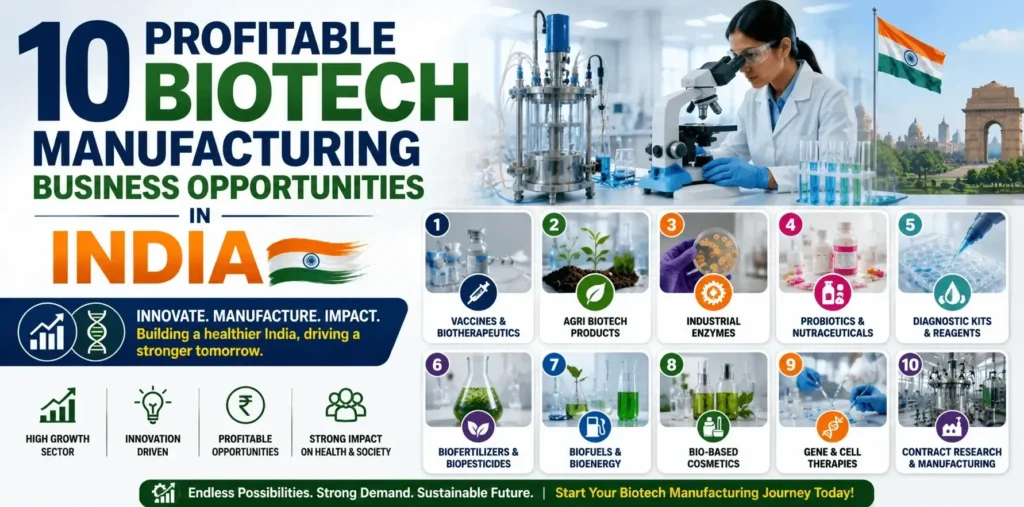
India’s biotechnology sector is rapidly emerging as one of the most profitable and future-focused industries for entrepreneurs, startups, and investors. With rising demand for healthcare innovation, sustainable agriculture, diagnostics, nutraceuticals, industrial enzymes, and bio-based products, biotech manufacturing business opportunities in India are expanding at an unprecedented pace. Today, small and medium-scale entrepreneurs can enter the biotechnology manufacturing industry with innovative and scalable business models. From biofertilizer production and diagnostic kits to probiotics and tissue culture labs, the biotech industry offers multiple high-growth opportunities for startups and investors. What are Biotech Manufacturing Business Opportunities? Biotech manufacturing business opportunities involve producing biotechnology-based products such as biofertilizers, probiotics, diagnostic kits, nutraceuticals, industrial enzymes, tissue culture plants, and sustainable bio-products for healthcare, agriculture, food processing, and environmental industries. This guide explores some of the most profitable biotech manufacturing business opportunities, startup ideas, investment sectors, and future-ready biotech industries in India. Top Biotech Manufacturing Business Opportunities in India Small investors looking to enter the biotech business space must focus on ideas that combine affordability with scalability. Thanks to outsourcing models, contract research organizations (CROs), and shared lab spaces, the initial barrier to entry has lowered significantly. Below are some of the most promising biotech startup concepts suited for small investors: 1. Tissue Culture Plant Nursery Setting up a tissue culture lab to propagate plants in a controlled environment is a lucrative biotech venture. This business model is suitable for small investors because it requires relatively low capital and can be operated in small spaces. The plants grown via tissue culture are disease-free and uniform in size and quality, which makes them ideal for commercial farming and exports. High-value crops like bananas, orchids, strawberries, and medicinal plants are particularly in demand. 2. Probiotic and Fermented Products With increasing awareness of gut health, demand for probiotic supplements and fermented foods like kefir, kombucha, and sauerkraut is growing. Entrepreneurs can establish a small-scale biotech business focused on manufacturing and marketing natural probiotic products. The formulation and fermentation processes are simple, and the startup costs are minimal. Additionally, partnerships with dietitians and wellness influencers can boost brand visibility and market reach. 3. Diagnostic Kits and Reagents Manufacturing The global pandemic has shown the world the importance of rapid diagnostics. Starting a diagnostic kit manufacturing unit is a profitable idea for small investors. These kits can be for infectious diseases, pregnancy testing, blood sugar monitoring, or food contamination. Manufacturing diagnostic reagents and kits under proper licensing and quality standards can serve local clinics, pathology labs, and government tenders. Moreover, localization reduces reliance on imported kits, boosting market demand. 4. Organic Bio-Fertilizers Production With the organic farming movement gaining traction, bio-fertilizers and bio-pesticides are in high demand. These are eco-friendly alternatives to chemical fertilizers and enhance soil fertility naturally. Starting a small production unit for bio-fertilizers made from nitrogen-fixing bacteria, mycorrhiza, or phosphate-solubilizing microorganisms is an excellent biotech business idea. This venture supports sustainable agriculture and aligns with government subsidies and eco-policy initiatives. 5. Microalgae Cultivation for Bio-products Microalgae such as Spirulina and Chlorella are rich in proteins, vitamins, and antioxidants. Cultivating microalgae is a scalable and profitable biotech business. Small investors can set up photobioreactors or open pond systems in rural or semi-urban areas. The harvested algae can be processed into food supplements, cosmetic ingredients, or even animal feed. With increasing vegan and health-conscious consumer bases, the demand for such natural ingredients is expected to rise. 6. CRISPR-Based Genetic Testing Startups Though slightly more technical, starting a small genetic testing service using CRISPR-based tools is feasible with the right partnerships. These startups can offer services like ancestry testing, inherited disease detection, or genome profiling. Investors can collaborate with academic researchers and laboratories for access to platforms and expertise. As this sector matures, licensing CRISPR-related applications can yield high returns for early adopters. 7. Bioinformatics Services and Data Analytics Not all biotech startups require wet-lab setups. Bioinformatics is a data-driven biotech business field involving software development, genome analysis, and drug discovery support. If you have a background in IT or can partner with a software expert, starting a bioinformatics consulting firm can be profitable. These services support pharmaceutical companies, research labs, and hospitals with customized data solutions. 8. Bioplastics and Biodegradable Packaging As plastic pollution becomes a global concern, bioplastics—derived from biological sources like starch, corn, or algae—are becoming essential alternatives. A small biotech business focusing on bioplastic production or biodegradable packaging materials can find ample buyers in the food, fashion, and e-commerce industries. The capital requirement is moderate, and innovations in material sciences continue to reduce production costs. 9. Stem Cell Storage and Therapy Advisory Services Although stem cell banks are capital-intensive, small investors can still benefit by providing allied services. These include stem cell therapy advisory, patient education, and collaboration with hospitals for lead generation. You can also offer logistics solutions for sample transport and storage coordination. This model allows entrepreneurs to participate in a highly promising sector without owning a full-fledged lab. 10. Nutraceutical Formulation and Packaging Nutraceuticals, which include dietary supplements, functional foods, and herbal products, combine nutrition and pharmaceuticals. With the rising demand for preventive healthcare, small-scale manufacturing or white-label branding of nutraceuticals is a good entry point into the biotech business. Entrepreneurs can focus on immunity boosters, anti-aging formulas, joint health supplements, and stress management products using naturally derived ingredients. 11. DNA-Based Personalized Nutrition Plans A highly trending concept in healthtech-biotech convergence is DNA-based diet recommendations. Businesses in this niche collect DNA samples from clients and offer diet charts based on genetic predispositions. The data is analyzed using genome sequencing services (outsourced) and interpreted through proprietary algorithms. Starting such a venture needs basic infrastructure, but once built, it allows scalability with low variable costs. 12. Aquaculture Biotechnology Biotech solutions for aquaculture include vaccines for fish, improved breeds, disease diagnostics, and feed supplements. A small biotech business in this area could focus on developing or distributing biotech-based inputs for fish farmers. India, China, and Southeast Asia are seeing a boom in fish farming, making this