
Bricks from Fly Ash Manufacturing Plant Detailed Project Report
In recent years, the construction sector has witnessed a significant shift toward sustainability and environmental responsibility. Among the notable innovations transforming this space is the fly ash bricks manufacturing plant. These plants are not only eco-friendly but also offer a profitable business opportunity for entrepreneurs looking to venture into the green construction materials segment. As the demand for durable, cost-effective, and environmentally sustainable building materials rises, fly ash bricks have emerged as a preferred alternative to traditional clay bricks. See Also : Seamless Pipes & Tubes Manufacturing Overview of the Fly Ash Bricks Industry Fly ash bricks are made using fly ash—a by-product of thermal power plants—combined with cement, sand, and water. This composition makes them lightweight, strong, and eco-friendly. Unlike clay bricks, which are fired in kilns and contribute to air pollution, fly ash bricks are compressed and cured without burning. This aspect reduces emissions and helps conserve topsoil. The fly ash bricks manufacturing plant utilizes industrial waste and transforms it into high-quality bricks suitable for modern construction. This dual advantage of waste utilization and low environmental impact makes the business both profitable and responsible. With the increasing adoption of green building practices, these bricks have found strong demand across residential, commercial, and infrastructure projects. Construction companies are shifting to fly ash bricks due to their uniform size, better finish, thermal insulation properties, and long-term durability. Their ability to withstand harsh weather and seismic activity also makes them highly desirable. Benefits of Fly Ash Bricks Over Traditional Bricks Fly ash bricks come with multiple advantages, both for builders and the environment. Some of the key benefits include: Eco-Friendly Production: These bricks are made without firing and use waste materials, reducing pollution. Cost-Effective: Raw materials such as fly ash and sand are abundantly available and low-cost. Consistent Quality: Machine-made bricks offer uniform shape and size, reducing mortar usage during construction. Energy Efficient: Fly ash bricks have good thermal insulation properties, leading to energy savings in buildings. Reduced Water Absorption: These bricks absorb less water, which improves the strength and longevity of structures. Given these advantages, it is no surprise that a fly ash bricks manufacturing plant is considered a future-ready investment for entrepreneurs and builders alike. Market Demand and Industry Trends India is undergoing rapid urbanization, with infrastructure development at the forefront. As the country builds smart cities, expressways, metros, and affordable housing, the need for sustainable construction materials has intensified. In response, government policies have started supporting the use of fly ash bricks, especially in public projects. For instance, several state governments and municipal bodies have made it mandatory to use a certain percentage of fly ash bricks in construction. Government schemes like Pradhan Mantri Awas Yojana (PMAY) have further increased demand, encouraging builders to adopt fly ash bricks in mass housing projects. Moreover, India produces nearly 180 million tonnes of fly ash annually. A large percentage of this remains unused and becomes an environmental burden. Converting this waste into usable bricks through a fly ash bricks manufacturing plant solves two problems—managing industrial waste and producing sustainable building materials. With real estate projects shifting to eco-certification standards such as GRIHA, IGBC, and LEED, the demand for fly ash bricks will continue rising. These certifications often prioritize the use of sustainable and low-carbon materials, which strengthens the business case for this plant. Setting Up a Fly Ash Bricks Manufacturing Plant Establishing a fly ash bricks manufacturing plant involves several steps and considerations. The investment can vary based on the level of automation (manual, semi-automatic, or fully automatic), production capacity, and land area. A typical small-to-medium-sized unit requires an area of 8000–12000 sq. ft. Here are the key steps involved in setting up the plant: 1. Location Selection The plant should be located near a thermal power plant for easy access to fly ash. Proximity to construction hubs helps reduce logistics costs and delivery time. 2. Machinery and Equipment Essential machinery includes a pan mixer, brick-making machine, belt conveyor, and curing racks. Fully automated machines can produce over 10,000 bricks per day with minimal labor. 3. Raw Material Management The plant requires fly ash, cement or lime, stone dust or sand, and water. Proper storage of raw materials ensures consistent production and quality. 4. Production Process Mixing: Raw materials are measured and mixed thoroughly. Molding: The mix is fed into the brick machine and pressed into molds. Curing: Bricks are cured either with water or steam to gain strength. Storage: After curing, bricks are stored and transported as per demand. 5. Labor and Workforce Even with automation, skilled labor is needed to monitor the process, ensure quality, and maintain machinery. 6. Legal and Regulatory Compliance Obtain necessary clearances from the Pollution Control Board, register the business, and follow BIS quality standards (IS 12894:2002). Cost Analysis and Profitability The total cost of setting up a small-scale fly ash bricks manufacturing plant ranges from ?10 lakh to ?25 lakh, depending on capacity and automation. Recurring costs include electricity, labor, raw material, maintenance, and transportation. A plant producing 10,000 bricks daily can achieve break-even within 1–2 years if run efficiently. The profit margin ranges from 15% to 25%, depending on market conditions and pricing strategies. Factors that impact profitability include: Consistent raw material supply Access to the construction market Efficient machinery operation Quality assurance processes Many entrepreneurs opt for government loans under MSME or Mudra schemes to reduce capital pressure. Some states also offer subsidies for pollution control and green manufacturing initiatives. Marketing Strategies for Fly Ash Bricks Effective marketing can make a significant difference in this industry. Entrepreneurs must build relationships with contractors, architects, and real estate developers. Offering competitive prices, high-quality bricks, and timely deliveries can create long-term clients. Here are a few marketing tips: Create a strong brand identity focused on eco-friendliness. Distribute product catalogs and brochures to construction firms. Attend building material expos and local trade fairs. Use social media to reach real estate professionals. Offer volume-based discounts for bulk buyers. Word-of-mouth and referrals from satisfied customers also play a
Processing of Sugarcane and By-Products of Molasses
Sugarcane is a vital commercial crop with immense agricultural and industrial significance. Primarily, it serves as a major raw material in the production of sugar and molasses. Moreover, it is grown predominantly in tropical and subtropical regions. As a result, sugarcane plays a significant role in generating rural income, providing employment, and supplying key ingredients for various industries. In this article, we will explore the detailed process of sugarcane and molasses production, along with the major products and by-products that emerge from this dynamic industry. Furthermore, we will examine how this sector contributes to economic development and sustainable agriculture. See Also : LED Light Assembling Business Understanding the Sugarcane & Molasses Industry Sugarcane & molasses production is not only important for the food sector but also for fuel, pharmaceuticals, and fermentation-based industries. To understand the industry’s depth, we must examine the entire chain — from cultivation to final product development. Cultivation and Harvesting of Sugarcane The sugarcane journey begins with careful selection of high-yielding varieties and healthy soil preparation. Farmers plant sugarcane either through sett planting or tissue culture propagation. A warm climate with moderate rainfall is ideal for maximum cane growth. Timely irrigation and pest management ensure healthy development of the crop. Generally, sugarcane takes about 10 to 18 months to mature, depending on the variety and climate. Once mature, it is harvested using mechanical harvesters or manual labor. The harvested cane is quickly transported to nearby mills for immediate processing to prevent sucrose loss due to fermentation. Cane Crushing and Juice Extraction After reaching the mill, sugarcane is first cleaned, then chopped, and subsequently fed into crushers to extract juice. Meanwhile, the leftover fibrous material, called bagasse, is collected and furthermore used as a biofuel to power boilers in the factory. The extracted juice, which is rich in sucrose, next undergoes filtration to remove impurities. Next, the juice is clarified by adding lime and heating. This process separates mud and non-sugar impurities, which are later used as fertilizer or animal feed. The clarified juice is then evaporated using multi-stage evaporators to concentrate the sugar content. Crystallization and Centrifugation The concentrated syrup enters vacuum pans where it is boiled to initiate sugar crystallization. The resulting massecuite (a mixture of crystals and syrup) is then sent to centrifuges. These machines spin at high speeds to separate sugar crystals from molasses. The first batch of sugar extracted is known as raw or plantation white sugar. After this stage, the leftover syrup, which now contains less sugar, is then subjected to repeated boiling and centrifugation. Consequently, second and third-grade sugars are produced, while the quantity of molasses increases with each cycle. Molasses: A High-Value By-Product Molasses is used in ethanol production. Additionally, it serves as a base ingredient in rum and animal feed. Molasses is a byproduct of sugar refining. However, its industrial value continues to grow. First, sugar is extracted from sugarcane. Then, the leftover molasses is collected for industrial use Molasses also plays a key role in the production of citric acid, yeast, and monosodium glutamate (MSG). The sugarcane & molasses segment contributes significantly to biofuel production. In fact, ethanol derived from molasses helps reduce reliance on fossil fuels and supports green energy initiatives. Key Products from Sugarcane & Molasses The sugarcane & molasses industry is known for producing a wide range of commercial products. Here are the main ones: 1. Sugar (Raw and Refined) This is the most obvious product. Sugar produced from cane is used for domestic consumption, food processing, and industrial applications. It is further refined to produce white crystal sugar, brown sugar, and specialty sugars. 2. Molasses As discussed earlier, molasses is a thick by-product used in the production of ethanol, alcoholic beverages, cattle feed, and industrial chemicals. 3. Ethanol India’s ethanol blending program has accelerated significantly. Ethanol extracted from molasses is blended with petrol to reduce carbon emissions and fuel imports. 4. Bagasse This is the leftover fiber after juice extraction. It is a sustainable biofuel used for cogeneration of electricity. Many sugar mills are now self-sufficient in power, thanks to bagasse-based energy systems. 5. Pressmud (Filter Cake) This is a nutrient-rich residue obtained during juice clarification. It is composted and used as organic fertilizer to improve soil fertility. 6. Vinasse/Spent Wash This is the leftover liquid from ethanol distilleries. It can be treated and used as a source of nutrients for crops or in biogas generation. 7. Alcoholic Beverages Several popular spirits such as rum are produced using molasses as the base material. Distilleries located near sugar mills capitalize on this steady by-product supply. Environmental and Economic Benefits The sugarcane & molasses industry supports sustainable agriculture and renewable energy goals. Using bagasse for cogeneration and molasses for ethanol reduces carbon footprints. Additionally, by converting waste into useful products, the industry minimizes environmental pollution and maximizes resource utilization. Economically, the sector supports millions of farmers, especially in states like Maharashtra, Uttar Pradesh, and Karnataka. Co-operative sugar mills have transformed rural economies by providing stable incomes, infrastructure, and employment. Challenges in the Sugarcane & Molasses Sector Despite its advantages, the sugarcane & molasses industry faces certain challenges: Water Usage: Sugarcane is a water-intensive crop. Efficient irrigation methods like drip systems are needed to conserve water. Price Fluctuations: Sugar and molasses prices are often volatile. Global demand and government pricing policies directly impact farmer incomes. Climate Dependency: Sugarcane yield heavily depends on rainfall and weather conditions. Climate change adds uncertainty to production cycles. Storage and Transport: Sugarcane must be processed quickly post-harvest. Delays lead to fermentation and loss in sugar content, affecting mill efficiency. Future Trends and Innovations The sugarcane & molasses industry is rapidly evolving through research, technology, and sustainability efforts. Here are some notable trends: Diversification: Many mills are diversifying into ethanol, cogeneration, and bioplastics to maximize profits and reduce waste. Digital Monitoring: Smart farming tools and GIS-based planning are being adopted to monitor crop health, water usage, and yield forecasts. Green Fuels: With increasing focus on carbon neutrality, molasses-based ethanol will play a bigger
How to Manufacture Gums and Stabilizers – Food Industry Ingredients (Hydrocolloids)
In today’s food industry, food stabilizers and gums play a crucial role in improving texture, consistency, and shelf-life. These additives help maintain the integrity of products like ice cream, sauces, yogurts, and beverages. Without food stabilizers & gums, many items would separate or spoil rapidly, disappointing consumers and damaging brand reputations. The manufacturing of these additives involves highly controlled processes and uses both natural and synthetic sources. See Also : Rice Mill & Parboiled Rice Understanding the Manufacturing Process of Food Stabilizers & Gums Food stabilizers & gums originate from various natural sources such as plants, seaweed, and microbial fermentation. Manufacturing begins with selecting the raw material—each gum or stabilizer requires specific sources. For instance, guar gum comes from guar beans, xanthan gum from bacterial fermentation, and carrageenan from red seaweed. Once harvested, raw materials undergo mechanical or chemical treatments. Manufacturers grind plant-based sources into fine powders after drying. For microbial gums like xanthan, they use fermentation. In this process, bacteria feed on sugars and excrete gum as a byproduct, which is then isolated and dried. After isolation, the product passes through filtration to remove impurities. This step ensures the final food stabilizers & gums meet strict safety and quality standards. Finally, manufacturers dry, grind, and pack them into usable commercial forms such as powders, granules, or concentrates. Each gum type follows a slightly different production path. However, the key stages remain similar: raw material preparation, extraction or fermentation, purification, drying, and final packaging. To ensure quality, many facilities operate under Good Manufacturing Practices (GMP) and comply with food safety regulations like FSSAI, FDA, or EFSA, depending on the market. Modern food manufacturers invest in advanced processing equipment to reduce contamination, improve yield, and optimize energy use. These innovations allow consistent production of high-quality food stabilizers & gums across various industries. Let’s now explore the various types of gums and stabilizers commonly used in the food industry. Types of Common Food Stabilizers & Gums Each stabilizer serves unique functions. Guar gum thickens and stabilizes dairy products, salad dressings, and baked goods. It is inexpensive and effective even in small amounts. Locust bean gum, derived from carob seeds, is often used in conjunction with other gums for synergistic effects. Xanthan gum, a microbial gum, works as a thickener and stabilizer in gluten-free baking and beverages. Its high solubility and stability under different pH and temperature conditions make it highly versatile. Carrageenan, extracted from red seaweed, is widely used in dairy and meat products due to its gelling properties. Pectin, found in citrus peels and apple pomace, is another popular stabilizer. It gives jams and jellies their characteristic texture. Agar-agar, like carrageenan, originates from seaweed and is used in desserts, sauces, and beverages. Starch-based stabilizers, including modified food starch, are commonly used to enhance viscosity and shelf life. These are especially important in ready-to-eat foods and instant mixes. Each stabilizer must be chosen based on the specific product’s needs, considering texture, processing method, and storage conditions. Applications in Food Products Food stabilizers & gums offer broad usage across the processed food sector. In dairy products like yogurt, cheese, and cream, they prevent separation and enhance creaminess. Without them, many dairy items would have unpleasant textures or lose their form over time. In beverages such as fruit juices, smoothies, and protein drinks, gums maintain uniformity by suspending particles and preventing sedimentation. They also improve mouthfeel, making beverages more appealing. Sauces, ketchup, and dressings use stabilizers to maintain thickness and stability. These ingredients prevent oil-water separation and ensure consistent texture across storage. In baked goods, gums like xanthan and guar act as gluten substitutes and moisture retainers, especially in gluten-free recipes. They improve dough handling and extend shelf life by retaining water. Even frozen products like ice cream benefit from food stabilizers & gums. These compounds inhibit the formation of large ice crystals, resulting in a smooth and creamy texture. Confectionery, soups, ready meals, and meat products also use these additives to maintain uniformity and enhance eating experience. Raw Material Sourcing and Sustainability Sourcing raw materials sustainably is essential in modern manufacturing. Many food stabilizers & gums come from agricultural byproducts or naturally renewable sources. For example, guar beans grow well in arid climates, requiring minimal water. Similarly, seaweed used for carrageenan and agar is cultivated in ocean farms without pesticides or fertilizers. Companies are adopting eco-friendly harvesting techniques and using certified suppliers to ensure long-term environmental sustainability. Moreover, some producers use microbial fermentation, which has a lower carbon footprint than traditional extraction methods. Food stabilizers & gums manufacturers also reduce waste through optimized processing. Reusing water, recycling biomass, and improving energy efficiency are common practices. By following sustainable sourcing methods, companies not only lower their environmental impact but also meet growing consumer demand for cleaner, greener food production. Quality Control and Regulatory Standards Every batch of food stabilizers & gums undergoes rigorous testing. Quality control teams measure pH, moisture content, microbial load, viscosity, and purity. These factors directly affect the additive’s functionality in food applications. International food regulatory bodies have set clear guidelines for usage levels and labeling. For example, the FDA classifies many gums as “Generally Recognized As Safe” (GRAS). The European Union assigns E-numbers to approved additives, while India’s FSSAI mandates specific limits and declarations on labels. Additionally, many manufacturers seek third-party certifications like ISO 22000, HACCP, and BRC to ensure food safety. These standards help build trust with clients and consumers alike. Exporters must also meet importing countries’ documentation and labeling requirements. Hence, companies invest in skilled personnel and modern labs to stay compliant and competitive. Challenges in Manufacturing Food Stabilizers & Gums Despite growing demand, manufacturers face several challenges. Raw material price volatility affects overall cost structure. A poor harvest or supply chain disruption can impact production timelines. Maintaining consistency is another concern. Natural sources like seaweed or plants vary based on season, soil, and climate, which may influence gum quality. Moreover, increasing regulations and consumer demand for clean-label ingredients require constant innovation. Manufacturers must develop functional, natural alternatives
Paper Shopping Bags, Kraft Shopping bags & Paper carry bags Manufacturing Plant
In the modern world, environmental sustainability is no longer just a trend—it is a necessity. Consumers and businesses are now increasingly turning towards eco-friendly alternatives. One major area where this change is most visible is packaging. With plastic bags being banned or restricted in many places, paper bags are fast becoming the preferred option. This shift presents a lucrative opportunity for those interested in setting up a paper shopping bag manufacturing unit. The process is simple, the demand is high, and the environmental benefits are undeniable. See Also : Adhesives & Resins Industry Overview and Market Potential The paper shopping bag manufacturing industry is growing rapidly. As businesses try to move away from single-use plastic, the market for paper bags continues to expand. Sectors such as retail, fashion, groceries, pharmaceuticals, food delivery, and e-commerce are all shifting to paper alternatives. This ongoing trend means that paper bag manufacturers are now in high demand. Government initiatives and policies also support this shift. Many state governments in India have banned plastic carry bags. The Ministry of Environment has set up regulations encouraging the use of biodegradable packaging. The “Swachh Bharat Abhiyan” and “Make in India” initiatives further boost the paper bag manufacturing sector. Urban consumers now demand reusable, stylish, and eco-friendly bags. Corporate clients also prefer printed paper bags that help in branding. These factors increase the product’s perceived value. As a result, paper shopping bags are no longer viewed as just carry bags—they are a part of modern, green marketing. Selection of Location for Manufacturing Unit To set up a paper shopping bag manufacturing plant, location plays a major role. A semi-urban or industrial area near cities is ideal. It ensures better logistics, easier labor availability, and proximity to target customers. The factory premises should have at least 1,000 to 1,500 square feet of space. This area will be enough for storing raw materials, installing machines, packaging, and storage of finished goods. Make sure the location has access to water, electricity, and transportation. Roads should be good for the smooth movement of finished goods and raw materials. A location close to retail hubs or printing presses can give you an extra edge. Required Licenses and Registrations Before starting the unit, it is necessary to obtain mandatory licenses and approvals. These ensure smooth operations and avoid legal problems in the future. The essential registrations include: Udyam Registration (MSME Registration) GST Registration for tax compliance Factory License from local authorities Trade License from the municipal corporation Pollution Control Certificate EPF and ESIC Registration if you employ more than 10 workers These documents must be prepared in advance and filed correctly. Consult with a business consultant or CA for a smoother process. Raw Materials Required The basic raw material for paper shopping bag manufacturing is kraft paper or recycled paper. The paper may be plain, printed, or laminated based on customer needs. Other important materials include: Kraft paper rolls (40 GSM to 150 GSM) Printing ink Adhesive glue Paper ropes or flat paper strips for handles Packaging material (plastic wrap, cartons) Buying raw materials in bulk reduces overall production costs. Tie-ups with paper mills or wholesalers will help ensure a regular supply. Machinery and Equipment The type of machine you choose depends on your budget and production goals. There are two types of machines: semi-automatic and fully automatic. Basic machines required: Roll Feeding Paper Bag Making Machine Flexographic or Offset Printing Machine Handle Making and Attaching Machine Creasing and Folding Machine Punching Machine for holes (optional) Drying Stand and Packaging Table A fully automatic line costs more but significantly reduces labor and time. If you are planning for bulk production and long-term business, automation is a better option. Manufacturing Process Step-by-Step The paper shopping bag manufacturing process is simple and efficient: Paper Cutting: Rolls of kraft paper are cut to the required size using roll cutting machines. Printing: The paper is sent through flexographic or offset printing machines for branding or product labeling. Folding and Pasting: The printed paper is folded and pasted using glue to make the basic bag structure. Bottom Folding: The bottom part is folded and glued to give the bag strength. Handle Attachment: Handles made from paper rope or flat strips are attached. This can be done manually or through machines. Drying: The bags are placed on drying stands for a few hours to ensure the glue is properly set. Quality Checking: Each bag is inspected for size, shape, strength, and print clarity. Packaging: Final products are stack, pack, and store in cartons for delivery. This step-by-step process ensures each bag meets the client’s expectations. Staffing and Labor Requirements A small-scale unit requires around 8–12 workers, including: Machine operators Printing technician Helpers for folding and drying Handle attachers Packaging staff Supervisor or quality checker With proper training, labor can easily manage the entire process. Staff should be skilled in operating machines, checking bag strength, and managing deadlines. Estimated Project Cost The cost of setting up a paper shopping bag manufacturing unit varies by scale and automation. Here’s an approximate breakdown for a small to medium-scale setup: Expense Head Estimated Cost (INR) Machinery & Installation ?8,00,000 – ?12,00,000 Raw Materials (initial stock) ?1,50,000 – ?2,00,000 Staff Wages (3 months) ?1,20,000 – ?1,50,000 Rent, Utilities & Maintenance ?80,000 – ?1,00,000 Packaging & Logistics ?50,000 – ?80,000 Licensing & Registration Fees ?50,000 Contingency and Miscellaneous ?1,00,000 Total Estimated Cost ?13 to ?17 Lakhs For a large-scale setup with full automation, the cost may go up to ?30–?40 lakhs. Marketing and Sales Strategy Effective marketing is critical to the success of your paper shopping bag manufacturing business. A strong B2B approach is more fruitful in this industry. Marketing ideas include: Collaborate with retail chains, boutiques, and supermarkets Partner with food delivery and e-commerce businesses Attend packaging expos and trade fairs Offer custom printing services for brand promotion Build a website and showcase your portfolio Use social media ads for brand awareness Register on B2B portals like IndiaMART, TradeIndia, or Alibaba Customer satisfaction will ensure
Flat Glass Manufacturing Plant Detailed Project Report
The flat glass industry plays a vital role in construction, automotive, and solar sectors. With increasing demand for energy-efficient and aesthetically pleasing building materials, the market for flat glass continues to grow. Entrepreneurs entering this space can benefit from stable demand and a wide range of applications. However, establishing a flat glass manufacturing plant requires careful planning, significant investment, and industry knowledge. See Also : Natural Dyes Manufacturing Key Steps to Start a Flat Glass Manufacturing Plant Starting a flat glass manufacturing plant involves multiple stages including market research, land acquisition, machinery procurement, licensing, hiring skilled labor, and marketing. This article outlines the complete roadmap to help new entrepreneurs establish a profitable unit in India or elsewhere. 1. Conduct Market Research and Feasibility Study Start by analyzing demand and consumption patterns in your target area. Determine if there’s a gap in supply for flat glass used in windows, doors, partitions, solar panels, or furniture. Understand your competitors’ pricing strategies and customer base. Evaluate government policies, import-export data, and upcoming infrastructure projects to forecast future demand. A well-documented feasibility study helps in attracting investors and securing bank loans easily. 2. Choose a Strategic Location for Your Plant Select land that offers proximity to raw material sources and transportation networks. Flat glass production requires raw materials such as silica sand, limestone, soda ash, dolomite, and feldspar. Locations near industrial belts or SEZs can offer logistic benefits, tax incentives, and easy labor availability. Ensure your site complies with zoning laws and environmental regulations. 3. Determine the Manufacturing Process There are two main methods to produce flat glass: the float process and the rolled glass method. The float process is the most common and efficient technique. In this method, molten glass floats over a bed of molten tin to form a flat and uniform surface. Decide the type of flat glass products you plan to manufacture—clear glass, tinted glass, reflective glass, or laminated varieties. Your plant design must align with your selected process. 4. Procure High-Quality Machinery and Equipment Invest in energy-efficient and modern machinery to ensure product quality and reduce long-term operational costs. Essential equipment includes: Batch house system (for raw material mixing) Melting furnace Float bath Annealing lehr Cutting line Polishing and edge finishing machines Inspection and packaging line Engage with trusted machinery suppliers who offer installation, training, and maintenance support. Choose automated systems to increase productivity and consistency. 5. Obtain Necessary Licenses and Certifications Compliance with government norms is crucial. You’ll need: Factory license from state authority GST registration Pollution Control Board (PCB) clearance Fire safety NOC Environmental clearance Bureau of Indian Standards (BIS) certification Additionally, certifications like ISO 9001 can improve credibility and help in attracting institutional buyers. Ensure documentation and approvals are completed before trial production begins. 6. Hire Skilled Technical and Managerial Staff Flat glass production requires trained staff including furnace operators, quality analysts, machine technicians, electricians, and safety officers. Hire experienced professionals who understand heat management, surface finish, and quality testing procedures. Also, recruit supervisors, HR, logistics, and accounts personnel to manage daily operations smoothly. Conduct regular training programs to enhance workforce efficiency and safety. 7. Focus on Quality Control and Testing Install advanced inspection systems to check for defects like bubbles, streaks, and uneven thickness. Maintain uniform temperature and humidity levels in your plant to ensure flawless production. Implement Six Sigma or Total Quality Management (TQM) practices for process improvement. Provide samples to clients and seek feedback for continuous product enhancement. 8. Invest in Branding and Marketing Branding plays a key role in the success of your flat glass manufacturing plant. Build an identity that reflects quality, reliability, and innovation. Launch a professional website, list your products on B2B platforms, and participate in industry expos. Target builders, contractors, architects, and dealers. Offer competitive pricing, bulk discounts, and flexible delivery schedules to increase orders. Utilize digital marketing channels like LinkedIn and YouTube to showcase your manufacturing capabilities. 9. Explore Value-Added Products and Exports To boost profitability, expand your product range to include toughened glass, insulated glass units (IGUs), and decorative glass panels. These options have higher margins and cater to premium market segments. If you’re located near a port, consider exporting your flat glass to neighboring countries or regions with high construction activity. Adhere to global quality standards to make your products export-ready. 10. Understand the Cost and Funding Options Setting up a flat glass manufacturing plant requires substantial capital investment. The initial cost can range from ?15 crore to ?50 crore depending on the plant capacity and automation level. Major cost heads include land acquisition, building construction, machinery, labor, electricity, and working capital. Explore funding options such as: Term loans from nationalized banks Working capital loans or overdraft facility Government subsidies under MSME or industrial policies Equity investment from private partners or venture capital firms Prepare a detailed business plan to present your vision and projected ROI to potential lenders and investors. 11. Focus on Environmental and Safety Compliance Glass manufacturing involves high-temperature furnaces, emissions, and potential safety risks. Install proper ventilation systems and adopt clean technologies to minimize carbon footprints. Use dust collectors and water recycling systems to meet pollution norms. Provide PPE kits, fire drills, and health check-ups to ensure employee safety. Being environmentally conscious also improves your brand image and eligibility for green certifications. 12. Embrace Innovation and Automation To stay ahead in the market, continuously invest in innovation. Use AI-powered inspection systems, automated conveyors, and IoT-based monitoring tools. Track production efficiency in real time and reduce wastage. You can also explore smart glass production that responds to light and heat, which has growing demand in modern architecture. 13. Maintain Strong Vendor and Client Relationships Establish long-term contracts with suppliers of silica sand, chemicals, and packaging materials. Negotiate bulk deals to reduce procurement costs. Also, maintain strong communication with your clients by providing timely deliveries and excellent after-sales support. Implement a CRM system to manage client interactions and track feedback efficiently. 14. Monitor Trends and Industry Challenges The flat glass market is evolving
IV Fluid (Intravenous Fluid) and Dialysis Solution Manufacturing Plant Detailed Project Report
The healthcare sector in India is growing rapidly, and the demand for quality medical consumables is increasing steadily. One such essential medical product is intravenous (IV) fluids and dialysis solutions. These are life-saving products used across hospitals, clinics, and emergency care facilities. Starting an IV Fluid & Dialysis Solution Manufacturing business is both profitable and socially impactful. If set up correctly, this business can generate consistent revenue while contributing to national healthcare development. See Also : Profitable Startup Projects Business Scope of IV Fluid & Dialysis Solution Manufacturing The market for IV fluids and dialysis solutions is expanding due to the rise in surgical procedures, trauma cases, and kidney-related diseases. In India, millions of patients require dialysis every year. Furthermore, IV fluids are a staple requirement for rehydration, drug delivery, and electrolyte balancing. Because of this, IV Fluid & Dialysis Solution Manufacturing is a recession-proof industry with stable demand in both rural and urban regions. Investors interested in this segment must understand product types, technical processes, regulatory requirements, and market distribution channels. The investment size may vary based on plant capacity, automation level, and product range. With proper planning, this plant can become a long-term revenue-generating venture. To succeed in this business, one must analyze both technical and commercial aspects. Also, forming strategic tie-ups with hospitals and clinics can provide a steady client base. Continuous quality assurance and compliance with health regulations are critical for the success of any IV Fluid & Dialysis Solution Manufacturing setup. Products Manufactured A well-equipped manufacturing plant generally produces the following: Normal saline (0.9% NaCl) Ringer’s lactate solution Dextrose solutions (5%, 10%, 25%, etc.) Combination fluids like DNS (Dextrose Normal Saline) Dialysis fluid solutions (acidic and bicarbonate types) These fluids are packed in sterile glass or plastic containers. Plastic packaging, especially non-PVC bags, has become more popular due to safety, affordability, and ease of use. Licenses and Regulatory Approvals Before starting, you must obtain essential licenses from regulatory bodies. IV fluids and dialysis solutions are classified as pharmaceutical products. Hence, approvals from the Central Drugs Standard Control Organization (CDSCO) and State Drug Controller are mandatory. You will also need: Drug Manufacturing License GMP (Good Manufacturing Practices) Certificate Pollution Control Board NOC Factory Registration and Fire Safety Certificate ISO 9001 & ISO 13485 (optional but recommended for exports) The compliance checklist should be updated regularly to avoid penalties or disruptions in production. Proper documentation will also assist in gaining buyer confidence, especially for institutional sales. Plant Setup and Infrastructure For IV Fluid & Dialysis Solution Manufacturing, the plant must follow cleanroom standards and aseptic manufacturing protocols. You must build Class 100 and Class 10000 cleanrooms depending on the production stage. A typical unit requires areas such as: Water treatment section Raw material storage Mixing & filtration section Filling and sealing zone Sterilization room (autoclaving or terminal sterilization) Quality control laboratory Packing and dispatch unit A minimum of 10,000 to 15,000 square feet is required for a medium-sized unit. However, plant size can be adjusted according to production capacity and automation level. Proper HVAC systems must be installed to maintain pressure differentials and microbial control. Machinery and Equipment Some of the critical machinery includes: RO+EDI water purification system SS316L mixing and storage tanks Inline filtration system Blow-fill-seal (BFS) or Form-Fill-Seal (FFS) machine Autoclaves or sterilizers Labeling and packaging machines Cleanroom air showers and pass boxes Microbiological and chemical testing equipment Investing in automated BFS or FFS machines improves sterility assurance and productivity. Initially, you can start with semi-automated systems and upgrade later based on market demand. See Also : Industrial Investment Projects Manpower and Staffing Trained professionals are essential to maintain quality and operational efficiency. The following staff roles are typically required: Production pharmacists and plant manager Quality assurance and quality control chemists Microbiologists for sterility testing Maintenance technicians and machine operators Packaging and dispatch assistants Regulatory compliance and documentation officers Hiring staff with pharmaceutical manufacturing experience is advisable. Regular training and audits must be conducted to maintain regulatory readiness and improve employee performance. Raw Materials and Suppliers The raw materials for IV Fluid & Dialysis Solution Manufacturing include pharmaceutical-grade chemicals like: Sodium chloride Dextrose Potassium chloride Sodium bicarbonate Calcium chloride Magnesium sulfate Purified water (WFI grade) Sourcing from reliable and certified vendors ensures batch-to-batch consistency and reduces the risk of contamination. In-house testing of all raw materials is necessary before use in production. Cost and Investment Breakdown Setting up a IV Fluid & Dialysis Solution Manufacturing plant involves moderate to high capital investment. Here’s a rough breakdown: Land and building: ?1.5 to ?2 crore (leased or owned) Machinery and equipment: ?2 crore to ?3 crore Cleanroom setup and utilities: ?1 crore Licensing, consulting, and legal: ?25 to ?50 lakh Raw materials and packaging: ?50 lakh (initial stock) Working capital (6 months): ?1 crore In total, a medium-capacity plant may cost ?6 crore to ?8 crore depending on location and scale. Financial assistance through bank loans, subsidies under MSME schemes, or investor partnerships can help ease the capital burden. Profit Margin and ROI The profit margins in IV Fluid & Dialysis Solution Manufacturing range between 15% to 25%. Once the plant reaches break-even, monthly profits can be quite substantial. ROI is typically achieved within 2.5 to 4 years depending on operational efficiency, sales volume, and market reach. Marketing strategies such as hospital tie-ups, government tender participation, and medical distributor networks can help maximize product reach. Export potential is also promising due to global healthcare demand and India’s cost competitiveness. Challenges and Solutions Though the business is lucrative, several challenges must be addressed: Regulatory compliance: Regular audits and quality checks will ensure long-term license retention. Sterility assurance: Adopting BFS or FFS technology ensures contamination-free production. Skilled labor availability: Conduct periodic training to keep employees aligned with GMP standards. Supply chain logistics: Partner with efficient cold chain or medical-grade logistics providers. Price competition: Focus on quality certifications and hospital relationships to gain loyalty over price. Addressing these pain points early can help the business grow sustainably and establish trust with
Start a Profitable uPVC Profiles Manufacturing for Doors and Windows: Get Plant Detailed Project Report (2026)
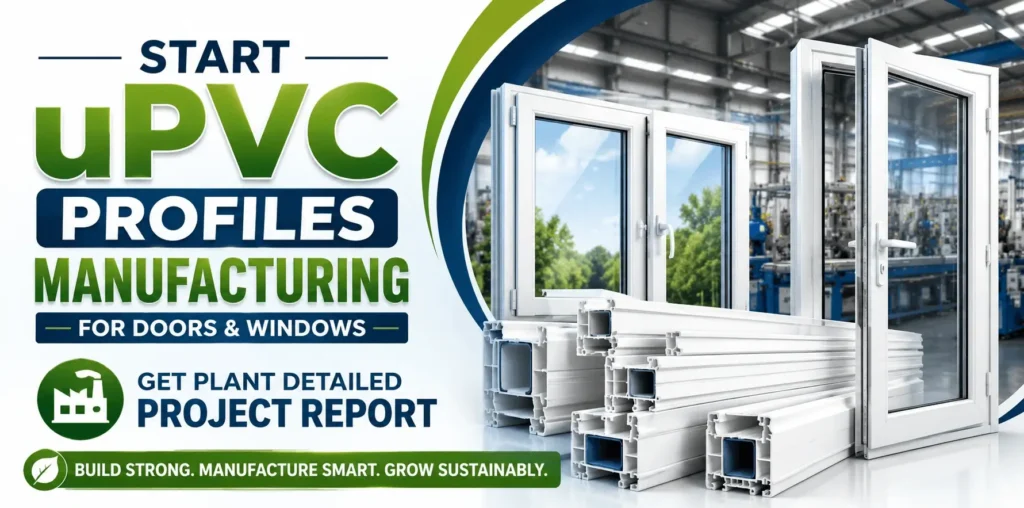
Unplasticized Polyvinyl Chloride, commonly known as uPVC, has emerged as a durable and cost-effective alternative to wood and aluminum. With rising demand for sustainable and low-maintenance materials in construction, the uPVC profiles manufacturing business is witnessing rapid growth. These profiles are used extensively in doors, windows, partitions, and roofing applications. Investors looking to enter this field have the opportunity to build a high-profit venture with strong long-term prospects. See Also : Medical College with Hospital Project Market Potential and Demand for uPVC Profiles In India and globally, the real estate and infrastructure sectors are experiencing robust development. This has created a growing need for reliable and weather-resistant materials. uPVC profiles manufacturing meets this need by providing lightweight, rust-proof, and recyclable alternatives. The global uPVC market is projected to grow consistently over the next few years, especially in urban and semi-urban areas. Builders and homeowners are increasingly switching to uPVC profiles because they offer better insulation, are termite-proof, and require minimal upkeep. These factors make them ideal for both residential and commercial projects. Furthermore, initiatives like “Housing for All” and “Smart Cities Mission” in India are pushing demand higher, especially in Tier-2 and Tier-3 cities. The demand is also rising in African, Middle Eastern, and Southeast Asian markets, opening doors for export-oriented manufacturing units. Startups and small-scale investors can benefit from both domestic and international sales channels. Overview of the Manufacturing Process The uPVC profiles manufacturing process involves several steps, all of which require precision and consistency. The basic raw materials used include PVC resin, stabilizers, lubricants, fillers, and color pigments. Here’s a simplified step-by-step outline of the production process: Mixing of Raw Materials:All ingredients are weighed accurately and fed into a high-speed mixer. The heated mixing ensures that the materials blend thoroughly and form a uniform mixture. Extrusion:The mixed compound is then fed into an extruder machine. Here, it is heated and passed through a die to give it the required shape. The die design determines the profile shape – whether for windows, doors, or railings. Calibration and Cooling:After extrusion, the hot profile passes through a calibration table, where vacuum and water cooling ensure it retains the exact shape and dimensions. Cutting and Finishing:The cooled profile is cut into the required length using automatic cutters. Surface finishing, such as lamination or printing, may also be done if desired. Quality Testing and Packing:Final profiles undergo various tests for strength, flexibility, and weather resistance. Once approved, they are packed and dispatched. This process is mostly semi-automated and requires trained staff for supervision. When managed well, a small or medium-sized plant can achieve high efficiency and minimal waste. Key Machinery Required To set up a uPVC profiles manufacturing unit, you’ll need several essential machines and equipment: High-speed mixer for raw materials Conical twin-screw extruder Vacuum calibration table Water cooling tank Haul-off machine Cutter Stacker or take-off unit Laminating machine (optional) Quality control instruments It is advisable to choose high-quality and energy-efficient machines from reputed suppliers to ensure consistency and durability. Space, Location, and Infrastructure The size of your uPVC profiles manufacturing plant depends on the production capacity. A medium-scale plant requires approximately 8,000–10,000 square feet of built-up area. This includes space for raw material storage, production area, cooling and cutting section, packaging area, and administrative office. Choose a location with good road connectivity for easy transport of materials and finished products. Access to stable electricity, water supply, and skilled labor is essential. Industrial zones or dedicated manufacturing parks are ideal for setting up such a unit. Financial Requirements and Investment Breakdown The total investment required for a uPVC profiles manufacturing plant depends on its scale and automation level. A medium-scale plant with moderate automation might require an investment ranging from ?1.5 crore to ?3 crore (approximately USD 180,000 to 360,000). Here’s a rough cost estimate for a medium-capacity unit: Land and Building (owned or rented): ?40–60 lakhs Machinery and Equipment: ?70–90 lakhs Raw Materials for Initial Production: ?10–15 lakhs Labor and Salaries (3 months): ?5–8 lakhs Utilities and Power Backup: ?5–7 lakhs Marketing and Licensing: ?2–4 lakhs Working Capital Margin: ?20–30 lakhs Funding options include term loans, government subsidies under MSME schemes, or private investment. Licensing and Compliance To legally start a uPVC profiles manufacturing business in India, certain registrations and licenses are mandatory: MSME Udyam Registration Factory License from the State Government Pollution Control NOC GST Registration Import Export Code (for exports) Fire Safety Clearance Labour and ESIC Registration (if applicable) Additionally, complying with Bureau of Indian Standards (BIS) for uPVC materials improves credibility and helps in gaining contracts from major builders and contractors. Profitability and Returns The profit margin in uPVC profiles manufacturing is encouraging, especially with high-volume production and optimized operations. The average gross margin can range between 30% and 40%, depending on raw material costs and market pricing. Export-oriented units may enjoy even higher margins due to better international rates. With consistent demand and steady supply chains, a plant can break even within 18–24 months. Manufacturers can also diversify into new profiles, colors, and finishes to expand their market and enhance brand value. Key ways to improve profitability include: Bulk procurement of raw materials to reduce cost Streamlining operations to lower production downtime Developing a strong distributor and retailer network Offering customized solutions for different market segments Investing in R&D for enhanced weatherproof and aesthetic features Environmental Benefits and Sustainability One of the biggest advantages of uPVC profiles manufacturing is its environmental compatibility. uPVC is 100% recyclable, non-toxic, and has a long lifespan. It does not require regular painting or polishing, reducing chemical pollution over time. Moreover, uPVC windows and doors significantly reduce energy loss in buildings, contributing to better thermal efficiency. By adopting eco-friendly production methods and recycling waste material, manufacturers can obtain “green certifications” and attract environmentally conscious clients, including builders of LEED-certified projects. Marketing Strategies and Growth Potential To succeed in this business, strong marketing is just as crucial as efficient production. Some effective ways to market your uPVC profiles manufacturing brand include: Partnering with construction
Sanitary Napkins Manufacturing Plant Detailed Project Report
In recent years, awareness around menstrual hygiene has grown considerably. This shift in mindset has opened up promising avenues for entrepreneurs to invest in sanitary napkin production. As demand increases, especially in rural and semi-urban areas, launching a sanitary napkin production unit offers not only financial gains but also serves a social cause. With the right machinery, raw materials, and business strategy, even a small-scale unit can flourish. See Also : Rare Earth Metals Extraction Understanding the Sanitary Napkin Production Process Before starting a sanitary napkin production unit, it’s important to understand the step-by-step process involved. Sanitary pads are made using a combination of absorbent materials, including non-woven fabric, absorbent core (usually cellulose or SAP), release paper, and adhesive glue. The manufacturing process typically involves the following stages: Material preparation: Raw materials like super-absorbent polymer, fluff pulp, and non-woven fabric are pre-treated or prepared. Core formation: The absorbent core is formed and shaped, using machines that ensure uniform thickness. Layering and sealing: The core is layered with a top sheet and back sheet, which are sealed together. Adhesive application: Glue is applied to fix the napkin to underwear and secure the components. Packaging: Finished pads are packed either manually or using automated packaging machines. This process requires precision and hygiene. Investing in semi-automatic or fully automatic machines improves consistency and output, especially for mid-scale operations. Market Demand and Scope The sanitary napkin market is growing at a fast pace due to rising awareness and government initiatives promoting menstrual hygiene. According to industry reports, the Indian sanitary napkin market is expected to witness double-digit growth in the coming years. Urban areas dominate consumption, but rural markets hold massive untapped potential. Entrepreneurs who can provide affordable, quality products to these regions can achieve rapid growth. Moreover, NGOs and CSR initiatives are constantly looking for partnerships with sanitary napkin production units that can supply low-cost, biodegradable options. This opens up an additional stream of steady orders. Machinery and Setup Cost To start a small-to-medium scale sanitary napkin production unit, you need key machinery like: Core-forming machine Sealing and cutting machine Napkin pressing machine UV sterilizer (for hygiene assurance) Packaging unit The cost of these machines varies based on automation levels. A semi-automatic unit may require an investment of ?15 to ?25 lakhs, whereas a fully automatic setup could cost ?40 lakhs or more. It’s important to ensure machines come with service support and spare parts availability. Setting up the production space also requires a clean, ventilated area of 800–1500 sq. ft. Hygiene certifications and a basic quality lab setup are also highly recommended. Raw Materials Required Quality raw materials directly impact the performance and comfort of sanitary pads. Essential materials include: Non-woven fabric (for the top and back layer) Fluff pulp or absorbent material SAP (super absorbent polymer) Release paper Hot melt adhesive or glue Packaging films or wrappers These can be sourced locally or imported in bulk for cost efficiency. Establishing relationships with reliable suppliers helps maintain consistency and timely delivery. Licenses and Regulatory Compliance Any business engaged in sanitary napkin production must adhere to health and hygiene regulations. Key legal requirements include: Factory License from local authorities GST Registration for tax compliance ISO certification (optional but adds credibility) Drug License (if using medicated pads) Pollution Control Board clearance, especially if you’re disposing of waste materials Also, lab testing of your final product is necessary to ensure absorbency, skin-friendliness, and safety. Partnering with NABL-accredited labs is a good practice. Workforce and Training A small sanitary napkin production unit requires 8 to 15 workers depending on automation. Skilled technicians manage machines, while packers, quality controllers, and hygiene supervisors form the rest of the team. Training employees on hygiene protocols, safe handling of materials, and proper usage of equipment ensures smooth and safe operations. Offering periodic skill development boosts productivity and reduces wastage. Branding and Marketing Strategy To make your sanitary napkin production business successful, effective branding and marketing are crucial. Focus on these strategies: Highlight key features like rash-free use, eco-friendly material, or extra absorbency. Create attractive, informative packaging that connects with your target audience. Partner with local health workers, schools, and NGOs for awareness drives. Use digital marketing platforms, especially Instagram and YouTube, to share educational content. Explore tie-ups with retail chains, medical stores, and online marketplaces like Amazon or Flipkart. Pricing plays a key role in product acceptance. Offering combo packs or subscriptions for regular deliveries can boost customer loyalty. Financial Planning and Profit Margin Budgeting plays a critical role in setting realistic goals. A typical small-scale sanitary napkin production unit might incur: Machinery: ?20 lakhs Raw materials (initial stock): ?3–5 lakhs Rent and utilities: ?30,000/month Staff salary: ?1–1.5 lakhs/month Marketing and branding: ?1–2 lakhs (initial) Once operations stabilize, the profit margin can be 20–30%, especially when production scale increases and raw material is procured in bulk. Selling to NGOs and government tenders also assures regular income. Break-even usually occurs within 12–18 months of starting the business, depending on market reach and pricing strategy. Sustainability and Innovation The future of sanitary napkin production lies in sustainability. More consumers are opting for pads that are biodegradable or made with organic materials. Innovations like banana fiber, bamboo pulp, and corn-based packaging are gaining attention. Entrepreneurs can tap into this trend by launching a separate line of eco-friendly products. It not only builds goodwill but also opens up export opportunities, especially in European and Southeast Asian markets. In addition, offering related products like panty liners, baby diapers, and adult incontinence pads can help expand the business portfolio. Challenges and Solutions Although this business offers great potential, it does come with challenges: Stiff competition from established brands: Focus on niche markets or affordability to stand out. Product testing and recalls: Maintain strict quality checks to avoid negative publicity. Logistics in rural areas: Partner with local distributors and women-led self-help groups for last-mile delivery. Customer trust building: Offer sample packs, free pads at schools, or loyalty discounts. Addressing these challenges with proactive solutions will ensure long-term
How to Start Dairy Farming and Manufacture of Milk Products
The dairy industry in India is flourishing, driven by a growing population and an increasing demand for nutritious food. Among the many food processing segments, milk products manufacturing stands out due to its profitability, scalability, and consistent consumer demand. From packaged milk to flavored curd, ghee, and cheese, the opportunities are immense. For anyone planning to enter this space, understanding the market, setup process, investment, and regulations is crucial. See Also : Steel Making & Rolling Mill Process Industry Overview and Business Scope India ranks as the world’s largest producer and consumer of milk. This creates a highly supportive environment for milk products manufacturing businesses. Consumers today are not just looking for milk—they want diverse products like paneer, butter, cream, yogurt, and flavored drinks. As urban lifestyles evolve, ready-to-consume dairy products have become more popular, opening new doors for small and medium enterprises. To begin with, one must decide the type of dairy products to manufacture. Liquid milk is always in demand, but products like ghee, cheese, and probiotic curd have higher profit margins. Your decision should depend on available capital, target market, and regional preferences. For example, Northern states have high demand for paneer and lassi, while Southern regions prefer buttermilk and curd. Choosing the Right Location and Equipment Selecting a location near milk-producing areas helps reduce transportation costs and ensures fresh supply. Proximity to urban markets also helps in faster distribution. Your plant layout should allow an efficient flow of operations from milk reception to processing and packaging. Essential machinery includes: Pasteurizers and homogenizers Milk chillers and cream separators Filling and packaging machines Storage tanks and cold rooms Starting small is advisable. You can later scale your milk products manufacturing plant based on customer response and revenue growth. Semi-automatic machines work well for small-scale operations, while larger units require fully automated lines. Raw Material Procurement and Quality Control Sourcing high-quality raw milk is the backbone of any dairy business. You can procure milk from nearby farmers, dairy cooperatives, or set up your own collection centers. Consistency in milk quality is important to maintain product standards. Quality control ensures customer safety and brand credibility. Regular lab tests, hygiene protocols, and trained staff reduce contamination risks. Also, investing in a milk testing kit helps monitor parameters like fat content, SNF (Solid Not Fat), and microbial levels. Legal Requirements and Certifications Compliance with food safety regulations is mandatory for any milk products manufacturing unit. Some of the essential licenses include: FSSAI (Food Safety and Standards Authority of India) Pollution Control Board clearance Factory license and labor compliance GST registration Proper documentation and transparent operations not only build customer trust but also help in scaling the business legally across regions. Investment and Cost Breakdown Setting up a small-scale milk products manufacturing plant may require ?10–15 lakhs, depending on the level of automation and product variety. For a medium unit with 500–1000 liters per day capacity, ?25–40 lakhs is a common range. Breakdown of initial and operational costs: Machinery and plant setup Raw material (milk, cultures, packaging) Salaries for staff and technicians Utility expenses (electricity, water, cold storage) Transportation and distribution You can also apply for government subsidies under schemes like the Dairy Processing and Infrastructure Development Fund (DIDF) and other MSME support programs. Product Development and Innovation Consumers appreciate variety and health-conscious options. Therefore, it is wise to offer unique and nutritious products. Some innovative product ideas include: Low-fat paneer Organic ghee Probiotic curd Flavored milk with fruit extracts Herbal buttermilk Regular product innovation helps you stay ahead in the milk products manufacturing industry and cater to emerging customer preferences. Branding, Packaging, and Promotion Effective branding is necessary to stand out. Use eco-friendly and attractive packaging with clear labeling for shelf appeal. Ensure your packaging mentions important details like: Expiry date and batch number Nutritional information Storage instructions Promote your brand through: Local distributor networks Digital marketing and e-commerce Retail tie-ups with grocery stores and supermarkets Sampling campaigns in residential areas and health clubs You can also build a mobile app or subscription-based delivery service for daily milk and curd, especially in metro cities. Distribution and Logistics Strategy Distribution is key to reaching consumers quickly and safely. Cold chain logistics help maintain freshness. Use refrigerated vehicles for transporting perishable items like paneer, curd, and butter. Develop partnerships with: Hotels, restaurants, and cafes (HORECA) School canteens and offices Modern retail outlets Wholesalers and online platforms Efficient logistics lower spoilage and increase sales. A streamlined supply chain keeps your milk products manufacturing operations profitable. Building a Reliable Farmer Network Establishing good relationships with milk suppliers ensures a consistent supply. Offer incentives like veterinary care, feed supplements, and timely payments. This builds loyalty and helps your brand source high-quality milk sustainably. Encourage bulk procurement and setup of milk chilling centers at village levels. This supports rural employment and improves milk quality due to better handling. Sustainability and Green Practices Eco-conscious consumers value sustainable brands. Incorporate the following into your business model: Solar-powered refrigeration units Recycled packaging materials Biogas from dairy waste Water reuse and rainwater harvesting Sustainable milk products manufacturing not only saves money but also builds a responsible brand image. Common Challenges and Solutions Running a dairy business involves some risks. Seasonal milk shortages, price fluctuations, and supply chain issues may occur. Here’s how you can address them: Maintain milk powder stock for emergencies Build strong local milk sourcing networks Implement inventory and waste management systems Regularly train your workforce on food safety standards Staying proactive helps you manage risks effectively and maintain uninterrupted operations. See Also : Formula & Manufacturing of Polishes Conclusion: A Profitable and Sustainable Venture Milk products manufacturing is one of the most dependable and high-potential industries in India. With increasing consumer demand, government support, and technological advances, this business offers immense scope. By starting small, maintaining quality, and constantly innovating, you can build a successful dairy brand. Whether you focus on milk, ghee, paneer, or curd, your venture can serve daily needs and improve livelihoods. With proper planning and dedication,
Nicotine Extraction from Tobacco Waste
Nicotine extraction from tobacco waste is a sustainable and profitable method for recovering valuable chemical compounds from agricultural by-products. As global regulations tighten around tobacco use and environmental responsibility, industries are seeking more efficient ways to manage tobacco waste. Extracting nicotine not only helps reduce environmental pollution but also generates raw material for pharmaceutical, pesticide, and e-cigarette industries. This approach is especially beneficial for countries with large tobacco production, where significant quantities of waste accumulate annually. See Also : Onion Powder Manufacturing Understanding the Process of Nicotine Extraction from Tobacco Waste The process of nicotine extraction from tobacco waste involves several key steps, beginning with the collection and preparation of raw materials. The waste used in this process typically includes tobacco dust, rejected leaves, stem pieces, and other residual matter from cigarette or bidi manufacturing units. These materials still contain a significant amount of nicotine, making them ideal for industrial recovery. First, the collected waste is cleaned and dried to remove any moisture or foreign particles. This step is essential because impurities can interfere with the chemical reactions involved in the extraction process. Once dried, the waste is ground into smaller particles to increase the surface area and enhance the extraction efficiency. The next major step is solvent extraction, where a suitable solvent—usually water, ethanol, or a mixture of organic solvents—is used to extract the nicotine. This mixture is typically heated and stirred to ensure maximum contact between the solvent and the tobacco material. During this stage, nicotine dissolves into the solvent, separating it from the fibrous plant matter. After a specific extraction period, the solution is filtered to remove solids. Once filtration is complete, the solution undergoes purification and concentration. In this phase, techniques like distillation, membrane filtration, or activated carbon treatment are applied to isolate nicotine from other components and concentrate it to the desired purity level. Depending on the intended use—whether for pharmaceutical-grade or industrial-grade nicotine—the process may involve additional refining steps. Benefits of Nicotine Extraction from Tobacco Waste There are several compelling benefits of nicotine extraction from tobacco waste, especially when analyzed from economic, environmental, and industrial perspectives. To begin with, this method significantly reduces tobacco waste pollution. Traditionally, discarded tobacco material ends up in landfills or is incinerated, leading to environmental hazards. By extracting nicotine, these residues are transformed into valuable products, thereby minimizing environmental impact. Secondly, nicotine extraction provides a lucrative income source for businesses involved in tobacco processing. Instead of discarding waste, manufacturers can establish in-house extraction units or collaborate with third-party processors. This vertical integration enhances profitability and promotes sustainable business models. In addition, governments can encourage such initiatives by offering subsidies and incentives to promote cleaner manufacturing practices. Another major benefit lies in the wide industrial applications of extracted nicotine. Pharmaceutical industries use nicotine as a key ingredient in smoking cessation products like patches, gums, and inhalers. The pesticide industry also requires nicotine sulfate solutions to develop eco-friendly insecticides. Moreover, the growing e-cigarette and vaping market creates continuous demand for high-purity nicotine, making this a promising long-term venture. Additionally, the nicotine extraction process helps reduce dependence on synthetic nicotine production. Synthesizing nicotine from chemical compounds is expensive and often lacks the purity found in natural extraction. Using tobacco waste, companies can maintain quality while also lowering production costs. Job creation is another positive impact of this industry. From waste collection to processing and logistics, the entire extraction ecosystem generates employment opportunities for technicians, chemists, machine operators, and laborers. Rural areas with abundant tobacco farming can particularly benefit by setting up small-scale units that offer local employment. Besides economic advantages, this approach contributes to environmental sustainability. Reusing waste aligns with circular economy principles and reduces the pressure on landfills. Moreover, efficient solvent use and energy-saving technologies ensure that the process remains environmentally responsible. Market Demand and Opportunities Global demand for nicotine has been rising due to the growth of e-cigarettes, nicotine replacement therapy products, and organic pesticides. Tobacco waste has emerged as a reliable and cost-effective source to meet this demand. Companies around the world are investing in setting up extraction facilities to tap into this opportunity. Moreover, the market is expected to grow steadily as awareness of sustainability increases. Consumers and regulators now favor products made through eco-friendly processes. Thus, extracted nicotine from waste enjoys a favorable market perception compared to synthetic alternatives. In addition, partnerships between tobacco manufacturers and extraction companies are becoming common. These collaborations ensure a steady supply of raw materials and improve operational efficiency. For startups and entrepreneurs, this presents a low-barrier entry into a high-value market segment. International buyers, especially from Europe and North America, are willing to pay a premium for high-purity nicotine made through sustainable methods. This creates a strong export market for processed nicotine. Governments can leverage this trend to promote manufacturing zones that specialize in green extraction technologies. Safety and Regulatory Considerations Despite the benefits, it is crucial to follow strict safety guidelines during the extraction process. Nicotine is a toxic compound and must be handled with care. Workers should wear protective equipment, and facilities must comply with health and environmental regulations. Additionally, waste disposal methods should follow industry standards. The fibrous residue left after extraction must be treated before being discarded or reused as biomass fuel. Solvents used in the process must be recycled or disposed of responsibly to avoid pollution. Regulatory approval is essential before selling nicotine in pharmaceutical or agricultural markets. Companies must adhere to local and international standards for purity, labeling, and safety. For instance, exporting nicotine to the EU requires compliance with REACH regulations, while in the US, the FDA monitors nicotine use in consumable products. Furthermore, traceability and quality assurance are vital. Manufacturers must maintain detailed records of raw material sources, processing steps, and final product testing. This ensures consumer safety and builds trust with clients and regulatory bodies. Future Outlook Looking ahead, the nicotine extraction from tobacco waste industry is poised for rapid expansion. Technological advancements are making the process more efficient and scalable. At