
Onion Processing and Onion Products
Starting an onion processing business is a smart move for entrepreneurs who want to invest in the growing agro-processing sector. Onions are among the most consumed vegetables worldwide, and their processed forms—dehydrated onion flakes, onion powder, onion paste, and pickled onions—are in high demand. With increasing demand from domestic and international markets, entering this sector offers long-term profitability and scalability. See Also : Leather Production & Tannery Business Why Start an Onion Processing Business? The onion processing business holds significant potential due to rising consumption patterns, year-round availability, and longer shelf life of processed products. India is one of the world’s largest onion producers, which makes sourcing raw materials affordable and easier. Besides, advancements in food processing technology have made this industry more organized and less labor-intensive. With proper planning and quality assurance, entrepreneurs can build a stable brand and tap into export opportunities. To succeed in the onion processing business, one must first understand market dynamics, customer preferences, and available value-added products. For instance, onion powder is widely used in instant food, ready-to-eat meals, snacks, and spice mixes. Dehydrated onion is demanded in the foodservice industry due to its long shelf life and easy storage. Such products reduce kitchen time and waste, making them ideal for households and commercial kitchens alike. Market Potential and Demand The global market for processed onions is growing steadily. Consumers prefer ready-to-use onion products because they are convenient and mess-free. Hotels, restaurants, and caterers form a huge chunk of bulk buyers. In addition, processed onion products are exported in large volumes to countries like the USA, UK, Japan, and the Middle East. With more international buyers sourcing from India, the onion processing business can be highly profitable for small and medium-scale entrepreneurs. The demand for organic and preservative-free products is also increasing. This opens up new opportunities for businesses focused on chemical-free processing. By offering clean-label products and sustainable packaging, you can create a strong brand image and appeal to health-conscious buyers. Steps to Start the Onion Processing Business Start by conducting thorough market research. Identify the products you want to process—onion paste, powder, flakes, or pickles. Understand customer needs and align your business offerings accordingly. A small-scale onion processing unit can be set up with moderate investment if you use cost-effective machinery and trained staff. Next, prepare a detailed business plan. Include production capacity, product mix, pricing strategy, and marketing plans. Secure the necessary licenses such as FSSAI registration, MSME Udyam registration, pollution control clearance, and local trade license. A well-documented project report will also help you secure financial support from banks or investors. Choose a location near onion-producing areas to reduce logistics costs. A 1000-1500 sq. ft. space can accommodate a small processing unit. Ensure the facility has access to clean water, electricity, and proper waste disposal systems. Install machinery such as peeling machines, dehydration units, pulverizers, and packaging machines. Hire skilled workers who can operate the machines efficiently and follow hygiene practices. Use standard operating procedures for cleaning, cutting, drying, and packaging. This ensures consistency in product quality. Always source fresh onions from reliable farmers or mandis. Grading and sorting should be done manually or with the help of machines before processing begins. Machinery and Equipment Needed The onion processing business requires different machinery depending on the final product. For dehydration, you’ll need a washing unit, peeling machine, slicer, tray dryer, and packaging unit. For making onion paste, you’ll require a pulper, boiling tank, sterilizer, and filling machine. Powder production includes grinding and sieving machines, along with proper moisture control systems. Invest in semi-automatic or fully automatic machinery based on your budget and expected output. Ensure all equipment is made from food-grade stainless steel. Regular maintenance of machines helps avoid breakdowns and ensures uninterrupted production. Cost Estimation and Profit Margins Setting up a small onion processing unit may cost between ?10 lakhs to ?25 lakhs, depending on capacity and automation level. Machinery, factory setup, labor wages, working capital, and marketing expenses are part of the total investment. Raw onion is available at competitive rates during harvest seasons, which helps reduce costs. Profit margins in this business are attractive due to low raw material prices and high value addition. For instance, one ton of fresh onions can yield 100-150 kg of dehydrated product, which sells at a much higher price per kg. With proper sales and distribution strategies, you can expect a 25-35% profit margin in the initial stages, and higher margins once you establish a brand and scale production. Marketing and Sales Strategy For your onion processing business to grow, a strong marketing plan is crucial. Create a brand that reflects quality and trust. Sell your products through wholesalers, retailers, supermarkets, and online platforms. Attend food expos and trade shows to build business relationships and explore B2B deals. Exporting offers excellent opportunities. You can register with APEDA and use their platform to find international buyers. Work with logistics partners who specialize in food-grade cargo. Highlight your quality standards, certifications, and packaging strength in your export proposals. Digital marketing plays a big role in today’s food industry. Use platforms like Instagram, Facebook, and LinkedIn to showcase your products, processing methods, and customer feedback. Share recipe videos and behind-the-scenes content to create engagement. Building a website with online ordering features can open up direct-to-consumer (D2C) sales. Quality Control and Certification Maintaining consistent quality is critical to the success of your onion processing business. Use food-grade packaging materials that prevent moisture and air exposure. Conduct regular lab tests to check for contaminants and nutritional values. Obtain FSSAI certification and comply with HACCP or ISO standards for food safety. Train your staff in hygiene practices and personal safety. Install CCTV cameras and monitoring systems in production areas to maintain transparency and traceability. Offer proper storage for raw and finished goods to avoid spoilage or contamination. Also, consider offering value-added products like garlic-onion blends, organic onion powder, or flavored onion chutneys. Diversifying your portfolio will help capture a larger market and reduce risk. Sustainability and Waste
Solid Waste Management Manufacturing Plant Detailed Project Report
Managing waste has become a pressing issue in India’s growing cities and towns. Rapid urbanization and industrial expansion have led to a sharp rise in solid waste generation. Therefore, establishing a Solid Waste Management Plant is not just an opportunity but a necessity. Entrepreneurs and environmentalists can turn this challenge into a profitable business while serving the community. Importance of Setting Up a Solid Waste Management Plant India produces over 150,000 tonnes of municipal solid waste daily, out of which only 20% is scientifically treated. A Solid Waste Management Plant helps in segregating, processing, and recycling this waste efficiently. It contributes to reducing landfills, cutting emissions, and promoting sustainability. Additionally, the government supports such ventures with subsidies, tax benefits, and public-private partnership models. See Also : Formula & Manufacturing of Polishes Research the Market and Understand Waste Categories Before investing, research your local area’s waste generation statistics and composition. Solid waste includes biodegradable waste, recyclable materials, e-waste, hazardous items, and inert debris. Understanding these categories helps determine the type and scale of plant needed. Different cities generate different types of waste, and your facility should be tailored accordingly. Consult municipal authorities and pollution control boards for detailed waste audit data. This helps in choosing the right machinery, manpower, and space. It also clarifies which by-products like compost, fuel pellets, or recycled plastic can be produced and sold profitably. Select the Right Location and Land Area Choosing the right location is crucial. Ideally, a Solid Waste Management Plant should be situated away from residential zones but close enough for efficient collection and transportation. A minimum of 1-2 acres is required for a small-scale unit, while larger plants may need over 5 acres. Ensure the site is accessible by road and complies with zoning laws. Also, secure environmental clearance and no-objection certificates (NOCs) from the local pollution control board and municipal body. These permissions ensure your business runs smoothly without legal hurdles in the future. Identify the Types of Waste Management Technologies Depending on your budget and the type of waste handled, several technologies are available: Composting Units for organic and biodegradable waste Recycling Machines for plastics, glass, and metals Refuse-Derived Fuel (RDF) units for producing fuel pellets Incinerators for non-recyclable and hazardous waste Bio-Methanation Plants for energy generation from food and agricultural waste The selection of technology determines your capital investment and ongoing operational costs. It is advisable to consult engineers and waste management consultants before finalizing any machinery or setup. Create a Comprehensive Business Plan Your business plan should include projected capital investment, operational costs, expected revenue, human resources, and marketing strategy. A clear financial plan helps in attracting investors and securing bank loans. For a mid-size Solid Waste Management Plant, the setup cost can range from ?30 lakh to ?2 crore depending on the scale and technology used. Revenue streams may include selling compost, recyclables, electricity (from biogas), and plastic pellets. Also, consider offering waste collection and segregation services to local municipalities and private colonies. Such service contracts generate regular income. Get Funding and Government Support The Indian government actively supports environmental projects. You can apply for subsidies and grants under schemes such as: Swachh Bharat Mission (Urban & Rural) Startup India and Stand-Up India MUDRA Loans for MSMEs State Urban Development Authority Incentives Approach nationalized banks, NBFCs, or private investors for capital funding. A well-prepared project report with environmental benefits and revenue potential can help you secure these funds easily. Hire Trained Staff and Build a Skilled Team Running a Solid Waste Management Plant requires technicians, machine operators, supervisors, and waste collectors. You need skilled labor to handle segregated waste, operate recycling units, and maintain equipment. Regular training ensures safety and operational efficiency. Also, hire environmental engineers and compliance officers to manage quality control, pollution norms, and regulatory documentation. A competent team builds the backbone of your plant’s performance and sustainability. Establish Ties With Waste Generators and Recyclers To ensure a steady flow of raw materials, tie up with municipal corporations, housing societies, hospitals, commercial complexes, and industries. These entities generate bulk solid waste and may even pay for proper disposal. On the other end, build partnerships with recyclers, compost buyers, biogas distributors, and cement plants that use RDF. This ecosystem ensures seamless input and output, helping you stay profitable year-round. Focus on Awareness and Community Participation Public awareness plays a key role in waste segregation at the source. Run campaigns, workshops, and community drives in your service area. Educate people about the need for separating dry, wet, and hazardous waste at home or office. Better segregation reduces processing costs and improves the quality of recyclable material. Many plants work closely with local NGOs and schools to build long-term behavioral change in waste disposal habits. Comply With Legal and Environmental Regulations A Solid Waste Management Plant must comply with several laws and policies, including: The Solid Waste Management Rules, 2016 The Environment Protection Act, 1986 Hazardous Waste Rules and Bio-Medical Waste Rules Consent from State Pollution Control Board (CPCB or SPCB) Submit Environmental Impact Assessments (EIA), safety protocols, and compliance reports regularly. These documents protect your business against shutdowns and penalties. Non-compliance can harm your reputation and profitability. Set Up Efficient Waste Collection and Transportation Collection and transport are integral parts of the waste management cycle. Use GPS-enabled vehicles, color-coded bins, and scheduled routes to streamline operations. Offer door-to-door collection services and install separate bins for wet and dry waste. Efficient collection minimizes wastage, increases processing volume, and improves customer satisfaction. Also, maintain clean surroundings and sanitize vehicles to meet hygiene standards. Innovate With Technology and Automation Embrace new technologies like AI-based segregation, sensor-driven bins, and waste tracking systems. Automating the sorting process can reduce labor costs and enhance productivity. Mobile apps can help users schedule pickups and track waste disposal. Innovation adds efficiency, transparency, and competitive edge to your Solid Waste Management Plant. Explore digital platforms that connect waste generators with recyclers for better business outcomes. Promote Your Business and Build Brand Trust Create a brand identity
High Tensile Fasteners Manufacturing Plant Detailed Project Report
High tensile fasteners are essential components in construction, automotive, aerospace, heavy engineering, and infrastructure projects. These fasteners offer high strength and durability under extreme conditions. Due to rising demand from manufacturing and development sectors, starting a tensile fasteners manufacturing business can be both lucrative and sustainable in today’s industrial landscape. A well-structured business plan will help you enter this segment with clarity and confidence. See Also : Leather Production & Tannery Business Understanding the Market Potential of Tensile Fasteners Manufacturing India is witnessing a surge in construction, automobile production, and engineering exports. All these industries require consistent supplies of high-quality fasteners. Moreover, international demand is growing, especially from countries investing in infrastructure modernization. Tensile fasteners manufacturing businesses can cater to both domestic and global needs with strategic investments and compliance. Additionally, Make in India, Atmanirbhar Bharat, and PLI schemes for manufacturing are encouraging industrial setups. Therefore, this is the right time to explore opportunities in the tensile fasteners segment. You can capture a decent market share if you focus on product quality, pricing, and supply timelines. Investment and Setup Requirements To start a tensile fasteners manufacturing unit, you will need land, machinery, skilled labor, raw material sources, and utility arrangements. A small-scale plant typically requires a 5,000–10,000 sq. ft. area. Setting up the infrastructure, including power backup, water supply, and drainage systems, is necessary before installing machinery. The capital investment depends on the plant’s size and automation level. A fully automated plant needs more funds but reduces long-term labor costs. Typically, initial investment ranges from ?75 lakh to ?2 crore. It includes: Land and construction Machinery and dies Quality testing equipment Working capital for raw materials Salaries and admin costs for the first 6 months Marketing and distribution setup Register your business with relevant government bodies like MSME (Udyam), GST, and Factory Inspector. Obtain BIS certification and ISO 9001 to ensure credibility and trust in B2B markets. Machinery and Production Process The core of tensile fasteners manufacturing lies in precision engineering. You need advanced machinery to ensure consistency, strength, and finishing. Essential machines include: Wire drawing machine Header machine Thread rolling machine Heat treatment furnace Electroplating or coating units Inspection and packaging systems The process starts with wire rod selection based on the required tensile strength. Wire rods are cleaned, cut to size, and shaped using headers. Threads are formed using thread rolling machines. Then, fasteners go through heat treatment to enhance strength. Post-treatment, they are surface finished (zinc plating or black oxide) for corrosion resistance. Each batch undergoes testing to ensure compliance with mechanical and dimensional standards. Products are then packed in bulk or customized packaging, based on client specifications. Types of Products You Can Manufacture A tensile fasteners manufacturing unit can produce a variety of products based on client demands. Popular types include: Hex bolts Socket head cap screws Hex nuts Washers Stud bolts Anchor bolts Flange bolts High-strength structural bolts These fasteners come in different grades like 8.8, 10.9, and 12.9 based on strength. You can target different segments like OEMs, infrastructure contractors, distributors, and retailers. Exporting to countries in the Middle East, Africa, and Southeast Asia will help scale the business. Diversifying your portfolio with fasteners for wind energy, railways, and metro projects can enhance profitability. Custom manufacturing for niche clients also ensures premium pricing. Raw Material and Supplier Network The main raw material in tensile fasteners manufacturing is high-grade alloy steel. You can source it from domestic steel mills like Tata Steel, SAIL, or Jindal, or import from global suppliers. Maintaining consistent quality of steel and coatings is crucial for meeting international standards. Apart from steel, you will need lubricants, galvanizing chemicals, packing material, and power supply. Building long-term relationships with suppliers will help you negotiate better pricing and ensure timely delivery. You should also have an in-house or third-party laboratory to test material hardness, tensile strength, and dimensional accuracy. Clients often demand MTCs (Material Test Certificates), and meeting such expectations builds long-term trust. Manpower and Skill Development A tensile fasteners manufacturing business needs both skilled and semi-skilled workers. Machine operators, fitters, quality inspectors, and engineers play vital roles in production and assurance. Initially, hire 15–25 workers, depending on your plant capacity. Train your workforce in ISO standards, 5S practices, and machine handling. Regular training helps reduce defects, wastage, and downtime. Use motivational methods to retain skilled employees, as frequent attrition hampers productivity. To stay competitive, invest in upskilling programs and safety training. Skilled labor not only ensures better production but also improves plant efficiency and output quality. Marketing and Business Development Once your products are ready, you need to actively promote and sell them. Create a professional website with a catalog of your fasteners, certifications, and test results. Participate in trade fairs like India Fastener Show, Auto Expo, and Industrial Engineering Expo. Build a strong sales team to contact OEMs, EPC contractors, and industrial suppliers. Offer trial samples and competitive rates to enter bulk orders. Listing your company on IndiaMART, TradeIndia, and ExportIndia boosts B2B visibility. To further expand, appoint regional distributors in high-demand states. For exports, register with DGFT and obtain an Import Export Code (IEC). Tie up with international agents and shipping partners for smooth overseas transactions. Promotional strategies like free quality audits, bulk discounts, or fast delivery options make your offer more attractive. Building a reliable after-sales and support team adds to client satisfaction and retention. Profitability and ROI Expectations Profit margins in tensile fasteners manufacturing can be significant if you manage operations efficiently. Raw material accounts for 60–65% of the cost, while labor and utilities make up another 15–20%. Remaining is marketing and admin overhead. With bulk production and consistent orders, you can expect a profit margin of 15–25% after the first year. Break-even typically happens within 18–24 months. You can improve ROI by upgrading machinery, reducing power wastage, and improving turnaround time. Repeat orders from reliable clients help maintain cash flow. Offering value-added services like custom labeling, third-party logistics, or urgent delivery boosts income. Tracking expenses and maintaining strict
Most Profitable FMCG Small Business Ideas to Start- Fast Moving Consumer Goods Scalable Production Business Plans
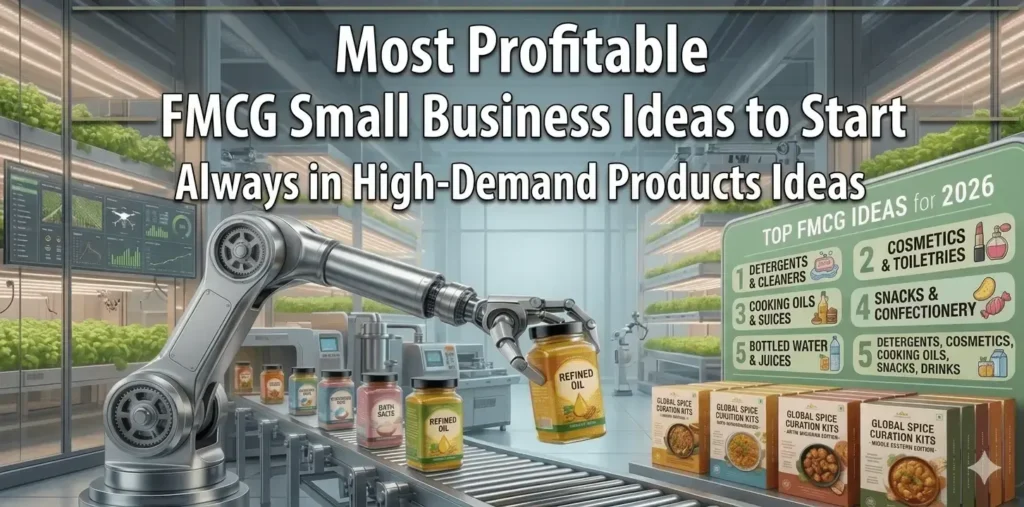
FMCG Small Business Ideas is the best choice of yours to start as it’s name itself speaks Fast-Moving Consumer Goods and it sells fast. Fast-Moving Consumer Goods (FMCG) products are essential, and always high demand products that people use regularly. This sector includes packaged foods, beverages, personal care items, and household goods. The demand for such products remains stable, regardless of economic conditions. As a result, starting a business in this sector offers promising returns, especially for entrepreneurs targeting rural and semi-urban areas. In 2026, with the rapid expansion of digital commerce and local manufacturing, many FMCG small business ideas can become profitable ventures with the right planning and strategy. With the right market entry strategy, many small business ideas can be scaled into highly profitable ventures. Let’s explore the top FMCG production opportunities primed for growth. See Also : Fevicol Type Adhesive Manufacturing Plant 15 Top Profitable FMCG Small Business Ideas for 2026 Let’s explore some of the most promising FMCG small business ideas that can help entrepreneurs build profitable ventures in the coming year. 1. Health-Conscious and Organic Food Products The post-pandemic trend for chemical-free, natural, and transparently sourced food is now a permanent market shift. Consumers are actively paying for a premium quality of Food Products. The demand for chemical-free, healthy, and organic food is growing steadily. Consumers are more conscious about what they eat and where it comes from. Launching a business that focuses on organic spices, pulses, grains, or ready-to-cook organic meals can generate consistent profits. You can source directly from farmers, build a brand, and sell through e-commerce platforms or your own store. By targeting health-conscious urban populations, your brand can earn customer trust quickly. 2. Herbal and Natural Personal Care Products India’s ancient tradition of Ayurveda and the global trend toward herbal solutions make this a profitable niche. Products like herbal soaps, shampoos, face packs, and oils are gaining popularity. You can manufacture these on a small scale using locally available herbs and oils. By focusing on quality and sustainable packaging, small businesses can tap into niche markets through online and offline retail channels. A well-branded FMCG small business ideas in this segment has strong potential to scale. 3. Packaged Snacks and Namkeen Indians love snacks, and the snacking habit is evolving rapidly. There is a growing demand for hygienically packed, innovative, and regional varieties of snacks. Starting a small-scale packaged namkeen or chips manufacturing unit requires moderate capital investment. You can experiment with millet-based snacks, baked chips, or low-oil varieties to attract the health-conscious audience. Attractive packaging and smart pricing can help your brand stand out in a competitive market. 4. Bottled Beverages – Flavored Water and Juices With rising temperatures and hectic lifestyles, ready-to-drink beverages are in high demand. Starting a small unit to produce natural fruit juices, flavored water, or health drinks is a viable option. Use locally available fruits and promote freshness and nutrition. You can sell through local grocery stores, vending machines, and food delivery platforms. This FMCG small business ideas works well when hygiene, taste, and convenience are combined effectively. 5. Homemade Pickles and Chutneys Traditional food items like pickles and chutneys are still in high demand, especially when made at home using authentic recipes. You can begin this business from your kitchen and gradually scale up. Use natural ingredients, attractive jars, and regional branding to connect with a wider audience. Offer variety such as mango, lime, mixed, and garlic pickles. With the right taste and packaging, even a small local brand can grow quickly in this FMCG category. 6. Detergents and Cleaning Products Household cleaning products like detergents, floor cleaners, and toilet cleaners are always in demand. This sector offers high-profit margins, and with proper formulations and licensing, you can launch your own brand. Focus on eco-friendly or skin-safe variants to attract health-conscious families. Low-cost packaging and regional distribution networks can help you build your brand quickly. It’s an excellent FMCG small business ideas for entrepreneurs in semi-urban or rural areas. 7. Bakery and Ready-to-Eat Packaged Food People prefer ready-to-eat items due to busy lifestyles. Starting a small bakery or packaged food brand that supplies bread, muffins, biscuits, or ready meals can be profitable. You can sell locally or tie up with cafes and supermarkets. Ensure your products have a good shelf life and proper food-grade packaging. Innovate with healthy ingredients like oats, millet, or multigrain. Customer satisfaction and consistent quality are key to long-term success in this space. 8. Personal Hygiene Products for Rural Markets There is rising awareness about hygiene in rural and semi-urban areas. Low-cost sanitary napkins, handwashes, and soaps are now reaching villages through government and NGO-led awareness campaigns. You can produce these products using basic machinery and distribute them through local retailers or health workers. It’s a scalable FMCG small business ideas with social impact as well as commercial potential. 9. Tea and Coffee Blends The tea and coffee market in India is evolving. Consumers want unique blends, flavored options, and premium packaging. You can launch a brand that offers artisanal tea, herbal infusions, or organic coffee blends. Begin with small batches and test your flavors in local markets. Use social media and influencers to grow brand awareness. Quality sourcing and aesthetic packaging will play a big role in making your brand successful. The Complete Book on Cultivation and Manufacture of Tea 10. Baby Care Products Parents today are more informed and willing to spend on safe and high-quality products for their children. Starting a line of baby care items like baby lotion, wipes, powders, and diapers can be lucrative. Focus on safety, dermatological testing, and natural ingredients. Since brand loyalty is high in this segment, you need strong branding and consistent quality to gain market share. 11. Pet Food and Grooming Essentials Pet ownership is rising, especially in urban regions. Starting a pet food brand or grooming products line like shampoos, wipes, or treats is a smart business idea. Use nutritional ingredients and highlight health benefits. Offer affordable pricing and
Particle Board (Wood Base) Manufacturing Plant Detailed Project Report
Particle board is a vital part of the furniture and construction industry. It offers a cost-effective and versatile solution for many applications. With the rising demand for sustainable and low-cost wood alternatives, starting a particle board manufacturing business can be a smart and profitable idea. Entrepreneurs seeking a scalable business model with growth potential should explore this sector in detail. See Also : NPCS Sep 2015 Market Scope and Future of Particle Board Manufacturing In India and globally, demand for particle boards has been steadily increasing. Urbanization and the surge in budget-friendly housing projects are driving this rise. Modern consumers prefer eco-friendly and affordable furniture, and this trend directly supports the growth of particle board manufacturing units. As the demand for engineered wood grows, opportunities for innovation and expansion multiply. The particle board is produced by compressing wood chips, sawdust, and resin under high pressure and heat. This technique not only utilizes wood waste efficiently but also reduces deforestation. With rising environmental awareness, both government and private sectors promote the use of engineered boards over traditional wood. See Also : Livestock & Poultry Feed Manufacturing Why Start Particle Board Manufacturing? There are several strong reasons to consider entering the particle board manufacturing industry: Low raw material cost: Most inputs like wood chips, shavings, and sawdust are by-products of other industries. High demand: Furniture, construction, and even packaging sectors use particle boards extensively. Sustainability: Particle board production promotes the recycling of wood waste. Government support: Policies now favor wood substitute industries due to their environmental benefits. All these factors contribute to making this a future-ready manufacturing business. Setting Up the Manufacturing Unit To establish a successful particle board manufacturing plant, several steps must be followed: 1. Market ResearchBegin by analyzing demand in your target region. Identify your potential clients—furniture companies, interior decorators, wholesalers, and construction contractors. Understand their needs and usage patterns. 2. Location SelectionChoose a location near wood-processing units or sawmills. This ensures easy and low-cost availability of raw materials. Also, ensure that the selected plot has ample space for factory setup, storage, and transport access. 3. Legal ComplianceObtain necessary licenses including a factory license, GST registration, pollution control board clearance, and trade license. Environmental clearances are critical due to the use of chemicals and emissions in the production process. 4. Machinery and EquipmentInvest in quality machinery for cutting, drying, mixing, pressing, and trimming. Key machines include a wood chipper, glue blender, hot press machine, and edge trimmer. Choose reliable suppliers and compare costs for the best returns. 5. Manpower RequirementSkilled and semi-skilled workers are required for smooth operations. Operators, machine technicians, supervisors, and quality control personnel are crucial for delivering a consistent product. 6. Raw Materials UsedThe main raw materials include: Wood shavings and chips Sawdust Urea-formaldehyde or melamine resin Wax and hardeners Quality raw material ensures better durability and finish of the final product. Production Process Overview The particle board manufacturing process is straightforward and systematic. It involves the following steps: 1. Material PreparationWood chips, sawdust, and shavings are cleaned and dried to reduce moisture content. Excess moisture affects board strength and quality. 2. Mixing with ResinThe dry wood particles are mixed with synthetic resin and other chemicals like hardeners and wax. Proper mixing is vital for the structural integrity of the board. 3. Forming and PressingThe resin-coated particles are spread in layers. These layers are then pressed under high temperature and pressure in hydraulic hot press machines. This forms a dense and durable sheet. 4. Cooling and TrimmingThe hot boards are cooled gradually to avoid warping. Edges are trimmed, and surface finishing is done as per specifications. 5. Sanding and FinishingFinal sanding is done to ensure smoothness. Some boards may receive laminates or veneers based on customer demand. 6. Quality Control and PackagingBoards are test for thickness, strength, and uniformity. Reject boards are reprocessed. Approve boards are pack for shipment. Cost Estimation and Profit Margins The initial investment in particle board manufacturing depends on the plant size and production capacity. A small to medium unit may require ?50 to ?80 lakhs. This covers machinery, land, construction, and working capital. Here’s a basic cost breakup: Land and building: ?20 lakhs (own/rent basis) Machinery: ?25 lakhs Raw material (monthly): ?8 lakhs Manpower (monthly): ?2 lakhs Miscellaneous: ?5 lakhs Selling boards at market rates ensures attractive margins. With efficient operations, profit margins range from 20% to 30%. A well-managed unit can break even within 2 to 3 years. Marketing and Sales Strategy Promotion plays a crucial role in the success of particle board manufacturing businesses. Use a mix of offline and online strategies: Collaborate with modular furniture manufacturers and plywood dealers. Offer samples and bulk discounts to wholesalers. List products on B2B portals like IndiaMART, TradeIndia, and Alibaba. Attend trade fairs and exhibitions for visibility. Launch a website with product catalogs and inquiry options. Customer service and quality control also act as indirect marketing tools. Happy clients bring referrals and repeat business. Environmental and Safety Guidelines Operating a particle board manufacturing plant requires responsibility toward the environment. Ensure proper waste management and emission control. Follow safety protocols to protect workers from exposure to chemicals and dust. Use eco-friendly resins wherever possible. Install air filtration units and ensure regular maintenance of equipment. Comply with environmental regulations to maintain your business reputation and avoid penalties. Scope for Expansion and Innovation Once the plant is operational and stable, you can explore additional income streams: Laminated Particle Boards: Add value by laminating with decorative sheets for furniture. Fire Retardant Boards: Manufacture boards with fire-resistant chemicals for commercial usage. Export Market: Many countries import particle boards from India due to quality and pricing advantages. Furniture Production: Start a downstream business to manufacture furniture using your own boards. Continual innovation in design, thickness, and application will help you lead the competition. See Also : Metal & Chemical Extraction Conclusion The particle board manufacturing business offers high potential with a manageable risk profile. As industries shift towards cost-effective and eco-friendly materials, particle boards continue to dominate. With proper planning,
IGCSE School (Nursery to Senior Secondary)
Education plays a vital role in shaping a child’s personality, thinking, and future. Parents today seek institutions that combine academic excellence with international standards. An IGCSE school offers exactly that—a globally accepted curriculum focused on comprehensive development from early years through Grade 12. With its flexible structure and subject choices, the IGCSE framework supports creativity, critical thinking, and cultural awareness. It prepares students not just for university, but for real-life challenges beyond classrooms. See Also : Mini Atta Chakki Plant Why Choose an IGCSE School for Your Child? An IGCSE school provides an enriching learning environment right from the nursery level to Grade 12. The curriculum, developed by the University of Cambridge, emphasizes intellectual growth through practical and application-based learning. It’s no surprise that more parents are turning to IGCSE institutions to help their children thrive academically and personally. From an early age, students are encouraged to explore and experiment with knowledge. The IGCSE syllabus fosters active learning, unlike traditional rote methods. Schools offer a variety of subjects, from science and math to arts and humanities, allowing students to customize their academic path. This flexibility helps them develop interests, understand strengths, and build strong foundational skills. Moreover, IGCSE students develop solid English language proficiency, mathematical reasoning, and scientific literacy. These core areas are vital for entrance into top universities and future careers in a globalized world. The structure of an IGCSE school is designed to adapt to each student’s pace and interest, promoting confidence and independence. A Nurturing Environment from Nursery to Grade 5 The journey begins at the nursery level, where emphasis is placed on motor skills, social interaction, and emotional intelligence. These early years are the most formative, and a good IGCSE school provides a safe, interactive, and inspiring space for children to grow. Teachers in IGCSE nurseries follow play-based methodologies, often using real-life examples to teach numbers, letters, and concepts. From Kindergarten through Grade 5, students gradually transition into structured academics. Language, basic science, arts, physical education, and foundational numeracy are integrated in fun and meaningful ways. In these primary years, IGCSE schools focus on developing reading habits, problem-solving skills, and ethical values. Importantly, children are not pressurized with exams or heavy homework. Instead, assessments are continuous, with a focus on improvement and feedback. This phase ensures that students enjoy learning, build curiosity, and stay motivated. Building Strong Academic Foundations in Middle School From Grades 6 to 8, the academic intensity increases, but so does the support. At this stage, an IGCSE school introduces more specialized subjects such as environmental management, global perspectives, and ICT (Information and Communication Technology). These subjects are taught using multimedia tools, lab experiments, group discussions, and project-based activities. Students also start getting familiar with research techniques, presentations, and collaborative tasks. Their ability to work in teams and express their opinions is honed. Many schools offer extra-curricular clubs like robotics, debate, and Model United Nations to broaden perspectives. Language and communication skills remain at the core of the curriculum. By the end of Grade 8, students are fluent in English and are able to analyze texts, write essays, and speak confidently in public. Mathematics becomes more logical and advanced, preparing students for the IGCSE board levels. The IGCSE Years – Grades 9 and 10 This is where the true strength of an IGCSE school becomes evident. In Grades 9 and 10, students select specific subjects based on their interests and career goals. They can choose from core subjects such as English, Mathematics, Physics, Chemistry, and Biology, along with options like Economics, Business Studies, History, Sociology, and Art & Design. The IGCSE exam pattern includes coursework, oral tests, practical assessments, and written exams. It prepares students for the demands of higher education by teaching them how to manage time, think analytically, and perform under pressure. Teachers guide students to set academic goals, create study plans, and track their progress. Every child receives personal mentoring and feedback that helps them improve continuously. The goal is not just to pass exams, but to master concepts and apply them. Moreover, many IGCSE schools have affiliations with international universities, offering exposure to global study programs. The certificate students earn at the end of Grade 10 is recognized worldwide and opens doors to higher education across the globe. Advanced Learning in Grades 11 and 12 After completing their IGCSEs, students progress to the A-Level curriculum (Grades 11 and 12), often offered in the same IGCSE school. This stage is considered pre-university and is more focused on depth of knowledge and academic specialization. Students pick 3 to 5 subjects and focus intensively on mastering them. For example, students interested in engineering may focus on Mathematics, Physics, and Computer Science. Those inclined toward business may take Economics, Accounting, and Business Studies. This focus helps students develop expertise in their chosen fields and prepares them well for university-level education. Additionally, most IGCSE schools encourage independent research projects, internships, and participation in academic competitions. Students also receive career counseling, university application support, and interview preparation. This holistic support ensures that graduates not only secure university admissions but also excel in their undergraduate courses. A robust alumni network, guest lectures, and industry partnerships further enhance learning. Teachers and Facilities – The Backbone of Quality Education One of the strongest advantages of an IGCSE school is its teaching staff. Faculty members are highly qualified, experienced, and trained in international pedagogy. They are not just subject experts but also skilled in child psychology, communication, and assessment techniques. Teachers constantly attend workshops and training programs to stay updated with modern education practices. They focus on nurturing curiosity rather than enforcing discipline. Every child is treated as unique, with tailored attention and motivation. Infrastructure also plays a big role. Most IGCSE schools boast world-class facilities—science labs, libraries, art studios, sports arenas, and innovation labs. Smart classrooms, robotics kits, and digital learning tools are standard, making learning immersive and fun. Moreover, safety and hygiene are strictly maintained. Schools follow international standards in health care, student support, and mental well-being.
Herbal and Ayurvedic Medicines
Herbal and Ayurvedic medicines are deeply rooted in nature’s wisdom and human tradition. These ancient healing systems use natural herbs, plant extracts, and time-tested practices to restore health and well-being. With growing interest in chemical-free remedies and holistic wellness, these treatments are gaining popularity across the globe. They offer not just physical healing but emotional and spiritual balance too. See Also : Phenolic Resins Manufacturing Understanding the Philosophy of Herbal and Ayurvedic Medicines The core principle behind herbal and Ayurvedic medicines is balance. Ayurveda, which originated in India over 5,000 years ago, teaches that health is achieved by maintaining harmony among the body’s energies — Vata, Pitta, and Kapha. Herbs, diet, yoga, and lifestyle adjustments are used to manage this balance and prevent disease. Herbal medicine, on the other hand, spans across cultures — from Traditional Chinese Medicine to Native American healing. It uses specific plant-based compounds to treat ailments, strengthen immunity, and support natural body functions. These remedies are created from leaves, roots, seeds, flowers, and bark — all parts of a plant. Unlike synthetic medicines that often target symptoms, herbal and Ayurvedic systems focus on root causes. They promote long-term wellness, not just temporary relief. Historical Significance and Global Rise Ayurveda is one of the oldest documented medical systems in the world. Texts like the Charaka Samhita and Sushruta Samhita describe thousands of herbal formulations still used today. These texts classify plants based on taste, energy, effects, and how they interact with the body. In modern times, people are returning to these natural remedies. Concerns about side effects, chemical overload, and antibiotic resistance have led many to adopt herbal and Ayurvedic medicines. Globally, countries like the USA, Germany, and Japan are promoting herbal supplements and treatments. Wellness spas, organic product companies, and natural pharmacies are driving this demand. Core Herbs Used in Ayurvedic and Herbal Practices Several herbs are at the heart of herbal and Ayurvedic medicines. Each plant offers specific healing benefits. Here are a few commonly used herbs and their effects: Ashwagandha: Reduces stress, improves energy, and boosts immunity. Turmeric (Haldi): Fights inflammation, promotes digestion, and supports joint health. Brahmi: Enhances memory, concentration, and overall brain health. Neem: Purifies blood, fights infections, and supports skin health. Tulsi (Holy Basil): Boosts immunity, combats respiratory issues, and reduces oxidative stress. Triphala: A blend of three fruits that helps digestion, detoxification, and regular bowel movement. Guggul: Used to manage cholesterol, obesity, and arthritis. Herbs in these systems are often combined in formulations to create synergistic effects. This multi-herb approach reduces side effects and enhances overall efficacy. Methods of Preparation and Usage Herbal and Ayurvedic medicines are prepared using several traditional methods. These include decoctions, powders, tinctures, pastes, oils, and tablets. Some popular preparations are: Kashayam: Water-based decoctions taken for digestion, fever, and respiratory issues. Churnas: Herbal powders used internally or externally for various ailments. Arishtams and Asavas: Fermented liquids that act as tonics for different systems. Tailams: Medicated oils for massages, particularly in joint pains and nervous disorders. Usage is often tailored according to a person’s body constitution (Prakriti) and current imbalance (Vikriti). A qualified Ayurvedic practitioner designs treatments based on pulse diagnosis, symptoms, and lifestyle. Benefits of Herbal and Ayurvedic Medicines One of the main advantages of herbal and Ayurvedic medicines is the lack of harmful side effects when used correctly. Here are some key benefits that make them a trusted form of healing: Holistic Healing: Focuses on the root cause, not just the symptoms. Personalized Approach: Treatments are tailored to an individual’s body type, environment, and lifestyle. Sustainable and Natural: Sourced from nature, these medicines are eco-friendly and bio-compatible. Chronic Condition Support: Effective in managing long-term conditions like arthritis, asthma, diabetes, and insomnia. Improved Immunity: Most herbs act as adaptogens and immunity boosters. Affordable and Accessible: Herbs can often be grown at home or sourced locally at low cost. By adopting herbal and Ayurvedic systems, people can avoid dependency on modern medications for minor health concerns. Instead, they develop long-term vitality and resilience. Safety, Regulation, and Precautions While the benefits are numerous, it is important to follow safety guidelines while using herbal and Ayurvedic medicines. Overuse or incorrect usage can lead to complications. Consumers should: Consult Qualified Practitioners: Self-medication can be risky, especially with chronic diseases or existing prescriptions. Verify Product Quality: Always choose certified and well-reviewed brands that follow good manufacturing practices. Understand Herb Interactions: Some herbs may interfere with modern drugs, such as blood thinners or anti-diabetic medications. Monitor Dosages: Natural doesn’t always mean safe in all amounts. Correct dosage is key. Avoid During Pregnancy Without Advice: Pregnant or breastfeeding women should take herbs only under expert guidance. Government bodies like AYUSH (India), FDA (USA), and EMA (Europe) are working to standardize and regulate herbal medicines. Efforts are being made to improve transparency, labeling, and safety research. Integrating Ayurveda in Modern Lifestyles Incorporating herbal and Ayurvedic medicines into daily life doesn’t always require major changes. You can start with simple, consistent habits. Drink turmeric milk or ginger tea to support digestion and immunity. Use Triphala at night for gentle detox and bowel regulation. Practice oil pulling and Abhyanga (oil massage) for oral and skin health. Include herbs like Tulsi and Brahmi in teas or supplements to improve focus and reduce stress. Follow seasonal detox plans like Panchakarma under professional supervision. These daily rituals help maintain balance and prevent the onset of disease. They also reduce dependence on synthetic drugs and enhance the body’s self-healing abilities. Role of Diet and Lifestyle in Ayurvedic Healing In Ayurveda, food is considered medicine. Eating right is central to the success of any treatment. Depending on your body type, certain foods may be beneficial or harmful. For instance: Vata types benefit from warm, moist, and grounding foods. Pitta types need cooling, less spicy meals with more vegetables. Kapha types thrive on light, warm, and spicy foods. Ayurveda recommends eating seasonal, freshly cooked meals and avoiding processed foods. Alongside diet, lifestyle choices like adequate sleep, physical activity, stress reduction, and mindful
How to Manufacture Paints Varnishes and Lacquers
The demand for decorative and protective coatings is constantly rising across residential, commercial, and industrial sectors. Among these, Paints and Lacquers have established themselves as indispensable materials due to their protective, aesthetic, and functional properties. These products not only enhance appearance but also provide long-term durability against environmental effects. To meet the growing market demand, manufacturers must understand the detailed production steps and choose high-quality raw materials. See Also : Pharmaceutical Bulk Drugs Understanding the Manufacturing Process of Paints and Lacquers Before diving into the steps, it is important to differentiate between paints and lacquers. Paints are pigmented liquids that form a solid film after drying, while lacquers dry mainly through solvent evaporation, resulting in a hard, smooth, and glossy finish. Though they serve slightly different purposes, the fundamental manufacturing process for both involves a structured and technical approach. Selection and Preparation of Raw Materials Raw material selection is the foundation of quality in Paints and Lacquers. The key ingredients include pigments, resins, solvents, and additives. Pigments provide color and opacity, resins form the film, solvents adjust viscosity, and additives enhance performance. Manufacturers first test the raw materials for compatibility and quality. Impurities must be filtered, and solids must be properly ground to avoid uneven texture. Quality control at this stage prevents future issues in application or durability. Transitioning from material preparation, the next phase involves creating a homogeneous mixture by dispersing the solid components into the liquid base. Dispersion and Mixing Stage Proper dispersion ensures even distribution of pigments throughout the liquid medium. This step typically involves high-speed mixers, sand mills, or ball mills. The goal is to break down pigment clusters into fine particles and ensure uniform mixing. During this stage, the resin and solvents are added in a specific ratio. The mixing process is monitored closely, and viscosity is adjusted to meet the desired application properties. In Paints and Lacquers, achieving proper dispersion is crucial for color consistency, gloss level, and film strength. Once the mixture reaches optimal consistency, it moves to the next critical phase—milling. Milling and Grinding Process Milling helps achieve a uniform particle size and enhances paint stability. The mixture is passed through bead mills or triple roll mills, where grinding beads reduce particle size. This process improves pigment dispersion and gives a smooth texture to the final product. Grinding continues until the paint achieves required fineness and flow properties. Testing is done using grind gauges to ensure uniformity. For lacquers, extra care is taken to maintain clarity and glossiness, which are key performance attributes. After milling, the product is transferred to a storage tank for the thinning and let-down process. Let-down and Adjustment Phase In this step, furthermore, additional solvents, plasticizers, and additives are introduced to adjust the paint’s flow and finish. Consequently, the let-down process balances viscosity, flow rate, drying time, and surface finish. At this stage, custom formulations are carefully fine-tuned depending on the final application. Therefore, this step plays a crucial role in ensuring the paint meets specific performance standards. Whether you’re manufacturing wood coatings, industrial protective paints, or decorative wall finishes, this step ensures Paints and Lacquers meet user expectations. Additional agents like defoamers or UV stabilizers are also added based on the final product’s application. At this stage, the paint or lacquer is technically complete and ready for quality checks before packaging. Filtration and Quality Control Checks Filtration removes large particles and ensures a smooth consistency. For lacquers especially, this step is essential to maintain transparency and a glossy finish. Filtration units such as mesh filters or magnetic separators help remove contaminants and metallic particles. After filtration, multiple quality control tests are conducted. These include: Viscosity testing using viscometers Color consistency checks with spectrophotometers Drying time tests using drying racks or chambers Gloss and sheen measurement Adhesion and durability tests Only after meeting quality standards are the products cleared for packaging. Regular inspections reduce customer complaints and increase brand reliability. Packaging and Labeling Proper packaging ensures that Paints and Lacquers remain stable during storage and transport. The product is filled into containers of varying sizes—ranging from small tins to large drums—depending on customer needs. Cans are sealed using automated machines, and anti-leak measures are applied. Each container is labeled with product information, safety warnings, usage instructions, and batch numbers. Regulatory compliance and eco-labeling are also important, especially when exporting to countries with strict environmental norms. Packaging plays a crucial role in marketing as well. An attractive design and clearly printed label build trust with buyers and make your product stand out. Environmental Considerations and Waste Management Manufacturers must manage waste generated from solvents, pigments, and other chemicals. Therefore, treatment plants are installed to neutralize harmful substances before disposal. In addition, recovery units are used to reclaim solvents and reduce emissions. In recent years, eco-friendly Paints and Lacquers—such as water-based or low-VOC variants—have gained popularity. These days, these products reduce air pollution and meet green building requirements. Consequently, manufacturers investing in sustainable solutions also benefit from incentives and improved brand image. Latest Trends in Paints and Lacquers Manufacturing The industry is rapidly evolving with the help of technology and innovation. Some recent trends include: Nano-pigments for better durability and color brightness Smart coatings that react to temperature or light Self-healing paints for automotive and aerospace sectors Bio-based resins to reduce dependency on petrochemicals Digital color matching tools for faster and accurate color production These advancements make manufacturing more efficient and create new product categories that appeal to modern consumers. Challenges Faced in the Manufacturing Process Despite technological progress, certain challenges persist: Fluctuating raw material costs impact profit margins Strict environmental regulations require constant updates to production practices Skilled labor shortage affects quality consistency High competition in the market pushes brands to innovate continuously To overcome these issues, companies must invest in R&D, adopt automation, and train workers regularly. Also, establishing a strong supplier network helps stabilize material costs. See Also : NPCS March 2016 Final Thoughts The step-by-step process of manufacturing paints and lacquers demands precision, quality control, and a
Corn Flakes Manufacturing Plant Detailed Project Report
Corn flakes have become one of the most popular breakfast options across the globe. With rising health awareness, the demand for nutritious and ready-to-eat food items like corn flakes continues to grow. Establishing a Corn Flakes Manufacturing Plant is a profitable venture that combines food technology with efficient business planning. This guide explores all crucial aspects needed to start and run a successful manufacturing unit. Understanding the Corn Flakes Manufacturing Process To build a successful Corn Flakes Manufacturing Plant, understanding the process flow is essential. The basic manufacturing of corn flakes involves several steps starting from raw corn cleaning to final packaging. It begins with sourcing high-quality maize, which is then cleaned and conditioned for flaking. The grains are cooked under controlled steam pressure and dried to the required moisture level. Once dried, they are rolled into flakes, toasted until crispy, and then cooled. After that, sugar or other flavoring agents may be sprayed before final packaging. Each stage in the process must follow strict hygiene and quality controls. Any deviation can affect the shelf life and taste of the product. Therefore, investing in semi-automated or fully automated machines helps maintain consistency and improves overall productivity. See Also : Baby Diaper & Sanitary Napkins Market Potential and Business Scope The growing urban lifestyle and fast-paced routines have created a strong demand for ready-to-eat breakfast options. This has led to an increased consumption of corn flakes in households, hotels, hospitals, and even in airlines. As a result, the Corn Flakes Manufacturing Plant has immense potential in both domestic and export markets. Moreover, health trends like gluten-free diets and low-fat consumption have encouraged producers to launch new variants. Adding value with ingredients like honey, nuts, or vitamins can widen your customer base. Tapping into niche markets with health-conscious variants can ensure consistent growth for your brand. Location and Infrastructure Choosing the right location plays a critical role in the success of your plant. Proximity to raw materials, easy transportation access, and availability of utilities like water and electricity should be your top priorities. The Corn Flakes Manufacturing Plant should be set up in an industrial zone approved by the local government. You will need a minimum of 2,000 to 5,000 square feet of area to start with small-scale production. The building must be divided into separate sections for raw material storage, processing area, packaging unit, and finished goods warehouse. Maintaining hygiene and safety standards in all zones is mandatory. Proper drainage, ventilation, and fire safety mechanisms must also be incorporated during the plant design phase. Machinery and Equipment Required The machinery used in the production process should be food-grade certified and capable of operating for extended hours. Key equipment for a Corn Flakes Manufacturing Plant includes: Maize cleaner and destoner Cooking unit (pressure steam cooker) Flaking rollers Roasting/toasting oven Dryer and cooling system Sugar coating machine (optional) Packaging machines (vertical or horizontal form-fill-seal machines) Investing in semi-automated lines reduces labor costs and enhances efficiency. For large-scale operations, fully automated machines are advisable. Always choose machinery from reliable manufacturers that offer warranty, after-sales service, and training support. Raw Materials and Ingredients The primary raw material for corn flakes is maize. It must be of superior grade and free from impurities. Other ingredients include sugar, salt, malt extract, vitamins, and flavoring agents. If you plan to introduce flavored or fortified corn flakes, additional ingredients like cocoa, honey, dried fruits, or edible oils may be required. Make sure all raw materials meet FSSAI and food safety regulations. Establish long-term contracts with trustworthy suppliers to ensure timely availability and price stability. Manpower and Staffing A small to medium Corn Flakes Manufacturing Plant typically needs 10–15 workers. These include machine operators, helpers, technicians, quality control personnel, and packaging staff. As your operations grow, more skilled professionals will be needed in departments like production planning, procurement, logistics, marketing, and finance. Conduct regular training programs to keep your staff updated with the latest production methods and safety protocols. Productivity and product quality improve significantly with a trained and motivated workforce. Licenses and Regulatory Approvals Before commencing production, you must obtain several legal licenses and registrations. These include: Company registration (as LLP, Pvt. Ltd., or Proprietorship) FSSAI food license Factory license Pollution control board clearance GST registration Trade license from the local municipal authority Fire safety certification Trademark registration (for your brand name) Compliance with food safety laws ensures smooth functioning and builds trust among customers and distributors. Financial Investment and Cost Structure The capital required to start a Corn Flakes Manufacturing Plant depends on the production capacity and scale of operations. A small-scale unit can be started with ?25–?40 lakhs, while a medium-sized plant may need ?75 lakhs or more. Here’s a basic cost breakdown: Land and building lease or construction: ?10–?15 lakhs Machinery and equipment: ?20–?30 lakhs Raw materials and ingredients: ?5–?10 lakhs Staff wages and training: ?2–?5 lakhs Marketing and branding: ?2–?5 lakhs Licensing, consultancy, and contingencies: ?5 lakhs You can also explore MSME loans, startup funding, or government subsidies to reduce the financial burden. Proper budgeting and cost control practices are crucial for long-term profitability. Packaging and Distribution Attractive packaging adds great value to any food product. Corn flakes should be packed in moisture-proof, hygienic materials that preserve crispiness and flavor. Common packaging formats include laminated pouches, plastic boxes, and cartons with inner foil wrapping. Labeling must mention nutritional facts, manufacturing and expiry dates, batch numbers, and usage instructions. The Corn Flakes Manufacturing Plant must have efficient logistics to ensure timely delivery to retailers, wholesalers, supermarkets, and online platforms. You can also collaborate with large retailers, schools, or airlines for bulk supply contracts. E-commerce platforms like Amazon or BigBasket offer a wide audience for packaged food products. Marketing and Branding Strategies For a new corn flakes brand to succeed, marketing is just as important as manufacturing. Build your brand identity with a memorable name, attractive logo, and value-driven message. Launch your product with free samples or discounts to gain initial customer feedback. Digital marketing, influencer tie-ups,
Bread Plant Manufacturing Plant Detailed Project Report
The food processing industry is undergoing a rapid transformation driven by evolving consumer preferences, technological advancements, and increasing demand for convenience foods. Among various sectors, the bakery segment stands out as one of the fastest-growing categories, particularly due to the rise in urban consumption patterns. One of the crucial components of this industry is the Semi-Automatic Bread Plant, which serves as a perfect bridge between traditional manual methods and high-capacity fully automatic plants. These semi-automated units offer flexibility, affordability, and sufficient output to cater to medium-sized markets. See Also : AAC Blocks Manufacturing Understanding the Semi-Automatic Bread Plant Market A Semi-Automatic Bread Plant typically includes machinery that handles dough mixing, fermentation, moulding, baking, and packaging with partial human intervention. Unlike manual setups, semi-automatic plants enhance productivity while keeping operational costs in check. This makes them ideal for growing bakeries, startups, and regional bread manufacturers aiming to scale their output. The bread market in India and globally is expanding steadily. Urbanization, changing food habits, and a preference for ready-to-eat products drive this demand. White bread, brown bread, multigrain variants, and specialty loaves are common products produced in such facilities. These plants can produce thousands of loaves per day, depending on their capacity and configuration. The semi-automatic segment, in particular, is booming because it offers a lower capital investment compared to fully automated setups. Furthermore, it allows easy customization, which is highly suitable for local tastes and innovation. This is especially relevant in countries with diverse food preferences and smaller cities that lack large-scale production facilities. Key Components of a Semi-Automatic Bread Plant To operate a Semi-Automatic Bread Plant efficiently, it’s vital to have the right combination of equipment. Typically, the plant comprises the following: Dough Mixer: Prepares the dough with consistent texture and hydration. Dough Divider & Rounder: Divides dough into uniform portions to ensure size consistency. Intermediate Proofer: Allows the dough to rest and develop gluten for proper rise. Moulder: Shapes the dough into loaf forms. Final Proofer: Supports fermentation before baking. Tunnel Oven or Rotary Rack Oven: Bakes the bread at controlled temperatures. Cooling Conveyor: Cools down loaves before packing. Slicer & Packing Machine: Cuts bread into uniform slices and seals them hygienically. Each machine can be adjusted manually or through semi-automatic controls, allowing human supervision and control over quality. Market Trends Driving Growth Several trends contribute to the rising demand for Semi-Automatic Bread Plants. The foremost is the increasing preference for locally produced, fresh bread. Consumers often trust regional bakeries for quality and taste, which fuels demand for medium-sized production units. Second, there is an evident shift toward health-conscious options. Multigrain, gluten-free, and fortified breads are gaining traction. Semi-automatic systems allow easier recipe customization compared to rigid, fully automatic lines, helping bakers cater to this niche. Third, regulatory bodies emphasize food safety and hygiene. As a result, many small bakeries upgrade their facilities to semi-automated units to comply with standards. This not only improves safety but also enhances shelf life and quality consistency. Fourth, cost and energy efficiency are vital considerations. A Semi-Automatic Bread Plant consumes less energy than large-scale setups and reduces labor dependency, making operations more sustainable. Lastly, e-commerce and home delivery services have boosted demand for packaged bakery products. This has encouraged even home-grown brands and entrepreneurs to invest in semi-automated solutions for consistent quality and volume. Benefits of Setting Up a Semi-Automatic Bread Plant Investing in a Semi-Automatic Bread Plant offers several benefits for business owners: Scalability: The plant can be expanded as demand grows without major restructuring. Cost-Effective: The initial investment is significantly lower than fully automated systems. Customization: Recipes, packaging, and portion sizes can be modified easily to meet local demand. Employment Generation: Although partially automated, these plants still create jobs for skilled workers. Faster ROI: With proper distribution and branding, businesses can recover investment within a few years. Compliance Ready: Modern machinery meets food safety standards and enhances credibility in the market. Challenges to Consider While the advantages are considerable, operating a Semi-Automatic Bread Plant does come with challenges. Managing skilled manpower is essential since human oversight is necessary during critical processes like dough preparation and baking. Maintenance of machinery also requires regular technical support to prevent downtimes. Another challenge is managing raw material quality. Inconsistent flour or yeast can drastically affect bread texture and taste. Therefore, working with reliable suppliers is crucial. Moreover, maintaining hygiene standards at each stage, especially in packaging, demands strict SOPs. Fluctuating demand patterns and changing consumer preferences can impact profitability. Hence, businesses must remain agile, monitor trends, and adapt quickly. Investment and Setup Costs Setting up a Semi-Automatic Bread Plant involves several cost components. These include land and building, machinery, labor, utilities, and licenses. A small to medium-sized plant with a daily capacity of 2,000–5,000 loaves can cost around INR 30–50 lakhs, depending on the level of automation and brand of machinery used. Here’s a basic cost breakdown: Machinery and Equipment: ?20–30 lakhs Installation and Setup: ?2–5 lakhs Utilities and Infrastructure: ?5–10 lakhs Working Capital (for 3–6 months): ?5–10 lakhs Miscellaneous and Licenses: ?2–3 lakhs While government subsidies and MSME schemes may support such ventures, it is advisable to create a solid business plan before investment. Licensing and Regulatory Requirements Operating a Semi-Automatic Bread Plant requires compliance with food safety and industrial regulations. Key licenses and certifications include: FSSAI Registration (mandatory for food businesses) Factory License from local authorities Fire Safety Certificate Pollution Control Board NOC GST Registration BIS certification (optional but adds value) Ensuring compliance builds trust with consumers and helps in marketing the products as safe and standardized. Marketing and Distribution Strategy Marketing plays a vital role in the success of a bread manufacturing business. A well-branded Semi-Automatic Bread Plant can sell its products through local grocery stores, supermarkets, institutional clients, and online delivery platforms. Building partnerships with retailers, offering product samples, and utilizing social media for branding are effective strategies. Additionally, introducing seasonal flavors, promotional pricing, and customer feedback mechanisms will help the business gain traction. Packaging also adds value—eco-friendly, attractive, and