
How to Start Onion Powder Manufacturing Business Setup in India
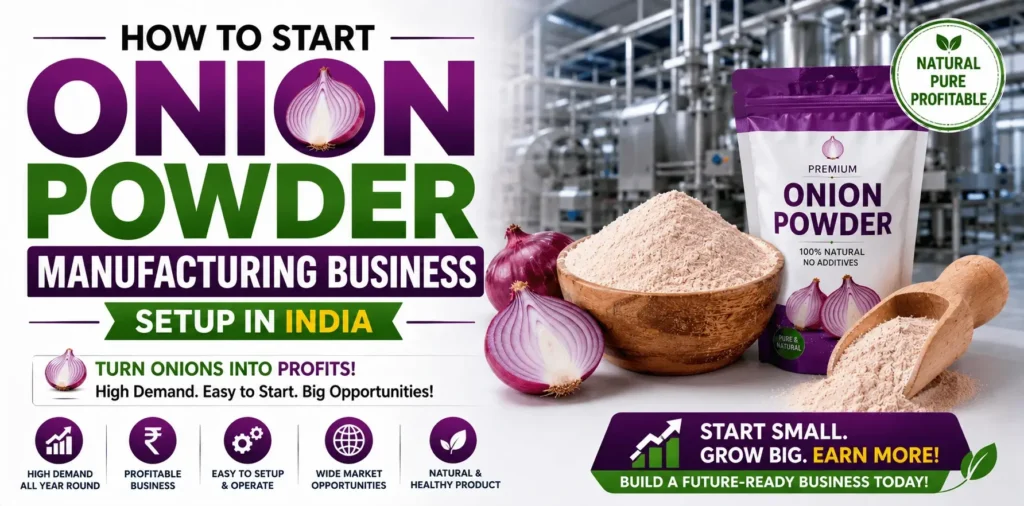
What is Onion Powder Manufacturing? Onion powder manufacturing is a food processing business that converts fresh onions into dehydrated powder through cleaning, slicing, drying, grinding, and packaging processes for seasoning and food industry applications. Onion powder is a widely used seasoning, it adds strong flavor and aroma to dishes and is essential in many food processing industries. With growing demand from fast food chains, restaurants, and households, the onion powder manufacturing business has emerged as a lucrative opportunity for entrepreneurs. This venture is particularly attractive due to the availability of raw materials, simple processing methods, and increasing consumption in domestic and international markets. Why Onion Powder Manufacturing Business is Profitable The onion powder manufacturing business is gaining popularity due to: Rising demand from food processing industries Growing fast-food market Export opportunities Long shelf life compared to fresh onions High value addition Easy storage and transportation Profit margins in onion powder manufacturing can range between 30%–40% depending on raw material sourcing, drying efficiency, and market positioning. Onion Powder Manufacturing Plant Cost in India Small-Scale Onion Powder Unit ₹10 lakh – ₹20 lakh investment Medium-Scale Manufacturing Plant ₹30 lakh – ₹60 lakh investment Major Cost Areas Drying machinery Pulverizer Packaging machines Raw onions Factory setup Labor Electricity Onion Powder Manufacturing Business Plan Include: raw material sourcing machinery setup drying technology packaging distribution export opportunities ROI breakeven Understanding the Onion Powder Manufacturing Process The process of onion powder manufacturing involves several carefully controlled steps to retain the flavor and nutritional quality of onions. It includes procurement, sorting, washing, slicing, drying, grinding, and packaging. Each phase plays a crucial role in ensuring the final product meets market standards. See Also: How to Manufacture Fruit Juice 1. Raw Material Procurement The first step in onion powder manufacturing is sourcing high-quality fresh onions. Medium-sized, white or red onions with low moisture content are ideal. Local markets, contract farming, or direct purchase from farmers can be good sources of supply. Seasonal availability and storage conditions significantly affect production planning. It’s important to ensure a consistent supply chain to maintain year-round operations. 2. Cleaning and Sorting After procurement, the onions are thoroughly cleaned to remove soil, dust, pesticides, and other foreign particles. Mechanical washers or water jets are commonly used for this purpose. Once cleaned, the onions are sorted manually or with grading machines based on size and quality. Spoiled or infected onions are discarded to avoid contamination during processing. 3. Peeling and Slicing The next step in onion powder manufacturing is peeling. Manual or automatic peeling machines can be used, depending on the production scale. After peeling, onions are sliced into uniform thin layers, usually between 2 mm to 5 mm. Uniform slicing is essential for even drying and better quality powder. Some units may also use blanching methods to enhance color retention and microbial safety. 4. Drying/dehydration Process Drying is the most critical part of onion powder manufacturing. The objective is to reduce moisture content to below 5%, which helps in long shelf life. Various drying techniques are used, including: Sun Drying (for small-scale units): Economical but slow and weather-dependent. Mechanical Tray Dryers: Commonly used in medium-scale production. Drying temperature ranges between 55°C to 65°C. Fluidized Bed Dryers or Vacuum Dryers: Used in advanced facilities for higher efficiency and better quality control. Proper drying ensures that the final product is free from microbial growth and retains strong flavor and aroma. 5. Grinding and Milling Once dried, the onion slices are transferred to grinders or pulverizers. This converts the dehydrated flakes into fine powder. The grinding process should be done in an environment that prevents moisture absorption. Mesh size can vary depending on the end-use; finer powders are preferred for seasoning and food mixes, while coarser granules may be used in soups or snacks. 6. Sieving and Quality Testing The ground onion powder is passed through sieves to ensure uniformity in particle size. Quality testing for microbial load, moisture content, and flavor is essential before packaging. Tests are conducted in laboratories to meet FSSAI, ISO, or HACCP standards, especially if the product is for export. 7. Packaging and Storage Packaging is vital in onion powder manufacturing to ensure product safety and extended shelf life. The powder should be packed in moisture-proof, air-tight, food-grade bags or pouches. Common packaging materials include laminated pouches, aluminum foil packs, and HDPE containers. Labels must include product name, weight, ingredients, batch number, manufacturing and expiry dates, and certifications. Store in a cool, dry place away from sunlight to prevent caking and spoilage. See Also: Start Sugarcane Juice Preservation & Bottling Plant Onion Powder Manufacturing Machine & Equipment A typical onion powder manufacturing unit includes the following machinery: Onion washer Peeling machine Slicing machine Tray or conveyor dryer Pulverizer/grinder Sieving machine Packaging machine Weighing scale Sealing machine Optional equipment includes elevators, storage bins, and quality testing instruments. Small-scale units may start with manual methods, while larger facilities require automated or semi-automated setups for efficiency. Investment and Profit Margin The investment required for onion powder manufacturing varies based on production capacity. For a small-scale unit, the setup may cost ?10 lakhs to ?20 lakhs, including equipment, infrastructure, and initial working capital. Medium and large-scale plants can require upwards of ?50 lakhs. Government subsidies under MSME or food processing schemes can reduce initial investment burdens. Profit margins in this business are quite attractive. The cost of raw onions is relatively low, and value addition through dehydration and packaging can increase the selling price significantly. A well-run unit can achieve 30%–40% gross profit, depending on the quality, brand positioning, and distribution network. Marketing and Distribution Channels Effective marketing strategies are key to success in the onion powder manufacturing business. Here are some common channels: B2B sales: Supply to food processing companies, spice manufacturers, and restaurants. Retail outlets: Packaging smaller units for direct sale in grocery stores and supermarkets. Online marketplaces: Selling through Amazon, Flipkart, BigBasket, etc. under a private label. Exports: Huge potential in countries like the USA, UAE, UK, and Canada where Indian spices
Top Most Profitable Agriculture Business Ideas in India
India, with its vast arable land, favorable climate, and centuries-old farming traditions, continues to be one of the most agriculturally rich countries in the world. With rising demand for organic products, processed foods, and sustainable farming techniques, 2025 offers several profitable opportunities for budding entrepreneurs. Agriculture is no longer limited to traditional crop farming—today’s agri-sector integrates technology, exports, and value-added services. This article explores some of the most promising agriculture business ideas in India that can bring high returns with low-to-moderate investment. Best Agriculture Business Ideas in India for 2025 Whether you are from a rural area, own ancestral farmland, or are simply passionate about the sector, these business ideas can help you capitalize on India’s agricultural boom. 1. Organic Farming Business Organic farming is gaining momentum as consumers shift towards chemical-free, natural produce. Entrepreneurs can begin on a small scale using vermicomposting and bio-fertilizers to cultivate vegetables, fruits, and pulses. With government subsidies and certification schemes, the startup cost can be reduced. The key to success lies in marketing your organic produce through online platforms, local farmer markets, or tie-ups with organic stores. Why it works: Growing demand in urban centers Premium pricing Support from the National Programme for Organic Production (NPOP) 2. Mushroom Farming Mushroom cultivation is one of the most lucrative agriculture business ideas in India due to its low startup cost and high market demand. Oyster, button, and shiitake mushrooms can be grown in climate-controlled environments using agricultural waste as substrate. A single room of 20×20 feet can yield good monthly profits if managed efficiently. Pro Tip: Attend a short-term training course from an agricultural university before starting to understand environmental control, contamination, and harvest management. 3. Dairy Farming India is the world’s largest milk producer, making dairy farming a traditionally profitable venture. The business involves rearing cows or buffaloes and selling milk, curd, paneer, or even ghee. With rising health consciousness, demand for A2 milk and organic dairy products is growing. Investment Range: ?3–10 lakhsKey Requirements: Land, shed, fodder supply, and veterinary care To stand out in the competitive market, focus on branding and home delivery models in urban zones. 4. Bee Keeping and Honey Production With minimal capital investment, beekeeping can become a profitable side-business or full-time venture. India’s diverse flora helps in producing multiple types of honey like eucalyptus, mustard, and wild forest honey. The government promotes this business under the “Sweet Revolution” program. Why choose it? Export potential Year-round income By-products like beeswax can also be sold Beekeeping works well alongside crops like mustard and sunflower, which helps in pollination and increases crop yield as a bonus. 5. Agro-Processing Units Processing raw farm produce into consumer products adds great value. Small-scale processing of items like tomato ketchup, mango pulp, spice powders, pickles, or papad can yield high returns. This business is scalable and can start at home with basic machinery. Examples of profitable agro-processing: Rice and flour mills Cold-pressed oil units Fruit drying and packaging Ready-to-cook food kits This is one of the more industrial agriculture business ideas in India, ideal for those who want to mix manufacturing with farming. See Also: Earn Profits from Rice Husk Ash 6. Polyhouse or Greenhouse Farming Growing high-value crops like strawberries, cherry tomatoes, or unfamiliar herbs in controlled environments is an emerging trend. Polyhouse farming ensures protection from pests, climate variations, and allows round-the-year production. Advantages: High yield from smaller land area Efficient water and fertilizer use Crop cycles can be shortened Initial investment is higher than traditional farming, but returns are significantly better due to higher prices of unfamiliar crops. 7. Plant Nursery Business A nursery that supplies fruit saplings, decorative plants, medicinal herbs, and vegetable seedlings can be a profitable venture, especially in peri-urban areas. With the growth in landscaping, home gardening, and organic terrace gardens, demand for healthy plant saplings is increasing. What you need: Shaded area Knowledge of propagation Marketing network with nurseries or retail outlets You can also start a B2B nursery supplying to corporate parks, real estate developers, or government landscaping projects. 8. Fish Farming / Aquaculture As meat prices soar and health consciousness rises, demand for protein-rich fish like Rohu, Catla, and Tilapia is surging. Aquaculture can be practiced in ponds, tanks, or even indoor systems with biofloc technology. States like Andhra Pradesh, West Bengal, and Odisha have flourishing fish farming ecosystems. Start-up Essentials: Water source Feed management Disease control This is one of the fastest-growing agriculture business ideas in India, supported by government schemes like Pradhan Mantri Matsya Sampada Yojana (PMMSY). 9. Hydroponics and Vertical Farming Hydroponics is a soil-less method where plants are grown using nutrient-rich water. It’s ideal for urban entrepreneurs with limited space. Though high-tech and capital-intensive, it allows control over nutrient levels, minimizes pests, and ensures faster growth. Popular crops: Lettuce, kale, spinach, mint, and basilMarket: Gourmet restaurants, online fresh produce platforms, high-end grocery stores This futuristic method is still evolving but has the potential to reshape agriculture business ideas in India for cities and smart towns. 10. Livestock Feed Production With the increase in dairy, poultry, and fish farming, there is a booming market for nutritious and affordable livestock feed. Entrepreneurs can manufacture feed from crop residues, grains, and additives. This business not only supports the agri-ecosystem but also generates consistent demand year-round. Opportunities include: Poultry feed Cattle fodder Fish feed pellets Adding fortification or herbal supplements can further boost sales. 11. Export-Oriented Farming India’s spices, basmati rice, herbs, and tea have strong global demand. Export-oriented farming focuses on cultivating produce that meets international standards and has steady overseas buyers. Farmers can collaborate with export agencies or participate in contract farming. Top export crops: Turmeric Ginger Medicinal herbs like ashwagandha and tulsi High-aroma basmati rice Certifications like APEDA registration and HACCP compliance are necessary for this route. 12. Custom Hiring Centers (CHC) Not all farmers can afford tractors or harvesters. A CHC provides rental services for modern agricultural machinery like rotavators, seed drills, threshers, and drones for pesticide spraying. This business
How to Start a Dairy Milk Plant.
India, the world’s largest producer and consumer of milk, presents a golden opportunity for entrepreneurs looking to venture into the dairy sector. With increasing urban demand for milk and value-added dairy products, starting a dairy business in India can be both lucrative and sustainable. Whether you want to focus on milk production, processing, or value-added product manufacturing, the dairy sector is ripe with potential. This article explores how to start a dairy business in India, including insights into milk processing, product diversification, investment planning, and government support. How to Start a Dairy Business in India Starting a dairy business in India involves several key steps, from selecting the right breed of cattle to setting up milk processing facilities and marketing your final products. Here’s a step-by-step guide to help you build a profitable dairy enterprise. See Also: Want to Start a Business in Karnataka Step 1: Research and Planning Before investing, conduct detailed market research. Understand the demand for milk and dairy products in your target region. Evaluate competition, pricing, customer preferences, and product trends. Planning includes identifying your business model—whether you will be a dairy farmer, milk collector, or product manufacturer. Make sure to finalize the size of your herd, type of processing unit, expected daily output, and logistics. A small-scale dairy unit may start with 10 to 20 cows or buffaloes, while medium and large-scale units require larger herds and advanced infrastructure. Step 2: Choose the Right Cattle Breed selection directly impacts milk yield, quality, and cost-efficiency. Popular high-yielding breeds in India include: Cows: Gir, Sahiwal, Red Sindhi, Jersey, and Holstein Friesian (HF). Buffaloes: Murrah, Jaffarabadi, Mehsana. Ensure animals are vaccinated, disease-free, and housed in hygienic sheds. Proper feeding, health checkups, and reproduction management are essential for consistent production. Step 3: Setting Up Dairy Farm Infrastructure For a smooth dairy business in India, infrastructure plays a vital role. Essential facilities include: Cow sheds with proper ventilation and drainage. Water supply and feeding troughs. Milking machines and cooling systems. Bio-waste disposal and dung management units. Transportation vehicles for raw milk and finished products. Use energy-efficient systems and automated milking equipment for better hygiene and labor reduction. Step 4: Milk Collection and Storage After milking, store milk in stainless steel containers and cool it immediately to prevent spoilage. Install a Bulk Milk Cooler (BMC) if you have more than 500 liters daily output. Proper milk handling, testing, and timely transportation to processing units are essential. Milk is usually graded and tested for SNF (Solids Not Fat), fat content, and bacterial load before processing. Step 5: Milk Processing and Product Manufacturing Milk processing includes pasteurization, homogenization, standardization, and packaging. Set up an FSSAI-approved milk processing unit with equipment such as: Pasteurizers Cream separators Homogenizers Packaging machines Cold storage chambers Processed milk can be packaged as full-cream, toned, or double-toned milk based on fat percentage. Diversify your dairy product range to boost profits. Popular value-added products include: Curd (Dahi) Butter Ghee Paneer Cheese Flavored milk Lassi and buttermilk Ice cream and kulfi By manufacturing multiple dairy products, you can cater to different customer segments and reduce dependency on milk sales alone. Step 6: Licensing and Compliance To operate a legal dairy business in India, secure the necessary licenses and registrations: FSSAI License (Food Safety and Standards Authority of India) Udyam Registration (for MSMEs) GST Registration Trade License from local authorities Pollution control certificate (if applicable) Animal health and vaccination records Maintaining proper records and adhering to hygiene standards ensures compliance and builds brand trust. See Also: Profitable Business Ideas in India Step 7: Marketing and Sales Channels Effective marketing is crucial for any successful dairy business in India. Strategies include: Local retail distribution Tie-ups with hotels, cafes, and supermarkets Online delivery apps and eCommerce Branding and attractive packaging Social media and influencer marketing You can also adopt a farm-to-home model, offering fresh milk subscriptions directly to customers. Building a loyal customer base through quality, hygiene, and timely delivery gives a competitive edge. Step 8: Financial Planning and Profitability Investment depends on your business scale. A small dairy farm with 10 cows may need ?10–12 lakhs, while processing units can require ?20 lakhs or more, depending on equipment and infrastructure. Costs include: Animal purchase Shed construction Feed and veterinary care Milking and processing equipment Transportation Labor and utilities Revenue sources include raw milk sales, value-added products, cow dung compost, and even biogas generation. Profit margins can range from 15% to 30%, and ROI is achievable within 2–3 years with good planning. Government Schemes and Subsidies The Indian government supports the dairy sector with attractive subsidies and loan schemes: Dairy Entrepreneurship Development Scheme (DEDS) – offers subsidy on dairy units, processing plants, and cold storage. NABARD Loans – for dairy farming, chilling units, and equipment purchase. PM Kisan Samman Nidhi Yojana – financial aid to farmers for animal feed and health care. Animal Husbandry Infrastructure Development Fund (AHIDF) – for startups in dairy and meat processing. Apply through your district animal husbandry office or local bank under the guidance of NABARD. Sustainability and Innovation Modern dairy business in India models are focusing on eco-friendly and tech-based practices: Organic dairy farming without antibiotics or chemical feed. Use of biogas from cow dung for power. IoT sensors and smart collars to monitor cattle health. Blockchain and traceability for milk supply chain transparency. Solar-powered chilling plants in remote areas. Innovation adds value and attracts conscious consumers seeking sustainable and premium dairy products. Challenges in the Dairy Sector Despite its potential, dairy entrepreneurs face challenges like: Price fluctuations and rising feed costs. Spoilage during transit without cold chain. Lack of awareness of modern practices among rural farmers. Poor access to veterinary care in remote areas. However, these challenges can be mitigated through proper training, planning, and government support. See Also: Fruit Juice Processing Plant Final Thoughts The dairy business in India is more than just milk—it’s a pathway to rural development, employment generation, and nutritional security. With a growing market for value-added dairy products and support from the
Commercial Meat Processing.
India’s growing demand for protein-rich food and rapid urbanization are paving the way for a surge in food-based industries, especially in the non-vegetarian segment. Among these, the meat processing business stands out as a highly profitable and scalable venture. With modern cold chains, advanced packaging technologies, and consumer preference shifting toward hygienically processed meat products, this sector holds vast untapped potential for new entrepreneurs. Whether you’re a farmer, butcher, or investor, venturing into the meat processing industry can offer sustainable income, job creation, and business growth. Why Start a Meat Processing Business in India? The Indian meat market is one of the world’s largest, valued at over $50 billion and growing annually. Yet, only a fraction of the meat sold in the country goes through modern processing units. Most of it is still traded in the unorganized sector, often lacking hygiene and proper storage methods. This gap creates a golden opportunity for new businesses to step in with value-added, quality-controlled meat products that cater to both domestic and international markets. The government is also actively promoting this sector through subsidies, infrastructure support, and skill development programs under schemes like the Pradhan Mantri Kisan SAMPADA Yojana. From beef (in export markets) to poultry and goat meat (for domestic consumption), there’s immense scope across product types and consumer demographics. See Also: How to Start a Kids Electronic Toys Factory Understanding the Meat Processing Business Model Before diving in, it’s essential to understand the different business models in the meat processing business. These include: Primary Processing Units: Where livestock is slaughtered, and basic processing (cleaning, cutting) is done. Secondary Processing Units: Where products like sausages, kebabs, meatballs, and ready-to-eat meats are produced. Integrated Plants: These combine slaughter, processing, packaging, and cold storage under one roof. Retail Chains & Delivery Services: Brands offering doorstep delivery of cleaned and packaged meat are becoming popular. Your investment and infrastructure will depend on which of these models you choose. Many entrepreneurs begin small with basic slaughtering and cutting units and later expand to value-added products. Key Steps to Start a Meat Processing Business Conduct Market ResearchBegin by understanding the type of meat in demand in your region—chicken, mutton, buffalo, or pork. Analyze consumer preferences, pricing, supply chain, and competitors. This will help you position your brand strategically and identify gaps in quality or availability. Choose the Right LocationYour processing unit should be away from residential zones but close to livestock farms and urban markets. Access to clean water, electricity, and road connectivity is crucial. State-specific zoning laws for slaughterhouses must be adhered to. Business Registration and LicensingThe meat industry is heavily regulated due to its public health implications. You’ll need the following: FSSAI License (Food Safety and Standards Authority of India) Local Municipal Health Permit GST Registration Trade License Pollution Control Board NOC BIS Certification for processed meat products (if exporting) Infrastructure and Equipment SetupA meat processing business requires specialized infrastructure including: Slaughtering equipment Cutting and deboning tables Meat mincers and mixers Blast freezers and cold rooms Packaging machines (vacuum pack, shrink wrap) Transportation (refrigerated vans) Maintaining hygiene standards is non-negotiable. The entire workflow should minimize contamination risks, and regular sanitization protocols must be in place. Hiring Skilled WorkforceFrom butchers and processing staff to food technologists and microbiologists, hiring skilled professionals ensures product quality and compliance. Also invest in training them in safety and hygiene practices. Sourcing Livestock and Quality Control The quality of your end product depends heavily on the livestock you source. Partner with reliable farms or cooperatives that follow ethical practices and veterinary care. Implement pre-slaughter inspection, ante-mortem and post-mortem tests to ensure the meat is safe for consumption. Use quality assurance systems like HACCP (Hazard Analysis Critical Control Point) to track and control potential hazards in production. This not only meets FSSAI standards but also boosts consumer trust. Product Development and Packaging Once your primary processing is established, you can move into value addition. This involves creating ready-to-cook or ready-to-eat meat products that offer convenience to urban consumers. Examples include: Marinated chicken/mutton packs Sausages and frankfurters Minced meat (keema) Pre-cooked kebabs and patties Packaging plays a crucial role in shelf life and brand appeal. Use vacuum-sealed or modified atmosphere packaging (MAP) to maintain freshness. Labels should include nutritional information, manufacturing/expiry dates, batch numbers, and FSSAI license number. See Also: Commercial Meat Processing | Opportunities in the Meat Industry Marketing and Branding Strategy The success of your meat processing business depends on how effectively you market it. Here’s how: Brand Identity: Build a trustworthy brand that emphasizes hygiene, quality, and taste. Digital Presence: Use social media, food delivery apps, and your own e-commerce platform to reach customers. Local Retail Tie-ups: Supply to local supermarkets, restaurants, hotels, and catering services. Loyalty Programs: Offer discounts, memberships, and regular deals to retain customers. Educate Consumers: Promote awareness about the health benefits of properly processed meat and how your brand ensures safety. Financial Planning and Profit Margins Starting a small-scale meat processing business may cost ?10 to ?25 lakhs, while a medium-sized unit with integrated cold storage and value-added production can cost ?50 lakhs or more. Here’s a breakdown: Setup and Equipment: 50–60% Licensing and Legal: 5–10% Raw Materials (Livestock): 20–25% Staff Salaries: 10–15% Marketing and Logistics: 10% Profit margins in primary processing are around 10–15%, but can go up to 30% in value-added products. With efficient sourcing and low wastage, your breakeven point can be reached within 1–2 years. Challenges and Risk Factors Despite the opportunities, running a meat processing business comes with challenges: Strict regulatory scrutiny Maintaining cold chains, especially in rural areas High perishable nature of the product Risk of disease outbreaks (avian flu, swine fever) Cultural sensitivities (religious restrictions on certain meats) Address these risks through insurance coverage, diversified sourcing, and contingency plans. Future Outlook and Expansion Possibilities With rising disposable incomes, increasing protein consumption, and greater health consciousness, India’s meat consumption is projected to grow significantly in the next decade. The export market is also expanding, with Indian buffalo meat being in
Spice Production: Masala Powder Making to Packaging Process with Formula
India is known globally as the land of spices. From everyday home cooking to gourmet cuisine, spice powders or masalas form the heart of Indian and international recipes. With the growing popularity of ready-to-use spice blends in both local and export markets, this segment has become highly lucrative. Entrepreneurs across India are recognizing the massive potential in this industry. However, to build a reliable and scalable business, it’s vital to understand the complete spice powder production process | masala making formula—from sourcing raw ingredients to final packaging. This business offers consistent demand, scalable operations, and attractive profit margins for those who approach it systematically. Spice Powder Production Process | Masala Making Formula Starting a spice powder manufacturing unit requires multiple steps that ensure quality, hygiene, and consistency. These include sourcing raw materials, cleaning, drying, grinding, blending, packaging, and quality checks. The right masala formulas, paired with proper execution, define your product’s uniqueness in the market. See More – Ice Cream Factory Sourcing Raw Spices Every successful spice blend starts with high-quality raw ingredients. Buying spices directly from farmers or wholesale markets ensures both freshness and cost-effectiveness. Commonly used spices include red chilies, turmeric, coriander, cumin, cardamom, cloves, cinnamon, black pepper, nutmeg, bay leaves, and dry mango powder. Ensure the spices are mature, dry, and free from pests. Moreover, store them in a clean, moisture-free facility to prevent fungal growth and maintain aroma. Good raw material selection is the foundation of a profitable spice powder production process | masala making formula. Cleaning and Grading Before processing, the raw spices must be thoroughly cleaned. This step removes impurities like dust, stones, or iron particles. Common cleaning machines include sieves, destoners, air blowers, and magnetic separators. Additionally, grading spices based on size or quality improves uniformity in grinding and blending. As a result, this improves the consistency of your final masala product. A clean batch leads to better taste, longer shelf life, and compliance with food safety standards. Drying (Sun or Mechanical) Proper drying is crucial because moisture in spices causes mold and reduces shelf life. You can use sun drying for low-cost operations or switch to mechanical dryers like tray or rotary dryers for better efficiency. Bringing down the moisture content to 6–8% is ideal. For instance, turmeric and red chilies must be fully dried to produce smooth powders. Moreover, uniform drying improves grinding performance and enhances overall quality. Roasting (Optional for Aroma) Roasting is optional but recommended for certain spices like cumin, coriander, or black pepper. It enhances aroma, activates essential oils, and improves shelf life. Use low-heat roasters (70–90°C) for a few minutes based on the spice. Moreover, roasted spices contribute a deeper flavor to your blend and help differentiate your brand in the competitive masala market. Grinding and Pulverizing Once dried (and optionally roasted), the spices are ground into fine powder. Machines like hammer mills, disc grinders, impact pulverizers, or chilly grinders are commonly used. To maintain quality, ensure the grinding process does not overheat the spices. Overheating can lead to loss of essential oils and aroma. Moreover, use cyclone separators and dust collectors to ensure clean output and reduce product loss. A finely ground spice is essential for effective blending and packaging in the spice powder production process | masala making formula. Masala Formulation and Blending This is where your spice blend becomes unique. After grinding, spices are mixed in exact proportions to form blends like garam masala, chaat masala, or meat masala. Use industrial ribbon blenders or paddle mixers to ensure a uniform mix. Garam Masala Formula (per 1 kg): Coriander – 400g Cumin – 150g Black pepper – 100g Cloves – 50g Cinnamon – 100g Cardamom – 50g Nutmeg & Mace – 50g Bay leaves – 100g Chaat Masala Formula (per 1 kg): Dry mango powder – 300g Cumin – 200g Black salt – 200g Coriander – 100g Black pepper – 50g Asafoetida – 5g Red chili – 50g Salt – 95g Meat Masala Formula (per 1 kg): Red chili – 250g Coriander – 200g Cumin – 150g Black pepper – 100g Fennel – 100g Cloves – 50g Cinnamon – 50g Cardamom – 50g Nutmeg – 50g Moreover, you can customize your masala making formula based on regional preferences or specific customer segments. Quality Control and Testing Every spice batch must undergo strict quality checks. Test for aroma, texture, taste, and microbial safety. Moisture should be below 10%, and spices like chilies or turmeric should be tested for aflatoxins in certified labs. Comply with FSSAI guidelines to build trust and ensure product safety. Moreover, keep batch records to trace any issues and maintain transparency with your buyers. Packaging and Labeling Attractive and hygienic packaging enhances product value. Use laminated pouches (50g to 500g), PET jars, or vacuum-sealed packs. Zip-lock pouches work well for premium spice blends. Modern form-fill-seal (FFS) machines automate this process efficiently. Also, nitrogen flushing helps preserve aroma for high-end masalas. Your packaging must include: FSSAI license number Ingredient list MRP, batch number, and manufacturing/expiry date Net weight Moreover, professional branding and colorful design can improve shelf appeal and sales across offline and online platforms. Storage and Distribution Packaged spices must be stored in cool, dry, and pest-free warehouses. Use FIFO (First-In-First-Out) methods to avoid spoilage and manage inventory efficiently. You can sell via wholesale distributors, grocery stores, supermarkets, and online channels like Amazon or Flipkart. Moreover, setting up your e-commerce website increases brand visibility and margins. Participate in local food exhibitions or trade shows to showcase your masala brand and generate bulk orders. Investment and Profitability Setting up a small spice powder production process | masala making formula unit requires an investment of ?5–15 lakhs. This includes costs for grinders, dryers, blenders, packaging machines, and quality control equipment. With proper marketing and sales strategy, monthly profits can range from ?50,000 to ?2 lakhs. Moreover, adding services like private labeling or targeting export markets can significantly boost your revenue and brand reach. See More – Make Money from Waste Conclusion Mastering the spice powder production