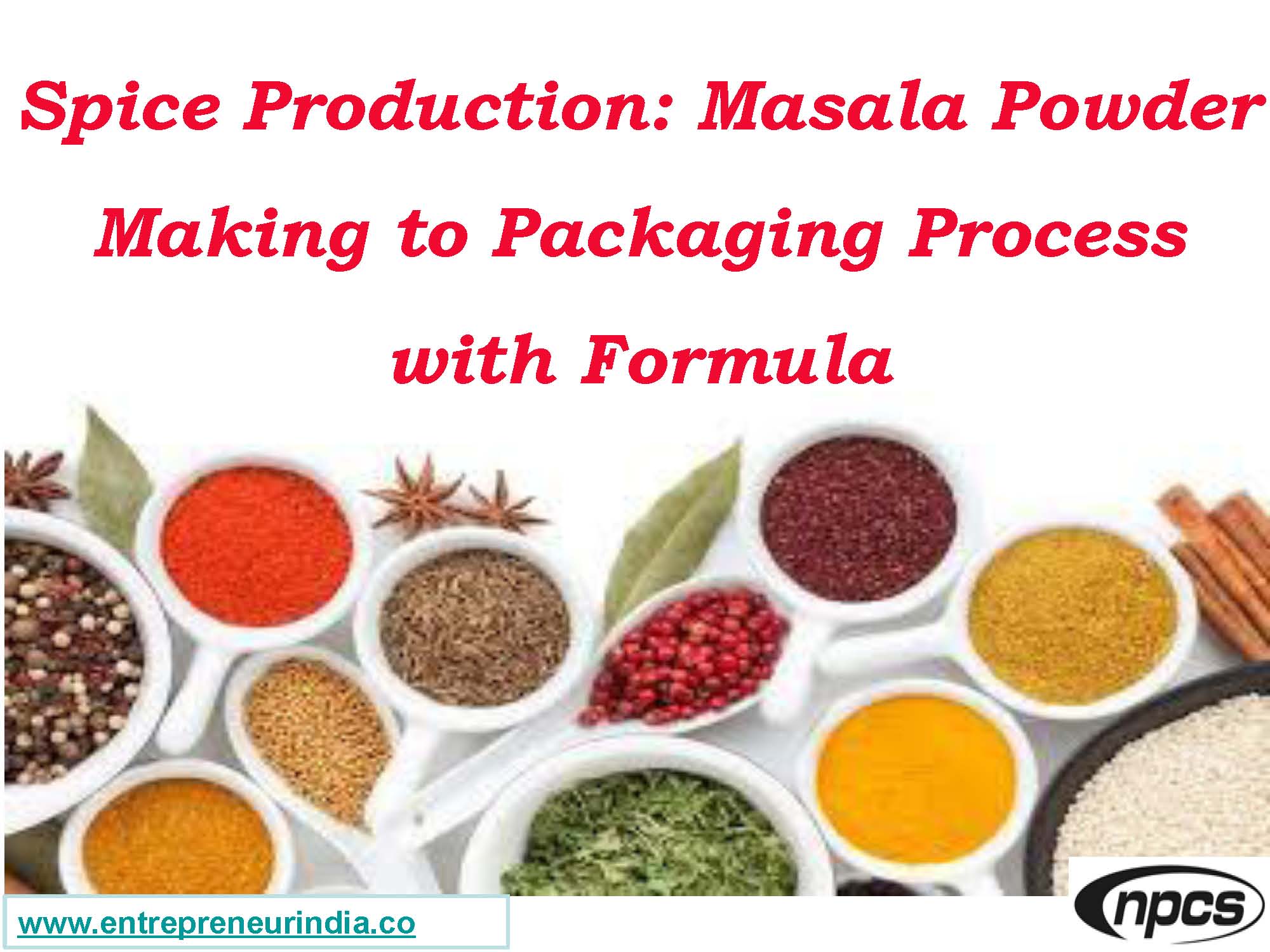
India is known globally as the land of spices. From everyday home cooking to gourmet cuisine, spice powders or masalas form the heart of Indian and international recipes. With the growing popularity of ready-to-use spice blends in both local and export markets, this segment has become highly lucrative. Entrepreneurs across India are recognizing the massive potential in this industry. However, to build a reliable and scalable business, it’s vital to understand the complete spice powder production process | masala making formula—from sourcing raw ingredients to final packaging. This business offers consistent demand, scalable operations, and attractive profit margins for those who approach it systematically.
Spice Powder Production Process | Masala Making Formula
Starting a spice powder manufacturing unit requires multiple steps that ensure quality, hygiene, and consistency. These include sourcing raw materials, cleaning, drying, grinding, blending, packaging, and quality checks. The right masala formulas, paired with proper execution, define your product’s uniqueness in the market.
See More – Ice Cream Factory
Sourcing Raw Spices
Every successful spice blend starts with high-quality raw ingredients. Buying spices directly from farmers or wholesale markets ensures both freshness and cost-effectiveness. Commonly used spices include red chilies, turmeric, coriander, cumin, cardamom, cloves, cinnamon, black pepper, nutmeg, bay leaves, and dry mango powder.
Ensure the spices are mature, dry, and free from pests. Moreover, store them in a clean, moisture-free facility to prevent fungal growth and maintain aroma. Good raw material selection is the foundation of a profitable spice powder production process | masala making formula.
Cleaning and Grading
Before processing, the raw spices must be thoroughly cleaned. This step removes impurities like dust, stones, or iron particles. Common cleaning machines include sieves, destoners, air blowers, and magnetic separators.
Additionally, grading spices based on size or quality improves uniformity in grinding and blending. As a result, this improves the consistency of your final masala product. A clean batch leads to better taste, longer shelf life, and compliance with food safety standards.
Drying (Sun or Mechanical)
Proper drying is crucial because moisture in spices causes mold and reduces shelf life. You can use sun drying for low-cost operations or switch to mechanical dryers like tray or rotary dryers for better efficiency.
Bringing down the moisture content to 6–8% is ideal. For instance, turmeric and red chilies must be fully dried to produce smooth powders. Moreover, uniform drying improves grinding performance and enhances overall quality.
Roasting (Optional for Aroma)
Roasting is optional but recommended for certain spices like cumin, coriander, or black pepper. It enhances aroma, activates essential oils, and improves shelf life.
Use low-heat roasters (70–90°C) for a few minutes based on the spice. Moreover, roasted spices contribute a deeper flavor to your blend and help differentiate your brand in the competitive masala market.
Grinding and Pulverizing
Once dried (and optionally roasted), the spices are ground into fine powder. Machines like hammer mills, disc grinders, impact pulverizers, or chilly grinders are commonly used.
To maintain quality, ensure the grinding process does not overheat the spices. Overheating can lead to loss of essential oils and aroma. Moreover, use cyclone separators and dust collectors to ensure clean output and reduce product loss.
A finely ground spice is essential for effective blending and packaging in the spice powder production process | masala making formula.
Masala Formulation and Blending
This is where your spice blend becomes unique. After grinding, spices are mixed in exact proportions to form blends like garam masala, chaat masala, or meat masala. Use industrial ribbon blenders or paddle mixers to ensure a uniform mix.
Garam Masala Formula (per 1 kg):
Coriander – 400g
Cumin – 150g
Black pepper – 100g
Cloves – 50g
Cinnamon – 100g
Cardamom – 50g
Nutmeg & Mace – 50g
Bay leaves – 100g
Chaat Masala Formula (per 1 kg):
Dry mango powder – 300g
Cumin – 200g
Black salt – 200g
Coriander – 100g
Black pepper – 50g
Asafoetida – 5g
Red chili – 50g
Salt – 95g
Meat Masala Formula (per 1 kg):
Red chili – 250g
Coriander – 200g
Cumin – 150g
Black pepper – 100g
Fennel – 100g
Cloves – 50g
Cinnamon – 50g
Cardamom – 50g
Nutmeg – 50g
Moreover, you can customize your masala making formula based on regional preferences or specific customer segments.
Quality Control and Testing
Every spice batch must undergo strict quality checks. Test for aroma, texture, taste, and microbial safety. Moisture should be below 10%, and spices like chilies or turmeric should be tested for aflatoxins in certified labs.
Comply with FSSAI guidelines to build trust and ensure product safety. Moreover, keep batch records to trace any issues and maintain transparency with your buyers.
Packaging and Labeling
Attractive and hygienic packaging enhances product value. Use laminated pouches (50g to 500g), PET jars, or vacuum-sealed packs. Zip-lock pouches work well for premium spice blends.
Modern form-fill-seal (FFS) machines automate this process efficiently. Also, nitrogen flushing helps preserve aroma for high-end masalas.
Your packaging must include:
FSSAI license number
Ingredient list
MRP, batch number, and manufacturing/expiry date
Net weight
Moreover, professional branding and colorful design can improve shelf appeal and sales across offline and online platforms.
Storage and Distribution
Packaged spices must be stored in cool, dry, and pest-free warehouses. Use FIFO (First-In-First-Out) methods to avoid spoilage and manage inventory efficiently.
You can sell via wholesale distributors, grocery stores, supermarkets, and online channels like Amazon or Flipkart. Moreover, setting up your e-commerce website increases brand visibility and margins.
Participate in local food exhibitions or trade shows to showcase your masala brand and generate bulk orders.
Investment and Profitability
Setting up a small spice powder production process | masala making formula unit requires an investment of ?5–15 lakhs. This includes costs for grinders, dryers, blenders, packaging machines, and quality control equipment.
With proper marketing and sales strategy, monthly profits can range from ?50,000 to ?2 lakhs. Moreover, adding services like private labeling or targeting export markets can significantly boost your revenue and brand reach.
See More – Make Money from Waste
Conclusion
Mastering the spice powder production process | masala making formula gives you a competitive edge in the booming spice industry. From choosing high-grade raw materials to ensuring hygienic processing, precision blending, and attractive packaging—each step plays a vital role in delivering quality products. Moreover, as global demand for natural, preservative-free spice blends rises, Indian entrepreneurs are well-positioned to meet this demand with authenticity and scale. With smart investment, proper planning, and a clear understanding of the production process, you can build a profitable and trusted spice brand in both domestic and international markets.