
Vinegar Manufacturing Business Idea – An Emerging Business Investment Opportunities in Food Processing Sector
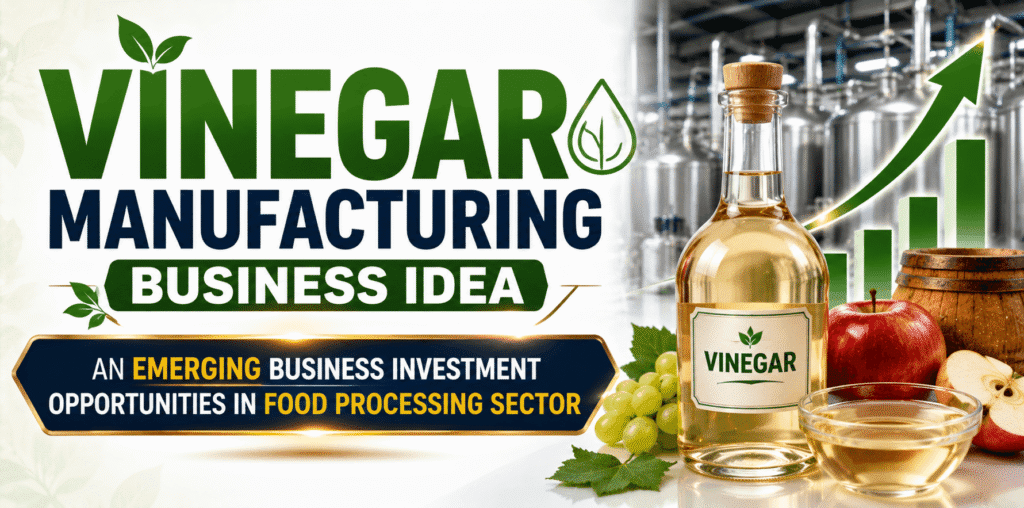
Vinegar, a product as ancient as civilization itself, has stood the test of time due to its wide-ranging applications. From being a culinary staple and a preservative to having medicinal and cleaning properties, vinegar remains a product with constant demand. With the growing trend toward organic and healthy food products, the demand for different types of vinegar has increased globally. Starting a vinegar manufacturing business in 2026 is not only a promising idea but also one that aligns well with the shift toward sustainable, value-added food processing businesses. Starting a Vinegar Manufacturing Business in 2026 To launch a vinegar manufacturing business, you must understand the science behind vinegar production and identify your target market. Vinegar is essentially a dilute solution of acetic acid made through the fermentation of ethanol. It is produced from a variety of sources including fruits (like apple or grape), grains (like rice), or industrial alcohol. There are two main processes involved in vinegar production: the slow fermentation method and the fast fermentation method. The slow method is traditional and results in superior flavor—ideal for premium vinegars such as balsamic or apple cider. On the other hand, the fast method involves industrial fermenters and is suitable for mass production, ensuring quick turnover and higher profits. The market for vinegar spans multiple sectors: food and beverage, healthcare, cleaning products, and even cosmetics. With rising health awareness, especially post-pandemic, more people are incorporating organic apple cider vinegar and other specialty vinegars into their diet. This health-driven trend can be a significant growth factor for the vinegar manufacturing industry. Market Potential and Demand Forecast The global vinegar market is experiencing robust growth. According to various industry reports, it is expected to reach over USD 15 billion by 2030, driven by demand for organic and flavored vinegars. In India alone, the urban middle class is rapidly adopting apple cider vinegar as a health supplement. Restaurants and food processing industries use large quantities of white vinegar, creating bulk B2B opportunities. This market trend indicates that entering vinegar manufacturing in 2026 could be a highly profitable move, especially if you focus on quality and differentiation. Small-scale vinegar units with unique offerings—like herbal infusions, fruit-based flavors, or certified organic status—are becoming more popular among health-conscious consumers. Steps to Start a Vinegar Manufacturing Business To establish a successful vinegar business, a step-by-step approach is essential: 1. Market Research and Product Selection: Begin with in-depth market analysis. Decide whether you want to manufacture industrial vinegar, culinary vinegar (like white, malt, or wine vinegar), or premium health vinegars (like apple cider or rice vinegar). Study consumer trends, competitor brands, and pricing. 2. Choose the Production Method: For small-scale production, traditional fermentation using fruit or rice in wooden barrels is suitable. For larger scale, invest in acetators (machines used for fast fermentation), stainless steel tanks, and bottling machines. 3. Location and Infrastructure: Your production unit should be in a location with easy access to raw materials (fruits, grains, sugar), clean water supply, electricity, and transportation facilities. A 1000–1500 sq ft area is typically sufficient for a small unit. 4. Obtain Licenses and Registrations: Compliance with food safety regulations is crucial. You’ll need: FSSAI Registration (India) GST Registration Factory License MSME Udyam Registration Pollution Control Certification Trademark for branding 5. Machinery and Equipment: Depending on your scale, equipment may include: Fermentation tanks Heating and cooling systems Acetator (for fast vinegar production) Filtration units Bottling and labeling machines 6. Sourcing Raw Materials: Use quality fruits, grains, or molasses for fermentation. If producing apple cider vinegar, ensure a consistent supply of fresh apples or apple juice concentrate. For white vinegar, ethanol and sugar are required. 7. Skilled Workforce: Hire staff familiar with fermentation techniques, quality control, packaging, and marketing. While automation can reduce manpower needs, initial operations often require manual oversight. 8. Branding and Packaging: Today’s consumer is influenced by packaging and story. Highlight organic ingredients, traditional processes, or health benefits on your product label. Use eco-friendly bottles and attractive designs to enhance shelf appeal. 9. Marketing and Distribution: Distribute through supermarkets, health stores, restaurants, and online platforms like Amazon and Flipkart. Tie up with nutritionists, wellness centers, or dieticians for product endorsements. Attend food expos to showcase your brand. 10. Quality Control and Certification: Ensure batch testing and consistent pH and acetic acid levels in your vinegar. Certifications like ISO, HACCP, and organic standards can boost consumer trust and expand export potential. Investment and Profitability Setting up a small vinegar manufacturing unit in India can cost between ?15 lakh to ?40 lakh, depending on automation and capacity. A mini plant producing 1000 liters/day of vinegar can yield significant margins, especially if targeting niche markets with value-added products. Profit margins range between 30% to 60%, depending on your scale, branding, and distribution model. For example: Cost of production for 1 liter of apple cider vinegar: ?20–?30 Selling price in retail (premium market): ?120–?250 By scaling operations and adding variants, monthly profits can reach ?1 lakh to ?5 lakh within the first two years of operation. Future Trends in Vinegar Manufacturing Business 2026 and beyond will witness increasing demand for: Organic Vinegar: With organic lifestyles gaining traction, vinegar made without synthetic additives will dominate shelves. Infused Vinegars: Flavored with herbs, spices, or fruit, these offer both taste and health benefits. Export-Oriented Units: Indian entrepreneurs are exploring export potential in Europe, Southeast Asia, and the Gulf where demand for natural products is high. Eco-Friendly Packaging: Sustainable packaging adds brand value and appeals to environmentally aware consumers. Moreover, with AI and IoT entering food manufacturing, expect intelligent fermentation monitoring systems that can optimize yield and quality, reducing waste and improving profitability. Challenges in the Business Like any industry, vinegar manufacturing has its hurdles: Raw Material Fluctuation: Prices of fruits, sugar, or alcohol may fluctuate based on season and supply. Market Competition: Low entry barriers mean more players; unique branding is key. Regulatory Compliance: Food and beverage regulations are becoming more stringent, especially for health claims on packaging. Storage and Shelf Life: Vinegar has
Electric Motor Rewinding Business. Emerging Investment Opportunities in Rewinding of Burnt Electric Motors Industry
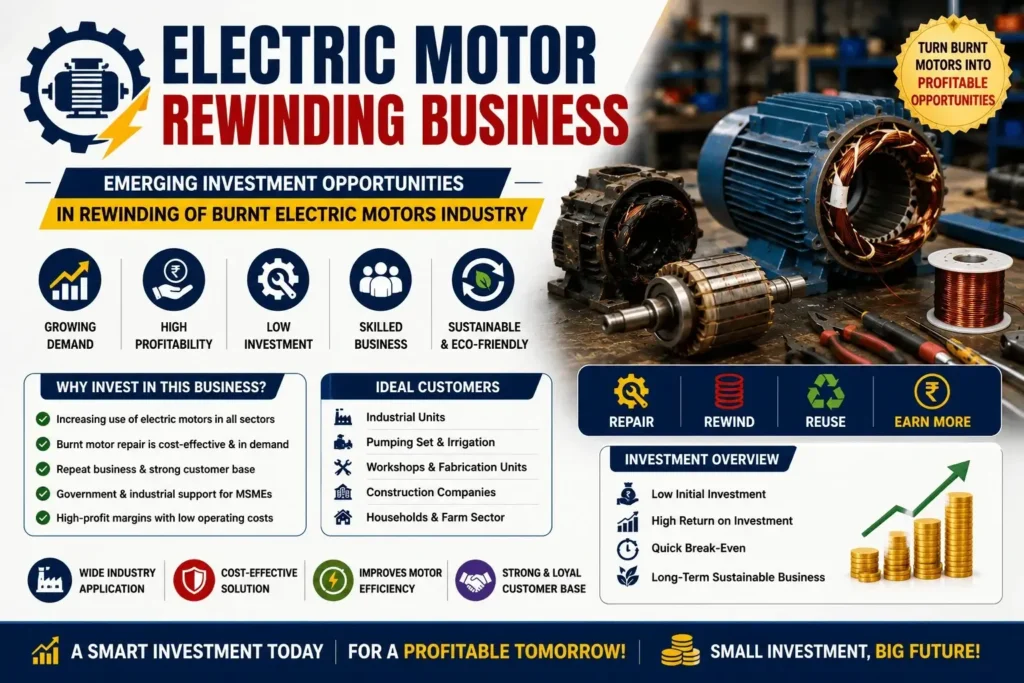
Electric motors are essential components in nearly every industrial sector, from manufacturing to agriculture, from mining to small home appliances. Over time, these motors suffer wear and tear, particularly in their windings, leading to decreased performance or failure. Replacing them can be expensive and time-consuming, especially in industrial environments. This is where the Electric Motor Rewinding business comes into play — offering a cost-effective solution and presenting a lucrative business opportunity for entrepreneurs with technical knowledge or access to skilled labor. Why Start an Electric Motor Rewinding Business? The increasing use of electric motors in nearly every mechanical system today ensures a constant demand for rewinding services. Whether it’s in water pumps, industrial machines, compressors, or fans, motors are everywhere. When these motors break down due to coil damage or insulation failure, rewinding offers a more economical option than replacement. This creates a steady and repeatable need for Electric Motor Rewinding, making it a viable and profitable venture. Understanding Electric Motor Rewinding Electric motor rewinding involves the process of removing damaged windings (typically copper wire) from a motor’s stator or rotor and replacing them with new windings of the same specifications. This restores the motor to its original or even improved efficiency. It typically includes disassembling the motor, cleaning and inspecting core parts, removing old windings, rewinding with fresh copper wire, varnishing, baking, reassembling, and testing. While the process may sound technical, with the right equipment and trained personnel, the business can be run smoothly. Many industries prefer rewinding as it saves 30-60% of the cost compared to buying a new motor, making the service highly attractive. Market Demand and Opportunities India’s rapidly growing industrial, commercial, and agricultural sectors rely heavily on electric motors. From textile mills and chemical plants to irrigation systems and urban infrastructure, the demand for electric motors and hence rewinding services is consistent. Additionally, the rise in energy efficiency awareness is leading many businesses to prefer motor rewinding with high-quality materials over complete motor replacement. Moreover, government incentives for MSMEs and skill-based manufacturing activities further make Electric Motor Rewinding a suitable business idea for those with limited initial capital. Initial Investment and Setup Setting up an Electric Motor Rewinding business can be done in phases, starting with small-scale servicing and gradually moving to medium or even large-scale industrial motors. A basic setup includes: Space: Minimum of 600–1000 sq ft for workshop and machinery layout. Machinery & Tools: Coil winding machine Coil inserting and forming tools Oven for varnishing and curing Testing instruments (megger, multimeter, voltmeter) Grinder, lathe (for rotor balancing), and other hand tools Workforce: Skilled rewinders and electricians, generally 3–5 technicians to start with. Investment: ?8–15 lakhs for a small to medium setup, with higher investments for industrial-grade services. Once you build a network of regular clients, including factories, pump repair centers, and institutions with heavy electrical infrastructure, the business can generate sustainable revenue. Business Model and Service Offerings Revenue in the Electric Motor Rewinding business typically comes from the following services: Motor rewinding (single-phase, three-phase) Armature rewinding (DC motors) Transformer rewinding Generator coil rewinding On-site motor dismantling and installation Motor bearing, shaft, and mechanical repairs Many rewinders also offer AMC (Annual Maintenance Contract) services to institutions and industries, ensuring repeat business and monthly cash flow. Profit Margins and Return on Investment Electric Motor Rewinding offers excellent profit margins, especially in industrial segments. For example: Small Motors (0.5–5 HP): Rewinding cost is ?500–?1500; profit margin 30–40% Medium Motors (5–20 HP): Cost is ?2000–?5000; margin 35–50% Large Industrial Motors (above 20 HP): Can charge ?8000–?30,000 or more with 50–60% margin depending on size and copper required Break-even can be achieved within 12–18 months with a consistent client base and quality output. Expanding to include transformer and generator rewinding services can boost ROI further. Skill Requirements and Workforce One of the advantages of this business is that it does not require the owner to be an engineer or technician. However, the presence of skilled labor is essential. Hiring or partnering with experienced rewinding technicians is a must. You can also train fresh ITI or polytechnic graduates under supervision, which is cost-effective. You may also consider tie-ups with local ITI colleges or offer apprenticeship programs that help train and retain skilled workers. Licensing and Compliance Starting an Electric Motor Rewinding business in India involves obtaining basic registrations such as: Udyam (MSME) Registration GST registration Local municipal shop act or trade license Pollution control clearance (in case of high-volume varnishing or burning activities) For commercial power load, approval from the local electricity board may be needed. Adhering to workplace safety standards and fire safety norms is essential too. Challenges and Mitigation Though rewarding, this business comes with its set of challenges: Material Costs: Copper prices fluctuate and can affect margins. Buying in bulk and maintaining a stock can mitigate this. Skilled Labor: Availability of reliable rewinders is limited. Training your own team is a good long-term solution. Quality Assurance: Sub-par rewinding can damage client machines. Always use standard gauge wires and high-quality insulation materials. Competition: Local workshops may offer low prices, but you can differentiate with quality, reliability, and timely delivery. Focusing on proper insulation, energy-efficient rewinding, and customer education can create a unique selling proposition (USP) for your brand. Digital Marketing and Client Acquisition Marketing is often neglected in this niche, but it plays a vital role in scaling the business. Here are a few proven ways to build clientele: Website and Google My Business Listing: Showcase your services, case studies, and client testimonials. WhatsApp and SMS Campaigns: Stay in touch with industrial clients for AMC renewals and service reminders. Local SEO & Online Ads: Run geo-targeted campaigns to reach factories and repair centers. Partnerships: Collaborate with motor manufacturers, resellers, and electrical supply stores to get referrals. Referral-based business can also grow exponentially with a reputation for quality. Future Scope and Expansion As more industries seek to become energy efficient and reduce machinery replacement costs, the future of Electric Motor Rewinding looks promising. The shift towards electric