
Get Started in Ferric Pyrophosphate Manufacturing with This Business Plan
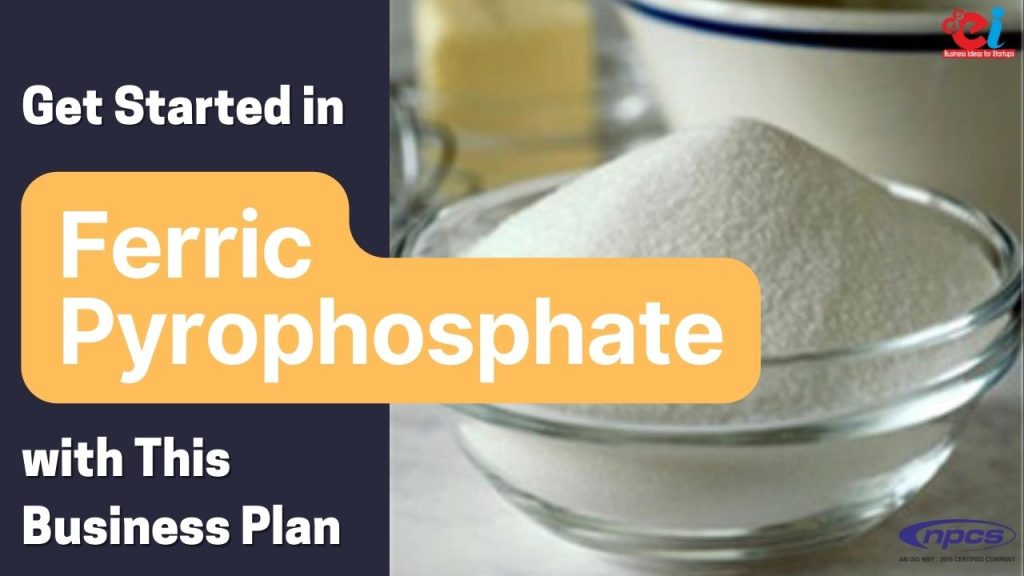
Ferric Pyrophosphate manufacturing business is emerging as a high-potential venture in the chemical and nutraceutical sectors. With the global surge in health awareness, especially around iron deficiency and anemia, Ferric Pyrophosphate has gained traction for its excellent bioavailability, neutral taste, and compatibility with food and pharmaceutical formulations. As a compound that enables effective iron fortification without altering the organoleptic properties of food or supplements, Ferric Pyrophosphate is being rapidly adopted in functional foods, baby formulas, beverages, and health supplements. Entrepreneurs and manufacturers aiming to enter a scalable and high-demand industry should consider this specialty chemical as a viable and profitable opportunity. Visit this Page for More Information: Start a Business in Chemical Industry Projects What is Ferric Pyrophosphate? Ferric Pyrophosphate is a ferric iron salt of pyrophosphoric acid, typically produced as a fine, yellowish powder. Its key characteristics include: High stability in food systems Bioavailability suitable for iron-deficient individuals Non-reactive taste and odor GRAS (Generally Recognized As Safe) status in many countries This compound is used extensively in: Infant formula and baby foods Nutritional supplements Cereal fortification Beverages and dairy products Intravenous (IV) iron formulations (pharmaceutical grade) Business Plan: Ferric Pyrophosphate Production Business 1. Chemical Composition and Properties Ferric Pyrophosphate typically contains: Iron (Fe): 23–25% Insoluble in water Stable under heat and normal processing conditions pH range: 5–8 for most stable applications The molecular formula is Fe?(P?O?)?, with a molar mass of ~745.21 g/mol. Download PDF: Ferric Pyrophosphate Manufacturing Business Plan | Startup Business Ideas 2. Manufacturing Process of Ferric Pyrophosphate Ferric Pyrophosphate is usually produced via a precipitation method, which is simple, cost-effective, and scalable. a. Raw Materials: Ferric Chloride (FeCl?) or Ferric Nitrate Disodium Pyrophosphate (Na?H?P?O?) Purified water pH regulators (optional) Anti-caking agents (optional, for final product formulation) b. Manufacturing Steps: Dissolution: Ferric chloride or nitrate is dissolved in distilled water in a reactor vessel. Disodium pyrophosphate is dissolved in a separate tank. Reaction: Both solutions are mixed under controlled conditions (temperature ~40–70°C). The reaction forms Ferric Pyrophosphate precipitate, with NaCl or NaNO? as byproducts. Filtration and Washing: The precipitate is filtered, washed repeatedly to remove impurities and byproducts. Drying: The washed precipitate is dried in a vacuum dryer or hot air oven to remove moisture. Milling and Sieving: The dried material is ground into a fine powder, then sieved to maintain uniform particle size. Packaging: Final product is packed in HDPE containers or food-grade bags with desiccants. This method ensures a high-purity, food/pharma-grade Ferric Pyrophosphate product. Related Feasibility Study Reports: Chemicals (Organic, Inorganic, Industrial) Projects 3. Required Machinery and Infrastructure To set up a basic Ferric Pyrophosphate manufacturing unit, you’ll need: SS Reactors with stirrers Filtration unit (Nutsche filter or vacuum filter) Drying unit (Tray dryer, vacuum dryer) Pulverizer and sieving machine Water purification unit (RO + Softener) PH meter and chemical dosing system Packaging machine (manual/semi-auto) Laboratory for in-process and final testing Land and Area Requirement: ~5,000 to 10,000 sq. ft. for a mid-scale plant Manpower: Chemists, production operators, QA/QC staff, and logistics personnel Read our Books Here: Chemical Technology (Organic, Inorganic, and Industrial), Fine Chemicals 4. Licenses and Regulatory Compliance Since Ferric Pyrophosphate is used in food and pharma products, compliance is strict. You will need: Company Registration (Pvt. Ltd., LLP, or MSME) GST Number Factory License Pollution Control Board (PCB) Clearance FSSAI License (if manufacturing for food use) WHO-GMP/ISO Certification (if exporting or targeting pharma clients) Drug License (if supplying to pharmaceutical industry) It’s advisable to maintain a cleanroom facility and follow Good Manufacturing Practices (GMP), especially if supplying to nutraceutical and international clients. 5. Market Demand and Applications The demand for Ferric Pyrophosphate is steadily rising due to: Growing anemia among women and children Government-driven food fortification programs Rising health awareness and supplement usage Expansion of functional food and beverage categories Key Buyers Include: Infant formula manufacturers (e.g., Nestlé, Amul, Abbott) Nutraceutical companies Iron supplement and multivitamin brands Food fortification agencies and government programs Exporters to Africa, Southeast Asia, and South America India is also a major exporter of Ferric Pyrophosphate to countries with high iron deficiency rates. 6. Investment and Setup Cost Investment depends on production capacity and automation level. Estimated Setup Costs: Small-scale unit (100 kg/day): ?35–50 lakhs Medium unit (300–500 kg/day): ?80 lakhs – ?1.5 crore Large-scale production (>1 MT/day): ?2 crore and above Cost Factors: Machinery and equipment: 40–45% Land and civil work: 20% Utilities and storage: 10% Licensing and lab setup: 10% Working capital (raw materials, salaries): 15–20% 7. Profit Margin and ROI Raw material cost per kg: ?150–200 Manufacturing and overheads: ?50–75/kg Selling price: ?300–500/kg (depending on grade and buyer) Profit margins range from 25% to 40%, with break-even in 1.5 to 3 years. Higher profits are seen when selling to: Pharma companies (IP/BP/USP grade) Export markets Government or institutional buyers 8. Marketing and Sales Strategy To build a strong presence in the Ferric Pyrophosphate market: List on B2B platforms (IndiaMART, TradeIndia, Alibaba) Develop product datasheets with specifications and test reports Attend pharma and food expos (e.g., CPhI, FICCI Food World) Partner with nutritionists and formulation scientists Create an export channel via DGFT and EPC registration Provide free samples and custom packaging for bulk orders Branding, technical support, and quality consistency are key differentiators. Final Thoughts The Ferric Pyrophosphate manufacturing business is a high-potential, specialized venture aligned with global healthcare goals. With iron deficiency continuing to affect billions worldwide, especially in low- and middle-income countries, this compound is a game-changer in dietary fortification and public health. With moderate investment, quality focus, and regulatory compliance, entrepreneurs can build a sustainable, scalable business. The product’s wide application, global demand, and compatibility with food and pharma standards ensure long-term profitability and social impact. See More Links: Start a Business in Asia Start a Business in Potential Countries for Doing Business Best Industry for Doing Business Business Ideas with Low, Medium & High Investment Looking for Most Demandable Business Ideas for Startups Startup Consulting Services Start a Business in Africa Start a Business in India Start a Business in Middle