
A Step-by-Step Guide to Conducting a Feasibility Study for Small and Medium Enterprises (SMEs)
It takes careful planning and good evaluation to run a successful small or medium enterprise or to run an SME. One significant step that businesses take at the beginning is conducting a feasibility study. It helps evaluate whether or not the business idea is practicable and can generate income for the business. This guide will take you through the process in every step to ensure that an informed decision is made for the business before investing time and resources. What is a Feasibility Study? Feasibility studies have an extensive analysis that aims to decide whether a business or project under consideration is profitable or not. This helps startups and business stakeholders determine the strengths, weaknesses, opportunities, and threats related to the proposed plan. For small and micro enterprises, feasibility study analysis is also a way to use limited resources effectively and minimize their financial risks. Also Read: Establishing an Industrial Project Why Conduct a Feasibility Study? In this connection, let’s look into why it is very significant for SMEs to conduct the feasibility analysis before going for stepwise guidance: Risk Comprehension: The use of feasibility analysis helps one to highlight possible risk and challenge areas in advance. Resource Optimization: It makes you use your financial and human resources wisely. Market Validation: It confirms product or service market demand. Strategic Planning: Forms a basis of solid business plan. For instance, a feasibility study before the launching of a new product can prevent expensive mistakes that could save time and money in the longer run. Also, Read Our Feasibility Study Reports Cold Storage Detailed Project Report Multi-specialty Hospital Bamboo Sticks Manufacturing Plant Step-by-Step Guide to Conducting a Feasibility Study 1. Define the Objective The first stage of any project would be defining its purpose; that is, what it intends to achieve. This could be the introduction of a new product, moving into a new place, or adopting new technologies for SMEs. Your goals need to be SMART (Specific, Measurable, Achievable, Relevant, and Time-bound). A clear objective is the basis of a good feasibility analysis. 2. Conduct Market Research For small and medium enterprises, familiarizing themselves with the market is a primary necessity. This involves knowing competitor studies, customer prospects, and market trends. So here are the key points to keep in mind: Customer Needs: What problem you solve for? Competition: What competitor you face and what makes your product different? Market Trend: Is there a growth in demand for your product or service? Government publications, industry reports, surveys, etc., are beneficial tools to get valuable insights. 3. Evaluate Financial Feasibility Evaluate your idea for financial viability by analyzing cost, possible income, and profit margins. Here is the guide for step-by-step: Cost analysis: compile comprehensive lists of all fixed and variable expenses, including production, marketing, and all operating costs. Revenue projections: estimate potential income from target market size and an accompanying pricing formula. Break-Even Time: Compute the time that starting up the business will need to recover the initial cost and to begin gaining profits. 4. Assess Technical Feasibility It is essential, especially for small and medium enterprises that indulge in manufacturing or development, to assess technical feasibility. For example, you might ask the following questions: Is your equipment and technology up to the task? Is your team capable of doing the technical work? Are there different ways you can achieve better outcomes? Conducting a technical feasibility assessment ensures that your assets are in place against the project technical requirements. 5. Analyze Legal and Environmental Factors All businesses need to comply with local laws and regulations. Understanding the following is part of this step Permits and Licenses: What permits do you need for your project? Environmental Impact: The effect of your project on the environment. For example, starting a manufacturing unit requires clearances from the environmental authorities. 6. Create a Feasibility Report Organize all your findings into a detailed feasibility report to aid effective decision-making. This report must have an executive summary giving an overview of the research, a market analysis indicating demand, competitors and customer needs, financial projections indicating costs and possible revenues, as well as the risk assessment that highlights the problems and their mitigation strategies. 7. Review and Decide Upon completion of that feasibility report, you must review the findings with your team and possibly with any other supporting advisers and use them to make a decision whether to proceed with the project, amend it slightly, or even discard it entirely. 8. Risk Analysis Every business idea is bound to face risks. The major target of this step is identifying possible hurdles and come with strategies to conquer those risks. For SMEs, this may include the following risk types: Financial Risks: Unexpected expenditure for the business might occur, or revenue may be delayed. Market Risks: Changes in customers’ tastes or rise in competition. Operational Risks: Supply chain disruption or employee shortage. For example, a new application to be developed by an SME may be prone to technical risks like bugs and user dissatisfaction, and by anticipating these situations, your business might save itself from extra expenditures. 9. Testing the Concept Testing is an important aspect of the feasibility study process. SMEs can use prototypes or small testing models to obtain real feedback. This is to ensure that it connects with the whole target audience. Ways to Test: Pilot Projects-Create a miniature version of your product or service. Feedback Surveys-Gather feedback from early users. Iteration and Improvement– Tweak your offer using feedback before full launch. 10. Investigate Funding Possibilities Funding is tough for SMEs; however, feasibility analysis shows a clearer picture of capital requirements and types of facilities available. Some funding sources to consider include: Bank Loans: Conventional funding with predictable pay-back plans. Angel Investors: Individuals willing to put in their equity for your idea. Government Grants: It is good to find programs specific to the SME environment. Investopedia and other online resources provide detailed information on the various ways of funding small businesses. Also Read: Project Feasibility Report How
The Role of Feasibility Analysis in Industrial Project Planning

Before embarking on any industrial project, the first and foremost thing to be known is whether the project will be viable and successful or not. This is where feasibility analysis becomes one of the unavoidable tools. A feasibility study conducted systematically helps to determine whether an idea is practically possible and economically viable, as well as whether it can be aligned with goals in the long term, with respect to economic, technical, operational, and legal aspects. Industrial project planning requires lots of investment in resources, time, and work. It is not uncommon for ill-planned projects to incur losses and jeopardize time frames or fail altogether. Thus, feasibility analysis is serving as a foundation for informed decision-making, risk management, and effective strategy execution. Also Read: Project Feasibility Report Why is Feasibility Analysis Important? Risk Evaluation There might be uncertainties, ranging from fluctuations in market demand to restrictions in technology illustrated in feasibility studies. Early recognition of such risks permits the company to strategize against them, improving the quality of decisions made. Cost Management Feasibility analyses will also give the company an accurate estimate of the costs and thereby help it plan budgets efficiently; this step is vital in ensuring the financial viability of the project alongside avoiding overspending. Resource Optimization A proper feasibility study indicates what resources a business should put into a project: human, material, and time. This helps reduce wastage since resource planning would be better. Confidence of Stakeholders The project will be at the mercy of investors and other stakeholders if well-documented feasibility studies are not submitted. They would assure them of the project’s profitability and success. Advantages of Feasibility Study Minimization of Project Abandonment: A feasibility study can help identify any potential weaknesses before investing too much in the project. Fine-Tuned Strategic Planning: The studies provide a clearer pathway toward directing the team toward more distinct goals in a more focused and, therefore, more efficient manner. Enhanced Efficiency: Applicability of these measures to remove bottlenecks prior to project launch will improve overall productivity and efficiency at work. Less Project Failures: Such a comprehensive feasibility study will identify weaknesses in projects so that businesses can choose the worthwhile ones having a high success rate. Better Strategic Planning: It is projected by the blueprint for executing towards clearer targets for the teams. Increased Efficiency: Addressing bottlenecks before the initiation of a project will increase productivity and work efficiency. How Feasibility Studies Drive Industrial Growth Innovation and the aptitude to take calculated risks are wheels under industrial growth. However, even the best ideas can fail without preparations. Feasibility analysis is said to be the binding force that brings the thinking part of ideation to the doing part of execution and checking the viability and profitability of such ideas with respect to the sustainability of industrial projects. If you are looking for expert help in conducting feasibility studies or need sources in industrial planning, visit the NIIR website the National Institute of Industrial Research offering specialized services and publications focused on industrial needs. When you examine the website, you will find everything you need for a huge project. Also, Read Our Feasibility Study Reports Cold Storage Detailed Project Report Multi-specialty Hospital Bamboo Sticks Manufacturing Plant Key Challenges in Conducting Feasibility Analysis Indeed, a feasibility study is a challenge, and this is the reason businesses need to understand the challenges so that they can also get prepared well and also have maximum benefit out of it. Data Accuracy and Accessibility The very foundation of feasibility analysis is reliable data. But obtaining accurate trends of the market or insights into competition or cost projections is not easy. The end result is a wrong conclusion, which places the project in jeopardy. Time-Consuming Process Feasibility analysis needs intensive research and evaluation, and hence the much time-delay possibility. This is particularly tough for fast-paced industries where timing is critical to success. Cost Factors Most small organizations find it harder to allocate enough funds for this stage because costs associated with hiring specialists, conducting surveys for analysis, and collecting tools for robust analysis can mount up. Evolving Market Conditions Rapid changes in today’s market can make much of a feasibility analysis less relevant at the time of a project start. Ongoing updates and flexible planning are required to offset this aspect of it. Applications of Feasibility Analysis in Various Industries Feasibility studies are a critical part of any project in any industry. They will, of course, tell the performance level, as well as the efficiency and financial viability, of a project. By looking closely at some of the main things, feasibility studies will help make choices before contributors sink any resources into the project. Here is how feasibility studies are administered in different sectors: Manufacturing Feasibility studies in manufacturing appraise the capacities of production, the cost-effective production, and transportation efficiency. As regards timely delivery of products without any compromise on quality or outstretch of budget, assessments must be considered. Real Estate Developers in real estate conduct feasibility studies for site purposes, market demand, and legality of the sites being put under construction for practicality of construction projects and legality to construction requirements. Renewable Energy In renewable energy projects, namely wind farm or solar plant projects, feasibility studies include site viability, resource availability, and regulatory matters that ensure the project remains sustainable and safe. IT and Technology Feasibility studies apply by computer companies in determining the feasibility of software development projects for themselves. A feasibility study thus guarantees that the proposed solutions are both market and economically viable. By facing these important issues, the feasibility studies can also make organizations reduce risks and optimize resources for the success of their initiatives. Case Study: The Role of Feasibility Study in a Solar Panel Manufacturing Unit Imagine the formation of a company that wants to build a solar panel manufacturing facility. Quite a bit was revealed during this study through the different phases of feasibility: Market feasibility: There will be a potential market value due to increasing demand for
Plastic Recycling and Its Role in Shaping Eco-Friendly Manufacturing Practices
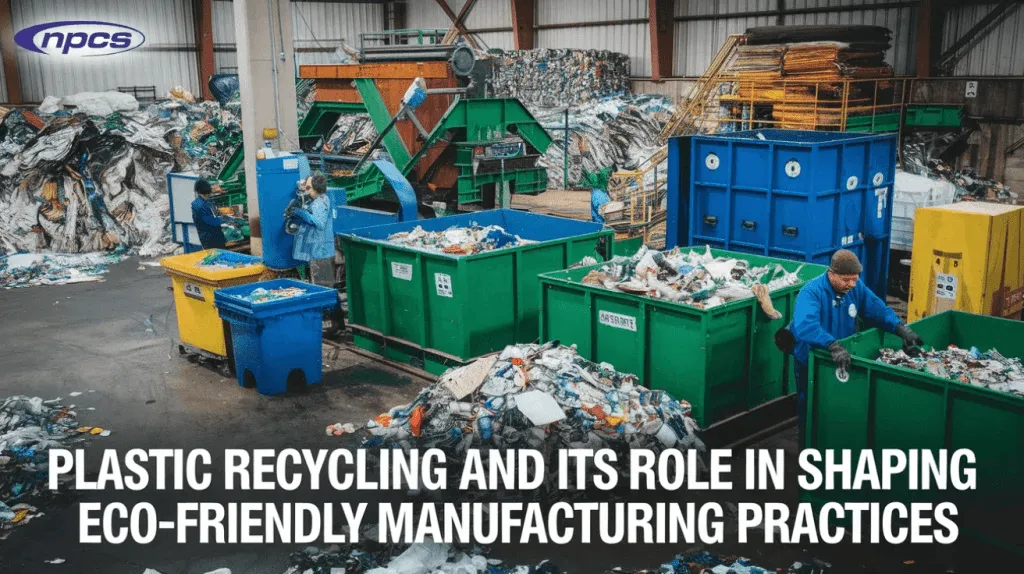
Plastic recycling has been a crucial solution in fighting against waste and promoting sustainability in a world burdened by environmental problems. With increasing consumption of plastics comes increased pressure on manufacturing industries to adopt greener practices. By integrating recycling machines and innovative processes, these industries change not only the waste that is produced but the whole future of eco-conscious manufacturing. Understanding the Importance of Plastic Recycling Increasing use of plastics in the world has increased plastic waste. Every year, hundreds of tons of plastic end up being incinerated, going to landfills, or thrown into the oceans and into other parts of ecosystems. All such actions affect wildlife and promote pollution. The waste is converted into reusable materials through the means of plastic recycling, hence significantly reducing its environmental footprint. Converting used plastics into processable raw materials using recycling thus minimizes the need for virgin production of plastics, which specifically conserves natural resources such as oil and constitutes reduced energy usage and greenhouse gas emissions. The conversion of such materials into plastics can be attributed to lower expenditure on production and a better brand image for companies manufacturing products using recycled plastics as a result. All these so-called recycled plastic products have the benefit of being made out of more advanced, efficient, and high-quality plastic recycling machines, which turn different types of plastics into superior reusable pellets catered to satisfy the diverse needs of different industries. For all these reasons, it becomes an obligation rather than an option for manufacturers to adopt these developments to satisfy global sustainability goals. As the sustainable subject is becoming popular with consumers toward eco-products, plastic recycling is the way industries can go for sustainability while being environmentally friendly. Companies can prove that they are taking part in being stewards of the environment while also reaching out to a conscious customer base by integrating recycled content. Also Read: Plastic Products Manufacturing Plant Recycling Business How Plastic Recycling Machines Are Revolutionizing Manufacturing The modern technology that acts as a backbone in the plastic recycling process is advanced plastic recycling machines. The machines are responsible for the conversion of wasted plastics into new valuable raw materials used by industries in the course of manufacture. From the PET bottles to the HDPE containers, these machines do handle many varieties of plastic types, thereby taking the very first step toward sustainable production. The machine is a great asset because of its capabilities to effectively separate, shred, and melt plastics to form high-quality recycled pellets, although such may hardly be produced elsewhere. The pellets are later fed back into the cycle of production instead of using virgin materials. This reduction then brings down the production costs while letting that organization go with the world’s environmental standards in relief for the firm in reducing its carbon footprint. The utility of plastic recycling machines has also enhanced creativity, from very tough building materials to eye-catching fashion items. The applications of recycled plastics are almost endless—from making durable construction materials to very stylish consumer goods. For manufacturing industries, this innovation means to open entirely new product lines without compromising ecology. Governments are providing subsidies and tax benefits to encourage such initial investments by entrepreneurs to adopt plastic recycling machines. These initiatives will not just encourage environmentally friendly practices but will also facilitate the purchase of recycling technologies for small and medium enterprises. It will help in making manufacturers competitive in a sustainable market. Benefits of Plastic Recycling for Manufacturing Industries Economic and environmental benefits derived from plastic recycling in manufacturing industries, firstly, reduce dependency on virgin plastic, which is exorbitant and costs a lot of resources to produce. Thus, producing cost advantages for manufacturers to channel such resources elsewhere. Furthermore, recycling gives a lot of credibility to a company’s sustainability agenda. Consumers today are looking towards companies with green practices, one of which is using recycled plastics in their products. Furthermore, plastic recycling machinery-equipped manufacturing industries can also comply with stringent environmental standards while avoiding possible fines and future compliance complications. Apart from economic advantages, recycling carries more severe advantages to the environment. It involves reusing plastic waste, which relieves landfills and reduces pollution in the natural environment. It also conserves energy needed for producing virgin plastics, emitting fewer greenhouse gases. For industries that would like to attain carbon neutrality, recycling is one of the major strategies. Additionally, plastic recycling creates opportunities for innovation in industries. Most recycling methods end up using recycled raw materials in developing innovative, sustainable products targeted at niche markets. This extends product diversity to a company but also greatly builds up its image as a pioneer in green manufacture. This could compel advancement in plastic recycling by many manufacturers. Invest in modern plastic recycling machines and collaborate with industry mentors. Some platforms like NIIR.org have been providing immense resources and guidance to such businesses intending to go green instead of recycling on outdated methods. Challenges in Plastic Recycling and How Industries Can Overcome Them However, despite its tremendous potential, plastic recycling is faced with various challenges to its full realization. The problem is very complex, as most plastics are made from mixed materials or are contaminated from products, and thus find it hard to recycle. This variant of the waste collection process necessitates that the manufacturing industries invest in technology for sorting and adapting their processes to other plastic types. Another major issue is establishing a strong infrastructure for recycling. The investment in equipment involved in plastic recycling machines is quite high and not affordable for small-scale manufacturers. Such costs can, however, be offset through channeling government incentives and grants or establishing a partnership with industry leaders. Another issue further complicating the situation is the lack of awareness and education on recycling practices among consumers and industries. Effective recycling starts at the source with proper disposal and sorting of plastic waste. Industries must partner with communities to create awareness about responsibility in plastic disposal and the value of recycling. The advent of technologies is making the recycling of
Top 5 Plastic Recycling Machines Transforming Waste Management for Manufacturers
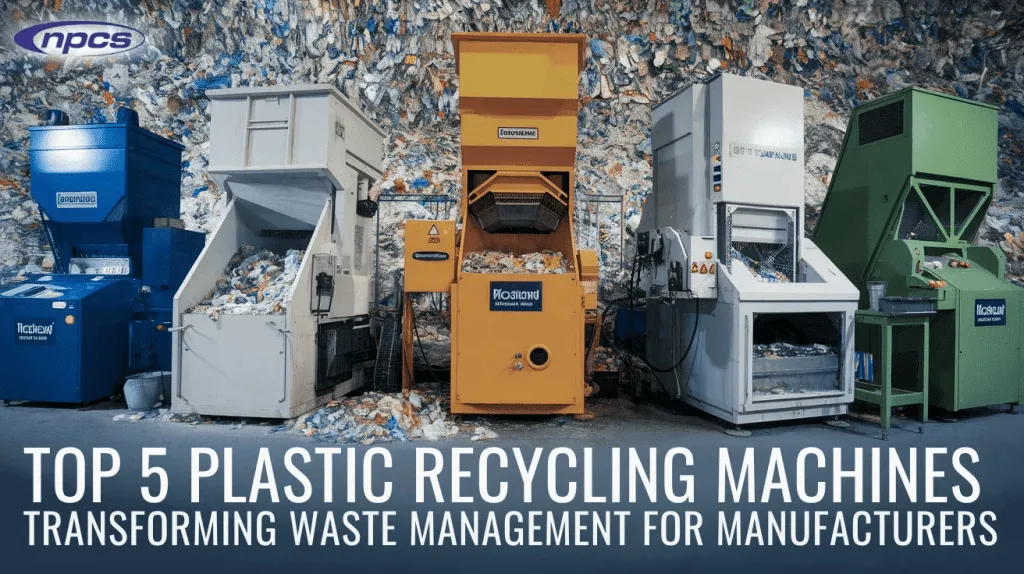
The whole world today seems to lean towards sustainability and thus demanding the industries to re-evaluate their waste management systems. It was plastic recycling that had mainly ushered in the green revolution among manufacturing industries. New plastic recycling technology has set itself into the faction of these industries to use modern plastic recycling machines to convert waste into reusable materials. The three top-notch haulers mentioned below are indeed capable of revolutionizing waste management. Automated Sorting Machines: Streamlining Waste Segregation The greatest problems for plastics recycling are usually accurate sorting. Automated sorting machines are revolutionizing the whole manufacturing industry because they use technologies such as artificial intelligence, robotics, and infrared sensors that do classify different types of plastics with efficiency. The machines would be able to identify and separate plastics based on resin codes and chemical compositions, thus practically eliminating contamination in recycled materials. The new models incorporate optical sorters that can detect the much more complicated group of polymers that, in the past, have been extremely difficult to recycle. Such precision would guarantee conformation of the recycled plastic to quality levels assumed by manufacturers for their reconstituted material. Automated sorting machines also represent a significant competitive advantage for manufacturers, as well as sustainability. Properly sorted waste plastics can be processed into high-value applications, thus saving the industries on raw material costs while simultaneously enabling environmental gains by maximizing the full potential of waste. Moreover, with stricter regulations around waste management, such technology will surely be an asset in maintaining compliance yet profitable. Also Read: Plastic Products Manufacturing Plant Recycling Business Balancing your initial cost understanding with long-term gains is necessary to maximize returns. Visit EntrepreneurIndia.co for detailed reports and subject matter experts on determining equipment suited for your needs. Their sources lead businesses to cost-effective and sustainable avenues. Thus with the analysis of these variables, a manufacturing industry can therefore select sustainable means of operation with maximized profit. Shredders: Breaking Down Waste for Versatile Applications They use more versatile plastic recycling machines as shredders that handle bulky, big-sized plastic waste and transform these pile wastes into small shredded fragments. Shredding machines are made for industries that manufacture and use all types of plastic waste, from plastic containers to scrap material. Both modern shredder machines are equipped with adjustable blades and a very high-powered drive so that they can shred different types of plastics, including those difficult to recycle, such as PVC and HDPE. The shredded materials known as regrind are used for manufacturing products like pipes, packaging materials, or furniture. Shredders, in fact, help increase the environmental savings a company has while costing very little to run. After all, it is a win-win situation for all profit-making industries that wish to be eco-responsible. Read Our Handbook: Medical, Municipal, and Plastic Waste Management Handbook Handbook on Biodegradable Plastics (Eco-Friendly Plastics) Modern Technology of Waste Management: Pollution Control, Recycling, Treatment & Utilization Bioplastics & Biodegradable Products Manufacturing Handbook Extrusion Machines: Turning Waste into Usable Products Extrusion machines convert waste into new materials that become raw materials for manufacture. These machines are converting broken plastics in heat and pressure, then extruding the waste into a continuous profile such as pellets, sheets, or films. The technology has revolutionized plastic recycling. Such sophisticated machines as that, especially in advanced countries, even allow for additives in the recycling process to boost properties such as UV resistance and flexibility of recycled plastic. Another strong advantage of modern extrusion machines is their energy efficiency. Many current models depend on renewable energy sources and limit the material losses in the recycling process. For industries, this means reduced operating costs and a lower carbon footprint. The extrusion technology has the added advantage of scalability. Whether it is for small-scale production or for large manufacturing units, this machine can be tailor-made according to the operational capacities required, thus providing versatile solutions in the journey toward sustainable waste management. Pyrolysis Machines: Transforming Plastic Waste into Fuel Pyrolysis machines are raising the stakes on plastic waste recycling by transforming waste plastics into useful fuels such as diesel, gasoline, and industrial-grade oil. This very important technology has embraced two major challenges faced by manufacturing industries: waste management and alternative energy generation. The process of pyrolysis is defining the detailed mechanism as heating plastic waste in the absence of oxygen, causing it to break down into smaller hydrocarbons. The products are extremely versatile in their applications, with pyrolysis oil ready to use or further refined to energize machinery. Gases collected from the process can also be utilized to fuel the machine itself, resulting in energy efficiency. Particular advantages of this pyrolysis technology are for non-recyclable plastics like polystyrene and multilayer plastic. Now, the whole manufacturing industry is taking up pyrolysis for their wastes in addition to saving costs; the fuel generated can also be used to meet operational energy requirements, thus contributing towards self-sufficiency. Pyrolysis also promotes the concept of a circular economy in that it turns waste into a resource without environmental harm. Also Read: Plastic Products Manufacturing Production of Glasses Yet, scalability and economics continue to be a challenge, but research is progressing in that direction, reducing the costs as well as moving nearer to developing pyrolysis machines that would prove easier and more affordable, encouraging sustainable waste management in the future. Washing Systems: Ensuring Purity in Recycled Plastics Never in the history of plastic recycling has anyone heard of a recycling machine that would yield high-quality output without assembling a thorough washing process. Washing systems are a prerequisite to preparing plastics for further treatments and eliminating dirt, adhesives, and remaining food residues; hence the recycled plastic meets high-end manufacturing industry standards. Novel washing systems have a multi-stage process involving pre-washing, hot washing, and friction cleaning. They can manage many plastics, from PET bottles to HDPE containers, with minimal consumption of water and energy. Some washing units use closed-loop water systems, thus giving them an innovative, eco-friendly technology of minimizing water wastages as well as complying with sustainability goals. Invest in washing
The Journey of Plastic: How Recycling Machines Revolutionize Sustainability in Manufacturing Industries
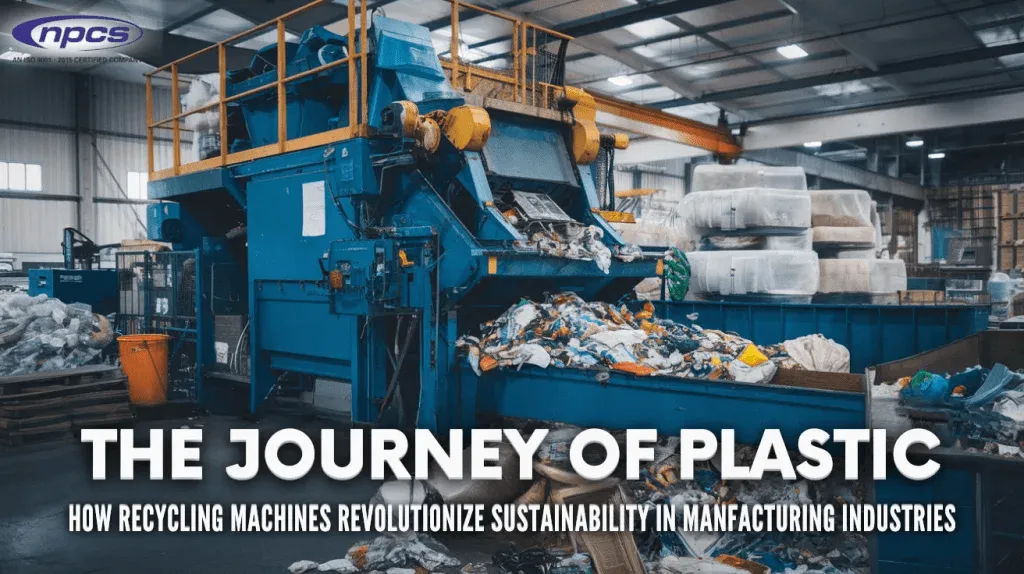
Plastic recycling has gained utmost significance in ameliorating the environmental strains while straightening the path for manufacturing industries to succeed in sustainability. Plastic recycling machines have forged a way to eco-based industries. Waste reduction in these places is partly about inhabiting the new law of nature; it is largely about forming a green legacy into the future. Understanding the Environmental Impact of Plastic As a versatile and useful member of the family of materials, plastics are a major environmental threat in case of improper disposal. Every year, more than 400 million tonnes of plastic are produced, and only a small part of it is sufficiently recycled. The majority goes on to pollute the ecosystems. Improper disposal results in the accumulation of waste that lasts for ages without decomposing and affects marine beings and soil health. This poses twin problems for the manufacturing industries: raw materials need to be epidemiological in their sourcing, and plastic waste needs to be disposed of safely. With this growing focus towards sustainability, plastic recycling has turned out to be an important aspect of an industrial operation. The technological advance in machines for recycling plastics has enhanced all processes of converting waste and remaking materials into reusable products. Such machines easily enable industries to implement the production of goods containing recycled plastics, thus lessening reliance on virgin resources. This practice, apart from being ethical, is also economically advantageous in terms of lowering the costs for raw materials and boosting brand reputation. How Plastic Recycling Machines Transform Waste Management The advent of these machines for plastic recycling would revolutionise the waste management systems. Unlike their predecessors, such machines sort, clean up, and process different kinds of plastics with remarkable deftness. The modern applications of plastic recycling machines integrated such technologies as infrared sorting and chemical recycling to ensure optimum resource recovery. For instance, with infrared sorting, plastics are separated according to their chemical composition for maximum recycling of PET, HDPE, and others. Chemical recycles, however, decompose the polymer into their original building blocks in order to end up with high-quality recycled plastic. For manufacturing companies, these innovative developments would mean an even more secure supply of raw materials for their industries. It is not just a waste management system; it is also a key contributor to a circular economy for industries. This closed economy helps them get rid of their environmental footprint while maintaining global sustainability standards. Read Our Handbook: Medical, Municipal, and Plastic Waste Management Handbook Handbook on Biodegradable Plastics (Eco-Friendly Plastics) Modern Technology of Waste Management: Pollution Control, Recycling, Treatment & Utilisation Bioplastics & Biodegradable Products Manufacturing Handbook The Role of Manufacturing Industries in Promoting Sustainability Manufacturing industries are critical components to promoting efficiency through the use of recycled materials in their production lines. Their adoption of plastic recycling, for example, preserves resources and reduces reliance on fossil fuels. Just like the automobile industry, plastic recycling machines are used to manufacture environmentally friendly plastics in the packaging sector. This has significantly helped industries to be in line with consumer demand for sustainable products. The implementation of such initiatives largely relies on stakeholders working together. Indeed, encouraging and creating a proper enabling environment through the synergy of government, industry, and consumers will go a long way in increasing the uptake of plastic recycling technologies. In the same breath, such industries should invest further in R&D to realise new innovative applications for recycled plastics so that sustainability would have entrenched itself into how they conduct their operations. Find the best plastics waste management solutions and advanced machinery for recycling plastics at niir.org and stay updated with the best sustainable practices changing the face of industries across the globe. Innovative Applications of Recycled Plastic in Manufacturing Industries Recycling plastic has opened new doors towards the end of innovation in industries dealing with manufacturing for both products and their production processes. Advances in technology have assisted industries in innovating new methods of using recycled materials in their process operations to minimise waste and costs of raw materials. In construction production, recycled plastics are transformed into suitable materials such as composite lumber and roofing tiles. Besides this, this material is green in nature; its durability and weather resistance of the products surpass those of conventional materials. This has, in turn, won consumers who are active in the environment responsible practices. Recycled plastics are being explored by the automobile and electronics companies as lightweight components that could result in energy savings without compromising on product quality. It is possible for a manufacturer to incorporate such recycled material in perfect integration into his production lines using the plastic recycling machines. Challenges in Adopting Plastic Recycling Technologies However, as immense as the benefits from using recycling machines are, obstacles are also many when it comes to adoption processes. Such as high initial investment requirements, limited infrastructure, lack of awareness, etc., which lead to decreased adoption of recycled plastics among manufacturing industries. It is the problem of inconsistent quality in recycled plastic materials. They differ from virgin materials regarding purity and performance and make them unusable in certain cases. Advanced plastic recycling machines are required to ensure proper sorting and purification of recycled plastics. Another factor is that there is no regional standardization. Unlike areas with regulations regarding the recycling of plastics, countries lack even a facility to solidify one. Lastly, there is a resistance to change from older industries to the newer innovative practices. Many manufacturers remain unaware of the long-term cost savings and environmental benefits machines have for them. Education and government incentives would improve this condition. Also Read: Plastic Products Manufacturing Plant Recycling Business The Future of Plastic Recycling in Manufacturing Industries The future holds great possibilities in terms of changing the working paradigms of manufacturing by recycling plastic. Such advancements in technologies will increasingly improve the efficiency and accessibility of the recycling systems used, which will lead to more progressive reductions in the environmental footprints of industries. Industries also investigate new bioplastics and hybrid ones constructed from mixtures of
Strategies to Optimize Supply Chains in Sustainable Food Processing
In this modern and changing food processing sector, sustainability is not an option anymore; rather, it is a necessity. It incorporates introducing new products by redefining how a product is sourced, manufactured, and delivered in hopes of lessening impact on the environment and increasing efficiency. Supply chain optimization facilitates achieving all these aspects to close the divide between sustainable practices and business profitability. Here is how the food processing industry can deal with challenges in supply chain management in order to promote sustainability. Leveraging Technology for Supply Chain Visibility One of the most effective means for achieving supply chain optimization is the enhanced visibility across the network. For instance, advanced technologies such as blockchain, the Internet of Things (IoT), and artificial intelligence (AI) may be used by companies in the food processing industry to track every product along the path from farm to fork. This means that every step along the supply chain is recorded so that the verification of sustainable sourcing may be accomplished and inefficiencies may be detected through the use of blockchain. In addition, IoT devices such as smart sensors provide real-time updates on factors including temperature, location, and handling conditions. It includes critical information for perishable products that guarantee quality and reduce waste. On the other hand, AI-enabled analytics may prevent disruptions, optimize routes, and achieve efficiencies in logistics processes. Investing in these technologies will create transparency for businesses involved in food processing while at the same time making them trustworthy among consumers demanding sustainable products. Besides this, these innovations can create value in operational efficiency and lower emissions, which will be beneficial both for the world and for profit. Related Project Reports: Food Processing Packaging Projects Building a Resilient Supply Chain with Local Sourcing The food processing industry tends to lean on global suppliers; it is, however, a very brittle and ecologically costly model of supply chain. This has found local sourcing to be a great method of supply chain optimization, both in terms of sustainable sourcing and making a supply chain more resilient. For example, raw materials can be obtained from their geographical locations, thus minimizing the distance of transport. This will in turn bring the carbon footprints down. This will also encourage local economies, have stronger communities, and ethical sourcing. Lastly, local sourcing minimizes risks for countries under disruption from global supply chains, e.g., pandemics, conflicts. And in making local sourcing optimized, companies would have to link themselves with local growers and cooperatives. Such contacts would be direct, thus ensuring the quality of the product supplied, reliability, democratic practice, and so on. Other ways of getting engaged would be through available businesses in the food processing industry in collaboration with local government or NGOs toward sustainable farming practices. Such local sourcing supplements an otherwise effective supply chain by providing a long-term anchor for sustainability. NIIR.org provides consultancy and resources on identifying and linking with local suppliers. Also Read: Food Manufacturing Business Reducing Food Waste Through Strategic Inventory Management Food waste is a big concern in the food processing industry from both environmental and economic perspectives. Efficient inventory control is the driving force behind reducing wastage and optimizing the supply chain processes. Just-in-time (JIT) inventory systems reduce overstocking because only as much inventory as needed is available for use. Furthermore, demand forecasting tools powered by AI and machine learning enable companies to get very accurate predictions of the sales’ patterns. It ensures the production and distribution of the right products and helps in optimizing spoilage and waste at the same time. Another effective strategy is to supplement those secondary processes with ways of using by-products or surplus in another manner. For instance: Protein-rich animal feed can be made from juicing pulp. Fruit pulps, or some of the extraction residues, can be transformed into jams. Vegetable scraps can be transformed into animal feed or compost. Also Read: Food Processing Business These principles exemplify the circular economy, as they reduce waste at all levels of the supply chain. Embracing Renewable Energy in Supply Chain Operations It is emergent where heavy energy consumption of the food processing industry and emission amounts from production, distribution, and storage are considerable. One might consider the execution of renewable energy sources to make operations more sustainable in the long run in minimizing cost for operational supply chain optimization. Renewables like solar, wind, and bioenergy can be used to power any facility, transport, and refrigerated cold storage units. For instance: Solar panels in processing plants reduce a foreign dependency on fossil fuels. Wind farms, whenever built at appropriate places, can generate electricity for supplying logistics hubs. Bioenergy from organic waste supports principles in a circular economy. All these solutions are usually available with government subsidies and tax benefits allowing the industries to save upfront on costs. Renewable energy use reduces carbon emissions and protects operations from exploding fuel prices or resource depletion. Organizations can also advance their sustainability through collaborations with green logistics providers to make use of energy-efficient carriers like electric or hydrogen-powered trucks. Sustainability will be amplified across the supply chain through such partnerships. Prioritizing Ethical Labor Practices in Supply Chains Ethical labor practices are vital in the establishment of a sustainable supply chain in the food and processing industry. It embodies, apart from ensuring compliance with global standards, the means for creating trust for consumers. Regular audits on supply chains may be conducted by companies to identify and correct various forms of unethical practices. Partnering with suppliers who are holding certifications as Fair Trade, Rainforest Alliance, or Ethical Trading Initiative (ETI) assures compliance with ethical sourcing. These certifications not only ensure better protection of workers but also improve product quality and enhance the brand reputation. Technology plays roles here as well. Blockchain technology provides an unalterable record of labor practices, whereas AI tools can identify discrepancies in payrolls or working hours as evidence. Ethical practices, therefore, are not just a moral obligation but also serve as a competitive advantage at a time when consumers demand transparency. Also Read:
How AI and IoT are Revolutionizing Supply Chain Optimization in the Food Processing Industry
Artificial Intelligence and the Internet of Things are leading to a significant transformation in the food processing industry. New methods are being devised to manage or operate the business-integration systems rather than just the efficient flow of goods and information. The most intriguing use cases are for supply chain optimization in the delivery, waste management, and operation costs. Let us understand this because it leads to various innovations through AI and IoT. Enhancing Inventory Management with AI and IoT In the food processing industry, effective inventory management has remained a challenge, mainly as a result of perishability. Historical data, sales patterns, and market trends are effectively analyzed by AI-powered tools to forecast demand. This would enable manufacturers to put in their production at the right time and amounts to avoid waste. It further provides timely monitoring of inventory via IoT. It makes use of sensors in warehouses that can capture humidity, temperature, and storage condition readings regarding perishable goods. If these conditions move away from the action set points, IoT alarm systems will instantly send alerts to the management. Sudden inducement of high temperature in a refrigerated storage section will trigger immediate remedial action. In addition, AI algorithms dynamically modify the inventory levels in real-time according to ambient weather changes or local activities that greatly impact demand patterns. Put together, all these definitions create a new concept of AI and IoT that helps businesses manage stock levels optimally without running out of stock, thus improving the entire electronic supply chain optimization. Also Read: Waste Management and Recycling Revolutionizing Food Safety and Quality Control Utilizing AI and IoT technologies in food processing has thus become an important step to maintain the high standards of safety and quality. Production lines with IoT sensors involve continuous surveillance to identify abnormalities. The AI algorithms will collect and analyze irregularities within the production lines, such as contamination or non-operational machine parts, to provide risk assessments and recommend corrective actions. As an enabled smart camera, IoT can see food products needed to be faultless as they are flowing through the production lines. AI has been programmed to determine, at a future time, when the equipment will be down so that a company can arrange a schedule for preventive maintenance work. Such prospects for innovation yield great potential benefits. These include being able to avoid product recalls, which negatively affect costs associated with possible damage to a brand’s market image it possesses or is in the process of building. Businesses may also keep safety regulations using AI analysis and large datasets. Product tracing makes it possible to find and fix problems early on. Together, AI and IoT bring high-level food safety, with consumer trust being built along with it. Optimizing Logistics and Transportation with Smart Technologies The provision of transport and logistics services is among the many aspects one should address in supply chain optimization in the food processing industry. AI and IoT are emerging as important technologies ensuring timely and quality delivery of food products. Route Optimization: AI algorithms, like the suggestion of routes based on traffic and weather combined with one’s fuel efficiency, lead to the determination of optimum delivery routes.Thus, the transit time becomes shorter, thereby cutting costs. Real-Time Tracking: GPS systems using IoT are capable of providing real-time movement updates about vehicles so that the deliveries are achieved on time. Environmental Monitoring: IoT sensors on transport route environments monitor the parameters such as their temperature and humidity to prevent their spoilage. Smart containers will notify logistics teams anytime those parameters exceed safe limits so that the intervention happens faster. Predictive Analysis: By determining demand spikes within the AI platform, businesses can respond in real time by proactively adjusting logistics strategy. Collectively, these technologies create a seamless, smooth, and very efficient logistical network delivering fresh products to consumers timely while minimizing waste and maximizing customer satisfaction—almighty goals for the food processing industry. Transforming Demand Forecasting with AI-Powered Analytics As the backbone of supply chain optimization, precision demand forecasting is an important challenge for food processors. With AI-driven analytics, it has proven to be possible to explore enormous datasets for predicting consumption preferences, market trends, and seasonal fluctuations. Unlike conventional forecasting, AI adopts real-time forecasting, through which predictions become accurate and actionable. Machine learning algorithms are examples of such technologies whose future applications could process information from trends on social media, weather conditions, and sales data on specific products to forecast their demands. Thus, production schedules can be adjusted and distribution strategies implemented when changes occur, which would reduce the possibility of overproducing or underproducing. IoT complements this by giving real-time information collected from connected devices, such as point-of-sale systems and sensors for inventory. With this much information, end-to-end visibility into the supply chain is achieved, allowing fast responses to demand changes. The food processing sector needs such predictive ability for products like these because overproduction causes wastage, while underproduction leads to missed sales. Businesses can thus have a profitable and sustainable balance with phenomena such as AI and IoT. Also Read: Food Processing and Agriculture-Based Industries PET Bottle Recycling Manufacturing Enhancing Sustainability in the Food Supply Chain The food processing industry now plays a key role in achieving sustainable outcomes, leveraging artificial intelligence (AI) and the Internet of Things (IoT) to optimize resource utilization and reduce waste, thereby meeting environmental goals while staying competitive. An analysis of production processes by artificial intelligence systems reveals all kinds of possible inefficiencies, such as excessive consumption of energy or water. Smart sensors connected to IoT allow manufacturers to monitor equipment performance and resource usage in real-time, enabling them to promptly address any efficiency loss. For example, IoT solutions have sensors that spot a leak in one of the water systems, which saves a lot of wasting and spending. Moreover, companies use AI-based supply chain applications to optimize transportation paths, reducing carbon emissions from logistics operations. These can also summarize the recycle-repurpose suggestions based on waste patterns that a company generates, which map to the circular economy.
How Supply Chain Optimization Drives Startup Success in Smart Manufacturing
In the current evolving ecosystem of manufacturing, startups are changing and introducing new metrics that redefine what supply chains should be to gain competitive advantages. This excellent strategy integrates with modern technologies and drives extraordinary processes in an agile way, helping manufacturing startups optimize operations, reduce costs, and enhance customer satisfaction. The following article tells how principles derived from smart manufacturing and the optimized supply chains have been preparing good grounds for that innovative variability of startup ideas. The Role of Supply Chain Optimization in Boosting Operational Efficiency For manufacturing startups, operational efficiency is the prime differentiator between success and failure. Supply chain optimization helps in reducing waste and costs and ensures the seamless transfer of raw materials to finished goods. A startup can achieve: Enhanced agility: Supply chains that are flexible will allow the startups to respond sufficiently quickly to any market change or disruption and will prove essential in a day when business is as uncertain as it is today. Cost savings: More streamlined logistics and inventory systems mean that overhead costs are reduced, freeing up resources to invest in innovation and growth. Enhanced customer satisfaction: Startups can build brand loyalty by ensuring on-time delivery of high-quality products. Predictive analytics and IoT-enabled monitoring solutions have revolutionized the market; these give way to data-driven decisions. Like predictive analytics, which performs demand forecasting so that the startup can proactively modify production schedules and inventory levels, such technological reforms help to eliminate stockouts and overproduction. How Smart Manufacturing Aligns with Supply Chain Innovation Smart manufacturing is an important area of Industry 4.0 that is currently opening up new opportunities for startups to optimize their supply chains. Innovations such as artificial intelligence, robotics, and automation are being employed to improve the capability of production systems that are dynamic in nature. Automating Workflows: Automation then lends the capability for increased speed of productivity while lowering human errors. The resultant improvements therefore have direct implications to increase and ensure the efficiency and reliability of the entire chain. Sustainability: Startups that adopt ‘green’ practices only have to fulfill the existing requirements when fresh regulations emerge and attract green consumers, one of the fastest-growing market segments. Collaboration: Better integration among suppliers, manufacturers, and distributors brings superior communication and fewer blockages in operations. New technologies have the potential for lowering overhead costs while improving product quality and market responsiveness, which are essential to becoming competitive even for startups. Also Read: Food Processing and Agriculture-Based Industries PET Bottle Recycling Manufacturing Emerging Startup Ideas Fueled by Supply Chain Optimization Innovation in novel startup ideas can be found at the intersection of supply chain optimization and smart manufacturing. Some good examples may include: Sustainable Supply Chains: Startups create eco-friendly logistics and sustainable raw materials to develop greener solutions and market them based on demand. On-demand Manufacturing Platforms: Customers can place orders for customized items that will be quickly delivered, thus changing the traditional method of manufacturing. Predictive Maintenance Services: Avenues that startups are focusing on in offering IoT and AI-based solutions that can predict or foresee equipment failure, thereby ultimately reducing downtime and increasing high efficiency. Such ideas show that startups are not merely part of the manufacturing space; they are transforming it with much innovation. Project Reports: Best Business Opportunities in Turkey Digital Transformation as a Catalyst for Supply Chain Success The new and ongoing digital transformation is changing the way startups manage their supply chains, from the blockchain to cloud computing. Digital tools provide visibility, traceability, and efficiency at every level of the supply chain. In short, new-age digital tools optimize supply chains so that the startup can grow fast without building a whole lot of additional cost overhead. Real-time tracking: IoT-enabled sensors that allow startups to track shipments create visibility alongside which risks to theft or damage can be reduced. Blockchain: This technology provides a record of transactions that can be tampered with, which, for example, is crucial to industries like pharmaceuticals, food manufacturing, and the like. Cloud-based collaboration: Any supplier, manufacturer, and distributor could work with other facilities through platforms that allow real-time data sharing; they can work more efficiently and reduce gaps in communications. Such innovations speed up the speed at which startups adapt to changing market trends, build customer trust, and normalize standards in the industry. This equipment is particularly critical in smart manufacturing, where flexibility and precision drive performance. Read our Books Entrepreneur’s Start-Up Handbook: Manufacturing of Profitable Household (FMCG) Products with Process & Formulations (2nd Revised Edition) Handbook on Production, Recycling of Lithium-Ion and Lead-Acid Batteries (with Manufacturing Process, Machinery Equipment Details & Plant Layout) Addressing Supply Chain Disruptions with Agile Strategies Unexpected interruptions, such as geopolitical tensions or natural catastrophes, can cripple the unprepared supply chain. However, startups that adopt agile strategy can protect themselves from these problems. Supply chain optimization is about laying structures that can be resilient to ups and downs without losing efficiency. Diversifying suppliers: More suppliers mean less dependency and more continuity during any regional disruption. Nearshoring production: Having production closer to key markets minimizes the issues involved with long-distance logistics and customs delays. Demand forecasting: An advanced analytics tool to predict market demand helps the startup to adjust inventory levels and production schedules in advance. Also Read Manufacturing Business of Disposable Products Building agility into operations can help startups achieve operational consistency while they grasp newly found opportunities and strengthen their positions in the competitive manufacturing landscape. Sustainability as a Competitive Advantage in Supply Chains These days, sustainability is no more a choice; it is a competitive necessity. Whether consumers or businesses, everyone talks about going green. Startups have good chances of being an ambush as far as sustainability in business goes. Supply chain optimization is one of the major things businesses engrave within an organization on how to be sustainable. Eco-friendly sourcing: Start-up companies can source from suppliers who are dedicated to the sustainability of materials and practices. Minimization of waste: Lean manufacturing principles are all about waste; by following them, waste will be
Startup Ideas in the Age of Smart Manufacturing: Opportunities in 2025
As 2025 approaches, smart manufacturing increasingly becomes a touchstone of industrial transformation, throwing up numerous opportunities for the most brilliant entrepreneurial minds and ideas. Advanced technologies redefine production processes, and supply chain optimization has become increasingly critical. Smart startups take advantage of these trends in addressing some pressing challenges and, in turn, unlocking new business models. Redefining Supply Chains with Technology Integration Supply chain optimization is now priority number one because of the complexities of world trade and the pressure to create resilient systems. Startups looking at real-time tracking or predictive analytics with the use of digital twins can reap these benefits. Logistics IoT-enabled AI, for example, may even predict and advise alternative routes for disruptions to improve delivery times and minimize costs. Digital twin technology is supposed to virtualize physical assets so that manufacturers can glean insights that reduce downtime and improve efficiency. Also Read: Waste Management and Recycling Nearshoring, relocating production within closer reach of key markets, provides additional opportunities for startups to create platforms for vendor collaboration and local sourcing. Consequently, newer markets, such as Mexico, are beginning to boom with investments from these shifts, thus becoming attractive markets for innovating supply chain solutions. Revolutionizing Manufacturing Through Industrial Automation Put an effective step forward in the smart manufacturing world with startups that industrial automation could bring yet. When you bring on board artificial intelligence, robotics, and even machine learning, it’s all about the advanced ingenuity startups have in efficiency and reducing human errors. Some of the examples include adaptable robots in high-mix manufacturing environments or using an AI vision platform that does some autonomous automation and welding; those are major game changers in the industry. Automation, on the other hand, makes it possible to scale production easily, custom manufacturing, or flexible batch sizes without sacrificing quality. Startups moving into the domain should target developing solutions that fit with existing manufacturing ecosystems so real-time adjustments and predictive maintenance could be carried out. Project Reports: Best Business Opportunities in Mozambique, Africa Sustainability as a Catalyst for Innovation The adoption of sustainable manufacturing is no longer a burgeoning trend but is, instead, developed into a necessity. Start-ups can conceptualize ideas such as closed-loop systems capable of recycling materials, energy-efficient production technologies, and support solutions of the circular economy. 3D printing, for instance, can produce things locally and waste-free, while renewable energy integration minimizes reliance on non-renewable sources. Furthermore, the global sustainability movement is also advancing innovations in packaging and product lifecycle management, where startups could develop biodegradable materials or software tracking solutions to minimize carbon footprints. As well, consumers and businesses alike will only continue to swell market numbers for startups whose innovations focus on sustainability. Also Read Food Processing and Packaging Industry Customization at Scale: The Role of Additive Manufacturing Additive manufacturing, or 3D printing, is now unlocking new avenues for mass customization. With this technology, even a startup can reach the niche markets quickly. It is all about producing complex parts with minimum wastage that makes it a friendlier option to conventional manufacturing. The new-age startups, which can use 3-D printing technology for specialized verticals like aerospace, healthcare, and consumer goods, have been seen to adopt lightweight aircraft components that cut down fuel consumption and prosthetics that add a totally new dimension in health care services. With the added benefit of rapid prototyping, this would shorten the time taken to roll out any product, which means a lot in dominating competitive markets. Startups can then create models that can be scaled to bridge the gap between industrial and consumer requirements. With applications of additive manufacturing in AI and IoT, it becomes more precise and adaptable for better integration into the manufacturing environment at the other end. Data-Driven Decisions: AI in Smart Manufacturing The AI technology stimulated the transition to smart manufacturing. AI start-up companies can bring into existence tools that will optimize production schedules, monitor quality, and predict equipment maintenance needs. AI could power supply chain optimization platforms that, for instance, forecast raw material shortages and propose alternatives to ensure seamless production continuity. Predictive analytics is another hot cake that start-ups can cash in on; this involves insights that disclose customer preferences so that the manufacturer will deliver exactly what the appraisal gives. Startups can, however, create solutions for cybersecurity to allow the connected systems to be fortified against vulnerabilities regarding data management and network security. These start-ups are certainly working their way towards artificial intelligence, which spells out for efficiency in manufacturing and somewhat broader goals toward resilience and sustainability in the industry’s future context. Also Read Food Processing and Packaging Industry PET Bottle Recycling Manufacturing Exploring Opportunities in Digital Twin Technology Digital twin technology, which translates to virtual models of physical assets, is reengineering manufacturing. Through it, startups can essentially put up platforms that will provide real-time monitoring of various production processes for predictive maintenance and resource optimization. A good example is how a manufacturer using digital twins can simulate the impact of changes to the design before it is actually done to minimize error and reduce costs. Tailored digital twin solutions are also now emerging in specific applications across different industries like automotive and pharma, where accuracy and assuredness are crucial. Thus, taking on supply chain optimization straight with digital twins ensures operations are carried out uninterrupted, even in disturbances. Investments in digital twin technologies will increase phenomenally, creating opportunities for startups to innovate and establish leadership within the smart manufacturing ecosystem. Conclusion The present times are not only offering new opportunities to the smartest businesses but are also changing the face of entrepreneurship. They are providing opportunities for enterprising individuals to establish startups with a focus on next-generation advanced manufacturing technologies, including artificial intelligence, additive manufacturing, and digital twin systems. While addressing critical industry needs such as supply chain management, operational efficiency, and sustainability issues. The markets won’t cause enormous impacts, but they will actively push the boundaries of current capabilities and drive progress toward resilient, environmentally friendly manufacturing ecosystems. That is, 2025
Supply Chains with Smart Manufacturing: Key Strategies for Startups
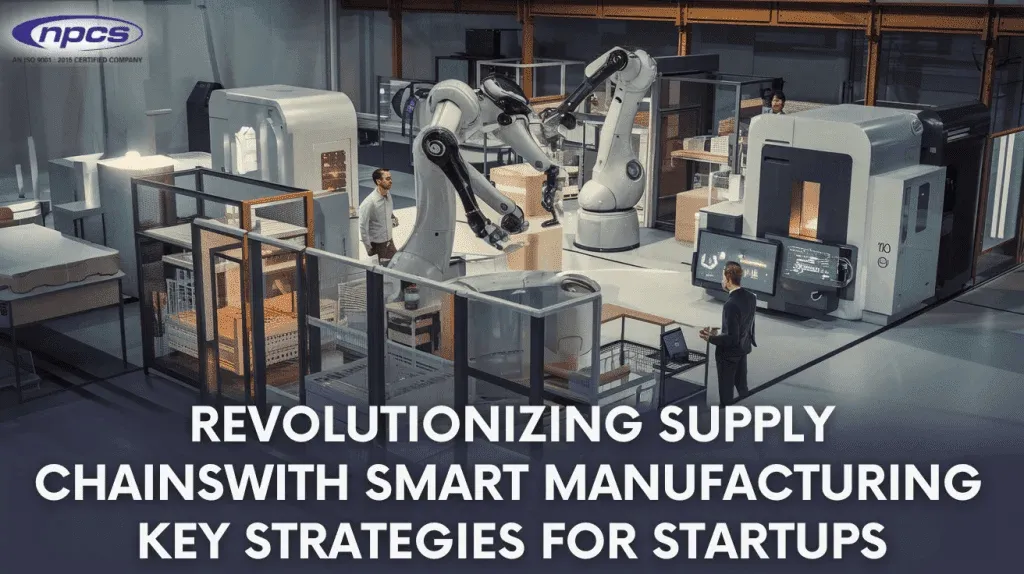
The choice of adopting sustainability practices is no longer a choice but a necessity to adapt to today’s changing food processing industry. The whole rethink on product sourcing and manufacturing to delivery is all aimed at reduction in the impacts on the environment through the performance of efficiency. Effective supply chain optimization cumulates the effort for achieving all these objectives; thus, it serves as a bridge between sustainable practices and business profitability. Here are the ways in which the food processing industry can address all supply chain challenges towards achieving a more sustainable future. Embracing Technology to Achieve Supply Chain Optimization The latest technologies integrated into the process work like IoT, cites AI and blockchain technology businesses that spent. However, startups need these technology processes and streamlined activities with optimal supply chain management. IoT-Integrations: Using IoT-enabled devices gives real-time visibility to goods, inventories, and transportation. For instance, the start-up in the food industry can use these sensors to monitor temperature-sensitive products during transportation, ensuring they are still in excellent condition and waste is minimized. Artificial Intelligence. It better forecasts demand tendencies, minimizes lead time, and facilitates improved decision-making through AI-driven analytics. For companies operating just above profit margins, AI is particularly beneficial. Blockchain: Blockchain guarantees transparency and instills confidence into the supply chain as it provides a secure ledger of transactions along with tracking every movement of the product. Read our Books Entrepreneur’s Start-Up Handbook: Manufacturing of Profitable Household (FMCG) Products with Process & Formulations (2nd Revised Edition) Handbook on Production, Recycling of Lithium-Ion and Lead-Acid Batteries (with Manufacturing Process, Machinery Equipment Details & Plant Layout) Not only do these technologies cut costs, but they also help startups increase customer satisfaction. As per the report of niir.org in 2024, roughly 30% effectiveness improvement was seen for adopting tech-driven strategies by companies in their supply chain performance. Developing Resilient Supply Chains Through Smart Manufacturing Smart manufacturing also uses advanced robotics and machine learning, as well as data-derived insights, and advances the nature of adaptive processes in manufacturing. By adopting this approach, the new startups can be able to make their processes more operationally efficient and reduce traditional dependency. Flexible Manufacturing System (FMS): This allows startup firms to switch production lines to meet changing consumer demands quickly, without incurring too much downtime. Predictive Maintenance: With AI and sensors, startups can predict before a breakdown happens and can avoid costly downtimes. Digital Twins: Companies will be able to create a digital twin of manufacturing and test new scenarios to improve processes without the risk in the real world. Sustainability as a Cornerstone of Supply Chain Optimization We will not have an alternative to sustainability; it is a necessity. To take up any sustainable practices in the supply chains, startups are not only reducing costs by doing so but are also learning to meet the growing consumer expectations of eco-friendliness in operations. Green Logistics: Startups can minimize their carbon footprints through optimized transportation routes and the use of electric and hybrid vehicles. Eco-friendly Packaging: It emphasizes biodegradable and recyclable materials that can reduce environmental impacts and boost brand image. Energy Efficiency in Manufacturing: Using renewable energy sources and energy-efficient machines contributes to smart and cost-effective manufacturing. Project Reports: Best Business Opportunities in Morocco, Africa Data-Driven Decision-Making for Enhanced Supply Chain Optimization With evolving technology, data has become a valuable asset to drive innovation in supply chain optimization. Startups use big data analytics and machine learning to gain actionable insights. These insights help startups improve operational efficiency and make better decisions. Startups use historical data and AI to detect demand patterns and supply chain breakpoints. Predictive analytics helps identify market trends for better decision-making. This enables companies to align production with real demand. As a result, waste and excess inventory are reduced. Real-Time Data Monitoring: Startups can deploy smart sensors and IoT devices that tend to monitor supply chains in real time and assure all issues are discovered and rectified as soon as they happen. This improves the resource-minimalization effort and delays in the supply chain. Supply Chain Visibility: Data integration tools allow startups to manage and track all their supply chains, from raw material sourcing to completion and delivery. The result of better visibility is that more informed decisions can be made faster and more accurately. Read Our Books: Business Ideas for Startups in the Drugs & Pharmaceutical Industry with Project Profiles (3rd Edition) Building Strong Supplier Relationships with Smart Manufacturing Tools Establishing strong ties with suppliers has always been a major component in optimizing supply chains. Employing intelligent manufacturing tools, startups can build collaborative ecosystems in their supply lines, benefiting their suppliers and manufacturers. Real-time Data Analytics for Supplier Performance Monitoring: This is to monitor and assess supplier performance based on real-time data analytics to ensure they meet the quality standards as well as delivery requirements. It tends to trust and minimize the chances of supply chain disruptions. Automated Ordering Systems: Automated as smart manufacturing technologies turn it into just-in-time ordering, eliminate unnecessary inventories, and reduce the occurrences of stockouts. In this case, startup companies can ensure an effective, smooth process from suppliers to production. Collaborative Platforms: Cloud-based platforms allow better communications between suppliers and the startup, improving order statuses, production schedules, and shipment updates. This makes the supply chain highly agile and flexible to changes in the market. Visit this Page for More Information Food Processing and Packaging Industry Agility in Supply Chain Management: The Role of Smart Manufacturing for Startups Indeed, startups have to keep themselves ever agile to survive, let alone thrive in the dynamic marketplace of today. At the heart of such agility lies smart manufacturing, the process of establishing agile supply chains that quickly adapt to changes in demand, market conditions, and other external disruptions. On-Demand Production: With advanced automation and robotics, startups are capable of adjusting production capabilities on the fly: ramping up or ramping down the output to reflect demand in real time. This makes it impossible for a business to overproduce; indeed, it only