
How Feasibility Studies Shape the Success of Startups in Emerging Industries

Starting up in a new industry proves both exciting and risky; emerging industries typically showcase rapid technological changes and evolving consumer needs. Although much potential lies in these industries, ample risks are always attached to them. However, one of the effective instruments through which entrepreneurs can assess and navigate this uncertainty is what the author calls feasibility study. The study defines the possibility of going ahead with the business idea, thus enabling an entrepreneur to make an informed decision and improve business success. This article will look at how feasibility studies provide a basis for the success of a startup business. It also explores the much more detailed steps of feasible study and how organizations such as NIIR have been guiding businesses through informed decision making. Critical Factors of Startup Feasibility Studies Analyze the Market Opportunity This will look at whether a system can run well in the existing market. It will include an analysis of the present market situation, identification of gaps and competition, and prediction of demand trends. Through these, start-ups will develop strategies that will enable their alignment with market needs and capitalize on opportunities. For example, where renewable energy and artificial intelligence exists, and among others as fast-moving markets, a potential feasibility analysis for start-ups helps identify areas with innovation or improvement of existing solutions, ensuring that start-ups target viable niches without hitting on bad ideas market-wise. Financial Feasibility Assessment and Risk Analysis New businesses typically spend thousands of dollars on research, new technologies, and hiring top-notch talent. A feasibility study allows a startup to gauge its cost estimates, the sources of revenue it is likely to generate, and the type of funding it would need to draw. Thus, it can anticipate problems and allocate its resources well by analyzing the financial feasibility. Moreover, such studies identify potential risks such as regulatory hindrances, technological barriers, and market volatility. Early migration of these risks prevents startups from making costly mistakes in their ventures. Resource Allocation and Strategic Planning Most of the time, the resources available in a startup organization are limited. Therefore, it is critical that maximum utilization of available resources is done. Feasibility analysis can tell the entrepreneurs that their idea is aligned with the resources available for development. This may include assessing the existing technology capacity, expertise of the workforce, and infrastructure needs before concept development. Steps to Conduct a Feasibility Study for Startups 1. Project Scope Definition Clearly define the business opening planned objectives and goals. Specify what the success means and what parameters need to be in place to measure the success. 2. Review the Market Define the target audiences for the competitors and the market. Apply data to assess whether demand exists for your product or service and what sets your business apart from your competitors. 3. Evaluate Technical Feasibility Check if the technology, infrastructure, and expertise required to implement your idea are available. For example, a biotech startup must check whether or not it has access to specialized equipment and personnel. 4. Financial Feasibility Develop a cost analysis that includes startup costs, what costs will be incurred to run the business, estimated future revenues, funding sources, and financial projections for at least the first five years. 5. Legal and Environmental Factors Considered Determine what the legal and regulatory requirements are. This is especially pertinent for startup companies in healthcare, as they have to comply with many stringent laws. 6. Informed Decision Summarize findings and determine if to go with, improve, or abandon the business idea. A full feasibility report templates it for execution. Experts Role in Feasibility Studies Great work of coming up with innovative ideas is possible by entrepreneurs, but the practical knowledge experts are having ensure good work in a feasibility study. NIIR can offer all this, from project reports to consultancy work, but above all essentials for start-ups. Their databases and insight on many industries bring perfection in credibility to develop complete feasibility studies. How Feasibility Analysis Drives Innovation in Emerging Industries Adaptability to Industry Trends Emerging sectors are fast developing. Thus, adaptation into these new domains can take the lead role in making successful companies. Viable feasibility analysis gives start-ups the heads-up from existing trends and discovers new opportunities for deviations. An excellent example of this is the development of electric vehicles technologically intense and awareness of their environmental benefits are exponential. Startups moving into this direction can look into feasibility studies to look into market entry points, charging infrastructure needs, and potential partnerships for renewable energy. With such insights, businesses can top themselves as the leader of industries and keep team relevance through gradual changes or shifts in trends. Improving Stakeholder Confidence Investors, lenders, and borrowers will be quick to support a startup when a comprehensive feasibility study has been conducted. This stipulates a well planned growth path and good intention in conducting due diligence. A startup should be using such studies to communicate with data how AI-driven farming solutions are going to be beneficial to the agritech audience. This adds credibility as well as confidence from would-be investors that might not be familiar with the power of the technology. Creating an Sustainable Business Model Sustainability is a very important concern of today’s business trend, especially in areas like green technologies or circular economy solutions, in which new startups have emerged. A feasibility study helps startups understand what exactly their business model is concerning environmental, social, and economic sustainability goals. Identifying these problems at this kind of early point gives start-ups the opportunity to map out lean operations with minimum negative impact and maximum benefit. Also Read: Project Feasibility Report Real-World Success Stories of Feasibility Studies TESLA-DISTURBER OF ECONOMY IN EV SECTOR The entire transition of Tesla electric cars from niche to mainstream has been made possible through feasibility studies. Before launching their products, Tesla understood scalability in manufacturing, technology of battery, and consumer adoption trends. Such findings enabled them to bring forth a model that is sustainable and innovative for the company. BEYOND MEAT,
The Future of Feasibility Analysis in Sustainable Industrial Projects
Nothing more than the icing on the cake, beyond any requirement, it has now become an essential prerequisite for any organization actually going for a long-term prospect. Feasibility analysis is one of such key tools for planning industrial sustainability developments. Therefore, with the global efforts from all industries to minimize their environmental footprints while enhancing their profitability, conducting a comprehensive feasibility study has now become even more important in making such feasibility confirmatory for not only the project but also its sustainability objectives. The Role of Feasibility Analysis in Sustainability A feasibility study is what evaluating a project is all about, checking whether it is reasonable and how successful it may be. In a fair sense, sustainable industrial projects would have an environmental, social, and economic assessment to meet current standards of sustainability. For instance, the feasibility analysis for manufacturing would tell whether renewable sources of power for operations would be feasible for a company setting up a manufacturing unit. Also, Read Our Feasibility Study Reports Cold Storage Detailed Project Report Multi-specialty Hospital Bamboo Sticks Manufacturing Plant Key Benefits of Feasibility Study in Sustainable Projects Well-informed Decisions A feasibility study exposes critical information in various aspects such as accessibility of resources, potential risks, and impacts on the environment. Therefore, the stakeholders can make informed decisions which are well aligned with sustainability goals. Cost Optimization All the cost analyses at the very early planning stage save cents for businesses in the long run since they can lead to the finding of sustainable materials, efficient technologies, and processes that lower costs. Regulatory Compliance All the governments and institutions around the world have set extremely higher environmental regulations. Thus, an exhaustive feasibility analysis will ensure that the company is in compliance with all the statutes so that it will not face any penalties and effect on its reputation. Stakeholder Confidence Most investors and stakeholders today are inclined toward projects bearing good sustainability plans. An elaborate feasibility study raises confidence as it demonstrates how the project fulfills environmental and social requirements. Also Read: Steps to be followed by an entrepreneur for Establishing an Industrial Project Future Trends in Feasibility Analysis for Sustainable Projects Feasibility study landscapes are on the fast lane of changes with very possible trends that promise greater dynamism and efficiency along the way. Bright sparks of fresh innovations in the horizon include the following: Integration with AI and Big Data The current state of technology with regard to future advancements has much to do with the improvement of artificial intelligence and big data that dynamically innovated changes in conducting feasibility analysis. By analyzing various and heavy datasets, these technologies help in improving the accuracy of predictions regarding availability, environmental impacts, and demand with more capacity for informed decisions. Life-cycle Assessment Modern feasibility studies would broaden out to consider life-cycle assessments, meaning the environmental and economic aspects that the project could take throughout its entire lifecycle-from acquisition of resources to disposal would address true sustainability. Renewable Energy Assessments Renewable energy is going to be one of the pivotal forces to bear the burden for industrial sustainability. Accordingly, it will generate feasibility analysis that includes a huge study concerning the most popular clean energy forms such as photovoltaic, wind, and so on. Also Read: What are the Components of a Project Feasibility Report? Challenges in Feasibility Analysis for Sustainable Projects However, several hurdles still need to be overcome before fully unleashing the future of feasibility analysis in sustainable industrial projects. Trade-off Between Profitability and Sustainability Often sustainability comes with a cost of added upfront cost due to organic materials, renewable energy solutions, and advanced technologies. Finding a way to balance achieving environmental goals with financial viability will be difficult for many businesses. Updating Regulations Current environmental and lawful standards, while variable regionally, are in constant flux. Having to update feasibility studies according to the current regulations only adds to the complexity of planning. Data Adequacy and Integrity Feasibility analysis finds its most practical application in resource, market trend, and environmental impact data. Quite often, companies encounter problems accessing such clear and credible data, especially in remote or underdeveloped parts of the world. Resistance to Change Industrial sectors using traditional methods usually have very strong resistance to introducing sustainability-oriented feasibility studies. This is going to need massive cultural change as well as strong leadership. How to Overcome These Challenges? Shareholders Involvement & Cooperation Businesses can develop extensive feasibility studies, accounting for all crucial fronts through stakeholder involvement such as local communities, environmentalists, and policymakers. Digital Approach Adoption Software solutions and digital platforms can simulate real scenarios or analyses about project activities. This enhances not only efficiency but also improvements by way of improvement-enabled improvements in mistakes during the feasibility study. Learning and Continuous Change Dynamic feasibility updated methods must adopt an organization’s current operation model to keep pace with technological changes and regulations. Case Studies: Success Stories in Sustainable Feasibility Analysis Case Study 1: Solar-Power Manufacturing Facility A manufacturing company in India undertook a rigorous feasibility study regarding the building of a solar-powered production establishment. This analysis proved that, although the initial investment is high, a switch to solar energy would reduce operational costs by 30% in five years. This project is also approved by the stakeholders considering it aligns with government incentives for renewable energy adoption. Case study 2: It is that built in green construction. This architectural firm in Europe has been able to make viable feasibility studies for a green office building. It had lifecycle assessments incorporated besides sourcing eco-friendly materials using energy-efficient designs. Hence it resulted in a green building consuming about 40% of energy and 50% less water, setting the stage for sustainable architecture. What’s Next for Feasibility Studies?: Road Ahead Focus on Circular Economy Feasibility studies of the future will emphasize principles of the circular economy: waste minimization, resource reuse, greener, more cost-effective industrial projects. Advanced Simulation Tools It is expected that indicative simulation tools for real-time environmental impacts and resource usage will play a significant role
Feasibility Study vs Feasibility Analysis: Complete Feasibility Study Guide for Startups & Businesses
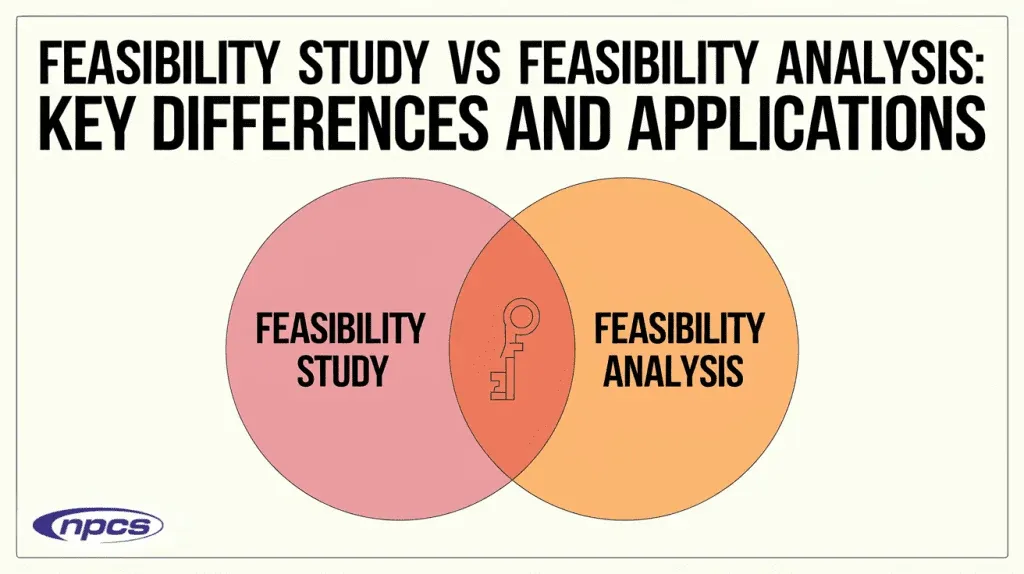
Before starting a new business, industrial project, manufacturing unit, or startup, entrepreneurs must evaluate whether the idea is practical, profitable, and sustainable. This is where feasibility studies and feasibility analysis become important tools in business planning. Many people confuse feasibility study and feasibility analysis, but both serve different purposes in project evaluation and investment decision-making. Understanding the difference can help startups, SMEs, and industrial investors reduce risks, improve financial planning, and increase business success rates. In this guide, we explain feasibility study vs feasibility analysis, their importance, applications, benefits, and how businesses use them for smarter strategic decisions. Key Takeaway A feasibility study evaluates the complete viability of a business or project, while feasibility analysis focuses on examining specific factors such as finance, operations, or technical capability in greater detail. Understanding Feasibility Study The feasibility study is actually one type of comprehensive assessment that is required to find out whether proposed project feasibility and viability would exist. This holistic evaluation for financial, technical, operational, and legal aspects is meant to arrive at a better all-round understanding of how well the project can work. It would help the stakeholders decide on whether to make a move. For example, if an organization would want to consider starting up a manufacturing plant, the feasibility study would look into the availability of raw materials, labor force, market demand, cost, and legal compliance for the activity. This broad evaluation makes sure that there are no overlooked factors in terms of resource commitment. These include the following essential components of a feasibility study: Market Study: Determining demand, competition, and customer needs. Technical Review: Finding out whether the required technology and infrastructure can be made available. Financial Analysis: Determining costs, revenue, and overall funding. Operational Planning: Fit of the project. Legal: Addressing the regulations and possible legal issues. While feasibility studies provide a broad evaluation of an entire project, feasibility analysis focuses more deeply on specific components that may affect project success, profitability, or operational performance. Understanding Feasibility Analysis Yet, feasibility analysis deals with detailed considerations of individual elements of the project. In fact, it is a very focused procedure often used to address some particular issues or examine single components. Whereas a feasibility study might broadly outline most aspects of an entire program, feasibility analysis typically delves more specifically for more granular insights. For example, prospective research might be in the feasibility analysis by throwing closer attention at whether the technology required for a new application software is feasible under budget and time estimated in the case of an organization that is unsure of the technology challenges that lie ahead. Or, a financial feasibility analysis can focus solely on ROI regarding a concept under consideration. Also, Read Our Feasibility Study Reports Cold Storage Detailed Project Report Multi-specialty Hospital Bamboo Sticks Manufacturing Plant Differences Between Feasibility Study and Feasibility Analysis The difference between a feasibility study and a feasibility analysis is scope and objective. Feasibility studies cover all aspects of a project comprehensively, providing a macro-level understanding of the viability. It is, however, accounted for in the feasibility analysis where studies presented a narrow focus on specific areas leading to micro-level insights that can be compiled into the general feasibility evaluations. For example, while a feasibility study for a real estate development would explore factors such as how much demand there is in the market, how legal constraints would be applicable, and the cost of construction itself, a feasibility analysis would drill down into such things as impact or financial modeling on the environment. Individually, they provide a view into detail balanced with a big picture. Applications of Feasibility Study vs Feasibility Analysis Both feasibility studies and feasibility analyses are essential tools used across industries to support better decision-making, reduce risks, and evaluate investment opportunities before major resources are committed. Business Expansion: A company that has recently ventured into a new market can perform feasibility studies on the possible demand, regulatory requirements, as well as the competition. It may also turn to feasibility analysis when focusing on the cultural preferences or distribution challenges of the market. Product Launch: Feasibility studies help learn the trends of the market and its financial needs for startups. A further analysis into the feasibility could delve into production costs or the rate of the scalability of production. Infrastructure Projects: Construction projects are often very broad feasibility studies for the overall viability and engineering firms conducting tenders for a construction project usually are in the habit of making both capacity and technical analysis for validation of design. Sustainability Initiatives: Organizations focusing on green projects usually carry out feasibility assessments to look at the environmental and regulatory compliance and then accompany such feasibility studies with in-depth operational feasibility studies for an implementation strategy. With these tools, organizations will be able to foresee difficulties and hidden opportunities and optimize strategies. Why Feasibility Evaluation is Essential A feasibility study is essential to reduce risks and increase the level of success in any business venture. Without these steps, companies can otherwise run into projects that consume resources and end in ultimate failure. A very good feasibility study will afford an overall picture, while the feasibility analysis will provide an expert examination of every area of concern. How to Conduct a Feasibility Study Step 1: Define Business Objectives Step 2: Conduct Market Research Step 3: Analyze Technical Requirements Step 4: Estimate Financial Costs Step 5: Evaluate Operational Feasibility Step 6: Assess Legal Compliance Step 7: Prepare Feasibility Report How to Conduct a Targeted Feasibility Analysis When addressing a certain area of project analysis, these steps should be followed: Identify the main issue Determine what the specific question or challenge is that is to be investigated more thoroughly. For instance, if a start-up became concerned about production costs, a financial feasibility analysis might be considered. Collect all necessary information Gather data relevant to the issue. This could include interviewing stakeholders, studying the industry benchmarks, or consulting with specialists. Use the right analytical tools Use specialized software or tools