
Starting an IV Fluid Bag Manufacturing Plant: A Comprehensive Guide
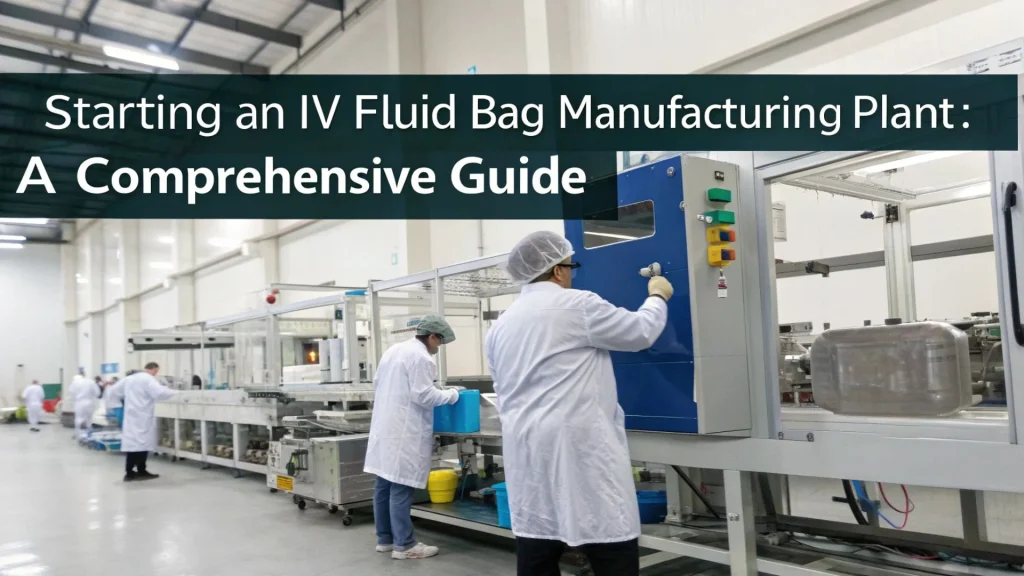
Intravenous (IV) fluids are critical in the patient care industry as the primary means of administering drug therapy, fluid, and electrolyte therapy.Their use is commonplace in both emergency situations and everyday medical practice at primary health centers and multi-specialty hospitals. IV fluids in the healthcare system are packaged and protected in sterile and tamperproof IV fluid bags which require stringent compliance to regulatory quality requirements. The growth of health care facilities into new regions and rising demand for sterile medical supplies have made the IV fluid bag industry a recession-proof venture. Starting an IV fluid bag manufacturing plant involves producing plastic bags and actively incorporating sterile filling, sealing, and packaging processes in controlled environments. This opportunity is attractive to social entrepreneurs looking for a blend of clear commercial risk with advanced technological requirements and strong social benefit. On the flip side, the business does require a strong compliance to medical grade standard operating procedures, well established infrastructure, and an aggressive upfront investment to set up a clean validated production line. Grasping the Product and Its Uses Intravenous (IV) fluid bags are pliable plastic containers that store and administer controlled quantities of sterile fluids into a patient’s body through the vascular system. Such fluid solutions are classified as simple saline, dextrose solutions, ringer lactate, multivitamin blends, and even more intricate fluids for parenteral nutrition. The fluid packaging must be sterile and intact before dispensing, and the bags are made of medical grade polyvinyl chloride (PVC), polyolefin, or multi-layer co-extruded films depending on the market’s regulatory standards and the appropriate use. The IV fluid bags provide a very significant benefit over conventional glass bottles, as they are lighter, more resistant to breakage, more portable, and are easier to use and dispense with automated systems. This makes them preferred in modern day hospitals and mobile healthcare facilities. Furthermore, there is a rapid increase in the use of IV therapy in outpatient and homecare treatment; therefore, the demand for simple-to-use pre-filled IV fluid bags is on the rise. Setting Up IV Fluid Bag Manufacturing Facility The planning and execution of an IV fluid bag manufacturing plant starts with a proper site selection as one of the core prerequisites. The location has to be in an industrial area where there is easy access to clean water, consistent electricity supply, and closeness to suppliers of pharmaceutical raw materials. The facility construction must also observe Good Manufacturing Practices (GMP) along with WHO/ISO cleanroom specifications as the manufacturing process entails cleanroom and microbiological environment control. The facility control drawing needs to indicate predefined areas of raw material pantry, compounding, bag making, filling, sterilization, inspection, packaging, and finished goods pantry. Also, a cleanroom of ISO Class 7 or 8 is required to fill and seal ampoules under aseptic conditions. Control of the environment requires control measures that include HVAV with HEPA filters, pressure differences, airlocks, and controls for particulates and microbial contamination. Purified water is one of the critical requirements needed in the manufacturing process of IV fluids. Furthermore, the plant needs to have a purified water generation system with reverse osmosis (RO), front-end deionization, ultraviolet (UV) sterilization, and loop distribution which have to comply with Pharmacopoeial standards of Water for Injection (WFI) and Purified Water (PW). Operators must continuously monitor and control the water used to prepare IV fluids for microbial load, endotoxin content, conductance, and temperature. Machinery and Technical Setup Setting up the machinery for an IV fluid bag manufacturing unit is both capital-intensive and essential for ensuring product safety. It encompasses three primary segments: bag manufacturing, fluid compounding and filling, and terminal sterilization. In bag manufacturing, there are specific machines like film extruders, bag forming machines, and welders to customize and seal plastic film into bags with injection ports and hanging eyelets. Moreover, the operation can be streamlined by purchasing ready-to-use medical-grade bags from certified vendors. The filling line typically includes compounding tanks that prepare bulk solutions, filling devices, and high-precision sealing units. Operators perform these processes in a Class 100 environment, ensuring sterility with laminar flow units. They filter the solution through a 0.22-micron membrane and validate the entire operation to maintain asepsis and batch uniformity. Technicians subject the filled and sealed bags to terminal sterilization using either an autoclave or ETO (ethylene oxide) sterilizer, depending on the materials and the product’s thermal tolerance. Among the three methods, manufacturers prefer steam sterilization for its low cost and high efficacy. However, they must carefully validate the process to ensure the bags don’t degrade or deform. Consumables and Raw Materials The production plant requires bulk chemicals such as pharmaceutical-grade sodium chloride, dextrose, potassium chloride, calcium lactate, and injectable-grade salts and sugars. These materials need to comply with IP/BP/USP pharmacopoeia requirements. For bag manufacturing, we need medical grade polymer films like PVC or multilayer PE/PP. Medically safe Ports, injection spikes, caps, labels, and packing boxes are also required. All consumable materials need to have documentation of their quality in paper and full traceability from certified vendors. The process must use GMP manufacturing-grade cleaning agents and reagents that comply with all manufacturing quality standards, and teams must evaluate all materials for quality before applying them in product processes. Compliance and Licensing The operating protocol for an intravenous fluid manufacturing unit defines complex checklists and procedures that regulate all these elements, given the product’s sensitive and critical nature. The most important approval comes as a primary validation from the Drug Controller General of India (DCGI) as per Drugs and Cosmetics Act since IV fluids are also classified as Schedule M pharmaceutical products.In addition, the State FDA issues a drug manufacturing license, which businesses must obtain and comply with GMP, GLP (Good Laboratory Practices), and other standards. Compliance requires regular audits, stability studies, documentation of batch records, in-process testing, product validation reports, microbiological assays, and more. Additional certifications are required for export products fore such as WHO-GMP, ISO 13485, and CE marking for the European markets. The products also need environmental compliance, water testing certifications, and waste disposal norms which falls under regulatory purview and is critical to observe in order to prevent penalties and disruption of