
From Slum to Supply Chain: How a Mumbai Street Vendor Built a ₹25 Crore Cold Chain Logistics Business
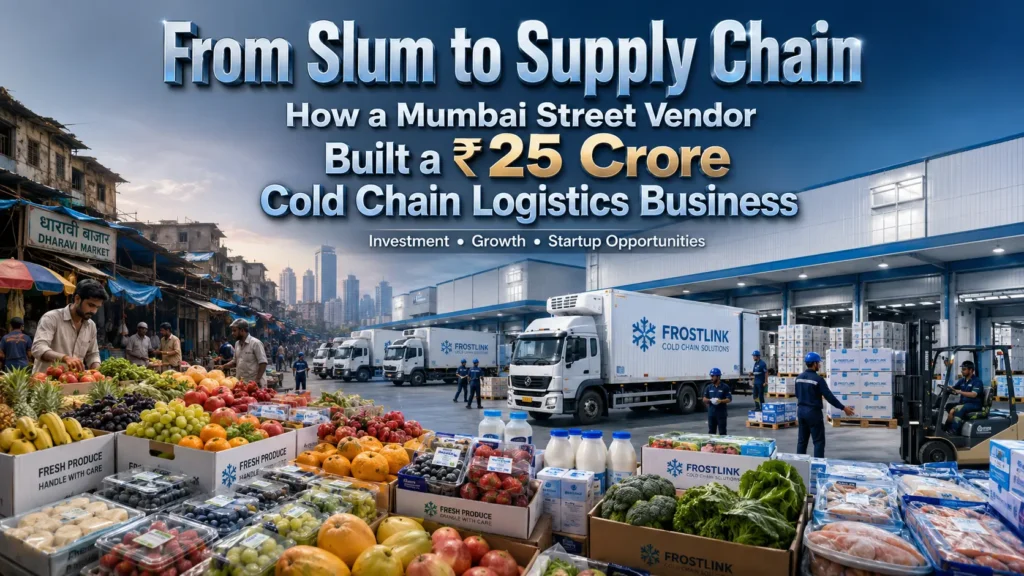
Cold Chain Logistics Business in India The Gap That Makes Millionaires Almost one third of the fruits and vegetables that are grown in India don’t reach the consumers. They decompose from the farm and up to the city market. Not due to its poor farming. This is not due to poor roads. The cold chain in India is where it lacks — at the last mile. The National Horticulture Board (NHB) reports that the installed capacity of cold storages in India is about 37 million metric tonnes. Which is large until you realise that more than 70% of that is in five states: Uttar Pradesh, West Bengal, Punjab, Gujarat and Maharashtra, and virtually no portion is temperature-controlled transport. Cold rooms are present. The refrigerated trucks have been removed. One man from Dharavi discovered his fortune in that space between warehousing and wheels. Ramesh Gaikwad started selling vegetables from a pushcart in Dadar in the late 1990s. He saw something that no logistics consultant had ever thought to write down: there were warm produce and no one owned a last-mile refrigerated van for small packs, in the hotel kitchens in South Mumbai. He took a loan of ₹3 lakh from the chit fund and started hiring a small cold van, making a firm commitment to one hotel for the same-day delivery of chilled produce. After 12 years, Ramesh’s company owns 22 cars with refrigeration and has two cold storage units in Navi Mumbai and Bhiwandi with an annual turnover of ₹25 crore. The business doesn’t spend money on advertising. All of the clients were referred. His is not a unique case. Repeatable — if you just know where to find it and how to make it. Access Complete Business Plan: Cold Chain, Temperature Controlled Supply Chain Projects India’s Cold Chain: Numbers That Should Embarrass Us The Ministry of Agriculture & Farmers Welfare estimates that India produces more than 320 million tonnes of horticulture produce every year, which is the second largest in the world. The estimated losses in the post-harvest sector from 10 years of losses by the National Centre for Cold-chain Development (NCCD) are approximately worth ₹92,651 crore annually. The nodal body on cold chain policy the NCCD estimates the demand of India at 61,000 reefer vehicles when less than 12,000 are available. This is a 80% deficit. The difference isn’t large in large cities. It’s in tier-2 towns, mandis and farm clusters in the states like Bihar, Madhya Pradesh, Assam, Odisha and Chhattisgarh. The pharmaceuticals add to the issue. According to the Pharmaceuticals Export Promotion Council of India (Pharmexcil), India exports more than USD 25 billion worth of pharma products every year. This is increasing proportionately for vaccines, biologics and temperature-sensitive APIs, which must be handled under 2°C to 8°C conditions from the factory to the airport. But only about 15% of Indian airports have dedicated pharma cold zones leaving exporters to last mile, which is fragmented. This was highlighted during the rollout of the COVID-19 vaccine where the government had to make do with blood banks, ice cream freezers, and improvised refrigeration at district health centres. The lesson has since led to serious investment by the government and private demand. It is two sectors which are seeing the greatest need across the country: processed food (11% growth per year) and pharma cold chain (14% growth per year). The last mile delivery is problematic in both the sectors. TABLE 1: State-Wise Cold Chain Demand, Infrastructure Gaps & Key Opportunity Clusters State Hort. Produce (MT/yr) Cold Storage Gap (%) Reefer Van Deficit Key Opportunity Clusters Uttar Pradesh 55 Million 28% ~9,000 vans Agra, Lucknow, Varanasi — potato, mango, milk Bihar 18 Million 67% ~4,200 vans Muzaffarpur, Patna — litchi, vegetables, pharma Maharashtra 22 Million 31% ~5,800 vans Nashik, Pune, Mumbai — grapes, onion, hospitality Madhya Pradesh 14 Million 54% ~3,600 vans Indore, Jabalpur — soybean, tomato, pulses West Bengal 19 Million 22% ~2,900 vans Kolkata, Siliguri — fish, vegetables, flower exports Assam 8 Million 72% ~2,100 vans Guwahati, Dibrugarh — tea, vegetables, fish Rajasthan 9 Million 48% ~2,400 vans Jaipur, Jodhpur — dairy, vegetables, tourism supply Get Detailed Insights from This Book: Handbook on Fruits, Vegetables & Food Processing with Canning & Preservation Why This Decade Belongs to Cold Chain Operators The cold chain business is one of the most poised logistics segments in India at present, thanks to three factors. The first one is the retail transformation. The app of quick commerce like Blinkit, Zepto, Swiggy Instamart have made it a consumer expectation to order food products in just 10 minutes. There is a need for a fresh produce delivery twice a day to every dark store in Tier-1 or Tier-2 cities from cold chain supplier. These platforms do not have the “last mile” themselves. They contract it out. The contracts are guaranteed to volume and multi-year. Second, regulation tightening by the pharma industry. Strengthening of Schedule M requirements for storage and transport of pharmaceuticals by CDSCO (Central Drugs Standard Control Organisation). The UK healthcare sector has been impacted by the transition to non-controlled environments; those that have already done so will now have to meet the requirements of becoming a controlled environment or risk suspension of their licence. This means that there is legal demand for certified cold chain operators, not merely discretionary demand. Third, government push. Under PM Kisan Sampada Yojana, the Indian government has pledged to establish an integrated cold chain network, budgeting a total of ₹2,000 crore for cold chain development initiatives nationwide. NABARD provides financing for the construction of cold storage through its development programme Rural Infrastructure Development Fund (RIDF) at subsidised interest rates. Under the Integrated Cold Chain and Value Addition Infrastructure scheme, 35% is the capital subsidy that is available from the Ministry of Food Processing Industries (MoFPI) — with the scheme, if you invest ₹1 crore, the government will write you a cheque of ₹35 lakh. NABARD Cold Chain Subsidy Scheme: Provides subsidy of up to 35% of the capital