
How to Start Empty Capsule Manufacturing Plant in India: Cost, Investment & Profit
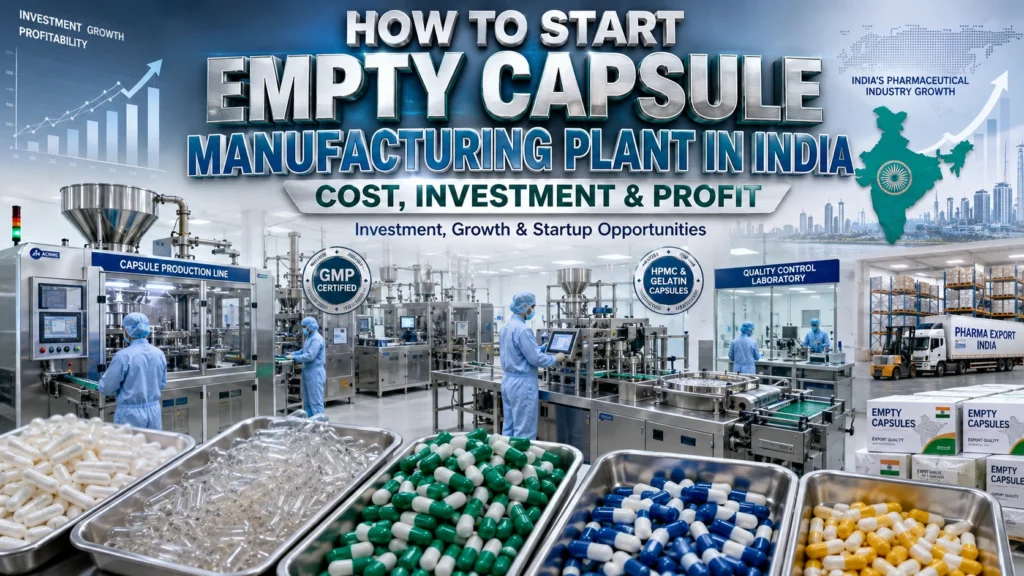
Each tablet that is not produced is a capsule order and each capsule order requires an empty capsule before the first milligram of active ingredient is placed in the capsule. However, India’s low bulk capsule production market is concentrated with just a few large-scale manufacturers, with mid-size formulation companies and nutraceutical brands waiting for days for orders which would fill their weeks in a free competitive market. It is the space where India businessmen can create an empty capsule manufacturing plant that can be sold to other business-to-business players – not branded as a consumer product. It’s packaging-adjacent manufacturing — not sexy, not obvious to the purchaser, and not a business that first-generation entrepreneurs typically think about. The vegetarian and HPMC capsule market is expanding more quickly than the domestic supply, due to the demand of halal, kosher and vegan consumers, which can’t be met by the gelatine capsule market. Get Detailed Project Report (DPR): Empty Gelatin Capsules Why This Is a Genuine Opening In this case, the demand reasons aren’t based on convincing anyone of anything. All tablet manufacturers making the move to capsule dosage, all new supplement brands from the nutraceutical industry, and every export order from Africa or Southeast Asia requires a dependable capsule supplier, but the supply base at home has not been able to keep up with the increase in formulation and nutraceutical manufacturing it feeds. There’s a special challenge for vegetarian HPMC capsules: consumers’ growing preference for plant-based shells for religious, dietary, and ethical reasons has created a shortage that’s exacerbated by the fact that only a few Indian manufacturers are currently producing HPMC capsules on a scale that meets demand. The entry cap-ex is not negligible. The cost of the single-line hard gelatin capsule unit, which is capable of producing about one billion to 1.5 billion capsules a year, is about eight to 15 crore rupees, involving investment in dip-pin machines, drying tunnels and printing equipment. The processing and drying conditions for the polymer used to make capsule lines are significantly different from those used in the case of gels and the lines are therefore more expensive, fifteen to twenty-five crore rupees. FSSAI registration is required for licensing and in case of export oriented pharmaceutical formulators, facility approval from CDSCO or USFDA clearance is required, which takes around twelve months of the commissioning process. Margin and Risk Structure This is because the commodity hard gelatin capsules is a thin margin business itself (gross margins are 8-12 percent) and because buyers change suppliers by fractions of a rupee per thousand capsules. The gross margin on HPMC vegetarian and specialty capsules is very high, anywhere from 18-25% gross margin, due to the fact that far fewer manufacturers can reliably produce these capsules to pharmacopeia specification, allowing the early movers to really have the pricing power that commodity gelatin manufacturers do not. In this segment, scalability typically comes from installing lines, not from building new facilities — a founder typically launches with a handful of dip-pin machines, tests out quality uniformity with a few formulation buyers, then expands lines based on repeat demand. The primary risks are raw material dependent; the price for gelatin is tied to the prices of bone and hide collagen on the global market, and is liable to sudden fluctuations, while HPMC is a derivative of cellulose, with a smaller and more concentrated global base of suppliers for its raw polymer. The other risk is rejection by quality-sensitive pharmaceutical buyers; if a buyer orders a year’s worth of sales but finds that one batch is out-of-specification, he or she may not order the next one. Product and Project Opportunities Worth Evaluating Standard Hard Gelatin Capsules The standard hard gelatin capsules are by far the biggest share of the market, providing generic pharmaceutical formulations to the overcrowded manufacturing camps in Baddi, Hyderabad and Ankleshwar in India. A unit designed to serve 1-1.5 billion capsules per year requires capex of ten to fourteen crore rupees, with an expectation of supplying companies in the formulation business within a radius of 300-400 kilometres to ensure cost of logistics. With the strong competition in the price of the existing large suppliers, it is obviously not a margin play that the new entrants can make the economics work with, but a business model based on volume and reliability. Gross margins finally settle at 8-12 percent. Related Article: Building a Successful Pharmaceutical Manufacturing Business HPMC Vegetarian Capsules For nutraceutical brands, halal and kosher export buyers, and pharmaceutical formulators seeking alternatives to animal-derived capsules, HPMC vegetarian capsules are the right choice. A dedicated line, which costs between a hundred and two crore rupees, accounting for the specialised polymer-processing and humidity-control specifications, directly targets nutraceutical contract manufacturers and export-based supplement brands. Margins are 18-24 % which is significantly better than gelatin, since there is very limited number of qualified HPMC capsule manufacturer in India till now with a growing demand. Colored and Printed Specialty Capsules Colored and custom printed capsules meet the brand differentiation needs of nutraceutical and consumer wellness companies looking to achieve a white shell that stands out on the shelf. Print and multi-colour capability is an additional cost of 2-4 crore rupees over the existing capsule line, margins are between 20-28 percent as the pricing is done based on brand value and not on the economics of capsules. A good second phase addition for an existing base gelatin or HPMC brand with a founder who does not want to invest in an additional facility for the higher margin brand-conscious consumers. Enteric-Coated Capsule Shells The enteric coated shells, which resist stomach acid and only open up in the intestine, appeal to a more niche but higher-value pharmaceutical and probiotic buyer segment. The additional cost of a specialised coating line at an existing capsule plant is of the order of Rs.5 to 8 crore, and margins are 25-30 per cent due to the technical barrier to entry, where the ability to replicate the coating consistency is a skill that
गांव में शुरू होने वाले 50 सबसे फायदेमंद बिजनेस आइडियाज़

गांव में बिजनेस आइडिया भारत के गांवों में एक बड़ा आर्थिक बदलाव चल रहा है। जमीन सस्ती है। मजदूरी कम है। कच्चा माल करीब है। और सरकारी योजनाएं पहले से कभी इतनी अनुकूल नहीं थीं। एमएसएमई मंत्रालय के आंकड़ों के अनुसार देश के कुल सूक्ष्म, लघु और मध्यम उद्यमों का करीब 51 प्रतिशत ग्रामीण और अर्ध-शहरी क्षेत्रों में काम करता है। नाबार्ड की वित्तीय समावेशन रिपोर्ट बताती है कि ग्रामीण परिवारों की औसत मासिक आय पिछले एक दशक में दोगुनी से ज्यादा हो चुकी है। यह रिपोर्ट उन 50 बिजनेस की बात करती है जो असल में चलते हैं — और जिनकी व्यवहार्यता जमीनी स्तर पर साबित हो चुकी है। यह क्षेत्र मजबूत स्टार्टअप अवसर क्यों है बाजार की मांग और विकास ग्रामीण खपत लगातार बढ़ रही है। खाद्य प्रसंस्करण, कृषि सामग्री, हस्तशिल्प और हल्के विनिर्माण — सभी में मांग बढ़ी है। हर बड़ी सरकारी योजना एक नई स्थानीय आपूर्ति श्रृंखला बनाती है। सरकारी सहयोग और नीतियां पीएमईजीपी योजना के तहत ग्रामीण उद्यमियों को 25 लाख रुपये तक की विनिर्माण इकाई के लिए 35 प्रतिशत पूंजी अनुदान मिलता है। अनुसूचित जाति, जनजाति और महिला उद्यमियों को यह और अधिक मिलता है। पीएमएफएमई योजना खाद्य प्रसंस्करण इकाइयों को दस लाख रुपये तक का ऋण सहायता अनुदान देती है। नाबार्ड ग्रामीण उद्योगों को कार्यशील पूंजी ऋण और तकनीकी सहायता देता है। जोखिम जागरूकता ग्रामीण बिजनेस में तीन मुख्य जोखिम हैं — कच्चे माल की मौसमी उपलब्धता, परिवहन की सीमाएं और कुशल कार्यबल की कमी। बिजनेस चुनते समय पहले स्थानीय कच्चे माल और खरीदार की पुष्टि करें — फिर पूंजी लगाएं। बिजनेस चयन का तर्क गांव में बिजनेस चुनते समय ‘क्या चल सकता है’ नहीं, ‘यहां क्या टिकेगा’ यह पूछें। मुनाफे की संरचना तीन स्तरों पर काम करती है: पहला — कृषि आधारित प्रसंस्करण: सकल मुनाफा 18 से 30 प्रतिशत, पूंजी कम, बाजार करीब। दूसरा — हस्तशिल्प और वस्त्र: सकल मुनाफा 35 से 55 प्रतिशत, बाजार जोड़ जरूरी। तीसरा — हल्का विनिर्माण (साबुन, मोमबत्ती, कागज थैली): मुनाफा 35 से 60 प्रतिशत, विस्तार संभव। विस्तार का रोडमैप सरल रखें। छोटी इकाई से शुरू करें, स्थानीय मांग सिद्ध करें, फिर बढ़ें। Find the most profitable startup for your investment range 50 फायदेमंद गांव के बिजनेस — विस्तृत विवरण 1. आटा चक्की गांव में हर घर रोज आटा पिसवाता है — यह मांग कभी नहीं रुकती। पांच से दस घोड़े-शक्ति की मोटर वाली छोटी चक्की में डेढ़ से तीन लाख रुपये की शुरुआती लागत है। रोजाना 200 से 500 किलो पिसाई पर सकल मुनाफा 15 से 22 प्रतिशत बनता है। पीएमईजीपी में 35 प्रतिशत पूंजी अनुदान मिलता है। विपणन की जरूरत लगभग शून्य है — ग्राहक खुद आते हैं। 2. दाल मिल अरहर, मूंग, उड़द — ये सभी दालें ग्रामीण इलाकों में बड़े पैमाने पर उगाई जाती हैं। छोटी दाल मिल में तीन से सात लाख रुपये की लागत है। प्रसंस्कृत दाल कच्चे अनाज से 30 से 40 प्रतिशत महंगी बिकती है। मध्यप्रदेश और महाराष्ट्र में ऐसी इकाइयां सालाना पांच से दस लाख रुपये कमाती हैं। उद्यम पंजीकरण के बाद नाबार्ड से कार्यशील पूंजी ऋण आसानी से मिलता है। 3. अगरबत्ती निर्माण घर से शुरू होने वाला जाना-पहचाना सूक्ष्म उद्योग। मशीन और कच्चे माल पर 50 हजार से डेढ़ लाख रुपये। महिला उद्यमियों में यह सबसे लोकप्रिय विनिर्माण बिजनेस है। तमिलनाडु और कर्नाटक में घरेलू इकाइयां सालाना तीन से पांच लाख रुपये कमाती हैं। खादी एवं ग्रामोद्योग आयोग प्रशिक्षण और बाजार सहयोग देता है। सकल मुनाफा 30 से 45 प्रतिशत। 4. मोमबत्ती निर्माण पैराफिन मोम, धागा और सांचों से शुरुआत होती है। 30 हजार से 70 हजार रुपये में इकाई लग जाती है। सजावटी मोमबत्तियां ऑनलाइन बाजार में 150 से 800 रुपये प्रति नग बिकती हैं। त्योहारी मौसम में मांग तीन गुना हो जाती है। देशभर के ऑनलाइन बाजार तक पहुंच सरल है। सकल मुनाफा 40 से 55 प्रतिशत। 5. साबुन निर्माण हर्बल और हाथ से बने साबुन की मांग शहरी बाजार में बढ़ रही है। 40 हजार से 80 हजार रुपये में घरेलू उत्पादन शुरू होता है। नीम, हल्दी, चारकोल — ये सामग्री गांव में आसानी से मिलती हैं। ठंडी विधि से बने साबुन में सकल मुनाफा 35 से 50 प्रतिशत है। सूक्ष्म खाद्य उद्यम योजना में पैकेजिंग के लिए अलग अनुदान उपलब्ध है। 6. वर्मी खाद उत्पादन जैविक खेती की मांग साल-दर-साल बढ़ रही है। 100 वर्ग फुट इकाई से शुरुआत — लागत 15 हजार से 30 हजार रुपये। तीन महीने में पहली खेप तैयार। आठ से 12 रुपये प्रति किलो के भाव पर महीने में 500 किलो बेचना संभव है। कच्चा माल लगभग मुफ्त मिलता है। सकल मुनाफा 40 से 55 प्रतिशत। 7. मुर्गी पालन एवं चारा प्रसंस्करण 500 ब्रॉयलर मुर्गियों से शुरुआत — लागत डेढ़ से ढाई लाख रुपये। प्रति खेप 45 दिन में शुद्ध आमदनी 20 हजार से 35 हजार रुपये। साल में छह खेप संभव हैं। नाबार्ड के कुक्कुट उद्यम पूंजी कोष से वित्त उपलब्ध है। चारा प्रसंस्करण जोड़ने पर मुनाफा और बढ़ता है। Read the Complete Book Here: Preservation of Meat and Poultry Products 8. मधुमक्खी पालन एवं शहद प्रसंस्करण दस बक्सों से शुरुआत पर 25 हजार से 40 हजार रुपये की लागत। प्रति वर्ष 200 से 300 किलो शहद उत्पादन। जैविक शहद 300 से 500 रुपये प्रति किलो बिकता है। प्रसंस्करण और पैकेजिंग जोड़ने पर 600 से 900 रुपये प्रति किलो तक मिलता है। कौशल विकास मिशन और खादी आयोग दोनों प्रशिक्षण देते हैं। 9. पशु चारा निर्माण डेयरी पशुपालन की वृद्धि के साथ गुणवत्तापूर्ण चारे की कमी है। छोटी चारा मिल में दो से पांच लाख रुपये की लागत है। कृषि उपउत्पादों को मूल्यवर्धित चारे में बदला जाता है। स्थानीय डेयरी सहकारी से सीधा आपूर्ति अनुबंध मिलता है। सकल मुनाफा 20 से 30 प्रतिशत। मध्यम आकार की इकाई सालाना 15 से 25 लाख रुपये का राजस्व बनाती है। 10. गुड़ निर्माण गन्ना उत्पादक गांवों में यह सबसे स्पष्ट अवसर है। पारंपरिक क्रशर और उबालने की इकाई में एक से तीन लाख रुपये लगते हैं। जैविक गुड़ शहरी बाजार में 80 से 150 रुपये प्रति किलो बिकता है जबकि उत्पादन लागत 25 से 35 रुपये है। सूक्ष्म खाद्य उद्यम योजना में पैकेजिंग के लिए अनुदान मिलता है।