
पैकेजिंग इंडस्ट्री में बिजनेस — कम निवेश, हर सेक्टर में डिमांड
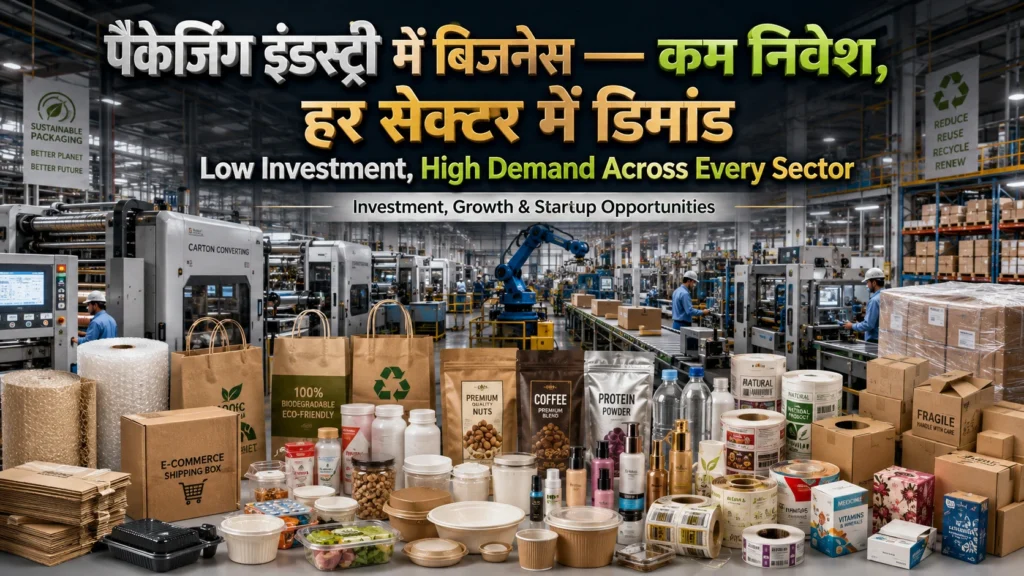
पैकेजिंग इंडस्ट्री में बिजनेस Packaging एक ऐसी industry है जो किसी एक sector पर निर्भर नहीं है। Food, pharma, FMCG, e-commerce, cosmetics, agriculture — हर जगह packaging चाहिए। यही कारण है कि packaging manufacturing को ‘recession-proof’ industry भी कहा जाता है। और अगर आप कम investment में एक ऐसा business idea ढूंढ रहे हैं जिसमें demand कभी कम न हो, तो packaging sector सबसे suitable जवाब है। भारत की पैकेजिंग इंडस्ट्री — मौजूदा स्थिति भारत दुनिया के top packaging markets में से एक है। Indian Institute of Packaging (IIP) के अनुसार, भारत का packaging sector तेज़ी से विस्तार कर रहा है। E-commerce boom, FMCG growth, और food processing expansion — तीनों ने इस growth को fuel किया है। Get Detailed Insights from This Book: Handbook on Modern Packaging Industries पैकेजिंग के मुख्य सेगमेंट 1. Corrugated Box Manufacturing यह packaging industry का सबसे large segment है। E-commerce ने corrugated boxes की demand में massive jump लाया है। Amazon, Flipkart के sellers को हमेशा boxes चाहिए। Investment ₹15-40 लाख से शुरू होता है। Monthly revenue एक medium unit से ₹20-50 लाख तक हो सकती है। 2. Flexible Packaging Laminated pouches, standup pouches, और multilayer films food और pharma packaging का सबसे popular format बन चुका है। यह traditional rigid packaging से lighter, cheaper, और more attractive है। Related Article: Sustainable Packaging Business in India – Future, Investment & Profit Guide 3. Rigid Plastic Containers Bottles, jars, और containers की demand personal care, pharma, और food sectors में बहुत ज़्यादा है। Injection molding machines से ये बनते हैं — एक machine से multiple products बना सकते हैं। 4. Paper और Paperboard Packaging Paper bags, paper cups, paper plates, और folding cartons की demand plastic ban के बाद और बढ़ गई है। यह एक environmentally friendly segment है जिसमें premium market भी है। Get Detailed Project Report (DPR): Biodegradable Packaging & Bio-based Polymers 5. Industrial Packaging Drums, IBCs (Intermediate Bulk Containers), और pallet wraps — ये industrial buyers के लिए हैं। Chemical, paint, और lubricant companies इनके बड़े buyers हैं। सबसे Profitable Packaging Products — Comparison Product Investment (₹) Target Market Profit Margin Scalability Corrugated Boxes 15–40 लाख E-commerce, FMCG 15–25% बहुत ज़्यादा Flexible Pouches 30–80 लाख Food, Pharma 20–35% ज़्यादा Plastic Containers 20–60 लाख Personal care, Food 25–40% ज़्यादा Paper Bags/Cups 5–20 लाख Retail, Cafes 25–40% मध्यम Industrial Drums 25–70 लाख Chemical, Paint 20–30% मध्यम E-Commerce Packaging — सबसे तेज़ Growing Segment E-commerce packaging सबसे fast-growing packaging segment है। Confederation of Indian Industry (CII) के अनुसार, India का e-commerce market तेज़ी से बढ़ रहा है, जिससे packaging demand में proportional growth आ रही है। Customized boxes, protective packaging (bubble wrap, foam inserts), और branded mailer bags की demand हर महीने बढ़ रही है। Packaging Business के लिए ज़रूरी Machines Corrugated Box Unit: Die-cutting machine, Flexo printing machine, Stitching machine Paper Bag Unit: Paper bag making machine, Handle fitting machine Plastic Container: Injection molding machine, Blow molding machine Flexible Pouch: Lamination machine, Pouch making machine सरकारी Support और Schemes Packaging industry को MSME schemes का पूरा benefit मिलता है। Udyam registration के बाद MUDRA loan, CGTMSE credit guarantee, और Credit Linked Capital Subsidy Scheme (CLCSS) — सब available हैं। Export के लिए DPIIT (Department for Promotion of Industry and Internal Trade) की startup और MSME schemes का लाभ उठाएं। Choose the right startup backed by real market demand Packaging Business में सफलता के Tips Quality consistency सबसे ज़रूरी है। एक bad batch पूरा contract खो सकती है। इसलिए raw material quality पर कभी compromise नहीं करें। Delivery reliability भी उतनी ही ज़रूरी है। Packaging buyers को just-in-time delivery चाहिए। इसलिए production planning और inventory management strong होना चाहिए। Customization offer करना competitive advantage देता है। Branded packaging, custom colors, और special printing — इससे आप commodity supplier से value-added supplier बन जाते हैं। अक्सर पूछे जाने वाले सवाल (FAQ) Q1. Packaging business के लिए minimum investment कितना चाहिए? Paper bag manufacturing जैसे simple segment में ₹5-10 लाख से शुरुआत हो सकती है। Corrugated boxes या flexible packaging के लिए ₹20 लाख से ज़्यादा चाहिए। Q2. Packaging में export का scope है? हां, pharmaceutical packaging और specialty packaging में India के export opportunities बड़े हैं। FDA-compliant packaging units को US और European clients मिलते हैं। Q3. क्या घर से packaging business शुरू हो सकता है? बहुत छोटे scale पर — जैसे handmade paper bags या gift packaging — घर से शुरू हो सकता है। लेकिन industrial scale के लिए dedicated space ज़रूरी है। Q4. Packaging में BIS या किसी certification की ज़रूरत है? Pharma packaging के लिए FDA approval ज़रूरी है। Food contact packaging के लिए food-grade material certification चाहिए। General packaging के लिए कोई mandatory certification नहीं है। निष्कर्ष Packaging industry एक ऐसी manufacturing business है जिसमें demand कभी नहीं रुकती। E-commerce, food processing, pharma — ये सभी sectors growing हैं, और सबको packaging चाहिए। कम investment में high demand वाला यह business idea उन उद्यमियों के लिए perfect है जो stable और scalable business चाहते हैं। अधिक जानकारी और Detailed Project Report के लिए niir.org पर जाएं।
India–Czech Republic: High-Growth Manufacturing Business Ideas in Machine Tools, Industrial Automation & Precision Engineering
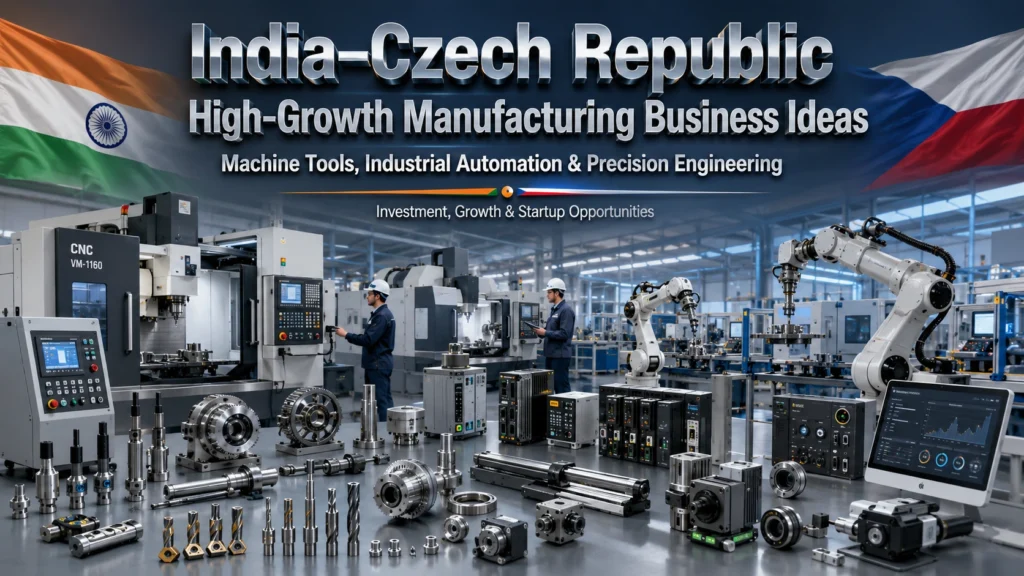
India Czech Republic Manufacturing A Strategic Industrial Corridor Taking Shape India and the Czech Republic are seldom found one and a half sentences back from each other in the business discussions. However, this two-way exchange might just be some of the most interesting manufacturing business opportunities today for entrepreneurs looking for real, fundable and globally accessible business ideas. The two nations have a shared history in sectors that are at the core of the global manufacturing economy such as machine tools, precision engineering, hydraulics, castings and advanced automation. The Embassy of India in Prague states that bilateral trade has reached a figure of US$ 4 billion, from less than US$ 86 million in 1993. This isn’t a trivial tweak. It’s a structural change and it represents that the industrial complementarity of the two economies has gone beyond diplomatic niceties to genuine commercial flows. This moment is not something to take lightly for a startup founder, MSME investor, or an industrial project planner. The Czech Republic has over 40 years of experience in precision manufacturing, not only in CNC machining, forging, hydraulics, environmental technology, but also in electrical power machinery. India offers scale, cost competitiveness, an ever-improving engineering talent pool and a growing domestic market with its increasing sophistication. Both countries can develop a strong two-way supply chain that will be beneficial to manufacturers and investors on both sides. The Embassy of India, Prague is very active in documenting this increasing industrial connection which can be very useful for entrepreneurs. In this article we will discuss specifically which sectors, the policy landscape, ideas for business projects and the trade dynamics make the India–Czech manufacturing corridor a meaningful project to develop? Related Article: How to Start a Fasteners and Precision Parts Manufacturing Export Business in India Why This Industrial Sector Deserves Your Attention Now The world of manufacturing is constantly evolving. The disruptions in the supply chain, geopolitical realignment and the “China Plus One” procurement strategy has compelled European industrial buyers to diversify their procurement aggressively. India has become one of the biggest beneficiaries of this change, especially in the areas of capital goods, precision components, casting, forging and automation in the industrial sphere. The other side of the coin, however, is the Czech economy, which is very engineering oriented. Its manufacturing sector features world-class skills in CNC machine tools, hydraulic & pneumatics, surface engineering, welding technology and Industry 4.0 integration. Czech companies offer technical expertise that is required by Indian manufacturers to enter into international markets. The cost efficiency and the size of Indian companies offer a number of advantages that Czech companies need to globally compete. The Numbers Behind the Opportunity India is already the 2nd largest producer of castings in the world. The turnover of the foundry industry alone is about US$ 20 billion and the exports are nearly US$ 3.54 billion. India Foundry Market is expected to post a CAGR of 10.30% to cross the US$ 31.77 billion mark by 2029. Data published by the IBEF shows that engineering industry makes up 27% of the total factories in the industrial sector in India and 63% of all foreign collaborations in the country. The India machine tool market is another indicator. One such indicator of the gaps in domestic manufacturing capacity is the quantum of import of machine tools which has crossed the ₹40,000 crore mark in a recent fiscal year. These gaps are opportunities for business investment by entrepreneurs who are able to establish import substitution or technology transfer businesses with a Czech business entity. In addition, Czech businesses are investing into India. India has attracted more than 37 Czech companies, such as Škoda Auto, Doosan Škoda Power and Bonatrans, who have invested over US$ 283m in the country. A significant partnership between Tata AutoComp and the Czech rail parts maker Škoda Group is another example of Czech trust in India’s manufacturing capabilities. This is the place in which a fresh entrepreneur can move with a thoroughly prepared feasibility plan. Government Policies and Incentives Supporting This Opportunity The bilateral manufacturing opportunity is viable for startups and MSMEs in India and Czech Republic due to robust policy frameworks. The policy momentum is strong on the Indian side. Production Linked Incentive (PLI) Scheme Now implemented in 14 critical sectors of industry, the PLI scheme has already attracted ₹2 lakh crore investment and incured incremental production of more than ₹18.7 lakh crore. The scheme has directly and indirectly generated more than 12.6 lakh jobs till September 2025. Strategic PLI beneficiaries are those in the capital goods and engineering industries that feed directly into the machine tools and automation industries discussed in this article. As an entrepreneur, you can have a steady and high demand pipeline by matching your project with the PLI connected anchor units. Please refer to Press Information Bureau, Government of India for more details. National Capital Goods Policy and Make in India A dedicated policy has been announced by the government namely National Capital Goods Policy for the machine tools and industrial equipment industry. It aims to boost value addition, cut imports and make India a global hub for capital goods manufacturing. Union Minister HD Kumaraswamy, at the event of IMTEX 2025, assured this would pave the way for innovation and help in cutting India’s reliance on imported precision machines. The Indian machine tool industry is expected to achieve a revenue of US$ 3.8 billion by 2030. Make in India initiative by DPIIT will continue to allow 100% FDI under the Automatic route for manufacturing of capital goods and machine tools. No licensing requirements for industry, no impediments to technology import agreements, and no foreign equity restrictions in most sectors involved. Investors looking into this path should utilise the Make in India portal. Get Detailed Insights from This Book: Our Books MSME Schemes and Credit Support The Ministry of MSME has a slew of support programs for small manufacturers, including the Credit Guarantee Fund Trust for Micro and Small Enterprises (CGTMSE), which offers collateral-free loans worth up