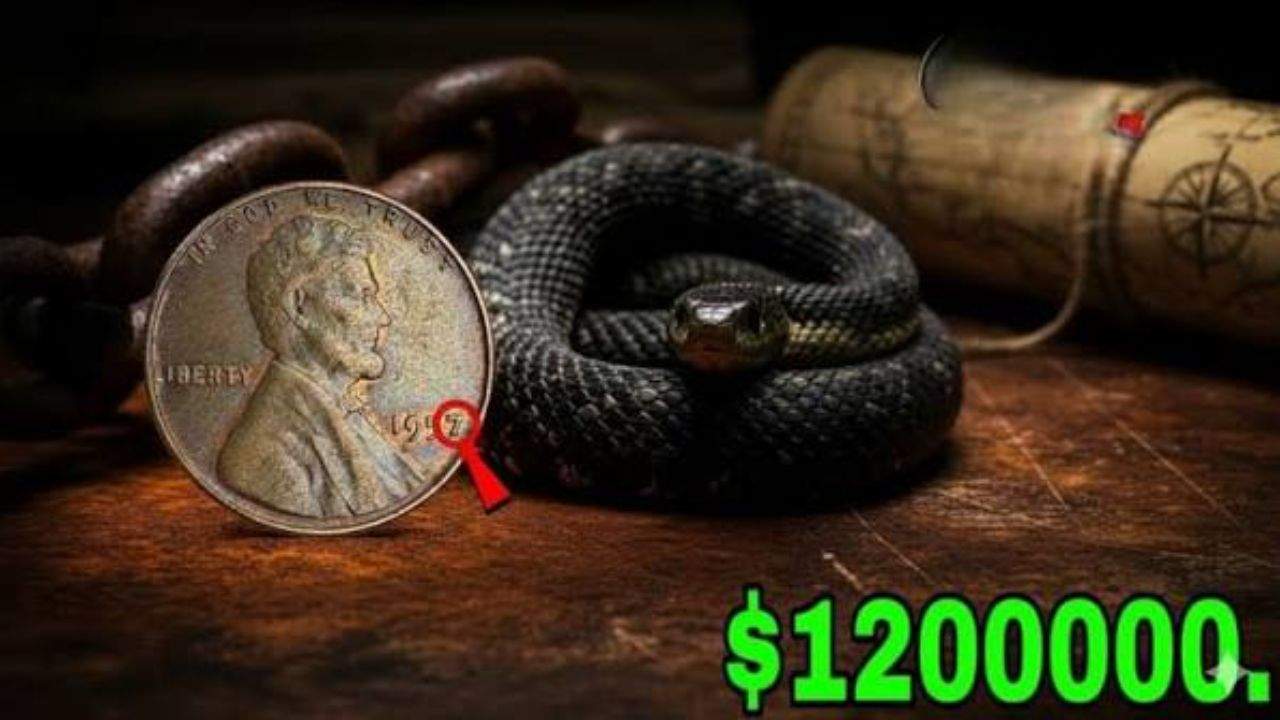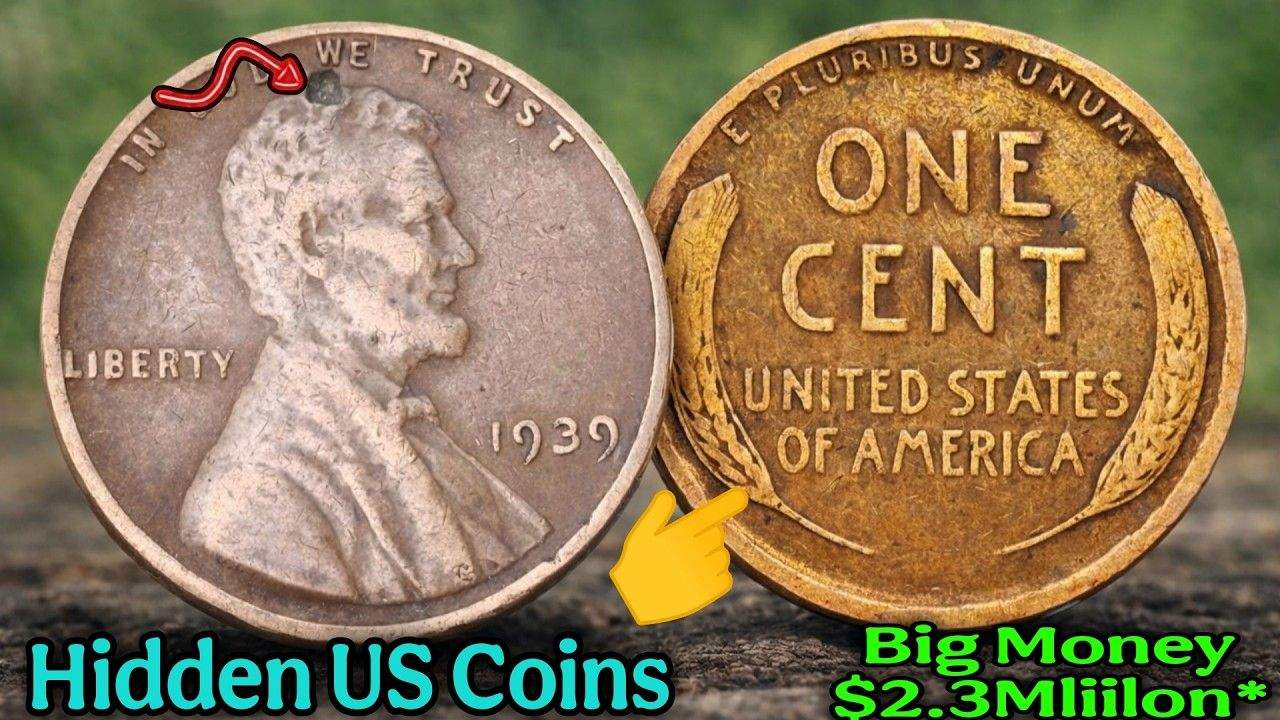

Finding an old penny with a date ending in 7 can be exciting, but the final digit alone does not make a coin rare. Some 1937, 1947, and 1957 Lincoln Wheat cents have brought strong prices at auction, especially when they are in exceptional condition or have a recognized variety.
Before spending or selling an old penny, check the complete date, mint mark, condition, and any unusual design details. One small difference can sometimes turn an ordinary Wheat penny into a valuable collector coin.
Contents
- 1. Why Pennies Ending in 7 Get Attention
- 2. 1. 1937 Lincoln Wheat Penny
- 3. 2. 1947 Lincoln Wheat Penny
- 4. 3. 1957 Lincoln Wheat Penny
- 5. 4. 1947 Doubled-Die Lincoln Penny
- 6. What a Penny Ending in 7 Could Be Worth
- 7. What You Should Check on Your Penny
- 8. Why Condition Can Change the Value So Much
- 9. Do Not Clean an Old Penny
- 10. The Bottom Line
Why Pennies Ending in 7 Get Attention
Lincoln Wheat cents were made from 1909 through 1958. They show Abraham Lincoln on the front and two wheat ears on the back. Because millions of these coins were produced, most pennies ending in 7 are not rare simply because of their date.
The important point is that some individual coins from these years survived in unusually good condition. Others have proof finishes or recognized varieties that collectors actively seek.
For example, PCGS records a $21,600 auction result for a 1947 Lincoln cent graded MS67+RD. A 1957 Lincoln cent graded MS67+RD has reached $20,400, while a 1937 proof Lincoln cent has recorded a $13,225 auction result. These are exceptional examples, not normal values for circulated pennies.
1. 1937 Lincoln Wheat Penny
A 1937 Lincoln Wheat penny can be worth more than face value, but its condition is extremely important. The Philadelphia issue was made in large numbers, so a normal worn 1937 penny is not automatically a rare coin.
The real excitement comes when a 1937 penny has unusually strong original detail or belongs to a special proof issue. PCGS records a $13,225 auction result for a 1937 proof Lincoln cent graded PR67.
Proof coins were specially made for collectors and have a different appearance from ordinary coins made for circulation. A proof 1937 penny should therefore not be confused with a regular 1937 cent simply because both have the same year.
If you find a 1937 penny, look carefully at its surfaces and details. Do not clean it to make it brighter. Cleaning can damage the original surface and hurt its collector appeal.
2. 1947 Lincoln Wheat Penny
The 1947 Lincoln Wheat penny is another date worth checking, especially when the coin is in very high grade.
The Philadelphia 1947 cent had a large mintage, so most worn examples are not worth huge amounts. However, exceptional examples can bring much higher prices because collectors compete for coins with strong color and very few marks.
PCGS records a $21,600 auction result for a 1947 Lincoln cent graded MS67+RD. The “RD” designation means the coin retained its original red color to a very high degree. That is a major reason why a top-quality example can be worth far more than an ordinary circulated penny.
There is also a recognized doubled-die obverse variety for 1947. A genuine doubled-die coin can be worth more than a normal example, although the exact value depends on grade and color. PCGS records a $3,055 auction result for a 1947 doubled-die obverse example graded MS67RD.
3. 1957 Lincoln Wheat Penny
The 1957 penny is especially interesting because it was one of the final years of the Wheat cent series. Millions were made, so an ordinary circulated 1957 penny is not automatically rare.
Condition is where things become more interesting. A 1957 Philadelphia cent in an extremely high grade and with strong original red color can be worth thousands of dollars.
PCGS records a $20,400 auction result for a 1957 Lincoln cent graded MS67+RD. This shows how much collectors can pay for an unusually well-preserved example.
There were also 1957 proof cents made at Philadelphia. A 1957 proof cent with a deep cameo finish has a recorded auction result of $29,375 in PR68DCAM. Again, this is an exceptional proof coin and should not be confused with an ordinary 1957 penny found in circulation.
The 1957-D penny is much more common. NGC lists a mintage of more than 1 billion for the Denver issue, which is a good reminder that the year alone does not determine rarity.
4. 1947 Doubled-Die Lincoln Penny
If your 1947 penny ends in 7, one of the most interesting things to check is whether it has a genuine doubled-die variety.
A doubled die happens when the design on the working die is created with a noticeable doubling effect. This is different from ordinary damage, machine doubling, or a scratch made after the coin left the Mint.
The 1947 Lincoln cent has a recognized doubled-die obverse variety. PCGS lists the variety as 1947 1C DDO, FS-101. A high-grade red example has reached $3,055 at auction.
Because doubling can be difficult to identify from a quick glance, collectors should be careful before assuming a coin is a valuable error. A genuine variety needs to match the known characteristics of that particular die variety.
What a Penny Ending in 7 Could Be Worth
The following examples show why the complete identity and condition of a coin matter more than the final digit of its date.
| Penny | Special Feature | Recorded Auction Result |
|---|---|---|
| 1937 Lincoln cent | Proof, PR67 | $13,225 |
| 1947 Lincoln cent | MS67+RD | $21,600 |
| 1947 Lincoln cent | Doubled-die obverse, MS67RD | $3,055 |
| 1957 Lincoln cent | MS67+RD | $20,400 |
| 1957 Lincoln cent | Proof, PR68DCAM | $29,375 |
These are documented auction results for specific high-grade coins. They should not be used as the expected value of every 1937, 1947, or 1957 penny. A worn example can be worth dramatically less.
What You Should Check on Your Penny
Start by reading the entire date instead of focusing only on the final 7. A coin ending in 7 could be from many different years, and each year has its own level of collector interest.
Next, check whether there is a mint mark below the date on the front. Some Lincoln cents were made at Philadelphia without a mint mark, while others were produced at Denver or San Francisco and carry their respective mint marks.
Then examine the coin under good light. Look for strong original detail, unusual doubling, scratches, cleaning, or other damage.
The most useful things to check are:
- The complete year, not just the final digit
- Any mint mark shown on the coin
- The amount of wear and the sharpness of the design
- Possible recognized varieties or unusual features
Do not use a coin’s color alone to decide that it is rare. A bright-looking penny may have been cleaned, while a naturally preserved red coin can be much more desirable to collectors.
Why Condition Can Change the Value So Much
The difference between a normal circulated penny and a high-grade example can be enormous.
A circulated Wheat cent may have scratches, worn lettering, faded color, and smooth areas where the original design has disappeared. A high-grade coin can still show sharp details and a much cleaner surface.
Collectors also pay attention to the original color of copper cents. Coins described as brown, red-brown, or red can have very different values depending on the date and grade.
This is why two pennies with exactly the same year can sell for completely different amounts. The date identifies the coin, but the condition helps determine how desirable that particular example is.
Do Not Clean an Old Penny
One of the biggest mistakes a new collector can make is cleaning an old coin.
Scrubbing, polishing, rubbing, or using chemicals may make a penny look brighter, but it can permanently change the coin’s surface. Collectors generally prefer coins with natural surfaces.
If you think your penny may be valuable, handle it carefully by the edges and keep it in a safe place. Avoid putting your fingers across the main surfaces.
If the coin appears to be a rare variety or an unusually high-grade example, professional evaluation can help confirm what you actually have.
The Bottom Line
A penny ending in 7 is worth checking, but the number 7 alone does not make a coin valuable. The real clues are the complete date, mint mark, condition, color, proof status, and any genuine variety or error.
The 1937, 1947, and 1957 Lincoln cents show how dramatic the difference can be. Exceptional examples from these years have reached thousands or even tens of thousands of dollars at auction, but those prices belong to specific coins in exceptional condition or with special characteristics.
So if you discover an old Wheat penny ending in 7, do not spend it immediately and do not assume it is a fortune either. Take a closer look. In coin collecting, the small details matter, and the right combination of date, condition, and variety can turn an ordinary-looking penny into a very interesting collector coin.