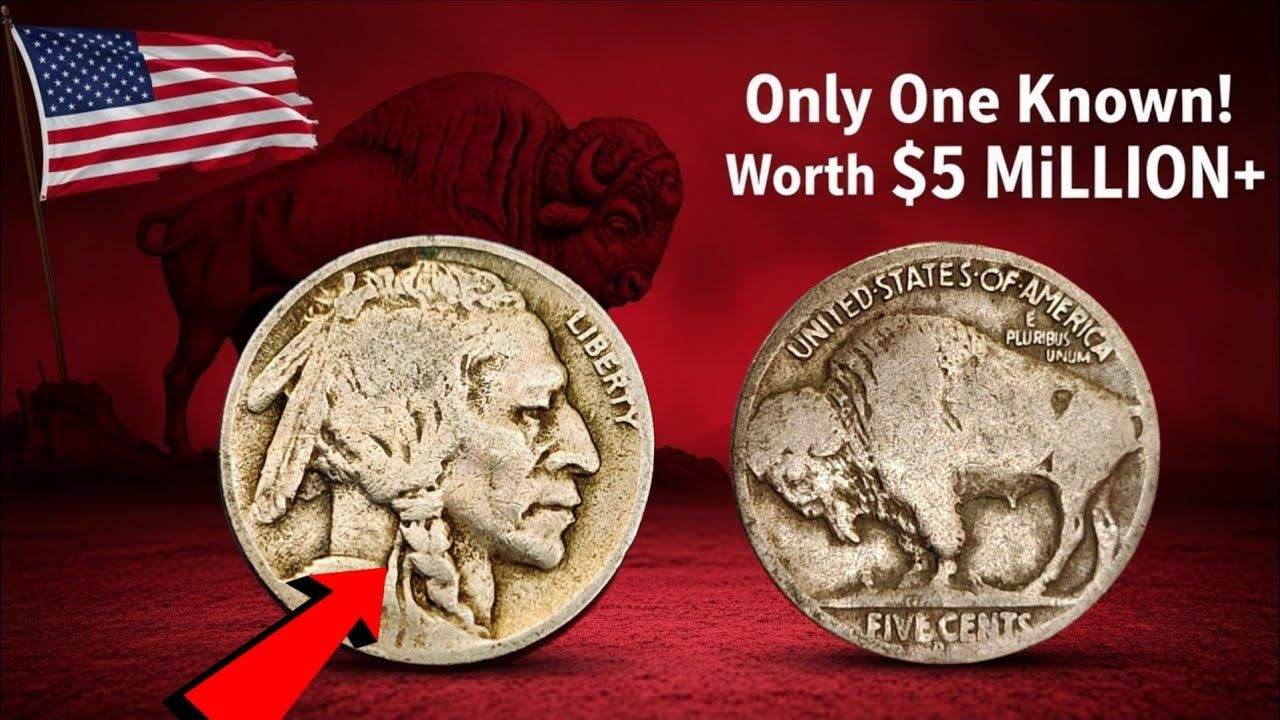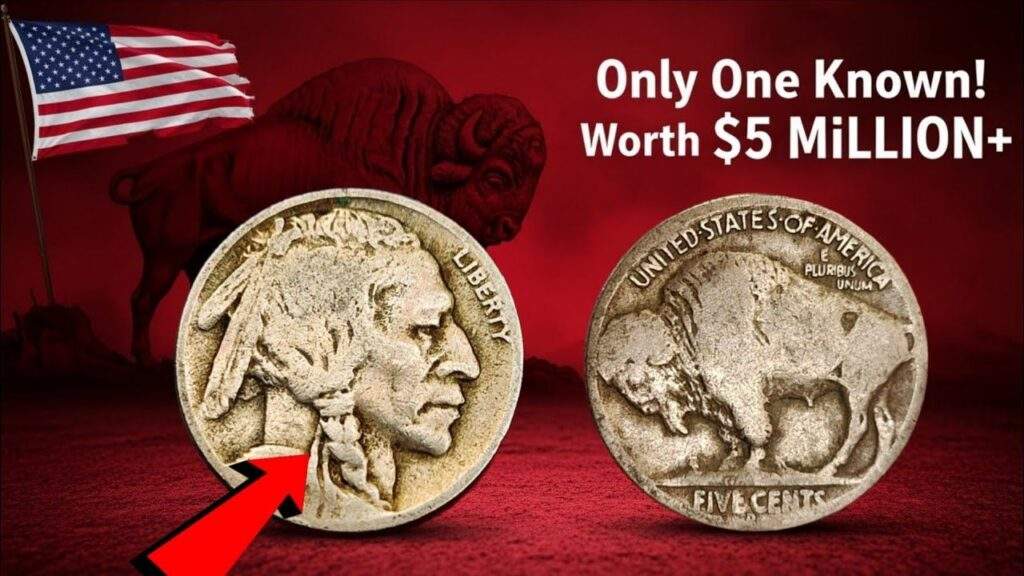

Buffalo nickels are some of the most popular old U.S. coins among collectors. Most are worth more than their original five-cent value, but a few rare dates and unusual varieties can be worth hundreds, thousands, or even much more in the right condition.
If you have old coins sitting in a drawer, collection, or inherited coin box, these four Buffalo nickels are worth checking carefully. The date, mint mark, condition, and small design details can make a huge difference in value.
Contents
- 1. 1. 1918/7-D Buffalo Nickel
- 2. 2. 1926-S Buffalo Nickel
- 3. 3. 1937-D Three-Legged Buffalo Nickel
- 4. 4. 1913-S Type 2 Buffalo Nickel
- 5. How Much Can These Buffalo Nickels Be Worth?
- 6. What Should You Look for on an Old Buffalo Nickel?
- 7. Why Condition Matters So Much
- 8. Be Careful With Rare-Looking Buffalo Nickels
- 9. The Bottom Line
1. 1918/7-D Buffalo Nickel
The 1918/7-D Buffalo nickel is one of the most important rarities in the entire Buffalo nickel series. The coin is called an “overdate” because the 1918 date was made over a 1917 date. Small parts of the earlier 7 can be seen beneath the 8 on genuine examples.
This coin was struck at the Denver Mint, which is shown by the small “D” mint mark on the reverse side. It is especially valuable because very few examples are known compared with ordinary Buffalo nickels.
The value can rise sharply when the coin has strong details and has been preserved in uncirculated condition. Professional grading can also make a major difference because collectors want to know that an expensive example is genuine.
PCGS lists an auction record of $350,750 for a 1918/7-D Buffalo nickel, while its current price guide also shows thousands of dollars for high-grade examples. Those figures are for exceptional coins, not every 1918/7-D nickel.
One important warning is that this coin is often altered or counterfeited. Some fake examples have had the date changed or a mint mark added to make an ordinary coin look rare. Because of this, an apparent 1918/7-D should not be cleaned, scratched, or altered. A valuable-looking example should be checked by a trusted coin grading service.
2. 1926-S Buffalo Nickel
The 1926-S Buffalo nickel is another major key date. The “S” means it was produced at the San Francisco Mint. San Francisco Buffalo nickels from this period can be difficult to find, especially in high grades.
The 1926-S is important because the coin is scarce in better condition. Many Buffalo nickels spent years in circulation, and the soft details of the design often became worn. A coin with a clear date, strong design details, and little wear can therefore be much more desirable to collectors.
The difference between an ordinary worn 1926-S and a high-grade example can be dramatic. PCGS records an auction high of $322,000 for a 1926-S Buffalo nickel in an exceptional mint-state grade. That does not mean every 1926-S is worth anything close to that amount. Most examples are worth far less, with condition playing a major role.
When checking one, look closely at the date and the small “S” mint mark on the reverse. Do not assume that an old Buffalo nickel is valuable simply because it is from 1926. The coin must be examined for condition and authenticity before its true value can be estimated.
3. 1937-D Three-Legged Buffalo Nickel
The 1937-D three-legged Buffalo nickel is probably the most famous unusual Buffalo nickel. It was made at the Denver Mint and is known for a buffalo that appears to have only three legs.
This unusual appearance was caused by excessive polishing of the coin die. The polishing removed part of one of the buffalo’s legs, creating the famous three-legged appearance.
The variety became highly popular with collectors. Because genuine examples are scarce and widely recognized, they can sell for much more than a normal 1937-D Buffalo nickel.
PCGS records an auction price of $99,875 for a 1937-D three-legged Buffalo nickel. Its price guide also shows substantially higher values for this variety than for a normal 1937-D coin.
However, this is another coin that needs careful examination. People have tried to alter ordinary Buffalo nickels to make them look like three-legged varieties. A genuine example has specific design characteristics that experts use to identify it.
If you think you have one, avoid cleaning it or trying to remove part of the leg yourself. A professional examination is much safer than attempting to create or improve the variety.
4. 1913-S Type 2 Buffalo Nickel
The 1913-S Type 2 Buffalo nickel is one of the major regular-issue key dates in the series. It was made at the San Francisco Mint during the first year of Buffalo nickel production.
The Buffalo nickel had two major designs in 1913. The Type 1 design placed the words “FIVE CENTS” on raised ground, while the Type 2 design moved the denomination into a recessed area below the buffalo. The change was made because the original lettering could wear away too quickly.
The 1913-S Type 2 is especially desirable because relatively few high-quality examples are available. Professional coin guides identify it as one of the key dates of the Buffalo nickel series.
PCGS records an auction high of $84,000 for a 1913-S Type 2 in mint state. Its price guide also shows that values increase substantially as the grade improves.
A worn example may still have collector value, but a sharply detailed coin in excellent condition can be much more valuable. This is why the condition of the coin should always be considered along with its date and mint mark.
How Much Can These Buffalo Nickels Be Worth?
There is no single price for any of these coins. Two Buffalo nickels with the same date can have very different values because one may be heavily worn while the other is nearly uncirculated.
Here is a simple comparison using recorded auction highs and current price-guide information for higher-grade examples:
| Buffalo Nickel | What Makes It Special | Recorded Auction High |
|---|---|---|
| 1918/7-D | Overdate variety | $350,750 |
| 1926-S | Scarce San Francisco issue | $322,000 |
| 1937-D Three-Legged | Famous three-legged variety | $99,875 |
| 1913-S Type 2 | Important early key date | $84,000 |
These are exceptional auction results and should not be treated as normal selling prices. The actual value of a coin depends on its grade, surface quality, strike, color, damage, authenticity, and demand at the time it is sold.
What Should You Look for on an Old Buffalo Nickel?
If you find a Buffalo nickel, start with the date. Many Buffalo nickels have heavily worn dates, so a clearly readable year can make identification much easier.
Next, check the reverse side for the mint mark. A “D” means Denver, while an “S” means San Francisco. Buffalo nickels without a mint mark were made at the Philadelphia Mint.
The most important things to check include:
- The year shown on the front of the coin
- The mint mark below the buffalo on the reverse
- Whether the coin appears to be a special variety
- How much wear, damage, cleaning, or other marks the coin has
Do not polish an old Buffalo nickel to make it look better. Cleaning can damage the original surface and may reduce its value to collectors.
Why Condition Matters So Much
Buffalo nickels were made from a copper and nickel alloy and circulated heavily. The design contains many raised details that wear down over time. The date is one of the first areas that can become difficult to read.
A coin that still has sharp details can be much more desirable than a heavily worn example of the same date. This is especially true for rare dates and varieties.
Collectors and grading companies use grades to describe the condition of coins. Higher grades generally mean the coin has better surfaces and stronger original details. Coins that have never circulated can be especially valuable when they are rare and well preserved.
This is why simply finding the correct year is only the first step. The coin’s condition must also be considered before deciding what it may be worth.
Be Careful With Rare-Looking Buffalo Nickels
Rare Buffalo nickels can attract counterfeiters because some varieties are worth a great deal of money. The 1918/7-D and 1937-D three-legged varieties are particularly important examples.
Some altered coins may have their dates changed, mint marks added, or parts of the buffalo modified. NGC has specifically warned about altered Buffalo nickels, including fake 1918/7-D and 1937-D three-legged examples.
If a coin appears to be worth a large amount of money, professional authentication is a smart step before buying, selling, or making any major decision about it.
The Bottom Line
Buffalo nickels may look like ordinary old five-cent coins, but a small number can be extremely valuable. The 1918/7-D, 1926-S, 1937-D three-legged, and 1913-S Type 2 are four of the most important examples for collectors to know.
The biggest lesson is that an old coin is not automatically a rare coin. The exact date, mint mark, variety, condition, and authenticity all matter. A Buffalo nickel that looks ordinary at first glance could deserve a much closer inspection.
If you find one of these dates in an old collection, do not clean it or assume its value from an online headline. Handle it carefully, identify it correctly, and have an apparently rare example professionally examined. In the world of Buffalo nickels, a tiny detail can sometimes make the difference between a common five-cent coin and a valuable collector’s piece.