
What Is The Potential For Chemical Industries In India?
India’s chemical industry is one of the oldest and most diverse sectors in the country, serving as a backbone for various other industries such as agriculture, pharmaceuticals, textiles, construction, and consumer goods. As the nation continues to push for industrial growth, self-reliance, and global competitiveness, it’s crucial to understand what is the potential for chemical industries in India. From rapid urbanization to increased foreign investment, numerous factors are paving the way for India’s chemical sector to become a global powerhouse. Click here to send your queries/Contact Us See More Links:
What Is the Future Outlook for the Indian Speciality Chemical Industry?
Indian Specialty Chemical Industry stands out as one of the most dynamic and fast-growing segments within the country’s manufacturing landscape. Unlike commodity chemicals, specialty chemicals offer value-added solutions designed for specific applications across diverse sectors like pharmaceuticals, agriculture, electronics, textiles, construction, automotive, and personal care. As global supply chains shift and new technologies drive demand, Indian companies are rising to the challenge. The industry’s future looks not only promising but also truly transformative. Let’s dive into what lies ahead for this high-growth sector. Understanding the Rise of Specialty Chemicals in India Over the past decade, India’s specialty chemical sector has grown significantly faster than the global average. It now accounts for over 22% of India’s total chemical market and is estimated to cross $65 billion by 2025. This growth is driven by increasing domestic demand, evolving regulatory standards, and an increasing shift of global businesses looking for alternative manufacturing bases outside of China. Visit this Page for More Information: Start a Business in Specialty Chemicals Manufacturing Industry The China+1 Strategy: A Game Changer One of the key drivers shaping the future of the Indian specialty chemical industry is the global “China+1” strategy. After COVID-19 disruptions and rising geopolitical tensions, global companies are actively seeking alternate, reliable suppliers. India, with its cost-effective production, skilled workforce, and improving infrastructure, stands out as a leading alternative. This transition has already begun to benefit Indian specialty chemical companies. Exports have increased, new international partnerships are being formed, and global players are even setting up joint ventures with Indian firms. Related Business Plan: Pharmaceutical, Drugs Strong Domestic Demand Across Key Sectors India’s rapid industrialization, urbanization, and rising disposable income are also fueling the domestic demand for Indian Specialty Chemical Industry. Key end-use sectors that are growing rapidly include: Agriculture: Growth in agrochemicals to ensure better yields and food security. Pharmaceuticals: Increasing production of APIs and intermediates needs specialty chemicals. Automotive and EVs: Chemicals for batteries, coatings, and plastics are in higher demand. Textiles: Dyes, finishes, and processing chemicals are witnessing strong growth. Personal and Home Care: A rise in consumer spending is boosting demand for surfactants, fragrances, and cosmetic ingredients. Each of these industries relies on niche chemical solutions, creating opportunities for innovation and tailored product development. Investment and Capacity Expansion on the Rise Indian specialty chemical manufacturers are aggressively expanding capacity to meet rising global and domestic demand. Investments are being made in plant modernization, new production facilities, and R&D centers. According to industry reports, over ?50,000 crores have been earmarked for capacity expansion in the next few years. Moreover, the Indian government’s support through PLI schemes, tax benefits, and promotion of dedicated chemical parks is further incentivizing private sector investments in this space. Emphasis on Green Chemistry and Sustainability The global trend toward sustainability and environmental responsibility is reshaping how specialty chemicals are produced. Indian manufacturers are increasingly focusing on: Green chemistry practices Waste minimization Renewable feedstocks Circular economy models By adopting eco-friendly technologies and reducing carbon footprints, Indian companies are aligning with global ESG (Environmental, Social, and Governance) norms—making them more attractive to international buyers and investors. Read our Books Here: Chemical Technology (Organic, Inorganic, Industrial), Fine Chemicals Innovation and R&D: Core to Future Growth One of the most important growth levers for the future of India’s specialty chemical industry will be innovation. As customer needs become more application-specific, companies that invest in research and development will stay ahead of the curve. R&D in areas like nanomaterials, biotechnology, polymer engineering, and formulation chemistry will unlock next-generation products that serve advanced industries such as semiconductors, aerospace, and biotechnology. Collaboration with academia and global research labs is also on the rise, strengthening India’s knowledge capital. Digitalization and Automation The integration of digital tools into chemical manufacturing—such as AI for predictive maintenance, IoT-enabled supply chains, and data analytics for quality control—is expected to become mainstream. These digital advancements will: Reduce operational costs Improve product consistency Enhance supply chain visibility Increase responsiveness to market demand Digital transformation will also be vital in complying with increasingly stringent global regulatory standards. Export Potential and Global Integration India’s specialty chemical exports have already shown strong momentum, and this is expect to accelerate. With enhanced quality standards and global certifications, Indian firms are tapping into markets in the US, Europe, Southeast Asia, and the Middle East. India’s reputation as a dependable supplier of intermediates and specialty ingredients, especially during the pandemic, has positioned it as a go-to manufacturing base. The expansion of bilateral trade agreements and the establishment of export-friendly chemical zones will further boost global integration. Challenges and How to Manage Them Although the outlook remains bright, the industry faces several critical challenges that demand immediate action: Raw material dependency: Indian manufacturers rely heavily on China for key raw materials. To overcome this, companies must strengthen domestic backward integration and develop local supply chains. Regulatory hurdles: Complex and inconsistent regulations across states slow down project approvals. The government must streamline clearance procedures and standardize policies to ensure smoother operations. Environmental compliance: Stricter environmental laws call for companies to adopt sustainable practices and invest in advanced waste treatment infrastructure. To manage these challenges effectively, industry leaders should collaborate closely, advocate for progressive policy reforms, and build strong public-private partnerships focused on infrastructure development and innovation. Conclusion: A Transformational Era for Indian Specialty Chemicals India’s specialty chemical industry stands ready to take a transformational leap. Global tailwinds, strong domestic support, continuous innovation in product development, and a firm commitment to sustainable practices are driving this momentum. With these strengths, Indian manufacturers are positioning the country as a leading global hub for specialty chemical production. Entrepreneurs and investors looking to enter or expand in this sector have a unique window of opportunity. As India strengthens its position on the global chemical map, those who align early with innovation, quality, and sustainability will lead the next wave of industrial success. Click here to send your queries/Contact Us https://npcsblog.com/ See More Links:
Which Chemicals Are Most Demanded in India?
India is one of the fastest-growing chemical markets in the world, thanks to its expanding economy, industrialization, rising consumer needs, and growing demand from key sectors like agriculture, pharmaceuticals, construction, and electronics. If you’re wondering which chemicals are in demand in India, the answer spans across a wide range of basic, specialty, and performance-based chemicals. From fertilizers to surfactants, India’s evolving needs are transforming the chemical consumption landscape and offering incredible opportunities for manufacturers and investors. Click here to send your queries/Contact Us Reasons for Buying NIIR Report: We use reliable sources of information and databases. And information from such sources is processed by us and included in the report. See More Links:
Which are the Top Specialty Chemical Industries in India?
India’s specialty chemical sector has evolved into one of the most dynamic components of its manufacturing economy. Fueled by rapid industrialization, increasing demand across diverse sectors, and the global shift away from China, the country has emerged as a reliable supplier of value-added chemicals. If you’re wondering which are the top specialty chemical industries in India, then you’re entering a world full of innovation, high-margin opportunities, and growing global recognition. These industries are vital to pharmaceuticals, agriculture, textiles, construction, and beyond. India’s Specialty Chemicals Boom: A Quick Overview The Indian specialty chemical sector is currently valued at over $40 billion and is expected to grow at a CAGR of 11–12% over the next five years. Specialty chemicals differ from commodity chemicals in that they are manufactured for specific performance or function and often cater to niche markets. India’s robust R&D capabilities, cost-effective manufacturing, and increasing export competitiveness make it a powerhouse in this sector. 1. Agrochemical Industry Agrochemicals are among the leading specialty chemical segments in India, serving the massive agricultural sector. This includes pesticides, herbicides, fungicides, and insecticides. Top Companies: UPL Limited, PI Industries, Rallis India, Dhanuka Agritech. Key Products: Mancozeb, Glyphosate, Chlorpyrifos, Imidacloprid. India is the fourth-largest producer of agrochemicals globally and is a major exporter to Latin America, Asia, and Africa. With growing food demand and shrinking arable land, precision farming is increasing reliance on agrochemicals. Related Feasibility Study Reports: Pharmaceutical, Drugs, Fine Chemicals
Start Manufacturing Business of Grinding Aids from Triethanolamine
Market Potential and Industry Outlook The global cement grinding aid market is expected to grow significantly in the coming years, driven by: Rapid urbanization and infrastructure development Increased demand for high-performance cement Government investment in housing and roads Energy-saving regulations in cement manufacturing India, being the second-largest cement producer in the world, provides an ideal environment to start a grinding aid manufacturing business. Read Similar Articles: Concrete & Cement Industry Steps to Start Manufacturing Business of Grinding Aids from Triethanolamine 1. Market Research and Feasibility StudyUnderstand your target market—cement manufacturers, distributors, and construction companies. Analyze competitors, demand trends, and customer expectations. 2. Selection of LocationChoose a location near cement plants or industrial belts to reduce logistics costs. Proximity to chemical suppliers and infrastructure facilities is crucial. 3. Sourcing Raw MaterialsThe main ingredient, Triethanolamine (TEA), is available domestically and through imports. Other ingredients may include glycols, amines, and surfactants. 4. Machinery and EquipmentSet up includes: Reactors and blending tanks Storage tanks for TEA and solvents Dosing and packaging machinery Pollution control systems Quality testing labs 5. Licensing and Regulatory ApprovalsObtain necessary licenses such as: Factory license Pollution Control Board (PCB) clearance Fire safety NOC GST registration BIS/ISO certification (optional but beneficial) 6. Product Formulation and R&DDevelop a formulation that suits local cement compositions and climatic conditions. Constant R&D helps in improving product performance and shelf life. Click here to send your queries/Contact Us Cost Structure and Profitability An average TEA-based grinding aid manufacturing plant with a capacity of 1–2 tons/day may require an initial investment of ?1–2 crore depending on scale and automation. The major cost heads include: Raw materials (~60%) Utilities and manpower (~15%) Equipment and infrastructure (~20%) Marketing and logistics (~5%) Profit margins range between 15–25%, depending on quality, demand, and supply chain efficiency. Related Feasibility Study Reports: Concrete, Cement and Cement based Products and Projects Target Customers and Marketing Strategy The primary customers are: Cement manufacturers (both large-scale and mini-plants) Cement exporters Construction companies Cement additives wholesalers Marketing strategies include: Technical demonstrations to showcase performance improvements Supplying free product samples to cement plants Participating in industry exhibitions and cement expos Creating a B2B website or listing on platforms like IndiaMART and TradeIndia Environmental and Safety Considerations Grinding aid manufacturing involves chemical handling. Therefore: Use Zero Liquid Discharge (ZLD) systems Implement fire safety measures Train staff in chemical handling and PPE usage Follow environmental norms for air and water emissions Being compliant with safety standards also increases credibility among buyers. Read our Books Here: Cement, Asbestos, Ceramics, Bricks, Limestone and Construction Materials Manufacturing Technology Conclusion: Start Manufacturing Business of Grinding Aids from Triethanolamine In conclusion, starting a manufacturing business of grinding aids from Triethanolamine is a smart move in today’s growing cement industry. With increasing focus on energy efficiency and cement quality, demand for high-performance grinding aids is steadily rising. Triethanolamine-based formulations offer technical advantages and economic benefits to cement manufacturers. This business offers scalability, export potential, and profitability—making it suitable for both startups and expanding chemical enterprises. If you’re ready to venture into this niche yet essential segment, now is the time to invest in planning, plant setup, and product development. Niir Project Consultancy Service (NPCS), one of the most reliable and secure websites, is the one we use for our reports. We provide the most up-to-date data with the closest measure of accuracy to satisfy our readers. In this report titled “Start Manufacturing Grinding Aids from Triethanolamine,” you may acquire all about the business, from determining the demand for raw materials to generating the components and processing. Engineers, project specialists, and industrial consultancy firms in India and around the world have benefited from the NPCS study. Each project report provides details on several company plans, giving technological, technical, independent contractor, and startup resources on the NPCS website. You might look at it there as well. Click here to send your queries/Contact Us Reasons for Buying NIIR Report: Our research report helps you get a detailed picture of the industry by providing an overview of the industry along with the market structure and classification. Our report provides market analysis covering major growth driving factors for the industry, the latest market trends and the regulatory framework of the industry. Our Report provides an analysis and in-depth financial comparison of major Players / Competitors. Our Report provides indispensable buyers data with their company financials as well as the contact details, which can be an important tool in identifying the target customers. Our report provides forecasts of key parameters which help to anticipate the industry performance. We use reliable sources of information and databases. And information from such sources is processed by us and included in the report. See More Links:
Start Manufacturing Business of Styrene Butadiene Rubber (SBR)
Visit this Page for More Information: Start a Business in Rubber Manufacturing Industry Why SBR is in High Demand Globally The demand for SBR is largely driven by the automotive and industrial sectors. Here’s why industries prefer SBR: High abrasion resistance and durability Good aging stability when mixed with antioxidants Cost-effective substitute for natural rubber Versatility in blending with other rubbers and additives More than 50% of SBR production is used in tire manufacturing, while the rest finds applications in footwear, adhesives, gaskets, and flooring materials. https://youtu.be/M4amyGg4p2o Market Potential for SBR Manufacturing in India India imports a significant volume of SBR annually due to limited local production, which creates a strong case for domestic manufacturing. Factors favoring SBR manufacturing in India include: Rising vehicle ownership and tire replacement demand Growth in infrastructure and construction activities Government’s “Make in India” initiative Import substitution potential to reduce dependency on foreign suppliers By setting up a plant to manufacture SBR locally, you can serve not just domestic clients but also tap into export markets like Southeast Asia, Africa, and the Middle East. Click here to send your queries/Contact Us Key Steps to Start Manufacturing Business of Styrene Butadiene Rubber (SBR) 1. Feasibility Study and Market AnalysisConduct in-depth research to understand regional demand, competitors, logistics, and supply chains. Also, identify your ideal customer base: tire manufacturers, rubber product makers, industrial suppliers. 2. Choosing the Right TechnologySBR is mainly produced by: Emulsion Polymerization (E-SBR): More common, suitable for general applications like tires, footwear. Solution Polymerization (S-SBR): Offers better performance, preferred in high-performance tires. Technology choice will impact your machinery, operating cost, and product range. 3. Location and InfrastructureSet up your plant near industrial hubs, ports, or petrochemical complexes. Ensure access to utilities (power, water, steam), road transport, and skilled labor. 4. Sourcing Raw MaterialsThe two main raw materials for SBR are: Styrene: Derived from benzene or ethylene Butadiene: A byproduct of petroleum refining or natural gas processing These can be sourced from petrochemical suppliers within India or through imports. 5. Machinery and Equipment Required Reactors and polymerization vessels Heat exchangers and separators Vacuum pumps and dryers Blending tanks and pelletizing systems Storage tanks for monomers and solvents Pollution control units (scrubbers, effluent treatment) 6. Licenses and ApprovalsSecure the following: Environment clearance from State Pollution Control Board Explosives and hazardous chemical storage licenses Factory license and GST registration Consent to Establish and Operate Related Feasibility Study Reports: Rubber and Rubber Products Investment and Cost Structure A medium-sized Styrene Butadiene Rubber (SBR) manufacturing unit may require an investment of ?50–100 crore or more depending on capacity and level of automation. Major cost components: Capital investment in land and machinery (45%) Raw materials and utilities (35%) Skilled labor and operations (10%) Licensing, R&D, and marketing (10%) Profitability improves with scale, long-term contracts, and energy-efficient operations. Margins typically range from 12–20% in the synthetic rubber sector. Target Buyers and Business Opportunities The primary customers for SBR include: Tire manufacturers (OEM and aftermarket) Conveyor belt and hose manufacturers Footwear and sports equipment brands Adhesive and sealant industries Additional revenue streams include exporting processed SBR to regions with rubber shortages and diversifying into rubber-based products. Read our Books Here: Rubber Processing And Compounding Technology Books Environmental and Safety Considerations As a chemical manufacturing business, SBR production must comply with environmental and safety norms: Install Zero Liquid Discharge (ZLD) systems Use air scrubbers and VOC emission control technologies Ensure worker safety with PPE, hazard training, and process automation Conduct regular audits for chemical handling and storage compliance Being compliant not only avoids regulatory penalties but also builds trust with clients and investors. Click here to send your queries/Contact Us Conclusion: Start Manufacturing Business of Styrene Butadiene Rubber (SBR) for Long-Term Growth The global rubber industry is evolving, and the shift toward synthetic solutions makes this the right time to start a manufacturing business of Styrene Butadiene Rubber (SBR) in India. With growing demand across multiple sectors, SBR production offers long-term profitability, scalable operations, and opportunities for product diversification. Whether you are an investor, chemical engineer, or entrepreneur, this business model aligns well with future trends in automotive and industrial applications. Take the first step today with proper planning, expert consultancy, and a focus on quality. Reasons for Buying NIIR Report: Our research report helps you get a detailed picture of the industry by providing an overview of the industry along with the market structure and classification. Our report provides market analysis covering major growth driving factors for the industry, the latest market trends and the regulatory framework of the industry. Our Report provides an analysis and in-depth financial comparison of major Players / Competitors. Our Report provides indispensable buyers data with their company financials as well as the contact details, which can be an important tool in identifying the target customers. Our report provides forecasts of key parameters which help to anticipate the industry performance. We use reliable sources of information and databases. And information from such sources is processed by us and included in the report. See More Links:
The Business of Manufacturing Epoxy Resin : Increasing Opportunities for Growth
In an increasingly material-driven industrial world, manufacturing epoxy resin stands out as a profitable and future-oriented business venture. Epoxy resins are valued for their exceptional mechanical strength, chemical resistance, and strong adhesive properties. From construction to electronics, the demand for epoxy-based materials is surging at a global scale—making this the perfect time to explore this dynamic field. With strategic investment and the right knowledge, manufacturers can unlock growth and export opportunities while serving diverse industries. What Is Epoxy Resin and Why Is It in Demand? Epoxy resin is a synthetic polymer formed through the chemical reaction between epichlorohydrin and bisphenol-A. Once cured with a hardener, it forms a durable, heat- and chemical-resistant material. Due to these properties, it’s widely used in adhesives, coatings, insulation, flooring, and composites. The increasing adoption of epoxy resin in infrastructure, aerospace, automotive, electronics, and renewable energy has fueled a steady growth curve globally. Especially in India, the resin market is poised for expansion with the growing need for high-performance materials. Visit this Page for More Information: Start a Business in Epoxy Resin Industry Key Industrial Applications of Epoxy Resin Understanding the broad applicability of epoxy resin helps in identifying potential customers when entering the manufacturing space. 1. Construction and InfrastructureUsed in flooring, waterproof coatings, crack repairs, and structural bonding agents. 2. Electrical and Electronics IndustryProvides insulation for motors, switchgear, and circuit boards due to its non-conductive nature. 3. Automotive and AerospaceIntegral in the creation of lightweight, durable composite components and bonding parts. 4. Paints and Protective CoatingsApplied on pipelines, ships, tanks, and industrial equipment to prevent corrosion. 5. Furniture and Decorative Resin ArtUsed extensively in tabletops, kitchen counters, and modern décor through casting and surface lamination. These sectors continue to drive demand, ensuring stability and scalability for entrepreneurs entering the field of manufacturing epoxy resin. Related Business Plan: Synthetic Resins How to Start a Business in Manufacturing Epoxy Resin Starting a manufacturing plant for epoxy resin involves a blend of chemistry, compliance, and smart business planning. Here’s how you can build a foundation for a successful venture. Step 1: Market Research and Feasibility Study Before investing in infrastructure or machinery, it is essential to conduct detailed market analysis. Determine: Local demand vs import reliance Regional industries needing epoxy resin Competing domestic manufacturers Export possibilities Potential partnerships or bulk buyers This groundwork ensures you’re not just manufacturing epoxy resin, but doing so strategically. Step 2: Choose the Right Production Process Epoxy resin production mainly uses two methods: Batch Process: Suitable for small to medium production; allows formulation flexibility. Continuous Process: Ideal for large-scale, uniform production and energy-efficient operations. The main raw materials used are: Epichlorohydrin (ECH) Bisphenol-A (BPA) Sodium hydroxide (NaOH) Advanced formulations may include flexibilizers, reactive diluents, and additives to meet specific industry requirements. Step 3: Infrastructure and Equipment Setup A standard epoxy resin manufacturing plant should include: Stainless steel or glass-lined reactors Condensers, heat exchangers, and distillation columns Storage tanks for raw and finished materials Pollution control units like scrubbers and ETP Laboratory for quality testing and R&D Plant capacity can range from 1 TPD (ton per day) to 20+ TPD based on your investment and market goals. Step 4: Obtain Necessary Licenses and Approvals To operate a compliant manufacturing facility, secure the following: Factory license under Factories Act NOC and consent from State Pollution Control Board Hazardous waste handling registration BIS certification (optional but preferred) GST and MSME registration for taxation and subsidies Following these legal norms not only ensures safety but also enhances your business credibility. Cost Estimation and Profitability Setting up a small to medium-sized epoxy resin plant can require an investment of ?4 crore to ?12 crore, depending on: Plant capacity and technology Level of automation Raw material sourcing (domestic or import) Quality certifications Manufacturing epoxy resin offers excellent margins—typically 15% to 25%. Long-term contracts, export orders, and innovation in formulation can further boost profitability. Click here to send your queries/Contact Us Environmental Considerations and Sustainability As epoxy resin is chemically synthesized, environmental management must be part of your business plan: Install effluent treatment and air filtration systems Implement a Zero Liquid Discharge (ZLD) policy Opt for solvent recovery units to minimize waste Explore bio-based or eco-friendly alternatives Sustainable manufacturing not only reduces operational risk but also opens doors to green markets and international clients. Marketing Strategies for Your Epoxy Resin Products Once production is underway, focus on building a customer base through: Direct sales to construction and automotive companies Partnerships with electrical and electronics manufacturers Presence on B2B marketplaces like IndiaMART, Alibaba, TradeIndia Participating in chemical and industrial expos Digital content marketing to showcase product specifications and case studies Building a strong, quality-driven brand is critical when you start manufacturing epoxy resin for B2B applications. Future Trends and Innovations in Epoxy Resin The field of epoxy resin is evolving quickly. Emerging trends include: Bio-based resins made from plant-derived BPA alternatives Nano-enhanced epoxy with improved mechanical and thermal properties Low-VOC and water-based formulations for eco-friendly coatings Smart resins for electronics that are self-healing or heat-conductive Investing in R&D can help you develop niche products and stay ahead of competitors. Final Words: Why Manufacturing Epoxy Resin Is a Smart Business Move With growing demand across sectors, consistent margins, and an ever-evolving technology landscape, manufacturing epoxy resin is an ideal business for entrepreneurs interested in chemicals, materials, and industrial applications. The versatility and scale of this business model make it resilient even during economic fluctuations. As industries continue to demand stronger, lighter, and more sustainable materials, epoxy resin manufacturers are in a prime position to deliver value. Read our Books Here: Synthetic Resins Visit the page Select and Choose the Right Business Startup for You for sorting out the questions arising in your mind before starting any business and know which start-up you can plan. We, at NPCS, endeavor to make business selection a simple and convenient step for any entrepreneur/startup. Our expert team, by capitalizing on its dexterity and decade’s long experience in the field, has created a list of
The Increasing Demand for Manufacturing Business of Polycarboxylate Ether
The construction industry is evolving with a strong emphasis on sustainability, durability, and performance. One key component that is enabling this transformation is Polycarboxylate Ether (PCE) — a high-performance water reducer and superplasticizer widely used in modern concrete formulations. The manufacturing business of Polycarboxylate Ether presents an excellent opportunity for entrepreneurs looking to tap into the fast-growing sector of advanced construction chemicals. With increasing demand from infrastructure projects, real estate, and precast concrete applications, now is the right time to invest in this business. What is Polycarboxylate Ether (PCE)? Polycarboxylate Ether is a polymer-based compound used as a superplasticizer in cement and concrete mixtures. It significantly improves workability, strength, and durability without increasing the water content. Its ability to reduce water usage by up to 30% while maintaining fluidity makes it superior to traditional plasticizers and naphthalene-based products. Used extensively in high-performance concrete (HPC), ready-mix concrete (RMC), and self-compacting concrete (SCC), PCE has become essential in large-scale construction and infrastructure projects. Why the Manufacturing Business of Polycarboxylate Ether Is Growing The global construction chemicals market is growing at a CAGR of over 6%, and PCE is leading the charge in the superplasticizer segment. Factors contributing to this rise include: Urbanization and infrastructure investments Need for high-strength, eco-friendly concrete Government emphasis on sustainable construction Growing adoption of precast and RMC solutions India, in particular, is experiencing a construction boom, with initiatives like Smart Cities Mission, Bharatmala, and affordable housing pushing the demand for advanced admixtures like PCE. Visit this Page for More Information: Start a Business in Construction Chemicals Industry Key Applications of PCE in the Construction Industry Understanding where and how Polycarboxylate Ether is used is critical to identifying your customer base. Major applications include: 1. Ready-Mix Concrete (RMC):Improves workability and pumpability without compromising strength. 2. Precast Concrete:Enhances early strength, reducing mold cycles and increasing productivity. 3. Self-Compacting Concrete (SCC):Maintains fluidity and compaction in narrow structural elements. 4. High-Performance Concrete (HPC):Reduces porosity, enhances durability, and enables the use of supplementary cementitious materials. 5. Infrastructure Projects:Used in roads, bridges, tunnels, dams, and high-rise structures for long-lasting performance. With such diverse applications, the manufacturing business of Polycarboxylate Ether caters to a large and growing customer base. Related Business Plan: Construction Chemicals Steps to Start the Manufacturing Business of Polycarboxylate Ether Entering this niche yet high-demand segment requires a mix of technical know-how, quality control, and efficient supply chain management. Below is a detailed roadmap: Step 1: Conduct Market Research Start by identifying: Regional demand and growth areas (urban development, metro cities, industrial zones) Competitor pricing and production capacity Existing distribution channels and customer behavior Raw material suppliers and logistics partners This research will help you define your USP and pricing strategy. Step 2: Understand the Manufacturing Process The basic process of PCE production involves: Polymerization Reaction: Acrylic acid and other monomers are polymerized with polyether side chains. Neutralization: Adjusting pH with alkalis like sodium hydroxide or ammonia. Filtration and Packaging: Final product is filtered, stabilized, and stored in drums or tanks. There are two major types of PCE: PCE Liquid: Ready to use in RMC plants and construction sites. PCE Powder: Preferred for dry mix mortars or export markets. Formulation expertise is key to ensuring desired performance, especially under different climatic and structural conditions. Step 3: Set Up Your Production Unit Your plant setup should include: Polymerization reactors with precise temperature control Mixing tanks and storage vessels Neutralization and filtration systems Quality control lab and testing instruments Drum-filling and packaging unit Utilities like boiler, water purification, and electricity backup Ensure your location has access to transportation, water, and is compliant with zoning laws. Step 4: Regulatory Approvals and Certifications To run the manufacturing business of Polycarboxylate Ether, you must obtain: Pollution Control Board NOC Factory license under the Factories Act GST registration and Udyam MSME certificate BIS certification (optional but recommended) Hazardous chemical storage permission (if applicable) Adhering to environmental and industrial norms builds trust with construction clients and government projects. Raw Materials Required for PCE Production Key ingredients include: Acrylic acid Methacrylic acid Polyethylene glycol (PEG) Deionized water Initiators and catalysts Neutralizing agents (e.g., NaOH) Most raw materials are petrochemical derivatives and are available from Indian and international chemical suppliers. Investment and Profitability Initial investment for a small-to-medium scale PCE manufacturing plant (5–10 tons/day) is approximately ?4–?10 crore. Breakdown of costs: Machinery and plant setup – 40% Raw materials – 30–35% Manpower, utilities, and maintenance – 15% Licensing, packaging, and logistics – 10–15% Profit margins typically range from 15% to 25%, depending on formulation quality, raw material cost, and market competition. Read our Books Here: Cement, Asbestos, Ceramics, Bricks, Limestone and Construction Materials Manufacturing Technology Marketing Strategy for PCE Products To build a successful customer base: Partner with RMC plants, civil contractors, and construction firms Offer product demos and technical support Showcase case studies and performance metrics List on B2B platforms like IndiaMART, TradeIndia, and BuildSupply Attend trade expos such as World of Concrete, India Chem, etc. Developing a strong technical service team will help retain clients and foster loyalty. Feasibility Study Reports: Construction Chemicals Projects Challenges and Opportunities Ahead Challenges: Price fluctuations in raw materials Quality control in large batches Competition from global brands Opportunities: Export to Middle East, Africa, and Southeast Asia Expansion into green building materials Government infrastructure contracts R&D for tailored PCE formulations based on regional needs Conclusion: Why Invest in the Manufacturing Business of Polycarboxylate Ether With increasing urbanization, infrastructure development, and the growing emphasis on durable, eco-friendly concrete, the manufacturing business of Polycarboxylate Ether presents high profitability and long-term viability. Entrepreneurs with a background in chemicals, polymers, or construction materials will find this an ideal entry point into the fast-evolving construction chemicals industry. With the right investment, strategy, and innovation, your PCE manufacturing unit can become a key supplier in India and beyond. Read Similar Articles: Construction & Building Materials Projects Click here to send your queries/Contact Us Plus points: The physical properties of polymers, such as plastics and rubbers, are improved by
The Increasing Demand for Manufacturing Businesses of FRP Gratings, Manhole
India’s industrial infrastructure is rapidly modernizing, and with that comes the demand for robust, corrosion-resistant, and cost-effective materials. One such product that has emerged as a preferred alternative to traditional metals in various industries is FRP (Fiber Reinforced Plastic) gratings. The Manufacturing Businesses of FRP Gratings are witnessing increasing traction as they serve sectors like chemicals, oil and gas, food processing, wastewater treatment, and marine applications. Starting this business is not only profitable but also strategically aligned with India’s focus on sustainable, high-performance materials. Click here to send your queries/Contact Us Reasons for Buying NIIR Report: See More Links:
How to Start a Manufacturing Business of Eggshell Membrane Powder?
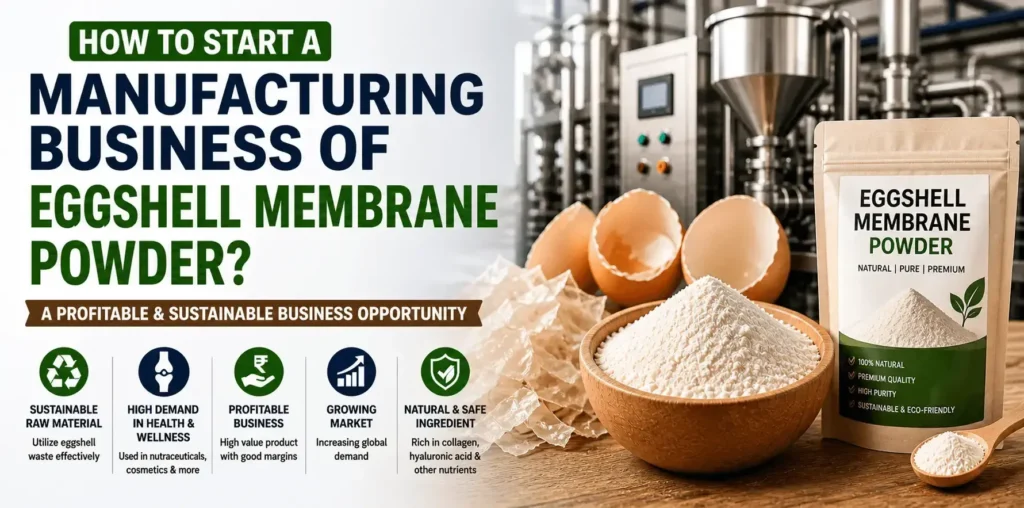
The manufacturing business of eggshell is an emerging sector that taps into the sustainable reuse of agro-waste materials. Eggshells, once considered mere food waste, are now recognized for their rich calcium carbonate content, which can be utilized across various industries—from fertilizers and animal feed to bioplastics, pharmaceuticals, ceramics, and even bio-composites. Market Potential of Eggshell Products Eggshell waste is generated in millions of tons globally each year. Countries with large poultry industries generate substantial volumes of this waste, opening the door to a revenue-generating recycling industry. The demand for natural calcium sources and eco-friendly raw materials is rapidly growing, giving the eggshell processing market a highly favorable growth trajectory. Target industries include: Agriculture (organic fertilizer and soil pH balancer) Animal Husbandry (calcium-rich poultry feed additive) Cosmetics & Skincare (natural exfoliant and calcium ingredient) Biomedical applications (bone graft materials, dental fillers) Bioplastics and eco-construction materials Visit this Page for More Information: Start a Business in Livestock Farming Sector Manufacturing Process of Eggshell Products A standardized manufacturing process ensures high-quality, contamination-free products ready for diverse applications. Here’s a step-by-step guide to the typical eggshell processing operation: Collection & Transportation In the Manufacturing Business of Eggshell, the first step is the efficient collection and transportation of raw eggshells. Collected eggshell waste is transported from designated collection points in sealed, hygienic containers. This helps maintain the quality and safety standards essential for a successful Manufacturing Business of Eggshell. Washing & Disinfection To ensure premium-grade products, eggshells undergo thorough washing to eliminate egg membrane residues, dirt, and other contaminants. In the Manufacturing Business of Eggshell, disinfection is carried out using antibacterial solutions to uphold microbiological safety—especially when the end product is intended for pharmaceutical or cosmetic applications. Drying A critical step in the Manufacturing Business of Eggshell involves drying the washed shells using tray dryers or fluidized bed dryers. Controlled temperatures (90–110°C) are applied to eliminate all moisture content, ensuring that the shells are shelf-stable and free from microbial growth. Pulverizing After drying, the shells are pulverized into powder using industrial-grade pulverizer machines. The Manufacturing Business of Eggshell may vary the fineness based on end-use. Ultra-fine powder is ideal for medical or cosmetic use, while coarser material suits fertilizer or construction-grade products. Sieving To maintain consistent quality, the powdered eggshell is sieved to separate oversized particles. The Manufacturing Business of Eggshell relies on this step to produce graded powder that meets specific industrial standards. The processed powder is then stored in airtight containers to maintain purity. Packaging In the final phase of the Manufacturing Business of Eggshell, the powder is packaged using food-grade or industrial-grade materials depending on the product’s target market. Packaging includes vital information such as product grade, date of manufacture, and batch numbers to ensure traceability and compliance. Read Similar Articles: Livestock Farming Projects Click here to send your queries/Contact Us Machinery & Equipment Required To start a small to medium-scale eggshell powder manufacturing unit, the following machines are typically required: Conveyor belts and bins Industrial washers Tray dryers or fluidized bed dryers Pulverizer machine Industrial sieves Dust collectors Packaging unit Advanced setups may also include automated washing and drying lines, UV sterilizers, and robotic packagers to increase productivity and hygiene. Investment & Setup Cost Initial capital depends on the scale of operation and level of automation. Here’s a general cost breakdown: Land & Building: ?10–15 lakh (for 1000–1500 sq. ft. space) Machinery & Equipment: ?8–20 lakh Utilities & Setup: ?2–3 lakh Labor & Overheads (6 months): ?3–5 lakh Working Capital (Raw materials, logistics, etc.): ?2–5 lakh Estimated total setup cost: ?25–45 lakh for a small-to-medium unit. Related Feasibility Study Reports: Livestock Farming Business Ideas Licenses & Regulatory Compliance Starting an eggshell manufacturing business requires certain licenses and registrations: Udyam Registration (MSME) FSSAI License (for products used in feed or food) Pollution Control Board clearance GST registration Factory license (if applicable) Trademark registration (for branding) Read our Books Here: Livestock Farming, Development Marketing & Distribution Strategy Marketing plays a crucial role in penetrating industry segments. Here’s how to make a strong market entry: Online B2B Platforms – IndiaMART, TradeIndia, Alibaba Industry Exhibitions & Trade Shows – Target chemical, agricultural, cosmetic, and pharma expos Social Media Campaigns – Highlighting the eco-friendly and organic benefits of eggshell products Direct Outreach – To poultry feed manufacturers, organic fertilizer producers, and bioplastic startups Distributor Networks – Building partnerships in key manufacturing zones Sustainability & Environmental Benefits The eggshell business is not only profitable but also environmentally sustainable. Key benefits include: Reduction in landfill waste and methane emissions Replacement of synthetic calcium additives Lower carbon footprint compared to mining calcium carbonate Encouragement of circular economy practices By transforming agro-waste into value-added products, the business supports green manufacturing goals and aligns with global ESG (Environmental, Social, Governance) standards. Challenges and Risk Management While promising, this industry faces a few challenges: Seasonal variation in eggshell supply Strict hygiene protocols for food-grade use Market education about eggshell-based product benefits High initial investment for automation and compliance To mitigate risks: Partner with multiple suppliers to stabilize raw material flow Invest in R&D for diversified product lines Create awareness via educational marketing content Apply for government subsidies and green initiative grants Future Outlook and Expansion Possibilities As sustainability becomes a driving force across industries, biogenic waste utilization will grow. The eggshell business can expand into: Calcium tablets and nutraceuticals Bio-ceramic materials Green construction additives Pet food supplements Cosmetic-grade exfoliants Technological innovation, strong branding, and niche targeting can transform a small eggshell unit into a multi-crore business venture. Conclusion: Although it is intended for the newly created eggshell membrane powder to replace and improve upon the deficiencies of the traditional insulators, such as glass wool, cotton, and wood, it is very possible that eggshell membrane powder sales will increase. NIIR should be your first pick if you’re thinking about the Manufacturing Business of Eggshell Membrane Powder. They are simple and inexpensive to build on-site using an extrusion procedure. There should be room for new businesses to prosper given the enormous demand for these products. Click here to send your queries/Contact