
What Are The Business Opportunities For Investment In Andhra Pradesh?
Business investment in Andhra Pradesh is rapidly gaining momentum as the state positions itself as one of India’s most investor-friendly destinations. With a robust economic framework, strategic infrastructure development, and proactive government policies, Andhra Pradesh has created an enabling environment that attracts both domestic and international investors. The state’s focus on innovation, technology, manufacturing, agriculture, and services sectors offers diverse opportunities for investors looking to capitalize on India’s growth story. In 2025, Andhra Pradesh’s growth trajectory and its strategic initiatives such as the AP Industrial Development Policy, Digital Andhra, and ease of doing business reforms make it a top choice for new and expanding businesses. This article explores the key sectors, investment opportunities, and reasons why Andhra Pradesh stands out as a lucrative business destination. Visit this Page for More Information: Start an Industry in Andhra Pradesh (AP)
Top 15 Profitable Business Ideas in Kuwait for Entrepreneurs
Kuwait is emerging as one of the most attractive destinations in the Middle East for entrepreneurs, startups, and foreign investors. With a strong economy, high consumer spending, advanced infrastructure, and government initiatives under Kuwait Vision 2035, the country offers excellent opportunities for launching profitable businesses across multiple sectors. From food services and eCommerce to healthcare, logistics, education, and digital startups, many profitable business ideas in Kuwait are gaining momentum due to rising market demand and increasing digital adoption. This guide explores the best business ideas in Kuwait for 2026, including small business opportunities, online ventures, startup concepts, and investment-friendly industries for entrepreneurs and foreign investors. Which are the Most Profitable Business Ideas in Kuwait? Some of the most profitable business ideas in Kuwait include: Food and beverage businesses eCommerce stores Real estate services Healthcare and wellness businesses Logistics and delivery services Digital marketing agencies Online businesses Education and training centers IT and software services Renewable energy businesses Best Business Ideas in Kuwait for Foreigners Include: consultancy restaurants online businesses import-export digital marketing logistics eCommerce mobile app businesses Visit this Page for More Information:Start a Business in Kuwait Why Start a Business in Kuwait? Kuwait’s strategic advantages make it a lucrative destination for business ventures. The country boasts a high GDP per capita, significant purchasing power, and a young, educated population. Moreover, Kuwait’s economic reforms are designed to foster private sector growth and reduce oil dependency, thereby creating diversified opportunities. Key benefits for investors and entrepreneurs include: Business-friendly policies and incentives Well-developed infrastructure and logistics Access to regional and international markets Stable political and economic environment Growing consumer market with increasing demand for modern goods and services Related Business Plan:Best Business Opportunities in Kuwait Top Profitable Business Ideas in Kuwait The following business ideas have gained traction in Kuwait, backed by market demand and government support. 1. Food Business Ideas in Kuwait Food and beverage businesses remain a cornerstone of Kuwait’s retail sector. With a growing expatriate population and rising lifestyle changes, demand for diverse cuisines, cafes, and healthy food options is booming. Business Options: Quick service restaurants (QSRs) Specialty cafes and juice bars Catering services for corporate and private events Organic and health food stores Food delivery and cloud kitchen services The evolving tastes of Kuwaiti consumers, combined with increasing digital adoption, make food-related businesses highly profitable. Read Similar Articles: Read Our Project Reports & Profiles 2. E-commerce and Online Retail Business Ideas in Kuwait Kuwait’s internet penetration rate is very high, creating ample opportunity for online retail ventures. The COVID-19 pandemic accelerated online shopping trends, which continue to grow. Potential Niches: Fashion and accessories Electronics and gadgets Home decor and furniture Beauty and personal care products Grocery delivery platforms Establishing a user-friendly, localized e-commerce platform with fast delivery can capture significant market share. 3. Real Estate and Property Management Kuwait’s real estate market is steadily growing due to increasing urbanization and infrastructural projects. Investing in property development, rental services, or property management can yield substantial returns. Key Areas: Residential apartments and villas Commercial office spaces Retail shopping centers Short-term rental and hospitality properties Real estate brokerage and consultancy With rising demand for modern housing and business spaces, this sector is lucrative for long-term investment. Click here to send your queries/Contact Us 4. Healthcare Business Opportunities in Kuwait The healthcare sector in Kuwait is expanding with government initiatives to improve public health and private sector participation. Wellness services are also gaining popularity amid growing health awareness. Business Opportunities: Clinics and specialty medical centers Fitness centers and gyms Wellness spas and therapy centers Medical equipment sales and rental Telemedicine and health tech startups Providing high-quality healthcare and wellness services meets a critical need and ensures steady growth. 5. Education and Training Services Kuwait values education and skill development, creating demand for supplementary learning services. The government encourages private sector participation in education, making it a promising business field. Possible Ventures: Language and skill development centers Online education platforms Vocational and technical training institutes Early childhood education and daycare Corporate training and consulting services Focusing on quality education tailored to the local market ensures success. How to Launch a Profitable Business in Kuwait Starting a business in Kuwait requires careful planning and compliance with local regulations. Here are key steps to ensure a smooth business setup: Market Research: Understand consumer needs, competition, and legal requirements. Business Registration: Obtain licenses and permits from the Kuwait Ministry of Commerce and Industry. Location and Infrastructure: Choose strategic locations with good accessibility or develop an online presence. Funding and Finance: Secure capital through investors, loans, or partnerships. Marketing and Promotion: Utilize digital marketing, social media, and local networks to attract customers. Compliance and Staffing: Hire skilled local and expatriate employees while complying with labor laws. Following these steps boosts chances of building a profitable, sustainable business. Future Outlook: Growing Business Landscape in Kuwait Kuwait’s government continues to implement reforms under Vision 2035, aimed at diversifying the economy and supporting private enterprise growth. This opens up exciting opportunities in fintech, renewable energy, tourism, and logistics. Entrepreneurs who adapt to changing market trends, embrace technology, and meet local demands will thrive in this promising market. Conclusion The scope for profitable business ideas in Kuwait is vast, ranging from food services to real estate and digital commerce. With strong economic fundamentals and an evolving business ecosystem, Kuwait offers lucrative prospects for both new and experienced entrepreneurs in 2025. By leveraging market insights, understanding consumer preferences, and navigating regulatory frameworks, investors can successfully capitalize on Kuwait’s growing economy. Read our Books Here: Our Books and Database Frequently Asked Questions Q1. Which business is best to start in Kuwait? Food businesses, eCommerce stores, logistics services, healthcare clinics, and digital businesses are among the best businesses to start in Kuwait. Q2. What are profitable small business ideas in Kuwait? Online businesses, food delivery services, social media marketing, tutoring, and retail trading are profitable small business ideas in Kuwait. Q3. Can foreigners start businesses in Kuwait? Yes, foreigners can start businesses in
What are some Profitable small business ideas in Bahrain 2026

Understanding Bahrain’s Booming Startup Landscape In recent years, Bahrain’s economy has emerged as a fertile ground for entrepreneurial growth and digital innovation. The Kingdom’s supportive government policies, robust fintech ecosystem, and access to regional markets make it an ideal launchpad for startups with global ambition to start creative small business ideas in Bahrain 2026. From blockchain pioneers to eco-conscious ventures, Bahrain is attracting sharp minds and bold ideas. The government’s vision, aligned with Bahrain Economic Vision 2030, strongly supports knowledge-based industries and private sector-led development. Top Performing Startups in Bahrain’s Thriving Ecosystem Rain – Bahrain’s Crypto Trailblazer Rain, the first licensed cryptocurrency platform in the Middle East, has rapidly become one of Bahrain’s most prominent fintech startups. Backed by top investors like Coinbase and MEVP, Rain offers a secure and Sharia-compliant trading experience. As global interest in cryptocurrency continues to rise, Rain is at the forefront, leveraging Bahrain’s progressive regulatory environment to dominate the digital asset space in MENA. Inagrab – Disrupting Retail Analytics Founded in Bahrain, Inagrab has revolutionized how businesses understand customer behavior through AI-driven analytics. Their flagship product, Tajir, helps retailers optimize sales through demand prediction and consumer insights. With data becoming the new currency, Inagrab is monetizing Bahrain’s retail data market in a highly scalable way. Tarabut Gateway – Open Banking Innovator A fintech born in Bahrain, Tarabut Gateway leads the open banking revolution in the GCC. It connects banks and fintechs through its secure API platform, offering seamless data sharing and financial integration. Supported by Central Bank of Bahrain (CBB) initiatives, Tarabut is facilitating a future where consumers have total control over their finances. Eat App – Revolutionizing Restaurant Tech Eat App is Bahrain’s homegrown success story in the hospitality tech space. This startup has expanded across the Middle East, offering reservation management systems to top-tier restaurants. It helps businesses manage tables, reduce no-shows, and enhance customer experience, making it one of Bahrain’s most profitable SaaS startups. Unipal – Empowering Students with Smart Discounts Unipal focuses on the student demographic, offering exclusive discounts and perks through a dedicated app. By targeting a niche segment with significant purchasing power, this Bahraini startup has developed a sustainable and scalable business model, all while enhancing student life across the Kingdom. Most Profitable & Small Business Ideas in Bahrain 2026 1. Fintech and Digital Wallets With Bahrain’s Central Bank strongly backing open banking and digital financial services, fintech is by far the most profitable sector for startup growth. Entrepreneurs can launch digital wallets, BNPL (Buy Now, Pay Later) services, or AI-powered financial advisory platforms. Key Advantage: Regulatory clarity, sandbox initiatives, and fintech-friendly policies. 2. E-commerce & Hyperlocal Delivery The COVID-19 pandemic accelerated Bahrain’s digital commerce shift, and the momentum hasn’t slowed. Startups offering niche product lines, such as eco-friendly goods, local artisans, or curated fashion, are thriving. Coupled with fast delivery models, hyperlocal e-commerce is exploding in profitability. Business Model Tip: Build platforms that cater to same-day delivery and integrate payment flexibility. 3. Healthtech & Wellness Startups Bahrain’s growing focus on healthcare modernization creates an excellent opportunity for startups in telemedicine, mental wellness, fitness tracking, and AI diagnostics. Businesses that focus on preventive healthcare or offer remote patient monitoring services are poised to capture high returns. Popular Niches: Subscription wellness boxes, online therapy platforms, AI-based diagnostic tools. 4. Edtech Solutions for Personalized Learning With Bahrain aiming to transform education through technology, edtech startups are finding ample growth opportunities. Platforms offering gamified learning, personalized tutoring, or language learning are particularly profitable. Customer Base: Schools, universities, and professional training institutes across the Gulf region. 5. Eco-Friendly Businesses and Green Tech Sustainability is no longer a trend but a necessity. Bahrain’s young population is especially aware of climate change, driving demand for eco-conscious products and services. Starting a business that offers reusable materials, organic skincare, or solar energy solutions can prove lucrative. Smart Angle: Leverage Bahrain’s ESG-focused investors to raise green capital. Government and Investor Support Driving Profits Bahrain’s Startup Bahrain initiative provides incredible support to new businesses through mentorship, funding access, and networking. The Bahrain Development Bank (BDB), Tamkeen, and Bahrain Economic Development Board (EDB) offer funding schemes and accelerator programs that reduce risk and fuel scale-up potential. Startup Accelerators to Consider: Flat6Labs Bahrain Brinc MENA C5 Accelerate How Bahrain’s Business Environment Fosters Startup Success Zero Tax & Low Operational Costs Bahrain has no personal income tax and offers low business registration and office space costs, especially when compared to neighboring UAE or KSA. This allows startups to maximize profits and reinvest in growth. Strategic Location in the Gulf Bahrain’s central location offers easy access to Saudi Arabia, UAE, and Kuwait — making it a strategic hub for logistics, distribution, and cross-border commerce. Entrepreneurs launching in Bahrain can quickly scale across the GCC. World-Class Infrastructure and Internet Penetration High-speed internet, smart logistics systems, and an educated, bilingual population add to the Kingdom’s appeal. Bahrain’s proactive approach toward 5G, IoT, and blockchain integration means tech startups thrive in a supportive digital ecosystem. Future Trends Shaping Bahrain’s Startup Landscape Web3 and Blockchain Given the success of Rain, Bahrain is positioning itself as a leader in Web3 applications. Startups building NFT marketplaces, DAO platforms, or smart contract services will find a highly receptive environment. AI-Driven Automation From customer service chatbots to AI-driven logistics, automation startups are increasingly profitable. Bahrain’s government encourages AI adoption in both public and private sectors. Digital Marketing & Content Creation With the rise of influencers and online branding, Bahrain is witnessing a surge in demand for digital marketing agencies, video content creators, and social media automation tools. In Summary Creative small business ideas in Bahrain 2026 is one of the most attractive in the MENA region. Whether you’re a fintech innovator, a healthtech disruptor, or a sustainability advocate, the Kingdom offers a thriving ecosystem, solid investor networks, and a well-educated workforce. The key to profitability lies in identifying niche demand, leveraging Bahrain’s digital infrastructure, and scaling regionally through strategic partnerships. Visit the page Select and Choose the Right Business
Top 5 Industries in Demand in Turkey
We, at NPCS, endeavor to make business selection a simple and convenient step for any entrepreneur/startup. Our expert team, by capitalizing on its dexterity and decade’s long experience in the field, has created a list of profitable ventures for entrepreneurs who wish to diversify or venture. The list so mentioned is updated regularly to give you a regular dose of new emerging opportunities. Contact Us
Top 10 Super Profitable Business Ideas in Tamil Nadu for 2026
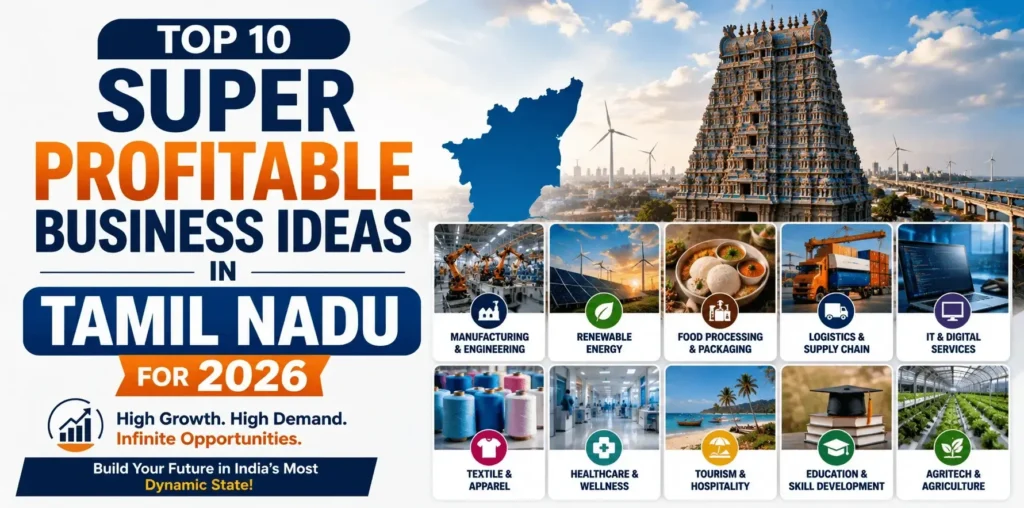
Tamil Nadu is one of India’s fastest-growing industrial states, offering several profitable business ideas in Tamil Nadu for entrepreneurs, startups, MSMEs, and investors. From textiles and automobile manufacturing to food processing, IT services, renewable energy, and tourism, the state provides a powerful ecosystem for launching successful ventures. With excellent infrastructure, skilled workforce, strong export connectivity, and government support for startups, many entrepreneurs are now searching for the most profitable business ideas in Tamil Nadu that require low investment and offer high returns. Why Profitable Business Ideas in Tamil Nadu Are Growing Rapidly? Some of the most profitable business ideas in Tamil Nadu include: Textile and apparel manufacturing Solar energy business Agro-processing units Food processing business IT and SaaS startups Automobile component manufacturing Tourism and hospitality ventures Logistics and warehousing services Organic farming Handicrafts eCommerce business In this detailed guide, we explore the top 10 super profitable business ideas in Tamil Nadu for 2026 that have strong market demand, scalable growth potential, and long-term profitability. Top 10 Profitable Business Ideas in Tamil Nadu In 2026 1. Textile and Apparel Manufacturing Business in Tamil Nadu With cities like Coimbatore, Erode, and Tiruppur at its helm, Tamil Nadu is the largest producer of cotton yarn in India. Entrepreneurs can tap into this thriving ecosystem by establishing garment manufacturing units, export houses, or fashion accessory businesses. Key Opportunities: Export-oriented ready-made garment production Knitting and dyeing units in Tiruppur Boutique stores focused on traditional weaves like Kanchipuram silk Why it works:Availability of raw materials, skilled labor, and government textile parks offer a seamless entry for investors. The Complete Technology Book on Textile Spinning, Weaving, Finishing and Printing 2. Solar Energy and Green Power Businesses Investing in Tamil Nadu’s Renewable Future Tamil Nadu is a frontrunner in renewable energy generation, particularly solar and wind power. Entrepreneurs can build businesses around solar panel distribution, installation services, or solar-powered rural solutions. Startup Ideas: Residential rooftop solar system services Solar street lighting in rural and urban areas Green consulting firms for factories and commercial buildings Why it works:Government subsidies, environmental demand, and low entry barriers make solar energy a prime business model. Solar PV Power and Solar Products Handbook 3. Agro-Processing and Organic Farming Turning Farm Output into Profitable Products Tamil Nadu’s agricultural belt grows rice, millets, coconut, banana, turmeric, and moringa. This provides a perfect foundation for agro-processing, organic farming, and value addition businesses. Popular Ideas: Cold-pressed oil mills Organic vegetable farming with local delivery Export units for spices, banana chips, and moringa powder Why it works:Consumer shift toward health-conscious products creates high-margin opportunities in both domestic and international markets. 4. IT and SaaS-Based Startups Digital Innovation from Chennai to Tier-2 Cities Tamil Nadu’s capital, Chennai, is a technology and IT outsourcing hub. With growing digital penetration, launching Software as a Service (SaaS) or tech startups is highly lucrative. Startup Ideas: Custom SaaS solutions for SMEs HRTech or EdTech platforms IT infrastructure and cybersecurity services Why it works:Skilled talent pool, access to funding, and a growing client base in India and abroad make IT a future-ready venture. 5. Tourism and Hospitality Ventures Tap Into Tamil Nadu’s Cultural and Scenic Wealth As India’s most visited tourist destination, Tamil Nadu boasts attractions like Mahabalipuram, Meenakshi Temple, Ooty, and Kodaikanal. Entrepreneurs can build boutique resorts, guided tour services, or eco-tourism packages. Business Ideas: Wellness retreats and spiritual tourism packages Luxury homestays in heritage buildings Online travel booking platforms focused on Tamil Nadu Why it works:A growing trend toward experiential travel and domestic tourism boom creates ripe opportunities for high-end and budget offerings alike. 6. Food Processing Business Ideas in Tamil Nadu Serve Tamil Nadu’s Culinary Richness to the World Tamil Nadu’s rich culinary tradition offers room for innovative food businesses like cloud kitchens, packaged snacks, and healthy meal subscriptions. Combining traditional recipes with modern delivery systems creates immense potential. Ideas to Explore: Millet-based snacks and breakfast mixes Filter coffee cafes or instant coffee powder brands Cloud kitchen focused on South Indian cuisine Why it works:Demand for health-focused and traditional food is rising, especially with the surge in online food delivery and exports. Handbook on Fruits, Vegetables & Food Processing with Canning & Preservation 7. Automobile and Auto Component Manufacturing Ride on Tamil Nadu’s Auto Industry Tamil Nadu, often called the Detroit of India, is home to major auto players like Hyundai, TVS, Ashok Leyland, and BMW. Entrepreneurs can launch auto ancillary units, spare part manufacturing, or EV servicing centers. Lucrative Niches: EV battery assembly and charging stations Manufacturing of plastic or metal components Two-wheeler accessories and smart gadgets Why it works:A strong supply chain, vendor ecosystem, and growing EV adoption offer long-term profitability and government support. The Complete Book on Production of Automobile Components & Allied Products 8. Education and Skill Development Build the Workforce of Tomorrow With one of the highest literacy rates in India, Tamil Nadu offers a strong foundation for educational startups, coaching centers, and vocational training institutes. Promising Ventures: Skill training for IT, digital marketing, and AI Language training for English, German, and Japanese Online learning platforms for school and college students Why it works:Demand for upskilling in rural and urban areas is soaring due to digitalization and the evolving job market. 9. Handicrafts and Traditional Arts E-commerce Revive and Scale Tamil Nadu’s Artistic Legacy From Tanjore paintings and bronze sculptures to Kanchipuram silk, Tamil Nadu’s arts are globally admired. Entrepreneurs can launch e-commerce brands, export houses, or artisan collectives. Ideas to Monetize: Online platforms for handmade sarees, paintings, and home décor Corporate gifting services with traditional crafts Export of antique-style idols and temple accessories Why it works:With digital marketplaces booming, traditional arts can reach new audiences worldwide with minimal investment. 10. Logistics and Supply Chain Services Leverage Tamil Nadu’s Strategic Connectivity With three major ports (Chennai, Tuticorin, Ennore), an expansive highway network, and e-commerce growth, logistics is one of the most promising sectors in Tamil Nadu. Business Models: Cold storage facilities for agri-products Last-mile delivery services in Tier-2 towns Third-party warehousing and inventory management for MSMEs
Top 5 Growing Business Ideas in Angola
Angola, one of sub-Saharan Africa’s largest economies, is in the midst of a significant economic transformation. After decades of relying heavily on oil exports, the government has embarked on a robust program of economic diversification, infrastructure renewal, and private sector development. This new direction is opening up multiple fast-growing sectors ripe with opportunities for investors, entrepreneurs, and development partners. Business Ideas in Angola in 2026 We explore five of the most dynamic sectors shaping Angola’s economic resurgence — Oil & Gas, Agriculture, Construction, Renewable Energy, and Technology — each offering high growth potential in both the short and long term. Oil and Gas: The Backbone of Angola’s Economic Strength Despite efforts to diversify, the oil and gas industry continues to be Angola’s most dominant sector, contributing over 90% of export revenues and nearly 40% of GDP. However, the structure and focus of this sector are shifting toward sustainability, efficiency, and domestic value addition. Offshore Exploration and New Licensing Rounds Angola’s offshore basins remain some of the richest and most underexplored in the world. The government, through Agência Nacional de Petróleo, Gás e Biocombustíveis (ANPG), is actively pursuing new exploration licensing rounds. Deepwater and ultra-deepwater blocks are attracting interest from TotalEnergies, Chevron, Eni, and ExxonMobil. Refinery Expansion and Natural Gas Initiatives To reduce dependence on imported refined petroleum products, Angola is building and expanding several refineries, including the Cabinda Refinery, Lobito Refinery, and Soyo Refinery. Additionally, Angola is unlocking its natural gas potential with projects like the Angola LNG facility, focusing on monetization and domestic energy generation. Investment Potential Oilfield services and engineering firms Downstream fuel distribution Refinery technology providers Environmental and safety service firms Agriculture and Agribusiness: From Subsistence to Commercial Scale Angola has vast agricultural potential, with over 58 million hectares of fertile land and diverse climatic zones ideal for growing a wide variety of crops. For years, agriculture was neglected, but recent efforts have seen this sector rebound. Revitalizing Farming through Government Incentives The PRODESI program (Program for Production Support, Export Diversification, and Import Substitution) is leading efforts to enhance agricultural productivity. Farmers are receiving subsidies, training, seeds, equipment, and improved access to markets. Major crops under cultivation include maize, cassava, bananas, coffee, cotton, and sugarcane. Livestock farming (cattle, pigs, poultry) and fisheries are also gaining momentum, supported by new cold chain facilities and rural road projects. Growth in Agro-Processing and Value Chains Agro-processing is a key priority to prevent post-harvest losses and increase exports. Initiatives are promoting the local transformation of raw products into consumables like flour, fruit juice, dairy products, and preserved fish. Opportunities for Investors Large-scale commercial farming Agro-processing plants Export-oriented agribusiness hubs Supply chains for food storage and logistics Construction and Infrastructure: Building the Foundations for Growth Post-war Angola continues to undergo an ambitious rebuilding process, with massive investments in roads, railways, ports, housing, and public utilities. The government has committed to modernizing infrastructure as a catalyst for regional integration and economic development. National Development Plan 2023–2027 The government’s five-year National Development Plan (PND) includes targeted goals for modern infrastructure, smart cities, and integrated transport systems. There is significant activity in Luanda and other regional cities such as Benguela, Huambo, and Lubango. Projects like the Lobito Corridor, connecting Angola to Zambia and the DRC, are central to creating new trade routes across Southern Africa. Urban Housing and Industrial Zones With a population of over 35 million and rising urbanization, the demand for affordable housing is surging. Angola is also developing Special Economic Zones (SEZs) like the Luanda-Bengo SEZ, offering tax breaks and facilities for industrial manufacturing. High-Demand Construction Segments Real estate (affordable and luxury housing) Cement and construction materials Roads, bridges, and rail projects Water and sanitation infrastructure Renewable Energy: Meeting the Power Needs of the Future Angola is aiming to electrify 60% of its population by 2027, up from the current 45%. While hydroelectric power remains dominant, solar, wind, and biomass energy are emerging as essential components of Angola’s energy strategy. Hydropower Leading the Transition Major hydropower plants such as Laúca, Cambambe, and Capanda are already online and powering large parts of the country. Further investments in grid expansion and maintenance are expected under public-private partnership models. Solar and Decentralized Energy Systems The government, in collaboration with the International Renewable Energy Agency (IRENA) and the African Development Bank, is focusing on deploying solar mini-grids and off-grid solutions in rural provinces like Moxico, Lunda Sul, and Huíla. Recent projects include the development of solar parks in Bié and Huambo and the creation of local energy cooperatives to manage village-level microgrids. Areas with High Investment Potential Solar PV farms and microgrids Battery storage and power backup systems Hybrid renewable power stations Green technology R&D and training centers Technology and Telecommunications: Driving Digital Transformation Angola is witnessing a tech boom, with increased digital connectivity, mobile penetration, and investment in ICT infrastructure. The government’s Digital Angola 2025 strategy is steering this transformation, emphasizing digital governance, smart services, and private sector innovation. Broadband Expansion and Satellite Connectivity The launch of Angosat-2 in 2022 has enhanced national satellite coverage, improving communication across remote regions. Meanwhile, fiber-optic cable expansion, supported by companies like Unitel and Africell, is making high-speed internet more accessible. Fintech, E-commerce, and Startup Ecosystem Fintech is one of the fastest-growing verticals. With over 50% of the adult population unbanked, mobile money solutions and digital banking platforms are flourishing. E-commerce platforms are emerging to serve Angola’s young, urban, and mobile-savvy consumers. The rise of co-working spaces, incubators, and angel investors is helping launch local startups in education, healthcare, logistics, and entertainment. Investment Focus Areas Cloud computing and SaaS services Mobile payment solutions and fintech infrastructure Tech incubators and VC funds Digital education and e-health platforms Why Angola Is Positioned for Rapid Business Expansion Angola’s business environment is improving steadily. The government has implemented major reforms to streamline bureaucracy, attract foreign direct investment, and promote private sector-led growth. Incentives include tax exemptions, simplified licensing procedures, and investment protection agreements. Key advantages that make Angola a compelling destination: Natural
Top Business Opportunities to Invest in Gujarat
Introduction: Gujarat – India’s Powerhouse of Enterprise Gujarat, often referred to as the growth engine of India, is a state synonymous with prosperity, robust industrial infrastructure, and an ecosystem ripe for entrepreneurial success. Its unmatched policy framework, access to ports, skilled labor force, and thriving industrial corridors make it a premier destination for businesses of all scales. As the land that nurtured visionary entrepreneurs and global industrialists, Gujarat continues to present unmissable business opportunities for local and international investors alike. Why Gujarat is a Magnet for Investors Gujarat’s appeal lies not only in its economic fundamentals but in its governance model and forward-looking policies. The state contributes nearly 8% of India’s GDP, boasts 42 ports, and offers 24×7 uninterrupted power—a rare find in many Indian states. The Gujarat Industrial Policy 2020 emphasizes innovation, ease of doing business, and fast-track clearances that have made the state a preferred hub for business expansion. Top Sectors Thriving in Gujarat 1. Manufacturing and Engineering Gujarat accounts for more than 25% of India’s total manufacturing output. Cities like Rajkot, Vadodara, and Ahmedabad are industrial powerhouses with clusters specializing in automobile components, machinery, and tools manufacturing. With the presence of engineering giants and incentives like plug-and-play facilities, the sector is booming with opportunities for MSMEs and large-scale enterprises alike. 2. Renewable Energy and Green Tech With vast open lands and high solar irradiance, Gujarat is a leader in renewable energy. The state aims to produce over 30 GW of renewable energy by 2030, focusing on solar, wind, and hybrid power projects. The Dholera Special Investment Region (SIR) is emerging as a solar city with giga-scale potential, attracting investors and technology providers from around the globe. 3. Agro and Food Processing Industry As the largest producer of groundnuts and cotton, Gujarat has built a strong agri-based economy. The agro and food processing sector receives government support in the form of subsidies, cold storage chains, and logistics parks. Value-added products like ready-to-eat foods, spices, and edible oils see high demand, creating profitable ventures for agri-tech firms and exporters. 4. Textiles and Apparel Known as the Manchester of the East, Gujarat contributes nearly 12% of India’s total textile output. Surat and Ahmedabad remain vibrant hubs for textile processing, synthetic fabrics, and garment production. With dedicated textile parks, favorable GST policies, and export incentives, the sector presents massive potential for domestic brands and international players. 5. Chemicals and Petrochemicals Gujarat produces over 60% of India’s petrochemicals and 50% of its chemicals, making it the chemical capital of the nation. Dahej, Ankleshwar, and Vapi are globally recognized chemical clusters, supported by world-class infrastructure, effluent treatment systems, and port proximity. High returns await investors exploring specialty chemicals, polymers, and organic chemical segments. 6. Pharmaceutical and Life Sciences With over 30% of India’s pharma production coming from Gujarat, the state is a leader in formulations, generics, and bulk drugs. Ahmedabad and Vadodara are home to FDA-approved facilities, biotech research centers, and pharma parks. Startups in nutraceuticals, biotech, and diagnostics are seeing an upward trend, thanks to proactive policy backing. Emerging Investment Zones and Smart Cities Gujarat is pioneering integrated development zones like GIFT City in Gandhinagar—the country’s first operational smart city and international financial services center. It provides world-class infrastructure, tax incentives, and regulatory freedom for fintech, IT, and banking businesses. Similarly, the Dholera SIR is a game-changer for logistics, manufacturing, and real estate investments. Opportunities in Tourism, Wellness, and Handicrafts Beyond industry, Gujarat’s diverse landscape offers untapped opportunities in eco-tourism, medical tourism, wellness resorts, and heritage crafts. Places like Rann of Kutch, Gir National Park, and the Statue of Unity see heavy footfall, creating demand for boutique hotels, homestays, and wellness centers. Gujarat’s tribal and traditional crafts, supported by government schemes, can evolve into lucrative e-commerce exports with the right digital approach. Startups and Innovation Ecosystem The Gujarat Startup Policy 2021 fosters a vibrant startup culture through incubation support, grants, and mentorship networks. Cities like Ahmedabad and Gandhinagar have become breeding grounds for tech innovation, particularly in agritech, edtech, healthtech, and clean tech. The iCreate campus, supported by the Government of India, links startups with venture capital and international collaborations, offering a launchpad for disruptive entrepreneurs. Logistics and Export Potential Gujarat handles approximately 40% of India’s cargo throughput, making it the most logistically integrated state. With direct connectivity to major global markets, the state’s ports (like Mundra and Kandla) are vital for import-export business growth. Warehousing, cold chains, freight corridors, and digital customs clearances are well developed, reducing overhead and ensuring faster movement of goods. Government Policies and Incentives Fueling Growth Gujarat stands out for its pro-business policies, including: Capital Subsidy and Interest Subsidy for MSMEs Land Allotment at Concessional Rates in Industrial Parks Single-Window Clearance Systems for all approvals Export Incentives under SEZ and EPCG schemes Special Policies for Women and SC/ST Entrepreneurs These schemes reduce entry barriers and enhance profitability, making it easy to establish and scale businesses. Digital Gujarat: E-commerce and IT Sector Growth Digital infrastructure in Gujarat has seen massive investments under the Digital India and Smart Cities Mission. Tier-2 cities are now high-speed internet zones with skilled IT talent, allowing IT companies and e-commerce ventures to expand beyond metro cities. B2B marketplaces, logistics tech, SaaS platforms, and local D2C brands are seeing a surge in venture capital interest. Skilled Workforce and Industrial Training The Gujarat Skill Development Mission (GSDM) and vocational training institutes ensure a steady pipeline of trained labor across sectors. From engineers to machine operators, the talent availability is a major driver behind the state’s industrial stability. Programs in robotics, AI, and automation are also aligning with Industry 4.0 needs. Conclusion: Now is the Time to Invest in Gujarat Gujarat is not just a business destination; it is an accelerator for long-term growth. With infrastructure matching global standards, investor-friendly governance, and opportunities across traditional and new-age sectors, the state continues to lead India’s economic trajectory. Entrepreneurs, exporters, tech pioneers, and manufacturers all have one thing in common—they are betting on Gujarat’s limitless potential. Visit
What Are Some Profitable Business Ideas In Qatar?
Why Qatar is the New Frontier for Startups Qatar is swiftly emerging as one of the most promising destinations for startup ventures in the Middle East. With a high GDP per capita, world-class infrastructure, business-friendly government policies, and a young, tech-savvy population, the Qatari market is ripe for innovation and entrepreneurship. The government’s Qatar National Vision 2030 lays the foundation for economic diversification, and startups are playing a key role in this transition. 1. Tech-Based Services and Apps Mobile App Development and SaaS Startups As Qatar’s population embraces smartphones and digital convenience, mobile applications and SaaS solutions are booming. From ride-hailing to healthcare to education, custom app development tailored to local needs can drive high returns. Areas like Arabic language learning apps, Islamic finance tools, and Halal food delivery platforms are largely untapped. Fintech Solutions for Sharia-Compliant Finance With Qatar’s strong Islamic finance sector, startups offering Sharia-compliant financial technologies can thrive. Think micro-lending platforms, mobile wallets, and crowdfunding apps designed for local Islamic banking regulations. 2. Eco-Friendly and Sustainable Business Ideas Solar Energy Products and Services Qatar enjoys abundant sunlight year-round, making it a natural hub for solar panel installation services, solar-powered devices, and green energy consultancy. Government grants and subsidies further incentivize this direction. Sustainable Packaging and Eco-Friendly Goods The demand for eco-conscious alternatives is rising, especially among younger Qatari consumers. Startups offering biodegradable packaging, reusable containers, or sustainable fashion can capitalize on this growing trend. 3. Health, Fitness & Wellness Startups Boutique Fitness Studios & Online Training Platforms Health awareness is rising in Qatar, and personalized wellness services are booming. Starting a boutique fitness studio, yoga center, or even a subscription-based fitness app can prove highly profitable. A niche idea? Fitness programs tailored for women only, respecting cultural norms. Organic Health Foods and Supplements There’s a burgeoning market for organic foods, vegan products, and natural supplements. Importing and distributing certified organic health products, or launching a local organic farm-to-table brand, taps directly into the health-conscious Qatari lifestyle. 4. Education and EdTech Solutions E-Learning Platforms and Tutoring Services Qatar has a strong focus on education, with large investments in its Education City and international partnerships. Startups can develop Arabic-English bilingual e-learning platforms, exam preparation tools, or coding bootcamps tailored to students and professionals alike. STEM Toys and Educational Products Educational toys that promote STEM skills for children are in high demand. Launching an e-commerce store for educational toys, especially locally made or culturally adapted ones, can fill a profitable niche. 5. Tourism and Experience-Based Startups Desert Adventure and Cultural Experience Agencies Qatar’s growing tourism sector, bolstered by global events like the FIFA World Cup, offers rich ground for startups. Create a brand around authentic desert adventures, camel safaris, or heritage village tours for international visitors. Luxury Concierge and Lifestyle Services High-net-worth individuals in Qatar are increasingly seeking personalized lifestyle services. Launching a luxury concierge business—handling everything from bespoke travel to personal shopping—caters to affluent locals and expats. 6. E-commerce & Niche Online Stores Hyper-Local Online Marketplaces Qatar’s e-commerce penetration is still maturing, which leaves room for new entrants. Building a local e-marketplace for groceries, fashion, electronics, or even home services can attract users seeking convenience and reliability. Qatari Art, Jewelry, and Handicrafts Online A unique angle is showcasing local artisans and traditional Qatari products to a global audience. Curating a premium e-commerce platform that offers handmade jewelry, pearls, traditional fabrics, and decor items can tap into cultural pride and the global demand for authentic, handcrafted items. 7. Food & Beverage Startups Cloud Kitchens and Virtual Restaurants With food delivery apps thriving, cloud kitchens are a smart, cost-efficient way to enter the F&B market. Creating online-only restaurants focusing on niche cuisines like healthy Qatari fusion, vegan Arabic dishes, or premium desserts could generate strong demand. Specialty Cafés and Food Trucks The café culture in Qatar is growing rapidly. Offering specialty beverages, Instagram-worthy interiors, and culturally inspired menus in a compact or mobile format (like a food truck) is an excellent way to break into the hospitality sector. 8. Real Estate & Property Tech Short-Term Rental Management Solutions Qatar is seeing increased demand for short-term rentals, especially around major events. Startups offering property management services, interior staging, or automated booking solutions can generate recurring income. Smart Home and IoT Installations High-income consumers are seeking smart home upgrades, including security systems, climate control, and voice-activated home automation. Positioning your startup as a premium home tech integrator can capture this demand. 9. Women-Centric Business Ventures Female-Only Co-working Spaces Given cultural nuances, there’s high demand for women-friendly business spaces. Launching female-only co-working hubs, mentorship programs, or even startup incubators for Qatari women can foster empowerment and generate long-term societal and financial rewards. Modest Fashion and Lifestyle Brands There’s a booming market for modest yet modern fashion in Qatar. A startup offering chic, high-quality abayas, modest sportswear, or luxury hijab collections—especially online—has substantial growth potential. 10. Digital Marketing and Branding Services Local Branding Agencies Specializing in Arabic Markets As startups and SMEs grow, they need professional support in branding, content creation, and digital marketing. Offering services in bilingual formats, with a deep understanding of local market behaviors, gives a competitive edge. Influencer and Content Strategy Firms Social media is a dominant force in Qatar. Starting an agency that connects brands with local influencers, manages content, and drives ROI through localized social media campaigns, can thrive in this influencer-rich ecosystem. Conclusion: Building the Future in Qatar With the government’s support for entrepreneurs, world-class infrastructure, and a high-income consumer base, Qatar is undoubtedly one of the most fertile markets for launching startups today. Whether in tech, wellness, education, or culture, opportunities abound for those who understand the market and act decisively. Don’t wait—leverage your ideas, align with Qatar’s vision, and be part of the next wave of innovation in the Gulf. Visit the page Select and Choose the Right Business Startup for You for sorting out the questions arising in your mind before starting any business and know which startup you can plan. We, at NPCS,
What Are The Best Business Opportunities in South Africa?
South Africa, as the most industrialized economy on the African continent, presents a wealth of business opportunities for new investors. With a diversified economy, strong infrastructure, and strategic location, the country is a gateway to regional markets across Sub-Saharan Africa. Investors looking for high-growth markets, favorable government incentives, and untapped sectors will find South Africa to be a land of immense potential. Why South Africa is Attractive to New Investors South Africa offers a blend of developed infrastructure and emerging market opportunities. It ranks among the top countries in Africa for ease of doing business, has a robust financial sector, and is known for its transparent legal and regulatory systems. The government actively promotes foreign investment through tax incentives, industrial zones, and funding initiatives. Top Industries Offering Lucrative Investment Opportunities 1. Renewable Energy and Green Technology The Integrated Resource Plan (IRP) aims to reduce reliance on fossil fuels and transition to renewables like solar, wind, and hydro. The Renewable Energy Independent Power Producer Procurement Programme (REIPPPP) offers private investors attractive long-term returns. With energy demand increasing, there’s room for new players in: Solar farm development Wind energy production Battery storage solutions Green construction and eco-friendly materials 2. Agriculture and Agribusiness South Africa has rich agricultural land, diverse climates, and strong export networks. New investors can explore: Organic farming Agri-processing for local and export markets Vertical farming in urban areas Agri-tech innovations for smallholder support South African agriculture exports, including citrus, wine, and macadamia nuts, are highly sought-after globally. 3. Technology and Digital Services Cape Town, known as “Silicon Cape,” is a rising tech hub. With a growing base of software developers and fintech startups, this sector offers numerous opportunities: App development and SaaS platforms AI and machine learning services eCommerce platforms tailored for African markets Cybersecurity and cloud infrastructure There is also a surge in blockchain-based solutions and mobile-based financial inclusion platforms. 4. Real Estate and Property Development Rapid urbanization and rising middle-class incomes are driving demand for residential, commercial, and industrial properties. Key opportunities include: Mixed-use developments in urban areas Affordable housing projects Student housing near major universities Eco-friendly and smart building innovations The government’s support for Social Housing Projects opens avenues for public-private partnerships. 5. Tourism and Hospitality South Africa’s diverse landscapes, wildlife, and cultural heritage attract millions of tourists annually. The pandemic created room for innovation and repositioning. High-yield opportunities now exist in: Eco-tourism and luxury safari lodges Adventure tourism like paragliding, hiking, and surfing Boutique hotels and B&Bs Cultural and historical tourism packages There’s also demand for local experience platforms similar to Airbnb Experiences. Government Incentives and Support for Investors The South African government actively promotes foreign direct investment (FDI) through numerous programs: Special Economic Zones (SEZs): Offer tax incentives, reduced tariffs, and infrastructure support. Black Industrialists Scheme: Encourages partnerships with local entrepreneurs. Industrial Development Corporation (IDC): Provides loans and equity financing for new industries. Section 12J Investments: Allow for tax deductions on investments into approved venture capital companies. These initiatives reduce the cost and risk for new investors entering the market. Strategic Location and Global Trade Access South Africa’s ports and logistics infrastructure are among the most developed in Africa. Its membership in the African Continental Free Trade Area (AfCFTA) grants businesses access to over 1.3 billion consumers across the continent. Major trade agreements include: SADC Free Trade Agreement EU-SADC Economic Partnership Agreement AGOA (African Growth and Opportunity Act) with the United States With access to both developed and emerging markets, investors gain a strategic advantage. Opportunities in Education and Skills Development South Africa faces a critical shortage in technical and digital skills, creating space for investors in: Private vocational training colleges Online education platforms Edtech startups delivering AI-based learning Corporate training and upskilling services Demand for STEM-focused education is rapidly increasing as the economy digitizes. Healthcare and Pharmaceuticals The public healthcare system is under strain, and there is increasing demand for private medical facilities and pharmaceutical services. Opportunities include: Medical technology and equipment supply Private clinics and day hospitals Telemedicine and digital health apps Pharmaceutical manufacturing and R&D South Africa also offers a growing market for wellness products, supplements, and mental health services. Mining and Natural Resources Although a traditional sector, mining remains a significant contributor to GDP. However, modern, sustainable mining practices and mineral beneficiation present new investment avenues: Mining equipment and automation Environmentally responsible mining solutions Local mineral processing Rare earth and battery metal extraction The push toward green energy has increased global demand for platinum, lithium, and cobalt, in which South Africa is richly endowed. Logistics, Supply Chain, and Infrastructure With South Africa being a gateway to the continent, investments in logistics, warehousing, and transport infrastructure are highly lucrative: Cold chain storage for agriculture and pharma Smart logistics software Private rail and road freight services Port expansion and modernization The National Infrastructure Plan 2050 prioritizes sustainable transport and smart logistics systems. Franchise and Retail Expansion South Africa’s modern retail sector is one of the largest in Africa. New investors can explore: Food and beverage franchises Health and wellness retail Fashion and beauty brands eCommerce logistics for last-mile delivery Local consumers are increasingly digitally savvy, and mobile-based retail platforms are seeing sharp growth. Steps to Enter the South African Market To successfully launch operations in South Africa: Conduct detailed market research and feasibility analysis. Register a local entity, typically a Pty (Ltd), and open a corporate bank account. Comply with B-BBEE regulations to enhance credibility and access to government tenders. Engage with local partners or consultants to navigate legal and regulatory frameworks. Leverage trade and investment offices for market entry support. Final Thoughts South Africa presents diverse and scalable opportunities for new investors who are ready to adapt to local dynamics and leverage government support. Its status as an economic powerhouse in Africa, combined with rising demand across industries, makes it one of the continent’s most promising destinations for forward-looking entrepreneurs. Visit the page Select and Choose the Right Business Startup for You for sorting out the questions arising in your
What Are Some Profitable Business Ideas in Algeria?
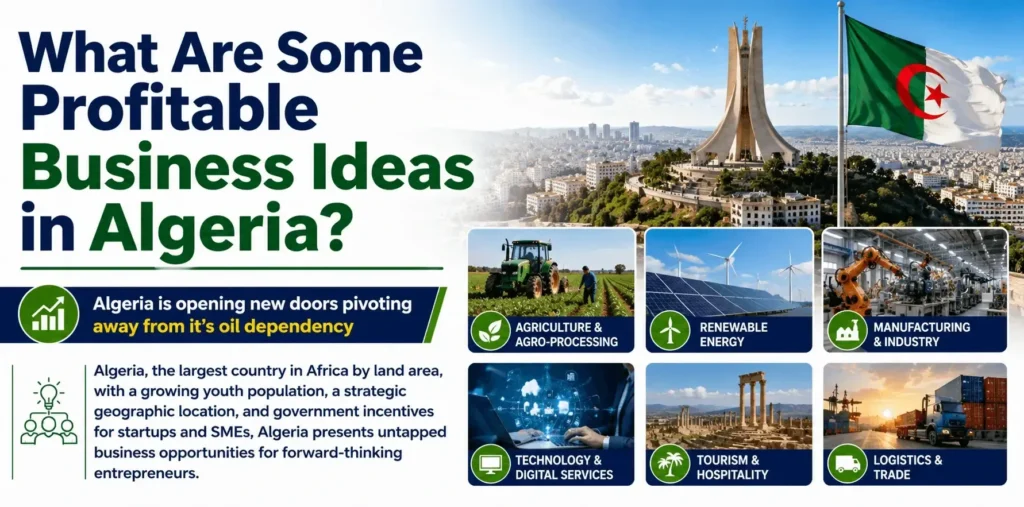
Algeria, the largest country in Africa by land area, is undergoing a transformation. As the largest nation in Africa, it is pivoting away from oil dependency and opening its doors to a new wave of entrepreneurs. If you are looking for Profitable Business Ideas In Algeria, the current landscape is a mix of high-tech innovation and much-needed industrial modernization. With a growing youth population, a strategic geographic location, and government incentives for startups and SMEs, Algeria presents untapped business opportunities for forward-thinking entrepreneurs. Profitable business ideas in Algeria for 2026 focus on import substitution, diversification, and digital transformation, particularly in agribusiness, renewable energy, manufacturing, and technology. Key opportunities include agro-processing, construction materials, logistics, ICT services, and sustainable energy components, supported by government initiatives to reduce import reliance. Below, we explore the most promising and profitable business ideas in Algeria that are well-suited for Algeria’s emerging market environment. 🌾 1. Agribusiness: Feeding a Nation, Beyond Basic Farming Algeria’s food security is a top national priority. Agriculture accounts for over 12% of Algeria’s GDP and employs a significant portion of the workforce. However, the country still imports a large percentage of its food. This is one of the most Profitable Business Ideas in Algeria for those who can bridge the gap between the field and the table. While traditional farming exists, there is a massive gap in technology-driven agriculture. Entrepreneurs who invest in modern farming techniques, greenhouse cultivation, and agro-processing can dominate this essential sector. Key Opportunities in Agribusiness: Organic farming: Rising health consciousness is driving demand for chemical-free produce. Livestock and dairy farming: With imports dominating the market, there’s an opportunity to establish local supply chains. Agro-processing: Value-added processing of dates, olives, and cereals can be highly profitable. Pro tip: Consider leveraging solar-powered irrigation systems to counter water scarcity and increase sustainability. ☀️ 2. Renewable Energy & “Green Tech”: Powering the Future Algeria is one of the sunniest countries on Earth, which is literally a solar goldmine. Receiving more than 3,000 hours of sunshine annually. Solar energy startups can thrive by catering to both urban and rural consumers. The government’s push for 15,000 MW of renewable capacity by 2035 means that small-scale solar startups have a clear runway. Top Business Ideas in Renewable Energy: Solar panel installation services Solar-powered water pumps for agriculture Micro-grid solutions for remote communities Battery storage and maintenance services Algeria’s government has also launched initiatives to attract renewable energy investors, making it a future-proof industry for entrepreneurs. 🏔️ 3. Tourism and Ecotourism: Rediscovering Algeria From the Mediterranean coastline to the vast Sahara, Algeria offers an incredibly diverse landscape for tourism. Despite its potential, the country remains largely unexplored by global travelers. Entrepreneurs can innovate in tourism infrastructure and create eco-friendly tourism models. High-Potential Business Models: Eco-lodges and desert camps in the Sahara Cultural tourism agencies offering guided historical tours of Roman ruins and Berber villages Adventure travel packages for hiking, sandboarding, and 4×4 desert expeditions Local cuisine-focused restaurants and cooking classes With the right digital marketing strategy, even small tour operators can attract a global clientele. 📱 4. The Digital Revolution: Tech & Fintech: Technology and Software Development With a tech-savvy young population and an increase in internet penetration, Algeria is ripe for digital innovation. From fintech to mobile apps and e-learning platforms, tech-based businesses are gaining traction. A tech-savvy youth population combined with a shift toward digital payments has made the tech sector one of the most exciting Profitable Business Ideas in Algeria. Profitable Ideas in Tech: Mobile payment solutions: Many Algerians remain unbanked, creating room for secure fintech apps. E-learning platforms: With unemployment and skill gaps, online education can address workforce readiness. Custom software development for local businesses and government agencies Tech outsourcing hubs for French- and Arabic-speaking countries The cost of entry in this sector can be low, especially with remote work capabilities and cloud infrastructure. 📦 5. E-Commerce & Digital Retail E-commerce in Algeria is still in its infancy, offering first-mover advantages. With increased smartphone usage and shifting consumer habits, launching online stores and delivery-based models can be highly lucrative. Winning Business Ideas in E-Commerce: Niche online retail stores for cosmetics, electronics, and fashion Local crafts and handmade goods marketplaces Online grocery delivery platforms Dropshipping businesses focused on imported items Setting up a cash-on-delivery payment system and optimizing logistics are key to succeeding in this domain. ♻️ 6. Waste Management & Recycling: Turning Scrap into Revenue Urban waste is an increasing problem in Algerian cities. With growing environmental awareness and regulatory pressure, the recycling industry offers both social impact and profit potential. This is one of the “greenest” Profitable Business Ideas in Algeria in terms of both impact and profit. Business Models in Recycling: Plastic and glass bottle recycling plants Scrap metal collection and resale Composting units for organic waste Electronic waste (e-waste) recycling services Innovators who can convert waste into reusable materials such as construction bricks or fuel alternatives stand to gain a competitive edge. 🏥 7. Specialized Healthcare & Wellness Healthcare infrastructure in Algeria is underdeveloped compared to global standards. There is also a growing demand for preventive healthcare and wellness services. This sector allows for innovation, especially through digital and community-based models. Startup Ideas in Healthcare: Private diagnostic centers and labs Home healthcare and older people care services Fitness centers and wellness retreats Telemedicine platforms for remote consultations The government supports private healthcare ventures and public-private partnerships (PPPs), making it easier for entrepreneurs to enter this space. 🎓 8. Education and Vocational Training Unemployment, especially among youth, is a pressing issue. The lack of alignment between formal education and market needs opens up opportunities for private education and skills training ventures. Opportunities in Education: Vocational training institutes focused on tech, agriculture, and renewable energy Language learning centers (English, French, German, Mandarin) Early childhood education centers STEM programs for schools Partnering with international education providers can add credibility and attract more students. 🏗️ 9. Real Estate Development and Construction Urbanization is accelerating, and Algeria’s housing deficit remains high. The construction