
Business Idea of Double Edge Razor Blade Manufacturing
The grooming and personal care industry has experienced consistent growth over the years, with shaving products being one of the core contributors to this expansion. Among various shaving tools, Double Edge Razor Blades have stood the test of time, offering a traditional, cost-effective, and environmentally friendly option for shaving. Starting a Double Edge Razor Blade manufacturing business can be a profitable venture if approached with strategic planning, quality control, and effective marketing. This comprehensive guide will help you understand every aspect of this manufacturing business—from setup to execution. Understanding the Double Edge Razor Blade Industry The Double Edge Razor Blade is a small yet highly in-demand product across the globe. Despite the rise of electric shavers and cartridge razors, many consumers still prefer traditional safety razors due to their low cost, sustainability, and closer shave. The resurgence of vintage grooming habits has boosted this segment’s demand, especially in markets like India, the United States, and parts of Europe. To enter the market successfully, aspiring entrepreneurs must understand market trends, target customers, and the technological requirements of the manufacturing process. The key to success lies in producing high-quality, stainless steel razor blades that compete with global brands in sharpness, durability, and smoothness. Market Research and Feasibility Analysis Before diving into production, conduct thorough market research. This includes studying competitors, understanding customer preferences, pricing strategies, and assessing raw material availability. Analyze demand across different geographical regions and identify gaps in the market that you can fill with your brand. A feasibility study should include: Cost of setting up a manufacturing unit Profit margins on bulk production Machinery and manpower requirements Target customer segments (e.g., barbershops, retail chains, online platforms) A well-documented business plan with market insights and financial projections will serve as a blueprint for your journey in the Double Edge Razor Blade manufacturing sector. Setting Up the Manufacturing Unit The success of your Double Edge Razor Blade business largely depends on the efficiency of your manufacturing unit. You need to select a location that is accessible for transportation and close to raw material suppliers. The facility should have ample space for machinery installation, storage, and packaging operations. Machinery and Equipment Required To start production, you’ll need specialized machines designed for precision engineering. Major machinery includes: Blade Cutting Machines Blade Grinding Machines Heat Treatment Furnaces Honing Machines Coating Machines (for anti-rust or platinum coating) Packing Machines The level of automation will depend on your budget. While a fully automated plant can increase productivity, a semi-automated unit can help reduce initial investment costs. Raw Materials and Quality Control The primary raw material for Double Edge Razor Blade manufacturing is high-grade stainless steel. The blade’s edge is honed and sharpened using grinding and polishing techniques to ensure smooth shaving. To increase blade life and performance, coatings such as platinum, Teflon, or chromium are applied. Quality control is essential in every step—from raw material inspection to final product testing. Ensure your blades pass through rigorous sharpness and durability tests before packaging. Poor quality products can harm your brand reputation and increase return rates. Skilled Labor and Technical Staff You’ll need both skilled and unskilled workers to run the plant. Hire trained technicians to operate machines, oversee quality checks, and manage production timelines. Additionally, employ packaging staff and logistics coordinators for seamless order fulfillment. Training programs should be conducted regularly to keep workers updated on best practices and safety procedures. The use of advanced machinery also demands engineers or mechanics for maintenance and troubleshooting. Branding, Packaging, and Design Branding plays a critical role in the competitive razor blade market. Choose a brand name that resonates with trust, quality, and performance. Eye-catching packaging can differentiate your product from competitors on retail shelves. The packaging should: Be tamper-proof and durable Include clear instructions for use Display your brand identity prominently Contain product certifications and manufacturing details Consider eco-friendly packaging options to appeal to environmentally conscious consumers. Licensing and Regulatory Compliance Before starting operations, you need to comply with all government regulations. In India, for example, the following registrations and licenses are mandatory: Company Registration (LLP, Pvt Ltd., etc.) GST Registration Factory License Pollution Control Board Clearance Trademark Registration (for your brand) Additionally, you must follow industry safety standards and employee welfare norms. Adhering to compliance will not only ensure smooth operations but also build customer trust. Cost Estimation and Financial Planning The total cost of starting a Double Edge Razor Blade manufacturing unit can vary depending on your production capacity and choice of machinery. On average: Small-scale setup: ?30 lakhs to ?50 lakhs Medium-scale setup: ?1 crore to ?2 crores Large-scale automated plant: ?5 crores and above Apart from machinery and infrastructure, allocate funds for raw materials, salaries, utilities, marketing, and working capital. Prepare a detailed break-even analysis and ROI forecast to attract investors or secure bank loans. Marketing and Distribution Channels Once production begins, you need a solid marketing strategy to establish your brand. Use a mix of online and offline channels to reach your target audience. Strategies may include: Collaborating with barbers and salons for endorsements Listing on e-commerce platforms like Amazon and Flipkart Wholesale distribution to supermarkets and grooming stores Social media promotions and influencer tie-ups Participating in trade shows and expos Build a strong distribution network with wholesalers, dealers, and logistics partners to ensure widespread availability of your product. Export Potential The Double Edge Razor Blade industry also has significant export potential. Countries in Africa, the Middle East, and Southeast Asia show high demand for cost-effective shaving solutions. By meeting international quality standards (ISO, CE, etc.), you can tap into these growing markets. Register with the Director General of Foreign Trade (DGFT) in India to get an Import Export Code (IEC), which is mandatory for exports. Tie up with freight and customs agencies for smooth cross-border shipping. Challenges in Razor Blade Manufacturing While the business offers good returns, it’s not without challenges. Common issues include: Maintaining uniform blade quality in mass production High competition from established international brands Fluctuations in steel prices Distribution
Learn How To Do Best Sweet Scented Supari Manufacturing Business 2026
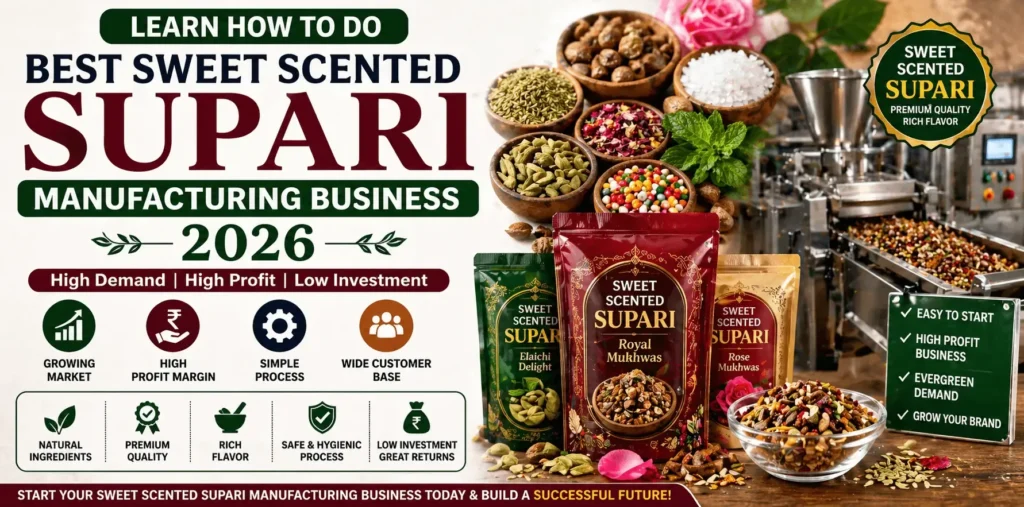
Starting a Supari Manufacturing Business in India can be a highly profitable venture, especially given the widespread use of supari (areca nut) in cultural, religious, and social practices across the country. Supari, also known as betel nut, is consumed in various forms—raw, scented, or processed—and is a key ingredient in products like pan masala and gutka. Due to its high demand and the relatively low investment needed for small-scale operations, this business is gaining popularity among budding entrepreneurs. This article will guide you step-by-step through how to start a Supari Manufacturing Business in India, discussing everything from market potential to machinery requirements, licensing, and profit margins. Market Potential and Scope of Supari Manufacturing Business The Supari Manufacturing Business has tremendous market potential in India and abroad. India is the largest consumer and producer of areca nuts, which are predominantly grown in states like Karnataka, Kerala, Assam, and West Bengal. The product is consumed in both urban and rural areas, and its use in religious rituals, hospitality, and social gatherings ensures a consistent demand throughout the year. Additionally, processed supari is exported to countries like the UAE, Nepal, Bangladesh, and the UK, opening up avenues for international trade. The industry also supports multiple layers of value addition—flavored supari, silver-coated supari, sweet supari, and branded products—each with its own pricing and market. Entrepreneurs can begin small and gradually scale operations depending on demand and capital availability. Given the rising preference for branded and hygienically packaged supari, there is also ample room for innovation and premium positioning. Steps to Start a Supari Manufacturing Business 1. Conduct Market Research Start with understanding the types of supari that are popular in your target market. Conduct surveys or talk to local traders and retailers to understand consumer preferences—flavored supari, scented supari, sweet supari, or plain chopped areca nuts. Check your competition, pricing strategies, and packaging trends to identify your business’s unique selling proposition. 2. Decide on the Business Model You can either go for a small-scale manual processing unit or set up a semi-automatic or fully-automatic manufacturing unit. For beginners, a semi-automatic setup is ideal—it offers a balance of cost-efficiency and operational ease. Depending on your capital, you may start with basic equipment and a workforce of 5–10 people. 3. Business Registration and Legal Compliance Before launching your Supari Manufacturing Business, ensure you complete all legal formalities. Some of the essential registrations and licenses include: Udyam Registration for MSME benefits GST Registration Trade License from local municipal authority FSSAI License if you plan to process and package flavored or sweet supari Factory License for medium or large-scale units Trademark Registration for branding If you’re planning to export, obtaining an Import Export Code (IEC) from DGFT is mandatory. 4. Choose a Suitable Location The ideal location for a Supari Manufacturing Business should be close to the source of raw materials (i.e., areca nut growing regions) or near the market where demand is high. Ensure proper water, electricity, and transportation facilities are available. A small-scale unit can be established in 1000–1500 sq. ft. of area, depending on the level of automation. 5. Procure Machinery and Equipment Depending on your budget and production capacity, the basic machinery required for supari manufacturing includes: Supari cutting machine Polishing drum Flavor mixing unit Roasting machine Dryer Weighing scale Packing machine (manual or automatic) Sealing machine A semi-automatic plant can cost anywhere between ?5 lakhs to ?15 lakhs. Make sure to buy machinery from reputed vendors who provide installation support and warranty. 6. Hire Skilled and Unskilled Labor You’ll need machine operators, flavoring technicians (if producing flavored supari), packagers, and quality control staff. Training them in hygiene, handling of machinery, and consistency in product quality is essential for a successful operation. 7. Source Raw Materials The primary raw material is raw areca nut (supari), which you can procure directly from farms or through wholesale markets. Other materials include: Flavors and sweeteners (cardamom, menthol, etc.) Silver leaves (optional for premium supari) Packing materials (plastic pouches, jars, labels, etc.) Quality raw material ensures a good product, which leads to customer retention and brand loyalty. 8. Manufacturing Process Here is a typical process flow for a small-scale Supari Manufacturing Business: Cleaning: Remove dust and impurities from raw areca nuts. Cutting: Use cutting machines to chop the nuts into uniform pieces. Roasting: Optional step to enhance flavor and shelf life. Flavor Mixing: Add flavors or sweeteners depending on product type. Polishing: Polishing in drums to improve texture and appearance. Drying: Ensures moisture-free supari, important for storage. Packaging: Final step involving sealing and labeling for retail. Each step must maintain hygiene and quality control. Keep records of batch production for consistency and traceability. 9. Branding and Packaging Branding is key to success in the Supari Manufacturing Business. Focus on attractive, tamper-proof, and food-grade packaging that stands out on retail shelves. Offer multiple pack sizes (2g, 10g, 50g, etc.) to cater to various market segments. Invest in a professional logo, design labels with proper FSSAI and manufacturing details, and build a distinct identity. 10. Marketing and Distribution Start with local markets—pan shops, general stores, tea stalls, and local distributors. Gradually expand to wholesale markets in nearby cities and states. Some effective marketing strategies include: Offering free samples Local newspaper or radio advertising Participation in trade fairs Tie-ups with wholesalers and distributors Social media promotion for urban reach If you’re making premium or flavored supari, you can even explore online selling through platforms like Amazon, Flipkart, or your own website. 11. Financial Planning and Investment Starting a small-scale Supari Manufacturing Business requires a modest investment, mostly in machinery, raw materials, and working capital. Here’s a rough estimate: Machinery and Equipment: ?5–15 lakhs Raw Materials (monthly): ?1–3 lakhs Packaging Materials: ?50,000–1 lakh Labor and Utilities (monthly): ?1–2 lakhs Marketing and Logistics: ?50,000+ Licensing and Registration: ?50,000 Total estimated initial investment: ?10–20 lakhs for a small to medium setup. 12. Profit Margin and ROI With proper planning and efficient production, you can expect a net profit margin of 20–30%. A small-scale
Jute Bags, Jute Sacks, Gunny Bags Manufacturing Industry
With the increasing demand for sustainable alternatives to plastic, eco-friendly products like jute bags are becoming more popular than ever. Entrepreneurs seeking green, profitable, and scalable business opportunities are turning to the Jute Bags Manufacturing Business. This business combines low environmental impact with a steadily rising market demand, especially in sectors such as retail, fashion, agriculture, and corporate gifting. Starting a Jute Bags Manufacturing Business is not only an environmentally conscious move but also a highly profitable venture if done strategically. In this article, we’ll walk you through the essentials of launching your jute bag business — from market research to production setup, legal requirements, and sales strategies. Why Invest in the Jute Bags Manufacturing Business? The growing concern about plastic pollution has created an urgent need for biodegradable alternatives. Jute, being 100% natural, recyclable, and durable, is the perfect substitute. Governments across the globe — especially in India — are promoting the use of jute bags over plastic ones. Moreover, the Jute Bags Manufacturing Business requires a relatively small initial investment compared to other manufacturing units. Another advantage is the abundance of jute as a raw material in countries like India and Bangladesh, which are the world’s leading jute producers. The government offers various subsidies and incentives to boost the jute industry, further reducing your startup cost and risk. Step-by-Step Guide to Start a Jute Bags Manufacturing Business Let’s explore the step-by-step roadmap to launch your Jute Bags Manufacturing Business successfully. 1. Conduct Market Research and Feasibility Study Start by researching the demand for jute bags in your target area — both domestic and international markets. Analyze the competition and identify your potential customers. Are you targeting retail customers, wholesalers, or corporate clients? This insight will help you shape your product line and pricing. Determine the types of jute bags that are most in demand — shopping bags, tote bags, lunch bags, wine bottle bags, promotional bags, or customized bags for companies. 2. Create a Business Plan A solid business plan is essential to guide your investment, operations, and growth. Include the following: Business model (B2B, B2C, or hybrid) Product types and customization options Estimated budget and funding sources Manufacturing processes and machinery Marketing and distribution strategies Break-even analysis and ROI projections Your business plan will also be necessary if you are applying for a loan or seeking investors. 3. Choose a Suitable Business Location Your manufacturing unit should ideally be located in an industrial zone or an area with easy access to transportation, raw materials, and labor. If you’re planning a small-scale Jute Bags Manufacturing Business, even a 1000-1500 sq. ft. space might be sufficient initially. Ensure that your unit meets basic infrastructure requirements like electricity, water supply, drainage, and ventilation. The location should also comply with local zoning laws and pollution control regulations. 4. Register Your Business and Obtain Licenses Register your Jute Bags Manufacturing Business with the appropriate government authorities. The basic registrations include: MSME Udyam Registration GST Registration Factory License (if applicable) Pollution Control Board NOC Trade License from the Municipal Authority If you’re planning to export your jute bags, you’ll also need an Import Export Code (IEC) from DGFT. 5. Source Quality Raw Materials The main raw materials for jute bags include: Raw jute fabric (woven and non-woven) Cotton or polyester handles Threads and zippers Printing dyes, inks, or embroidery threads (for customization) Source your raw materials from reputed suppliers in bulk to get better pricing. Some popular jute markets in India include Kolkata, Siliguri, and Guwahati. 6. Purchase Machinery and Equipment The type and number of machines depend on the scale of your Jute Bags Manufacturing Business and the types of bags you want to produce. Basic machinery includes: Jute cutting machine Industrial sewing machines Printing machine (screen or digital) Lamination machine (optional) Eyelet machine (for handles) For a semi-automatic setup, your investment in machinery can range between ?5 lakhs to ?10 lakhs. You may also consider hiring skilled labor to operate these machines efficiently. 7. Hire and Train Workers Your workforce will include machine operators, cutters, tailors, packers, and quality control personnel. Training is crucial for ensuring quality output, especially if you offer customized printing or complex designs. If you plan to scale up, start with a small team and expand as demand grows. 8. Design Your Product Line Offer a variety of jute bags that cater to different customer segments. For example: Basic shopping bags for grocery stores Fashionable tote bags for boutique shops Customized gift bags for corporate gifting Wine bottle bags for hospitality businesses Attractive designs, durability, and eco-friendly branding will set your products apart. Consider hiring a designer or collaborating with freelance artists to create unique designs. 9. Set Up Quality Control Standards Quality is essential to establish brand reputation and retain customers. Define quality checkpoints at different stages — raw material inspection, stitching, printing, and final packing. Ensure all bags meet durability, load-bearing, and finishing standards. Use recyclable or biodegradable packaging for shipping your bags, keeping in line with the eco-friendly ethos of your brand. 10. Develop a Sales and Marketing Strategy Marketing plays a crucial role in the success of your Jute Bags Manufacturing Business. Here’s how to promote your products: Online Presence: Launch a website and showcase your catalog with high-quality images. Social Media: Use platforms like Instagram, Pinterest, and Facebook to reach eco-conscious customers. B2B Platforms: Register on B2B marketplaces like IndiaMART, TradeIndia, and Alibaba. Offline Marketing: Attend trade shows, exhibitions, and jute fairs to connect with wholesalers and retailers. Branding: Create eco-friendly branding and storytelling that resonates with your target audience. Offer samples or small batches to test new markets. Consider creating a white-label service where businesses can brand your jute bags as their own. 11. Calculate Costing and Pricing Understanding your cost structure is critical. Break down your costs into: Raw materials Labor Rent and utilities Machinery depreciation Marketing Packaging and logistics Once you know the cost per unit, add your desired profit margin to fix your selling price. Competitive pricing,
Fish Meal Manufacturing Business
Fish meal manufacturing is a lucrative sector in the agro-based industry, offering a sustainable and profitable venture by converting fish and fish waste into nutrient-rich animal feed. As global demand for protein-rich feed ingredients rises, especially in aquaculture and livestock farming, the fish meal industry is experiencing significant growth. To capitalize on this demand, establishing a fish meal plant with efficient planning, advanced technology, and streamlined operations is essential. Understanding the Fish Meal Manufacturing Process Raw Material Selection and Sourcing The foundation of any successful fish meal manufacturing venture lies in sourcing the right raw materials. Whole fish (particularly non-edible species) and fish waste from processing units are primary sources. These materials should be fresh, free from excessive spoilage, and ideally sourced close to the manufacturing facility to minimize transportation and quality degradation. Popular raw materials include: Sardines Anchovies Mackerel Tuna waste Surimi by-products Local fishing harbors, seafood processing plants, and cold storages are excellent sources for bulk procurement. Pre-Cooking and Grinding Once the raw materials are sorted and cleaned, they are passed through grinders to reduce them into smaller particles. This enhances the surface area for heat penetration during the cooking phase. The cooking is typically carried out in steam jacketed cookers at controlled temperatures to denature proteins, remove fat, and kill pathogens. The goal here is to bring the fish material to a semi-solid paste suitable for pressing. Pressing and Liquid Separation The cooked mass is pressed mechanically using screw presses. This step separates the solid cake (containing proteins and bone) from the liquor phase, which includes water and fish oil. The press cake is the core ingredient that is later dried to form fish meal, while the liquid undergoes further treatment to recover valuable oil and soluble proteins. Drying and Milling The cake is conveyed to dryers, which remove the remaining moisture without burning or degrading the protein content. Most plants use rotary or disc dryers with temperature control systems. Once adequately dried, the cake is passed through hammer mills or pulverizers to achieve a consistent powdery texture. This fine powder is what we call fish meal — a high-protein, long-shelf-life feed component used globally. Fish Oil Extraction and Recovery The liquid from pressing is processed through centrifuges to separate fish oil from water and dissolved solids. The recovered oil can be used in pharmaceuticals, pet food, and aquafeed. This step adds another revenue stream to the fish meal business while ensuring zero-waste operation. Packaging and Storage Proper packaging ensures long shelf life and prevents quality degradation. Fish meal is packed in airtight, moisture-proof bags, often with nitrogen flushing to prevent oxidation. Warehousing must ensure protection from pests, moisture, and temperature fluctuations. Key Components of a Fish Meal Manufacturing Plant Machinery and Equipment To establish a modern, efficient fish meal manufacturing plant, the following machinery is essential: Raw Material Conveyor Grinder and Cutter Steam Cooker Screw Press Rotary/Disc Dryer Pulverizer Centrifugal Separator Packaging Unit Boilers (for steam generation) All equipment should be made from food-grade stainless steel, ensuring durability, hygiene, and compliance with food safety norms. Plant Layout and Infrastructure Choose a coastal or riverine location to minimize logistics costs. Ensure adequate drainage, waste treatment systems, and ease of access for raw material trucks and distribution networks. A standard fish meal plant includes: Raw material reception area Processing hall Drying and milling section Fish oil separation room Packaging and storage unit Quality control laboratory Wastewater treatment facility Proper ventilation and odor control systems (such as bio-filters and scrubbers) are crucial to meet environmental compliance. Licensing and Regulatory Requirements Operating a fish meal manufacturing business in compliance with national and international standards is mandatory. The following permits and registrations are typically required: Factory License FSSAI Registration (India) Pollution Control Board Consent Local Municipality Trade License Import-Export Code (if targeting international markets) Additional certifications like ISO 22000, HACCP, and GMP add credibility and help access premium buyers. Investment and Financial Planning The cost of setting up a small-to-medium scale fish meal plant ranges between ?50 lakhs to ?3 crores, depending on capacity and automation level. Expenses include: Land and building Machinery and equipment Labor and staffing Working capital for raw materials Utilities and maintenance Revenue sources: Fish meal sales (?90–?150/kg) Fish oil extraction Sale of by-products like bone meal Proper budgeting, ROI analysis, and break-even estimation are vital before full-scale implementation. Quality Control and Testing Maintaining high quality is non-negotiable in fish meal production. Frequent lab testing is necessary to ensure: Protein content (minimum 60%) Moisture levels (<10%) Oil and ash content Absence of contaminants like heavy metals and pathogens Use advanced testing methods like spectrophotometry, moisture analyzers, and microbial testing kits. Sustainability and Environmental Concerns A well-managed fish meal manufacturing unit prioritizes environmental protection. Key steps include: Using waste-to-energy systems Proper odor suppression Recycling process water Sustainable fish sourcing Aligning with FAO guidelines and promoting traceability from ocean to factory is essential for long-term viability and brand image. Marketing and Business Growth Strategies To thrive in this competitive industry, manufacturers should build strategic partnerships and robust distribution channels. Key marketing strategies include: Exporting to high-demand regions like Southeast Asia, Europe, and Latin America Selling to aquaculture farms, poultry feed manufacturers, and pet food brands Participating in B2B trade expos Listing on industry platforms like Alibaba, IndiaMART, and TradeIndia Branding with premium packaging and certifications Utilizing digital marketing, SEO, and industry blogging can significantly boost online visibility and credibility. Conclusion Starting a fish meal manufacturing unit is a technically demanding but financially rewarding enterprise. With precise planning, the right technology, and regulatory adherence, entrepreneurs can tap into the booming demand for protein-rich feed across global markets. The key lies in optimizing raw material utilization, ensuring consistent quality, and building a responsible, sustainable operation. Visit the page Select and Choose the Right Business Startup for You for sorting out the questions arising in your mind before starting any business and know which start-up you can plan. We, at NPCS, endeavor to make business selection a simple and convenient step
Capacitors Manufacturing Business
The capacitor manufacturing industry continues to experience robust growth, driven by escalating demand across automotive, industrial, telecommunications, and consumer electronics sectors. As we enter 2025, global focus on smart electronics, renewable energy, and electric mobility opens up new dimensions for entrepreneurs looking to invest in this high-potential sector. Understanding the Capacitor Manufacturing Business A capacitor is a fundamental passive component used in almost every electronic device. From smartphones to EVs and power grids, capacitors play a critical role in energy storage, voltage regulation, signal coupling, and more. The capacitor manufacturing business involves meticulous precision, high-quality raw materials, and advanced technological know-how. We guide you through the entire process to help you launch and scale this business effectively in 2025. Types of Capacitors and Their Applications There are various types of capacitors manufactured based on their materials, design, and use cases. Understanding the market demands and selecting a niche is the first step toward building a competitive edge. 1. Ceramic Capacitors One of the most commonly produced capacitors, ceramic capacitors are known for their reliability and wide frequency range. They are widely used in smartphones, laptops, and consumer electronics. 2. Electrolytic Capacitors These have high capacitance and are ideal for power supply filtering and energy storage. Electrolytic capacitors find usage in industrial power systems, audio equipment, and inverters. 3. Film Capacitors Film capacitors offer excellent stability and longevity, and are used in applications such as electric motor drives, lighting ballasts, and automotive electronics. 4. Tantalum Capacitors Tantalum capacitors are known for their small size and high performance, commonly found in military, aerospace, and medical equipment. Raw Materials Required A successful capacitor manufacturing setup depends on the availability and quality of raw materials. The primary materials include: Dielectric materials (ceramic, plastic film, paper, tantalum oxide) Metal foils (aluminum, tantalum, silver) Electrolytes (for electrolytic capacitors) Leads and terminals Encapsulation compounds Sourcing high-purity raw materials is essential to maintain product consistency and meet international quality standards. Machinery and Equipment Setup To establish a high-performance capacitor manufacturing unit, the following machinery is typically required: Winding machines for coiling the dielectric material Metalizing units for applying electrode layers Drying ovens for removing moisture content Assembly and soldering stations Encapsulation equipment Testing and quality control devices Automation plays a significant role in maintaining production efficiency and minimizing human errors. Consider integrating smart production lines and IoT-enabled quality monitoring systems. Manufacturing Process Overview The typical steps involved in capacitor manufacturing are: Dielectric Preparation – Selection and pre-treatment of dielectric material according to the capacitor type. Electrode Formation – Deposition of metal electrodes on dielectric surfaces via metallization or foil lamination. Winding or Stacking – The manufacturer either winds the dielectric-electrode assembly for cylindrical capacitors or stacks it for rectangular ones. Impregnation and Encapsulation – Manufacturers impregnate the assembly with insulating liquids and seal it with epoxy or resin to prevent moisture ingress. Lead Attachment – Electrical terminals are attached using soldering or welding techniques. Aging and Testing – Capacitors undergo controlled aging and rigorous testing to ensure electrical properties meet the standards. Marking and Packaging – Capacitors are marked with specifications and packed for shipment. Quality Standards and Certifications Compliance with global quality standards is mandatory in the capacitor manufacturing sector. Key certifications include: ISO 9001 for quality management systems RoHS (Restriction of Hazardous Substances) REACH (Registration, Evaluation, Authorisation, and Restriction of Chemicals) UL Certification (for product safety) Investing in in-house quality labs and following strict quality control measures helps in maintaining brand credibility and gaining customer trust. Market Opportunities in 2025 The capacitor manufacturing business is expanding rapidly with the rise of several megatrends: Electric Vehicles (EVs): The shift to EVs requires high-capacitance components for power control units and battery management systems. 5G Infrastructure: The deployment of 5G requires compact, high-frequency capacitors for signal processing equipment. Renewable Energy Systems: Wind and solar power systems use capacitors in inverters and converters. Industrial Automation: IoT and Industry 4.0 applications demand rugged and reliable capacitors. Targeting these high-growth markets can provide significant revenue potential and long-term stability. Financial and Licensing Requirements Setting up a capacitor manufacturing plant involves moderate to high capital expenditure, depending on the scale of operation. Major cost heads include: Land and Building Machinery and Equipment Raw Material Inventory Labor and Training Utility and Maintenance In India, you need to obtain the following licenses: Company registration (Private Ltd or LLP) GST Registration Pollution Control Clearance Factory License under the Factories Act BIS Certification (Bureau of Indian Standards) for electronic components Government subsidies and MSME incentives can also reduce the financial burden for startups in this field. Key Success Factors for 2025 To thrive in the capacitor manufacturing industry in 2025, focus on: Innovation: Offer miniaturized, high-performance capacitor solutions. Customization: Provide tailor-made products for specific industries like defense or healthcare. Quality Assurance: Maintain rigorous quality control protocols to meet global export standards. Sustainability: Use eco-friendly materials and comply with environmental norms. Digital Marketing: Leverage B2B platforms, trade expos, and SEO to gain visibility. Export Potential India’s capacitor exports are growing steadily due to favorable trade policies and rising global demand. Key export destinations include: USA Germany Japan UAE Singapore Invest in IEC registration, product certifications, and participate in international expos like Electronica or Asia Electronics Exhibition to explore global markets. Future Outlook and Trends By 2025, the capacitor market is expected to cross USD 30 billion globally. Emerging trends include: AI-Powered Manufacturing – Smart factories with AI-controlled defect detection. Graphene-Based Capacitors – Offering ultra-high energy density. Flexible and Wearable Electronics – Driving the need for soft, bendable capacitors. 3D Printed Capacitors – Revolutionizing custom electronics manufacturing. Entrepreneurs who embrace these trends early will position themselves as leaders in the new era of electronics manufacturing. Conclusion Launching a capacitor manufacturing business in 2025 presents a strategic opportunity to tap into growing global electronics demand. With the right investment, quality systems, and market focus, businesses can establish a strong foothold in this vital sector. Visit the page Select and Choose the Right Business Startup for You for sorting out
How to Start Banana Powder Manufacturing Business Unit
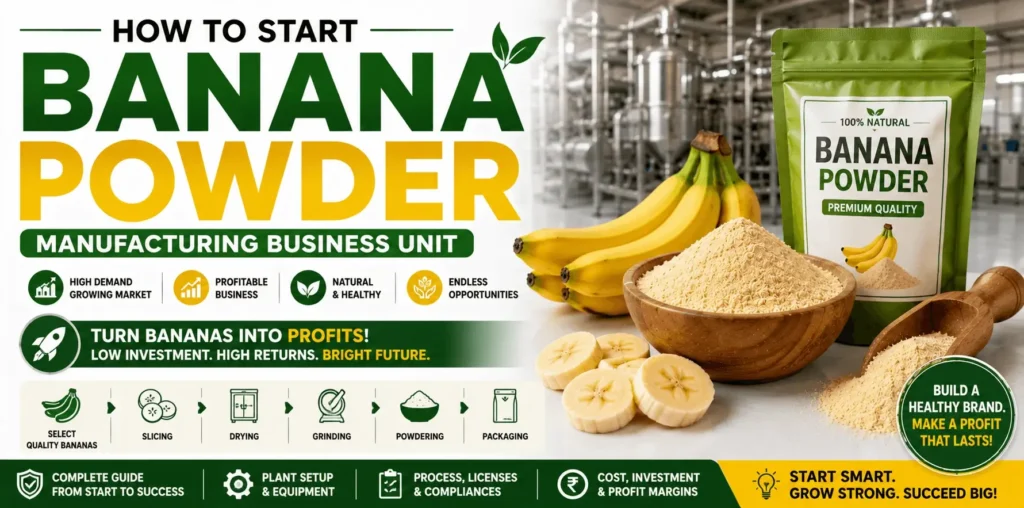
Banana powder is a versatile product with growing demand in the food processing, baby food, bakery, and pharmaceutical industries. Derived from processed bananas, it serves as an excellent natural flavoring and nutritional enhancer. Entrepreneurs looking to enter the agro-processing industry will find banana powder manufacturing business a lucrative opportunity, especially in banana-producing regions. This article offers a complete guide on how to set up a banana powder manufacturing business unit, covering everything from raw material procurement to market strategy. Understanding the Banana Powder Manufacturing Business India is one of the largest producers of bananas globally, making it a natural hub for banana powder manufacturing business. The industry benefits from abundant raw material availability, government support for agro-based industries, and a steadily increasing demand in both domestic and export markets. The manufacturing process involves cleaning, slicing, drying, milling, and packaging bananas in powdered form, which retains much of the fruit’s nutritional value and taste. Market Potential and Applications Banana powder is widely used in baby food, bakery products, ice creams, milkshakes, health supplements, and as a natural sweetener. Its long shelf life, easy transportability, and high nutritional content make it ideal for both B2B and B2C segments. With increasing awareness around health foods and the shift toward natural additives in food products, the global demand for banana powder is expected to rise. The product also sees export demand from countries in the Middle East, Europe, and Africa. The key market drivers include convenience, affordability, and the growing popularity of organic and plant-based food products. Key Steps to Set Up a Banana Powder Manufacturing Business Unit 1. Market Research and Business Plan Begin with in-depth market research. Analyze demand trends, competitor analysis, pricing strategy, and customer expectations. A well-researched business plan should include production capacity, investment outlay, machinery and technology needs, financial projections, and a marketing roadmap. 2. Location and Infrastructure The ideal location for a banana powder manufacturing unit is near banana-growing regions to minimize transportation costs and ensure the freshness of raw materials. The infrastructure should include: Space for processing unit and storage Water supply and power backup Waste disposal system Good connectivity to markets You’ll need about 1,500–2,000 sq. ft. of space for a small-scale setup. 3. Legal and Regulatory Requirements Register the business as an MSME or under any other suitable business entity. Obtain the following: GST registration FSSAI license (Food Safety and Standards Authority of India) Pollution Control Board clearance Factory license from the state government Trademark for branding (optional but recommended) Compliance with food safety regulations is critical for building trust and expanding your reach. 4. Procurement of Raw Materials Procure fully ripe and blemish-free bananas directly from farmers or wholesalers. It’s best to develop long-term relationships with reliable suppliers to ensure year-round availability. Organic bananas are in high demand, so sourcing certified organic produce can help cater to premium markets. Additional raw materials include: Food-grade packaging materials Preservatives (optional and based on regulatory standards) Cleaning and sterilizing agents 5. Machinery and Equipment For a small to medium-scale banana powder manufacturing business unit, you will need the following equipment: Banana peeler Slicer or cutter Blanching tank (optional) Dryer or dehydrator (solar or electric) Pulverizer or grinder Sieving machine Packaging machine Weighing scale Machinery should meet food-grade standards. Automation can significantly increase efficiency and output. 6. Manufacturing Process The production process typically follows these steps: Sorting and Cleaning – Select and clean the bananas thoroughly to remove dust, dirt, and surface contaminants. Peeling and Slicing – Peel and cut the bananas into uniform slices to ensure even drying. Drying – Dry the slices using solar, hot air, or freeze drying methods. This step is crucial for shelf life and product quality. Grinding – Dried slices are ground into fine powder using a pulverizer. Sieving – The powder is sieved to remove coarse particles and ensure uniformity. Packaging – The final product is packaged in moisture-proof and food-grade containers. Strict quality control at every stage ensures the consistency, flavor, and safety of the product. 7. Manpower Requirement For a small unit, 6–10 employees are sufficient. This includes machine operators, quality controllers, packaging staff, and administrative personnel. Trained workers improve efficiency and reduce waste. 8. Investment and Profitability Setting up a small-scale banana powder manufacturing business unit may require an investment of ?10–20 lakhs depending on scale and automation level. The cost breakdown includes: Machinery: ?5–10 lakhs Infrastructure: ?3–5 lakhs Raw materials and working capital: ?2–5 lakhs Profit margins range between 20%–35%. With consistent quality and strong market demand, breakeven is possible within 1–2 years. 9. Branding and Packaging Effective branding plays a major role in attracting customers, especially for retail sales. Focus on: Eye-catching logo and packaging design Nutritional information and usage instructions Eco-friendly packaging materials Retail packs of 100g, 250g, 500g, and 1kg are popular. Bulk packaging (25kg, 50kg) is used for industrial customers. Marketing Strategy and Distribution A robust marketing strategy helps you penetrate the market and build a loyal customer base. Target the following: B2B Segment Food processing companies Bakeries Ice cream manufacturers Baby food brands Exporters and traders B2C Segment Health food stores Supermarkets and online retailers Organic and natural product outlets Direct-to-consumer (via website or marketplaces) Use digital marketing, SEO, social media, and product sampling to build awareness. Participation in food expos and industry events boosts visibility and networking. Government Support and Schemes The Indian government offers several schemes for agro-based and food processing industries, including: PMFME (Pradhan Mantri Formalization of Micro Food Processing Enterprises) NABARD subsidies and low-interest loans Stand-Up India Scheme for SC/ST and women entrepreneurs NSIC and MSME support for machinery procurement Leverage these schemes for funding, training, and infrastructure development. Challenges and Solutions Banana powder manufacturing business comes with its own set of challenges, including: Raw material perishability – Tie-ups with local farmers and cold chain logistics can minimize waste. Price fluctuations – Long-term procurement contracts and buffer stock help maintain cost stability. Quality control – Invest in testing equipment and follow standard operating procedures to maintain consistency.
Common Facility Centre for Jute
India’s jute industry has long held a significant place in the country’s textile sector, not only for its contribution to exports and employment but also for its role in promoting eco-friendly alternatives to plastic. At the heart of this industry lies the cluster of Jute MSMEs—Micro, Small, and Medium Enterprises—that play a crucial role in the manufacturing, processing, and innovation of jute-based products. However, despite their potential, these small enterprises face challenges such as outdated technology, limited infrastructure, and lack of access to quality raw materials. To address these issues, the Government of India has introduced the concept of Common Facility Centres (CFCs), which are poised to transform the fortunes of the Jute MSMEs sector. How Common Facility Centres (CFCs) Can Transform Jute MSMEs Common Facility Centres (CFCs) are shared spaces equipped with modern machinery, testing labs, training areas, and production support facilities. These centres are designed to offer specialized services that are otherwise unaffordable for individual Jute MSMEs. By providing access to high-quality tools and skilled manpower, CFCs help these businesses upgrade their technology, improve productivity, reduce wastage, and enhance overall quality. One of the biggest issues faced by Jute MSMEs is the lack of modern processing machinery. Many units still depend on outdated manual systems that limit their production capacity and quality. CFCs, by centralizing cutting-edge equipment, allow multiple MSMEs to access these tools on a shared basis. This not only lowers the cost of investment but also increases their competitiveness in domestic and global markets. Additionally, CFCs are instrumental in offering design and innovation support. With dedicated teams and infrastructure, they help Jute MSMEs explore new applications of jute beyond traditional uses. This includes jute composites, home furnishings, fashion accessories, and biodegradable packaging materials. Such innovations open up fresh market opportunities and make these enterprises more resilient to market fluctuations. Government Support for Jute MSMEs through CFCs The Ministry of Micro, Small and Medium Enterprises, in collaboration with the Ministry of Textiles, has launched several cluster development programmes to support jute industries. Under the Scheme of Fund for Regeneration of Traditional Industries (SFURTI), CFCs have been established in various jute clusters across West Bengal, Bihar, Assam, and Odisha. These CFCs are backed by financial grants for machinery, training, and marketing support. They are typically managed by Special Purpose Vehicles (SPVs), which may include local NGOs, industry associations, or cooperative societies. The idea is to ensure that Jute MSMEs retain control over the operations while benefiting from government-funded infrastructure. Under this initiative, the focus is not just on manufacturing support but also on training and capacity-building. Jute artisans and workers are given regular training in modern production techniques, quality control, and packaging standards. This leads to skill enhancement and empowers local entrepreneurs to scale their businesses efficiently. Economic and Social Impact of CFCs on Jute MSMEs The establishment of CFCs has far-reaching economic and social impacts on Jute MSMEs. Firstly, the shared infrastructure significantly brings down the cost of production. Entrepreneurs no longer need to make heavy capital investments to start or expand their businesses. Secondly, improved access to technology enhances the quality of output, thereby increasing the marketability of products both locally and internationally. Job creation is another key benefit. As the production capacity of Jute MSMEs improves, the demand for skilled and semi-skilled workers rises. This is especially beneficial in rural and semi-urban areas where jute is traditionally cultivated and processed. CFCs create direct and indirect employment opportunities, thereby contributing to rural development and reducing migration to urban centres. Furthermore, many of these CFCs are now adopting sustainable practices, such as rainwater harvesting, solar energy, and waste recycling, which help promote green manufacturing among Jute MSMEs. This aligns well with the increasing global demand for eco-conscious products and strengthens India’s positioning in the global green economy. Case Studies: Success Stories of Jute MSMEs Empowered by CFCs Several jute clusters have already seen significant progress thanks to CFC implementation. For instance, in the Nadia district of West Bengal, a jute-based cluster supported under SFURTI witnessed over 40% increase in production output within a year of CFC establishment. Local entrepreneurs reported increased profits due to improved quality and timely deliveries. In another case from Barpeta, Assam, a group of women-led Jute MSMEs used the CFC to design and manufacture jute-based sanitary products and shopping bags. With minimal training and production support, these women not only launched their brands but also secured contracts from retail chains in metro cities. Such stories underline the transformative potential of CFCs in unlocking the true capabilities of Jute MSMEs. They act as incubators of growth, innovation, and collaboration within the sector. Challenges and the Way Forward Despite the positive outcomes, there are several challenges that need to be addressed. For example, many CFCs face operational issues due to lack of professional management or inadequate maintenance. In some clusters, entrepreneurs are unaware of the services available at CFCs or find the access process bureaucratic. To overcome these issues, the following steps can be considered: Awareness Campaigns: Proactive outreach programs are needed to inform Jute MSMEs about the facilities, training programs, and financial support available through CFCs. Skill Development: More focus should be placed on capacity-building, with regular workshops and digital training modules for young entrepreneurs. Public-Private Partnerships (PPPs): Collaborating with private players can bring in better management practices, global market linkages, and faster innovation cycles. Digital Integration: Incorporating ERP systems, real-time production monitoring, and e-commerce integration at CFCs can take Jute MSMEs to the next level of industrial maturity. The Role of Jute MSMEs in India’s Green Economy In a world moving towards sustainable alternatives, jute products are becoming increasingly popular. From reusable shopping bags to eco-friendly packaging, the applications are expanding every day. This makes Jute MSMEs strategically important not just for economic growth but also for environmental sustainability. By promoting Jute MSMEs through Common Facility Centres, India can emerge as a global leader in sustainable textile solutions. The scalability, employment potential, and environmental benefits of this sector make it an ideal
Bamboo Charcoal Manufacturing Business
Bamboo charcoal has emerged as a revolutionary product that serves multiple industries due to its high absorbency, sustainability, and versatility. With rising environmental awareness and the global shift toward eco-friendly products, starting a bamboo charcoal manufacturing business has become a lucrative and impactful entrepreneurial opportunity. Entrepreneurs with a vision for green innovation are tapping into this booming market, not only for its profitability but also for its sustainability advantages. The Rising Potential of Bamboo Charcoal Manufacturing Bamboo charcoal manufacturing is the process of converting bamboo into carbonized charcoal using controlled heating techniques. Unlike traditional wood charcoal, bamboo charcoal is known for its higher porosity, making it extremely effective in applications like air purification, water filtration, soil enhancement, cosmetics, and health care products. The business landscape for bamboo charcoal is rapidly expanding due to growing consumer preferences for natural and biodegradable alternatives. Countries like India, China, Japan, and several Southeast Asian nations are driving this demand. As a renewable resource that grows quickly without the need for pesticides or fertilizers, bamboo is one of the best raw materials for sustainable manufacturing practices. The bamboo charcoal manufacturing industry is a low-waste, high-return business that entrepreneurs can start on a small scale and scale up rapidly. Why Bamboo Charcoal? One of the key reasons for the popularity of bamboo charcoal is its multipurpose utility. It is used in: Purification: Due to its porous structure, it acts as a natural filter in air purifiers and water filtration systems. Health and Beauty: Activated bamboo charcoal is used in face masks, soaps, and dental products due to its detoxifying properties. Agriculture: Enhances soil quality by improving water retention and regulating nutrients. Textile Industry: Used in odor-resistant fabrics and clothing materials. Fuel and Cooking: Bamboo charcoal briquettes burn longer and cleaner, ideal for domestic and commercial use. This extensive utility of bamboo charcoal provides diverse income streams for manufacturers. Steps to Start a Bamboo Charcoal Manufacturing Business Market Research and Planning Before launching the business, conduct thorough market research. Understand your target audience—whether it is the cosmetic industry, agricultural suppliers, or water purifier companies. Evaluate local and international competition, pricing strategies, and market gaps. A detailed business plan including investment, machinery cost, manpower, raw material sourcing, and marketing strategy is crucial for a successful launch. Licensing and Registration Register your bamboo charcoal manufacturing business as an MSME (Micro, Small, and Medium Enterprise) in India to avail of government schemes and subsidies. Obtain necessary licenses such as a Pollution Control Board certificate, Factory License, GST registration, and Trade License. Choosing the Right Location Select a site near bamboo-growing regions to minimize raw material transportation costs. Ensure that the factory space has proper ventilation, fire safety equipment, storage area, and waste management facilities. Procurement of Machinery and Equipment You will need the following machinery: Bamboo cutter Carbonization kiln or retort Crushing and sieving machines Briquette machine (if producing charcoal briquettes) Packaging machine Depending on the scale of operations, you can choose between batch-type or continuous-type carbonization kilns. Raw Material Sourcing Secure a reliable supply of mature bamboo—preferably from local bamboo farms or forest contractors. Some popular bamboo species for charcoal production include Bambusa vulgaris and Dendrocalamus strictus. Manufacturing Process The bamboo charcoal manufacturing process typically involves: Harvesting and drying: Bamboo is harvested and sun-dried to reduce moisture content. Carbonization: Bamboo is placed in a kiln at high temperatures (400–700°C) under low oxygen conditions. This step converts it into charcoal. Crushing and screening: The charcoal is crushed into fine particles and sieved to ensure uniformity. Activation (optional): For high-end products, the charcoal undergoes steam or chemical activation to enhance absorbency. Briquetting (optional): Crushed charcoal is mixed with binders and pressed into briquettes. Packaging and labeling: Pack the final product based on market requirements (powder, granules, briquettes). Marketing and Sales Promote your bamboo charcoal manufacturing business through online and offline channels. Build partnerships with health product retailers, organic farming cooperatives, industrial distributors, and e-commerce platforms like Amazon and Flipkart. Participation in trade expos and green product fairs also enhances visibility. Investment and Profit Margin Setting up a small-scale bamboo charcoal manufacturing unit may require an initial investment of ?10 lakhs to ?30 lakhs, depending on the automation level. Operating costs include raw materials, electricity, labor, transportation, and maintenance. The profit margin in bamboo charcoal manufacturing can range from 20% to 40%, especially if you cater to niche markets such as activated charcoal for cosmetics or export-grade briquettes. With proper branding and strategic marketing, the return on investment (ROI) can be achieved within 1–2 years. Challenges and Risk Management Every business comes with challenges, and bamboo charcoal manufacturing is no exception: Raw Material Scarcity: Ensure contracts with bamboo suppliers for consistent input. Pollution and Environmental Compliance: Follow eco-friendly carbonization techniques and adhere to pollution control norms. Quality Control: Maintain consistent quality in terms of carbon content, particle size, and moisture level. Market Competition: Differentiate your brand by highlighting sustainability, certifications, or product versatility. Addressing these challenges through robust planning and monitoring systems can keep your business on a path of stable growth. Future Prospects With increasing demand for sustainable alternatives, bamboo charcoal manufacturing is poised for exponential growth. The global bamboo charcoal market is projected to expand significantly in the coming decade due to its rising use in home care, skincare, and industrial applications. India, with its abundant bamboo resources and low labor costs, is well-positioned to become a leading exporter of bamboo charcoal products. Entrepreneurs entering this space today are not just building businesses—they’re contributing to a circular economy and promoting eco-conscious living. Incorporating R&D and product innovation will allow manufacturers to stay ahead of the curve and explore new applications of bamboo charcoal in emerging markets. Conclusion Starting a bamboo charcoal manufacturing business is a promising and impactful entrepreneurial venture. It combines the twin advantages of profitability and sustainability, offering wide-ranging applications across various industries. From air purification to agriculture and cosmetics, bamboo charcoal continues to revolutionize how we approach clean living and eco-friendly products. By investing in quality
Wood Plastic Composite (WPC) Profiles Manufacturing Industry
The WPC Profiles Manufacturing industry has emerged as a pivotal segment within the modern construction and furnishing sectors, witnessing remarkable growth over the past decade. With a rising preference for sustainable, eco-friendly, and low-maintenance alternatives to traditional wood, Wood-Plastic Composite (WPC) profiles are rapidly gaining traction. As global demand surges across residential, commercial, and industrial applications, the future of the WPC Profiles Manufacturing sector looks exceptionally promising. Market Expansion and Material Advantages in WPC Profiles Manufacturing The core strength of WPC Profiles Manufacturing lies in the synergy between recycled wood fibers and thermoplastics such as PVC, PE, or PP. This fusion creates durable, moisture-resistant, and termite-proof profiles that mimic the appearance of natural wood without its inherent limitations. Key Benefits Driving Growth: Weather Resistance: WPC profiles are unaffected by rain, heat, or UV rays, making them ideal for outdoor and semi-outdoor applications. Sustainability: The use of recycled raw materials supports green manufacturing practices, aligning with global environmental goals. Cost-Effectiveness: Long lifecycle and minimal maintenance needs reduce total ownership costs. Versatility: Profiles can be extruded into various shapes and finishes, suitable for cladding, decking, door and window frames, fencing, louvers, and more. Countries like India, China, and Brazil are emerging as manufacturing hubs due to the abundance of raw materials and cost-effective labor, while North America and Europe represent significant consumer markets due to the heightened awareness around sustainable building materials. Technological Innovations in WPC Profiles Manufacturing Modern WPC Profiles Manufacturing processes leverage advanced co-extrusion, twin-screw extruders, and automated calibration systems. These technologies ensure precision, high production rates, and consistent quality across batches. Key Innovations Include: Foamed WPC Profiles: Reduced density and material costs without compromising strength. Co-Extrusion Layers: Enhanced UV protection and color durability. Custom Tooling and Dies: Allow for diverse shapes, textures, and grain patterns for a more authentic wood feel. Automated systems integrated with IoT-enabled sensors also contribute to process optimization, enabling real-time monitoring of material ratios, die temperatures, and extrusion pressure, thereby minimizing waste and enhancing productivity. Applications Fueling Market Demand The applications of WPC Profiles Manufacturing are multifaceted, contributing to its exponential market demand across various industries: 1. Building & Construction:WPC profiles are extensively used for cladding, facades, decking, fencing, and railing systems. These applications benefit from the material’s resistance to weathering and pests. 2. Furniture Manufacturing:Indoor and outdoor furniture crafted from WPC offers a combination of aesthetic appeal and long-lasting performance, ideal for modern lifestyles. 3. Automotive and Transportation:Interior trims, storage panels, and ceiling systems in commercial vehicles are being increasingly developed using WPC profiles due to their lightweight and impact-resistant nature. 4. Agricultural and Horticultural Uses:Planters, compost bins, and greenhouse components benefit from the chemical resistance and durability of WPC. Key Trends Shaping the WPC Profiles Manufacturing Industry 1. Shift Towards PVC-Based Composites:While PE and PP remain prevalent, PVC-based composites are increasingly favored due to their superior thermal stability and fire resistance. This is especially useful in cladding and framing systems. 2. Rising Demand for Customization:Clients are seeking custom colors, textures, grain finishes, and dimensional profiles. Manufacturers are now offering tailored solutions using 3D mold printing and digital twin simulations. 3. Surge in Green Construction Initiatives:Architects and builders globally are turning to WPC as a LEED-compliant material, helping to accrue green building points. This has spurred collaboration between WPC manufacturers and construction firms. 4. Export Opportunities for Emerging Markets:India’s WPC Profiles Manufacturing industry is thriving due to lower production costs and high demand from Middle Eastern, African, and Southeast Asian countries. Challenges in the WPC Manufacturing Process While the WPC Profiles Manufacturing industry continues to grow, several challenges persist: Raw Material Volatility: Fluctuations in the availability and cost of recycled wood fibers and plastics can impact production economics. Initial Investment Costs: High capital requirements for extrusion equipment and tooling may deter new entrants. Lack of Standardization: Absence of global standards sometimes leads to inconsistent product performance, especially in export markets. Environmental Regulations: Adherence to local and international norms around recycling, emissions, and energy usage remains a compliance pressure. Future Outlook and Investment Potential The global WPC Profiles Manufacturing industry is expected to grow at a CAGR of over 10% over the next five years, with the Asia-Pacific region spearheading the charge. Governments across countries like India and China are investing in infrastructure, affordable housing, and urban modernization, all of which rely heavily on WPC-based materials. Emerging Opportunities: Modular Construction: Prefabricated housing using WPC panels and frames. Smart Furniture Solutions: Lightweight, integrated WPC products with embedded tech for urban living. Marine and Waterfront Applications: Docks, jetties, and marine facades are increasingly switching to WPC due to its saltwater resistance. As awareness and preference for sustainable alternatives increase, companies focusing on innovation, quality control, and international certification will hold a distinct competitive edge. Top Manufacturers in the WPC Industry Leading names in WPC Profiles Manufacturing include: Everwood WPC (India) GreenPlast (Europe) Trex Company, Inc. (USA) UFP Industries Shubhwood (India) These players are investing in R&D, expanding global footprints, and partnering with construction giants to cater to the rising demand. Strategic Recommendations for Manufacturers Invest in Automation: Embrace Industry 4.0 tools to reduce cost and improve quality. Focus on Branding: Position WPC products as luxury alternatives with unique textures and finishes. Expand Distribution Channels: Online platforms, modern trade, and export networks must be diversified. Environmental Certifications: Acquiring FSC, CE, RoHS, and other standards helps build trust in competitive markets. Conclusion The WPC Profiles Manufacturing industry is poised for transformative growth as global trends shift toward sustainability, durability, and innovation. With applications spanning from construction and furniture to marine and modular housing, WPC profiles offer unmatched versatility. By leveraging technological advancements, adhering to green mandates, and aligning with modern aesthetic preferences, manufacturers can capitalize on the immense market potential that lies ahead. Contact Us
Roasted Bentonite Granules Manufacturing Industry
In the ever-expanding agricultural and industrial sectors, Roasted Bentonite Granules have emerged as a crucial component for enhancing soil properties, acting as carriers in agrochemicals, and playing vital roles in water retention and nutrient absorption. As the demand for high-quality bentonite granules increases, establishing a robust manufacturing process becomes essential for entrepreneurs, chemical manufacturers, and agro-input producers. Understanding the Manufacturing Process of Roasted Bentonite Granules The production of Roasted Bentonite Granules involves several critical stages, starting from the procurement of raw bentonite clay to the final roasting and packaging of granules. Each step is engineered to ensure optimal strength, porosity, and adsorption characteristics of the final product. 1: Raw Material Procurement and Quality Analysis We begin with the sourcing of high-grade sodium bentonite clay from mining areas known for rich deposits, such as Kutch in Gujarat, India. This clay is the base material, known for its swellability, moisture absorption, and colloidal properties. The clay is tested for moisture content, clay percentage, and plasticity. Impurities such as stones, sand, and organic matter are removed to enhance purity. 2: Crushing and Pulverizing The purified bentonite is passed through a jaw crusher and hammer mill to bring it to the desired particle size. Particle size affects the granule binding, roasting behavior, and final application effectiveness. A mesh size between 50 to 100 mesh is commonly used for granule formation. 3: Granulation Process This is the most crucial stage in Roasted Bentonite Granules manufacturing. The powdered bentonite is fed into a pan-type or drum-type granulator. Water is sprayed continuously to form spherical wet granules. Binders such as lignosulfonates or molasses can be added to improve granule strength. 4: Drying Wet granules are transferred to a rotary dryer to eliminate moisture. Target moisture content should be below 8% to ensure roasting efficiency. The drying process stabilizes granules and prevents breakage during handling. 5: Roasting Process Roasting is a transformative stage that turns raw granules into high-quality Roasted Bentonite Granules. Roast the granules in an oil-fired or gas-fired rotary kiln at temperatures between 500°C and 700°C. Roasting improves mechanical strength, reduces dust, and enhances absorption properties. Duration in the kiln may range from 30 to 60 minutes, depending on the granule size and moisture. 6: Screening and Sizing After roasting, workers screen the granules for uniformity. Standard sizes include 2-4 mm, 3-5 mm, and 4-8 mm. Oversized or undersized particles are recycled back into the granulation process. 7: Cooling and Coating (Optional) The fluid bed cooler cools the granules to room temperature. Apply a coating of polymer or oil to reduce dust formation. Optional coatings also improve granule appearance and flowability. 8: Packaging and Storage Finally, workers pack the granules in HDPE bags with liners or in bulk containers. Packages typically range from 25 kg to 50 kg. Proper labeling includes batch number, manufacturing date, size specification, and handling instructions. Uses and Applications of Roasted Bentonite Granules Roasted Bentonite Granules are highly versatile and serve a wide range of purposes: Agrochemical Carriers: Used for carrying insecticides, herbicides, and biofertilizers due to their porous structure. Soil Conditioner: Improves moisture retention, aeration, and nutrient holding in poor-quality soils. Organic Farming: Acts as a carrier for organic micronutrients and growth stimulants. Seed Coating: Facilitates germination and uniform seed dispersion. Desiccants: In moisture-sensitive packaging and storage environments. Market Demand and Business Scope With increasing awareness about sustainable agriculture and precision farming, the demand for Roasted Bentonite Granules is surging in countries like India, Bangladesh, Brazil, and African regions. The Indian agrochemical industry alone consumes lakhs of tons per annum of these granules. Starting a Roasted Bentonite Granules manufacturing unit is a highly profitable venture due to: Abundant availability of raw materials. Low-cost production with local machinery and labor. High return margins, especially when integrated with value-added coatings or custom sizing. Machinery and Plant Setup Requirements A standard manufacturing plant for Roasted Bentonite Granules includes: Jaw Crusher & Pulverizer Granulator (Pan or Drum type) Rotary Dryer Rotary Kiln for Roasting Screening Machine Cooling System Packing Machine The plant can be semi-automatic or fully automatic depending on investment capacity. A medium-scale unit with a capacity of 10 tons/day may require an initial investment of ?25–30 lakhs, excluding land and working capital. Quality Control and Certifications Maintaining consistency and quality is critical for customer retention and regulatory compliance. IS 13500: Follow the 1992 guidelines for soil conditioners. Regular checks on granule hardness, size distribution, moisture content, and swelling index. ISO 9001 and GMP certifications can enhance credibility for exports. Environmental and Safety Considerations Roasting kilns must use scrubbers or filters to control emissions. The unit should implement dust extraction systems and PPEs. Recycle or treat wastewater from granulation using an ETP. Key Tips for Profitability Source high-swelling bentonite for better yield per kg. Use efficient fuel sources like natural gas or biomass briquettes in roasting. Market to fertilizer companies, pesticide formulators, and agricultural cooperatives. Offer custom granule sizes and coated variants for niche demands. Export Potential of Roasted Bentonite Granules India is a leading exporter of bentonite products. There’s growing demand in: Gulf Countries (UAE, Saudi Arabia) African Agricultural Markets (Kenya, Nigeria) Latin America and South Asia Exporters must comply with REACH and GHS norms, ensure proper labeling, and collaborate with international agrochemical brands for bulk orders. Conclusion Investing in a Roasted Bentonite Granules manufacturing setup can yield high profits due to strong demand, scalable production, and repeat usage in agriculture. By ensuring product quality, operational efficiency, and market connectivity, manufacturers can not only meet domestic demand but also tap into lucrative export markets. Roasted Bentonite Granules are not just a product but a vital input in the global agrochemical supply chain. Setting up a manufacturing unit can be your gateway to a sustainable, growth-oriented industrial venture. Visit the page Select and Choose the Right Business Startup for You for sorting out the questions arising in your mind before starting any business and know which start-up you can plan. We, at NPCS, endeavor to make business selection a simple and convenient step