
Profitable Semiconductor Business Opportunities in India Under ISM 2.0 (Startup & MSME Guide)

Semiconductor business opportunities in India are expanding rapidly as the industry moves beyond capital-intensive fabrication plants that once required billions of dollars in investment. However, the Union Budget of India 2026–27, along with the expansion of the India Semiconductor Mission (ISM) 2.0, is changing this narrative. The government’s focus has shifted toward building a complete semiconductor ecosystem, opening the door for startups and MSMEs to participate in one of the world’s most strategic industries. Rather than competing head-on with global chipmakers, Indian entrepreneurs can enter the semiconductor manufacturing supply chain. Incentives such as capital goods duty exemptions, bonded warehousing provisions, deferred duty payments and export facilitation have lowered entry barriers. As a result, startups now have practical possibilities in manufacturing support systems, materials, services and specialised logistics. India’s effort to minimize dependence on imports and increase electronics manufacturing is driving persistent demand for domestic suppliers. Businesses that are about quality, technical capability and disciplined growth can build strong, defensible businesses in this new ecosystem.(Semiconductor business opportunities in India) Read More: Our Books Why ISM 2.0 Is a Real Opportunity for Startups Semiconductors are now one of the strategic manufacturing sectors in India, which translates into long-term policy support and structural support. The latest budget initiatives are aimed at enhancing the financial feasibility and efficiency of operation in industrial ventures. Demand visibility is on the upswing as domestic fabs and electronics manufacturers are interested in local suppliers to minimize the risk and supply chain delays.(Semiconductor business opportunities in India) Startups have several policy benefits that make manufacturing more viable: Duty exemptions on capital goods reduce initial costs of investment Bonded warehousing – inventory storage free of duty payments Deferred duty systems help in reducing the working capital pressure Export facilitation measures ease the international shipping Together these reforms provide a more favourable environment for entrepreneurs who are willing to invest in specialised manufacturing or services. Ancillary Manufacturing: The Hidden Workhorse of Semiconductor Production Ancillary manufacturing is one the easiest ways to enter the semiconductor ecosystem. Fabrication and backend facilities rely on the use of thousands of precision components and consumables which must comply with strict technical and cleanliness standards. These products may not be glamorous, but they are important for daily operations.(Semiconductor business opportunities in India) Because of this tendency among fabs not to switch approved vendors, the ancillary suppliers often have the benefit of long term repeat orders. Profitability, not due to high-volume production, but to consistent quality and process discipline. Typical ancillary manufacturing areas are: Precision machined components for vacuum and process systems Wafer carriers, trays, and handling accessories ESD-safe packaging and cleanroom-compatible products Automation fixtures, enclosures, and thermal management solutions Startups that concentrate on one market segment achieve better results than businesses that try to develop multiple products simultaneously. Read More: Business Plans / Project Profiles Tooling and Equipment: Innovation in Engineering Brings Growth The semiconductor manufacturing process requires various equipment components combined with automated systems. The advanced chipmaking machines used by international companies run the market yet they require specialized tools and support equipment. Indian startups with good engineering skills have the ability to solve specific operational challenges that semiconductor facilities face. The focus of the Union Budget on domestic capital goods manufacturing makes for a robust business case for domestic tooling companies. Import delays and high prices make manufacturers seek out domestic suppliers who can deliver faster and provide technical support.(Semiconductor business opportunities in India) In this segment, success is often achieved through a build-create-qualify-repeat scale. A startup may well start with a single product or engineering solution. Once qualified by a customer, the equipment becomes part of the manufacturing process, which creates stable and long-term revenue opportunities. Examples of possible areas for tooling focus would include automation systems, precision alignment tools, environmental monitoring devices and specialised sub-fab equipment. The main thing is to solve one problem extremely well before going into additional products. Read More: Project Reports & Profiles Chemicals and Materials: Strategic and Technically Demanding The chemicals and materials segment is one of the most sensitive areas of semiconductor manufacturing. Production processes rely on ultra-pure substances and materials with high technology where even the smallest contamination can cause a production failure. As India looks to decrease dependency on imported materials, the local manufacturing of the same is gaining importance.(Semiconductor business opportunities in India) Startups moving into this sector will need to focus on: High level quality control systems Advanced laboratory testing and process validation Strict regulatory compliance & certifications Constant research and product development Although the barrier to entry is high, the rewards are high. Once a material supplier is approved, customer relationships are often long term since fabs are reluctant to switch validated suppliers. Companies that manage to gain credibility in specialty chemicals or advanced products can typically enjoy good margins and stable growth.(Semiconductor business opportunities in India) Testing, Packaging and Semiconductor Logistics: Growth Path Available The backend semiconductor ecosystem provides one of the most realistic places for new businesses to start. Testing and packaging services earn revenue from long-term service contracts instead of huge investments in manufacturing. Because electronics manufacturing in India is growing at a fast rate, the need for reliable backend support is rising further. Testing businesses can specialise in functional testing, reliability testing or failure analysis. Packaging services are adding value by the use of high-tech assembly and chip finishing processes. These segments have higher skill demands and lower capital investment requirements than fabrication facilities.(Semiconductor business opportunities in India) Logistics is another very important part of the semiconductor supply chain. Components need specialised handling to prevent them from being damaged by electrostatics and contamination. Budget reforms like bonded warehousing safe harbour and electronic export sealing are making things much more feasible for logistics startups with semiconductor clients at the centre of their business.(Semiconductor business opportunities in India) Read More: Handbook on Electroplating with Manufacture of Electrochemicals (2nd Edition) Import Substitution and Export Expansion India’s reliance on import of semiconductor inputs opens up immediate opportunities for Indian manufacturers. Startups
How to Start a Contract Manufacturing Business in Agrochemicals
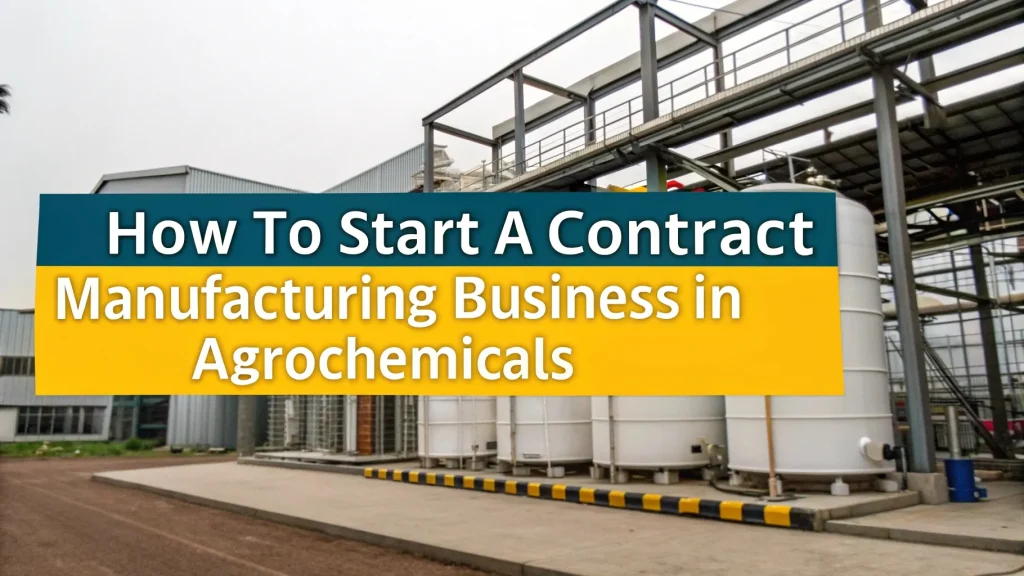
Tapping into the Agrochemical Contract Manufacturing Boom There is no denying that the global agricultural chemical market is on the rise. Specialists predict that in 2024, it will reach USD 297.7 billion and in 2033, soar to approximately USD 394.8 billion at 3.2% CAGR. The increasing popularity of Contract Development and Agrochemical Manufacturing Organizations (CDMO or CMOs) in the agrochemical field, which cater to larger brands by designing, developing, and manufacturing specialized formulations, is a key factor driving growth. One industry report claims that the agrochemical CMO services market was valued at USD 36.8 billion in 2024, expecting almost USD 90 billion by 2034, marking a CAGR of 10.3%. Other reports estimate global agrochemical CMOs at USD 5–9 billion today, growing steadily by around 6–7% each year. What’s driving this growth? Global agrochemical companies are outsourcing due to costs, complicated regulations, and the need for specialized products. This is the perfect opportunity for startups and entrepreneurs in India to enter the market—leveraging lean operations to pair technical expertise delivering high-quality services worldwide. In this article, we’ll look at how to develop a successful agrochemical contract manufacturing business, using Bayer’s global capability model and the Indian example of Safex Chemicals. We’ll define the market, estimate growth, outline a process, and do much more, all presented in a simple, structured manner. Why is the CDMO Model Increasing in Popularity? Some of the more important issues driving agrochemical contract manufacturing are: Market’s Specialized Needs: Modern formulations, especially liquids and microemulsions, require sophisticated labs and intellectual property, along with rigorous quality testing. Global Supply Realignment: Economic shifts due to the pandemic are forcing many companies to relocate their supply chains responsibilities away from China. Compliance: Increasingly sophisticated “corporate social responsibility” requirements such as maintaining globally accepted process archives and documentation add to the appeal of outsourcing due to their complexity. Flexibility and Price: Contract manufacturing increases client autonomy regarding the speed at which new formulations can be scaled, reduces CAPEX, and shifts the focus on R&D and marketing. New Types of Agrochemicals: There is a growing need for agility and new methods to develop biopesticides, nano-formulations, and next-generation seed treatments. Agile startups with moderate-volume and high-value targeting agrochemical manufacturing stand to gain considerably from these trends. Related: How to Start an Agrochemicals Manufacturing Business? Learning from the Best: Bayer vs. Safex Models Bayer Crop Science: The Global Benchmark About half of Bayer’s global revenue comes from the Crop Science division. Bayer is a classical case study of an integrated, global R&D and manufacturing counterpart. It is strong in: In-house route development and safety-conscious processes. Advanced plants in the world can create wettable powders as well as emulsifiable concentrates and seed coatings. International Standard profiles are maintained in different countries along with strict adherence to FAO/WHO and equivalently regulatory directories. There are manufacturing partnerships as well as regional production hubs which allow for toll-manufacturing. These CDMO practices are beneficial for both domestic and export brands. R&D-led formulation along with regulatory compliance are key focal points from day one for startup businesses. Safex Chemicals: A Successful Indian Example Safex Chemicals, a branch of PI Industries, specializes in sophisticated emulsion and other technical formulations. With Bayer level quality controls, Safex is able to offer: Lower-cost, localized manufacturing options or opening to other regions while upholding strict QA protocols. Providing other regions with technical servicing to regional agro firms. International export standards compliance upholding outsource for other regions. Safex’s lean operations blended with R&D proves to be fruitful for MSME newcomers to the CDMO contract manufacturing and design. Starting a Lean Agrochemical CMO: Manufacturing Overview 1. Grasp the Entire Formulation Range Granules & Wettable Powders: require jet mills, impact mills, blending dryers. Emulsifiable Concentrates: more complex and include Stirred Tank Reactors like homogenizers with cooling, pH control, and stability tanks for emulsification. Soluble Concentrates and Suspension Concentrates: utilize dispersing and settlement filtering technology for milling. Resistance and compliance with market demands should drive the choice of formats. It is wise to start with a couple of formats for comfort. 2. Route Development & Analytical Infrastructure An additional service provided by Bayer/Safex-style plants is in-house research and development labs. These labs provide test development that includes active ingredient formulation trials which include: Stability, bioassay, and performance testing as well as Analytical Quality Control—HPLC, GC, particle size, and rheology. Many clients expect some form of development assistance right from the start. Therefore, building this capacity early, even through partnerships, is crucial. 3. Pilot Scale & Scale-Up Strategy With pilot batches, which are typically 50 to 200 liters or kilograms in volume, testing efficiencies can be performed on mixing cycles, emulsifying energy, viscosity, moisture during drying, and even on the size of the particles. For successful pilot scale-up transitions, the following equipment can be utilized: Jacketed reactors High-speed dispersers Milling and blending systems Filtration and filling lines For successful alignment with GMP, it is important to document Process Validation and Batch Manufacturing Records (BMR). Related: Why Manufacturing of Agrochemicals is a Lucrative Business Opportunity 4. Quality, Compliance & Documentation Aligned with Bayer and Safex expectations, follow WHO and cGMP guidelines. Maintain: Master Formula Cards Change Controls Raw Material QC Finished Product Testing Stability studies which include accelerated and long-term This focus ensures transparent practices served to all global clients. 5. Environmental & Safety Considerations Use specialized storage for solvents, PPE, treatment of effluents, and disposal of controlled wastes. Along with these, global clients trust certified companies like those with ISO-9001, ISO-14001, and OHSAS. Client Acquisition: Finding Your Niche As a lean startup, Bayer and Safex often collaborate with Tier 1 multinational product companies. Focus on: Regional agrochemical brands in need of new formulation Southeast Asian, LATAM, and Middle Eastern exporters Academic spin-offs or biotech firms focused on plant treatment innovations
Concrete, Cement, and Cement-Based Products
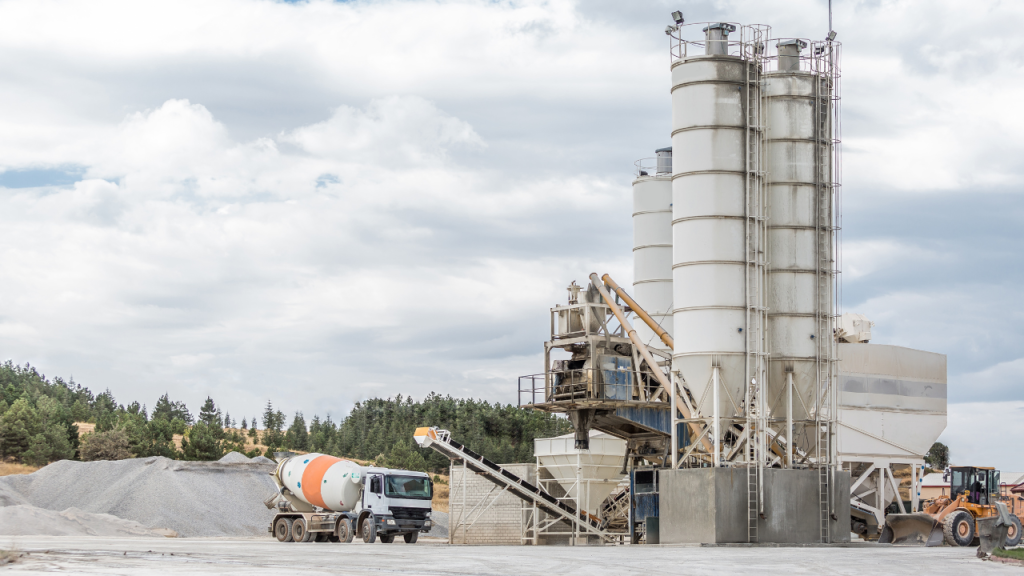
A Thriving Market for Concrete and Cement Concrete and cement are fundamental components in construction, providing a stable and ever-growing market for startups. The demand for these commodities is driven by global urbanization and the development of infrastructure internationally. Investing in these products provides startups with a chance to enter a marketplace that is not only expansive but growing year on year. Innovative Cement-Based Products – An Opportunity for Differentiation The market for cement is not all about traditional cement and concrete. There is an expansive variety of innovative products that have remarkable possibilities, each of which is attractively different. For example, waterproofing agents and specific types of cements such as white cement and PVC solvent cements provide niches in the marketplace for several startup businesses. These commodities address specific needs in the construction processes, allowing the door to specialization for some in the industry. Cement Plant Power Generation – A Sustainable Investment Sustainability is a distinct industrial trend in the construction industry. A cement plant integrated with power generation is an innovative investment model. For example, not only does it generate cement, but it also generates power for the operations. In this way, revenues from power generation provide the facility with the opportunity to create additional revenue streams as operational outlay increases. This is particularly enticing to a growing segment in the market that expresses desire for sustainability with environmental concerns consumers reflect. Visit this Page for More Information: Start a Business in Cement and Cement-Based Products Industry Sanitary Ware Products: Capitalizing on Lifestyle Trends Items like sanitary ware (such as wash basins and bathroom cabinets) connect construction to lifestyle trends. These items have transformed from mere utilities to lifestyle statements. This provides an excellent opportunity for startups to tap into the increased demand for fashionable and comfortable hygiene ware. Ready Mixed Concrete: Quality Meets Convenience The popularity of ready mixed concrete is increasing because of its convenience and consistent quality. It is the ideal product in busy construction jobs. While moving a new startup to ready mixed concrete will take time, it is a great way for startup construction companies to take advantage of demand for projects meeting modern needs. Specialized Applications: Railway Sleepers and PSC Electric Poles Concentrating on specialized applications – such as railway sleepers and PSC electric poles – is a smart move. These types of items have specific requirements, which means lower competition and higher margins for those that can provide them. Concrete Admixtures: Optimizing Performance Concrete admixtures, or additives, are critical tools for enhancing the performance properties of concrete, including toughness, workability, and curing time, allowing concrete to perform much better. Startups introducing this category can build a completely unique niche in the marketplace. Prestressed Concrete Sleepers: Disrupting Railway Construction Prestressed concrete sleepers are actually disrupting rail construction. They provide superior durability and robustness, making them an excellent alternative for modern rail systems. Investing in this technology keeps startups at the heart of infrastructure development. New Trends in Cement-Based Products The concrete industry is also moving beyond traditional ideas, particularly in the area of green and innovative materials. Specifically, green cement, made with more sustainable inputs, is gaining popularity as an alternative to conventional cement and concrete. Green cement significantly reduces the carbon footprint of construction and is fast becoming accepted. Another trend is smart cements, which can be equipped with sensors to monitor the integrity of an entire building. These technologies provide environmental benefits, improved safety, and a strong value proposition for startups. Related Reports of Feasibility Study: Concrete, Cement, and Cement-Based Products and Projects Market Size and Share: Intrigue Startups are always interested in market size and share, as it helps them understand the market context. The global concrete market is expected to continue its upward trajectory due to greater urbanization and infrastructure expansions. Startups in this market can assess the industry’s scale because it is efficient at almost any size. The market is vast and diverse, spanning residential, commercial, and industrial construction, offering a range of opportunities and challenges. Analysis of Consumer Preferences and Trends To be successful, startups must understand consumer preferences and evolving trends. There is a growing demand for eco-friendly and premium construction materials. Consumers and businesses increasingly search for products that offer long-lasting durability, energy efficiency, and aesthetics. Startups able to innovate and respond to these shifting preferences will gain a major advantage. Competitive Landscape: Obstacles and Tactics Competition in the concrete and construction market is intense, with numerous well-known players. However, competition drives innovation and quality as companies seek to differentiate themselves. Startups could find their niche by focusing on distinctive materials, best-in-class quality, and sustainability. Partnerships with construction companies, engineers, and government projects could provide added support. Supply Chain Optimization for Efficiency and Sustainability Effective supply chain management is critical in the cement industry. It refers not only to product delivery time but also to sustainability in product and distribution sourcing. Startups that invest in supply chain efficiencies decrease costs, increase sustainability, and improve overall customer experience. Regulatory Compliance and Safety Standards Understanding and complying with regulatory compliance and safety standards is key to navigating the cement industry. Startups must ensure compliance to avoid legal issues and to build a reputation as a responsible, trustworthy company. Innovative Marketing Strategies Innovative marketing strategies are fundamental to success in this industry. Startups should focus on developing strong brand identities and utilizing digital marketing strategies to reach a larger audience. Engaging in content marketing, social media, and customer testimonials can encourage new customers to pursue interest in cement products. Financing and Investment for Startups Raising capital and financing can be a significant hurdle for startups. However, given the cement industry’s potential for return on investment, startups can attract investors. Startups should create sound business plans, demonstrate market knowledge, and show product progression to secure funding. Read our Book Here: The Complete Book on Cement & Concrete Products Manufacturing Global Market Opportunities The global nature of the cement industry presents various opportunities. Emerging markets offer
The Complete Book on Cement & Concrete Products Manufacturing
Introduction to Cement and Concrete Manufacturing Contact Us
How To Start Manufacturing Business of Biofuel?
Types of Biofuels and Their Manufacturing Process 1. Bioethanol Manufacturing Bioethanol is primarily produced through the fermentation of biomass materials such as sugarcane, corn, broken rice, or molasses. Steps: Pre-treatment of raw material Hydrolysis to release fermentable sugars Fermentation using yeast Distillation to separate ethanol Dehydration for fuel-grade ethanol Bioethanol is widely used in blending with petrol and as a base ingredient in hand sanitizers and industrial chemicals. 2. Biodiesel Manufacturing Biodiesel is produced via transesterification, a chemical process that converts fats/oils into methyl or ethyl esters. Steps: Collection and filtration of oil (used cooking oil, palm oil, jatropha, etc.) Pre-treatment to remove impurities and water Mixing oil with alcohol (methanol or ethanol) and catalyst (sodium/potassium hydroxide) Transesterification reaction Separation of biodiesel and glycerin Washing and drying of biodiesel Biodiesel can be directly used in diesel engines or blended with conventional diesel. 3. Biogas Manufacturing Biogas is produced through anaerobic digestion of organic matter such as cow dung, municipal waste, or food leftovers. Steps: Feedstock collection and slurry preparation Loading into digesters Anaerobic digestion by microbes Gas collection and purification Use for electricity generation or as cooking fuel Biogas units can be set up in urban, rural, or industrial zones for both decentralized and grid-connected energy systems. Related Business Plan: Ethanol Manufacturing as Bio-Fuel Required Equipment and Machinery The equipment needed varies depending on the type of biofuel. A typical setup includes: Bioethanol Plant: Feedstock grinders and hydrolysis tanks Fermenters Distillation columns Dehydration and ethanol recovery systems Biodiesel Plant: Oil filtration and heating tanks Mixing vessels Reactors for transesterification Glycerin separation units Biodiesel storage and dispensing pumps Biogas Plant: Inlet tank Anaerobic digester (fixed dome or floating drum) Gas storage balloon or dome Pressure regulators and piping systems Automation, safety mechanisms, and pollution control units are essential for compliance and efficiency. Click here to send your queries/Contact Us Investment and Profitability in Biofuel Manufacturing The biofuel manufacturing business offers scalable models for small to large entrepreneurs. The initial investment depends on capacity, feedstock type, automation level, and product lines. Estimated Investment: Small-scale biodiesel plant: ?25–50 lakhs Medium-scale ethanol plant: ?1–3 crores Large integrated biofuel plant: ?5 crores and above Profit Margins: Biodiesel: 20–30% Ethanol: 25–35% Biogas: 15–25% Revenue Sources: Sale of primary biofuel (retail, B2B, export) By-products like glycerin, spent wash, oil cakes Government subsidies and carbon credits Sale of renewable energy certificates (RECs) Setting up the plant near agricultural belts or food processing zones ensures raw material availability at lower costs. Related Feasibility Study Reports: Ethanol Manufacturing as Bio-Fuel Government Schemes and Support for Biofuel Business The Government of India actively promotes biofuel under its National Policy on Biofuels, which includes: Ethanol blending targets (20% by 2025) Viability gap funding for 2G ethanol plants Excise duty exemption on bioethanol Priority sector lending for biofuel projects Assistance under schemes like PM Kusum and MNRE for biogas plants Apply for approvals from: State Pollution Control Board (SPCB) Ministry of Petroleum & Natural Gas (MoPNG) FSSAI (for ethanol used in food/medicine) Explosives and fuel licensing (for fuel-grade bioethanol/biodiesel) Read our Books Here: Read Our Books & Databases Challenges in Biofuel Manufacturing and How to Overcome Them While the business is rewarding, it comes with operational and logistical challenges: Feedstock variability: Create long-term contracts with farmers, food processors, and oil recyclers. Technology costs: Use modular, scalable systems initially; upgrade as demand grows. Market access: Partner with OMCs (Oil Marketing Companies), state electricity boards, and energy distributors. Digital marketing and eco-branding also help reach B2B and retail consumers effectively. Click here to send your queries/Contact Us Export Opportunities and Global Market Demand Biofuel export is emerging as a profitable vertical with international demand for clean fuels. India can export: Biodiesel to Europe and the USA (meeting EN 14214 standards) Ethanol to Southeast Asia and Africa Biogas/biomethane through gas grid connectivity Register with DGFT and get certifications like ISCC, GMP+, or REACH for global compliance. Conclusion: A Green Goldmine for Modern Entrepreneurs The manufacturing business of biofuel not only contributes to the nation’s energy independence but also offers sustainable, long-term profitability. With supportive policies, growing demand, and increasing environmental awareness, now is the perfect time to venture into this green sector. Whether you choose to produce biodiesel, ethanol, or biogas, the potential for impact and income is enormous. Focus on innovation, backward integration, and compliance to lead a successful biofuel manufacturing enterprise. See More Links:
How to start Manufacturing Business of Fatty Alcohol?
The manufacturing business of fatty alcohol is a highly profitable and industrially essential venture that continues to grow in demand globally. Fatty alcohols are long-chain alcohols derived from natural fats and oils or petrochemical sources. These versatile compounds are used extensively in the production of surfactants, personal care products, lubricants, detergents, and even pharmaceutical intermediates. With increasing environmental consciousness and the shift toward bio-based ingredients, the demand for natural fatty alcohols is surging. This trend presents a golden opportunity for entrepreneurs and investors looking to capitalize on a sustainable and scalable chemical manufacturing business. Setting up a manufacturing business of fatty alcohol not only ensures participation in a billion-dollar global industry but also allows room for diversification into multiple sectors. As industries shift toward renewable, green chemistry, and biodegradable raw materials, the importance and value of fatty alcohol production only continue to rise. Related Business Plan: Alcohol Understanding the Fatty Alcohol Industry The global fatty alcohol market size was valued at over USD 5.5 billion in 2023 and is expected to grow at a CAGR of 4.2% through 2030. Fatty alcohols are increasingly replacing petroleum-based chemicals in soaps, emulsifiers, cosmetics, and detergents due to their biodegradable nature. Read Similar Articles: ETHANOL AND ALCOHOL INDUSTRY What Are Fatty Alcohols and Where Are They Used? Fatty alcohols are aliphatic alcohols with carbon chains typically ranging from C6 to C22. They are derived primarily from: Natural sources like palm oil, coconut oil, tallow Synthetic sources via Ziegler or oxo process from petrochemical feedstocks Applications include: Detergents and surfactants Personal care and cosmetics (creams, shampoos, lotions) Textile and leather processing Lubricants and plasticizers Pharmaceutical excipients Their emulsifying, thickening, and spreading properties make them indispensable across industries. Production Process of Fatty Alcohols The manufacturing business of fatty alcohol involves several key stages based on the source: 1. Natural Route (from triglycerides): Hydrolysis of fats and oils to produce fatty acids Hydrogenation of fatty acids under high pressure and temperature using catalysts (typically nickel) to yield fatty alcohols 2. Synthetic Route: Ziegler Process: Oligomerization of ethylene followed by oxidation and hydrogenation Oxo Process: Hydroformylation of olefins followed by hydrogenation Natural fatty alcohols are gaining more market share due to their sustainability and biodegradable nature, especially in the personal care and green cleaning markets. Click here to send your queries/Contact Us Machinery and Infrastructure Needed Setting up a fatty alcohol manufacturing unit requires: Hydrogenation reactors Fat splitting columns Distillation and separation units Pressure vessels and heat exchangers Storage tanks for feedstocks and products Pollution control systems Basic infrastructure includes: Factory area (minimum 4000–5000 sq. ft.) Reliable electricity and water supply Fire safety and exhaust systems Quality control lab and packaging units Automation and process monitoring tools can greatly enhance efficiency and safety. Related Feasibility Study Reports: Alcohol From Tapioca Starch Raw Materials Required Depending on the production method, raw materials may include: Coconut oil or palm kernel oil (for natural fatty alcohols) Ethylene and catalysts (for synthetic methods) Hydrogen gas Catalysts like nickel or copper-chromite Solvents for purification (if needed) Most raw materials are readily available in chemical and agro-industrial supply chains, especially in countries like India, Indonesia, Malaysia, and China. Cost Estimation and Investment The manufacturing business of fatty alcohol can be started at a small to medium industrial scale with a capital investment of ?1.5 to ?3 crore, depending on production capacity and level of automation. Cost components include: Land and building: ?30–40 lakhs Machinery and setup: ?60–90 lakhs Working capital and raw materials: ?50–80 lakhs Licensing and environmental clearances: ?10–15 lakhs Return on investment is typically achievable within 2–3 years with a well-structured marketing and distribution strategy. Read our Books Here: Alcohol and Alcohol Based Industries Profitability and Market Demand Fatty alcohols are high-value commodities with consistent demand in B2B markets. Pricing depends on chain length, purity, and source. On average: The selling price ranges between ?100–?250 per kg Profit margins can range from 20–35% Major clients include FMCG manufacturers, cosmetics brands, detergent producers, and pharma companies Establishing contracts with these sectors ensures long-term stability and recurring income. Licensing and Regulatory Approvals To run a compliant fatty alcohol production unit, the following approvals are essential: Factory License under Factories Act Consent from State Pollution Control Board Hazardous Chemicals Storage approval (if using synthetic feedstock) Explosive & Fire Department Clearance Drug license (if supplying to pharma sector) Proper waste treatment systems, emission controls, and safety protocols are also mandatory. Challenges and Solutions Common challenges: Managing high-pressure hydrogenation safely Fluctuations in feedstock (natural oils) prices Regulatory hurdles for hazardous materials Solutions include: Using modern, explosion-proof reactor systems Sourcing from reliable, long-term vendors Investing in compliance consulting for smooth approvals Quality assurance and a consistent supply chain are critical to maintain product standards and customer trust. Opportunities for Expansion Once the fatty alcohol unit is operational, further business expansion opportunities include: Value-added products: like fatty acid esters, surfactants, emulsifiers Private label cosmetics manufacturing Export of refined fatty alcohols to markets like Europe, Africa, and the Middle East Green chemical production using natural inputs for niche eco-friendly brands Demand for green surfactants and natural cosmetic ingredients continues to surge, making this business scalable and future-proof. Conclusion The manufacturing business of fatty alcohol is not only profitable but also aligns with the growing trend of sustainable, eco-friendly industrial production. With applications across a wide array of sectors and a global demand curve that continues to rise, this business promises consistent returns, market relevance, and expansion potential. Whether you’re an MSME looking to diversify or an industrialist seeking to venture into green chemicals, fatty alcohol production offers a smart, rewarding path forward. Niir Project Consultancy Services (NPCS) provides detailed Project Report, Business Plan for Manufacturing Plant, Start-up Ideas, Business Ideas for Entrepreneurs, Start up Business Opportunities, entrepreneurship projects, Successful Business Plan, Industry Trends, Market Research, Manufacturing Process, Machinery, Raw Materials, project report, on various segments. A lot of engineers, project consultant & industrial consultancy firms in India and across the globe have taken benefit from the project report provided
Start a Profitable Abrasive Grinding Wheels Manufacturing Business

Abrasive grinding wheels are a cornerstone of the industrial and manufacturing sectors, offering indispensable support in cutting, grinding, shaping, and finishing applications. As demand surges in automotive, metal fabrication, aerospace, construction, and electronics industries, the opportunity to establish a lucrative abrasive grinding wheel business has never been stronger. This guide provides a complete roadmap, from market analysis to operations and financial planning. Market Demand for Abrasive Grinding Wheels in India and Globally The global market for abrasive grinding wheels is expected to grow significantly, driven by industrial automation, increasing infrastructure projects, and rapid modernization in sectors such as automotive manufacturing, aerospace, and metalworking. In India, the “Make in India” initiative has stimulated industrial growth, with the abrasives market projected to grow at over 6% CAGR in the coming years. Key demand contributors include: Automotive Sector: Precision grinding in gear and transmission production Construction Industry: Polishing, surface preparation, and finishing Tool Manufacturing: High-precision applications for cutting tools Electronics: Delicate and fine polishing of semiconductors Types of Abrasive Grinding Wheels and Their Applications Bonded Abrasive Wheels Bonded wheels are made from abrasive grains bonded with ceramic, resin, or rubber binders. They’re primarily used for precision applications in industrial setups. Popular Types: Straight Grinding Wheels – Used for cylindrical and surface grinding Cylindrical Wheels – Used in toolroom grinding and finishing Cut-off Wheels – Ideal for quick and clean cuts on metal surfaces Coated Abrasive Wheels These use abrasive materials adhered to a backing like paper or cloth. They’re common in finishing and polishing processes. Examples: Flap Discs Abrasive Belts Sanding Discs Super Abrasive Wheels Composed of industrial diamonds or cubic boron nitride (CBN), these wheels offer exceptional durability and precision for high-end applications like aerospace and advanced tooling. Investment and Machinery Requirements Initial Capital Requirements The startup capital will depend on the scale—small, medium, or large-scale unit. A medium-scale abrasive grinding wheels plant may require an investment of INR 25–50 lakhs (USD 30,000–60,000). Costs Breakdown: Land & Building: INR 5–10 lakhs Machinery & Equipment: INR 15–20 lakhs Raw Materials & Inventory: INR 5–10 lakhs Labor & Working Capital: INR 5–10 lakhs Required Machinery Mixing Machine Hydraulic Press Ovens and Kilns for Curing Balancing Machine Testing Equipment Packing Machines These machines ensure uniform bonding, curing, and quality assurance, making them critical for consistent product delivery. Raw Materials Used in Grinding Wheel Production To produce high-quality abrasive wheels, focus on reliable sourcing of raw materials: Abrasive Grains: Aluminum oxide, silicon carbide, CBN, diamond Binders: Vitrified (ceramic), resinoid (resin-based), rubber Filler Materials: Cryolite, iron pyrites Backing Material (for coated abrasives): Fiber, cloth, paper Additives: To improve strength, thermal resistance, and durability Quality raw material ensures longevity, speed, and performance of the wheels. Licensing and Legal Formalities To run your abrasive grinding wheels business legally and efficiently in India, the following registrations are essential: Company Registration (Proprietorship/LLP/Private Ltd.) GST Registration Factory License Pollution Control Clearance from SPCB BIS Certification (IS 1249) for bonded abrasives Udyam/MSME Registration for availing government subsidies Production Process of Abrasive Grinding Wheels The manufacturing process involves the following crucial steps: Mixing: Raw abrasive grains and bonding agents are mixed uniformly. Moulding: The mix is poured into molds and shaped under hydraulic pressure. Drying & Curing: Wheels are dried and heated in kilns to gain strength. Finishing: Edges are trimmed, and wheels are dressed to correct dimensions. Testing: Each wheel is tested for balance, crack detection, and speed tolerance. Packing: Labeled, shrink-wrapped, and sealed for market dispatch. Marketing Strategies for Abrasive Grinding Wheel Business B2B marketing is most effective in this sector. Here are powerful strategies to build a strong brand presence: Industrial Exhibitions: Participate in machinery expos and tool fairs Online Platforms: List on IndiaMART, TradeIndia, Alibaba, and Justdial Search Engine Optimization: Rank for keywords like “abrasive grinding wheels manufacturer in India” or “cutting wheels supplier” Corporate Tie-ups: Establish long-term supply contracts with automotive and construction companies Social Media & LinkedIn: Build thought leadership through technical content and product demos Profit Margin and ROI Analysis An established abrasive wheel business offers 30–50% profit margins, depending on efficiency and scale. Superabrasive segments (CBN & diamond) yi Sample Revenue Estimate (Medium-Scale Unit): eld higher margins due to specialized usage and limited competition. Monthly Production: 20,000 units Average Selling Price per Unit: INR 80 Monthly Revenue: INR 16,00,000 Operational Expenses: INR 10,00,000 Monthly Profit: INR 6,00,000 Break-even typically occurs within 12–18 months with consistent market penetration. Challenges and Risk Factors While lucrative, this business does have challenges: Raw material price fluctuations High precision requirements and quality control Regulatory compliance and safety standards International competition from Chinese and European manufacturers Address these risks through automation, quality assurance, and differentiation by specialty products like superabrasives or eco-friendly bonded wheels. Future Scope and Expansion Opportunities With increasing automation and high-speed machinery, demand for high-performance grinding wheels will expand. Business owners can scale operations by: Introducing CNC-compatible wheels Launching export-quality product lines Setting up distribution hubs across industrial zones Entering the aftermarket tool servicing space Government incentives under MSME and Startup India initiatives further support expansion and innovation. Benefits of Starting Abrasive Grinding Wheels business Start your own abrasive grinding wheel manufacturing company if you want to invest in a successful business. Abrasive is a significant natural resource made composed of minerals that have been moulded and created over millions of years and can be used in a range of applications. Starting an abrasive grinding wheel manufacturing company is one method to get your hands on these resources. This could be an excellent approach for you to have access to natural resources without prior knowledge. However, you’ll need to learn more about how to start such a firm, so keep reading for some helpful advice. The first step is to pick what type of grinding wheel you wish to make. There are numerous varieties available, each with its own set of purposes and qualities. Starting an abrasive sanding wheels manufacturing company, for example, could be excellent if you’re seeking for a straightforward business concept with cheap overheads. There’s
Start a Plastic Optical Lenses Manufacturing Business. Learn how to start a Plastic Optical Lenses Manufacturing Business

Understanding the Scope of the Plastic Optical Lenses Industry The plastic optical lenses industry is at the forefront of innovation in optics and precision manufacturing. These lenses, which are lightweight, shatter-resistant, and easily customizable, are used across industries such as eyewear, medical diagnostics, imaging systems, automotive displays, smartphones, and augmented reality devices. With global demand surging due to technological advancements, now is the right time to enter this high-potential market. Market Research and Feasibility Analysis Before starting a plastic optical lenses manufacturing business, we must conduct comprehensive market research. Identifying key competitors, understanding their production scale, pricing strategies, and customer base will help us position ourselves in the market. Feasibility studies will also inform us of the required investment, ROI expectations, and potential risks. Target Segments: Eyewear manufacturers, medical equipment suppliers, electronics producers, automotive companies. Emerging Markets: AR/VR tech, laser optics, and aerospace systems. Demand Trends: Increasing usage in lightweight, high-durability applications. Business Registration and Legal Compliance To formalize operations, we must register the business under the appropriate legal entity—LLP, Pvt. Ltd., or Corporation—based on the country’s business laws. Additionally, we need to: Acquire manufacturing licenses from industrial authorities. Ensure ISO certification for quality control. Comply with environmental and safety norms under pollution control and labor acts. Protect our technology and brand with patents and trademarks. Choosing the Right Manufacturing Location The factory location plays a critical role in cost-efficiency and logistics. An ideal location should offer: Access to skilled labor trained in optics and plastics. Close proximity to raw material suppliers and transport hubs. Availability of industrial utilities like clean water, electricity, and waste management. Industrial zones or optical manufacturing clusters offer incentives and supply chain advantages. Raw Materials and Suppliers The core materials in plastic optical lenses include: CR-39 (Columbia Resin 39) – commonly used for eyeglasses. Polycarbonate – offers impact resistance for safety lenses. Acrylic (PMMA) – used in lightweight, budget-friendly optics. Resins and Coatings – for anti-scratch, anti-glare, and UV protection. We should establish contracts with reliable chemical manufacturers and coating material suppliers to maintain uninterrupted production. Optical Lens Manufacturing Process The process to manufacture plastic optical lenses involves a mix of precision engineering and automation technologies. The key steps are: 1. Molding We use injection molding or casting techniques to shape raw plastic materials into semi-finished lenses. Molding machines with precision tooling ensure dimensional accuracy and surface smoothness. 2. Curing The molded lenses undergo UV curing or heat curing to harden the material. Temperature and time must be carefully controlled to prevent defects. 3. Polishing Polishing removes micro-imperfections and improves transparency. Advanced CNC polishing machines and abrasive materials like cerium oxide help achieve the required optical clarity. 4. Coating We apply functional coatings such as: Anti-reflective (AR) coating Scratch-resistant coating Hydrophobic and oleophobic coatings UV protection layer These are applied in vacuum chambers or dip-coating units, depending on the coating type. 5. Inspection and Quality Control Each lens undergoes visual inspection, optical power measurement, and surface analysis to ensure it meets standards like ANSI Z80 or ISO 8980. Using optical comparators and wavefront sensors ensures precision. Required Machinery and Equipment To set up a plastic optical lenses manufacturing unit, we need advanced machinery: Injection molding machines Lens polishing machines Coating chambers Cleanroom facilities Lens inspection equipment Automated production lines ensure higher throughput and consistency. We should source machinery from certified optical manufacturing technology providers in Japan, Germany, or the U.S. Manpower and Technical Team An efficient team will include: Optical engineers for design and precision measurements. Production managers to oversee manufacturing workflows. Quality control specialists trained in lens standards. Machinists and operators for equipment handling. Maintenance and safety personnel for equipment and workplace management. Training and periodic skill upgrades ensure high productivity and reduced wastage. Cost and Investment Breakdown Starting a medium-scale plastic optical lenses plant typically requires: Cost Component Estimated Cost (USD) Land & Building $100,000 – $250,000 Machinery & Tools $300,000 – $700,000 Raw Materials $50,000 – $100,000 Labor & Salaries $10,000/month onwards Licenses & Legal $10,000 – $20,000 Marketing Budget $20,000 – $50,000 Total $500,000 – $1.2 Million Marketing and Distribution Strategy We must build a B2B and B2C outreach model for different product categories. Key strategies include: Launching a dedicated website with 3D lens previews and catalog downloads. Partnering with eyewear brands, hospitals, and OEM manufacturers. Exhibiting at international optics expos and trade fairs. Leveraging platforms like Alibaba, Indiamart, and ThomasNet. Running Google Ads, SEO campaigns, and LinkedIn outreach. High-quality plastic optical lenses earn repeat orders through consistent performance and certifications. Sustainability and Green Manufacturing The industry is shifting towards eco-friendly plastics and biodegradable lens materials. Our business should invest in: Recyclable resins Low-energy curing methods Solar power for machinery Zero-liquid discharge systems Being certified as a green optics manufacturer opens up international partnerships and sustainable brand recognition. Future Innovations in Plastic Optical Lenses To stay competitive, we must invest in R&D for next-gen optical products: Photochromic plastic lenses Smart lenses with embedded sensors High-index ultra-thin lenses Custom 3D-printed optical solutions Collaborating with universities and nanotech labs enhances product innovation and IP generation. Conclusion: Building a Profitable Optical Manufacturing Legacy The plastic optical lenses business offers long-term profitability when built with precision engineering, innovation, and commitment to quality. With rising global demand and numerous industrial applications, a robust setup supported by trained manpower and the latest technology can scale quickly. By positioning ourselves as a reliable, certified, and eco-conscious manufacturer, we can supply to domestic and international markets with confidence. Visit the page Select and Choose the Right Business Startup for You for sorting out the questions arising in your mind before starting any business and know which start-up you can plan. We, at NPCS, endeavor to make business selection a simple and convenient step for any entrepreneur/startup. Our expert team, by capitalizing on its dexterity and decade’s long experience in the field, has created a list of profitable ventures for entrepreneurs who wish to diversify or venture. The list so mentioned is updated regularly to give you a
Start your own Micronutrient Fortified Blended Energy Dense Food Manufacturing Business
Energy dense food refers to foods that provide a high number of calories per gram or serving. These foods are rich in fats, carbohydrates, or both, making them excellent for individuals needing increased calorie intake. Whether you’re an athlete, recovering from illness, dealing with malnutrition, or trying to gain healthy weight, energy-dense foods play a vital role in your diet. In this comprehensive guide, we will explore what energy dense foods are, who should consume them, and which food options are considered the best sources of healthy energy density. By the end, you’ll know how to include these foods in a balanced and effective way. Visit this Page for More Information: Start a Business in Cereal Processing Industry What is Energy Dense Food? Energy dense food is defined by its high caloric content relative to its weight or volume. While low-energy-dense foods like fruits and vegetables contain fewer calories per gram, energy-dense foods pack more calories in smaller portions. For example, a tablespoon of peanut butter contains more calories than a cup of lettuce. Read Similar Articles: CEREAL FOOD PROCESSING Why it matters: Supports healthy weight gain Essential for people with high metabolic needs Useful in meal planning for those with poor appetite Helps athletes meet their energy demands efficiently However, it’s important to distinguish between healthy energy-dense foods (like nuts and seeds) and unhealthy options (like fried snacks or sugary desserts). Watch Video: Food Fortification Business | Micronutrient Fortified Blended Energy Dense Food Manufacturing Who Needs Energy Dense Foods? Energy-dense foods are not for everyone. They are specifically beneficial for individuals who require more calories than average, including: 1. Athletes and Bodybuilders Intense training burns a lot of calories, and energy dense food helps replenish energy without needing to eat huge volumes of food. 2. Children and Teenagers Growing bodies often require more nutrients and calories per day. Kids with poor appetite or rapid growth phases benefit from concentrated sources of energy. 3. People Recovering from Illness or Surgery During recovery, the body needs extra energy and nutrients to rebuild tissues, which makes energy dense food important in hospital or home-based nutritional therapy. 4. Individuals with High Metabolism or Eating Disorders Some people naturally burn calories faster and need energy-rich meals to maintain or increase body weight. Related Project: Micronutrient Fortified Energy Dense Food Manufacturing Business Healthy Energy Dense Food Options It’s essential to focus on nutrient-rich and healthy energy dense foods to avoid unhealthy weight gain or nutritional imbalances. 1. Nuts and Nut Butters Almonds, walnuts, cashews, and peanut butter are loaded with healthy fats, protein, and calories. Just a small handful can add 150–200 calories. 2. Avocados Rich in monounsaturated fats, avocados are calorie-rich and packed with vitamins like potassium, vitamin E, and fiber. 3. Dried Fruits Compared to fresh fruits, dried fruits like dates, raisins, apricots, and figs provide more calories in smaller servings. They also supply iron, fiber, and antioxidants. 4. Cheese and Full-Fat Dairy Cheese, whole milk, yogurt, and cream are high in calories, protein, and calcium. They’re excellent for people looking to gain weight healthily. 5. Whole Grains and Granola Whole grain bread, brown rice, quinoa, and granola bars are energy-dense carbohydrates that provide sustained energy release. 6. Healthy Oils Cooking with olive oil, ghee, or coconut oil adds calories to meals without increasing volume. A tablespoon can contain over 100 calories. 7. Seeds Chia seeds, flaxseeds, and pumpkin seeds are compact in size but high in calories, fiber, and omega-3 fats. 8. Dark Chocolate In moderation, dark chocolate provides both energy and antioxidants. A good option for those with a sweet tooth who want a nutritious boost. Watch other Informative Videos: Food Processing and Agriculture Based Projects Unhealthy Energy Dense Foods to Limit Not all energy-dense foods are beneficial. Some high-calorie items offer little to no nutrition and should be consumed sparingly: Fried snacks (potato chips, pakoras) Sugary desserts (cakes, pastries, candies) Sugary sodas and sweetened beverages Processed meats and junk food These options may add weight, but not in a healthy way. They can also increase your risk of chronic conditions like diabetes, obesity, and heart disease. Related Feasibility Study Reports: Cereal Processing (Rice, Dal, Pulses, Oat, Wheat), Sugar and value added Products How to Include Energy Dense Foods in Your Diet Incorporating energy dense food into your diet should be strategic to avoid unwanted fat gain or nutrient imbalance. Here’s how to do it effectively: 1. Add, Don’t Replace Instead of removing low-calorie healthy foods, add energy-dense toppings like seeds, cheese, or nuts to salads, oatmeal, and yogurt. 2. Use Healthy Fats in Cooking Cook vegetables in olive oil or add ghee to dal and curries to increase the calorie content naturally. 3. Snack Smart Replace low-calorie snacks like popcorn with nut bars, trail mix, or hummus with whole wheat crackers. 4. Focus on Portion Packing Eat smaller but more calorie-packed meals if you have a poor appetite or difficulty eating large meals. 5. Choose Whole Ingredients Whole grains, lean meats, and full-fat dairy not only offer energy but also important micronutrients. Energy Dense Food vs Nutrient Dense Food While energy dense food focuses on calories, nutrient dense food focuses on vitamins, minerals, and antioxidants per calorie. The goal is to combine both when needed. Example: Nuts = Energy dense + Nutrient dense ? French Fries = Energy dense but nutrient-poor ? Spinach = Nutrient dense but low in calories ? for weight gain Choosing the right mix ensures you gain energy without sacrificing overall health. Conclusion Energy dense food is a critical part of many dietary strategies—especially for those with high calorie needs. When chosen wisely, these foods can help with weight gain, support muscle building, aid recovery, and improve overall nutrition. From healthy fats and whole grains to nuts, seeds, and dairy, there are numerous options that offer both calories and nutrients in compact servings. However, balance is key. Make sure to pair energy-dense items with physical activity, hydration, and a diet rich in fruits, vegetables,
Setting up a Manufacturing Plant of Razor Blade for Safety Razor and Disposable Safety Razor.
The grooming industry has been witnessing consistent demand over the years, and razor blades form a significant component of this market. With the rise in population, urbanization, and personal grooming awareness, the razor blade manufacturing industry is evolving rapidly. If you’re looking to enter a steady and scalable business, setting up a razor blade manufacturing plant can be a strategic investment. This guide will walk you through all critical steps – from market research to machinery, investment, operations, and compliance. Understanding the Razor Blade Manufacturing Industry The global demand for razors and blades continues to surge due to increasing hygiene awareness and lifestyle changes. In India and many developing nations, disposable razors and refillable razor systems are widely used across urban and semi-urban regions. A razor blade manufacturing plant caters not only to domestic consumers but also opens up lucrative export opportunities. The industry is moderately capital-intensive but offers strong margins with proper branding and distribution networks. Market Research and Feasibility Study Before initiating any industrial project, a comprehensive feasibility study is a must. Start with: Demand analysis: Evaluate current consumption rates, seasonal fluctuations, and customer preferences. Competition assessment: Identify top players and local manufacturers. Target audience segmentation: Divide the market into men’s, women’s, travel-friendly, premium, and economic segments. Product variety: Single-blade, twin-blade, triple-blade, and safety razors. This stage helps in understanding the market dynamics and shaping your business strategy accordingly. Choosing the Right Location The selection of a plant location can significantly affect logistics, production cost, and labor availability. An ideal site should be: Near raw material suppliers and transportation hubs. Compliant with industrial zoning laws. Equipped with infrastructure like electricity, water, and waste disposal systems. Accessible to a skilled or semi-skilled workforce. Setting up in an industrial park may also offer tax incentives or subsidies. Required Licenses and Registration Starting a razor blade manufacturing plant in India or abroad involves several legal steps. Make sure to obtain: Company registration (Private Limited, LLP, or Proprietorship). Factory license from local government authorities. GST Registration for tax compliance. Pollution control clearance from the respective state board. Udyam Registration (for MSMEs in India). Trademark registration for your brand. Always consult a legal advisor to ensure smooth documentation and regulatory compliance. Raw Materials and Supply Chain Key raw materials used in razor blade manufacturing include: Stainless steel strips or carbon steel (for blades). Plastic or rubber components (for handles). Lubrication strips (commonly aloe vera or vitamin E infused). Packaging material like blister packs, cardboard boxes, and labels. Establish long-term contracts with quality raw material suppliers. Maintaining a robust and timely supply chain ensures uninterrupted production. Machinery and Equipment To run a razor blade manufacturing plant efficiently, you’ll need specialized machinery. Some essential units are: Blade blanking machine – For cutting metal strips into blade shapes. Heat treatment unit – To harden the blades for sharpness and durability. Grinding and honing machine – For edge shaping and sharpening. Coating machines – To apply anti-rust or friction-reducing coatings. Injection molding machines – For producing handles and blade holders. Assembly and packaging line – For bundling final products. Invest in semi-automatic or fully automated systems based on budget and scale. While initial investment may be substantial, automation helps reduce labor costs and increase output. Workforce and Training Even a moderately automated razor blade manufacturing plant requires a skilled workforce. The workforce structure typically includes: Technicians and engineers – For machine operations and maintenance. Quality control experts – To ensure blade precision and safety. Packaging and logistics staff – For product finishing and dispatch. Administrative staff – For documentation, marketing, and inventory management. Regular training and performance evaluations are essential for optimizing productivity and maintaining safety standards. Manufacturing Process Overview Here’s a brief outline of the blade production process: Material Preparation – Steel strips are cleaned and pre-treated. Blanking – Strips are cut into blade-sized blanks. Hardening – Through heat treatment to enhance strength. Grinding – To achieve sharp edges. Coating – With chromium, PTFE, or platinum for smooth glide. Handle Attachment – Blades are mounted onto handles using automated injection machines. Sterilization and Inspection – For safety and quality checks. Packaging – Final assembly into blister packs or cartons. Each step requires precision and strict quality control measures. Investment and Cost Breakdown Starting a razor blade manufacturing plant demands significant capital. Here’s an estimated cost breakdown: Land and building: ?25–50 lakhs (or more based on location) Machinery and equipment: ?40–70 lakhs Raw materials (initial stock): ?10–15 lakhs Labor and operations (monthly): ?5–10 lakhs Utilities and overheads: ?2–5 lakhs per month Marketing and branding: ?5–10 lakhs (initially) Total estimated setup cost: ?1 crore to ?1.5 crores for a mid-scale unit. For smaller scale startups, costs can be controlled using second-hand machinery and outsourcing non-core components. Profitability and ROI Profit margins in razor blade manufacturing can range between 15%–25%, depending on: Production scale and cost control Brand recognition and customer loyalty Distribution efficiency and retailer margins Export potential You can expect breakeven within 2–3 years if managed efficiently. Bulk production and strategic tie-ups with salons, retailers, or FMCG distributors will boost growth. Marketing and Distribution To succeed in the market, marketing is as crucial as production. Key channels include: Retail networks: Pharmacies, general stores, supermarkets. Online platforms: E-commerce websites, brand website, marketplaces like Amazon or Flipkart. Institutional sales: Hotels, hospitals, and travel companies. Export markets: African, Middle Eastern, and South American countries are major buyers. Effective use of branding, influencer marketing, attractive packaging, and competitive pricing can help establish a strong market presence. Sustainability and Waste Management Blade manufacturing creates metallic and plastic waste. Therefore: Ensure recyclable packaging and environment-friendly materials where possible. Partner with local recycling agencies to manage waste. Implement energy-saving practices and maintain compliance with environmental laws. Sustainability is not only a regulatory requirement but also enhances brand appeal in today’s eco-conscious world. Challenges in Razor Blade Manufacturing Every industry has its share of challenges. Common ones include: Price wars with established brands. High machinery maintenance cost. Fluctuations in raw material prices. Need for