
List of Profitable Business Ideas in Textile Bleaching, Dyeing, Spinning, Weaving, Printing and Finishing Industry.
The textile industry stands as one of the oldest and most lucrative sectors globally, offering vast potential for entrepreneurs looking to start a manufacturing venture. As the demand for quality fabrics, fashion products, and sustainable materials increases, the scope of textile manufacturing business ideas continues to expand. From traditional fabric weaving to high-tech textile production, this industry encompasses a wide range of opportunities for both small-scale and large-scale entrepreneurs. Whether you want to begin with minimal investment or plan a full-scale industrial unit, the textile sector provides promising options for long-term profitability. Profitable Textile Manufacturing Business Ideas – Complete List When entering the textile industry, selecting the right niche is crucial. Below is a complete list of textile manufacturing business ideas that cater to varying budgets, markets, and technological capacities. 1. Cotton Fabric Manufacturing Cotton is the most commonly used natural fiber in the textile industry. Setting up a cotton fabric manufacturing unit can be highly profitable, especially in countries with easy access to raw cotton. This business involves spinning, weaving, or knitting cotton fibers into fabrics used in everything from casual wear to home furnishings. With sustainable and organic cotton gaining popularity, producers who focus on eco-friendly methods enjoy higher market demand and better margins. 2. Synthetic Fiber Production Synthetic fibers like polyester, nylon, and acrylic are widely used in sportswear, automotive fabrics, upholstery, and industrial applications. Launching a synthetic fiber production unit requires more technical expertise and machinery, but it offers higher scalability and return on investment. Due to their durability and cost-effectiveness, synthetic fabrics remain a top choice for many brands, making this a smart textile manufacturing business idea for long-term success. 3. Denim Fabric Production Denim never goes out of fashion. Manufacturing denim fabric is a specialized segment that requires heavy-duty looms and dyeing equipment. However, the demand for jeans, jackets, and casual wear made from denim remains strong worldwide. Innovations in eco-friendly denim processing and distressed finishes have added further value to this niche. Entrepreneurs can also tap into premium markets by offering organic or stretchable denim fabrics. 4. Nonwoven Fabric Manufacturing Nonwoven fabrics are used in sectors like hygiene (diapers, sanitary napkins), medical (surgical gowns, face masks), and industrial insulation. This form of textile manufacturing business idea has grown significantly after the pandemic, where demand for medical-grade textiles surged. Nonwoven production requires specialized machinery but is highly rewarding in terms of market stability and customer diversity. 5. Woolen Fabric Manufacturing Wool fabric manufacturing is another profitable venture, particularly in colder regions. Woolen textiles are used in winter wear, blankets, and fashion accessories. This sector values craftsmanship and quality. Businesses can source wool from local sheep farms and add value by offering handwoven or premium branded woolen textiles. 6. Textile Dyeing and Printing Unit This is a service-oriented textile manufacturing business idea where you provide dyeing and printing services for raw fabrics. It includes processes like screen printing, digital textile printing, block printing, and batik. With innovations in natural dyes and fabric-safe chemicals, this segment offers plenty of scope for eco-friendly startups. You can also develop your own fabric designs and sell under a private label. 7. Embroidery and Lace Manufacturing Embroidery and lace fabrics are widely used in ethnic wear, bridal wear, and home décor. Automatic embroidery machines and computerized lace-making systems make the production process more efficient. A business in this niche can cater to designers, exporters, and local boutiques, making it a strong and creative textile manufacturing business idea. 8. Technical Textiles Production Technical textiles include fabrics designed for performance rather than appearance, such as fire-retardant suits, waterproof fabrics, geotextiles for construction, and military wear. Though this niche requires higher capital and compliance with technical standards, it brings premium clients and long-term contracts. The government and private sectors heavily invest in technical textiles, making it a future-proof business area. 9. Recycled Textile Manufacturing As sustainability becomes central to fashion and textile, recycling waste fabric into usable textiles is emerging as a strong textile manufacturing business idea. This includes converting textile waste, plastic bottles, or discarded garments into yarns or fabrics. Startups focusing on circular fashion models can attract eco-conscious buyers and government grants. 10. Carpet and Rug Manufacturing Handmade and machine-made carpets are valuable items used in homes, offices, and hotels. India, Turkey, and Iran are major exporters of high-end rugs and carpets. Starting a carpet manufacturing unit offers both cultural value and good profit margins. You can also specialize in jute rugs, cotton dhurries, or Persian-style carpets depending on your market. 11. Blanket and Quilt Manufacturing Blankets and quilts are essential in household and hospitality sectors. Their manufacturing involves fiber selection, layering, stitching, and sometimes decorative quilting. Cotton, wool, and synthetic fibers are commonly used. This textile manufacturing business idea is easy to start on a moderate scale and allows seasonal product diversification. 12. Silk Fabric Manufacturing Silk, known for its luxury and texture, is highly valued in the fashion industry. Starting a silk fabric manufacturing unit requires sourcing raw silk, spinning it into yarns, and weaving it into various patterns. The business has strong export potential and government support in many countries. Silk weaving is labor-intensive but can offer premium pricing and strong branding. 13. Knitted Fabric Manufacturing Knitted fabrics are used in innerwear, T-shirts, babywear, and sportswear. This textile manufacturing business idea focuses on circular or flat knitting technology. It’s easier to scale, has continuous demand, and supports fast-fashion timelines. With the rise in athleisure and comfort wear, investing in knitted fabrics offers a solid market opportunity. 14. Jute and Hemp Fabric Production Jute and hemp are biodegradable fibers used in bags, packaging, home décor, and eco-clothing. These natural fibers have lower carbon footprints and are highly in demand in international markets. A jute or hemp textile manufacturing unit requires moderate capital and caters to the sustainable product segment. 15. Uniform Manufacturing Unit Schools, hospitals, security services, and industries require uniforms in bulk, all year round. Starting a textile unit focused on uniform production can lead to consistent
List of Profitable Business Ideas in Electrical and Electronics Products Manufacturing Industries and Power Project
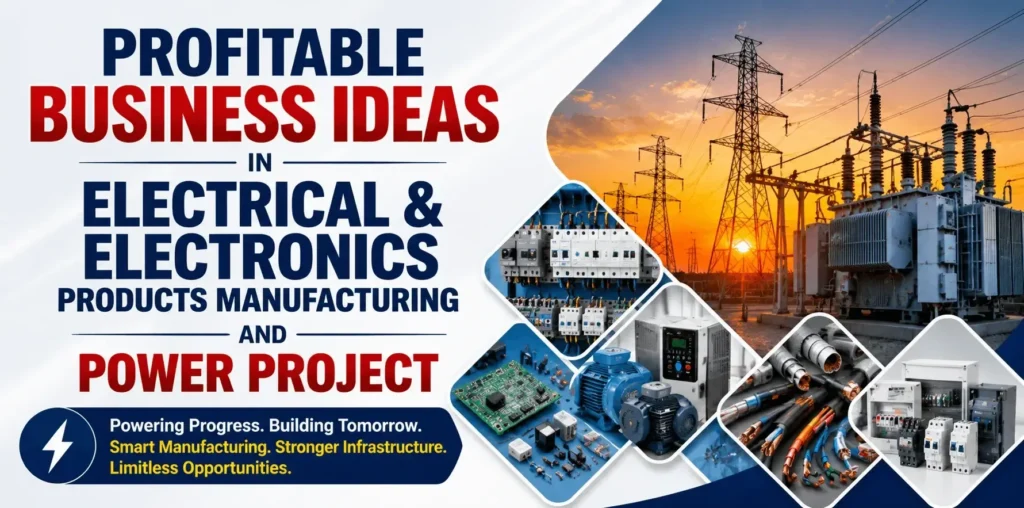
In 2025, the electrical & electronics manufacturing sector is undergoing rapid evolution, fueled by advancements in artificial intelligence, automation, green energy, and the Internet of Things (IoT). With increasing consumer demand for smart devices, energy-efficient appliances, and electric mobility, the sector presents lucrative opportunities for entrepreneurs, startups, and MSMEs. This guide explores innovative and profitable business ideas that align with global trends and emerging technologies in this dynamic industry. Emerging Electrical & Electronics Manufacturing Business Ideas One of the most significant drivers of the electrical & electronics manufacturing industry is the global shift toward sustainability and digital transformation. Businesses that integrate eco-friendly materials, energy-efficient components, and smart technology are positioned to lead in 2025 and beyond. Here are top business ideas you can explore: 1. Smart Home Device Manufacturing The rise of smart homes is creating high demand for devices that enhance convenience, security, and energy efficiency. Manufacturing products such as smart thermostats, intelligent lighting systems, connected door locks, motion sensors, and voice-controlled assistants can be extremely profitable. Integration with popular platforms like Alexa, Google Assistant, and Apple HomeKit is key to marketability. With consumers increasingly adopting automation in daily life, entering the smart home device space gives you access to a growing and relatively untapped market in India and globally. IoT and embedded software development expertise will add significant value. 2. Electric Vehicle (EV) Component Manufacturing India’s push toward e-mobility and net-zero emissions is accelerating the growth of EVs. Opportunities exist in manufacturing EV batteries (especially lithium-ion and solid-state), power control modules, battery management systems, and charging stations. Startups and SMEs that enter this segment can benefit from government incentives under schemes like FAME II and PLI (Production Linked Incentive). With strategic partnerships and access to raw materials, EV component manufacturing can become a future-proof venture in electrical & electronics manufacturing. 3. PCB (Printed Circuit Board) Production PCBs are essential components in virtually all electronics—from consumer gadgets and industrial equipment to defense and medical devices. Establishing a PCB manufacturing unit can be a low-to-medium investment business idea with high returns. Advanced PCBs with multilayer structures, flexible circuits, and high-density interconnects (HDI) are in demand, particularly for AI-powered electronics and automotive applications. Localizing production helps reduce dependency on imports and meets the government’s “Make in India” goals. 4. Solar Power Equipment Manufacturing As countries around the world adopt clean energy policies, the demand for solar energy components is surging. Manufacturing solar inverters, panels, mounting structures, charge controllers, and solar battery systems offers huge potential. Targeting both residential and commercial solar projects opens up multiple revenue channels. Partnering with EPC (Engineering, Procurement, and Construction) contractors and leveraging government subsidies can improve your market penetration. Solar equipment is a cornerstone of green-focused electrical & electronics manufacturing in 2025. 5. LED Lighting Products The LED lighting market continues to grow due to energy efficiency, longer life, and affordability. You can manufacture LED bulbs, tube lights, panels, floodlights, and decorative lights. There is also rising demand for solar-powered and smart LED lighting solutions, especially in rural electrification and smart city projects. With relatively low capital requirements and easy access to raw materials, LED manufacturing is an ideal business for first-time entrepreneurs. 6. Power Backup and Energy Storage Systems Power reliability remains a concern in many regions, increasing the demand for backup solutions. Manufacturing inverters, UPS (Uninterruptible Power Supplies), home batteries, and industrial storage systems is a high-demand area. As renewable energy sources like wind and solar grow, efficient energy storage becomes essential. Companies that innovate in lithium-ion and flow battery technologies will lead the next wave of energy solutions. This is a high-growth segment within electrical & electronics manufacturing, especially with industries and data centers requiring uninterrupted power. 7. Consumer Electronics Assembly India is becoming a major hub for assembling smartphones, tablets, wearables, and televisions. You can launch an assembly unit focusing on white-label electronics or cater to known brands as a third-party vendor. With the government’s push for domestic manufacturing, along with increasing demand for budget-friendly electronics, consumer electronics assembly is both scalable and profitable. Quality control, efficient supply chains, and after-sales support are essential for long-term success. 8. Industrial Automation Equipment Manufacturing automation solutions like programmable logic controllers (PLCs), human-machine interfaces (HMIs), robotic arms, and sensor-based control systems is gaining traction. Industries ranging from automotive to textiles are modernizing operations, and automation equipment is in high demand. If you can offer locally manufactured, cost-effective alternatives to imported equipment, this could become a lucrative niche in electrical & electronics manufacturing. 9. Embedded Systems and IoT Modules Manufacturing embedded control boards, microcontroller-based devices, and sensor modules for smart devices is a highly specialized yet profitable domain. These are used in agriculture tech, health monitoring devices, smart cities, and industrial automation. Developing IoT development kits and modules for developers, startups, and academic institutions can help you penetrate this tech-driven sector. High R&D investment is required, but margins and scalability are equally strong. 10. Home Appliances and Kitchen Electronics From mixer grinders and air purifiers to smart cooktops and induction heaters, Indian consumers are embracing modern home and kitchen appliances. The middle class is expanding, and the aspiration for comfort and convenience is creating consistent demand. Manufacturing durable, efficient, and affordable home appliances can be a stable business. Targeting Tier-2 and Tier-3 cities will provide a competitive edge. This is one of the most resilient categories in the electrical & electronics manufacturing domain. How to Get Started in the Manufacturing Business Launching a manufacturing unit in this sector requires detailed planning, investment, and compliance with technical and legal regulations. Here are the key steps: Market Research – Understand the target market, competitors, pricing strategies, and technology trends. Business Plan – Prepare a structured plan covering the product line, production process, funding, and distribution model. Location & Infrastructure – Choose a location with access to skilled labor, logistics, and power supply. Licensing & Compliance – Obtain necessary approvals like MSME/Udyam registration, GST, pollution control license, and BIS certification for certain products. Funding & Investment – Seek
List of Profitable Business Ideas in Plantation, Farming, Cultivation, Agro Based and Livestock Projects.
The agriculture sector has evolved drastically in recent years. In 2025, with the growing demand for organic food, sustainable farming practices, and value-added agri-products, the scope for agriculture business ideas has expanded beyond traditional cultivation. Entrepreneurs are increasingly tapping into modern techniques and innovative agri-solutions to build scalable and highly profitable ventures. From organic farming and dairy processing to agri-tech services and vertical farming, the industry offers multiple avenues for investment and growth. Emerging Trends Supporting Agriculture Business Ideas in 2025 The agriculture sector is being reshaped by technological innovation, climate awareness, and consumer preference for quality and sustainability. A few key trends fueling this transformation include: Organic and residue-free farming: Consumers are willing to pay a premium for safe, organic, and naturally grown food, making it a lucrative segment. Smart farming and agri-tech: Internet of Things (IoT), drones, and data analytics are helping farmers optimize crop yield and resource use. Farm-to-table supply chains: Direct selling through e-commerce and farmers’ markets is helping producers get better prices. Climate-resilient agriculture: Drought-resistant crops, vertical farming, and soil-less techniques are gaining ground. Agri-fintech: Digital lending and farm insurance platforms are simplifying capital access for small farmers. Here are some of the most profitable agriculture business ideas to consider in 2025: 1. Organic Vegetable Farming Organic produce remains one of the fastest-growing markets globally. As consumers become more health-conscious, they are increasingly turning toward pesticide-free, non-GMO vegetables. Starting an organic vegetable farm requires fertile land, organic inputs, and compliance with certification standards, but the returns can be significantly higher than conventional farming. Why it’s profitable: Organic vegetables fetch 2–3x the price of conventional ones. Government schemes support organic inputs and marketing. Can be sold directly to urban consumers via subscription models. 2. Mushroom Cultivation Mushrooms are a high-value crop that require little space and can be grown indoors, making it ideal for small-scale entrepreneurs. Button mushrooms, oyster mushrooms, and shiitake mushrooms are in great demand from restaurants, hotels, and households. Setup needs: Temperature-controlled rooms or sheds Moisture and humidity control Spawn and substrates (straw, sawdust, etc.) Profitability:A small 500 sq ft unit can yield significant monthly profits with quick harvest cycles (every 30–45 days). 3. Dairy and Milk Processing Unit Milk is a staple in most Indian households, and its by-products like paneer, ghee, yogurt, and flavored milk are always in demand. Setting up a small-scale dairy processing unit can turn into a highly profitable venture if hygiene, branding, and consistent quality are maintained. Key components: Access to fresh milk (own dairy or local farmers) Processing equipment (pasteurizer, homogenizer, packaging) Branding and distribution network Business edge:Value-added products have longer shelf life and greater margins than raw milk. Flavored dairy drinks, probiotic yogurt, and organic ghee are trending in 2025. 4. Vertical Farming and Hydroponics With urbanization and land scarcity, agriculture business ideas like vertical farming and hydroponics are changing the way crops are grown. These soil-less systems allow you to grow vegetables and herbs indoors with minimal water and space. Ideal crops include lettuce, basil, spinach, strawberries, and cherry tomatoes. Advantages: Up to 90% less water usage Year-round production Clean, pesticide-free produce Though the initial setup is capital-intensive, the high efficiency and premium pricing make it a viable long-term business. 5. Agri-Tourism Blending farming with tourism is an innovative agriculture business idea that caters to urban dwellers seeking authentic rural experiences. Agri-tourism farms offer farm stays, tractor rides, cow milking, and organic food, giving city visitors a taste of rural life. Revenue sources: Entry tickets and guided tours Farm-stay accommodations Sales of farm-fresh products States like Maharashtra and Kerala are promoting agri-tourism through dedicated policies, making this a low-risk, high-reward model. 6. Beekeeping and Honey Production Beekeeping, or apiculture, is a low-investment business that supports biodiversity and yields multiple products like raw honey, beeswax, and royal jelly. With the rise in demand for organic and raw honey in wellness and cosmetic markets, beekeeping is emerging as a sweet spot in agriculture entrepreneurship. Start-up essentials: Bee boxes and equipment Flowering plants or access to farms/orchards Minimal land required Market scope:India exports honey to the U.S., UAE, and Europe, making it a good export-oriented opportunity. 7. Seed Production and Processing Farmers need high-quality seeds for better yields. You can enter the certified seed business by growing foundation seeds and getting them certified through seed certification agencies. Hybrid seeds for vegetables, grains, and pulses are in great demand. Business model: Contract farming with R&D companies Own production unit for drying, grading, and packing Supply to cooperatives, agri-input shops, and directly to farmers This is one of the most scalable agriculture business ideas due to its recurring demand and government support through seed subsidy schemes. 8. Commercial Nursery Business Supplying saplings of fruits, vegetables, ornamentals, and medicinal plants is another thriving niche. A well-managed nursery can serve farmers, landscapers, government schemes, and home gardeners. What’s needed: Polyhouse or shade net Mother plants for propagation Skilled labor for grafting and potting Popular plants include mango, guava, neem, tulsi, aloe vera, and decorative plants like ficus and palms. 9. Cold Storage or Warehousing for Produce Post-harvest losses in India account for over 30% of produce due to poor storage infrastructure. Setting up a cold storage unit near agri-clusters or mandis can be a highly profitable investment. Farmers, traders, and retailers are willing to pay storage fees to preserve perishables like fruits, vegetables, flowers, dairy, and seafood. Facilities to include: Cold chambers for varied temperature needs Ripening chambers Logistics and inventory software With rising e-commerce grocery platforms, B2B warehousing is also gaining traction. 10. Millet Processing and Packaging Millets like ragi, bajra, and jowar are back in demand due to their health benefits and eco-friendly cultivation. Processing them into flour, ready-to-cook mixes, or snacks (like millet cookies and khakra) is a rising trend among health-conscious consumers. Why invest in millets: Government is promoting “Shree Anna” under International Year of Millets Urban buyers prefer clean, packaged grains Low input cost and drought-resistance make millet farming viable too This value-addition model ensures
List of Profitable Business Ideas in Rubber Processing and Rubber Products Manufacturing Industry.
Rubber products manufacturing has emerged as a highly promising industrial sector due to its wide application across automotive, construction, healthcare, consumer goods, and industrial machinery. With the ever-growing demand for flexible, durable, and cost-effective materials, rubber-based products have become an essential component in modern production systems. The global shift towards sustainable and eco-friendly materials also opens up new avenues for biodegradable and recycled rubber products, making this industry ripe for innovation and entrepreneurship. Exploring Profitable Avenues in Rubber Products Manufacturing The rubber products manufacturing industry offers numerous profitable opportunities for entrepreneurs and small manufacturers. These opportunities range from daily-use household items to high-performance components for industrial use. Here’s a comprehensive look at some of the most profitable and scalable ideas in this sector: 1. Rubber Gaskets and Seals Rubber gaskets and seals are extensively used in automotive, plumbing, aerospace, and machinery sectors. These products help prevent leaks, maintain pressure, and reduce vibration. Manufacturing rubber gaskets involves precision molding and often requires specialized dies, but the investment is relatively moderate. Given their consistent demand across multiple industries, these products can be a steady source of revenue. Gasket and seal production in rubber products manufacturing is a long-term, scalable business that can expand with minimal added costs by diversifying into different shapes, sizes, and custom designs. 2. Rubber Floor Mats and Tiles With the rising focus on safety, hygiene, and aesthetics in both residential and commercial spaces, rubber flooring products have gained immense popularity. Gym mats, anti-fatigue mats, playground tiles, and industrial rubber flooring are examples of high-margin products in this category. The best part about this idea is the potential to use recycled rubber—particularly from old tires—making it not only cost-effective but also environmentally responsible. These floorings are durable, slip-resistant, and easy to clean, which enhances their utility and market appeal. 3. Automotive Rubber Parts Rubber products manufacturing in the automotive sector is a lucrative niche. Items such as rubber bushings, engine mounts, weather stripping, belts, hoses, and pedal covers are critical to vehicle performance and safety. With the growth of electric vehicles and two-wheelers, especially in developing markets, the demand for durable and efficient rubber parts is growing exponentially. The startup investment may include mold creation, high-precision machinery, and industry compliance certifications, but the returns are long-term and sustainable. Partnering with automobile OEMs (Original Equipment Manufacturers) or tapping into the aftermarket segment can amplify profits. 4. Rubber Bands and Latex Products Rubber bands, though simple, are used in large volumes across offices, industries, households, and agriculture. The manufacturing process is semi-automated and requires natural or synthetic latex. Similarly, latex gloves, balloons, and rubber tubing are essential products in the healthcare, education, and laboratory sectors. The global demand for latex-based rubber products manufacturing spiked during the pandemic and continues to remain strong due to hygiene awareness. Setting up a small-scale rubber band or glove manufacturing unit can yield impressive ROI with minimal investment. 5. Rubber Pipes and Hoses Rubber hoses and flexible piping solutions are indispensable in the agricultural, chemical, mining, and automotive industries. They transport fluids, gases, and slurries safely and efficiently. The types include hydraulic hoses, garden hoses, industrial hoses, and food-grade rubber hoses. Though the machinery and quality control standards are relatively stringent, the demand is consistent and less prone to market fluctuations. Investing in durable, high-pressure hose manufacturing with value-added features like UV resistance or chemical compatibility can set your product apart. 6. Reclaimed Rubber and Recycled Rubber Products One of the fastest-growing segments in rubber products manufacturing is the recycling and reprocessing of used rubber materials. Old tires, industrial rubber waste, and latex scraps can be reclaimed and turned into a variety of products like crumb rubber, rubber tiles, speed breakers, and mats. This business not only supports the circular economy but also qualifies for green manufacturing subsidies in many regions. With environmental regulations tightening globally, recycled rubber goods are increasingly sought-after, especially in eco-conscious markets. Reclaimed rubber businesses can also supply raw material to other rubber products manufacturing units, further diversifying income streams. 7. Rubber Bushings and Shock Absorbers Used heavily in the automotive, railways, and industrial machinery segments, rubber bushings and shock-absorbing mounts reduce vibration, enhance performance, and increase equipment lifespan. These components are generally manufactured through compression molding or injection molding techniques. The technical requirements are slightly advanced, but once the production setup is complete, manufacturing becomes streamlined. There is also a consistent aftermarket demand for replacement parts, making it a high-potential business within the rubber products manufacturing domain. 8. Medical and Surgical Rubber Products This niche includes items such as catheters, surgical gloves, rubber sheets, teats, enema kits, and stoppers. These products require medical-grade rubber and adherence to strict regulatory standards such as FDA, CE, or ISO certifications. However, the margins in this category are considerably higher due to the critical use and value-add of the products. Demand from hospitals, clinics, and diagnostic labs continues to rise globally, and local manufacturing can help reduce import dependency. Specialized medical rubber manufacturing can also open up export opportunities, especially for high-quality, sterilized items. 9. Footwear and Soles Rubber soles, flip-flops, and safety boots are essential in both urban and rural markets. With increasing awareness about comfort, style, and foot health, rubber footwear manufacturing offers an excellent business opportunity. India and many Southeast Asian countries have already become global hubs for rubber footwear exports. A small to medium-scale unit for rubber sandals or molded soles can be profitable if combined with creative branding and low-cost distribution. This model works particularly well in countries with a young demographic and strong retail penetration. 10. Rubber Toys and Teething Products This is a niche yet emerging field in rubber products manufacturing, particularly focused on child-safe and pet-friendly products. Natural rubber is preferred for making teething toys, squeaky toys, and stress balls. The market is growing among eco-conscious parents and pet owners looking for non-toxic, biodegradable alternatives. With the right designs, certifications (like BPA-free, FDA-approved), and branding, rubber toy manufacturing can target premium customers and even export markets.
List of Profitable Business Ideas in Wood and Wood Products Manufacturing Industry.
Wood has been one of the oldest and most versatile materials used by humankind, from the construction of homes to the creation of household items, art, and industrial components. In 2026, as sustainability and eco-consciousness take center stage in consumer behavior, the demand for eco-friendly and durable wooden products continues to grow globally. With modern tools, efficient production methods, and increasing export potential, wood product manufacturing is among the most promising and profitable sectors for entrepreneurs. This industry not only supports traditional craftsmanship but also integrates modern aesthetics and green design thinking. Why Start a Wood Product Manufacturing Business in 2026? There are several reasons why venturing into wood product manufacturing in 2026 makes business sense. First, the push towards sustainability has increased the demand for biodegradable and renewable materials, especially in construction, décor, furniture, packaging, and daily-use products. Second, the rising middle class in developing countries and the trend toward minimalist living in developed nations create a broad market for high-quality wooden products. Finally, governments across the world are supporting forest-based and MSME industries with subsidies, tax benefits, and technical support, making it an opportune time for startups. Below is a list of some of the most profitable wood product manufacturing ideas that can be started with varying levels of investment: 1. Wooden Furniture Manufacturing Furniture manufacturing continues to dominate the wood product manufacturing sector due to consistent demand across residential, commercial, and hospitality sectors. From beds and tables to modular kitchen cabinets and ergonomic office chairs, the scope is vast. Startups can specialize in custom-designed furniture, smart furniture with in-built tech, or eco-friendly bamboo-based alternatives. Profit Tip: Focus on sustainable wood like rubberwood, reclaimed wood, or engineered wood to tap into the green consumer market. 2. Wooden Packaging Products As the world turns away from plastic, wooden crates, pallets, boxes, and bins are becoming increasingly popular for logistics and export. Wooden packaging products are especially in demand in industries like agriculture, electronics, chemicals, and machinery, where strength and durability are essential. Low-Cost Entry: You can start with manual tools and scale gradually by investing in automation and precision cutting machines. 3. Handcrafted Wooden Home Décor Handmade wooden décor items like candle holders, carved mirrors, photo frames, wall art, and nameplates are witnessing high demand on platforms like Etsy, Amazon Handmade, and Flipkart. These products cater to a global audience interested in rustic, eco-friendly, or culturally rich interior accents. Export Potential: These items are small, lightweight, and ideal for e-commerce shipping, making them great for international markets. 4. Wooden Toys and Educational Kits The global resurgence of interest in Montessori education, STEM toys, and toxin-free playthings has pushed the popularity of wooden toys. Parents are moving away from plastic and opting for safer, more durable options. Educational kits made of wood are also popular among schools and homeschooling communities. Key Advantage: Low competition in niche designs and high emotional value make wooden toys a lucrative business idea. 5. Engineered Wood Products Engineered wood products like plywood, MDF (Medium Density Fiberboard), particle board, and laminated veneer lumber (LVL) are in great demand for use in construction, furniture, and modular interiors. This segment of wood product manufacturing is capital-intensive but highly profitable if scaled effectively. Tech Angle: Use automation and chemical treatment processes to produce moisture-resistant, termite-proof engineered wood variants. 6. Wooden Flooring and Wall Panels With rising demand for elegant interiors and eco-conscious architecture, wooden flooring, ceiling beams, and wall panels are gaining popularity in both residential and commercial spaces. Many modern builders and interior designers prefer using pre-finished wooden planks and panels for a luxurious, natural look. Niche Tip: Specialize in reclaimed wood flooring or thermally treated wood for added environmental value. 7. Wooden Kitchenware and Tableware Spoons, bowls, cutting boards, coasters, and spice boxes made of wood are increasingly preferred over metal or plastic in urban kitchens. Consumers love the aesthetic appeal, warmth, and sustainability of wooden utensils, especially when paired with minimalistic or rustic kitchen themes. Market Trend: Products made with neem or bamboo wood are popular due to their antibacterial properties and natural finish. 8. Custom Wooden Signage and Corporate Gifts Corporate and small businesses often order customized signage, engraved plaques, trophies, and wooden desk accessories for branding, events, or gifting. Laser-cutting and CNC machines allow entrepreneurs to offer intricate and personalized products at a premium price. Bonus Opportunity: Collaborate with branding agencies or event planners to get consistent orders. 9. Wooden Garden and Outdoor Products Wooden planters, benches, gazebos, birdhouses, and garden fences are ideal for homes, cafes, resorts, and public parks. This market is thriving due to urban gardening trends and a rising emphasis on outdoor aesthetics. Treated wood that can withstand outdoor conditions is particularly valuable. Revenue Strategy: Offer seasonal catalogs and combo packages for landscaping firms or housing societies. 10. Prefabricated Wooden Houses and Cabins Although high in investment, prefabricated wooden homes are becoming a viable business idea in regions with eco-tourism potential, hill stations, and off-grid living enthusiasts. These are easy to assemble, cost-effective, and blend well with nature, making them ideal for vacation rentals or resorts. Growth Insight: In India and Southeast Asia, glamping sites and resorts are turning to prefab wooden cottages for both aesthetics and convenience. How to Start a Wood Product Manufacturing Business Starting a wood product manufacturing venture in 2026 will require the right mix of planning, investment, technical knowledge, and marketing. 1. Identify Your Niche Select a product category based on your budget, skills, and target market. It’s wise to start small, validate the idea, and then scale production. 2. Legal Registration and Licensing Register your business as a sole proprietorship, partnership, or private limited company. Obtain licenses such as GST registration, factory license (if applicable), and pollution control clearance for larger units. 3. Setup and Machinery Depending on your chosen product, you will need cutting tools, sanding machines, polishing units, carving tools, or CNC routers. For handcrafted products, initial investment can be modest. 4. Sourcing Wood Ensure ethical and legal sourcing of raw
List of Profitable Business Ideas in Wire & Cable Manufacturing Industry.
The wire cable manufacturing industry plays a critical role in supporting global infrastructure development. From powering homes and industries to enabling communication and connectivity, wire cables are indispensable in modern life. With increasing demand in sectors such as construction, automotive, telecommunications, and renewable energy, the wire cable manufacturing business has emerged as one of the most profitable segments within the electrical and electronics domain. Entrepreneurs looking to invest in this industry have numerous opportunities to explore, provided they understand the technology, quality standards, and evolving market needs. Profitable Opportunities in Wire Cable Manufacturing The wire cable manufacturing business offers multiple avenues for growth. By aligning with market trends and choosing the right product segment, entrepreneurs can maximize profitability and sustain long-term success. Below are some of the most promising areas and ideas within this industry: 1. Diversify Product Range Based on Industry Applications To succeed in wire cable manufacturing, it’s important to cater to specific industries with tailor-made products. Cables are used in various applications, and each sector requires unique specifications. For example: Power Cables: Used for electricity transmission in homes, commercial buildings, and industrial units. Automotive Wires: Required in vehicles for battery, lighting, and engine wiring systems. Telecommunication Cables: Optical fiber cables, coaxial cables, and twisted pair wires support data transfer and communication. Instrumentation Cables: Used in control systems for transmitting low-voltage signals. Solar Cables: High-temperature resistant cables ideal for photovoltaic systems. Offering a broad yet focused product line increases your market reach and opens doors to multiple revenue streams. 2. Invest in Advanced Technology and Machinery One of the core aspects of running a profitable wire cable manufacturing unit is investing in automated and high-capacity machinery. The production process includes wire drawing, annealing, insulation, twisting, armoring, and sheathing. Utilizing efficient and energy-saving machines reduces production costs and ensures consistent product quality. Technological advancements in laser-guided precision cutters, automatic insulation testers, and smart coiling systems further enhance productivity. Integrating Industry 4.0 systems and IoT-based controls can also streamline operations, enabling real-time monitoring and predictive maintenance. 3. Maintain Compliance with Quality and Safety Standards The wire cable industry is governed by stringent safety and performance standards. Adhering to international norms like ISO, IEC, UL, and RoHS is essential. You should implement robust quality control protocols and conduct frequent testing for tensile strength, conductivity, insulation resistance, and flame retardance. Acquiring certification not only builds credibility but also allows you to compete in export markets. Establishing an in-house quality assurance laboratory can be a wise investment for long-term brand trust. 4. Target Emerging Sectors and Green Energy The shift toward sustainability has created new opportunities for wire cable manufacturing businesses. Sectors such as solar power, electric vehicles (EVs), and smart cities are witnessing explosive growth. Each of these relies heavily on custom cable designs that offer efficiency and durability. For example, EVs require lightweight, high-voltage cables with thermal insulation. Similarly, solar energy systems need UV-resistant, flexible cables for rooftop and grid integration. By targeting these new-age industries, manufacturers can diversify and future-proof their business. 5. Focus on Branding and Market Positioning In a competitive industry like wire cable manufacturing, establishing a strong brand is key to capturing market share. Beyond technical capabilities, clients seek reliability, service support, and timely delivery. Creating a recognizable brand through quality assurance, professional packaging, and strategic marketing can help you command premium pricing. Use digital platforms, industry trade fairs, and B2B marketplaces to showcase your offerings. Maintaining close relationships with distributors, contractors, and EPC firms also opens doors to recurring bulk orders. 6. Adopt Sustainable and Cost-Effective Practices Modern wire cable manufacturers must balance performance with sustainability. Reducing environmental impact and optimizing resource usage should be part of the core strategy. Some initiatives include: Using recycled copper or aluminum where feasible. Installing energy-efficient motors and lighting in production units. Implementing water recycling and effluent treatment systems. Minimizing material wastage through lean manufacturing. Such practices not only improve your environmental footprint but also reduce operational costs—directly contributing to higher profits. 7. Set Up a Scalable Manufacturing Unit Planning for scalability from day one gives your wire cable manufacturing venture a growth-ready structure. Choosing a modular plant layout and flexible machinery allows you to increase capacity without major disruptions. It’s advisable to start with high-demand SKUs like household cables and automotive wires, then gradually move into specialized sectors. A scalable unit ensures that you can meet rising market demands quickly and cost-effectively. 8. Tap into the Export Market India and other developing nations are emerging as global hubs for cable production due to low labor costs and improving technical capabilities. Exporting to regions like Africa, the Middle East, and Southeast Asia can significantly boost margins. However, to enter the export market, manufacturers must ensure compliance with global quality standards and documentation processes. Partnering with export houses or appointing country-specific agents can fast-track market penetration abroad. 9. Train and Retain Skilled Workforce Skilled manpower is the backbone of any wire cable manufacturing operation. From machine operators and QA engineers to logistics managers, every team member contributes to product success. Providing regular training, safety workshops, and performance incentives improves output and reduces human errors. A motivated and technically trained workforce ensures consistent production and helps in innovation as new cable technologies evolve. 10. Leverage Government Schemes and Financial Support Many governments offer subsidies, loans, and tax benefits for electrical manufacturing businesses, especially under schemes like “Make in India” or MSME initiatives. Entrepreneurs should explore these options to ease the financial burden during the setup phase. Additionally, securing working capital through government-backed credit programs enables smoother procurement of raw materials like copper, aluminum, PVC, XLPE, and HDPE—critical components in wire cable manufacturing. Conclusion The wire cable manufacturing industry holds immense potential in 2025 and beyond, driven by infrastructure expansion, energy transformation, and digital connectivity. However, success in this field requires a blend of technical expertise, financial planning, market understanding, and continuous innovation. By targeting niche segments, ensuring product quality, and staying aligned with sustainability goals, entrepreneurs can establish a profitable and
List of Profitable Business Ideas in Wax and Polish Manufacturing Industry.
In today’s world, cleanliness, shine, and preservation play a significant role in multiple industries—from automobiles to furniture and even footwear. This is where wax and polish manufacturing emerges as a highly profitable and scalable business opportunity. Whether it’s to restore a car’s shine, maintain a floor’s gloss, or protect a wooden table from wear, demand for specialized wax and polish products continues to surge globally. Entrepreneurs looking to enter this domain can benefit from relatively low startup costs, diverse market applications, and growing consumer awareness around product quality and sustainability. Emerging Opportunities in Wax and Polish Manufacturing Starting a wax and polish manufacturing business involves creativity, knowledge of chemistry, an eye for market trends, and the right blend of raw materials. Here are some of the most promising and profitable ideas for entrepreneurs exploring this field: 1. Car Wax and Polish Manufacturing The automotive care industry is booming, and within it, car wax and polish products form a core component. These products not only enhance the vehicle’s appearance but also provide a protective coating against UV rays, rain, and pollution. You can manufacture carnauba wax-based products for high-gloss finishes or synthetic polymer waxes that offer long-lasting protection. There’s also increasing demand for eco-friendly, water-based formulas. Product Variants: Quick-detailing spray waxes Hard paste wax Liquid polish with cleaning agents Ceramic coating polishes Market Tip: Offer combo kits for DIY car care to attract hobbyists and car enthusiasts. 2. Floor Wax and Polish Products Hotels, offices, hospitals, malls, and homes all require floor maintenance products to keep surfaces looking clean and glossy. Floor wax and polish solutions are used for wooden, vinyl, marble, and granite flooring. These can be categorized as buffable wax, no-buff wax, and mop-on polishes. Key Ingredients: Emulsified wax, solvents, preservatives, and fragrance. Green Innovation: Water-based, biodegradable floor waxes with low VOC (Volatile Organic Compounds) are trending. 3. Furniture Polish Manufacturing Wooden furniture, especially antique and luxury items, require periodic polishing to maintain luster and longevity. Wax-based furniture polish not only enhances aesthetics but also protects wood from scratches and moisture damage. Beeswax polish and oil-based formulations like linseed and tung oil are popular choices. Product Formats: Paste polish Aerosol sprays Liquid oils Scented and unscented variants Focus on producing non-toxic, child-safe polish for homes and daycare centers to carve a niche. 4. Shoe Polish Production Shoe polish remains a stable, everyday-use product, especially in professional, military, and school environments. It’s a great niche within wax and polish manufacturing that has relatively low investment and easy entry. You can develop traditional wax-based shoe polish or innovate with cream polish, instant shine sponges, and colored polish options. Types of Shoe Polish: Wax polish (hard, in tins) Cream polish (moisturizing, with richer color) Liquid polish (fast-drying, often with a sponge applicator) Packaging Tip: Compact, travel-friendly kits for office goers and students can boost retail sales. 5. Leather Polish and Conditioner Luxury bags, wallets, belts, and jackets require regular polishing to maintain flexibility and shine. A leather polish business can target both consumer markets and bulk orders from retailers or repair shops. Combining polish with conditioners that nourish the leather makes your product more appealing. Add-Ons for Premium Positioning: UV protection Weatherproofing agents Natural oils like jojoba or almond 6. Metal Polish Manufacturing Metal polishes are in demand across households, hospitality, religious places, and jewelry stores. These products clean and restore the shine of brass, copper, silver, aluminum, and stainless steel. You can manufacture multi-metal polish or specialize in one segment for higher brand recall. Popular Formats: Cream polish for silverware Spray polish for appliances Paste polish for heavy-duty industrial use Consider including anti-tarnish formulas or microfiber cloths as part of your product bundles. 7. Wax and Polish for Industrial Use Industrial-grade wax and polish products are used for machinery, automotive parts, metalwork, electronics, and even molds. These need special attention to chemical stability, non-conductivity, and surface protection. High-end manufacturing units often require polish that leaves no residue and resists high temperatures. Examples: Mold release wax for plastic molding Metalworking polish Rust-prevention wax coatings Strategy: Collaborate with factories, warehouses, or industrial suppliers for bulk B2B contracts. Raw Materials Required for Wax and Polish Manufacturing: Carnauba wax, paraffin wax, beeswax Mineral oil, turpentine oil, silicone oil Emulsifiers and solvents Colorants and fragrance Preservatives and stabilizers For eco-friendly lines, you can explore natural waxes, essential oils, and plant-based emollients. Sourcing sustainable raw materials can enhance your brand value in premium markets. Basic Manufacturing Process Overview: Melting Wax: Wax is heated to a specific temperature for melting. Blending Oils & Additives: Oils, emollients, and active ingredients are mixed with melted wax. Emulsification (if water-based): Water and emulsifiers are added and blended thoroughly. Color and Fragrance: Dyes and fragrances are introduced as per the product variant. Cooling & Molding: The liquid is cooled and poured into molds, bottles, or tins. Packaging: Final product is packed with proper labeling and batch coding. Automation can significantly enhance output and reduce labor dependency, especially in medium and large-scale setups. Licensing and Quality Control: To operate a wax and polish manufacturing unit in compliance with local laws, you’ll need the following: Business Registration (MSME/Udyam in India) Pollution Control Board Clearance Factory License (if manufacturing at scale) BIS Certification for certain products Safety Data Sheets (SDS) for exports Invest in testing equipment to ensure consistent product quality, viscosity, pH levels, and safety. Marketing Strategies for Success: Targeted Branding: Use visual appeal and clear labeling (e.g., “High Gloss,” “Eco-Safe,” “Long-Lasting Protection”) Retail and E-commerce: Distribute via automotive shops, supermarkets, hardware stores, and online platforms like Amazon or Flipkart Private Labeling: Offer to third-party brands or local distributors who want to launch under their label Demo Videos and Tutorials: Highlight product usage and results through YouTube and Instagram Reels Combo Offers and Kits: Bundling complementary products (e.g., polish + applicator sponge + microfiber cloth) encourages higher sales Profitability Outlook in 2025 and Beyond The global market for cleaning and polishing products is expanding with urbanization, rising disposable incomes, and an increased preference
Business Opportunities in Water Sector in India.
India, a country with over 1.4 billion people, is facing increasing pressure on its natural resources — especially water. With urbanization, industrialization, and climate change impacting water availability, the demand for clean, accessible, and sustainable water solutions is rising rapidly. This makes the Water Business in India a highly promising sector for entrepreneurs, investors, and innovators alike. From packaged drinking water to wastewater treatment, opportunities are growing across multiple verticals. Growing Demand and Emerging Opportunities in Water Business The future of the Water Business in India looks incredibly promising, thanks to increasing awareness of health and hygiene, government focus on clean water access, and the rise of smart technologies. The water crisis in many Indian states, both rural and urban, is pushing the need for scalable and innovative solutions. As a result, water-related businesses have shifted from being utility-based services to high-growth entrepreneurial ventures. Here are some of the most profitable and future-oriented business ideas within the Water Business in India: 1. Packaged Drinking Water Manufacturing The most recognized segment in the water industry is packaged drinking water. The Indian packaged water market is expected to grow at a CAGR of over 11% till 2030, driven by the increasing consumer demand for safe drinking water. Setting up a manufacturing plant requires a moderate investment in filtration, purification, bottling, and labeling equipment. With strong branding and distribution, this venture can be highly profitable, especially in cities and tourist destinations. 2. Water ATM and Dispensing Units Water ATMs — coin-operated water vending machines — are gaining traction in rural and semi-urban areas. They provide affordable and clean drinking water, especially in regions with poor water infrastructure. Entrepreneurs can partner with local municipalities or NGOs to install and manage these units. It not only generates profit but also fulfills a social responsibility, making it one of the most impactful business ideas in the Water Business in India. 3. RO Water Purifier Retail and Maintenance The rise in urban water pollution has increased demand for household RO (Reverse Osmosis) purifiers. Becoming a distributor or retailer of water purifiers from established brands like Kent, Aquaguard, or Livpure can be a smart move. Moreover, setting up a service center for maintenance and filter replacements offers recurring income and customer retention. Customizable purification systems for homes, offices, and small businesses also create niche markets. 4. Mineral Water Plant for Niche Segments Unlike regular packaged water, mineral water includes added minerals like calcium and magnesium, making it a premium product. With proper certification from BIS and FSSAI, entrepreneurs can launch their own mineral water brands targeted at gyms, spas, luxury hotels, and corporate events. As lifestyle awareness grows, so does the market for high-quality bottled water. Setting up a mineral water plant requires advanced purification systems like UV treatment, ozonation, and mineral dosing. However, with the right marketing strategy, this can become a highly profitable niche within the Water Business in India. 5. Rainwater Harvesting System Providers Rainwater harvesting is not just an eco-friendly initiative — it’s becoming a legal requirement in many Indian states for large buildings and institutions. Entrepreneurs can tap into this by offering customized rainwater harvesting solutions for housing societies, factories, and educational institutions. This includes designing, installing, and maintaining the systems. Additionally, rainwater harvesting is gaining popularity in agriculture and farming, where water shortages directly impact productivity. As climate patterns become erratic, such services will gain further relevance in the broader Water Business in India. 6. Wastewater Treatment and Recycling Industries and municipalities generate massive quantities of wastewater daily. This water must be treated before disposal or reuse. Setting up small and mid-scale wastewater treatment plants (STPs and ETPs) is now a viable business, especially near industrial clusters, hotels, and hospitals. Technologies such as Membrane BioReactors (MBR) and Moving Bed Biofilm Reactors (MBBR) make treatment faster and space-efficient. This segment of the Water Business in India also includes greywater recycling — particularly for reuse in flushing, gardening, and cooling. With the government promoting sustainable urban development (like Smart Cities Mission), wastewater recycling businesses are poised for long-term growth. 7. Desalination Plants in Coastal Areas India’s vast coastline offers an opportunity to convert seawater into usable water through desalination. Though capital-intensive, desalination plants are the future of water sustainability in coastal cities like Chennai, Mumbai, and Visakhapatnam. Entrepreneurs can partner with government bodies or invest in smaller-scale mobile desalination units for resorts and islands. With technology becoming cheaper, this can become a game-changer in the future Water Business in India. 8. Mobile Water Tanker Supply Many urban areas suffer from water shortages, especially in summer. Starting a mobile water tanker service can fill this gap by supplying water to homes, restaurants, schools, and construction sites. With GPS-enabled tankers and real-time water delivery apps, this old business model is getting a modern facelift. Water can be sourced from borewells or treated storage tanks — but must comply with health and municipal norms. This venture requires a low-to-medium investment and offers high ROI, especially in metro cities where demand spikes regularly. 9. Smart Water Monitoring Solutions Tech-driven startups are making waves in the Water Business in India by offering smart metering and water leak detection systems. IoT devices are used to monitor water usage in homes, factories, and institutions. These systems help reduce wastage and improve efficiency. SaaS-based platforms can collect data, send alerts, and offer water-saving analytics — making this a scalable, futuristic, and investment-friendly business model. This field is ideal for tech entrepreneurs looking to bring innovation into environmental sustainability. 10. Water Testing Labs and Kits With increasing focus on water safety, starting a water testing lab can be a steady income-generating idea. These labs test samples for hardness, pH, TDS, bacterial contamination, and heavy metals. Water testing services are required by housing societies, industries, packaged water plants, and government agencies. Additionally, DIY water testing kits for domestic use are gaining popularity. Manufacturing or distributing such kits is a growing micro-business opportunity within the Water Business in India. Government Support and Regulatory Framework
List of Profitable Business Ideas in Waste Management, Disposal and Recycling Industry.
In an era of rapid urbanization, rising consumerism, and climate consciousness, waste management has emerged as a critical issue as well as a lucrative business opportunity. As cities grow and consumption patterns change, the volume of waste generated — from households, industries, and agricultural activities — continues to rise. According to various studies, India alone generates more than 62 million tonnes of waste annually, with the number expected to double by 2047. While improper disposal of waste leads to serious environmental and health concerns, it also opens avenues for businesses that can turn waste into wealth. Entrepreneurs with vision and responsibility can tap into this growing sector through innovative models and sustainable practices. Top 10 Profitable Waste Management Business Ideas 1. Recycling Plant Setup Starting a recycling plant is one of the most profitable ideas under waste management. You can choose to recycle paper, plastic, e-waste, or metal, depending on the local availability of waste and the demand for recycled products. For instance, paper recycling can reduce deforestation while plastic recycling reduces pollution and creates reusable materials. With proper machinery, licensing, and logistics, recycling businesses can become long-term revenue generators. The key is to ensure high-quality segregation, efficient collection, and consistent supply chains. 2. E-Waste Collection and Disposal With the explosion of gadgets and electronic items, e-waste has become a growing concern globally. Devices like phones, computers, TVs, and appliances become obsolete within a few years, ending up in landfills where they release toxic substances. A business in e-waste management involves collection, dismantling, refurbishing, and safe disposal of electronic components. Valuable metals like gold, copper, and palladium can be extracted and resold, adding to profitability. Governments are increasingly supporting e-waste handling initiatives, making this business both ethical and rewarding. 3. Organic Composting Units Another eco-friendly and high-potential waste management business is composting. Organic waste from kitchens, gardens, and food markets can be processed into rich compost or vermicompost. These products are in high demand among farmers, gardeners, and organic food producers. Setting up small-scale composting units requires minimal investment and space, making it ideal for rural or semi-urban settings. Entrepreneurs can also create packaged compost products under a brand, increasing market value and outreach. 4. Waste Collection & Segregation Services Urban areas struggle with the first step of waste management: collection and segregation. You can build a business model around providing door-to-door garbage collection with proper segregation (wet, dry, recyclable). This service can be offered to residential societies, restaurants, commercial offices, and more. By partnering with local municipalities or recycling companies, you can streamline the transfer of waste to the appropriate treatment facilities. This model requires good logistics and employee management but can be scaled rapidly across neighborhoods and cities. 5. Plastic Waste to Fuel Conversion Innovative technologies now allow plastic waste to be converted into synthetic fuel such as diesel or gasoline through pyrolysis. This concept has picked up in various countries and is slowly entering the Indian market. Setting up such a plant involves some technical and environmental approvals, but the returns are promising. As the world looks for sustainable energy alternatives, this form of waste management presents dual benefits — reducing plastic pollution and providing clean energy. 6. Biogas Production from Organic Waste Food waste, animal manure, and agricultural waste can be used to produce biogas — a renewable source of energy that can replace LPG and electricity in rural areas. Establishing biogas plants can serve villages, dairy farms, and agro-based industries. The byproduct of this process, slurry, is also a good organic fertilizer. With increasing government support for clean energy, biogas production is becoming an attractive waste-to-energy business. Moreover, it encourages local employment and community involvement. 7. Upcycling and Waste Art Products Turning waste into functional or decorative products — also known as upcycling — is gaining popularity in urban markets. Old clothes, tires, bottles, cans, and scrap materials can be creatively repurposed into furniture, fashion items, showpieces, or home décor. This niche waste management idea not only reduces landfill pressure but also has high marketing appeal. Eco-conscious consumers prefer upcycled products that tell a story and reflect creativity. The business can be scaled through online stores or tie-ups with interior designers and handicraft shops. 8. Hazardous Waste Disposal Services Industries that deal with chemicals, paints, batteries, and medical equipment often generate hazardous waste. Such waste cannot be handled like regular trash and requires specialized treatment and disposal. Setting up a hazardous waste management service involves investment in safety equipment, trained manpower, and regulatory compliance. However, due to the lack of adequate services in many regions, this business can enjoy high margins and long-term contracts with industrial clients. 9. Textile and Fabric Waste Recycling With the rise of fast fashion and textile industries, fabric waste has become a major contributor to landfill pollution. You can start a business collecting leftover textile materials from garment manufacturers, tailor shops, or households. These fabrics can be shredded and used for making insulation materials, rugs, industrial rags, or even paper. Additionally, some startups focus on recycling fabric to create sustainable fashion. As awareness about sustainable fashion grows, this waste management niche can become highly profitable. 10. Medical Waste Management Hospitals, clinics, and diagnostic centers generate biomedical waste that poses serious health and environmental risks if not handled correctly. Starting a medical waste management service requires coordination with healthcare institutions, proper waste categorization, and adherence to biohazard safety norms. It’s a high-responsibility business, but due to stringent laws, the demand for reliable services is consistent. Investment in incineration or autoclaving units may be needed, but once established, it ensures steady and regulated income. Why Waste Management Business Makes Sense in 2025 The growing urban population and consumerist lifestyle mean waste is not going away anytime soon. Government policies are increasingly pushing for sustainability and extended producer responsibility (EPR), creating favorable ecosystems for entrepreneurs. Whether it is recycling, upcycling, composting, or energy conversion, waste management provides immense opportunities that align with both profit and purpose. Moreover, many of these businesses contribute
List of Profitable 6 Business Ideas in Manufacturing of Distribution Transformer
The electrical industry continues to expand with the rapid growth in urbanization, infrastructure development, and the increasing shift towards renewable energy. One of the most vital components in the power distribution network is the transformer. From residential societies to large industrial zones, transformers are crucial for ensuring efficient voltage regulation. With increasing electricity demand and modernization of power grids, the transformer manufacturing industry has emerged as a lucrative opportunity for entrepreneurs and investors. Market Scope and Growth Potential in Transformer Manufacturing The transformer manufacturing sector is poised for substantial growth over the next decade. According to industry reports, the global transformer market is projected to reach USD 80 billion by 2030, driven by increasing power demand, smart grid adoption, and renewable energy integration. India, in particular, stands out due to its ambitious electrification goals, expanding metro cities, and smart city projects. This makes transformer manufacturing not just a relevant investment, but a highly profitable one when done right. Types of Transformers to Manufacture When entering this domain, it’s important to understand the variety of products within the transformer manufacturing space. Here are some high-potential categories: Distribution TransformersThese are widely used by electricity distribution companies to deliver power to end users. Their frequent demand makes them a high-volume product. Power TransformersSuitable for high-voltage transmission networks, these are critical in industrial and large infrastructure applications. Isolation TransformersUsed in medical equipment, telecommunications, and laboratories, these transformers provide electrical isolation and are growing in demand. Instrument TransformersDesigned for measuring voltage and current, these are essential in energy meters and control devices. Dry-Type TransformersThese oil-free transformers are safer and more eco-friendly, gaining traction in commercial buildings and green projects. Special Purpose TransformersCustomized for unique industrial uses like furnaces or railways, these units can command higher margins. Each of these categories presents different levels of capital investment, technical requirements, and target customer bases. The key is to align your production capabilities with market needs and profitability goals. Setting Up a Transformer Manufacturing Unit Establishing a transformer manufacturing unit involves several stages—from selecting the right location and obtaining clearances to procuring machinery and hiring skilled staff. Here’s a breakdown: Location & InfrastructureChoose an industrial area with good connectivity and access to raw materials. You’ll need space for manufacturing, testing, and storage. Licensing & ComplianceSecure licenses from electrical inspectorates, BIS certification (mandatory for transformers in India), pollution control clearance, and UDYAM/MSME registration if applicable. Machinery & EquipmentKey machines include coil winding machines, core cutting machines, oil filtering units, vacuum drying ovens, and testing benches. Raw MaterialsThe primary raw materials include CRGO silicon steel, copper or aluminum wire, transformer oil, insulation materials, and tank fabrication components. WorkforceEngineers, welders, fitters, machine operators, and quality control technicians form the backbone of your workforce. A mid-sized transformer manufacturing setup typically requires an initial investment of INR 1.5 to 5 crore, depending on the scale and product range. Profitability and ROI One of the most appealing aspects of the transformer manufacturing business is its profitability. Here’s why: High Margins: Specialized transformers, especially those custom-built for industrial use, offer high margins. Recurring Orders: Power utilities and industries require transformers regularly, ensuring a steady demand cycle. Value Addition: Services like transformer oil filtration, testing, and repairs can offer additional revenue streams. Government Incentives: Subsidies under schemes like ‘Make in India’, and PLI (Production Linked Incentive) schemes for electrical equipment manufacturers can boost profits. On average, a well-managed manufacturing unit can achieve a gross margin of 25-35% and break even within 2-3 years of operation. Business Models and Target Markets Depending on your capabilities and budget, there are multiple approaches you can take within the transformer manufacturing business: OEM ManufacturingPartner with large transformer brands and manufacture under their specifications. This reduces your marketing burden but lowers margins. Private Label ProductionSell under your own brand name. It involves higher upfront marketing and distribution efforts but builds long-term brand value. Export-Oriented ManufacturingCountries in Africa, Southeast Asia, and the Middle East present good export opportunities for transformers due to growing energy needs. Repair & Refurbishment ServicesBesides new units, the refurbishment and repair of old transformers is a cost-effective and profitable niche, especially in rural and semi-urban areas. Turnkey Power SolutionsBundle transformer manufacturing with substation setup and EPC (Engineering, Procurement & Construction) services. This can elevate your business to a solutions provider level, increasing project size and profitability. Innovation and Trends Shaping the Industry To stay competitive in the transformer manufacturing field, it’s important to keep up with emerging trends: Smart Transformers: Integration with IoT and monitoring systems allows real-time performance tracking and fault detection. Eco-Friendly Designs: Bio-degradable oils and recyclable materials are gaining popularity. Compact and Modular Units: Especially in urban areas where space is a constraint. Digital Twin Technology: For real-time performance simulations and predictive maintenance. Investing in R&D or partnering with engineering institutions can help develop cutting-edge products and give you a competitive edge. Marketing and Distribution Marketing is essential to ensure profitability. Your primary clients may include: State Electricity Boards Private Power Companies Industrial Estates Construction Companies Export Buyers EPC Contractors Participating in electrical expos, trade fairs, and vendor registration with large government departments will help gain traction. Also, having a well-optimized website with product catalogs and compliance certifications can increase inbound inquiries, especially from global buyers. Establishing a service network and offering warranties can further enhance your brand credibility. Challenges and How to Overcome Them Like any business, transformer manufacturing comes with its own set of challenges: High Initial Investment: Can be managed through MSME loans, startup grants, or JV partnerships. Compliance Requirements: Hiring a consultant to guide regulatory processes can prevent costly delays. Skilled Manpower Shortage: Tie-ups with technical institutions or offering in-house training programs can address this. Raw Material Volatility: Maintain supplier diversification and explore bulk procurement options. Effective planning, risk management, and operational efficiency are the keys to long-term success. Final Thoughts In 2025 and beyond, the transformer manufacturing business will continue to benefit from infrastructure expansion, rising power demand, and the global energy transition. Whether you are an established entrepreneur