
Rare Earth Magnet Production Opportunities in India
India is at an important point in its evolution as an industrialist country. With the demand in the world for green energy, electric vehicles, and high-performance electronics increases and rare earth magnet are emerging as essential components across all industries. As a major policy change in the last few years, it is now the Government of India is now actively encouraging private sector participation in the manufacturing of rare earth metals. This is a great chance for entrepreneurs and startups to get into the manufacturing industry, supported by the national strategic goals. Understanding Rare Earth Magnet and Their Importance Rare earth magnets (also known as which are primarily Neodymium-ironboron (NdFeB) magnets) are well-known for their magnetic strength and efficacy. They are essential to various applications like wind turbine generators as well as electric vehicle motors, drones as well as medical imaging devices, mobile phones, as well as aerospace systems. As the world shifts towards green technology, the rare earth magnet is rapidly replacing traditional magnets due to their advantages in performance. Market Potential and Growth Forecast According to market research from around the world, the market for rare earth magnets is predicted to expand at a rate of more than 7.5 percent between 2024 to 2030. India is the fifth largest manufacturer of rare earth elements (REE) and has a huge untapped potential. The government’s efforts to promote Atmanirbhar Bharat and production-linked incentive (PLI) plans further increase the potential for the country’s rare earth magnet production. The market for NdFeB magnets alone is predicted to be around the USD 25 billion mark by 2030, with India likely to take an important portion because of its efforts to promote EVs and renewable energy. Related: Rare Earth Magnet Production in India: A Strategic Opportunity for Entrepreneurs Government Initiatives and Policy Support On July 20, 2025, the Union Minister G. Kishan Reddy announced plans to increase the number of private players in the field of rare earth magnet production, which indicates a pivotal shift from the export of raw ore towards value-added production of magnets. Reforms to the policy framework are in process to remove regulatory obstacles and provide land support via industrial corridors and to facilitate access to the latest manufacturing technologies through global collaborations. This is in line with India’s energy independence long term as well as crucial minerals strategy. Key Industries Driving Demand Electric Vehicle (EV) Manufacturing Renewable Energy (Wind Turbines) Consumer Electronics Aerospace and Defense Medical Equipment (MRI Machines) Robotics and Automation These industries are seeing massive investments and policy incentives, which makes rare earth magnets an excellent business opportunity. Outline of Rare Earth Magnet Manufacturing Process Raw Material Processing: Rare earth oxides that are extracted are separated and cleaned. Alloy Preparation: The elements neodymium, iron and boron are heated in furnaces that use vacuum to create alloys. Powder Metallurgy: The alloy gets crushed to fine powder, then it is aligned magnetically. Pressing and Sintering: Powders are compressed into the desired shape and then burned at high temperatures. Machining, Coating and Cutting: Magnets are cut, ground and then coated to stop corrosion. Magnetization and Testing: Final magnetization is performed using powerful magnetic fields, followed by quality tests. Related: Understanding Rare Earth Alloys for Product Development Challenges and Barriers to Entry Although the market is promising, entrepreneurs should be ready for capital costs, technological complexity, supply chain volatility for critical inputs, and strict environmental regulations. However, through strategic partnerships and feasibility planning, these challenges are reduced. How NPCS Can Help You Enter the Rare Earth Magnet Sector Niir Project Consultancy Services (NPCS) provides detailed Market Survey as well as technological economic Feasibility Reports for setting up new manufacturing units and industries. Our reports include the entire manufacturing process, the raw materials needed, plant layout plans, as well as comprehensive financials. If you’re an entrepreneur or an investor, NPCS assists in assessing the financial and technical potential for the rare earth magnet manufacturing company, giving you clarity and certainty in your investment choice. The industry of rare earth magnets in India is poised to undergo transformational growth. With government incentives, growing market demand, and abundant mineral resources, India has begun to become a major manufacturing hub. Entrepreneurs who embrace the national vision early will not only gain financially but also aid in India’s self-reliance in key technology. With the help of a skilled advisor and a thorough plan, manufacturing of rare earth magnets will become a key element in India’s future industrial development. Global Context and India’s Competitive Edge Globally, countries such as China dominate the rare earth value chain with more than 80 percent of the world’s demand for rare earth resources. However, increasing tensions between the two countries and the increasing emphasis on diversification of supply chains have drawn the attention of international authorities to alternative hubs such as India, Australia, and the USA. India is home to the fifth-largest reserves of rare earth elements, mostly in states like Odisha, Andhra Pradesh, Kerala, and Tamil Nadu. The Indian Rare Earths Limited (IREL), under the Department of Atomic Energy, has played an important role in rare earth extraction. India’s enormous reserves, low-cost skilled workers, and strong engineering foundation give it a competitive edge to be a leading source of magnets made of rare earth. Supply Chain and Raw Material Sourcing Manufacturing rare earth magnets is extremely resource-intensive and requires a reliable supply chain. The primary rare earths used in magnet production are neodymium (Nd), praseodymium (Pr), dysprosium (Dy), and terbium (Tb). These are typically created from bastnaesite and monazite ore. India’s coastal states hold huge monazite sand reserves, processed by IREL and other authorized miners. To secure raw materials, the government supports joint ventures and long-term offtake contracts with friendly countries. This reduces import dependence and ensures steady feedstock for domestic magnet producers. Technology Trends and Innovation Opportunities Modern technology is revolutionizing rare earth magnet production. Innovations such as grain boundary diffusion, nano-structured magnetics, and the recycling of
Best Small Farming Ideas for Rural Startups in India
Small Farming Ideas has always been important for India’s rural economy, but viewing it as a startup has just begun to gain traction. Rural entrepreneurs are adopting farming as a business model instead of the earlier sustenance approach and are even considering market research, value addition, branding and exports. The combination of government policies, technology, internet access, and changing consumer behavior is creating new small-scale farming opportunities in Indian villages. These farming models are sustainable over the long term, require little investment, and are suitable for smaller land spaces. Today, even small rural farms can access customers directly through local mandis, farm-to-home services, and digital aggregators. These include organic vegetables, some medicinal herbs, and even goat meat production. This article discusses the most promising small farming business concepts for rural startups in India with an extensive analysis of implementation strategies, profitability, market trends, policy support, and more. Organic Farming of Vegetables: Elevating One Acre to a High-Demand Production System The growing concern among consumers regarding pesticide-free food has bolstered organic vegetable farming in rural areas. Families from cities, health-conscious individuals, and organic stores are readily purchasing fresh stock from trusted farms, thus establishing a persistent supply chain for vegetables produced without any synthetic fertilizers. On an acre-sized organic vegetable farm, farmers can grow diverse seasonal crops such as spinach, okra, tomatoes, brinjal, bottle gourd, and green chilies. They can fertilize these crops using organic inputs like cow dung compost, jeevamrut, and bio-pesticides. Through multi-cropping and short harvest cycles lasting 30–60 days, farmers are able to rotate crops for optimal land utilization. Access to going to the market plays an important factor in profitability. Farmers selling directly to consumers through local delivery systems, farmer markets, and cooperative outlets make 2–3 times more than what they earn through traditional mandi systems. Many farmers sell their product through digital aggregators or using subscription box models. From a ?????? angle, schemes such as the Paramparagat Krishi Vikas Yojana and assistance for organic farming under state agriculture missions provide basic funding, training, and access to certificates for organic farming. Related: The Rise of Bio Fertilizers and Organic Farming Mushroom Cultivation: An Indoor Farm with Quick Returns You can start growing mushrooms as an agri-business with little investment and without owning land, making it ideal for subsistence farmers or landless rural families. You can cultivate varieties like button and oyster mushrooms in controlled environments, sheds, or even thatched rooms. Use agricultural waste such as paddy or wheat straw as the growing medium. Mushroom cultivation is very appealing because of its short crop cycle. Mushrooms are ready to be harvested in 25 to 30 days. This means that we can have 5 to 6 cycles in a year. Even a modest setup using 100 beds can yield 800 to 1000 kg of mushrooms per year. Locally, mushrooms are sold at retail prices of ?100 to ?150 per kg. Profit margins from this business are quite high. In a small scale operation, the capital investment is under 1 lakh rupees. Many state horticulture departments and Krishi Vigyan Kendras provide training and guidance to new growers. Investment in mushroom drying and packaging to be sold to wellness stores or Ayurvedic medicine sellers also boosts profit margins significantly. Goat Farming: A Steady Earning Livestock Business with Low Risks In India, the demand for goat meat is on the rise, driven by religious reasons, affordability, and ease of access. Farming goats is less demanding in terms of land requirements, and the breeds Black Bengal, Sirohi, and Jamunapari are well suited for small goat farms because of their high fertility and rapid weight gain. A rural entrepreneur can start with a small herd consisting of ten does and a buck, increasing the herd size over the next 18 to 24 months. Goats are hardy animals and do well in semi extensive systems that feature open access grazing combined with some stall feeding. Goats also require less housing and protective shelter compared to cattle and poultry. Goat meat is sold retail for the price of 600 to 800 rupees per kg, while breeding goats are sold for premium prices if well managed. There is also secondary income from goat manure, which is valuable for organic farms. There is support from NABARD and state animal husbandry departments in the form of capital subsidies for trainings and livestock insurance schemes. These successful goat farmers later diversify into breeding services, contract farming, or even farm tourism. Beekeeping (Apiculture) Business with Exceptional Environmental Significance Through the production of honey, wax, royal jelly, and even offering pollination services, beekeeping has transitioned from a rural hobby into a micro-enterprise. Moreover, beekeeping is a perfect supplementary income source for farmers who plant mustard, sunflower, or fruit trees, as pollination from bees drastically improves yield. Starting to keep bees is a straightforward process without any significant financial burden. An investment of ?50,000–?80,000 on a unit with 20–30 boxes will yield over 300–400 kg of honey and raw unprocessed honey sells for a staggering ?200–300 per kg or even more when packaged. Beekeepers can earn more by selling beeswax to candle companies, cosmetics, or the Ayurvedic market. Additionally, the government has established the National Beekeeping and Honey Mission which aids in equipment, training, and marketing providing structured superb opportunities. This model complements organic farming practices and directly supports environmental sustainability and is gaining popularity alongside horticulture or agroforestry. Farming of Medicinal and Aromatic Plants: A Specialized Sector with Export Opportunities The demand for medicinal and aromatic plants has surged due to the rise in popularity of Ayurveda, organic wellness, and herbal products. Herbs such as ashwagandha, tulsi, giloy, aloe vera, and lemongrass are now cultivated under rainfed and irrigated conditions with good returns. The low input requirement combined with long-term market potential makes this business very appealing. Also, ashwagandha and giloy are drought tolerant. Farmers harvest lemongrass 3–4 times per year for oil extraction. They can distill an acre of lemongrass to yield 100 liters of oil, which sells for ?1,000–?1,500 per liter
How to Set Up a Profitable Agro Processing Cluster
India’s agricultural economy is significant, yet some of the value-added potential is lost due to insufficient investment in agro processing infrastructure. Establishing a value-added agro-processing cluster can powerfully augment rural economies, reduce excess production, and substantially increase incomes for farmers. With proactive government policies, increasing domestic and international markets for processed foods, and improving logistics, the time is now for entrepreneurs to invest in this sector. This article discusses the most important building blocks of a successful agro-processing cluster and touches on the basic infrastructure and financing requirements, policies needed for support, and more. It is targeted towards the agro-industrial revolution prospective investors, MSMEs, and industrial startups in India. What is an Agro Processing Cluster? An agro-processing cluster is a zone which contains food processing units, primary processing, cold storage, and their supporting infrastructure, which are located geographically close to each other to facilitate and perform reasonable logistical costs. Key Features Common facilities for several units Integration of the entire value chain (from farming to packaging) Job creation for rural youth and women Connections with suppliers and markets for both purchasing and selling Agro-processing clusters are usually set up under the Pradhan Mantri Kisan SAMPADA Yojana (PMKSY), which is administered by the Ministry of Food Processing Industries (MoFPI). Related: Top 10 Government Schemes for Food Processing Startups in India Why Invest in an Agro-Processing Cluster? MoFPI Annual Report 2022-23 states: The Indian food processing industry stands at ?26.82 Lakh Crore (USD 407 Billion). It contributes 8.45% of GVA in agriculture. The food exports stood at USD 46.43 billion in 2023-24. Over 12 Lakh people have been provided employment through PMKSY schemes. These statistics provide strong agro-industrial growth potential. Forecasted CAGR for Food Processing Sector (2023–2027): 6.5% Forecasted CAGR for Value-Added Agri Exports: 7.3% A well-structured cluster model reduces raw material waste and establishes a self-sustaining profitable ecosystem. Steps to Establish a Profitable Agro-Processing Cluster 1. Identify the Area and Raw Material Resources Conduct an agri-resource survey of the region. Select areas with high potential for perishable or value addition crops such as mango, tomatoes, paddy, millets, etc. Be near the mandis and farm-gate for ease of access. 2. Choose the ODOP Product Under the PMFME and ODOP schemes, every district is assigned one focus crop or product. Some examples include: Chili in Guntur, Andhra Pradesh. Pineapple in Wayanad, Kerala. Mango in Ratnagiri, Maharashtra. Building the cluster around the ODOP ensures subsidy convergence and demand. 3. Determine the Required Infrastructure Primary Processing Centers: Sorting, grading, pulping Cold Chain Units: Connected ripening chambers, cold storage, refrigerated trucks Value Addition Units: Canning, bottling, and dehydration Common Facility Centers: Quality lab, packaging, effluent treatment, training room Related: The Agriculture Sector in India: Industry Overview and Business Opportunities for Agritech 4. Create a Special Purpose Vehicle (SPV) The cluster must be run by a registered SPV with private promoters, cooperative societies, FPOs, or SHGs. The SPV will: Maintain ownership and operation of the shared infrastructure Maintain communication and relations with government offices Oversee financing and company operations 5. Prepare a Techno-Economic Feasibility Report Analyze raw materials Determine product mix and processing capability Calculate investment cost and forecast ROI Design the layout and machinery setup for the plant Forecast demand for the market This step is critical to securing grant funds from the government and investment funding. Estimating Project Costs and Financial Layout Here’s a financial projection for a medium-sized fruit and vegetable agro-processing cluster. While the structure of cost for an agro-processing cluster varies by scale, this is an example structured around something more mid-tier: Component Estimated Cost (INR Crore) Land & Site Development 2.5 Building & Civil Construction 5.0 Plant & Machinery 8.0 Cold Chain & Logistics 4.0 Common Infrastructure 3.0 Working Capital (6 months) 2.0 Contingency & Misc. 0.5 Total Project Cost 25.0 Cr Capital grants of up to 35% of the eligible project cost and up to ?10 crore are available for common infrastructure under PMKSY. Employment and Economic Impact A mid-scale cluster has the ability to: Directly employ around 800–1000 people Support between 5000 to 20000 farmers Enhance farmer income by 40–50% through better price realization Promote women-led self-help groups and food micro-units Market Potential and Demand Forecast India is projected to reach a processed food market size of USD 535 billion by 2027. Availability of ready-to-eat foods, organically grown, ethnic cuisine is seeing unprecedented global demand, aiding export markets. Export Products from Agro Clusters: Mango pulp Frozen vegetables Pickles and chutneys Millets and ready mixes Spices and condiments Top International Markets: Middle East, ASEAN, USA, Europe, and Africa Challenges and Risk Mitigation Challenge Mitigation Strategy Seasonality of produce Contract farming and crop planning Infrastructure delays Phased execution with EPC contracts Market linkages Tie-ups with exporters and e-commerce platforms Quality compliance Establishing quality labs and certifications Government Support and Schemes PMKSY Agro Processing Cluster Schemes Capital grant up to 35% of cost with a maximum of INR 10 Cr Applicable for common facilities only Support for SPV-led models PMFME Micro Enterprises Credit-linked subsidy @35% for micro units Capacity building & seed capital for SHGs PLI Scheme for Food Processing Cash incentives for incremental sales and global branding NABARD Support Refinance food infrastructure projects Long-term loans for FPOs and rural enterprises Role of NPCS in Project Planning Niir Project Consultancy Services (NPCS) is a trusted name in preparing Market Survey cum Detailed Techno Economic Feasibility Reports which cover: Detailed manufacturing process Raw material sourcing Plant layout and infrastructure Cost estimation and financial modeling NPCS helps entrepreneurs assess the technical and commercial viability of agro-processing clusters and food units. Conclusion The Agro Processing Clusters hold great promise for the development of India’s food economy. They transform untapped rural resources into wealth, decrease food wastage, enhance exports, and create sustainable avenues of employment. Supported by ODOP synergies, government grants, and proper strategies, agro-based entrepreneurship can be both impactful and immensely profitable. With NPCS’s tailored strategies and mentorship, you can trust that venturing into
One District One Product (ODOP): New Startup Ideas Backed by Government Support
The One District One Product (ODOP) initiative is transforming India’s grassroots economy by advancing a product from each district with the aim of driving economic development, generating employment opportunities, and fostering local entrepreneurship. Under the Pradhan Mantri Formalization of Micro Food Processing Enterprises (PMFME) Scheme by the Ministry of Food Processing Industries (MoFPI), ODOP serves to further India’s goal of self-sufficiency articulated by “Atmanirbhar Bharat.” For many startups and entrepreneurs, ODOP functions as more than a scheme—it serves as a launchpad. It offers localized assistance, infrastructure opportunities, finances and economic incentives, and branding. This article delves into the entrepreneurial opportunities available within the ODOP framework and discusses future trends, government policies, and viable business models. Why ODOP is Ideal for New Startups Concentrated Product Development: Each district has a specific product they specialize in which greatly simplifies brand association as well as supply chain sourcing. Government Backing: The PMFME scheme offers grants for training, as well as credit linked subsidies. Entrepreneurship Clusters: ODOP promotes collaborative entrepreneurial engagement within agro-processing to excel above entry barriers. International Markets: Many ODOP products have GI tags or are in high demand overseas, giving startups international growth opportunities. Related: Why Now Is the Best Time to Launch a Food Startup in India ODOP Coverage and Reach According to the MoFPI Annual Report 2023–24, ODOP has: 713 districts 137 unique products identified 92,549 micro enterprises formalized under PMFME Over 1 lakh SHG members receiving support Examples of ODOP Products Mango – Malihabad, UP Turmeric – Erode, TN Walnut – Budgam, J&K Chilli – Guntur, AP Market Trends and Growth Potential India’s food processing sector is expected to grow from USD 407 billion in 2023 to USD 535 billion by 2027, at a CAGR of 6.5%. The growth of ODOP-linked spices, millets, fruits, and dairy products is expected to drive this growth. Segmented Growth Forecast Sector CAGR (2023–27) Key Driver Processed Fruits & Vegetables 7.2% Urban demand, ODOP clusters Spices & Turmeric 10%+ Export demand, wellness trend Frozen & RTE ODOP Foods 12.5% Convenience trend Dairy & Millet-based Products 9.1% Health awareness, ODOP linkage Related: Building A Successful Integrated Business MoFPI Statistics (2023–24) Contribution to GDP Year GVA – Food Processing (? Lakh Cr.) Share of Manufacturing (%) 2018-19 2.36 10.13% 2022-23 1.92 7.66% Employment Registered Units: 20.68 lakh workers Unregistered Units: 51.11 lakh workers Women Workers (Informal): Over 12 lakh Processed Food Exports Year Value (US$ Billion) Share in Agri Exports 2022-23 13.08 25.6% 2023-24 10.88 23.4% Government Schemes Fueling ODOP Startups PMFME Scheme – ?10,000 Cr allocation; 35% capital subsidy for individual entrepreneurs, self-help groups (SHGs), and farmer producer organizations (FPOs). PMKSY Scheme – Support for Mega Food Parks, Cold Chains, and Agro-processing clusters. PLI Scheme for Food Processing – ?10,900 Cr incentives to expand processing and global branding. Startup Opportunities Linked to ODOP Regional Processing Units – Establishment of micro-units for ODOP products such as mango pulp, turmeric powder, or chili flakes. Cold Chain Logistics – Development of storage and transportation for perishables such as litchis and fish. Organic/GI-tagged Products – Creation of brands focused on export markets for ODOP items registered under geographical indications (GI). Millet-Based Startups – Use the International Year of Millets and ODOP initiatives to create snacks, flour, and millet-based cereals. E-commerce Aggregators – Set up marketplaces that exclusively sell products branded under ODOP. For more information check our related videos on Food Processing Challenges for Entrepreneurs Challenge Mitigation Strategy Lack Awareness of Schemes Training under PMFME; NGO and SLTI-led outreach campaigns FSSAI and GST Compliance Center Subsidy for Incubation Facilities Inadequate Infrastructure Common use of facilities through Mega Food Parks or Self Help Groups While these challenges exist, with proper backing, there is an overall positive risk-to-reward balance for startups leveraging ODOP. Role of NPCS in ODOP-linked Business Development Niir Project Consultancy Services (NPCS) has a critical role to aid the ventures based on ODOP by providing: ODOP-based market survey cum detailed techno-economic feasibility studies Manufacturing processes and financials, raw materials, plant layout, and process documentation Comprehensive ODOP guidance and new business or industrial set-up feasibility appraisals NPCS supports food entrepreneurs to align their business models to the goals of ODOP ensuring they are scalable and profitable. Conclusion: Your District, Your Brand The ODOP initiative aims to foster an ecosystem where local entrepreneurs are empowered to establish global brands. With access to raw materials, government policies, training opportunities, and growing consumer interest, along with subsidized frameworks, increase the chances for startups to thrive. Startups that align with ODOP gain access to local level assets and recognition in the entire country. With the support of NPCS and MoFPI, a small food idea today can become a flagship business tomorrow. The time to act is now. And ODOP is the launchpad. Which business to start? How to choose a business idea?
Top 10 Chemical Import-Export Trends India’s Entrepreneurs Can Capitalize on
India’s Strategic Chemical Trade Shift India is quickly transforming into a significant player in international chemical trading. Chemical imports and exports have recently crossed the $37 billion mark, and are expected to reach $100 billion soon. The focus has now shifted from low-value bulk chemicals to high-value specialty chemicals, green chemistry, and meeting international standards. Government policies such as “Make in India” along with import-substitution-driven “real demand” are in place due to the growing double-digit export potential of agrochemicals, pharma intermediates, solvents, and specialty polymers. The combination of increased global reliance on India after China + 1 strategy shift, high domestic demand, and low-cost technical and infrastructure support makes India a promising entry point for entrepreneurs and MSMEs in 2025. This article covers ten alluring trends in specific chemical products that serve as a strong foundation for import-export business for mid-sized companies. This comprehensive guide aims to provide Indian entrepreneurs in the chemicals industry with actionable manufacturing and trade strategies to ensure their businesses are resilient to future challenges. Related: Opportunities for Startups in India’s Chemicals Sector 1. Water Treatment Chemicals and Polymers The importance of water treatment chemicals for industrial and municipal water processing is booming throughout Asia, Africa, and the Middle East. This is due to rapid urbanization, stricter discharge norms, rising concerns over water reuse, and the growing need for water. India is now a competitive exporter of polyacrylamides, flocculants, coagulants, and anti-foam products. Building manufacturing units for these products requires polymer synthesis reactors, precise dosing control systems, and filtration units. Exporting requires quality standards like NSF and BIS certification. There is a growing market in Southeast Asia and Eastern Europe for economical highly purified water chemicals, and Indian companies are now supplying to those regions. 2. Bio-Based Solvents and Green Chemistry Products The market for green solvents is booming, experiencing double-digit growth due to stricter regulations around VOC emissions and chemical toxicity. Indian entrepreneurs are already producing ethyl lactate, d-limonene, and bio-acetone from sugarcane and agro waste. The production process is rooted in fermentation, distillation, and environmental compliant refinement. These green solvents support sustainable processes and offer significant growth potential in developed countries as coaters, ink, adhesive, and cleaning product manufacturers turn toward greener products. Startups partnering with biotech labs and using modular production systems for scalable and cost-effective solutions will capture emerging markets. 3. Export of Pharmaceutical Intermediates and Active Ingredients India remains dominant in generic pharmaceuticals due to the robust supply of active pharmaceutical ingredients (APIs) and intermediates. Exports are transforming in 2025, shifting from bulk APIs to complex exports of intermediates for anti-infectives, anti-diabetics, oncology, and lifestyle diseases. Manufacturing these intermediates requires complex processes including batch reactors with stringent purity standards and advanced quality control systems like HPLC, GC-MS, and residual solvent monitoring. Now, Western buyers prefer sourcing from India because of its adherence to cGMP and USFDA standards. New entrepreneurs could target fermentation-based intermediates, derivatives from amino acids, or specialized excipients which are less competitive and offer higher profit margins. 4. Agrochemical Formulations and Technicals India is now the global leader in formulating pesticides, particularly for herbicides and insecticides with low toxicity and biofungicides. The country’s existing regulatory framework, abundant raw materials, and established export history makes it an ideal candidate for new entrepreneurial ventures. Agrochemical formulation requires emulsification, dispersion, granulation, or suspension of actives in carrier solvents or powders. The capital investment for the plant setup is not very high and there is scope for both in CDMO model partnerships and white-label exports. There is a growing trend of Indian companies exporting to African and Latin American nations where low-cost and quality crop protection products are highly sought after. 5. Advanced Polymer Additives and Specialty Plastics Additive manufacturing is being utilized in the medical field for packaging solutions, as well as for manufacturing construction materials for electric vehicles and electronics, which resulted in a massive boom for advanced polymers and specialty additives. Products like UV stabilizers, antistatic agents, flame retardants, and color masterbatches have also seen a sharp increase of over 10% CAGR. Niche polymers such as polyphenylene sulfide (PPS), polyimides, and thermoplastic elastomers are exported from India too. Such entrepreneurs with formulation and compounding capabilities can take advantage of export-driven growth by setting up blending, pelletizing, and extruder-based units at moderate investment. Export certification standards RoHS, REACH, and even FDA approvals are increasingly becoming mandatory. Related: Acrylonitrile Butadiene Styrene(ABS) Market 6. Electrolyte Chemicals and Lithium-Related Intermediates The push for EVs and grid-scale energy storage comes with a new wave of opportunity for battery materials India can export. Lithium hexafluorophosphate (LiPF6), lithium carbonate, and certain electrolyte solvents (EC, DEC) are in demand all over the world. Production of these chemicals is expensive due to the need for dry room infrastructure, glove-box synthesis, and stringent quality control for moisture-sensitive intermediates. Most lithium refining is in China, but India has great potential for lithium refining with new manufacturing units in Gujarat and Rajasthan and raw stock material from other regions. For new businesses, the optimal strategy would be penetrating the market as Tier-2 or Tier-3 suppliers to bigger cell manufacturers or engaging in low-volume, high-margin intermediate exports to Europe and Korea. 7. High-Purity Laboratory Reagents The export of reagents for laboratories such as toluene, chloroform, acetone, nitric acid, and potassium permanganate has increased India’s export prominence as research and diagnostic laboratories seek alternative supply sources. Preparation of such reagents involves several distillation and purification processes, pH balance, and reagent-grade bottling. Industries require a minimum purity of 99.9%, and the packaging should be made using certified HDPE or amber glass containers. With regards to reagents exports, packaging also includes safety data sheets (SDS), shippers, and other essential regulatory paperwork. 8. Biopesticides and Organic Plant Boosters India is one of the top producers and exporters of biopesticides due to organic farming and zero-residue crop requirements emanating from the US and Europe. Trichoderma, Metarhizium, Beauveria, Bacillus, and neem emulsions are highly sought after these days. Biopesticides
How to Start a Contract Manufacturing Business in Agrochemicals
Tapping into the Agrochemical Contract Manufacturing Boom There is no denying that the global agricultural chemical market is on the rise. Specialists predict that in 2024, it will reach USD 297.7 billion and in 2033, soar to approximately USD 394.8 billion at 3.2% CAGR. The increasing popularity of Contract Development and Agrochemical Manufacturing Organizations (CDMO or CMOs) in the agrochemical field, which cater to larger brands by designing, developing, and manufacturing specialized formulations, is a key factor driving growth. One industry report claims that the agrochemical CMO services market was valued at USD 36.8 billion in 2024, expecting almost USD 90 billion by 2034, marking a CAGR of 10.3%. Other reports estimate global agrochemical CMOs at USD 5–9 billion today, growing steadily by around 6–7% each year. What’s driving this growth? Global agrochemical companies are outsourcing due to costs, complicated regulations, and the need for specialized products. This is the perfect opportunity for startups and entrepreneurs in India to enter the market—leveraging lean operations to pair technical expertise delivering high-quality services worldwide. In this article, we’ll look at how to develop a successful agrochemical contract manufacturing business, using Bayer’s global capability model and the Indian example of Safex Chemicals. We’ll define the market, estimate growth, outline a process, and do much more, all presented in a simple, structured manner. Why is the CDMO Model Increasing in Popularity? Some of the more important issues driving agrochemical contract manufacturing are: Market’s Specialized Needs: Modern formulations, especially liquids and microemulsions, require sophisticated labs and intellectual property, along with rigorous quality testing. Global Supply Realignment: Economic shifts due to the pandemic are forcing many companies to relocate their supply chains responsibilities away from China. Compliance: Increasingly sophisticated “corporate social responsibility” requirements such as maintaining globally accepted process archives and documentation add to the appeal of outsourcing due to their complexity. Flexibility and Price: Contract manufacturing increases client autonomy regarding the speed at which new formulations can be scaled, reduces CAPEX, and shifts the focus on R&D and marketing. New Types of Agrochemicals: There is a growing need for agility and new methods to develop biopesticides, nano-formulations, and next-generation seed treatments. Agile startups with moderate-volume and high-value targeting agrochemical manufacturing stand to gain considerably from these trends. Related: How to Start an Agrochemicals Manufacturing Business? Learning from the Best: Bayer vs. Safex Models Bayer Crop Science: The Global Benchmark About half of Bayer’s global revenue comes from the Crop Science division. Bayer is a classical case study of an integrated, global R&D and manufacturing counterpart. It is strong in: In-house route development and safety-conscious processes. Advanced plants in the world can create wettable powders as well as emulsifiable concentrates and seed coatings. International Standard profiles are maintained in different countries along with strict adherence to FAO/WHO and equivalently regulatory directories. There are manufacturing partnerships as well as regional production hubs which allow for toll-manufacturing. These CDMO practices are beneficial for both domestic and export brands. R&D-led formulation along with regulatory compliance are key focal points from day one for startup businesses. Safex Chemicals: A Successful Indian Example Safex Chemicals, a branch of PI Industries, specializes in sophisticated emulsion and other technical formulations. With Bayer level quality controls, Safex is able to offer: Lower-cost, localized manufacturing options or opening to other regions while upholding strict QA protocols. Providing other regions with technical servicing to regional agro firms. International export standards compliance upholding outsource for other regions. Safex’s lean operations blended with R&D proves to be fruitful for MSME newcomers to the CDMO contract manufacturing and design. Starting a Lean Agrochemical CMO: Manufacturing Overview 1. Grasp the Entire Formulation Range Granules & Wettable Powders: require jet mills, impact mills, blending dryers. Emulsifiable Concentrates: more complex and include Stirred Tank Reactors like homogenizers with cooling, pH control, and stability tanks for emulsification. Soluble Concentrates and Suspension Concentrates: utilize dispersing and settlement filtering technology for milling. Resistance and compliance with market demands should drive the choice of formats. It is wise to start with a couple of formats for comfort. 2. Route Development & Analytical Infrastructure An additional service provided by Bayer/Safex-style plants is in-house research and development labs. These labs provide test development that includes active ingredient formulation trials which include: Stability, bioassay, and performance testing as well as Analytical Quality Control—HPLC, GC, particle size, and rheology. Many clients expect some form of development assistance right from the start. Therefore, building this capacity early, even through partnerships, is crucial. 3. Pilot Scale & Scale-Up Strategy With pilot batches, which are typically 50 to 200 liters or kilograms in volume, testing efficiencies can be performed on mixing cycles, emulsifying energy, viscosity, moisture during drying, and even on the size of the particles. For successful pilot scale-up transitions, the following equipment can be utilized: Jacketed reactors High-speed dispersers Milling and blending systems Filtration and filling lines For successful alignment with GMP, it is important to document Process Validation and Batch Manufacturing Records (BMR). Related: Why Manufacturing of Agrochemicals is a Lucrative Business Opportunity 4. Quality, Compliance & Documentation Aligned with Bayer and Safex expectations, follow WHO and cGMP guidelines. Maintain: Master Formula Cards Change Controls Raw Material QC Finished Product Testing Stability studies which include accelerated and long-term This focus ensures transparent practices served to all global clients. 5. Environmental & Safety Considerations Use specialized storage for solvents, PPE, treatment of effluents, and disposal of controlled wastes. Along with these, global clients trust certified companies like those with ISO-9001, ISO-14001, and OHSAS. Client Acquisition: Finding Your Niche As a lean startup, Bayer and Safex often collaborate with Tier 1 multinational product companies. Focus on: Regional agrochemical brands in need of new formulation Southeast Asian, LATAM, and Middle Eastern exporters Academic spin-offs or biotech firms focused on plant treatment innovations
How to Launch a Profitable Methanol-Based Chemical Unit
India is experiencing a transformative phase in its industrial landscape, driven by sustainability goals, energy independence, and the growing need for chemical intermediates in crucial sectors. Among the rising prospects in this evolving ecosystem, methanol chemical stands out as a chemical of significant strategic value. Not only is methanol remarkably versatile, but it also aligns closely with India’s long-term objectives of clean fuel adoption and reducing reliance on imports. From applications in transportation and pharmaceuticals to its role as a clean energy alternative, methanol is emerging as a key player across multiple industries. For entrepreneurs and small manufacturers, this trend presents a unique opportunity. The anticipated rise in demand, coupled with favorable government policies, creates an ideal environment for establishing methanol-based chemical units. This guide serves to inform and empower aspiring industrialists by exploring methanol’s potential in India, its practical applications, production processes, and strategies for entering the sector sustainably. Understanding Methanol and Its Industrial Significance Methanol, chemically represented as CH?OH, is a clear and colorless liquid that plays a foundational role in the field of chemistry. Known for its clean-burning properties and biodegradability, methanol offers a viable alternative to conventional fossil fuels. Although it is toxic in concentrated forms, methanol’s controlled industrial use makes it a crucial ingredient in numerous chemical applications. In the Indian industrial context, methanol serves dual purposes: as a chemical feedstock and as an alternative energy source. It is a precursor for several essential chemicals including formaldehyde, acetic acid, methylamines, and dimethyl ether. Additionally, extensive research is ongoing to establish methanol as a sustainable fuel for automotive and industrial heating purposes. A major concern for India is its dependence on imported methanol. In 2024, it was estimated that over 75% of methanol consumption was met through imports. This heavy reliance is not only economically burdensome due to trade deficits but also risky during global supply chain disruptions. Enhancing domestic methanol production would significantly strengthen the national economy, reduce vulnerabilities, and support energy security. Related: What Is the Future Outlook for the Indian Speciality Chemical Industry Market Overview and Industry Outlook (2025–2029) India’s methanol infrastructure has witnessed substantial improvements over recent years. These developments have paved the way for increased demand across several sectors such as automotive, construction, pharmaceuticals, textiles, and coatings. Between 2025 and 2029, methanol demand is expected to rise sharply, supported by industrial expansion and government-backed initiatives. Estimated Growth Trajectory The anticipated demand for methanol in 2025 stands at 4.1 million metric tonnes (MMT). This figure is projected to grow at a compound annual growth rate (CAGR) of over 13% through 2029, reaching approximately 6.7 MMT. The consistent upward trend is driven by its application in fuel substitution, adoption in industrial chemicals, and expanding use in pharmaceuticals and infrastructure-related products. Notably, government support in the form of fuel blending policies and investment in coal and biomass gasification technologies has added to the sector’s viability. Government programs such as the M15 blending initiative, where 15% methanol is blended with petrol, further enhance the appeal of methanol as an alternative fuel. This, along with various policies aimed at encouraging clean energy adoption, creates a fertile ground for investment in methanol production and distribution. Key Drivers for Methanol Consumption The widespread industrial utility of methanol makes it a chemical of high demand. In the petrochemical sector, it is used extensively in the production of formaldehyde, acetic acid, and other derivatives that are foundational to the manufacture of paints, adhesives, and resins. The continued growth of India’s infrastructure and construction sectors fuels this demand. In the transportation sector, methanol offers a promising solution to reduce dependency on imported fuels. The Indian government’s approval of methanol-blended fuels like M15 indicates a shift towards alternative energy in both private and public transport systems. Additionally, trials involving methanol-based fuel in marine and railway engines show promising results. Pharmaceutical manufacturing also benefits from methanol through its derivatives such as methylamines, which are essential for producing medications. With India becoming a leading global exporter of pharmaceuticals, methanol’s relevance in this sector is likely to increase. Methanol’s utility in the energy sector is not limited to blending with gasoline. It can also be converted to dimethyl ether (DME), which serves as a cleaner substitute for LPG. This conversion plays a crucial role in India’s clean energy transition, particularly in rural and semi-urban areas that rely on domestic LPG. Manufacturing Process Overview of Methanol Production Establishing a methanol chemical production unit involves careful planning and execution, particularly when it comes to technology selection and production methodology. The most prevalent production route globally is catalytic conversion of synthesis gas (syngas), a mixture of carbon monoxide, carbon dioxide, and hydrogen. The first stage in this process involves feed preparation. While natural gas is commonly used as the feedstock worldwide, India is exploring alternatives such as coal and biomass. Before entering the reactor, the selected feedstock is cleaned and conditioned to remove impurities. The next phase is syngas generation. In natural gas setups, steam methane reforming (SMR) is employed, while biomass feedstocks undergo a gasification process. Both routes aim to achieve the right hydrogen-to-carbon monoxide ratio for optimal reaction efficiency. Once the syngas is prepared, it undergoes methanol synthesis through catalytic conversion using copper-based catalysts. This process occurs under high pressure and moderate temperature. The resulting crude methanol contains various by-products that must be separated. Purification and distillation follow, where methanol is separated from water and impurities to achieve high purity standards. The final product is stored in pressurized tanks and made available for shipment in bulk or smaller containers, depending on market needs. For more information check our project report Environmental and Sustainability Considerations Methanol is recognized as a cleaner alternative to fossil fuels. Its use in combustion engines and industrial boilers significantly reduces emissions of nitrogen oxides (NOx), sulfur oxides (SOx), and particulate matter. This makes methanol a valuable contributor to India’s environmental and public health goals. Innovations such as green methanol—produced using renewable hydrogen and captured CO?—further enhance methanol’s
How to Start a GFRP Rebar Manufacturing Business
An Untapped Opportunity in the Future of Reinforcement As India modernizes its infrastructure with smart cities, expressways, coastal ports, and metro lines, the construction sector is on the lookout for innovative materials with the required longevity, resilience, strength and sustainability? GFRP Rebar are one of the advancements that are rapidly being adopted. They are fortified against corrosion, and in comparison to traditional steel rebars, GFRP rebar are lighter and stronger. These characteristics make GFRP rebars perfect for projects susceptible to moisture and chemicals such as bridges, marine structures, underwater tunnels, and water treatment facilities. The GFRP rebar market in India on the other hand is still in its infancy which means enormous opportunities for first-mover entrepreneurs. This guide provides a? actionable and practical blueprint for industrialists and manufacturers wishing to venture into the GFRP space. From the manufacturing processes and resources needed, technical details, compliance requirements, strategic business growth, and everything else needed to establish a successful, resilient and future-ready manufacturing business, we will discuss it all. Why GFRP Rebars Are Replacing Steel in Modern Construction Steel rebars are one of the most useful materials in the construction industry for several years, but like any other material, it has its limitations. For example, steel is prone to corrosion. In high humidity or saline environments, steel can weaken entire structures and maintenance costs. GFRP rebars eliminate this risk. Manufactured using Continuous glass fibers bound with thermosetting resin like epoxy or vinyl ester, GFRP rebars possess comparable tensile strength to steel while being much lighter. Their non-conducive thermal and electrical properties and lack of rusting makes them suitable for delicate installations like hospitals and defense structures. In the eyes of the business world, GFRP is not a trend. Investment infrastructure designers and project consultants are consistently incorporating GFRP in tender documents and builders have become more open to strategies that help sustain the life cycle of the assets. Related: How to Set up Your Production Business of Glass Fiber Reinforced Polymer (GFRP) Rebar The GFRP Manufacturing Process Explained Before planning your plant setup, it’s important to understand the manufacturing process. The GFRP rebars are produced using a method called pultrusion, which is a continuous method that ensures uniformity, high production rates, and low wastage, preferable for scalable manufacturing. The process starts with drawing glass fiber rovings from several spools and threading them through a resin bath. The resin which is usually a mix of epoxy or vinyl ester, augmented with curing agents and other performance additives. It is then heated to solidify into the desired profile. After this, the rebars are cooled and cut to specified lengths. They undergo a quality assessment and are packaged for shipment. If every step is executed properly, the composite rebars are strong and uniform in strength, finish, and dimensions. The uninterrupted working model is one of the advantages of the pultrusion method. It streamlines production efficiency and scalability. Automation can be implemented for various phases of the process, such as resin feeding and surface coating, which benefits both MSME and mid-cap manufacturers. Raw Materials and Setup Requirements Plant setup along with raw material procurement for starting up a GFRP Rebar unit requires strategic planning. The primary materials required include: Glass Fiber Rovings: These have high-grade rovings which enhances product performance. Polymer Resin (Epoxy or Vinyl Ester): For binding matrix, choice is made based on the applications needed. Curing Agents and Accelerators: Used during pultrusion phase and added to start the hardening phase of the resin. Silica Sand or Wrapping Yarn: Coating materials that increase bonding with concrete structures. Your essential investments from a plant setup perspective will be: Pultrusion Machine with die heating and pulling system Resin Mixing Station and storage tanks Cutting and Cooling System Quality Control Lab with basic mechanical testing equipment With 10,000–15,000 sq. ft. of industrial land, a plant with the right power and water supply can house the machinery, raw material storage, production, and packaging. There will be a need for skilled workers to operate the machines, manage resin formulations, and oversee production quality. For more Information Check Our Project Reports Compliance and Standards: What Indian Manufacturers Need to Know To manufacture GFRP rebars in India legally and profitably, your product needs to comply with IS 16658:2017, which is the BIS specification for GFRP rebars. This certification is necessary to bid for government projects and gain credibility in the private sector. Apart from this technical standard, entrepreneurs need to ensure: Company registration (under MSME or Private Limited format) GST Registration Pollution Control Board (PCB) Approval Factory license as per state regulations Power load sanction for industrial operations These compliances not only help with business operation but also provide access to government aid and industrial schemes under the “Make in India” and “Startup India” initiatives. Applications and Buyers: Who Is Likely to Buy GFRP Rebars? As GFRP rebars are strictly a B2B product, sales and purchases occur within specific industries. Your buyers will mainly be: EPC (Engineering, Procurement, Construction) companies executing large-scale public civil works projects. Government contractors working on highways, metros, ports, and smart city projects. Builders of industrial facilities like refineries, water plants, and power plants. Manufacturers of precast concrete components. Additionally, GFRP has some specific applications in the defense, aerospace, and marine fields where electromagnetic neutrality and corrosion resistance is vital. Related: Glass Fiber Reinforced Polymer (GFRP) Rebar Manufacturing Plant Marketing and Sales Strategy: Accessing B2B Customers Focusing on large organizations as your customers means that your sales strategy has to combine both technical aspects and relationship building. Start with a clean, professional website that allows for datasheet downloads showcasing applications, testing results, and industry certifications. This is your digital business card. Market your company on IndiaMART, TradeIndia, and the GeM portal so that you can be found by government departments and contractors. At the same time, proactively build relationships with structural engineers, civil consultants, and project designers as these people have significant influence and buy decisions during the
Water Purification Business for Rural India: A Low-Cost, High-Impact Industrial Opportunity
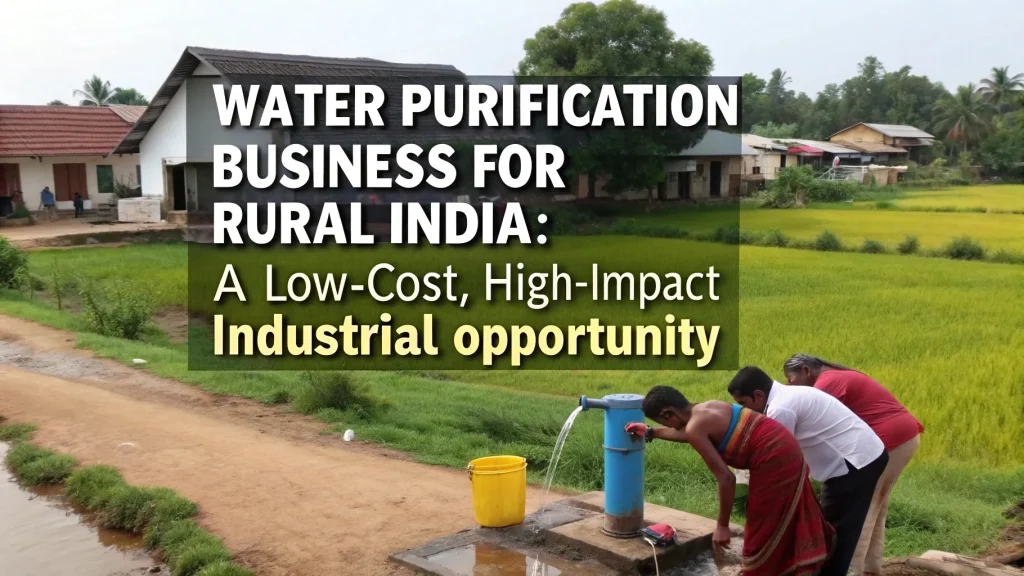
The Urban-Rural Divide in Drinking Water Access The division between urban and rural areas in India is evident in one area: the availability of clean drinking water by the Water Purification Business. While cities have sophisticated municipal systems in place, a large proportion of rural India relies on untreated groundwater, ponds, or hand pumps that are heavily contaminated with chemicals, bacteria, and heavy metals. Due to this, waterborne diseases continue to be one of the leading causes of illness and mortality in these regions. This situation does, however, present a significant chance for economic advancement. There is a rising need for convenient and economical options for water purification. For entrepreneurs and small to medium enterprises (SMEs) keen on entering the manufacturing arena, the region of rural India offers an unparalleled opportunity that combines low investment, high impact, and long-term growth potential. This situation transcends business considerations alone. The social impacts—improved public health, community progress, environmental conservation, and tapping into a blossoming market—are equally compelling. Market Demand and Industry Landscape The packaged and purified water industry in India has for so long been dominated by urban consumers as the packaged and purified water industry in India was dominated by urban consumers. This shift is now surging. With the increase of rural awareness, health concerns post-COVID-19, and government initiatives like Jal Jeevan Mission, rural households are prioritizing trusted water purification systems. Estimates from NITI Aayog suggests more than 600 million people in India face high to extreme water stress, the majority of which comes from rural regions. Furthermore, the World Health Organization indicates that 21% of the communicable diseases in India can be attributed to the consumption of unsafe water. Considering the scale, the business opportunity becomes even more apparent: over 180 million rural households, most of which do not have tap water or access to purified water systems. This creates an urgent need as the public health, the environment, and the economy are all simultaneously at risk. This indicates that the rural water purification market has the potential to experience rapid growth. Related: How to Start a Manufacturing Business of Flavored Drinking Water Forecasting Market Size: Anticipated Changes in the Next 5 Years The market for water purification solutions for the rural centers, including filtration units, community plants, and household kits, is anticipated to expand further and reach even greater heights with the support of innovation, government policies, and increased public and private partnerships. Predicted Expansion: Rural Water Purification Industry in India Year Predicated Market Size (? Crore) Annual Growth Rate Primary Influencers 2025 ?1,540 Cr – Cleansing COVID related health issues, water necessity 2026 ?1,930 Cr 25.3% Jal Jeevan Mission NGO initiatives aim at clean water and sanitation 2027 ?2,520 Cr 30.6% Increase in tech-adapted solar water-powered units 2028 ?3,240 Cr 28.6% CSR involvement coupled with adoption in rural areas 2029 ?4,160 Cr 28.3% Campaigns for rural health alongside local production These forecasts signify not only an emerging market but also highlight its fundamental importance, wherein the driving force remains need-based rather than lavish spending. Incentives for Potential Investors in the Market The Business of Water Purification lines up very well with the aspirations of budding entrepreneurs today. It presents the unique intersection of low startup cost, localized production, social return on investment, and predictable cashflow. Especially beginners or smaller players in the industry will appreciate the wide range of products available, such as solar-powered portable water plants and even simple gravity-based water filters. This sector is far removed from cumbersome heavy industries because there is quick prototyping and low-skill production completion within region-specific arrangements. Additionally, this is a business that welcomes collaboration with NGOs, the CSR arms of corporations, self-help groups, and government agencies, all of whom are looking for collaborators to achieve their rural water accessibility objectives. Manufacturing Water Purification Systems: Building a Scalable Rural Ready Product Rural water purification system engineering is not about fancy equipment but about efficiency, strength, and economical approaches. Solutions need to be rugged, low-maintenance, able to operate without electricity (in most cases), and must adhere to basic water safety requirements. The manufacture of community or household scale water purifiers includes the following stages: Design & Prototyping The initial step is picking a technology that is suitable for the geography in question. For regions with high TDS levels or excessive fluoride, a reverse osmosis (RO) design would be essential. While, in other situations, ceramic and activated carbon gravity filtration would suffice. This stage entails CAD modeling, pilot testing, and field verification. Entrepreneurs have the option to license models available or partner with R&D institutions for affordable designs. Component Sourcing The main components are filter cartridges (of carbon, UF, ceramic, or RO membranes), valves, water tanks, plastic casings, connectors, and sometimes even UV lamps or solar panels. These parts can be obtained from industrial suppliers in India or wholesale centers like Bhagirath Palace in Delhi and the industrial hubs of Ahmedabad. Assembly Line Operations The purifiers are assembled in a semi-automated or manual line, depending on the business scale. Casing molding, cartridge fitting, sealing, pressurization, and packaging are some of the steps in the workflow. Most units are lightweight and do not require heavy-duty fabrication. Quality Control and Testing Each unit must undergo basic water testing, especially microbial removal capability, TDS, and structural integrity. Sales to government bodies and NGOs are more credible with certification from NABL-accredited labs. Branding and Packaging Branding is crucial to sales in rural areas as purchases are made based on trust and visual representation. Local language instructions, pictorial guides for ease of use, and contact numbers for help lines should be provided. This alongside long-lasting eco-friendly materials enhances the perception of these products. Related: Business Opportunities in Water Sector in India Opportunities and Models for Business Development As a market, Rural India has several subdivisions. Each region has its own water problems, arsenic in Bengal or fluoride in Andhra Pradesh. Customization is an even more important aspect of business than advertising. Catering solutions
Why Cloud Kitchens Are the Smartest Low?Cost Food Business
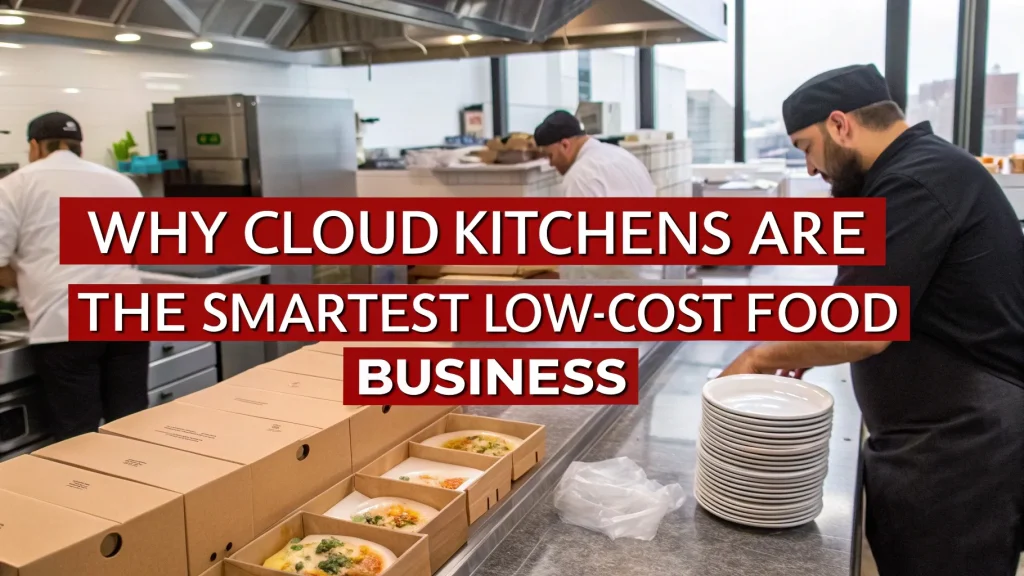
The Food Industry Revolution Without Dine-In Settings In India’s metro areas and even in Tier-II cities, a quiet transformation is happening in the food business. This transformation isn’t accompanied by big billboards or grand celebrations. Rather, it happens from humble industrial offices, cellars, and even shared kitchen workspaces. The reality of cloud kitchens has emerged. This new model not only transforms the way we consume food but also alters the way we set up food businesses in a digital driven economy. Cloud kitchens offer a flexible, smart, and easily scalable solution when compared to traditional restaurants that require a significant investment of capital, expensive real estate, staff, and other resources. For many people, such as home cooks and entrepreneurs in the food processing sector, cloud kitchens provide an efficient way to enter a low-budget expanding market. This article describes, with the help of market data, operational insights, demand forecasts and India’s evolving food economy, why cloud kitchens are the most intelligent low-investment food business of today. Understanding India’s Love for Delivery-First Dining: Current Trends and Market Size The emergence of cloud kitchens stems from urbanization in India. People are busier than ever with 9-5 jobs and the growing gig economy. The rise of food delivery services like Zomato and Swiggy also add to the convenience. Forecast India Cloud Kitchen Market Size and Growth Rate (INR Cr) 2025-2030 Year Estimated Market Size (INR Cr) Annual Growth Rate Key Growth Drivers 2025 ?7,300 Cr 17% Expansion of delivery apps, youth-driven market 2026 ?8,540 Cr 17% Health-focused menus, demand growth from tier-II cities 2027 ?10,000 Cr 17% Aggregator support, cloud catering models 2028 ?11,700 Cr 17% Tech innovation, franchise cloud kitchens 2029 ?13,600 Cr 16% B2B models, industrial-scale commissaries 2030 ?15,500 Cr 14% Regional cuisine expansion, cold-chain logistics This growth pattern suggests expansion towards Indian cloud kitchens catering to tier – II cities. The figure also indicate structural profitability as these businesses operate on a fictional scale. Cloud kitchens can begin and grow gradually, scaling over time without the hefty burdens that come with a physical restaurant. What Makes Cloud Kitchens So Cost-Efficient? Catering tier-ii cities can be more profitable. Opening a restaurant always comes with excessive overheads: expensive rent for shopfronts, décor, front-of-house staff, maintenance and much more. These are non-essential expenditures that can be avoided if a business shifts to food production and delivery only like cloud kitchens do. A cloud kitchen works from an off-site, backend, non-retail location, ranging from 300 to 1000 sq. ft. which includes packaging and processing stations as well as a fully equipped commercial kitchen. As there is no customer waiting area or staff seating area, there is no need for any seating or waiting staff. As a result, these businesses save on rent, labor, design, utilities, and a host of other factors. This is beneficial for new manufacturers looking toward a high-margin business with a small footprint or entrepreneurs who are short on capital. In addition to this, cloud kitchens can rapidly scale and lean start. An entrepreneur can begin with a single-brand kitchen offering health bowls or biryani, and later introduce multi-brand offerings, all from the same kitchen. The flexibility in branding and operations is what makes it a dream model for modern food entrepreneurs. Related: How to Start a Cloud Kitchen in India: Legal, Licensing & Cost Breakdown How a Cloud Kitchen Operates: The Manufacturing Process With respect to industrial operations, cloud kitchens serve as small-scale food manufacturing centers or units designed for efficient output and consistent quality to meet customer demands. As is the case with almost every business, these processes begin with raw materials procurement, which in this case includes meat, vegetables, spices, grains, and even packaging materials. These are procured from wholesalers or B2B sites, and inventory is managed on FIFO basis to reduce wastage. Upon receiving the ingredients, the kitchen adheres to strict SOPs. Recipes have to be sequenced into measurable steps including amounts, cooking temperatures, and time to ensure every order is identical. Depending on the complexity of the menu, some items may be partially pre-cooked in bulk and finished just before serving. Last-mile delivery requires the food to be placed in tamper-evident containers that retain heat. While container type can vary based on the food’s nature (dry vs. gravy, hot vs. cold), preservation of the food’s sensory attributes is crucial. Order intake and processing is fully automated. Orders can be placed via food aggregator applications or the kitchen’s own system. Once completed, orders are monitored for tracking, reviews, and automated feedback loops. In some scenarios, customer data is integrated with CRM tools for advanced menu and delivery experience customization. As we can see, a cloud kitchen is not just a kitchen. It is a tech-enabled, logistics integrated, regulated food manufacturing facility. Licensing & Legal Requirements: Cloud Kitchens Avoid Dine-In Compliance Contactless operations do not exempt cloud kitchens from food and business safety regulations. These food service establishments still require licenses, which are critical for a cloud kitchen’s credibility and legal standing. Understanding these licenses is equally important. Without an FSSAI license, your kitchen will not be recognized as compliant with food safety regulations. Depending on the turnover and scale, one can apply for Basic, State or Central licenses. In addition, FSSAI also refines hygiene standards, food inspection and labeling, and Has mandates to enforce inspections periodically. Moreover, a trade license for the municipality is also required. This ensures that your kitchen is in a commercially zoned area. Furthermore, registration under the Shops and Establishments Act is a prerequisite to formalize your workplace and to access labor and taxation incentives. For those kitchens that exceed a certain area or employ LPG cooking, a Fire NOC becomes essential. Likewise, if the kitchen discharges waste, employs ventilation chimneys, or is environmentally scrutinized, a clearance from the Pollution Control Board may be required. If the business is expecting a turnover above ?20 lakhs (or ?10 lakhs for some northeastern states), a GST registration is mandatory.