
Most Profitable Mayonnaise & Salad Dressings Manufacturing Business
The Mayonnaise & Salad Dressings Manufacturing Business has evolved into a highly profitable sector, thanks to growing global demand for fast food, convenience meals, and healthy eating options. With increasing consumption of sandwiches, burgers, wraps, and salads—especially in urban areas—this business presents a lucrative opportunity for entrepreneurs, manufacturers, and food processors alike. As food habits shift towards continental and health-focused cuisines, establishing a manufacturing setup for mayonnaise and salad dressings offers not just good margins but also long-term growth. Market Overview & Demand Potential The market for mayonnaise and salad dressings has expanded significantly over the past decade. As consumers become more experimental with food and prefer quick, tasty options, dressings have become a kitchen staple in homes, restaurants, and cafés. This demand surge has created space for both large-scale manufacturers and niche, artisanal producers. Moreover, the rise of health-conscious alternatives—like low-fat, vegan, and eggless variants—adds even more layers to the potential product line, making it a scalable and dynamic business. Types of Products You Can Manufacture There are multiple varieties within the mayonnaise and salad dressing category. The core products include: Classic Mayonnaise (egg and eggless) Flavored Mayonnaise (garlic, peri-peri, mint, tandoori, etc.) Vegan Mayonnaise Caesar Dressing French Dressing Ranch Dressing Honey Mustard Italian Dressing Thousand Island You can choose to start with 2–3 core products and gradually diversify based on customer feedback and market trends. Ingredients & Formulation The base ingredients for mayonnaise typically include oil, eggs (or egg powder), vinegar or lemon juice, mustard, and spices. Salad dressings vary more but commonly include oil, vinegar, herbs, spices, and flavoring agents. Formulation is key to product quality and shelf life. It’s also important to conduct stability tests to ensure your products remain fresh for several months. Preservatives (natural or synthetic), stabilizers, and emulsifiers are usually added to increase product shelf life and maintain consistency. However, if you’re targeting the health-conscious or organic market, clean-label ingredients with minimal additives are preferred. Manufacturing Process The production of mayonnaise and dressings involves several steps: Ingredient Preparation: Measuring and pre-mixing of ingredients. Emulsification: Mixing oil and water-based ingredients at high speed to form a stable emulsion. Pasteurization: (Optional) For extended shelf life, some batches may be heat-treated. Cooling & Storage: Product is cooled and transferred to storage tanks. Filling & Packaging: Automated filling into jars, bottles, pouches, or sachets. Labeling & Sealing: Containers are sealed and labeled as per FSSAI or FDA norms. Quality Control: Random batch testing for pH, consistency, taste, and microbial stability. Modern machinery ensures hygienic and consistent production, minimizing manual handling. Depending on your scale, you can start with semi-automatic or fully-automated lines. Infrastructure & Setup To start a manufacturing unit, you’ll need a facility of approximately 1000–2000 sq. ft. for small-scale production. The space should include: Raw Material Storage Room Processing Area Packaging Area Cold Storage (Optional but recommended) Laboratory for QC Basic machinery required: High-speed emulsifier or blender Mixing tanks with agitators Pasteurizer (if used) Filling and capping machine Labeling machine Refrigerated storage (for sensitive formulations) Your plant must comply with food-grade standards and hygiene regulations. Certifications like FSSAI, ISO 22000, or HACCP can add trust and credibility to your brand. Investment & Profit Margin A small-scale setup may require an initial investment of ?10–?25 lakhs depending on location, machinery, and scale. Medium units may require ?50 lakhs or more. The key cost elements include: Machinery & Equipment Raw Materials Packaging Material Labor & Overheads Licensing & Certifications Marketing & Distribution Typical profit margins range between 20% to 35%, depending on your production efficiency, branding, and pricing strategy. Value-added or niche products (like vegan dressings or gourmet options) can fetch even higher margins. Licenses & Registrations Required To legally operate a Mayonnaise & Salad Dressings Manufacturing Business, the following documents and registrations are required: FSSAI License GST Registration Udyam/MSME Registration Factory License NOC from Local Municipal Authority Trademark (optional, for brand protection) You may also need quality assurance certifications like ISO or HACCP if you plan to export or supply to large retail chains. Marketing & Distribution Channels Effective marketing is essential to build your brand and reach consumers. Here’s how you can go about it: Retail Distribution: Supermarkets, grocery stores, and hypermarkets. Online Sales: Amazon, Flipkart, JioMart, and your own D2C website. HORECA Sales: Supply to hotels, restaurants, and caterers at bulk rates. Export: If your unit is compliant with export standards, you can explore Gulf, African, and Southeast Asian markets. Use attractive and informative packaging to make your product stand out. Digital marketing, influencer tie-ups, and food exhibitions can boost brand awareness quickly. Trends & Innovations in the Segment The dressing industry is seeing rapid innovation. Some of the emerging trends include: Low-Calorie & Keto-Friendly Dressings Organic & Non-GMO Variants Squeeze Bottles and Sachet Packaging Fusion Flavors (like mango-mustard or sriracha-mayo) Gluten-Free and Dairy-Free Options Staying up-to-date with such trends ensures your product line remains competitive and in-demand. Challenges & Risk Factors While the business offers excellent potential, some risks to consider include: Short Shelf Life: Proper preservation and storage are critical. Price Competition: Larger brands may offer heavy discounts. Supply Chain Fluctuations: Ingredient costs can vary, affecting margins. Strict Food Safety Compliance: Any lapse can lead to legal action or bans. Brand Loyalty: Building trust takes time, so you need strong quality and consistency. Still, with proper planning, these challenges are manageable. Npcsblog Final Thoughts The Mayonnaise & Salad Dressings Manufacturing Business offers a smart entry into the growing processed food market. With the right recipe formulations, quality control, attractive packaging, and effective distribution, you can carve a niche in this high-demand sector. Whether you cater to mass markets with affordable options or focus on premium, gourmet offerings, the scope for profitability and brand building is immense. This is an industry where small players can compete with giants by being agile, innovative, and customer-focused. If you’re ready to blend taste with business strategy, this venture can turn out to be a creamy, profitable ride. Most Profitable Mayonnaise & Salad Dressings Manufacturing Business
Fruits & Vegetables Powder Manufacturing Business
The fruits & vegetables powder manufacturing business is rapidly emerging as a high-demand sector in the global health and wellness industry. With increasing awareness of nutrition, rising demand for natural food ingredients, and the shift toward convenience in food consumption, fruit and vegetable powders have become an essential product across sectors like food processing, nutraceuticals, cosmetics, and even pharmaceuticals. These powders are used to add flavor, color, nutrition, and shelf-life to various food items without compromising quality or freshness. As health trends evolve and processed food preferences shift toward clean-label and organic alternatives, the opportunity to launch a fruits & vegetables powder manufacturing business has never been more promising. Understanding Fruit & Vegetable Powder Manufacturing Business Fruit and vegetable powders are made by dehydrating or freeze-drying fresh produce and grinding them into a fine powder form. They retain most of the nutrients and flavors of the original fruit or vegetable and have a long shelf life, making them a perfect ingredient in a variety of products. Commonly Produced Powders: Tomato, carrot, spinach, beetroot, onion Banana, mango, amla, apple, papaya Ginger, garlic, turmeric Mixed fruit and vegetable blends These powders are used in soups, sauces, bakery products, baby food, instant mixes, health supplements, and more. 1. Market Potential and Demand Growth The global market for fruit and vegetable powders is witnessing exponential growth due to rising demand in health-conscious and convenience food segments. According to market reports, the industry is expected to surpass USD 25 billion by 2030, with Asia-Pacific leading the expansion. Demand Drivers: Increased consumption of functional and fortified foods Demand from the nutraceutical and herbal supplements industry Surge in natural coloring and flavoring agents in food processing Popularity of vegan and plant-based diets E-commerce-based health food brands India, with its rich agricultural output and growing processing sector, is ideally placed to become a global leader in this market. 2. Process of Manufacturing Fruits & Vegetables Powder The production process of fruit and vegetable powders involves cleaning, slicing, drying, grinding, and packing the produce in a hygienic, controlled environment. Basic Manufacturing Steps: Cleaning & Sorting – Remove dirt, debris, and unsuitable items. Blanching (optional) – Mild heating to preserve color and nutrients. Dehydration / Freeze-Drying – Using hot air dryers or freeze dryers. Grinding – Turning dried matter into fine powder. Sieving – Ensuring uniform particle size. Packing – In airtight, moisture-resistant packaging. Automation and hygienic conditions are crucial to maintain quality standards and comply with food safety regulations. 3. Raw Materials and Equipment Needed The fruits & vegetables powder manufacturing business relies heavily on access to fresh produce and reliable drying equipment. Seasonal planning and cold storage may be required for year-round production. Raw Materials: Fresh fruits and vegetables Preservatives (optional, depending on process) Food-grade packaging materials Machinery & Equipment: Washer/sorter machines Slicer/dicer Dehydrators or freeze-drying units Pulverizers/grinders Sieving units Packaging and sealing machines A small-to-medium-scale unit may require an initial investment of ?25–50 lakhs, depending on the production capacity and drying technology used. 4. Licenses and Certifications Required Like all food businesses in India, manufacturing fruit and vegetable powders requires proper licensing and adherence to quality and safety norms. Mandatory Licenses: FSSAI (Food Safety and Standards Authority of India) License GST Registration MSME/Udyam Registration Pollution Control Board clearance (if needed) ISO 22000 (Food Safety Management System) – Recommended HACCP certification – For exports or B2B sales Proper labeling—including nutritional information, shelf life, and batch details—is also mandatory as per FSSAI guidelines. 5. Target Market and Customer Segments The fruits and vegetables powder market is multi-dimensional and serves a broad customer base across sectors. This allows for B2B and B2C business models. B2B Customers: Food and beverage manufacturers (soups, sauces, baby food) Nutraceutical companies (protein shakes, supplements) Bakery and confectionery brands Hotel and restaurant chains Export traders and e-commerce aggregators B2C Segment: Health-conscious individuals Vegan/plant-based diet followers Fitness professionals Homemakers and chefs seeking natural food ingredients Packaging in consumer-friendly sizes (100g, 250g, 500g) alongside bulk packs (5kg–25kg) can help cater to both segments. 6. Marketing and Branding Strategy In the competitive health food space, branding, packaging, and digital presence can determine your success. Focus on quality, transparency, and the nutritional edge of your product. Effective Marketing Channels: SEO-optimized website with e-commerce functionality Amazon, Flipkart, and other D2C platforms Distributors and health stores Social media ads targeting nutrition and fitness audiences Collaborations with chefs, dieticians, and food bloggers Highlight keywords like “natural,” “no added sugar,” “rich in antioxidants,” and “gluten-free” to align with health trends. 7. Export Opportunities Fruit and vegetable powders from India are in demand in countries across the Middle East, Europe, and the USA. Buyers are looking for clean-label, vegan-friendly, and long-shelf-life products. Popular Export Items: Mango powder (amchur) Tomato powder Amla and moringa powders Onion and garlic powder Mixed vegetable blends By complying with international certifications (FDA, USDA Organic, EU Organic), manufacturers can access premium global markets with high margins. Challenges and Risk Factors While profitable, the fruits and vegetables powder manufacturing business comes with a few risks: Common Challenges: Seasonality and perishability of raw materials Power consumption in drying equipment Price fluctuations in fruits and vegetables Quality control and contamination risks Solutions: Establish direct tie-ups with farmers or cooperatives Invest in solar dryers to reduce energy costs Build inventory during peak harvest season Employ strict quality testing procedures Proper planning, storage, and sourcing can overcome most of these hurdles. Conclusion The fruits & vegetables powder manufacturing business is a promising and scalable venture in today’s health-driven consumer landscape. From small-scale startups to export-ready industrial units, the business offers excellent potential across food, nutraceutical, cosmetic, and pharma sectors. With a relatively low barrier to entry, growing demand, and the ability to diversify product lines (single ingredient or blends), this industry offers long-term returns and global scalability. By leveraging automation, smart sourcing, and strong digital marketing, you can establish a sustainable and profitable business in this space. Frequently Asked Questions (FAQs) FAQ 1: What is the minimum investment required to start a fruits and vegetables
Setting Up of Planetarium Profitable Investment Opportunity in Astronomy Education Sector.
The investment opportunity in the astronomy education sector is rapidly gaining traction in both developed and developing countries. As space science continues to fascinate young minds and global interest in astronomy increases, a new wave of demand for structured, interactive, and curriculum-integrated astronomy education is emerging. This niche sector not only supports STEM learning but also fosters curiosity, innovation, and future career pathways in aerospace, astrophysics, and space technology. With the Indian government’s focus on space innovation, the rise of private space companies, and inclusion of astronomy in educational curriculums, this sector presents high growth potential for investors, entrepreneurs, and educators alike. Why Invest in Astronomy Education? Astronomy has evolved from being a specialized science to an engaging educational field that blends physics, math, and technology. The rising popularity of STEM education , Investment Opportunity in Astronomy Education Sector and the success of space missions like India’s Chandrayaan and Aditya-L1 have fueled widespread interest in space science among students. Key Reasons to Invest: Integration of astronomy in K–12 school curriculum Increased funding in space and science education globally Growing demand for interactive and experiential learning Government support for STEM education and edtech platforms Lack of structured astronomy learning models in many countries In addition, the popularity of astronomy clubs, planetariums, and mobile space labs is offering creative business avenues for investment. 1. Astronomy Learning Centers and Space Labs Establishing astronomy learning centers or mobile space labs can be a highly impactful and profitable business. These centers provide hands-on learning experiences through telescopes, simulations, VR tools, and live sky observation sessions. You can collaborate with schools, host workshops, or run your own weekend programs. Potential Services: Night sky observation programs Telescope handling workshops Astrophotography courses Planetarium shows STEM-themed summer camps These labs can be set up in urban, semi-urban, or even remote schools to provide experiential learning in a mobile format. 2. EdTech and Online Astronomy Courses The rise of online learning platforms has made it easier to deliver astronomy courses to a global audience. Creating an edtech platform focused on astronomy for students, hobbyists, and professionals can attract widespread engagement. Features to Include: Pre-recorded astronomy and space science courses Live telescope streaming sessions Interactive quizzes and simulations Certifications and collaborations with scientists or institutions You can monetize through subscriptions, freemium models, and institutional licensing for schools. 3. Astronomy Toys, Kits, and DIY Experiments Creating and marketing educational astronomy kits is another lucrative niche. These kits—targeted at children aged 7 to 18—can include solar system models, DIY telescope kits, constellation charts, or safe solar viewers. Market Potential: Parents looking for scientific toys for children Schools for science labs or clubs Edtech companies needing physical products for hybrid learning Investors can collaborate with product designers and scientists to build innovative, curriculum-friendly kits with safety and engagement in mind. 4. Franchise Model for Astronomy Education One of the fastest ways to scale in the astronomy education sector is through franchise models. You can either buy a franchise of an existing astronomy learning brand or create your own and offer it to schools, educators, and tuition centers. Franchise Services May Include: Standardized astronomy curriculum Teacher training modules Access to content and telescope kits Branding, technical support, and curriculum updates This model ensures quick scalability with minimal operational complexity for investors and educators. 5. Corporate Training & CSR Programs Many companies are including science education in their Corporate Social Responsibility (CSR) initiatives. Astronomy workshops for underprivileged students, school donations of telescope equipment, or mobile planetariums can be part of these programs. How to Capitalize: Partner with corporations for CSR-funded programs Offer turnkey education + equipment packages Reach underserved areas and Tier-2/Tier-3 cities This approach builds goodwill, impact, and profitability through long-term institutional contracts. 6. Planetarium and Observatory Projects For larger investors, building or upgrading public or private planetariums and observatories can be a significant project. As tourism, education, and science blend, these facilities can attract thousands of visitors annually. Revenue Streams: Ticketed entry School visit packages Space-themed merchandise Hosted events and exhibitions Though capital-intensive, these projects are ideal for cities, educational hubs, or tourism-focused states. 7. Partnership with Space Agencies and Schools Collaborations with space organizations like ISRO, NASA, ESA, or private aerospace startups can lead to co-branded workshops, internships, or science missions for students. Example Offerings: “Student Satellite Mission” programs Co-curated curriculum on rocketry or satellite design Internships for top-performing students School space competitions and Olympiads Such partnerships add authenticity, credibility, and a competitive edge to your education offerings. Challenges and How to Overcome Them While the astronomy education sector is filled with promise, it also comes with a few hurdles: Common Challenges: Initial cost of equipment (telescopes, VR kits) Lack of trained astronomy educators Awareness gaps among parents and schools Limited inclusion in mainstream academic syllabus Solutions: Start small with virtual workshops and scale up Train teachers or build educator certification programs Run awareness campaigns via social media and school webinars Tie content to existing science curriculum for better integration Revenue Models and Profit Potential Investing in astronomy education is not just socially impactful, but also financially viable. The sector supports multiple monetization models: Revenue Avenues: B2C model: selling courses/kits to parents B2B model: licensing to schools and tuition centers Franchise income from centers CSR grants and NGO tie-ups Astronomy merchandise and event ticketing Profit margins range from 20% to 50%, especially in services like workshops, courses, and digital products. Conclusion The investment opportunity in the astronomy education sector is both timely and transformative. It is a futuristic domain that not only promotes scientific thinking but also prepares students for careers in space science, engineering, and innovation. From mobile labs and online courses to franchise models and CSR-backed workshops, there are countless scalable formats that entrepreneurs and investors can explore. With growing curiosity about the universe and strong STEM education policies, astronomy is no longer limited to observatories—it’s a business opportunity waiting to be tapped in schools, homes, and digital screens. Setting Up of Planetarium See More https://bit.ly/2ThjHXsx https://bit.ly/30h8BTE Contact Us
Emerging Business of Medical Disposables
The emerging business of medical disposables has become one of the most lucrative and high-potential sectors in the global healthcare industry. With growing awareness of infection control, hygiene, and patient safety—especially after the COVID-19 pandemic—demand for single-use medical products has skyrocketed. From gloves and syringes to gowns, IV sets, and surgical masks, disposable medical items are now indispensable in hospitals, clinics, and home healthcare settings. Market Research: – Market Research Report Major Key Players: Contact Us
List of 18 Profitable Businesses in Burkina Faso, Africa you can start
Start a Business in Burkina Faso Start a Business in Africa Related Market Research Reports Watch Video: Startup Business Opportunities in Africa. See More For More Detail: https://www.niir.org/blog/list-profitable-businesses-burkina-faso-africa-you-can-start/ An ISO 9001:2015 Company ENTREPRENEUR INDIA 106-E, Kamla Nagar, Opp. Mall ST, New Delhi-110007, India. Email: npcs.ei@gmail.com info@entrepreneurindia.co Tel: +91-11-23843955, 23845654, 23845886 Mobile: +91-9097075054, 8800733955 Website: https://www.entrepreneurindia.co https://www.niir.org Contact Us
A Complete Business Plan for Edible Oil Refinery (Soya and Palm) Plant
A well-structured business plan for edible oil refinery is essential for entrepreneurs looking to enter the food processing and FMCG (Fast-Moving Consumer Goods) sector. With the rising demand for healthy and affordable cooking oils across households, restaurants, and industrial food units, setting up an edible oil refinery can be a highly profitable and sustainable venture. Watch other Informative Videos: See More Links: An ISO 9001:2015 Company ENTREPRENEUR INDIA 106-E, Kamla Nagar, Opp. Mall ST, New Delhi-110007, India. Email: npcs.ei@gmail.com info@entrepreneurindia.co Tel: +91-11-23843955, 23845654, 23845886 Mobile: +91-9097075054, 8800733955 Website: https://www.entrepreneurindia.co https://www.niir.org Contact Us
Setting up a Plastics Material and Resin Manufacturing Business
If you are looking to start your own plastics material and resin manufacturing business, there are several things you need to consider. First, before making any investment into the production of your own plastic product, you should evaluate how much demand your product will have in the market. If there is high demand, it’s definitely worth investing in your own plastic resins and materials manufacturing business. Before deciding on the type of plastic resins and materials that you want to manufacture, you need to take note of the specific properties required by your customers so that you can determine which type of plastic you will use in order to produce the desired product. here are the step by step guide to start plastics material resin manufacturing business Start a Business in Plastics and Polymers Industry, Click Here Plastic materials are divided into two main types: thermoplastics and thermosets. Thermoplastics, which make up most of what we think of as plastics, are malleable at high temperatures but become rigid when cooled to room temperature. They can be molded or extruded into shapes that harden without further processing, such as injection molding. Thermosets, on the other hand, do not soften again after cooling; they remain solid and can only be processed with solvents. Thermoset plastics include polyesters (such as fiberglass), epoxies (used in boat hulls), silicones (such as sealants) and urethanes (such as coatings). Most resins are thermosetting plastics, although some resin systems can be formed from either type of plastic. Read Similar Articles: Resins Industry A plastic material is often specified by its chemical composition. A material may have many different grades depending on its purity and level of refinement. There is usually no single standard composition for any given plastic material, since each application has different requirements. In plastics industry, plastic raw materials are also called as resins, but there are some differences between resin and plastic. At present, most of resins used in plastics industry belong to thermosetting plastics. In thermosetting plastics, all main monomers have an active hydrogen, which can react with other monomers or crosslinking agents to form covalent bonds at room temperature or by heating. The reaction is irreversible and forms a stable three-dimensional network structure that cannot be broken down into its original components. The final product is hard, infusible, insoluble in solvents and heat resistant. Commonly used resins include phenol-formaldehyde (PF), urea-formaldehyde (UF), melamine-formaldehyde (MF) and so on. Watch Video: Plastic Products Manufacturing | Profitable Plastic Industries The plastics material and resin industry is made up of companies that manufacture polymers such as polyethylene, polystyrene, polypropylene, polyvinyl chloride (PVC), acrylonitrile butadiene styrene (ABS) and high-density polyethylene (HDPE). These manufacturers use raw materials derived from natural gas, coal or petroleum to produce plastic pellets. The industry also produces resins which are intermediates in making plastic products. Raw materials used by these manufacturers include ethylene, propylene, vinyl acetate monomer (VAM), vinyl chloride monomer (VCM) and tetrafluoroethylene monomer (TFEM). Other products produced by these companies include nylon 6/6 fibers, nitrile rubber and methyl methacrylate copolymer. Some major producers of plastics material and resin include ExxonMobil Chemical Company, Dow Chemical Company, LyondellBasell Industries NV and Chevron Phillips Chemical Company LLC. Related Feasibility Study Reports: Plastics, Polymers and Resins, Polypropylene (PP), Polystyrene (PS), Acrylonitrile butadiene styrene (ABS), Polyethylene terephthalate (PET), Polyester, PA, Poly (vinyl chloride) (PVC), Polyurethanes (PU), Polycarbonate (PC), Polyethylene (PE) Projects The global plastic material and resins market reached a value of nearly $466.2 billion in 2020, having increased at a compound annual growth rate (CAGR) of 1.2% since 2015. The market is expected to grow from $466.2 billion in 2020 to $659.2 billion in 2025 at a rate of 7.2%. The market is then expected to grow at a CAGR of 3.5% from 2025 and reach $ 784.2 billion in 2030. Growth in the historic period in the plastic material and resins market resulted from increased demand for industrial packaging products, growth of motor vehicles, and growth in the construction industry. The market was restrained by stringent regulations, and environmental concerns over plastics. Going forward, new developments in packaging will drive the growth in the plastic material and resins market. New developments in the packaging industry, such as CO2RE foaming technology, big data, IoT integration are expected to drive the plastic material and resins market going forward. Convenience features, such as resalable packs, easy-opening, stand-up pouches and smaller pack sizes for single-servings are being introduced and more promotional packs and brand extensions are being developed to ensure customer loyalty. Similarly, recent development of bio-degradable plastics which degrade naturally from the actions of microorganism such as bacteria, algae and fungi is gaining traction. These developments in packaging will increase the consumption of plastics and will in turn drive the market growth. Read our Books Here: Synthetic Resins, Alkyd, Phenolic Resins Watch other Informative Videos: Plastic Products Niir Project Consultancy Services (NPCS) can provide project report on above mentioned products – Manufacturing Plant, Detailed Project Report, Profile, Business Plan, Industry Trends, Market Research, Survey, Manufacturing Process, Machinery, Raw Materials, Feasibility Study, Investment Opportunities, Cost and Revenue, Plant Economics. The project report provided by NPCS gives a detailed market review. The report analyses the market confirms the availability of various necessities such as plant & machinery, raw materials and tells about the forecasting financial requirements. A lot of professionals have taken benefit from the project reports if you are interest in the manufacturing business get in contact with us from the official website of NPCS. See More Links: An ISO 9001:2015 Company ENTREPRENEUR INDIA 106-E, Kamla Nagar, Opp. Mall ST, New Delhi-110007, India. Email: npcs.ei@gmail.com info@entrepreneurindia.co Tel: +91-11-23843955, 23845654, 23845886 Mobile: +91-9097075054, 8800733955 Website: https://www.entrepreneurindia.co https://www.niir.org Contact Us
Tyre Retreading: A ?6,000 Cr Sustainable Business Opportunity
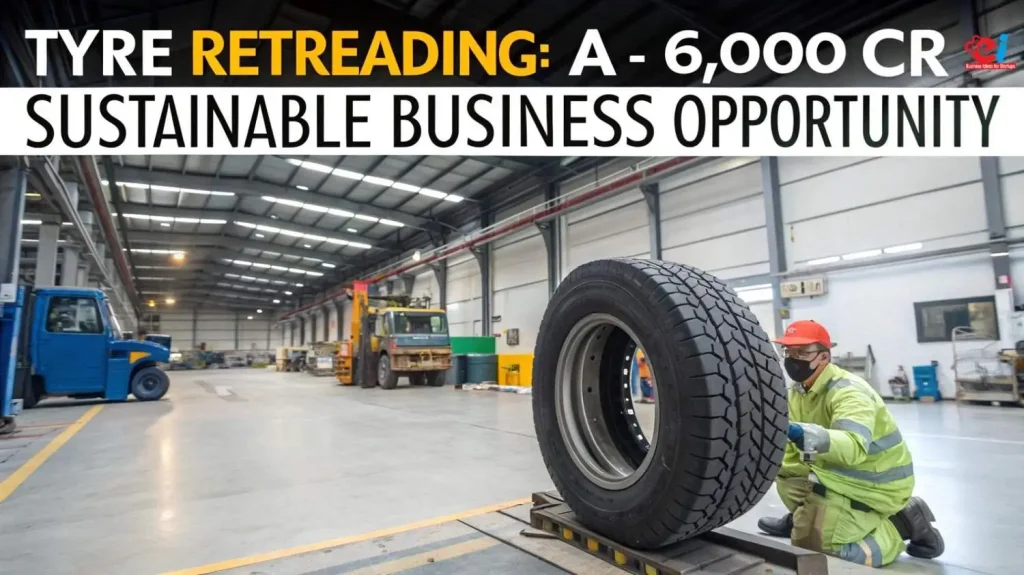
The revolution of sustainability Tyre Retreading is now taking place in the automotive sector. The industry is now looking beyond vehicle innovations to consider the carbon emissions, waste generation, resource scarcity along with the lifecycle of all vehicle components. One of the most effective yet ignored strategies in this context is tyre retreading which helps reduce operational costs while promoting the circular economy. Over the decades, tyre retreading has evolved significantly. The process was previously deemed to be a stopgap measure for the worn-out tires. But now, it is a global, technologically sophisticated, safety-standardized, and industry-backed quality-controlled process that is in increasing market demand. This is especially critical in economies such as India, where public transportation, logistics, and commercial vehicles are dominant. The rising fuel and maintenance costs, retreading offers logistic operators and fleet companies a cost-effective solution for increasing the life of tires while maintaining safety. Retreading tyres stands out as an economically appealing option as the Indian government works on decarbonizing the transportation sector and dealing with the growing environmental issue of waste tyres. For small manufacturers, existing automobile service providers and entrepreneurs, the decision to start a business in tyre retreading now has great timing and very good long-term impact. The Importance of Tyre Retreading for Business Today Retreading refers to the process to restore a worn-out tyre by changing its tread but keeping the casing if the tyre is still usable. The idea is to use the casing of the tyre which is more than 70% of the material and manufacturing cost, and add a top coat which improves the quality and safety of the tyre. The retreaded tire operates almost the same as a new tyre but at a much lower price. The work usually starts with an inspection of the tyre casing. Inspecting every part of the tyre lets the technician check for hidden cracks, sharp punctures, or heavy wear that would make the tyre dangerous to reuse. Once the outer layer is see-through, we grind off the worn rubber and stick on a new sheet. That patch can be either cold, already cured, or hot, still uncured-and each method brings its own strengths. Retreading old tyres cuts the number of new ones that factories must build, so everyone saves money, raw materials, and energy. There is now a wide utilisation of retreaded tyres in on-highway and off-highway transport applications including buses, trucks, trailers, construction equipment, and even some aircraft. They are fuel-efficient and deliver great mileage and performance, and if well-cared for, are nearly as durable as new tyres. For many transport operators, this translates into considerable reductions in operating costs. Environmentally, it results in reduced reliance on natural rubber oil, carbon black—crucial raw materials, and tyres in landfills which have great environmental costs. Related: Why to Invest In a Tyre Retreading Business? The Environmental Effects that Tyre Retreading has The main reason for the increase in the retreading of tyres globally is due to the willingness to adopt sustainable business practices. An estimate 25 – 28 litres of oil is consumed in the manufacture of a truck tyre. Multiply that single wasted tyre by the millions of trucks, cars rolling down the road each day, and the pile of junk rubber quickly grows into an eye-watering mountain. Tossing those tyres straight into a landfill-or worse, beside the highway-hurts the planet in ways we cant easily brush off. The environmental carbon footprint incurred while manufacturing a new tyre is significantly more than that of retreading a tyre. By retreading a tyre, it is possible to reduce emissions by up to 70% increase. In addition to that, the problem waste issue of used tyres is additional benefits of retreading. Old tyres dont break down like food scraps or paper, so when we toss them in a landfill or burn them, toxic bits leak into the soil, ruin nearby water, and drift up to pollute the air we all breathe. Retreading offers a way to alleviate such a waste concern. Countries with more sophisticated environmental policies like Germany, USA and Japan has incorporated the tire retreading into the waste management and formulated transport policies at the national level. India is a country that discards in excess of 100 million tyres every year. Developing a strong retreading infrastructure in India can create dual environmental and economic solutions. Methods of Retreading: Comparison of Cold and Hot Retreading Processes The classification of tyre retreading two types: cold retreading (precure process) and hot retreading (mold cure). Each one has its particular benefits based on the type of tyre, it’s size and the environment of application. Cold retreading is widely used for commercial vehicles in India. The pre-cured tread is molded and vulcanized with its design before being applied to the tire. The tread is bonded to the casing of the tyre and is later cured in a chamber. One of the biggest advantages of this method is that it preserves consistent tread depth, better mileage, shorter processing time, among others. Hot retreading consists of adding unvulcanized rubber to the casing and tread design is added while curing the tyre. This allows easy tread design changes and is common in off-road or custom vehicles. Even though cold retreading has lower operational costs and a cleaner finish, hot retreading integrates with the tyre body better. Most modern plants are equipped to handle both methods and select a process based on the casing’s condition and end-use requirements. Market Demand and Business Viability Market experts say the Indian tyre-retreading business is already worth more than 6,000 crore and still growing every year. Roughly 60 to 70 out of every 100 commercial tyres in India are retreaded at least once before being scrapped. That slice of the market should grow even bigger for truck and bus radials, because fleet owners are moving away from bias tyres and looking for ways to stretch every tyre’s lifespan. When it comes to the retreading business, the economics are quite persuasive. The price for a new truck
Top 10 High-Demand business ideas for Indian Entrepreneurs in 2025

A passionate entrepreneur with a market vision can strategically plan a new business ideas in 2025. Due to the change in consumer behavior, technological advancements, and government policies promoting self-employment manufacturing, the opportunity to build a successful venture in India is endless. In this guide, we explain the top 10 most successful business ideas to start, Each section offers valuable insights and trending keywords such as “successful business opportunities,” “best business ideas for Indian Entrepreneurs in 2025 to start in India,” and “most profitable manufacturing business.” It emphasizes how NIIR Project Consultancy Services supports your business setup with excellent marketing services. NPCS covers everything ranging from detailed project reports and feasibility studies to strategic insights which help you grow your business. 1. Electric Vehicle Battery Recycling Business Recycling EV batteries has come to be known as one of the most profitable business ideas since the adoption of electric vehicles and the increased concern for environmental legislation. Electric vehicle lithium-ion batteries have an expiration date and produce massive e-waste making their recycling necessary. Currently, the market lacks sufficient support for the industrialized lithium battery recycling plant. For substantial returns, consider starting a recycling plant that processes black mass recovery and extracting metals such as lithium, cobalt, and nickel. Aside from being highly demanding and requiring a level of exceptional technical skills, this undertaking has a significant reward owing to the high international demand for recycled raw materials OEMs and battery manufacturers to facilitate the smooth flow of the supply chain and NPCS gives detailed reports on setting up plants that recover black mass, enabling entrepreneurs to analyze plant design, material costs, effluent treatment plant (ETP) requirements, and profit margins 2. Food Processing and Dehydrated Vegetable Units Food processing has consistently been proven to be a highly resilient recession proof, enduring even the toughest economic downturns. Numerous products like dehydrated vegetables, dried fruits, garlic and onion flakes and even tomato powder are heavily demanded by hotels and food service companies, exporters, and FMCG brands alike. The market is rapidly growing with the rising demand for easy to use cooking ingredients. Dehydrated food items have a significantly longer shelf life, reduced storage difficulties, and great potential for exports, especially to the Middle East, Europe, and the U.S. From an entrepreneurial standpoint, this type of business model ensures consistent demand and repeat business, as well as scalability and government support. For setting up HACCP compliant plants, NIIR Project Consultancy Services provides comprehensive project reports for dry vegetable processing which encompass working capital, machinery, and marketing strategy. 3. Manufacturing of Medical Consumables and Disposable Syringes The pandemic placed a huge importance on the health care infrastructure which created a need for diagnostic kits, urine containers, IV fluids, and most importantly, disposable syringes. India serves as a cost-effective manufacturing hub making it easier to set up new business ideas that cater to medical devices. Syringes are frequently used in clinics, hospitals, and vaccination programs. With the growth of diagnostics chains and health-tech businesses, this demand will grow. The addition of government support funding under the PLI, or Production Linked Incentive Scheme, also increases the viability of this business. NPCS provides solutions for the entire business lifecycle, from developing strategies based on market research to class 10000 cleanroom plant layout schemes. Their services include pricing for machinery, sterilization procedures, and even analyzing market trends. They help fund startups to provide guidance and increase confidence in entering the regulated markets. 4. Herbal Cosmetic Manufacturing India is experiencing an astonishing boom in the herbal and natural skincare sector. Health-focused consumers are increasingly using organic shampoos, essential oils, as well as Ayurveda face masks. There is a growing demand for personal care products produced in India, hence launching a herbal cosmetic venture is one of the best small business ideas. Margins in this sector are very high, with plenty of room for private labeling and exports. It has low barriers to entry in terms of capital outlay, development of formulations, and good packaging design. NPCS prepares herbal products’ soaps, shampoos, and moisturizers business plans based on natural ingredient formulations that include licensing guidance from AYUSH and FDA, feasibility reports, and herbal product manufacturing. 5. Box and Cardboard Container Manufacturing The packaging sector is experiencing rapid growth in tandem with the boom in e-commerce, FMCG, and exports. For safe and eco-friendly shipping, corrugated boxes, duplex board cartons, kraft paper bags, and printed cartons are very important. This is a repeat purchase industry with low promotional spending, creating strong demand for first time investors. With growing concern for the environment, the need for biodegradable and recyclable options also grows. Depending on the budget, a corrugated box manufacturing plant can be established with semi-automatic or fully automatic production lines. NPCS can assist with packaging grade investment feasibility, raw materials costs, machine layout, and process streamlining for various levels of corrugated packaging. 6. Nutraceutical Gummies and Functional Foods Pharma and food industry blend has given birth to a successful segment ‘nutraceuticals’. Over the years, the consumption of health supplements has been greatly transformed by the introduction of gummies enhanced with vitamins, herbal extracts, and probiotics. India’s nutraceutical market is set to cross $18 billion by 2026, with the most innovative and easiest to consume form being gummies. From an entrepreneurship perspective, there is an opportunity to cater to modern health requirements such as immunity, digestion, skin care, and mental wellness. The customer demographic spans across urban millennials and the NPCS reports. NPCS provides extensive project reports for establishing nutraceutical gummies manufacturing units elucidating the food safety regulations, supplier of ingredients, and setting up of machinery. 7. Manufacturing of Solar Panels and Silicon Ingots There has not been a stronger shift towards clean energy than now. There are great opportunities regarding the manufacturing of solar panels at a local level due to the Indian government’s aggressive PM-KUSUM solar scheme and the National Solar Mission. However, even greater opportunities are present in the ‘upstream segment’ which includes manufacturing silicon ingots and solar cells. These parts
How to Start Manufacturing Business of IVD Strips (Glucose, Urine & Pregnancy)
The Manufacturing Business of IVD Strips (In Vitro Diagnostic Strips) has witnessed significant growth in recent years, driven by rising demand for point-of-care testing, increasing cases of lifestyle-related diseases like diabetes, and the urgent need for rapid diagnostic solutions post-COVID-19. These strips are essential tools used in diagnostic kits to detect glucose levels, pregnancy hormones, infectious diseases, and more—making them a critical part of the medical device industry. See More Links: Contact Us