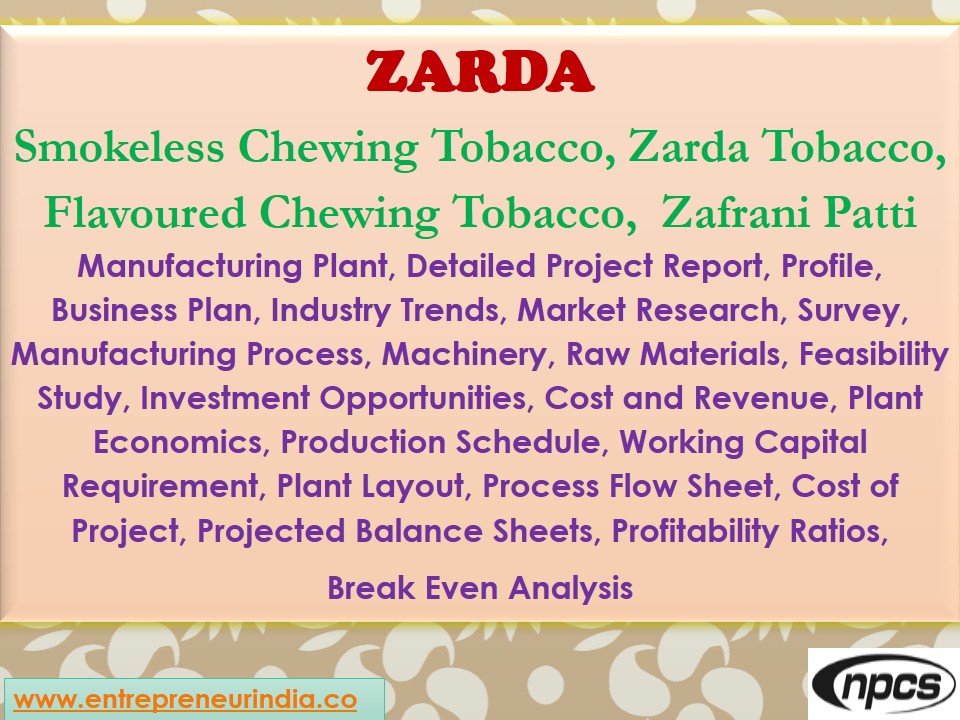
Zarda Chewing Tobacco is one of the most widely consumed smokeless tobacco products in India and several South Asian markets. Known for its strong aroma, traditional flavour blends, and processed tobacco leaves, Zarda tobacco is commonly used in flavoured chewing tobacco products such as Zafrani Patti and scented tobacco mixtures.
The Zarda Chewing Tobacco manufacturing industry in India has evolved through traditional processing methods combined with modern flavouring and packaging techniques. From tobacco curing and blending to flavour infusion and final packaging, the industry serves a large consumer base across urban and rural markets.
This guide explains the manufacturing of Zarda chewing tobacco in India, including production methods, flavouring processes, raw materials, packaging systems, and industry insights.
What is Zarda Chewing Tobacco?
Zarda Chewing Tobacco is a flavoured smokeless tobacco product made from processed tobacco leaves blended with aromatic ingredients, flavouring agents, and traditional additives. It is commonly consumed in India and South Asia in products such as Zafrani Patti and scented chewing tobacco mixtures.
How to Start a Zarda Chewing Tobacco Manufacturing Business
Starting a Zarda chewing tobacco unit requires a combination of careful planning, understanding raw materials, setting up production facilities, and adhering to legal regulations. This guide will help you understand the complete process from start to finish.
See Also – Activated Carbon Manufacturing
1. Understanding Zarda Chewing Tobacco
Zarda chewing tobacco is a mixture of processed tobacco leaves, spices, flavouring agents, and sweeteners. The main appeal lies in its rich aroma, vibrant color, and instant stimulation. It’s commonly sold in sachets or tins under various brand names.
Unlike smoking tobacco, Zarda is chewed and not smoked. Therefore, the moisture content, texture, and taste play a vital role in user satisfaction. Understanding these product attributes is the first step before entering manufacturing.
2. Market Potential of Zarda Tobacco in India
India is one of the world’s largest consumers of chewing tobacco. Millions of users across rural and urban areas prefer Zarda chewing tobacco for its flavor and portability. Brands such as Tulsi, Pan Parag, and Rajnigandha dominate this sector, yet there is still space for niche players and regional manufacturers.
The demand remains consistent due to cultural habits and daily consumption patterns. This makes the business lucrative, especially when branding and quality are managed well.
3. Raw Materials Required
Here are the essential ingredients needed to produce quality Zarda chewing tobacco:
Raw tobacco leaves – Cured and dried
Areca nut (supari) – Optional but commonly added
Flavouring agents – Kewda, rose, sandal, etc.
Colorants – Food-grade coloring
Perfumes – To enhance aroma
Sweeteners – Such as saccharin or sugar
Lime (chuna) – Often included as an additive
Quality of raw materials directly affects the final product. You must source tobacco leaves with uniform texture and proper curing. Always buy from certified vendors to avoid impurities or health hazards.
4. How is Zarda Tobacco Made in India?
The process of Zarda chewing tobacco manufacturing involves multiple steps. Here’s a simplified overview:
- Selection of tobacco leaves
- Curing and drying process
Tobacco leaf processing – Drying, grading, and shredding of leaves.
Blending – Mixing the shredded leaves with flavoring agents, perfumes, and sweeteners.
Color application – Spraying food-grade coloring for visual appeal.
Fermentation – Allowing the mixture to rest for a defined time to develop the aroma.
Drying & Sieving – Removing excess moisture while retaining the softness of the tobacco.
Packing – Sachets, tins, or plastic pouches are filled, sealed, and branded.
Each stage must follow hygiene practices and quality checks to ensure customer safety and satisfaction.
5. Machinery & Equipment Needed
To set up a small-to-medium scale Zarda manufacturing plant, the following machinery is essential:
Tobacco shredding machine
Flavor mixing unit
Rotary blender or ribbon blender
Fermentation containers
Weighing scale and sealing machine
Packaging unit
Dust collection system (for hygiene)
You can either purchase semi-automatic machines or go fully automatic depending on your investment capacity.
6. Legal Requirements and Licensing
Zarda tobacco falls under regulated products in India. Therefore, you must comply with all legal obligations:
Trade License – From your local municipality
GST Registration – Mandatory for sales and taxation
Tobacco Board Registration – For authorized manufacturing
FSSAI License – If additives or food-grade materials are used
Health Warnings – Packaging must include pictorial warnings as per Indian government norms
In addition, environmental clearance and labor law compliance are essential if your production exceeds basic limits.
7. Investment and Profitability
The cost of starting a small Zarda chewing tobacco unit can range from ?10 lakhs to ?25 lakhs depending on scale. This includes:
Land or rented unit
Machinery and installation
Raw materials for 1–2 months
Labor and utilities
Licensing and branding
Profit margins in this industry are high—often 25% to 35%. Due to regular consumption, customer retention is strong, making it easier to scale up production over time.
8. Branding and Marketing Tips
The tobacco market is competitive, but branding plays a crucial role. Here’s how to create a unique identity for your Zarda brand:
Use colorful, eye-catching packaging
Offer sachets in different sizes and price points
Focus on strong aroma and lasting flavor
Create brand loyalty using local influencers or shop partnerships
Promote under guidelines – avoid public advertising of tobacco
While direct promotion may be limited due to laws, you can focus on B2B partnerships and shop-level engagement.
9. Challenges in the Zarda Business
Despite the benefits, this sector also has some challenges:
High taxation and legal scrutiny
Competition from well-established brands
Health-related criticism and anti-tobacco regulations
Fluctuating prices of raw tobacco
Ban in some states or areas
You must plan your operations considering these factors. Investing in quality and compliance gives you a long-term edge.
10. Sustainability & Waste Management
Zarda manufacturing produces waste such as dust, leaf residues, and packaging waste. Proper disposal and recycling can improve your reputation and reduce pollution. Some manufacturers are now moving toward biodegradable pouches and dust-filtering systems to lower environmental impact.
See Also – Manufacture Synthetic Resins
11. Regulatory and Compliance Considerations
Manufacturers involved in Zarda Chewing Tobacco production in India must comply with applicable tobacco regulations, packaging requirements, health warning guidelines, taxation rules, and local manufacturing laws issued by regulatory authorities.
Final Thoughts
The Zarda Chewing Tobacco industry in India continues to hold significant importance within the smokeless tobacco sector due to its traditional consumption patterns, flavoured product variations, and strong regional demand. Products such as Zafrani Patti and flavoured chewing tobacco remain widely recognized across different consumer markets.
Understanding the Zarda tobacco manufacturing process, raw materials, flavouring techniques, packaging methods, and compliance considerations can help businesses and researchers gain better insight into this specialized industry segment.
If you’re ready to explore this space, start with a small unit, monitor the results, and gradually scale up. Success in this industry depends on consistency, taste, and trust.
Frequently Asked Questions
Q1. What is Zarda Chewing Tobacco?
Zarda Chewing Tobacco is a flavoured smokeless tobacco product prepared using processed tobacco leaves, aromatic additives, and traditional flavour blends.
Q2. How is Zarda tobacco made in India?
Zarda tobacco is made through tobacco curing, shredding, flavour blending, conditioning, and packaging processes used in smokeless tobacco manufacturing.
Q3. What is Zafrani Patti?
Zafrani Patti is a flavoured chewing tobacco product known for its aromatic blend and processed tobacco composition.
Q4. Is Zarda tobacco part of the smokeless tobacco industry?
Yes, Zarda tobacco is categorized under smokeless chewing tobacco products commonly consumed in India and South Asia.
Looking for Tobacco Manufacturing Project Guidance?
If you are exploring opportunities in the smokeless tobacco or flavoured chewing tobacco industry, professional consultancy can help with:
- Manufacturing project reports
- Plant setup guidance
- Machinery consultation
- Production process insights
- Packaging solutions
- Market research
- Regulatory understanding
Contact our expert team to learn more about tobacco manufacturing project opportunities and industry insights.
Contact Us