
Manual of On Vermiculture and Vermicomposting
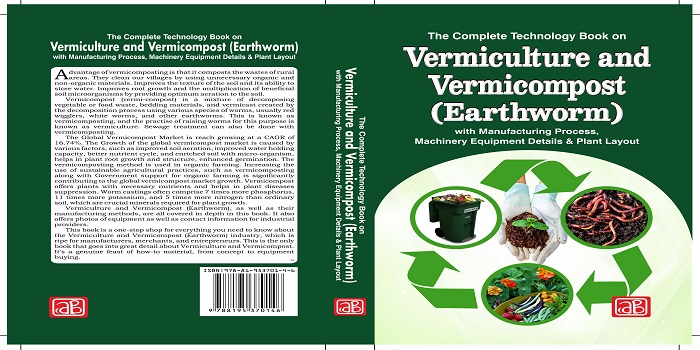
Vermiculture and vermicomposting are eco-friendly and sustainable methods of converting organic waste into high-quality compost using earthworms. This natural recycling process not only enriches the soil but also plays a vital role in organic farming, waste management, and eco-agriculture. With the rising awareness about soil health, chemical-free produce, and sustainable farming, starting a vermicomposting business is both environmentally impactful and economically viable. This business idea requires minimal investment, uses readily available organic waste, and can be started even on a small plot of land, making it ideal for rural entrepreneurs, farmers, and agro-startups. Visit this Page for More Information: Start a Business in Vermiculture and Vermicompost Industry What is Vermiculture and Vermicomposting? Vermiculture refers to the cultivation of earthworms, particularly for the purpose of producing compost and as a source of live feed for fish and poultry. Vermicomposting is the process of breaking down organic waste (like kitchen scraps, farm residue, cow dung, etc.) using specific species of earthworms (e.g., Eisenia fetida) to produce nutrient-rich organic compost known as vermicast. This compost is rich in: Nitrogen Phosphorus Potassium Microbial life And it’s widely used in organic farming, nurseries, landscaping, and kitchen gardens. Read our Books Here: Biofertilizer, Biofertiliser, Biogas, Organic Farming, Vermicompost, Vermiculture, Biotechnology 1. Types of Earthworms Used in Vermicomposting Not all earthworms are suited for composting. The following species are commonly used: Eisenia fetida (Red wigglers) Eudrilus eugeniae (African nightcrawler) Perionyx excavatus (Indian blue worm) These species thrive in decaying organic material and reproduce rapidly, making them ideal for commercial vermicomposting. 2. Setting Up a Vermiculture and Vermicomposting Unit The setup is simple and low-cost. Here’s how you can start: a. Land and Space Requirements Minimum: 500–1000 sq. ft. Ideal: Shaded, well-drained area No direct sunlight or rain exposure b. Vermicompost Bed/Structure You can use: Brick-lined beds (3 ft × 10 ft × 1 ft) Cement tanks or plastic bins Raised beds under thatched roofing c. Materials Needed Cow dung (pre-decomposed) Agricultural waste Vegetable peels, dry leaves, husk Moisture (40–50%) Earthworms (1 kg can process 1 quintal of waste) d. Step-by-Step Process Pre-decompose farm waste with cow dung for 10–15 days. Fill the vermicompost bed with this mixture. Introduce earthworms evenly (approx. 1 kg per 100 kg of waste). Cover the bed with a jute sack or gunny bags. Sprinkle water regularly to maintain 40–50% moisture. Compost will be ready in 45–60 days. Separate worms by light exposure and harvest the black granular compost. 3. Machinery and Tools Required While most of the process is manual, you may need: Shovels and rakes Sieving machine (for compost refinement) Moisture meter Vermiwash collection unit (for liquid extract) Compost packing machine (optional for scale) Download PDF: The Complete Technology Book on Vermiculture and Vermicompost (Earthworm) 4. Licenses and Certifications Though vermicomposting is a low-regulation business, for commercial selling, you may require: Udyam (MSME) Registration Fertilizer license under the Fertilizer Control Order (FCO) GST registration Organic certification (for exports or branded products) You can also opt for Agmark or ICAR-certified compost testing to boost credibility. 5. Market Demand and Buyers Vermicompost is widely used by: Organic farmers and horticulturists Fruit and vegetable growers Landscaping and gardening companies Nurseries and plantations Government schemes like MIDH and organic farming missions Agro-based startups and retailers Packaging Options: 1 kg, 5 kg, 10 kg, and 25 kg bags Bulk packs for farms Branded packs for retail stores and eCommerce 6. Cost and Investment Breakdown A small-scale vermiculture and vermicomposting unit can be started with minimal capital. For 1000 sq. ft. unit: Item Cost Shed and vermibeds ?30,000 – ?50,000 Earthworms (20–30 kg) ?10,000 – ?15,000 Tools and trays ?10,000 Labor and water setup ?15,000 Branding, Packaging & Misc. ?10,000 Total Initial Cost ?75,000 – ?1,00,000 7. Profit Margin and ROI The vermicompost business is highly profitable, especially with repeat buyers and bulk orders. 1 kg of vermicompost sells for ?8–?15 (retail) and ?4–?7 (bulk) From 1000 kg of organic waste, you get approx. 600–700 kg of vermicompost Monthly production from a 1000 sq. ft. unit: 2–3 tons Monthly gross income: ?30,000 – ?50,000 Net Profit Margin: 40–60% Break-even: Within 6–8 months Additionally, vermiwash (liquid extract) can be bottled and sold as organic pesticide/fertilizer, adding a new revenue stream. 8. Marketing and Sales Strategy To grow your vermiculture and vermicomposting business: List on Agri B2B platforms (AgriBegri, BigHaat, IndiaMART) Partner with organic stores and farmer cooperatives Create a brand name and eco-friendly packaging Sell on Amazon, Flipkart, Jiomart (gardening section) Use WhatsApp, Facebook, and Instagram for farmer reach Educate buyers on benefits through workshops and farm tours Collaborate with NGOs promoting sustainable farming Final Thoughts Starting a vermiculture and vermicomposting business is more than just a venture—it’s a contribution to a sustainable, organic future. It helps in managing biodegradable waste efficiently while creating a high-demand product with minimal environmental impact. With growing interest in chemical-free farming and green entrepreneurship, vermicomposting offers both profitability and purpose. Whether you’re a farmer, agri-preneur, or eco-conscious businessperson, this is your chance to turn waste into wealth and soil into gold—literally. Related Feasibility Study Reports: Biotechnology See More Links: Start a Business in Asia Start a Business in Potential Countries for Doing Business Best Industry for Doing Business Business Ideas with Low, Medium & High Investment Looking for Most Demandable Business Ideas for Startups Startup Consulting Services Start a Business in Africa Start a Business in India Start a Business in Middle East Related Videos Related Books Related Projects Related Market Research Reports NIIR PROJECT CONSULTANCY SERVICES, DELHI An ISO 9001:2015 Company ENTREPRENEUR INDIA 106-E, Kamla Nagar, Opp. Mall ST, New Delhi-110007, India. Email: npcs.ei@gmail.com info@entrepreneurindia.co Tel: +91-11-23843955, 23845654, 23845886 Mobile: +91-9097075054, 8800733955 Website: https://www.entrepreneurindia.co https://www.niir.org Contact Us
May 2022 Entrepreneur India Monthly Magazine
The May 2022 Entrepreneur India Monthly Magazine delivered a treasure trove of actionable insights, startup success stories, investor trends, and sector-specific analyses tailored for India’s entrepreneurial ecosystem. As business founders navigated a changing global economy, this edition emphasized resilience, innovation, and sustainability—making it a must-read for both emerging and established entrepreneurs. From deep dives on scaling businesses to profiles of breakthrough founders, here’s a comprehensive breakdown of what made May 2022’s issue so impactful. What Made the May 2022 Edition Stand Out? The May issue centered on post-COVID recovery, digital transformation, and sector opportunities, with featured interviews, curated frameworks, and dynamism suited for businesses of all sizes across India. 1. Cover Story: Digital Disruption in Traditional Industries The cover story explored how age-old industries—like agriculture, real estate, and logistics—are being transformed through digital technology. Founders leveraging AI, IoT, and digitization shared their journeys towards operational efficiencies, cost advantages, and market expansion: Farmers deploying farm?to?door e-aggregator apps Realtors offering virtual property walkthroughs Traditional logistics hubs going sensor-based for real-time tracking Key Takeaways: Digital augmentation can reduce costs by 15–25% Consumer access and convenience are driving adoption Government initiatives like Digital India are acting as catalysts 2. Startup of the Month: Agri-Tech Enabling Rural Empowerment May’s spotlight was on an agri?tech startup that helped smallholder farmers access real-time soil data and weather forecasting with AI-powered sensors. Their B2B model—partnered with cooperatives—helped predict crop yields and prevented post-harvest losses. Highlights: Raised a ?5?cr Series A from agri?impact VCs Helped farmers increase yields by 12–18% Scalability across states with language?localization support 3. Sector Focus: Fintech for India’s Unbanked Population One of the major featured sections delved into mobile-first fintech innovations, especially in rural and semi-urban India. The article explored how startups are enabling: Micro-lending through UPI and partner bank models Digital insurance with real-time claim settlement Agri?finance for seasonal farmers via SMS-based credit scoring Industry Insights: UPI volume was growing over 40% YoY Over 200?million Indians are still underbanked Partnerships with post offices and cooperatives offer unique onboarding routes 4. Investor Spotlight: Navigating the Funding Pause In May 2022, global deals slowed. This edition brought insights from angel investors and early-stage VCs on how startups are navigating uncertainty: Investor Guidance: Shift focus toward cash flow metrics and DIP (daily income performance) Trim non-core tech tools and renegotiate vendor contracts Pitch runway with K-shaped recovery models rather than top-line growth 5. Women Entrepreneurs Feature: Leading with Purpose May’s edition showcased women?led startups dealing with sectors like agritech, edtech, and clean energy. These founders spoke about funding challenges, bias, and mentorship—but also held a key message: resilience. Female founder investment rose by ~28% between 2021–22 Focus areas included maternal health, green energy, and gender-smarted tech Featured NGOs and incubators supporting first-time founders 6. Franchise & Scale-up: Cloud Kitchens & Wellness Centres A detailed page focused on small-scale franchising opportunities in wellness (yoga studios, organic cafés), cloud kitchens, and local health clinics. It outlined: Capex under ?10?lakh Location selection / demographic matchmaking ROI timelines: 12–18 months with clear brand equity 7. Tech Corner: SaaS Startups Pivoting to B2B A special segment explored India’s SaaS ecosystem shifting from B2C to enterprise focus—especially in HRTech, Supply?chain, and Agri?SaaS domains. Highlights: Revenue from B2B SaaS outperformed B2C by 3× in 2021–22 Niche product bundles (like Sensor?based crop advisories) performed strongly Founders emphasized the value of shortening deployment times for customers Final Thoughts The May 2022 Entrepreneur India Monthly Magazine was not just an issue—it was a strategic toolkit for entrepreneurs navigating a shifting landscape. Whether you’re a startup founder, an investor, or a business advisor, it provided timely perspectives on digital transformation, sectoral pivots, gender equity, and scale-up models. If you’re scaling a digital-first business or exploring franchising and fintech in 2025, revisiting this edition can offer timeless frameworks and case studies aligned with today’s demands. Its strength lies in combining real-world startup journeys, investor playbooks, and sectoral deep dives with practical roadmaps that resonate long after the issue hits stands. Business Ideas Covered in this Issue: Wheat Processing Unit (Wheat Starch, Vital Wheat Gluten, Modified Starches, Fibres & Proteins) 3-Chloropivaloyl Chloride Manufacturing Business Plan Plastic Waste Recycling Plant Lovastatin Production Business (from Dextrose, Peptone Powder, Sugar & Soyabean) Quartz Slabs Manufacturing Business Business Plan for Setting up Automated Vehicle Scrapping and Recycling Unit Surgical Cotton Manufacturing Business Sodium Hypochlorite Manufacturing Ethyl Acetate Production Business Production Business of Industrial Enzymes used in Textile, Poultry and Paper Pulp Industries Rice Husk based Biodegradable Cutlery Making Plant NPK Complex Organic Fertilizer Plant Badminton Rackets Manufacturing Business Curcumin Extraction Unit Linear Alkyl Benzene Sulphonic Acid Tennis Rackets Manufacturing Business Stainless Steel Cold Rolled Coil using Stainless Steel Scrap Download Magazine Here: May 2022 Entrepreneur India Monthly Magazine NIIR PROJECT CONSULTANCY SERVICES An ISO 9001:2015 Company ENTREPRENEUR INDIA 106-E, Kamla Nagar, Opp. Mall ST, New Delhi-110007, India. Email: npcs.ei@gmail.com info@entrepreneurindia.co Tel: +91-11-23843955, 23845654, 23845886 Mobile: +91-9097075054, 8800733955 Website: https://www.entrepreneurindia.co https://www.niir.org Contact Us
The Incredible Growth of the Tourism and Hospitality Sector in India

Introduction to Tourism and Hospitality Sector in India: The tourism and hospitality sector in India has exploded in recent years. It has proven to be a significant contribution to India’s national GDP in terms of foreign exchange profits, job creation, and infrastructure development, all while showcasing India’s cultural richness and variety on a worldwide scale. The tourism and hospitality sector in India has emerged as one of the most important sectors of the Indian economy because it provides a major source of direct and indirect employment opportunities for millions of Indians who are unemployed or underemployed by providing relatively better job opportunities than other sectors such as agriculture, manufacturing, or others. With each passing year, it continues to expand tremendously. There are a variety of accommodations available, ranging from luxurious hotels to budget-friendly guest houses. In reality, India’s tourism industry has expanded by 7%, with more than 8 million visitors flocking to destinations such as Mumbai, Goa, Rishikesh, Agra, and Delhi. Rajasthan forts are popular among tourists visiting India, along with other tourist attractions such as heritage sites, animal sanctuaries, and picnic places. Visit this Page for More Information: Start a Business in Tourism & Hospitality Industry Overview of Indian Hotel Industry: The Indian hotel business has been expanding at a rapid pace in recent years, and it has emerged as one of the country’s most promising sectors. India’s tourism industry is also a thriving and developing industry that contributes significantly to the country’s economy and employment market. It is a vital economic engine that allows India to maintain its status as one of the world’s top tourist destinations and encourages foreign investment into the Indian hospitality industry. It is estimated that it currently accounts for 7% of India’s GDP, making it one of the country’s most important contributors. The key reasons for this quick rise include the country’s expanding importance in terms of global tourism, international investments, and government modernization programmes during the last few years. Due to its rich cultural legacy, historical landmarks, and magnificent natural beauty, India is one of Asia’s and the world’s most popular tourist destinations. With rising demand from foreign travellers and an improving economy, the hospitality sector offers tremendous business opportunities. Related Business Plans: Hotel and Hospitality Projects India is Wonderful: Tourism and Hospitality Sector in India is One of India’s most important service businesses. The tourist industry in India is an important part of the Make in India initiative. The tourist business in India is a big economic multiplier, and it is becoming increasingly important as India strives for rapid growth and employment creation. Geographic diversity, world heritage sites, and specialist tourist goods such as cruises, adventure, medical, and eco-tourism are all available in India. Incredible India has boosted tourist arrivals and job opportunities. Tourism encourages the development of multi-use infrastructure, such as hotels, resorts, and restaurants, as well as transportation infrastructure (airports, highways, shipping, and trains) and healthcare facilities. India is predicted to be one of the top five business travel markets by 2030. Under the automatic approach, 100 percent FDI in the tourism business is permitted. Tourism construction projects, including the development of hotels, resorts, and recreational facilities, are eligible for 100 percent FDI. For further details, please refer FDI Policy Economic Factors Driving the Growth of Tourism and Hospitality Sector in India: Tourism in many places of India has increased in recent years. Furthermore, foreign tourists from nations with no direct border with India, such as the United States, the United Kingdom, and France, have increased. A number of political upheavals in Europe have also resulted in an increase in tourism in India. The hospitality business has seen remarkable expansion as a result of these advances. Many factors are propelling Tourism and Hospitality Sector in India forward. High domestic income levels, a huge population base, a developing middle class population, and rising urbanisation rates all contribute to higher disposable incomes. Furthermore, favourable government policies supporting domestic and international travel, as well as low-cost airfares, have aided the rapid growth of the Indian hotel business in recent years. Read our Books Here: Infrastructure, Hospitality, Medical, Entertainment, Warehousing & Real Estate Projects Situation in Industry: By 2028, India will have contributed $512 billion to its GDP and created 53 million employment. The travel and tourism industry contributed US$ 121.9 billion to GDP in 2020, and it is predicted to grow to US$ 512 billion by 2028. Between 2019 and 2028, the industry’s direct contribution to GDP in India is predicted to expand at a pace of 10.35 percent per year. Tourism and Hospitality Sector in India is predicted to earn $50.9 billion in tourist exports by 2028, up from $28.9 billion in 2018. By 2028, international visitor arrivals are predicted to exceed 30.5 million. From an estimated US$ 75 billion in FY20, India’s travel market is expected to grow to US$ 125 billion by FY27. In FY20, India’s tourism sector employed 39 million people, accounting for 8.0 percent of the country’s overall workforce. It is estimated to employ almost 53 million people by 2029. Between April 2000 and June 2021, the hotel and tourism sector received a total of US$ 15.89 billion in FDI. Read Similar Articles: Hotel and Hospitality Projects Growth Prospects for This Industry: In today’s India, tourism is one of the most developed businesses. It employs over ten million people, many of whom work in resorts, hotels, restaurants, transportation, and travel agencies. International interest has increased as a result of improved security in tourist locations such as Goa, Rajasthan, and Kerala, as well as continuous economic growth, which has boosted domestic tourism. The expanding middle class in India, along with increased demand from foreign tourists, implies that the Indian hospitality business has lots of room for expansion. Furthermore, rather than using traditional brick-and-mortar travel agents, contemporary technology has made it easier for passengers to book their own rooms online. Self-booking gives an opportunity for hospitality entrepreneurs wishing to create new businesses or grow existing ones by making
Oil and Gas Sector in India: The Fastest Growing Industry

Oil and Gas Sector in India: Oil and Gas Sector in India is one of the Fastest Growing Industry of the economy. Crude oil output totals 267 million tonnes, accounting for 2% of global oil production, while natural gas production totals 636 billion cubic metres, accounting for 5% of global gas production. Since independence, India has discovered significant hydrocarbon resources on land and at sea. Only about 38% (1119 trillion cubic feet) of them have been examined. At present usage rates, these reserves are expected to last more than 100 years. It is an appealing investment destination and a lucrative business prospect because of its enormous potential. Indian energy demand is predicted to expand by 4-5 percent each year over the next 10 years, according to the Petroleum Planning & Analysis Cell (PPAC), a division of the Ministry of Petroleum & Natural Gas. This will need investments in the Oil and Gas Sector in India of $250 billion (Rs 12 lakh crore). Rising incomes, increased urbanisation, industrialisation, population growth, and greater living standards will all contribute to this growth. Visit this Page for More Information: Start a Business in Petroleum Industry Rising Demand of Oil and Gas Sector in India: Total energy demand is expected to rise by more than a third between 2012 and 2035, according to the International Energy Agency, with fossil fuels accounting for the majority of this increase. Oil demand has steadily increased from 1.6 billion tonnes in 2010 to roughly 1.8 billion tonnes (b/d) now, owing to economic expansion and fast modernization. According to the latest IEA report, world oil demand will grow at an average pace of 1.2 million b/d from 2013 to 2030, surpassing 10 million b/d for the first time before 2030. In other words, non-OECD nations, led by China and India, will account for almost two-thirds of new demand over that time span. With a population of over 1.3 billion people, India is expected to overtake the United States and China as the world’s third largest consumer. Although only 2% of its population consumes motor gasoline, compared to 55% in the United States, it will overtake the United States as the third largest consumer in the next five years due to fast GDP growth. Read Similar Articles: Petroleum Based Products Energy Market with the Fastest Growth: After China and the United States, India is the world’s third largest energy and oil consumer. India is the world’s fourth-largest liquefied natural gas importer (LNG). In FY 2019-20, India utilised 213.13 MMT petroleum products and 64.14 BCM natural gas, respectively, up 0.4 percent and 5.5 percent from FY 2018-19 consumption levels. India’s oil demand will climb by about 4 million barrels per day by 2040, the biggest increase of any country. India has 26 sedimentary basins encompassing 3.36 million square kilometres. With a goal of reducing oil and gas import dependency by 10% by 2022. The overall number of petroleum retail outlets increased by 7.7% from 18,848 in 2002 to 77,094 in 2021. As of January 2022, this number had risen to 81,099 people. India is attempting to transition to a gas-based economy by boosting natural gas’s portion of the country’s energy mix from 6.3 percent to 15 percent by 2030. The Pradhan Mantri Ji-VAN Yojana aims to set up 12 commercial scale 2G bio-ethanol projects with viability gap funding of up to INR 150 crore per project. The Sustainable Alternative to Affordable Transportation (SATAT) Scheme aims to install 5000 compressed biogas (CBG) units. By 2025, the goal is to have 20% ethanol blended into gasoline. Natural gas output grew by 19.5% in December 2021 compared to December 2020. Production at petroleum refineries grew by 5.9% in December 2021 compared to December 2020. Petroleum Products exports were valued at $ 3732 million in January 2022, up 74.73 percent from $ 2136 million in January 2021. Total crude oil output from April to December 2021 was 22378.40 TMT, down 4.47 percent and 2.63 percent from the period’s objective and production from the same period previous year, respectively. Natural gas production totaled 25673.90 MMSCM from April to December 2021, up 21.51 percent from the same period previous year. Related Business Plans: Petroleum and Petroleum Products, Refining, Greases, Lube Oil, Brake Fluid, Automotive & Industrial Lubricants, Gear Oils, Wax & Wax Products, Paraffin Wax, Polishes, Bitumen, Base Oil, Crude Oil, Fuel Oils, Lubricating Oils, Gear Oils, Kerosene Situation in Industry: India’s present refining capacity is 249 MMTPA, with 23 refineries (nine in the public sector, three in the private sector, and one in a joint venture). With a capacity of 80.5 MMTPA, Indian Oil Corporation (IOC) is the largest domestic refiner. One Gas Grid, One Nation: Up until September 2021, a total of 21735 kilometres of pipelines have been installed as part of the Gas Grid. By 2024-25, India wants to increase pipeline coverage by 60%, to 34,500 kilometres. By 2027, all states should be connected by a trunk national pipeline network. Over the years, India’s output and consumption of petroleum products have steadily increased. Petroleum product production increased by 5.9% YoY to 250 MMT in 2021, compared to 236 MMT in 2020. Petroleum product consumption increased by 3.6 percent YoY to 201 MMT in 2021 from 194 MMT in 2020. product exports totaled USD 7730.20 million in April 2022, representing a 113.21 percent increase over April 2021. OMCs have adopted a number of efforts to encourage improved LPG consumption and avoid diversion and supply delays. From April to December 2021, PSU OMCs enlisted 141.15 lakh new domestic consumers. On both coastlines, LNG supply is advancing, with three new LNG terminals and one expansion project under construction on the west coast and two on the east coast. The total capacity will be 62.5 MMTPA when all of the projects are completed. Read our Books Here: Petroleum, Greases, Petrochemicals, Lubricants Opportunities for Entrepreneurs: Oil and Gas Sector in India is one of the fastest growing Industry in the world. Huge investment opportunities await business entrepreneurs thanks to