
How to Start a Manufacturing Business of Silica from Rice Husk Ash?
What is Silica from Rice Husk Ash? Silica from rice husk ash refers to high-purity amorphous silica extracted through thermal treatment and chemical processing of rice husk ash. Unlike crystalline silica, this variant is non-toxic and highly reactive, making it ideal for applications in high-tech and industrial sectors. It can be processed into: Precipitated silica Activated silica Nano-silica Silica gel Each variant has distinct applications and market demand. Read Similar Articles: Rice Husk Based Projects Industrial Applications of Silica Silica has versatile industrial uses, such as: Rubber and Tyre Industry – As a reinforcing agent Paints and Coatings – Enhances durability and finish Adhesives and Sealants – Improves bonding strength Construction Chemicals – Used in concrete and high-performance cements Electronics and Semiconductors – For insulation and chip manufacturing Cosmetics – Used in exfoliants and creams Agriculture – As a biofertilizer additive These diverse applications ensure consistent market demand for processed silica. Raw Materials and Their Availability The primary raw material is rice husk ash, obtained from rice mills and biomass power plants that burn rice husk as fuel. Additional chemicals and materials required include: Hydrochloric acid or sulfuric acid (for silica extraction) Distilled water Anti-foaming agents Filtration aids India, being one of the top producers of rice, provides a steady and cheap supply of rice husk ash—making raw material procurement highly feasible. Manufacturing Process of Silica from Rice Husk Ash The silica extraction process from RHA involves several chemical and thermal steps: Collection and Screening – Rice husk ash is collected and filtered to remove large particles. Acid Leaching – The ash is treated with acid to remove metallic impurities. Washing – The leached ash is thoroughly washed to remove residual acid. Precipitation – The ash is treated with alkali to convert it into soluble silicate, which is then precipitated. Drying and Calcination – The silica gel formed is dried and calcined to achieve the desired grade and purity. Grinding and Packaging – Final silica powder is ground to a fine consistency and packed for sale. This process requires technical know-how but ensures high-purity output. Related Feasibility Study Reports: Silica From Rice Husk Ash – Manufacturing Plant Machinery and Equipment Needed To set up a silica manufacturing unit, you’ll need: Ash storage and feeding system Acid and alkali reactors Filtration and neutralization tanks Dryers and calcination kilns Silica grinding mills Pollution control systems Quality testing laboratory A semi-automated setup improves production efficiency and consistency in product quality. Infrastructure and Space Requirements You’ll need approximately 10,000 to 15,000 sq. ft. of industrial space for a small to medium-scale plant. The layout should include: Raw material storage Chemical reaction chambers Filtration and drying zones Packaging unit Wastewater treatment area Administrative block The facility must comply with environmental norms and maintain proper ventilation and worker safety measures. Read our Books Here: Rice Cultivation and Processing Industry Licensing and Regulatory Approvals Being a chemical manufacturing process, several licenses are required: MSME/Udyam Registration Factory License NOC from the State Pollution Control Board Chemical storage and handling license Fire and Safety NOC Hazardous Waste Disposal Permit (if applicable) Ensure all approvals are obtained before commencing commercial operations to avoid penalties and delays. Investment and Financial Insights A silica manufacturing plant using rice husk ash can be set up with an investment of ?1.5 to ?3 crore depending on the scale. Key capital requirements include: Machinery and plant setup Working capital for chemicals and wages Utilities like water, power, and fuel Quality control and lab setup Profit margins range from 20% to 35%, and the return on investment can be expected in 2–3 years if raw material access and market linkages are strong. Environmental Benefits This business is not just profitable—it’s also environmentally beneficial. Converting rice husk ash, which is often discarded or burned in open fields, into silica: Reduces air pollution Decreases landfilling and waste dumping Promotes zero-waste circular economy Cuts down on the use of mining-derived silica Aligns with global green manufacturing practices This gives your business an edge in sustainability and brand value. Market Scope and Target Clients Your primary buyers would be: Rubber and tyre manufacturers Paint and coating companies Construction chemical brands Agricultural input suppliers Pharmaceutical and cosmetic product manufacturers List your business on platforms like IndiaMART, TradeIndia, and Alibaba. Also, consider forming partnerships with rice mills or biomass power plants for steady RHA supply and vertical integration. Challenges and How to Overcome Them Challenges: Managing acid-based chemical processes Ensuring consistent quality of RHA Meeting safety and compliance standards Setting up reliable distribution networks Solutions: Train staff thoroughly in chemical handling Source ash from reliable and standardized mills Invest in quality control at every stage Market your silica as eco-friendly to attract global buyers Future Growth and Innovation Potential The demand for silica from rice husk ash is set to grow as industries shift toward green materials. Innovations in nano-silica production, biodegradable packaging materials, and biofertilizer blends using silica open up new market avenues. Governments and international agencies are also supporting waste-to-wealth projects, making it easier to receive grants or subsidies. Thoughts Starting a manufacturing business of silica from rice husk ash is a win-win—converting agricultural waste into a high-value industrial product. With relatively low raw material cost, strong demand across sectors, and increasing environmental awareness, this business offers excellent returns and long-term scalability. If you are an entrepreneur looking for a sustainable and profitable venture, silica production from rice husk ash should be on your radar. Visit this Page for More Information: Start a Business in Rice Husk Based Products Industry Ending Note: There are many uses and applications for silica, including the production of paper, glass, water filtration, paint pigment, ceramics, dyes, and pigments. As was already established, silica is extremely porous, has a large specific surface area, and a peculiar purity. Frequently Asked Questions (FAQs) FAQ 1: What is silica from rice husk ash and why is it valuable? Silica from rice husk ash refers to high-purity amorphous silica extracted through thermal treatment and chemical processing of
Production Plant of Ginger Oil & Ginger Powder | Business Plan for Ginger Oil & Ginger Powder
Ginger, known for its medicinal, aromatic, and culinary uses, is one of the most valued spices across the globe. Beyond its use in raw or powdered form, ginger oil has emerged as a high-demand product in the wellness, food, and cosmetic industries. Setting up a production plant of ginger oil offers a high-margin, export-oriented business opportunity with steady growth. With increasing awareness around natural and organic health products, ginger oil is capturing global attention—and now is the time to invest in its production. Why Start a Ginger Oil Production Business? Ginger oil is extracted from the roots (rhizomes) of the ginger plant using distillation methods. The oil contains active compounds like gingerol and zingiberene that are widely used in: Aromatherapy Skincare and cosmetics Pharmaceuticals Food and beverage flavoring Herbal health remedies Its consistent demand in domestic and international markets, coupled with relatively simple processing requirements, makes ginger oil production a viable and scalable business. Visit this Page for More Information: Start a Business in Ginger Processing Industry What is Ginger Oil? Ginger oil is a concentrated, volatile essential oil extracted from fresh or dried ginger rhizomes. It is known for its warm, spicy fragrance and anti-inflammatory, digestive, and antimicrobial properties. Unlike raw ginger, the oil form has a longer shelf life and more potent therapeutic qualities, making it ideal for use in: Massage oils Hair and scalp treatments Digestive tonics Food flavorings Perfumes and incense This natural extract is in high demand among wellness-conscious consumers globally. Related Business Plan: Manufacturing Business Ginger Oil & Ginger Powder Raw Materials Required The primary raw material is fresh or dried ginger roots, which can be sourced from local farms or agri-markets. India, being one of the largest producers of ginger, offers a reliable supply chain. Other materials include: Pure water for steam distillation Stainless steel containers and barrels Packaging materials (glass bottles, essential oil vials) Optional: carrier oils and stabilizers (for blended products) Using high-quality ginger directly affects the yield and purity of the extracted oil. Read Similar Articles: GINGER AND GARLIC PRODUCTS Manufacturing Process of Ginger Oil The most common and effective method of ginger oil extraction is steam distillation. Here’s how the process works: Sorting and Cleaning – Ginger rhizomes are washed thoroughly to remove soil and impurities. Cutting or Crushing – The roots are chopped or crushed to increase surface area. Steam Distillation – The ginger is placed in a distillation unit where steam passes through the plant material, vaporizing the oil. Condensation – The steam carrying the oil is condensed back into liquid form. Separation – The oil is separated from the water and collected. Filtration and Bottling – The oil is filtered and packed in airtight containers. This process is simple yet highly efficient for producing essential oils at commercial scale. Read our book here: The Complete Book on Ginger Cultivation Machinery and Equipment Required To set up a production plant of ginger oil, the following equipment is essential: Stainless steel steam distillation unit Condensers and oil separators Boilers and water tanks Ginger washing and cutting machines Oil filtration unit Filling and labeling machines Quality testing lab setup Modern automated or semi-automatic units improve operational efficiency and ensure consistent oil quality. Download Pdf: Beneficial Business Idea for Ginger Oil Infrastructure and Space Requirements You will require around 5,000 to 10,000 sq. ft. of land for a small to medium-scale unit. The facility should include: Raw material and storage rooms Washing and drying area Distillation and processing area Oil storage and packaging room Office space and laboratory Ventilation and fire safety zones It is advisable to locate the plant near agricultural belts for easy sourcing and lower logistics costs. Related Feasibility Study Reports: Ginger Oil & Ginger Powder Production Business Regulatory Licenses and Approvals To legally operate a ginger oil production plant in India, you will need: FSSAI License (for food-grade oil) MSME or Udyam registration Factory License and Fire Safety Certificate Pollution Control Board Clearance Import-Export Code (for export business) Trademark registration (optional but recommended) Compliance with health and safety regulations is essential for smooth business operations. Watch other Informative Videos: Business Ideas for Startups Investment and Profit Margins The estimated capital required for a small to medium-scale ginger oil plant ranges between ?25 lakhs and ?75 lakhs, depending on the capacity and automation level. Investment includes: Machinery and equipment Land and infrastructure Working capital for raw materials Staff salaries and utility expenses Packaging and branding Profit margins in the ginger oil business can range between 30% and 50%, especially if you export or develop your own retail brand. Break-even is usually achievable within 1.5 to 2 years. Environmental and Health Benefits Ginger oil production is a low-waste and eco-friendly process. It uses biodegradable raw materials and avoids chemical solvents. The leftover ginger fiber can be used as: Organic compost Animal feed Biomass fuel This adds to the sustainability of the business and appeals to eco-conscious consumers and investors. Target Market and Buyers Key markets for ginger oil include: Cosmetic and personal care product manufacturers Ayurvedic and pharmaceutical companies Essential oil wholesalers and retailers Spa and aromatherapy centers Food and beverage industry Exporters and international wellness brands You can market your products through B2B portals, trade exhibitions, online stores, or by building your own brand with e-commerce support. Challenges and Risk Mitigation Common Challenges: Price fluctuation of ginger roots Seasonal availability of raw materials Quality consistency issues Regulatory hurdles in export Solutions: Partner with farmer co-operatives for steady supply Set up cold storage to manage seasonal inventory Invest in proper quality control and R&D Stay updated with international compliance norms Mitigating these risks ensures business stability and long-term profitability. Future Scope and Scalability The global essential oils market is booming, driven by the rise in natural product demand and holistic wellness trends. Ginger oil, in particular, is gaining traction due to its proven medicinal benefits. With rising exports to the U.S., Europe, and Southeast Asia, there is immense scope to expand this business both in scale and
Booming Business of Trading Of Spices
India has long been known as the “Land of Spices,” contributing over 70% of global spice production. The booming business of trading of spices offers entrepreneurs a high-demand, high-return opportunity in both domestic and international markets. With the global food and health industries leaning toward natural flavorings, Indian spices are experiencing renewed interest. If you’re considering a low-investment, scalable business with excellent export potential, spice trading is one of the most rewarding options available today. Why Enter the Spice Trading Business? Spices are an everyday kitchen essential, used globally in households, restaurants, and food processing industries. The spice trade also supports segments like ayurveda, pharmaceuticals, cosmetics, and nutraceuticals. From turmeric and black pepper to cardamom and chili, each spice offers a unique niche and price point, allowing traders to cater to diverse buyers across different markets. With increasing international demand for organic and ethically sourced spices, the trading business is on a steady upward trajectory. Visit this Page for More Information: Start a Business in Export Oriented Units Business What Does the Spice Trading Business Involve? Spice trading refers to the business of buying spices in bulk from producers, wholesalers, or farmers and reselling them in processed, semi-processed, or raw form to domestic or international buyers. This trade can take various forms: Bulk trading Wholesale distribution Retail packaging and private labeling Export business You can operate either as a pure trader, a distributor, or even launch your own brand of packaged spices. Related Business Plan: Export Oriented Units, Projects (100% EOU) Popular Spices in High Demand India produces and trades a wide variety of spices. Some of the most profitable and in-demand spices include: Turmeric – Known for medicinal and culinary uses Black Pepper – Often referred to as “black gold” Cumin (Jeera) – Used in Indian, Middle Eastern, and Latin cuisines Cardamom – A premium-priced spice with high export demand Chili (Red and Green) – Widely used in cooking, sauces, and pickles Coriander – Used as both a spice and herb Cloves, Nutmeg, Fenugreek, and Mustard Seeds – Used in spice blends Each of these has a year-round market and varying price points to suit different trade strategies. Read Similar Articles: Spices Projects Sourcing and Supply Chain The success of a spice trading business heavily depends on quality sourcing. You can source spices from: Local farmers and co-operatives Wholesale mandis or agri-markets Direct farm contracts for organic production Agricultural export hubs like Kochi, Guntur, Erode, and Khari Baoli (Delhi) Building strong relationships with farmers and suppliers ensures consistency in product quality and pricing. Click here to send your queries/Contact Us Processing and Packaging Requirements While trading raw spices is common, value addition in the booming business of trading of spices increases margins. Some simple processing and packaging tasks include Cleaning and grading Drying and moisture control Roasting (optional for certain blends) Powdering and mixing Vacuum packing, pouch packing, or jar packaging Well-packaged spices improve shelf life and allow you to brand the product for retail or export. Related Feasibility Study Reports: Export Oriented Units, Projects Infrastructure and Equipment Needed Setting up a small spice trading and packaging unit requires: Weighing and cleaning equipment Pulverizer or grinder (if powdering) Packaging machines (pouch filler, vacuum sealer, labeling unit) Storage racks and pallets Basic office setup with invoicing and billing software If you’re only trading in bulk without packaging, the infrastructure requirements are minimal—mostly focused on warehousing and logistics. Read our Books Here: Spices and Condiments Cultivation Licensing and Legal Formalities To run a compliant spice trading business in India, you must obtain: FSSAI license (mandatory for food products) GST registration MSME/Udyam registration Trade license from local municipality Export-Import Code (if trading internationally) AGMARK Certification (optional but adds credibility) If you aim for global markets, ensure your packaging complies with international standards like FDA, ISO, or HACCP. Investment and Profit Margins Starting a spice trading business can cost as little as ?5 to ?15 lakhs for a basic setup. Here’s where the investment goes: Initial stock purchase Storage and packaging setup License and legal formalities Marketing and distribution costs Profit margins can vary between 15% to 40%, depending on the spice type, volume, and market (domestic or export). Retail packaging and organic certification can further boost margins. Domestic and Export Market Potential The Indian spice market is valued at over $10 billion and growing annually. On the global front, India exports spices to more than 150 countries, with high demand in: United States United Kingdom Germany UAE Canada Malaysia and Singapore Exporters who offer certified organic, pesticide-free, or customized blends can command premium pricing in international markets. Marketing and Distribution Strategies To grow your spice trading business, use a mix of traditional and digital marketing methods: List on B2B platforms like IndiaMART, TradeIndia, Alibaba Create your own e-commerce website or sell via Amazon/Flipkart Attend food expos, trade fairs, and export summits Collaborate with restaurants, hotels, and food brands Use social media to promote your brand and sourcing stories Strong packaging, storytelling, and certifications help build trust with buyers and increase brand visibility. Challenges in Spice Trading Common obstacles include: Price fluctuations due to climate or political issues Adulteration and contamination risks Market competition and branding limitations Export compliance and shipment logistics To mitigate these, invest in quality control, supplier audits, and maintain a diversified product portfolio. Developing a strong, transparent brand also sets you apart. Future Scope and Expansion Ideas As consumers become more health-conscious, the demand for organic, ethically sourced, and chemical-free spices is rising. Future opportunities include: Creating your own private label Launching spice-based health supplements Entering ready-to-cook masala blends market Exporting high-value premium spice packs Offering customizable spice kits for international cuisines With increasing culinary diversity and global exposure to Indian cuisine, this business holds huge future potential. Final Thoughts The booming business of trading of spices is a timeless, recession-proof venture with a perfect mix of tradition and modern demand. Whether you start small as a domestic wholesaler or scale up as an exporter, this business offers
The Business of Aloe Vera Juice and Gel: Increasing Opportunities for Growth
Aloe Vera is often hailed as the “plant of immortality” due to its exceptional medicinal, nutritional, and cosmetic properties. With a booming demand for wellness and natural skincare products, the business of Aloe Vera juice and gel has become a highly lucrative and sustainable opportunity. From health supplements to herbal cosmetics and skincare brands, Aloe Vera-based products are now indispensable in daily life. Setting up a business in this sector allows you to tap into a vast, evergreen market with strong growth prospects. Why Enter the Aloe Vera Juice and Gel Industry? The Aloe Vera industry has seen a surge due to the rising consumer preference for organic and herbal products. This versatile plant contains over 75 active compounds, including vitamins, enzymes, amino acids, and antioxidants—making it suitable for: Health drinks and detox tonics Skincare and anti-aging products Hair care and dandruff solutions Ayurveda and herbal medicines Starting a business of Aloe Vera juice and gel requires low investment, ensures high returns, and contributes to natural health and beauty trends. What is Aloe Vera Juice and Gel? Aloe Vera juice is a hydrating drink made from the inner pulp of Aloe Vera leaves. It is rich in antioxidants, supports digestion, boosts immunity, and helps in detoxification. Aloe Vera gel, on the other hand, is the transparent, soothing gel extracted from Aloe Vera leaves. It is used topically in skincare, sunburn relief, hair conditioning, and wound healing products. The gel can also be processed into creams, shampoos, and moisturizers. Both products are in high demand for health, wellness, and cosmetic uses. Visit this Page for More Information: Start a Business in Herbal Products Industry Applications of Aloe Vera Juice and Gel The dual product offering opens multiple market segments: Health Industry – For weight management, diabetes care, liver health, and digestion Skincare and Cosmetics – In creams, lotions, face masks, and after-sun gels Hair Care – Used in shampoos, conditioners, and anti-hair fall serums Nutraceuticals – Formulated as dietary supplements and immunity boosters Ayurveda – Aloe Vera is a key ingredient in several herbal formulations These versatile applications ensure year-round product demand. Related Business Plan: Herbs and Herbal Based Products Raw Materials and Availability The primary raw material is fresh Aloe Vera leaves, which can be cultivated on-site or sourced from Aloe farms. India’s climate supports Aloe Vera cultivation in states like Rajasthan, Gujarat, Uttar Pradesh, and Tamil Nadu. Other required materials include: Purified water Preservatives (citric acid, potassium sorbate) Stabilizers (for gel products) Packaging containers (PET bottles, tubes, jars) Natural flavoring agents (for juice) Cultivating Aloe Vera on your land can further reduce costs and improve product quality. Read Similar Articles: HERBS AND HERBAL BASED PRODUCTS Manufacturing Process of Aloe Vera Juice and Gel Here’s a simplified process for both products: 1. Harvesting and Washing – Fresh Aloe leaves are harvested and thoroughly washed.2. Leaf Trimming – The thorns and outer green skin are removed.3. Gel Extraction – The clear pulp is scooped out manually or using an automated extractor.4. Filtration – The gel is filtered to remove fibers and impurities.5. Juice Preparation – For juice, the gel is diluted with purified water and mixed with stabilizers and preservatives.6. Gel Formulation – For gel products, the pulp is thickened and enhanced with fragrances or botanical extracts.7. Bottling and Packaging – The final product is bottled, sealed, labeled, and stored for distribution. A hygienic and temperature-controlled environment is essential for maintaining quality. Read our Books Here: Herbal Products, Aromatic Plant Cultivation Machinery and Equipment Required To start a small to medium-scale Aloe Vera processing unit, you’ll need: Aloe Vera leaf washer Gel extractor or pulper Filtration unit Juice mixer and homogenizer Pasteurizer (for juice) Filling and sealing machine Labeling unit and packaging station Refrigerated storage (optional) A semi-automated plant helps maintain hygiene and production efficiency while keeping investment moderate. Related Feasibility Study Reports: Herbs and Herbal Based Products Infrastructure and Space Requirement A production unit for Aloe Vera juice and gel typically needs 5,000 to 8,000 sq. ft. of area, including: Raw material reception area Processing and filtration zones Quality control lab Bottling and labeling line Storage and warehouse Office and administration area A separate cleanroom for gel formulation ensures compliance with cosmetic-grade product standards. Licensing and Legal Requirements To run the business of Aloe Vera juice and gel, you must obtain the following: FSSAI license (for juice production) Cosmetic manufacturing license (for gel products) MSME/Udyam Registration Factory license Pollution Control Board NOC GMP Certification (for export and credibility) Trademark registration (for your brand) Proper documentation ensures market entry, product trust, and long-term sustainability. Financial Requirements and Profit Margin The average investment required for a small to medium-scale Aloe Vera juice and gel business is ?20 to ?50 lakhs. This includes: Machinery and infrastructure Working capital (raw material, wages, utilities) Licensing and compliance costs Branding and marketing Packaging and distribution Profit margins can range from 30% to 45%, especially if you sell directly to end users or via e-commerce. The return on investment (ROI) is typically achieved within 18–24 months. Market Opportunities and Buyers Your potential buyers include: Ayurvedic and herbal product companies Cosmetic and skincare brands Online retailers (Amazon, Flipkart, Meesho) Wellness and nutrition shops Supermarkets and organic stores Exporters of herbal products You can also create your own brand and sell directly via D2C websites, health expos, and retail chains. Challenges and Their Solutions Common Challenges: Maintaining hygiene and shelf life Ensuring consistent product quality Navigating regulatory approvals Competing with established brands Solutions: Use food-grade and GMP-certified facilities Invest in R&D and quality testing Differentiate with unique formulations (like aloe + turmeric juice) Focus on niche branding and packaging Building a strong USP and targeting the right market can help overcome competition. Growth Potential and Future Scope The demand for Aloe Vera-based products is expected to rise sharply in coming years due to the global push for natural, organic, and chemical-free solutions. There’s scope to expand into: Aloe Vera face washes, creams, and soaps Herbal supplements and
How to get in on the Booming Business of Bamboo Toothbrush Manufacturing
The bamboo toothbrush industry has been around for ages, and yet its still just getting started! Why? Because weve only recently discovered how well bamboo brushes clean teeth, and with their natural antimicrobial properties, the impact on oral health care in the developed world could be huge! With this in mind, you may want to consider opening your own bamboo toothbrush manufacturing plant to capitalize on the sudden surge in demand. Visit this Page for More Information: Start a Business in Bamboo Industry Why Bamboo Toothbrushes Are Important? Bamboo toothbrushes are hypoallergenic, vegan, biodegradable, eco-friendly and contain no animal fats or dyes. This can reduce the spread of viruses and bacteria in your mouth. You’ll be helping our environment by using a more sustainable plant product to clean your teeth that also reduces waste that contributes to deforestation and pollution. Bamboo is one of the fastest growing plants on earth meaning it doesn’t require much energy input to grow new bamboo plants. It’s an excellent renewable resource with naturally antimicrobial properties. It also has natural antibacterial qualities which make it an ideal material for brushing your teeth because you’re less likely to develop any harmful bacteria in your mouth when you use this type of brush than you would if you were using a plastic toothbrush with artificial bristles. If you have braces, bamboo brushes are gentle enough to not scratch them but strong enough to get all the plaque off your teeth. They last three times longer than regular brushes so they’re worth their higher cost upfront over time. Read Similar Articles: BAMBOO AND BAMBOO PRODUCTS Manufacturing Process of Bamboo Toothbrush One of the first steps in producing a bamboo toothbrush is harvesting the bamboo, which begins with selecting the proper stalks and trimming them to size. Once they are cut, they are ground into thin strips that resemble wood planks. They are then heated until they are softened and ready for use. The next step involves pressing the bamboo pieces together until they form a tight sheet, creating what is called biscuit. The biscuit is left out to dry. Lastly, it’s trimmed and cut into various sizes before being packaged. After it has been dried, the now solid piece of bambootoothpaste is shaved down to its final thickness by a saw. It goes through another round of cutting and shaving before an adhesive is applied to one side so that bristles can be glued on top. Finally, the brush heads are set aside for packaging as well as sterilization and distribution. Once the brushes have been made, they’re ready to be shipped off to different retailers around the world. Related Business Plan: Bamboo and Bamboo Products, Value-Added Bamboo Products Benefits of Starting This Business Benefits of manufacturing bamboo toothbrushes are the sustainability, cost and ease of the product. With such high demand for sustainable products, many people have been drawn to this option. Bamboo is quickly renewable and sustainable; there’s more demand than supply! In addition, bamboo also has a low carbon footprint meaning that it won’t pollute our environment like other materials. As well as, it being cheap which makes this a great opportunity for all entrepreneurs looking to break into the market. Furthermore, you don’t need any special skills or equipment to start this business. Lastly, the process for making these brushes is relatively easy because they’re naturally biodegradable. All in all, it’s a good idea to get in on this business before it booms even further. There are so many opportunities with no drawbacks. Click here to send your queries/Contact Us Indian Market Outlook of Bamboo Toothbrush India has a huge population of about 1.3 billion, a growing middle class and limited clean water. Many Indians also use a brush once or twice before discarding it. This practice leaves millions of toothbrushes going to landfills every day, causing an ecological nightmare and creating extra cost for the patient due to constant visits to the dentist. A bamboo toothbrush could help solve this issue. Bamboo is renewable resource that can be grown on any type of soil without needing pesticides, fertilizers or irrigation. Its biodegradable, durable and can grow as much as one meter in just one year! So imagine what you can do with all those discarded toothbrushes! You can recycle them by shredding them down into a pulp which will be used to make into eco-friendly products like toothpaste, sugarcane bags, newspapers and paper. You’ll have fulfilled your social responsibility while being economical at the same time. Related Feasibility Study Reports: Start Bamboo Fiber & Yarn Manufacturing Business Visit the page Select and Choose the Right Business Startup for You for sorting out the questions arising in your mind before starting any business and know which start-up you can plan. We, at NPCS, endeavor to make business selection a simple and convenient step for any entrepreneur/startup. Our expert team, by capitalizing on its dexterity and decade’s long experience in the field, has created a list of profitable ventures for entrepreneurs who wish to diversify or venture. The list so mentioned is updated regularly to give you a regular dose of new emerging opportunities. Global Market Outlook of Bamboo Toothbrush Nowadays, bamboo toothbrushes are becoming more and more popular all over the world as people become more and more conscious of the importance of using the product to protect the environment. The bamboo brush has many advantages, including the fact that it is chemical-free, naturally antibacterial, and promotes sustainability. Demand is being accelerated by the government’s initiative to create regulations to reduce the use of plastic. For instance, India has stated its intention to eliminate single-use plastic within three years, according to a Washington Post piece that was published in October 2019. The demand for the product is also being driven up by hotels throughout the world using more environmentally friendly items. The increased demand for the product has been greatly influenced by the rising use of sustainable items around the world. For instance,
The Profitable Business of Producing Ethanol from Waste Grains
What is Ethanol from Waste Grains? Ethanol, or ethyl alcohol, is a type of renewable alcohol-based biofuel derived from the fermentation of sugars and starches. Waste grains, such as spoiled wheat, broken rice, damaged maize, or unfit pulses, are rich in fermentable sugars. These grains are processed through hydrolysis and fermentation to convert starch into ethanol. The resulting product can be used as: Fuel blend (e.g., E10, E20 for vehicles) Base for hand sanitizers and disinfectants Ingredient in alcoholic beverages Raw material for chemical industries The conversion of waste into fuel offers environmental, economic, and energy-security benefits. Related Business Plan: Ethanol Manufacturing as Bio-Fuel Types of Waste Grains Suitable for Ethanol Production The following categories of grains can be used: Broken or damaged rice Spoiled wheat and maize Rotten sorghum or millets Wet or pest-infested pulses Brewer’s spent grains Unsold or aged stock from food processing units These grains are typically considered agricultural waste and are available at low or zero cost, making them an ideal raw material for ethanol production. Read Similar Articles: ETHANOL AND ALCOHOL INDUSTRY Click here to send your queries/Contact Us Required Equipment and Machinery To start an ethanol production unit using waste grains, the following machinery is needed: Grain crusher and slurry mixer Liquefaction tank with agitators Fermenters with temperature control Distillation columns Dehydration system (molecular sieve or membrane unit) Storage tanks and bottling unit Effluent treatment plant (ETP) Modern automated plants reduce manual labor and improve safety and productivity. Related Feasibility Study Reports: Opportunities In Business Of Ethanol As Bio-fuel Infrastructure and Space Requirement Setting up a small to medium-scale ethanol plant requires approximately 10,000 to 20,000 sq. ft. of land. This space accommodates: Raw material and storage sheds Process and fermentation areas Distillation and dehydration zones Laboratory and quality control rooms Office, loading dock, and security zone Proximity to agricultural hubs or food processing units ensures a consistent waste grain supply. Read our Books Here: Maize (Corn) Processing Legal Compliance and Licenses To legally produce ethanol in India, the following permissions and licenses are mandatory: Ethanol manufacturing license from State Excise Department Pollution Control Board NOC Factory License and Fire Safety Clearance Environment Impact Assessment (EIA), if required BIS certification for fuel-grade ethanol FSSAI license (if producing food-grade ethanol) Udyam/MSME registration and GST Obtaining proper legal clearances helps avoid regulatory hurdles and ensures smooth operations. Click here to send your queries/Contact Us Cost and Profitability The investment needed to establish a 30 KLPD (Kilo Liters per Day) ethanol plant using waste grains ranges from ?15 crore to ?25 crore, depending on scale and automation. Cost elements include: Land and infrastructure Plant and machinery Enzymes and yeast Licensing and approvals Power and water supply Working capital and labor Despite the upfront cost, the business offers excellent ROI. With government incentives under the Ethanol Blending Program and consistent demand, profit margins can exceed 20%–30%, with the breakeven period typically within 4–5 years. Environmental and Economic Benefits Producing ethanol from waste grains benefits the environment by: Reducing landfill and methane emissions Lowering fossil fuel dependence Converting waste into renewable energy Providing income to farmers and food processors Creating green jobs in rural areas Target Markets and Buyers Ethanol has a vast and growing customer base, including: Oil Marketing Companies (OMCs) like IOCL, BPCL, HPCL Alcohol beverage companies Pharmaceutical and sanitizer manufacturers Chemical processing industries Cattle feed and fertilizer companies (for byproducts) Exporters of biofuel and ethanol blends Long-term supply contracts with OMCs provide predictable revenue streams. Challenges and Risk Management Challenges: Raw material availability during off-seasons Complex licensing and regulatory compliance High initial capital investment Effluent treatment and environmental monitoring Solutions: Source from multiple grain suppliers and FCI Consult experts for obtaining licenses and EIA reports Apply for government subsidies and soft loans Install a proper ETP and monitor emissions regularly Proactive planning and efficient management reduce risks significantly. Future Scope and Scalability With India targeting 20% ethanol blending by 2025, there is massive demand for domestic ethanol production. Cellulosic ethanol (from crop residues) Export of bioethanol to fuel-deficient countries Technology upgrades (continuous fermentation, membrane distillation) Integration with bio-CNG and solar power systems The sector offers long-term growth with environmental sustainability and profitability. Final Thoughts Producing ethanol from waste grains is a high-potential business that transforms agro-waste into clean energy. With government support, robust demand, and eco-friendly processes, it offers entrepreneurs a rare opportunity to combine purpose and profit. As India and the world shift to sustainable energy solutions, ethanol production will remain a key pillar of the green economy. Reasons for Buying NIIR Report: Our research report helps you get a detailed picture of the industry by providing an overview of the industry along with the market structure and classification. Our report provides market analysis covering major growth driving factors for the industry, the latest market trends and the regulatory framework of the industry. Our Report provides an analysis and in-depth financial comparison of major Players / Competitors. Our Report provides indispensable buyers’ data with their company financials as well as the contact details, which can be an important tool in identifying the target customers. Our report provides forecasts of key parameters which help to anticipate the industry performance. We use reliable sources of information and databases. See More Links: Contact Us
How to Start an IV Fluid Manufacturing Plant Using BFS Technology
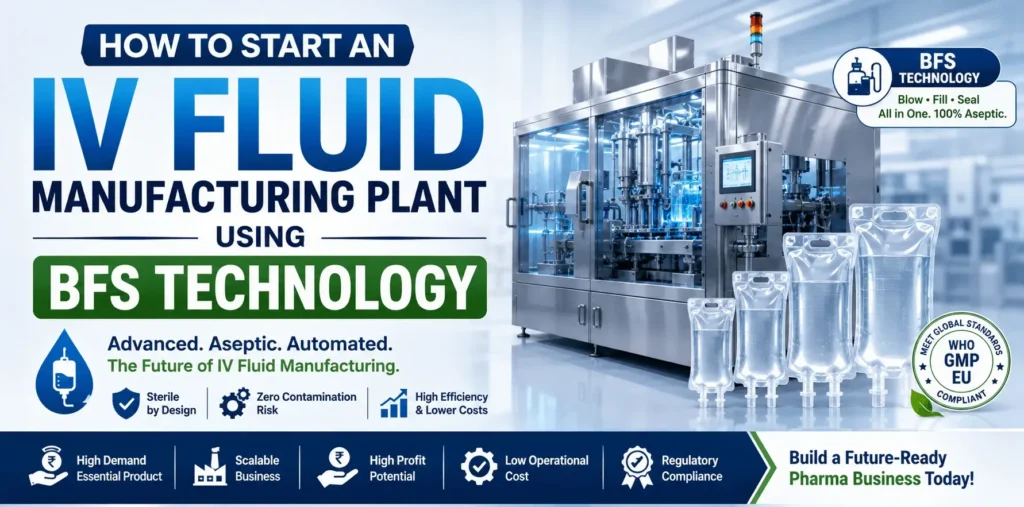
The IV Fluid Manufacturing Plant industry is witnessing rapid growth due to increasing demand for sterile injectable solutions across hospitals, emergency healthcare services, clinics, and pharmaceutical supply chains. Intravenous (IV) fluids are essential in hydration therapy, surgery, trauma care, electrolyte replacement, and drug administration, making this sector one of the most important segments in healthcare manufacturing. With advancements in Blow-Fill-Seal (BFS) technology, modern IV fluid manufacturing plants now achieve higher sterility, automation, and production efficiency while meeting global pharmaceutical standards. India is emerging as a major hub for IV fluids manufacturing due to increasing healthcare infrastructure, government support, export opportunities, and rising domestic demand. How are IV Fluids Made? The IV fluid manufacturing process generally includes: Water purification (WFI generation) Solution preparation Sterile filtration Blow-Fill-Seal packaging Leak testing and inspection Labeling and packaging Sterility testing and quality control This guide explains the complete IV fluid manufacturing plant setup process including BFS technology, plant investment, machinery, manufacturing process, licensing requirements, and profitability analysis. What is an IV Fluid Manufacturing Plant? An IV Fluid Manufacturing Plant is a pharmaceutical production facility that manufactures sterile intravenous fluids such as saline, dextrose, and electrolyte solutions using automated technologies like Blow-Fill-Seal (BFS) systems. Modern manufacturing units use BFS (Blow-Fill-Seal) Technology, which is a highly automated process that forms the container, fills it with fluid, and seals it—all in one continuous operation. This minimizes human contact and ensures maximum sterility, a must in the pharmaceutical industry. Applications of IV Fluids IV fluids play a critical role in the healthcare and medical industry. Common applications include: Hydration therapy for dehydration and fluid loss Electrolyte replacement during surgery or trauma Parenteral nutrition for patients who cannot eat Drug dilution and delivery for antibiotics and anesthetics Blood volume expansion in emergency care The constant demand from hospitals, nursing homes, and healthcare centers makes this business highly sustainable. Visit this Page for More Information: Start a Business in Intravenous Fluids Industry Why Use BFS Technology in IV Fluid Manufacturing? Blow-Fill-Seal technology revolutionized pharmaceutical packaging. Unlike traditional glass bottles or manually filled containers, BFS offers: Aseptic production with minimal human intervention Single-use packaging ideal for sterility and disposal Low contamination risk High-speed and cost-effective production Compact unit design with smaller footprints WHO-GMP compliance Adopting BFS technology ensures compliance with international regulatory bodies like WHO, FDA, and GMP. Read Similar Articles: PHARMACEUTICAL INDUSTRY Types of IV Fluids You Can Manufacture A well-planned IV Fluids Manufacturing unit can produce various types of fluids such as: Normal Saline (0.9% Sodium Chloride Solution) Dextrose Solutions (5%, 10%, 25%) Ringer’s Lactate Solution Dextrose-Saline Combination Mannitol Injections Sterile Water for Injection Multivitamin and Electrolyte Fluids Each product serves different clinical purposes and ensures a broad customer base. Related Business Plan: IV Fluids, I.V. solutions Raw Materials Required Key raw materials for manufacturing IV fluids include: Pharmaceutical-grade water (WFI – Water for Injection) Sodium chloride, dextrose, potassium chloride, calcium chloride Plastic granules (for BFS containers) Sterile filters and cartridges Labels, cartons, and secondary packaging Quality sourcing and strict vendor controls are vital to ensure patient safety and compliance with drug regulations. Related Feasibility Study Reports: I. V. Fluids IV Fluids Manufacturing Process (Using BFS) The IV Fluids Manufacturing process using Blow-Fill-Seal technology involves: Water Purification – Raw water is purified using RO + UV + EDI systems and converted into WFI. Solution Preparation – Precise quantities of solutes (like sodium chloride) are dissolved in WFI in a stainless-steel mixing tank. Filtration – The solution is filtered to remove any microbial or particulate impurities. BFS Operation – The plastic container is blow-molded, filled with fluid, and sealed—all in a sterile environment. Leak Test & Inspection – Each unit is checked for leakage, particulate matter, and clarity. Labeling and Packaging – The final product is labeled, packed, and stored in controlled conditions before distribution. This process ensures high sterility and scalability for bulk orders. Read our Books Here: Pharmaceutical, Drugs, Proteins Technology Handbooks Equipment and Machinery Required To set up a BFS-based IV Fluids manufacturing plant, the following machinery is essential: BFS Machine (Blow-Fill-Seal Unit) WFI Generation System RO Water Treatment Plant Mixing Vessels (SS316 grade) Sterile Filtration Units Online Leak Detection Machine Visual Inspection Unit Labeling and Packing Machines HVAC and Clean Room Setup A fully automated plant reduces labor requirements and enhances quality consistency. Infrastructure and Layout A medium-scale IV fluids plant will require around 10,000–20,000 sq. ft., divided into: Raw material storage Water treatment zone Sterile manufacturing (Class 100 or Class 10,000 clean room) BFS and packaging area Quality control laboratory Warehouse for finished goods Office and utility space Adherence to WHO-GMP, Schedule M, and ISO standards is mandatory for layout planning. Regulatory Approvals and Compliance The IV fluids business falls under the pharmaceutical sector, hence requires several licenses: Drug Manufacturing License under the Drugs & Cosmetics Act FSSAI license (if applicable) GMP and WHO-GMP certification Pollution Control Board NOC Fire and Factory License ISO 9001 and ISO 13485 (recommended for credibility) CDSCO and FDA approval (for exports) Proper documentation and audit readiness are essential to operate legally. Cost of Setting Up IV Fluids Manufacturing Unit The capital investment for setting up an IV fluids unit using BFS technology ranges from ?5 crores to ?15 crores, depending on: Plant capacity (number of vials/bottles per day) Degree of automation Clean room setup and certifications Location and utility costs Regulatory compliance expenses Working capital must also account for raw materials, utilities, staff salaries, and distribution. Profitability and ROI Despite high initial investment, IV Fluids Manufacturing promises strong returns: Bulk demand from hospitals and healthcare distributors High margin on sterile products (up to 30% per unit) Scalability with export opportunities Quick turnover and recurring orders You can expect to reach break-even in 3 to 5 years, especially if you establish contracts with government or private hospitals. Target Market and Sales Channels Your customers include: Government and private hospitals Emergency medical services Nursing homes and clinics Medical distributors and wholesalers Export agents and pharma chains Distribution can be done through medical
How to Start the Business of Chilli Oleoresin?
The global spice extract industry has been witnessing exponential growth, and Chilli Oleoresin is one of the most in-demand products in this segment. With its wide application in the food, pharmaceuticals, and cosmetic industries, starting the business of Chilli Oleoresin presents an excellent opportunity for entrepreneurs in India and beyond. Extracted from dried red chillies, this concentrated liquid holds the true essence, flavor, and heat of the spice, making it a sought-after ingredient worldwide. What is Chilli Oleoresin? Chilli oleoresin is a natural extract obtained from red chillies through solvent extraction. It contains capsaicin, the compound responsible for pungency, and carotenoids, which give chillies their red color. This viscous oil-based extract is used extensively in flavoring food, coloring products naturally, making pain-relief balms, and more. It’s a highly concentrated form of chilli, making it cost-effective and easy to use in bulk food manufacturing, processed food industries, and pharmaceutical formulations. Applications of Chilli Oleoresin The versatility of chilli oleoresin makes it applicable in various industries: Food Industry – Used as a flavoring and coloring agent in sauces, snacks, pickles, and spice blends. Pharmaceuticals – Capsaicin is used in pain relief creams and patches for arthritis and muscle pain. Cosmetics – Added to creams for lip plumping and slimming products. Animal Feed – Used in small quantities to improve palatability and health benefits. Pesticides and Repellents – Capsaicin acts as a natural insect and rodent repellent. Its long shelf life and effectiveness at low concentrations make it ideal for large-scale manufacturing use. Visit this Page for More Information: Start a Business in Spices Industry Why Start the Chilli Oleoresin Business? India is the world’s largest producer and exporter of red chillies, especially from Andhra Pradesh, Telangana, Karnataka, and Madhya Pradesh. This provides abundant raw material access for oleoresin extraction. Advantages of this business include: Low-cost raw material availability Rising global demand for natural food ingredients High export potential to the US, Europe, and Middle East Stable shelf-life and year-round demand Value-added product with significant profit margins With proper setup and certifications, this business can yield consistent returns. Related Business Plan: Spices and condiments, Indian Kitchen Spices, Masala Powder Raw Materials Required To begin production, you’ll need the following inputs: Dried red chillies (high capsaicin variety like Byadgi or Guntur) Food-grade solvents (like hexane or ethanol) Antioxidants (optional, to improve shelf life) Packaging containers (glass, aluminum, or HDPE drums) Deodorizing agents (optional, depending on the application) Sourcing high-quality chillies directly from farms or mandi markets ensures better yield and potency of the final extract. Read Similar Articles: SPICES Manufacturing Process of Chilli Oleoresin The process to manufacture chilli oleoresin typically involves these steps: Cleaning & Drying – Raw chillies are cleaned to remove dirt, stones, and other impurities. Grinding – Chillies are ground into powder to increase surface area for extraction. Solvent Extraction – Powdered chilli is treated with a solvent in an extractor to pull out the oleoresin. Filtration – The solvent-chilli mixture is filtered to remove solid waste. Distillation – The solvent is evaporated and recovered for reuse, leaving behind pure oleoresin. Standardization – The extract is tested and adjusted for capsaicin and color units. Packaging – The final product is packed in airtight, inert containers to maintain quality. Advanced technology like supercritical CO? extraction can also be used for a solvent-free process, though it requires higher capital investment. Click here to send your queries/Contact Us Equipment and Machinery Required To set up a small or medium-scale chilli oleoresin unit, you’ll require: Chilli cleaning and drying unit Pulverizer (chilli grinding machine) Solvent extraction vessel Filtration system Solvent recovery and distillation unit Standardization and blending tank Packaging and sealing equipment Quality testing instruments (for capsaicin and color units) Automating the process ensures uniformity, safety, and efficiency in production. Related Feasibility Study Reports: Spice Powder (turmeric, Chilli, Pepper, Coriander And Cumin Powder) Infrastructure and Space Requirements You can set up a small-scale manufacturing unit in a space of 4,000–6,000 sq. ft., including: Raw material and finished goods storage Extraction and processing room Solvent storage and recovery area Laboratory for quality control Administrative and utility rooms The facility must comply with safety standards for handling solvents and food-grade materials. Read our Books Here: Spices And Condiments Cultivation Licenses and Approvals Needed To operate the business of Chilli Oleoresin, you must obtain the following licenses: FSSAI license (for food-grade oleoresin) Factory license under local industrial norms Pollution Control Board NOC Fire safety certificate MSME/Udyam registration Export license (if targeting international markets) ISO 22000 or HACCP certification (recommended for food safety) Ensure proper documentation for audits, especially when dealing with food and export-grade products. Investment and Profitability The investment required for a chilli oleoresin extraction unit depends on capacity: Small scale (1–2 tons/day): ?25–?40 lakhs Medium scale (5–10 tons/day): ?50 lakhs–?1.5 crore Expenses include: Equipment purchase Construction and utilities Labor and raw material procurement Licensing and certifications Working capital for 3–6 months Profit margins can range from 25% to 40%, depending on product quality, branding, and market access. Export-grade oleoresin fetches significantly higher prices. Potential Buyers and Sales Channels You can sell your chilli oleoresin to: Spice exporters and traders Food processing companies Pharmaceuticals and nutraceuticals manufacturers Cosmetic companies International buyers (via export channels or B2B portals) Additionally, you can build your own brand or supply as a contract manufacturer for FMCG brands. Market Opportunities and Growth Scope You can set up a small-scale manufacturing unit in a space of 4,000–6,00Health awareness and regulatory pressure against artificial additives continue to boost the demand for natural food coloring and flavoring. The global spice oleoresin market is growing at over 6% CAGR, fueled by the rising demand from processed food and ready-to-eat sectors. sq. ft. India holds a dominant position in this market due to: Abundant raw material Skilled labor Established export channels Low-cost processing advantage Future expansion options include paprika oleoresin, turmeric oleoresin, and multi-spice extraction. Final Thoughts The business of Chilli Oleoresin offers a robust blend of profitability, scalability, and export potential. By setting up
The Business of Fatty Alcohols: Opportunities for Growth
If you’re looking to grow your business, it might be time to consider expanding into the alcohol industry. Fatty alcohols (typically referred to as fatty alcohols) are used in every kind of personal care product, and they make up the bulk of ingredients in industrial products like paints and varnishes too. Producing and developing products of fatty alcohol may not be as well-known as some other varieties of alcoholic beverages. But as research has found more and more benefits to these types of alcohol, it seems inevitable that this will grow into the next big thing for businesses who sell these type of alcoholic beverages. In fact, many companies are already starting to produce new drinks with fatty alcohols because the demand is there. Visit this Page for More Information: Start a Business in Alcohol Industry Personal Care Applications for Fatty Alcohols Include Related Business Plan: Alcohol Benefits of Starting Business of Manufacturing of Fatty Alcohols Production of fatty alcohols is a great way to get into the business of beverage manufacturing. It has a more prominent foothold than say, other types of beverages such as alcohol, wine, and coffee. Fatty alcohols are less niche in their consumer base since they are found within popular food and drink items like margarine and ice cream. This type of production also operates much differently than traditional spirit production with the ability to make adjustments on the fly without having any large consequences. Along with its versatility, this particular type of production produces more consistent results which many manufacturers will find attractive. In addition to this flexibility and consistency in results, there is an ever-growing market for these types of products making it a lucrative investment for those looking to start their own business. Fatty alcohols are typically made from natural materials that are rich in fatty acids, like oilseeds. The production process usually begins with a solvent and ends with a number of chemically altered compounds which can be used for different purposes, such as cosmetics and pharmaceuticals. Applications and Booming Opportunities in the Fatty Alcohol Industry Fatty alcohols also have numerous applications when it comes to food additives. These include hardening agents and flavor enhancers, just to name a few. Due to their versatility, they are the ideal ingredients for cooking or baking. In addition, they have many industrial uses too- especially in the paint industry. With these facts in mind, there is no doubt that these products will continue to grow as an industry. There are many benefits to using these products, such as high resistance to water and other chemicals found in paints. They are also eco-friendly because of how easily renewable sources can create them! With all of these qualities combined, it’s easy to see why the opportunities in this business sector are booming. Read Similar Articles: ETHANOL AND ALCOHOL INDUSTRY Global Market Outlook of Fatty Alcohol Business The global fatty alcohol market size was USD 5.08 billion in 2019 and is projected to reach USD 7.40 billion by 2027, exhibiting a CAGR of 5.2% during the forecast period. The market is divided into three segments based on product: C6-C10, C11-C14, and C15-C22. In 2019, the C11-C14 market segment had the lion’s share of the market. Its extensive use in the soap and detergent industry is credited with this rise. The C15-C22 category is anticipated to have rapid expansion because of the personal care industry’s growing demand. The need for C15-C22 alcohols is rising as a result of the rising demand for cosmetics items like shampoos, lotions, vanishing creams, lipsticks, and shaving creams. Click here to send your queries/Contact Us Application-Wise Market Segmentation and Growth Outlook The market is divided into applications for soaps & detergents, personal care, lubricants, amines, and others. During the projection period, the soaps and detergents category is anticipated to generate a significant market share. The expansion of this market will likely be fueled by rising personal hygiene awareness and rising standards of living in developing economies. The category is also anticipated to grow because to the increased demand for home and industrial cleaners to maintain a hygienic atmosphere. During the forecast period, the personal care segment is anticipated to be the second-largest segment. Due to increased consumer spending power, personal care products including shampoos, lotions, and essential oils are in great demand from Asia Pacific. Related Feasibility Study Reports: Alcohol From Tapioca Starch Simplifying Business Selection with Expert Guidance and Emerging Opportunities Visit the page Select and Choose the Right Business Startup for You for sorting out the questions arising in your mind before starting any business and know which start-up you can plan. We, at NPCS, endeavor to make business selection a simple and convenient step for any entrepreneur/startup. Our expert team, by capitalizing on its dexterity and decade’s long experience in the field, has created a list of profitable ventures for entrepreneurs who wish to diversify or venture. The list so mentioned is updated regularly to give you a regular dose of new emerging opportunities. Regional Market Trends and Growth Drivers in the Surfactant and Personal Care Industry In 2019, the Asia Pacific market had a value of USD 1.47 billion. Due to the growing demand from the personal care & cosmetics and surfactant sectors, it is the main driver of market growth. The market would expand exponentially under the influence of rising disposable incomes in South Korea, China, and India. Additionally, China, which is home to several of the world’s largest soap and detergent producers, is showing signs of rising usage. The market expansion in North America is related to the increasing demand for surfactants. The COVID-19 outbreak would also increase demand for sanitizers and household cleaning supplies in this area, which would encourage use. The personal care industry’s explosive demand is what distinguishes the European market. The market is expanding as a result of consumers’ growing demand for liquid soaps. Around 12.6 million tonnes of soaps and detergents were produced in the European Union in 2018, with 19%