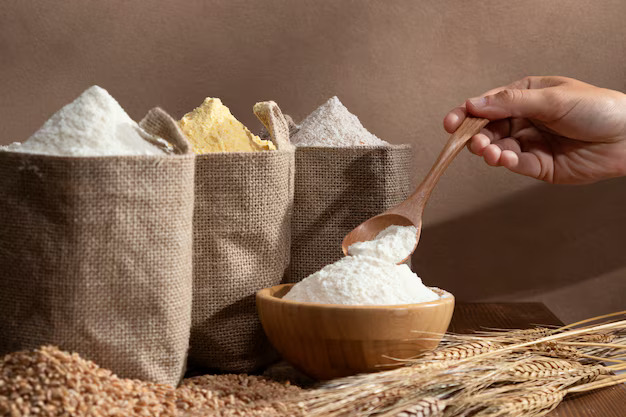

The global starch and its derivatives market are estimated to be around $75 billion as of 2023 and expect to register a CAGR of approximately 6% during the forecast period of 2018–2023. Market share is widely spread out worldwide with significant parts held by the Asia-Pacific region, North America, and Europe. The sector’s sizeable market size and constant increase price reflect its vital function in numerous sectors, showing its capacity to invest.
Visit this Page for More Information: Start a Business in Maize Processing Industry
A crucial fad in this industry is the boosting demand for ready-to-eat and convenience foods, which heavily make use of starch and its derivatives. In addition, the expanding recognition of the value of a healthy diet is driving demand for low-fat and health foods where starch plays a substantial duty. With climbing disposable revenues as well as the expanding international populace, these patterns are anticipated to proceed, better driving the growth of the industry.
However, despite the hardship such as low ROI on capital, it is still lucrative in the business of manufacturing of starch and its derivatives. A constant growth rate, along with an increasing use in multiple industries, ensures a regular income. In addition, the increase in demand from emerging markets can create more ways to make money.
There is a global production hub being seen with a substantial increase in emerging markets such as China, India, Brazil, and South Africa. Yes, localization can be essential as different jurisdictions have different deal flows and laws. For example, the European market has a strong demand for Genetically Modified Organism (GMO) free starch products, which requires production to be located closer to its final destination.
The supply chain of this industry is more stable. It starts with growing strategy these are corn, wheat and cassava. To do this, the starch from these crops is extracted and modified into a range of derivatives. Our current level of technological advancement with agriculture can help us to adapt and overcome any risks created by the changing climate.
However, the key to success lies with branding and marketing, which are extremely important traits of you want to succeed in a saturated market. Some strategies might include: Highlighting the quality and safety of your products letting people know they are GMO-free or suitable for vegans.
In this industry, technological innovation is essential. Similarly, another example where enzymatic technologies are being developed widely is the synthesis of advanced starch derivatives in a more precise way. In addition, new agricultural technologies support continuous delivery of raw materials.
The starch and its derivatives industry is poised for good growth going forward. The demand for bio-based.
The demand for bio-based adhesives in the packaging industry represents a significant opportunity. This is being driven by increasing consumer awareness and preference for sustainable and eco-friendly products. In addition, the use of starch in the production of biofuels could also offer new avenues for growth.
Expanding out further, the pharmaceutical sector is another area. The superior binding properties of modified starches has led to a rise in the incorporation of these in tablet manufacturing. The global pharmaceutical market is growing, and it is foreseen that this growth trend will lead to an ever-increasing demand for starch and its derivatives.
However, the company will be fueling its growth by tapping emerging markets like Africa and Latin America. Growing industrialization in the regions are anticipated to drive demand for starch and its derivatives especially in applications such as food & beverage industry, textile, and paper among others.
Finally, there are many opportunities for the introduction of new starch-based products. Wood researchers, for instance, are looking into more eco-friendly manufacturing of biodegradable plastic made from starch. Amid the scaling anxiety around plastic waste, this kind of innovation may well represent a big market opportunity.
The starch and its derivatives industry are on the threshold of being completely transformed by technology. Advancements are helping to increase the recovery from extraction, improve products and further unlock the creation of novel derivatives.
This is reflected in the use of biotechnology for example. Of course, genetic engineering is already increasingly applied in the production of crops yielding more and better starch. The use of Nanotechnology in Starch Extraction is also revolutionary for the 1st time. He employed the technology of nanoparticles to develop methods that are more efficient and environmentally friendly while also cutting costs and limiting waste.
Companies are expanding new enzymatic technologies that produce specific starch derivatives. They customize these derivatives to meet the demands of various industries, making them a standout option in the market for manufacturers. These developments will only further drive the industry and turn it into an exciting market to invest in.
As the starch and its derivatives are closely related to food processing and pharmaceutical industries, this industry has tight regulations doing on around from waste water discharges to purchasing wheat style carriers that will take into power some personal preferences. With many rules in place around the world mainly concerning product quality and safety, remaining compliant is a big challenge for businesses.
Regulations, though, can be a two-edged sword. For instance, regulations enforcement becoming stringent on sustainable features is creating awareness for green products. This raises the market for starch-based bioplastics and biofuels. Thus, keeping updated of going regulatory changes and adapting to them by designing out your business accordingly can be a good strategy.
Read our Books Here: Starch & Its Derivatives
Opportunity is plentiful in the industry, however there are risks and challenges as well. The largest factor is the unpredictability of prices on raw materials, which depend primarily on crop yields. When this is the case, it can affect production cost and therefore profit margins.
Moreover, the industry is threatened by substitutes. In some cases, other hydrocolloids can replace starch and its derivatives: gums, resin, etc. Emergence of new and low-price alternatives may hamper growth of the market.
In spite of this risk, the industry has an aggressive growth cyclicality and could still be hit as a valid option in contrast to other stock investments. Understanding and effectively managing these risks allows businesses to capitalize on the huge potential that the sector represents.
Starch and also its derivatives making is a strong state industry with many different investment opportunities. It flaunts a huge market, varied applications, appealing development patterns, as well as countless methods for future development. While it deals with particular threats, calculated planning and sharp management can transform these challenges right into opportunities for additional development and also productivity. For investors seeking a resilient and successful market with an intense future, the starch as well as its by-products producing industry is an excellent selection. With its strong basics and appealing expectation, it offers a compelling case for financial investment.
Localization and adjustment are crucial for success in the international starch and also its derivatives industry. Various areas have special choices as well as regulatory demands for example, Europeans consume non-GMO products where the demand for traditional foods are high in Asia with certain types of starch. Those regional differences are easy to find as long as we don’t stand too close and concentrate on the wide receiver. It could involve changing the crops being starched out, or changing the process to produce particular derivatives. These strategies serve to promote penetration within the market and increase the level of productivity.
Ecological elements are steadily ending up being a more important factor in the starch and its derivatives market. With expanding customer as well as regulative focus on eco-friendliness, producers are under pressure to make their operations extra sustainable. Small quantities are poured to reduce waste, less water and power is used; the raw are sourced responsibly. The benefits of investing in this manner are numerous, both short and long term. It enhances a company’s credibility, attract eco-friendly clients, and it may even save you money in the long run. It creates fresh opportunities as well in the burgeoning sustainable products market like bio-based adhesives and green plastics, for instance.
Mergers and also acquisitions (M&A s) are a typical method in the starch and its by-products market. They can provide a fast and also effective method to broaden market share, expand item offerings, and also access to brand-new innovations. Over the last few years, there have been numerous prominent M&A s in the market. These have actually assisted business settle their settings, improve their competition, and take advantage of harmonies. While M&A s feature their own threats, such as combination difficulties and also high prices, they can provide considerable rewards if implemented well.
This book is literally a journey, where we will walk you through the terrains of knowledge that we have so carefully constructed and organized. We made it for you, the reader who is most important to us, and we think it’s an hour well spent for anyone interested in learning more.
We, at NPCS, endeavor to make business selection a simple and convenient step for any entrepreneur/startup. Our expert team, by capitalizing on its dexterity and decade’s long experience in the field, has created a list of profitable ventures for entrepreneurs who wish to diversify or venture. The list so mentioned is updated regularly to give you a regular dose of new emerging opportunities.
Frequently Asked Question
What are starch derivatives and why are they important in the global market?
Starch derivatives are functional ingredients created by modifying natural starch through physical, chemical, or enzymatic processes to enhance properties like thickening, stabilizing, and emulsifying. They are widely used in food and beverage products, pharmaceuticals, cosmetics, and industrial applications due to their versatility, biodegradability, and cost-effectiveness. Their broad adoption across sectors drives consistent global demand.
How large is the starch derivatives market and what is its growth outlook?
The global starch derivatives market has grown significantly in recent years, reflecting rising use in processed foods, pharmaceuticals, and sustainable industrial products. Industry research shows the market is valued in the tens of billions of dollars and is expected to continue expanding steadily with a positive compound annual growth rate (CAGR) through the next decade, fueled by increased demand for clean-label and natural ingredients.
Which industries contribute most to the demand for starch derivatives?
The food and beverage industry is the largest consumer of starch derivatives, using them as thickeners, stabilizers, and texture enhancers in sauces, snacks, and beverages. Other notable applications include pharmaceuticals (as binders/disintegrants), paper and packaging, textiles, and personal care products. Non-food industrial uses, especially biodegradable materials and adhesives, are also expanding.
What are the key trends shaping the starch derivatives market?
Several trends are influencing this market:
- Clean-label and natural formulations as consumers prefer recognizable ingredients.
- Technological advancements in enzymatic and eco-friendly processing.
- Growth in sustainable applications, such as biodegradable packaging.
- Regional expansion, particularly in Asia-Pacific and emerging economies, where food processing and industrial use are increasing rapidly.