
Detailed Project Report on Printed Circuit Board (PCBs) Manufacturing Business
Printed Circuit Boards (PCBs) are at the core of all modern electronic devices, from smartphones and laptops to industrial machinery, medical equipment, and military systems. The growing digitization of industries and the explosion of smart technologies have significantly increased the global demand for PCBs. Establishing a PCB manufacturing business offers a lucrative opportunity for entrepreneurs and investors who want to capitalize on the rising electronics manufacturing market. This detailed business plan and feasibility report explores the investment needs, technical aspects, process flows, market outlook, and financial projections necessary to launch and sustain a profitable PCB manufacturing venture. Executive Summary We aim to launch a technologically advanced and scalable PCB manufacturing unit capable of producing a wide range of PCB types—single-layer, double-layer, and multi-layer boards—to cater to diverse sectors such as consumer electronics, automotive, telecommunications, aerospace, industrial automation, and defense. Our vision is to become a reliable and innovative supplier of customized PCBs that meet international quality standards. We plan to implement automated production systems, strict quality assurance protocols, and rapid prototyping capabilities to ensure our competitiveness in both domestic and export markets. Industry Outlook and Market Analysis The global PCB manufacturing market is growing rapidly and is projected to reach USD 105 billion by 2028, up from around USD 78 billion in 2023. Factors fueling this growth include: Widespread adoption of Internet of Things (IoT) devices. Emergence of electric vehicles (EVs) and autonomous driving systems. Expansion of 5G network infrastructure. Increasing use of PCBs in wearables, medical devices, and defense technology. In India, the government’s push for Atmanirbhar Bharat, rising import tariffs on foreign PCBs, and Production Linked Incentive (PLI) schemes have created favorable conditions for local manufacturing. The Indian PCB market, currently valued at USD 3.6 billion, is largely import-dependent—presenting a huge gap for domestic producers to fill. Investment and Capital Requirements Starting a PCB manufacturing business requires significant upfront capital investment. However, the long-term returns justify the initial expenditure, especially when entering a market with increasing demand and limited supply. Estimated Capital Requirements: Expense Category Estimated Cost (INR) Land and Building ?50 lakh – ?3 crore Machinery and Automation ?1 crore – ?8 crore Raw Material Inventory ?25 lakh – ?80 lakh Working Capital (6–12 months) ?50 lakh+ Licenses and Certifications ?5 lakh – ?10 lakh Utilities Setup (Water, Power) ?10 lakh – ?30 lakh Furniture, Office Equipment ?3 lakh – ?10 lakh Total initial setup cost: ?2.5 crore to ?15 crore depending on the scale and level of automation. Funding Options: Bank loans under MSME schemes SIDBI financing Equity investment from venture capitalists State subsidies and PLI scheme grants Detailed PCB Manufacturing Process PCB production is a complex process involving precise steps, advanced equipment, and stringent quality control. Here’s a comprehensive breakdown: Design & CAD Layout: Engineers use CAD software (e.g., KiCAD, Altium) to design the circuit schematic and layout. Photoplotting & Printing: Design patterns are transferred onto the copper-clad boards using UV light-sensitive film. Etching Process: Excess copper is chemically etched away, leaving only the conductive paths. Drilling Holes: High-speed CNC drills create holes for vias and component mounting. Plating Through Holes (PTH): Holes are plated with copper to ensure connectivity between layers. Solder Mask Application: An insulating solder mask layer is applied to protect the circuitry. Silkscreen Printing: Identifying marks, logos, and reference designators are printed. Surface Finishing: ENIG (Electroless Nickel Immersion Gold), HASL (Hot Air Solder Leveling), or OSP (Organic Solderability Preservative) finishes are applied. Electrical Testing & Inspection: AOI (Automated Optical Inspection), Flying Probe Testing, and ICT (In-Circuit Testing) ensure zero defects. Cutting & Packaging: Final PCBs are cut, cleaned, and packaged for delivery. Our plant will follow RoHS (Restriction of Hazardous Substances) and ISO 9001 standards to ensure global competitiveness. Licensing and Legal Requirements To legally establish and run a PCB manufacturing business, the following registrations and certifications are necessary: Company Registration (Private Limited or LLP) GST Registration Udyam (MSME) Registration Pollution Control Board Certificate Factory License (as per Factories Act) Import-Export Code (IEC) ISO 9001:2015 Quality Certification RoHS Compliance Certification Fire Safety and Environmental Clearance These ensure credibility with clients and compliance with industry norms, especially when dealing with large OEMs and government contracts. Raw Materials and Supplier Management The quality of PCB raw materials directly impacts product reliability and performance. We will establish relationships with certified suppliers in India, China, Taiwan, and Japan to source high-grade inputs. Essential Raw Materials: Copper-clad Laminates (FR-4, CEM-1, Polyimide) Copper Foil Rolls Solder Mask Inks (Green, Red, Blue, Black) Dry Films & UV Resists Etching Chemicals (Ferric Chloride, Ammonia) Drilling Bits and Routing Tools Silkscreen Inks Surface Finish Chemicals We plan to maintain a 60–90-day inventory to avoid production disruptions and mitigate price volatility. Target Market and Customer Segments Our PCB manufacturing business will cater to a wide variety of sectors: Electronics OEMs Automotive Manufacturers Consumer Device Startups Defense & Aerospace Suppliers Medical Device Companies Home Automation and IoT Ventures We will focus on B2B partnerships, offering rapid prototyping, low-to-high volume manufacturing, and custom solutions for niche requirements. Sales and Marketing Strategy A successful PCB business depends heavily on visibility, brand trust, and technical credibility. Our Key Marketing Initiatives: SEO-optimized website with instant quote features B2B platforms like IndiaMART and Alibaba LinkedIn marketing to reach tech entrepreneurs and OEM buyers Participation in trade expos (Electronica India, DEFEXPO) Webinars and technical blogs for thought leadership Google Ads targeting keywords such as “custom PCB manufacturer India”, “HDI PCB supplier”, “prototype PCB services” We will also offer loyalty discounts, volume-based pricing, and after-sales support to build long-term relationships. Financial Projections and Profitability Below are projected revenues and margins for a mid-scale plant: 1st Year: Revenue: ?2 crore Cost of Goods Sold: ?1.4 crore Net Profit: ?16 lakh ROI: 10–12% 2nd Year: Revenue: ?4.5 crore Net Profit: ?55 lakh Break-even Achieved 3rd Year: Revenue: ?7 crore+ Net Profit: ?1.2 crore+ ROI: 28–30% Long-Term Growth Avenues: Exporting to Middle East, Africa, and Southeast Asia Upgrading to flex-rigid and HDI boards Establishing in-house component assembly (EMS expansion) SWOT Analysis
Project Report on Battery Recycling Plant | Recycling of Lithium Ion Battery
As the world aggressively shifts toward electrification, the role of lithium-ion battery recycling becomes paramount. With electric vehicles (EVs), portable electronics, and renewable energy systems consuming a staggering number of lithium-ion batteries every year, the challenge of managing spent batteries has emerged as both a critical concern and a lucrative opportunity. This article provides an in-depth project report for setting up a lithium-ion battery recycling plant, exploring every vital detail from technology to profitability. Global Demand for Lithium-ion Battery Recycling The consumption of lithium-ion batteries is expected to exceed 3,000 GWh by 2030, largely driven by EV adoption, solar power storage, and increased digitization. However, most of these batteries are discarded after their lifecycle, contributing to e-waste. Recycling them not only recovers valuable metals like lithium, cobalt, and nickel but also supports sustainable manufacturing and reduces dependency on volatile mining operations. Governments and international organizations are now enforcing stricter rules around battery recycling. India, for instance, implemented the Battery Waste Management Rules, 2022, which mandate Extended Producer Responsibility (EPR) and hold manufacturers accountable for recycling spent batteries. Why Invest in a Lithium-ion Battery Recycling Plant? Setting up a lithium-ion battery recycling plant is more than a business—it’s an essential part of a green, circular economy. Here’s why this industry offers high potential: High Profit Margins: Recovered metals can be sold at competitive prices, reducing the cost of sourcing virgin materials. Policy Support: Governments are offering subsidies, tax exemptions, and technology support for green ventures. Environmental Necessity: Improper disposal leads to soil and groundwater contamination, posing ecological threats. Job Creation: Establishing a plant creates jobs across multiple disciplines including engineering, logistics, safety, and R&D. Resource Independence: It reduces the need for importing critical minerals from unstable or monopolized markets. Comprehensive Business Model Overview To run a profitable lithium-ion battery recycling unit, we need a well-structured business model involving material sourcing, advanced processing, logistics, and market linkages. Below is a detailed breakdown of each component: Raw Material Sourcing Channels Lithium-ion batteries come from various sources, including: Electric Vehicles (EVs): EV manufacturers and fleet operators produce a significant quantity of battery waste. Consumer Electronics: Mobile phones, laptops, and tablets have short battery life cycles. Industrial Applications: UPS systems and telecom towers contribute industrial-scale battery waste. E-waste Collection Drives: Municipalities, recyclers, and NGOs often run collection programs. Partnerships with vehicle dealerships, e-waste aggregators, and OEMs are essential to maintain a constant supply. Location and Infrastructure Requirements A strategically located plant near industrial zones or transportation hubs reduces logistical costs. Key infrastructure includes: Battery Discharging Units: For safe energy drainage from batteries. Crushing and Shredding Machines: Mechanical processing units to break down battery packs. Sorting and Separation Units: Equipment to segregate metals and non-metals. Chemical Processing Tanks: For hydrometallurgical or pyrometallurgical recovery. Effluent Treatment Plants (ETPs): Mandatory for treating wastewater and chemical discharge. Storage Areas: Secured storage for hazardous materials and recovered metals. A medium-sized plant that processes 10,000 tons per year typically requires a 20,000 sq. ft. space and demands an investment between ?15–25 crores.. Detailed Process Flow of Battery Recycling The core steps in the recycling of lithium-ion batteries include: Collection and Transportation: Batteries are collected, labeled as hazardous, and transported under safe conditions. Discharging: Remaining charge is safely drained to avoid fires or explosions. Mechanical Dismantling: Batteries are opened to access the internal cell components. Crushing and Sorting: Cells are crushed and materials are separated into plastics, metals, and electrode materials. Thermal Processing (Pyrometallurgy): High-temperature processing to extract cobalt, nickel, and copper. Chemical Processing (Hydrometallurgy): Acid leaching and solvent extraction to isolate lithium, cobalt, and other rare elements. Material Purification: Refinement of extracted metals to make them battery-grade. Lithium-ion battery recycling plants may also include advanced direct recycling methods, which aim to retain cathode materials in usable form. Though still developing, these methods promise higher recovery efficiency and lower environmental impact. Technology and Equipment Required Key technologies include: Automated Sorting Lines Thermal Chambers Acid Leach Reactors Solvent Extraction Columns Induction Furnaces Advanced Control Systems Dust & Emission Control Units Automation not only improves safety and output but also ensures compliance with regulatory standards. Regulatory and Legal Considerations Running a battery recycling plant requires strict compliance with environmental and safety regulations. Approvals must be obtained from: State Pollution Control Boards (SPCB) Central Pollution Control Board (CPCB) MoEFCC Directorate of Industrial Safety and Health (DISH) Hazardous Waste Handling Rules Additionally, the business must register under the Battery Waste Management Rules and obtain EPR authorization. Operational Team and HR Requirements A successful recycling plant will need: Process Engineers Chemical Analysts Environmental Scientists Machine Operators Safety Managers Logistics Coordinators Training programs should be implemented to manage hazardous material handling, fire safety, chemical exposure, and environmental protection. Costs and Financial Projections Estimated cost components for a medium-scale plant: Land & Infrastructure: ?5–8 Crores Machinery & Equipment: ?7–10 Crores Licensing & Compliance: ?1–2 Crores Working Capital: ?3–5 Crores Break-even period: Generally achievable within 3–5 years, depending on capacity utilization and market access. Revenue Generation and Market Scope Key revenue streams: Sale of recovered cobalt, lithium, nickel, copper Scrap sale of plastic and aluminum casings Service fees for battery collection and processing Carbon credits and green subsidies Given that cobalt trades at over $30,000 per ton and lithium around $20,000 per ton (2025 estimates), profitability can be significant. Global buyers include battery manufacturers, EV companies, and metal refineries. Environmental and Social Impact Lithium-ion batteries contain electrolytes and heavy metals that can pollute soil, air, and water. Proper recycling prevents: Groundwater contamination Airborne toxin release Mining-related deforestation Worker exposure to carcinogens Recycling also contributes to UN Sustainable Development Goals (SDGs), particularly in climate action, clean energy, and responsible production. Market Trends and Future Outlook Automation: Use of AI for material detection and robotic dismantling. Urban Mining: Cities becoming hubs for battery recovery from e-waste. Policy Evolution: India is expected to impose stricter EPR compliance from 2026. Battery Passport: Future regulations may require digital tracking of battery components for traceability. Companies entering the lithium-ion battery recycling market today can capitalize
Spinning Mill Business Plan | Start your own Textile Business
A well-prepared spinning mill business plan is the cornerstone of launching a successful venture in the textile industry. Spinning mills serve as the primary stage of fabric production, where raw fibers like cotton or polyester are converted into yarn. With global demand rising for textiles and clothing, spinning mills have become a lucrative business opportunity for entrepreneurs looking to invest in manufacturing. Crafting a comprehensive spinning mill business plan ensures that operational, financial, and strategic aspects are covered for smooth establishment and sustainable growth. Visit this Page for More Information: Start a Business in Textile Processing Industry Understanding Market Potential and Demand The textile industry, especially in countries like India, Bangladesh, China, and Vietnam, is witnessing consistent demand for yarn. Cotton yarn remains the most consumed material globally, but the shift toward blended and synthetic fibers is also creating new opportunities. A detailed spinning mill business plan should evaluate regional and global demand trends. With initiatives like “Make in India” and rising exports of garments, there is a need for domestic yarn production to reduce dependency on imports. Furthermore, the boom in fashion, e-commerce, and retail sectors continues to drive the need for quality yarn supply. Read Similar Articles: Textile Industry Selecting the Right Type of Spinning Mill Before diving into the technical and financial details, your spinning mill business plan must identify the type of spinning unit to be established. Ring spinning is the most commonly used method for producing fine, strong yarn, especially from cotton. Open-end or rotor spinning, though more cost-effective, produces lower-quality yarn but at higher speeds. Compact spinning offers a high-tech option, minimizing hairiness and increasing yarn strength. Synthetic spinning mills, on the other hand, focus on polyester, viscose, or blended yarns for industrial usage. Each type demands a different scale of investment, machinery, and technical workforce. Related Project Report: Rising Demand in Spinning Mill Core Components of a Spinning Mill Business Plan Your business plan should begin with a clear objective—whether you’re setting up a small-scale unit for local powerlooms or a mid-sized plant targeting garment exporters. Choosing a suitable location is essential; textile hubs like Tamil Nadu, Gujarat, and Maharashtra offer easy access to cotton, labor, and logistics. The legal structure—proprietorship, partnership, LLP, or private limited—must be decided early for funding and compliance purposes. Market analysis is another critical area: determine your target buyers, their volume requirements, and price expectations. Define your production capacity clearly—whether 5,000 or 25,000 spindles—based on market potential and investment bandwidth. Read our Books Here: Textile Spinning Raw Materials and Supply Chain Planning No spinning mill business plan is complete without detailing how raw materials will be sourced. For cotton-based mills, procuring high-quality raw cotton from farmers, ginning mills, or the Cotton Corporation of India is essential. For synthetic yarn, you’ll need reliable suppliers of polyester and viscose fibers. Other inputs like lubricants, bale wires, and packaging materials must also be planned. Establish long-term contracts with vendors to manage price fluctuations and ensure uninterrupted supply. Having a warehouse for storing raw material and finished goods helps manage seasonal volatility in cotton prices and demand cycles. Machinery and Infrastructure Setup Machinery is the biggest capital expense in any spinning mill. Depending on the yarn type and production method, you’ll need blow room machines, carding machines, draw frames, speed frames, ring frames, and winding machines. Automated humidification and waste collection systems can improve efficiency and reduce material loss. Land and infrastructure costs vary based on location and size, but a 25,000-spindle unit would typically require 2 acres of space. A reliable power supply—either from the grid or a captive source like solar—is critical. Proper layout planning ensures seamless material movement, minimal downtime, and optimum worker efficiency. Related Feasibility Study Reports: TEXTILE BLEACHING Financial Requirements and Investment Estimates The capital requirement for a spinning mill depends on scale and automation. A small-scale unit might need ?3–5 crore, while a medium-sized unit can go up to ?15–20 crore. Machinery alone could cost around 60–70% of the total investment. Other costs include land acquisition, construction, utilities setup, and working capital for raw materials and wages. Your spinning mill business plan should include a detailed project report with capital investment, operating expenses, expected revenue, ROI, and breakeven analysis. To fund the project, you may explore term loans, subsidies under the TUFS scheme, MSME loans, and even private equity if the scale is large. Licensing and Regulatory Compliance Running a spinning mill requires several registrations and approvals. These include Udyam (MSME) registration, GST registration, a factory license from the Department of Factories and Boilers, and pollution control clearances. Labor law registrations such as PF and ESI are mandatory once you employ a sizable workforce. Some states offer incentives to textile businesses, including interest subsidies and tax benefits. For export operations, you’ll also need an Importer Exporter Code (IEC). Ensuring all documentation is in place will safeguard your business from legal disruptions and delays in commissioning. Workforce Requirements and HR Planning Manpower planning is another crucial element in your spinning mill business plan. Skilled workers are needed for machinery operation, quality control, packing, and maintenance. Supervisors and shift managers oversee daily production targets, while administrative staff handle procurement, accounting, and compliance. A medium-sized unit may require 100–150 workers across shifts. Providing housing or transport facilities may improve retention in rural areas. Staff training is essential to reduce machine downtime and improve output quality. Labor laws and safety regulations must be strictly adhered to, including regular health checks, safety drills, and insurance. Sales and Marketing Strategy Producing yarn is just half the game—the other half lies in selling it effectively. Your spinning mill business plan should outline marketing channels. These can include selling directly to fabric manufacturers, exporters, powerloom units, or through yarn brokers. Digital platforms like IndiaMART and TradeIndia also offer B2B sales avenues. Participating in textile expos, partnering with apparel manufacturers, and offering consistent quality at competitive rates helps build long-term buyer relationships. Branding your yarn with certifications and quality seals can help gain
Start Small and Medium-Sized Businesses in Burkina Faso
Burkina Faso, a landlocked West African country, is gradually becoming a destination of interest for investors and entrepreneurs looking for stable and promising markets in Francophone Africa. Despite challenges in infrastructure and security, the country has shown resilience in sectors like agriculture, textiles, mining, and services. In this dynamic landscape, medium-sized businesses in Burkina Faso are playing a pivotal role in economic growth, job creation, and value generation. These businesses act as the bridge between micro-enterprises and large corporations, often spearheading innovation and regional trade in a country with evolving business dynamics. Importance of Medium-Sized Enterprises in the Burkinabé Economy Medium-sized businesses in Burkina Faso contribute significantly to GDP, employment, and diversification of economic activity. These businesses are especially critical in key sectors like food processing, textiles, renewable energy, and construction. They not only create employment for locals but also drive import substitution, reduce dependency on foreign products, and enhance regional competitiveness. As the government strengthens its support for the private sector through tax incentives, funding programs, and ease-of-doing-business reforms, the role of medium-sized businesses becomes even more crucial in building a resilient economy. Start a Business in Burkina Faso 1. Agro-Processing Units One of the most thriving segments for medium-sized businesses in Burkina Faso is agro-processing. Businesses that process agricultural produce like shea nuts, groundnuts, mangoes, sesame, or cotton into exportable or value-added products have seen remarkable growth. These enterprises supply both local and international markets while reducing post-harvest losses and creating employment, especially for women and rural communities. 2. Construction & Building Materials With rapid urbanization in Ouagadougou and Bobo-Dioulasso, the demand for infrastructure and housing is rising. Medium-sized businesses producing cement blocks, tiles, paints, doors, and other construction materials are booming. Additionally, construction service providers—ranging from engineering firms to general contractors—have become vital contributors to national infrastructure projects. 3. Textile and Garment Manufacturing The country has a strong tradition in cotton cultivation, and medium-sized businesses in the textile sector are tapping into this local advantage. Enterprises involved in spinning, weaving, dyeing, and tailoring are making strides both locally and through exports to neighboring countries. The popularity of Faso Dan Fani (traditional woven cotton cloth) presents cultural and commercial opportunities. 4. Renewable Energy Installations Given the inconsistent electricity supply and growing need for energy in rural areas, businesses involved in solar energy solutions are among the fastest-growing medium-sized businesses in Burkina Faso. These include companies that sell, install, and maintain solar panels, batteries, and inverters for homes, farms, and small enterprises. 5. Small-Scale Mining and Equipment Supply Burkina Faso is one of Africa’s leading producers of gold. Medium-scale mining businesses—especially those involved in gold buying, refining, and equipment leasing—are playing a central role in the value chain. These businesses support thousands of artisanal miners while also benefiting from global demand for precious metals. Start a Business in Africa 6. ICT Services and Software Solutions With the expansion of mobile and internet access, ICT firms have emerged to serve businesses and public sector needs. Medium-sized enterprises offering software development, digital payment solutions, IT maintenance, and cloud-based services are rapidly gaining ground in urban centers. 7. Water Bottling & Beverage Production In response to increasing demand for safe drinking water and beverages, many medium-scale businesses have established water bottling plants and local juice production units. These businesses reduce reliance on imported drinks and promote local fruits like baobab, mango, and hibiscus. 8. Logistics and Transportation Landlocked Burkina Faso depends heavily on overland logistics. Medium-sized transport companies that offer freight services to and from ports in Côte d’Ivoire, Ghana, and Togo are vital for the flow of goods. Also, local courier services within cities are becoming increasingly important in the digital commerce space. 9. Education and Vocational Training Medium-sized private schools, colleges, and vocational training centers are meeting the growing demand for quality education. These institutions focus on skills like mechanics, tailoring, IT, and agribusiness—preparing the youth for a more competitive job market. 10. Hospitality and Tourism Despite periodic security concerns, medium-sized businesses in Burkina Faso continue to invest in guesthouses, mid-range hotels, travel agencies, and local tour services. Cultural tourism—centered around the Mossi heritage and music festivals—is an area with untapped potential, especially in relatively safe regions. 11. Printing and Publishing In cities like Ouagadougou, printing and publishing businesses—especially those offering corporate branding, packaging, textbooks, and marketing materials—are essential service providers. These medium-sized businesses serve NGOs, schools, government agencies, and the private sector. 12. Healthcare Clinics and Pharmacies With a growing urban population, private healthcare facilities are rising. Medium-sized businesses operating clinics, diagnostic labs, and licensed pharmacies fill gaps left by the public health sector and cater to the middle-class demographic. 13. Car and Motorcycle Dealerships As vehicle imports rise, medium-sized dealerships that sell new or used cars and motorbikes are multiplying. These businesses often provide value-added services like insurance facilitation, spare parts sales, and maintenance—making them integral to urban mobility. 14. Waste Management and Recycling Environmental consciousness is increasing, and so is the business opportunity in waste collection and recycling. Some businesses now process plastics, paper, and metals into reusable materials. Waste-to-energy projects are also under development, providing green solutions to urban problems. 15. Retail Supermarkets and Wholesale Distribution Medium-sized retail chains and wholesalers are expanding in both urban and peri-urban areas. These businesses stock food, beverages, toiletries, and household goods, creating jobs and improving access to essential products for growing communities. Final Thoughts The development of medium-sized businesses in Burkina Faso is essential for bridging the gap between subsistence trade and industrial growth. These businesses offer not only local employment but also opportunities for innovation, regional trade, and sustainable development. As investment climates improve and digital tools become more accessible, medium enterprises will continue to play a key role in Burkina Faso’s transformation into a self-reliant and inclusive economy. Entrepreneurs who can combine local insight with scalable strategies will find long-term success in this dynamic West African nation. Watch Video: Startup Business Opportunities in Africa See More Links: Related Projects Start a Business in Potential Countries
Top 15 Best Business Opportunities in Vietnam for Startups | Doing Business in Vietnam
Vietnam’s thriving economy, youthful population, and increasing global trade presence make it a strategic location for entrepreneurs. Whether you’re a local innovator or a foreign investor, the nation offers an array of sectors ready for exploration and investment. From agriculture and education to tech and tourism, the best business opportunities in Vietnam provide a solid path to profitability. With relatively low startup costs, government support for SMEs, and access to fast-growing consumer markets, Vietnam has become a magnet for smart business ideas and scalable ventures. Let’s explore the most rewarding sectors you can tap into in 2025. Start a Business in Vietnam, Click Here Why You Should Invest in Vietnam’s Business Landscape The Vietnamese economy is one of Asia’s rising stars, with consistent GDP growth, favorable demographics, and increasing digital adoption. The government’s policies supporting entrepreneurship and foreign direct investment (FDI) create a healthy ecosystem for starting new ventures. That’s why so many investors are actively searching for the best business opportunities in Vietnam today. Start a Business in Asia 1. Technology & Software Development Vietnam is home to a growing base of talented software developers and engineers. Establishing a tech startup, software development company, or mobile app business targeting domestic or international markets is one of the best business opportunities in Vietnam, especially in cities like Ho Chi Minh and Da Nang. 2. Export of Agricultural Products As an agricultural powerhouse, Vietnam exports rice, coffee, pepper, cashew nuts, and more. Starting an export business focusing on high-quality, certified agricultural goods offers immense potential. Demand from Europe, the U.S., and ASEAN countries continues to rise, making this a lucrative option. 3. E-Commerce Store With Vietnam’s internet penetration surpassing 75%, launching an e-commerce platform or niche online store is a modern and scalable business. Selling fashion, electronics, beauty products, or even handmade goods online can result in quick growth. Shopee, Lazada, and TikTok Shop are local platforms ripe with opportunities. Related Market Research Reports 4. Organic Farming and AgriTech Consumer awareness about health and food safety is rising. Investing in organic vegetable farming using modern agri-tech methods such as hydroponics or smart irrigation is considered one of the best business opportunities in Vietnam for future-ready entrepreneurs. 5. Renewable Energy Solutions Vietnam is investing heavily in solar and wind energy. Starting a solar panel installation company, clean energy consultancy, or energy storage solution service can position you well in this green transition. Government subsidies and rural energy demand make this sector highly promising. 6. English Language Training Centers English proficiency is in high demand due to Vietnam’s globalizing workforce. Opening a training center focused on conversational English, business communication, or IELTS/TOEFL prep is a strong educational venture. It’s especially rewarding in Tier 2 and 3 cities where options are limited. 7. Tourism & Travel Services Vietnam is rich in culture, nature, and heritage. Launching a boutique travel agency, local guide service, eco-tourism venture, or customized travel planner can provide steady revenue. With tourism bouncing back post-COVID, this is again among the best business opportunities in Vietnam. Start a Business in Potential Countries for Doing Business 8. Co-working & Shared Office Spaces With the rise in startups and freelancers, the need for affordable, flexible workspaces is growing. Starting a co-working space in urban centers like Hanoi, HCMC, or Da Nang can attract remote workers, digital nomads, and small teams looking for cost-effective solutions. 9. Pet Care & Pet Products Vietnam’s urban population is embracing pet ownership. A business focused on pet grooming, pet food, accessories, or veterinary services has high growth potential. This is a unique niche that’s trending upward in major cities. 10. Mobile App-Based Delivery Services Delivery-based apps for groceries, medicine, laundry, or meals are growing in demand in Vietnamese cities. Creating a hyperlocal delivery service app can tap into the fast-paced urban lifestyle and offer great monetization via partnerships and subscriptions. 11. Manufacturing for Export Vietnam is a leading global manufacturing hub. Starting a small-scale manufacturing unit for garments, footwear, electronics components, or furniture can help you export to international clients. With access to low-cost labor and trade agreements, this ranks high among the best business opportunities in Vietnam. Related Market Research Reports 12. Online Education Platforms Vietnamese parents are investing more in their children’s education. Launching an online tutoring platform for school subjects, soft skills, or test prep (in Vietnamese or English) is a timely opportunity. This model offers scalability with minimal overhead. 13. Health & Wellness Products Vietnam’s growing middle class is increasingly health-conscious. Starting a business around herbal teas, traditional medicines, dietary supplements, or natural skincare products made from local ingredients is both culturally relevant and profitable. Best Industry for Doing Business 14. Real Estate & Property Management Real estate in Vietnam remains strong, especially in Tier 2 cities. Starting a real estate consulting, property management, or rental service business for locals and expats can bring significant commissions and passive income opportunities. 15. Waste Management & Recycling With rising concerns about pollution and sustainability, businesses offering eco-friendly waste disposal, plastic recycling, or composting services are in demand. This is not only profitable but also contributes to Vietnam’s long-term environmental goals. Start a Business in Africa Final Thoughts From traditional industries like agriculture and tourism to modern sectors like software development and e-commerce, these best business opportunities in Vietnam offer strong growth prospects and manageable startup requirements. Vietnam is not just a low-cost destination but a fast-developing market where innovation, sustainability, and digital transformation are shaping the future. Whether you’re looking for high-profit margins, long-term scalability, or simply a reliable income stream, choosing the right opportunity in the right niche can help you build a successful business in this vibrant country. Business Ideas with Low, Medium & High Investment NIIR PROJECT CONSULTANCY SERVICES, DELHI An ISO 9001:2015 Company ENTREPRENEUR INDIA 106-E, Kamla Nagar, Opp. Mall ST, New Delhi-110007, India. Email: npcs.ei@gmail.com info@entrepreneurindia.co Tel: +91-11-23843955, 23845654, 23845886 Mobile: +91-9097075054, 8800733955 Website: https://www.entrepreneurindia.co https://www.niir.org Contact Us
Top 30 Most Successful Small Business Ideas for Startups in Vietnam
Introduction The top 30 most successful small business ideas are proof that you don’t need a huge investment or a big office to build a profitable business. Today’s entrepreneurs are solving real-world problems with small but powerful ventures that offer consistent income and long-term scalability. Whether you want to start a side hustle or build a full-time enterprise, small businesses are the foundation of any strong economy. In this blog, we’ve compiled 30 successful business ideas that are practical, in-demand, and suitable for both beginners and experienced entrepreneurs. Start a Business in Vietnam, Click Here Explore the Top 30 Most Successful Small Business Ideas to Start Today The top 30 most successful small business ideas listed here cover a wide range of industries, including food, technology, services, and manufacturing. These ideas require low to medium investment and can be started even from home or with a small team. Start a Business in Asia 1. Tiffin and Meal Delivery Service A home-cooked meal is always in demand, especially among working professionals and students. With minimal kitchen equipment, you can start a daily tiffin or meal box delivery service. Related Market Research Reports 2. Digital Marketing Agency With every business going online, digital marketing services like SEO, social media management, and paid ads are high in demand. You can run this business from a laptop. Start a Business in Middle East 3. Freelance Content Writing Content writers are the backbone of blogs, websites, and social media. If you have a flair for writing, start offering article and blog services to startups, agencies, and brands. Start a Business in Potential Countries for Doing Business 4. Graphic Design Studio From logo creation to social media posts and packaging design, graphic designers are needed everywhere. This creative business idea requires software skills and a strong portfolio. Related Book 5. Customized Gift and Hamper Business Personalized gifts, hampers, and occasion-based boxes are trending. You can create festive or corporate hampers with custom branding and packaging. 6. Handmade Candle Making Candle making is one of the most profitable and aesthetic home businesses. You can sell scented, decorative, or therapeutic candles online and at flea markets. 7. Mobile Car Wash and Detailing People prefer convenience, and a mobile car cleaning service that visits homes or offices is an ideal low-investment venture with repeat customers. 8. Dropshipping E-commerce Store With no inventory needed, dropshipping allows you to sell products through an online store while a third-party supplier handles delivery. 9. Coaching and Online Courses Whether it’s language learning, digital skills, or yoga, creating online coaching programs or live classes is a booming industry with great margins. 10. Tailoring and Alteration Services Tailoring is a timeless business that never goes out of style. From bridal fittings to daily wear alterations, this small business has a steady market. 11. Bakery or Home Baking From cupcakes and cookies to designer cakes, baking is a deliciously rewarding business. You can sell online, via Instagram, or to local cafés. 12. Pet Grooming and Pet Sitting As pet ownership increases, so does the demand for grooming, boarding, and care. A mobile grooming service or pet daycare is a great startup idea. 13. Photography and Videography Services From weddings to business branding shoots, photographers with creative vision are always in demand. Start small, rent gear if needed, and grow with your portfolio. Best Industry for Doing Business 14. Tutoring or Homework Help With education moving online, students and parents are seeking virtual tutors. You can teach academic subjects, competitive exams, or soft skills. 15. Printing and Merchandise Customization T-shirts, mugs, bottles, and diaries—custom printing has found its place in corporate gifting, influencer merchandise, and birthday returns. 16. Handicraft or Crochet Items If you have crafting skills, turn them into a business. Handmade jewelry, crochet toys, home décor, or wall art can fetch high returns in niche markets. 17. YouTube Channel or Podcast With great content, even a small creator can go viral. Monetization comes through ads, sponsorships, affiliate marketing, and merchandise. Business Ideas with Low, Medium & High Investment 18. Mobile Repair and Accessories Store With smartphones ruling our lives, repair services, tempered glass installations, and mobile accessories are a profitable business anywhere. 19. Used Books and Pre-Loved Products Store Selling used books, clothes, or furniture appeals to both environmentally conscious and budget-conscious consumers. 20. Courier Franchise or Logistics Partner You can start a courier franchise or be a pickup/drop point for major logistics companies. This model ensures daily earnings and growing demand. 21. Event Planning and Decoration From birthdays and weddings to baby showers and corporate parties, event planners are needed for end-to-end coordination and décor. 22. Stationery and Office Supply Store Start an online or local store selling notebooks, pens, files, planners, and school supplies. You can cater to businesses and educational institutions. 23. Online Reselling Business Apps like Meesho and Amazon allow individuals to become resellers without inventory. Just market and sell products through your phone. Looking for Most Demandable Business Ideas for Startups 24. Bamboo or Eco-Friendly Products Eco-friendly products such as bamboo toothbrushes, bags, and containers are trending. This business aligns with sustainable consumer habits. 25. Personal Fitness Trainer or Yoga Instructor You can run one-on-one or group sessions online or at home. Certification, consistency, and testimonials are key to growth in this business. 26. Social Media Influencer or Affiliate Marketer If you can build a niche audience, brands will pay you to promote their products. Affiliate marketing also offers passive income from product links. 27. Virtual Assistant Services Small businesses and solopreneurs often need help with admin tasks, emails, scheduling, and data entry. You can offer this remotely as a freelancer. 28. Resume and Cover Letter Writing Service Job seekers often need help crafting professional resumes and cover letters. If you have HR or writing skills, this is a valuable service business. 29. Herbal or Organic Skincare Products The demand for chemical-free skincare has opened up opportunities in DIY or small-batch organic creams, scrubs, soaps, and oils. 30. Laundry
Top 10 Profitable Investment Opportunities in Vietnam for Entrepreneurs | Doing Business in Vietnam.
10 profitable investment opportunities in Vietnam are capturing the attention of global investors and entrepreneurs as the country transforms into one of Southeast Asia’s most dynamic economies. With its strategic location, young workforce, rapidly expanding middle class, and business-friendly government, Vietnam offers a fertile environment for diverse investments across multiple sectors. In recent years, Vietnam has positioned itself as a reliable alternative to China for manufacturing, a rising consumer market, and a digital economy hub. Whether you’re a seasoned investor or a new entrepreneur seeking international expansion, Vietnam offers long-term, scalable, and profitable opportunities. Manufacturing and Export-Based Industries – Investment Opportunities in Vietnam Vietnam has emerged as a manufacturing powerhouse, thanks to its low labor costs, trade agreements (like EVFTA and CPTPP), and government incentives for foreign direct investment (FDI). Electronics, garments, textiles, furniture, and automotive components are among the leading export-oriented manufacturing sectors. Foreign companies are setting up plants in industrial parks in provinces like Bac Ninh, Binh Duong, and Ho Chi Minh City. With increasing global supply chain diversification, this sector promises high returns and scalable operations. 2. Real Estate and Urban Development Vietnam’s real estate market is thriving due to urbanization, rising incomes, and a booming expat and tourism population. Key cities like Hanoi, Ho Chi Minh City, and Da Nang are hotspots for commercial, residential, and mixed-use developments. High-rise apartments, retail spaces, hotels, industrial parks, and logistics hubs are all investment-friendly verticals. Foreign investors are allowed to purchase certain property types under Vietnamese law, making this sector accessible and profitable. Long-term returns, rising property values, and strong rental yields make real estate a safe bet in Vietnam. 3. Renewable Energy Projects With energy demand expected to double by 2030, Vietnam is making massive strides in wind, solar, and biomass energy. The government aims to increase the renewable share of the energy mix to reduce reliance on coal and imported fuel. Foreign investments in solar farms, wind power projects (especially offshore), and clean-tech infrastructure are highly encouraged and benefit from tax breaks and power purchase guarantees. This sector aligns well with ESG-focused portfolios and global climate initiatives. 4. Tourism and Hospitality Vietnam’s tourism industry has bounced back post-COVID and continues to expand. Cultural tourism, eco-resorts, wellness retreats, adventure travel, and luxury hospitality are growing segments. With over 100 million domestic travelers and millions of international tourists annually, there’s a clear opportunity in boutique hotels, themed resorts, tour agencies, and service-based travel tech platforms. The country’s long coastline, UNESCO heritage sites, and cultural diversity provide an unbeatable value proposition for tourism investors. 5. Agriculture and Food Processing Vietnam is among the world’s top exporters of rice, coffee, pepper, and seafood. Investment opportunities exist in high-value agriculture, organic farming, aquaculture, and food processing facilities. Investors can also explore packaging innovation, cold-chain logistics, and export-based agribusiness for Europe, Japan, and North America. With growing demand for traceable, sustainable produce, modern agritech solutions such as hydroponics and smart irrigation are gaining ground. 6. E-commerce and Retail Tech Vietnam’s digital economy is booming, with over 70% internet penetration and a young, mobile-first population. E-commerce giants like Shopee, Tiki, and Lazada have made online shopping a part of daily life. Investment opportunities abound in: Online marketplaces Last-mile logistics B2B e-commerce platforms Payment gateways and digital wallets Omnichannel retail infrastructure Investors can also partner with local brands to digitize traditional retail operations or import foreign products for online sale. 7. Education and EdTech Solutions The Vietnamese population places a high value on education. With a rapidly growing middle class and increasing focus on English proficiency, STEM learning, and digital literacy, the demand for quality education is skyrocketing. Investors can explore opportunities in: International schools and language centers Vocational and technical training institutes Online learning platforms and education apps Early childhood education and skill-based learning programs Hybrid models that combine in-person teaching with digital learning are particularly promising. 8. Healthcare and Pharmaceuticals Vietnam’s healthcare sector is undergoing transformation with rising investment in infrastructure, hospitals, and diagnostic centers. An aging population and increased health awareness are driving this demand. Opportunities exist in: Private clinics and specialty hospitals Medical equipment distribution Health tech platforms for telemedicine Pharmaceutical manufacturing and distribution There is strong potential for public-private partnerships (PPPs), especially in rural and underserved regions. 9. Logistics and Supply Chain Infrastructure Vietnam’s geographic advantage near key shipping lanes and its proximity to China make it ideal for logistics and warehousing businesses. The rise of e-commerce and FDI in manufacturing has led to a boom in third-party logistics (3PL), fulfillment centers, and industrial parks. Investors can look into: Cold storage and distribution Inland container depots Last-mile delivery startups Smart logistics solutions using IoT and AI Government projects like the North–South Expressway and expanded seaport capacity are further boosting the logistics ecosystem. 10. Financial Services and Fintech With a large unbanked population and rapid digital adoption, Investment Opportunities in Vietnam is one of Southeast Asia’s hottest fintech markets. The government is encouraging cashless payments and digital financial services as part of its long-term national development plan. Invest in: Peer-to-peer lending platforms Mobile banking and neobanking startups Micro-insurance services Wealthtech and robo-advisory platforms Collaborations with traditional banks and telcos offer scalable entry points into the Vietnamese fintech space. Conclusion These 10 profitable investment opportunities in Vietnam clearly highlight the country’s immense economic potential across various high-growth sectors. From traditional industries like agriculture and manufacturing to emerging ones like fintech and renewable energy, Vietnam offers a balanced and investor-friendly environment. Strong GDP growth, political stability, pro-business reforms, and global trade integration make it a top choice for international investors. Whether you are looking to expand your business footprint, relocate your supply chain, or diversify your portfolio, Vietnam should be on your radar. https://www.entrepreneurindia.co/ https://www.niir.org/ NIIR PROJECT CONSULTANCY SERVICES, DELHI An ISO 9001:2015 Company ENTREPRENEUR INDIA 106-E, Kamla Nagar, Opp. Mall ST, New Delhi-110007, India. Email: npcs.ei@gmail.com info@entrepreneurindia.co Tel: +91-11-23843955, 23845654, 23845886 Mobile: +91-9097075054, 8800733955 Website: https://www.entrepreneurindia.co https://www.niir.org Contact Us
Business Ideas & Production Opportunities in Bamboo Industry
In recent years, global awareness regarding environmental sustainability has grown rapidly. One of the industries seeing a noticeable shift is oral hygiene. The bamboo toothbrush, a biodegradable alternative to plastic toothbrushes, has become an eco-conscious trend embraced by millions. The bamboo toothbrush market is not just a trend—it’s a profitable business opportunity with long-term potential. This article explores the complete business plan for entering the bamboo toothbrush industry, highlighting essential steps, investment needs, market demand, and opportunities for growth. Why Start a Bamboo Toothbrush Business? The world is gradually turning away from plastic. More than 3.5 billion plastic toothbrushes are discarded every year, taking over 500 years to decompose. This creates a significant environmental hazard. In contrast, a bamboo toothbrush is sustainable, biodegradable, and equally effective for dental hygiene. There is a sharp rise in demand for eco-friendly consumer products, especially among millennials and Gen Z, who prioritize sustainability in their purchases. This growing demand makes the bamboo toothbrush a viable product with a strong market base. Market Analysis The global bamboo toothbrush market is growing steadily. Countries like India, the USA, UK, Germany, and Australia are witnessing rising interest in zero-waste and plastic-free products. E-commerce platforms like Amazon, Flipkart, Etsy, and eco-specific online stores are flourishing with bamboo toothbrush listings. The business has high export potential, especially when combined with eco-friendly packaging and certifications like “cruelty-free” and “organic.” Additionally, the Government of India has been encouraging eco-entrepreneurship under various schemes like Startup India, which makes this venture a suitable fit for young entrepreneurs. Target Audience The bamboo toothbrush business caters to a diverse audience: Environmentally conscious consumers Vegans and zero-waste lifestyle followers Health-conscious individuals Eco-friendly product retailers Sustainable gift providers Creating a strong brand identity focused on values like eco-consciousness, hygiene, and innovation will resonate well with this target group. Product Development The success of a bamboo toothbrush business largely depends on the quality of the product and branding. The typical components of a bamboo toothbrush include: Handle: Made from organic bamboo, often heat-treated for water resistance and smoothness. Bristles: Usually nylon-4 or plant-based options, designed to be soft or medium for different dental needs. Packaging: Recyclable, compostable boxes or cloth bags for an eco-friendly touch. Some brands also offer bamboo toothbrushes with charcoal-infused bristles for added antibacterial properties or child-sized versions for broader appeal. Manufacturing Options There are two common routes to start production: Own Manufacturing Unit: Requires more investment, land, machines, and labor. Offers complete control over quality and branding. OEM (Original Equipment Manufacturing): Partner with existing bamboo toothbrush manufacturers and sell under your own brand. For startups with limited capital, OEM is ideal. Once the brand gains traction, transitioning to own manufacturing can increase profit margins. Investment Requirements Starting a bamboo toothbrush business is relatively affordable compared to many other manufacturing setups. Below is a basic cost breakdown: Expense Category Estimated Cost (INR) Raw Materials (Bamboo, Bristles, Packaging) ?1,00,000 – ?2,00,000/month Machinery (for own setup) ?5,00,000 – ?8,00,000 OEM Initial Order (for resellers) ?50,000 – ?1,00,000 Branding, Logo, Design ?20,000 – ?50,000 Marketing & Website ?30,000 – ?70,000 Certification & Licensing ?10,000 – ?25,000 Depending on the scale, the initial investment can range from ?1.5 lakh to ?10 lakh. Legal and Certification Requirements Running a bamboo toothbrush business requires a few legal compliances to ensure safety and authenticity: GST Registration MSME/Udyam Registration Trade License FSSAI (if promoting for health use) Eco-certifications like FDA approval, cruelty-free, or ISO standards if targeting export markets. These add credibility and ease entry into premium markets and e-commerce platforms. Branding and Packaging Branding plays a crucial role in differentiating your bamboo toothbrush business. Some branding tips include: Use earthy and green tones in logos and packaging. Choose eco-friendly packaging that is minimal yet attractive. Clearly communicate product benefits on the packaging, such as “biodegradable handle”, “BPA-free bristles”, “100% vegan”, etc. Offer QR codes that link to your brand story or sustainability impact. Developing a story around your brand’s mission, such as reducing plastic waste or supporting rural artisans, creates an emotional connection with customers. Marketing Strategy A strong digital presence is essential for success. Here’s a strategic plan: 1. Social Media Marketing Leverage platforms like Instagram, Pinterest, and Facebook to highlight product features, behind-the-scenes production, eco-tips, and customer reviews. 2. Influencer Collaborations Partner with eco-influencers or dentists to promote your bamboo toothbrush brand. Their testimonials can create trust and credibility. 3. Content Marketing Create blogs and videos about oral hygiene tips, environmental benefits of bamboo products, and sustainable living. 4. E-commerce Integration Sell on Amazon, Flipkart, Meesho, and niche eco-websites. Create your own Shopify or WooCommerce store for brand independence. 5. Offline Retail Approach organic stores, supermarkets, and pharmacies for consignment or wholesale distribution. Opportunities for Growth The bamboo toothbrush business holds various opportunities: a) Product Line Expansion Bamboo tongue cleaners Bamboo dental floss Bamboo combs Travel pouches or eco-kits b) Corporate Gifting Offer bulk bamboo toothbrushes to companies looking for eco-friendly gifts. c) Subscription Boxes Create monthly oral-care eco-boxes with toothbrushes, floss, toothpaste tablets, etc. d) Export Potential The international demand for sustainable products is rising. Indian-made bamboo toothbrushes can be exported to Europe, the US, Canada, and Australia. e) Customized Branding Offer white-label or custom branding options to influencers or health coaches. Risks and Challenges Like any business, this one comes with challenges: Raw Material Quality: Ensure bamboo is organically sourced and treated for durability. Bristle Disposal: Though biodegradable handles are eco-friendly, most bristles are nylon-based. Educate customers on how to dispose of them properly. Market Competition: The eco-product space is becoming saturated. Differentiation is key. Pricing: Bamboo toothbrushes are costlier than plastic ones. Emphasize value through education and branding. Profit Margin The profit margin in the bamboo toothbrush business can be quite healthy if managed efficiently. On average: Cost Price (per toothbrush): ?10 – ?25 (bulk manufacturing) Selling Price (retail): ?50 – ?150 Profit Margin: 50% – 70% Higher margins are possible through direct-to-consumer models, subscription services, and value-added product combos. Sustainability Impact One of the most
Manufacturing of Lemon-Lime Flavoured Soft Drink (Nimbu Pani) with Lemon Juice.
Starting a lemon lime soft drink business is an exciting and profitable venture, especially in a country like India where refreshing beverages like Nimbu Pani have high demand throughout the year. This business combines traditional flavors with modern bottling and branding techniques, offering great opportunities in both rural and urban markets. With rising temperatures and increasing health consciousness, people are shifting towards natural, citrus-based drinks, making this a timely opportunity for entrepreneurs. Why Start a Lemon Lime Soft Drink Business? The lemon lime soft drink market has seen tremendous growth over the last few years. Consumers are increasingly choosing flavored beverages over aerated sodas, and lemon-based drinks provide a tangy, hydrating alternative. The drink, often seen as a packaged version of India’s traditional Nimbu Pani, can be marketed as a natural thirst-quencher and health-friendly choice. Some advantages of starting this business include: Low initial investment compared to other manufacturing setups. High demand throughout the year, especially in hot climates. Possibility to scale up quickly by targeting local retailers and online marketplaces. Flexibility to offer multiple packaging options—PET bottles, glass bottles, cans, or tetra packs. Opportunity to create a brand identity based on “desi flavor with a modern twist.” Market Potential for Lemon Lime Soft Drink The Indian beverage industry is estimated to be worth over $30 billion and continues to grow rapidly. The lemon lime soft drink category is a significant contributor to this market, with both local and multinational brands competing. Despite competition, there’s always room for innovative players offering something unique, such as preservative-free drinks, organic lemons, or unique packaging formats. Cities, towns, and even villages welcome new soft drink options, especially during summers and festive seasons. If you can ensure quality, taste consistency, and attractive pricing, there’s a solid chance to grab market share. Step-by-Step Guide to Start the Business 1. Business Planning Before diving in, create a comprehensive business plan that outlines your: Target market Startup cost Pricing strategy Distribution model Revenue forecast Licensing and legal framework This roadmap will serve as your guide and help secure funding if needed. 2. Product Formulation (Nimbu Pani Formula) The heart of a lemon lime soft drink business is its formula. A typical Nimbu Pani drink includes: Lemon juice concentrate or fresh lemon extract Lime essence Sugar or low-calorie sweeteners Salt (optional for tangy taste) Carbonated or non-carbonated water Natural preservatives like citric acid Stabilizers and flavor enhancers (all FSSAI approved) Make sure to balance taste, acidity, and sweetness. It is advisable to work with a food technologist to finalize the formula and ensure shelf life. 3. Required Licenses and Registrations To start your lemon lime soft drink unit, you’ll need: FSSAI License (Food Safety and Standards Authority of India) GST Registration Trade License from the local municipality BIS Certification if producing under ISI standard Pollution Control NOC (for medium to large-scale units) Factory License (if employing 10+ workers) Adhering to hygiene and quality standards is critical in the food and beverage industry. 4. Infrastructure and Machinery For a small-scale unit, the following machinery and setup are required: Water treatment plant (RO system) Mixing tanks (SS316 grade) Carbonation unit (if making fizzy drinks) Syrup mixing unit Bottle filling and sealing machine Labeling and packaging machine Cold storage (optional for storage of lemon extract or concentrates) You can start with semi-automatic machines and upgrade to fully automatic systems as your business grows. 5. Raw Materials Needed Key ingredients include: Lemon/lime concentrate Sugar or stevia Citric acid and other food-grade preservatives Filtered water CO? cylinders (for carbonated versions) PET or glass bottles Caps, labels, cartons Establish reliable vendor relationships to ensure continuous supply and negotiate bulk pricing for cost efficiency. 6. Branding and Packaging Packaging plays a huge role in customer appeal. Keep the design: Fresh and vibrant with lemon/lime visuals Easy to handle with tamper-proof sealing Available in multiple sizes: 200 ml, 500 ml, 1 L Your brand name should evoke freshness and be memorable. Examples: “ZestyLime,” “CoolPani,” or “NimbooGo.” Also, emphasize USPs like: “No added colors” “Low sugar” “Traditional Indian flavor” “Preservative-free” 7. Distribution Channels You can distribute your lemon lime soft drink through: General retail stores Cold drink and juice shops School and college canteens Hotels, restaurants, dhabas Online marketplaces like Amazon or BigBasket Tie-ups with food delivery apps for bundled combos Create attractive schemes and introductory offers to boost initial sales. Provide free samples to retailers for trial and consumer feedback. 8. Marketing Strategy Promote your drink using both traditional and digital methods: Local newspaper ads and FM radio Social media campaigns using reels and influencer marketing Posters and in-store branding Seasonal promotions like “Beat the Heat with NimbooGo” Offer referral discounts or loyalty points Also, educate consumers about health benefits—rich in vitamin C, refreshing in summer, good for hydration, etc. Use the keyword lemon lime soft drink consistently in your online content, product descriptions, blog articles, and press releases to help improve search visibility. 9. Cost and Profit Analysis Initial Investment (for small scale unit): ?5–10 lakhs Machinery: ?3–5 lakhs Raw materials: ?50,000–?1 lakh Packaging: ?50,000 Branding and marketing: ?1–2 lakhs Licenses and admin costs: ?50,000 Production Cost per 200 ml bottle: ?5–7 (approx.) Market Selling Price: ?10–15 per bottle Profit Margin: 30–50% depending on scale and distribution If you sell even 5,000 bottles a day, you can generate revenue of ?50,000 to ?75,000 daily, with significant net profits after operational costs. 10. Challenges to Watch Out For Seasonal variation in lemon supply and prices Competitor price wars and market saturation Maintaining taste consistency Logistics and shelf life management Regulatory inspections and compliance A strong supply chain and consistent quality can help you stand out even in a crowded market. Conclusion Starting a lemon lime soft drink business based on the Nimbu Pani formula can be a refreshing way to enter the thriving beverage industry. With the right strategy, quality control, and marketing approach, you can build a scalable brand that caters to both health-conscious and taste-loving consumers. Whether you’re targeting your local city or
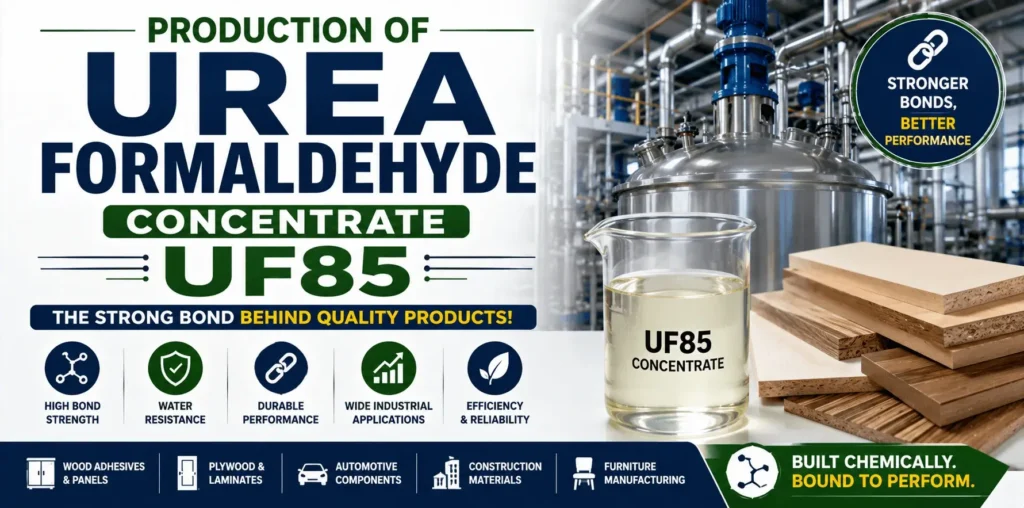
Production of Urea Formaldehyde Concentrate UF85
The production of Urea Formaldehyde Concentrate UF85 typically involves a controlled chemical reaction between urea and formaldehyde in the presence of a catalyst. This process is executed under precise conditions of temperature, pH, and reaction time to achieve the desired molecular weight and physical characteristics of UF85 resin. Growing demand from furniture manufacturing, construction materials, and industrial resin sectors continues to drive the global UF85 market. Urea Formaldehyde Concentrate UF85 is one of the most commonly used thermosetting resins, widely used in the production of thermosetting resins, adhesives, plywood, particle boards, MDF boards, laminates, textile finishing chemicals, and fertilizer additives. Due to its excellent bonding strength, high solid content, and cost-effectiveness, UF85 has become one of the most commonly used resin intermediates in the wood-processing and chemical industries. It has extensive use in industrial and commercial applications, understanding the production process of Urea Formaldehyde UF85 is crucial for manufacturers, engineers, and researchers in the field of polymer chemistry. What is Urea Formaldehyde Concentrate UF85? Urea Formaldehyde Concentrate UF85 is a viscous liquid intermediate containing approximately: 60% formaldehyde 25% urea 15% water It is commonly used as a raw material for manufacturing urea formaldehyde resins, adhesives, laminates, and slow-release fertilizers. UF85 is valued for its high reactivity, long storage stability, and strong bonding characteristics in industrial manufacturing applications. Production Process of Urea Formaldehyde Concentrate UF85 Let’s break down the steps involved in producing Urea Formaldehyde UF85. Step 1: Selection and Preparation of Raw Materials The two key raw materials required for manufacturing Urea Formaldehyde UF85 are: Urea (CO(NH?)?): A colorless, crystalline organic compound widely used as a nitrogen-release fertilizer and a base for resins. Formaldehyde (CH?O): A pungent-smelling, colorless gas that is commercially available in aqueous solution (formalin). A typical molar ratio used in the process is between 1:1.6 to 1:2 (urea to formaldehyde). This excess of formaldehyde ensures better cross-linking during polymerization and enhances the resin’s bonding properties. Step 2: Initial Methylolation Reaction The first chemical reaction in the production of Urea Formaldehyde UF85 is methylolation. This step involves mixing urea with formaldehyde at a temperature of about 50–60°C and an alkaline pH (typically 7.5 to 9). A base catalyst like sodium hydroxide (NaOH) is added to initiate the reaction. During methylolation, hydroxymethyl ureas are formed: Urea + Formaldehyde ? Mono-, Di-, and Tri-methylolureas These hydroxymethyl derivatives serve as intermediates for further polymerization. The concentration and time of the reaction at this stage determine the number of methylol groups, which directly influence the curing speed and final resin properties of UF85. Step 3: Condensation Reaction (Polymerization) Once methylolation is complete, the pH is adjusted to acidic conditions (typically pH 4.0 to 5.0) using formic acid or acetic acid, and the temperature is raised to 80–90°C. Under these conditions, the hydroxymethyl groups undergo a condensation reaction, forming methylene and dimethylene ether bridges. Condensation reaction: Hydroxymethylureas ? Linear and Branched Oligomers ? Crosslinked Polymer This step transforms the liquid monomers into a viscous polymeric resin. The degree of polymerization is closely monitored to achieve the specific viscosity and molecular structure characteristic of Urea Formaldehyde UF85. The timing is critical; if the reaction proceeds too far, the resin becomes too thick and unusable. Step 4: Stabilization and pH Adjustment After the desired level of polymerization is achieved, the reaction is stopped by neutralizing the pH back to 7–7.5 using sodium hydroxide or ammonia. This halts the condensation process and stabilizes the resin. At this point, stabilizers and modifiers may also be added to improve shelf life, reduce free formaldehyde content, and fine-tune the resin properties for different applications. Stabilization ensures that Urea Formaldehyde UF85 maintains its performance over time, especially during storage and transportation. Step 5: Concentration and Filtration The UF85 resin is then concentrated to the required solids content, typically 60–65%, through vacuum evaporation or distillation. Filtration is performed to remove any impurities or unreacted materials, ensuring a clean and consistent final product. The resulting viscous liquid is the commercial-grade Urea Formaldehyde UF85. Some manufacturers may further dry the resin into a powdered form depending on the end-use application. Step 6: Quality Testing and Packaging Once the resin is ready, it undergoes stringent quality control tests including: Viscosity Solids content Free formaldehyde content Gel time pH The manufacturer packages the Urea Formaldehyde UF85 resin into drums or containers only after it meets all specified standards, then delivers it to industries like wood panel production, textile finishes, and automotive interior manufacturing. Machinery Used in UF85 Production Major equipment used in the production of Urea Formaldehyde Concentrate UF85 includes: stainless steel reactors condensers vacuum evaporators agitators cooling systems filtration units storage tanks pH control systems packaging machines Modern automated process-control systems help maintain product consistency, quality, and production efficiency. Applications of Urea Formaldehyde UF85 Urea Formaldehyde UF85 is used in numerous applications across various industries: Wood adhesives: For particle board, MDF, and plywood Molded objects: Electrical fittings, buttons, and kitchenware Textiles: As a finishing agent to enhance wrinkle resistance Paper industry: For surface strengthening and gloss The choice of UF85 over other resins is often due to its cost-effectiveness, high reactivity, and favorable mechanical properties. Advantages of UF85 Some of the notable benefits of using Urea Formaldehyde UF85 include: High bond strength Fast curing time Economical production Low color and odor Customizable viscosity and solids content These features make UF85 a preferred material for large-scale industrial applications requiring reliable and consistent resin performance. Environmental and Safety Considerations Despite its advantages, Urea Formaldehyde UF85 does present environmental and health concerns primarily due to the release of formaldehyde gas. To mitigate this: Manufacturers add formaldehyde scavengers such as urea, melamine, or ammonia to reduce free formaldehyde levels. Manufacturers use closed reactor systems and maintain efficient ventilation during production. Workers must follow safety protocols and use personal protective equipment (PPE) during handling and processing. Manufacturers also focus on developing low-emission UF85 variants that comply with environmental regulations such as CARB (California Air Resources Board) and E1 European standards. Global Market Trends and Innovations The demand for