
Choose the Right Business to Start with Investment of 40 Lakhs (Plant and Machinery)
India’s industrial landscape is evolving rapidly, creating a conducive environment for entrepreneurs to invest in plant and machinery businesses. With the rising demand for local production, cost-effective manufacturing, and advanced equipment across multiple sectors, this segment is seeing remarkable growth. Starting a plant & machinery business under ?40 lakh is not only feasible but also a smart move if you pick the right niche. Whether you’re looking to manufacture machines, set up semi-automatic units, or resell industrial equipment, the opportunities are abundant. Why Invest in a Plant & Machinery Business under ?40 Lakh? Starting a plant & machinery business under ?40 lakh is a strategic decision for entrepreneurs aiming to tap into India’s growing industrialization. With the government’s push for “Make in India” and local sourcing, MSMEs (Micro, Small and Medium Enterprises) in machinery production and support services are gaining momentum. The budget cap of ?40 lakh allows you to explore both manufacturing and service-oriented business models in sectors like packaging, agriculture, construction, and food processing. Let’s explore the top opportunities where a solid investment in plant and machinery can yield high returns within a ?40 lakh budget. 1. Automatic Agarbatti Making Unit Agarbatti (incense sticks) is in high demand in domestic and international markets. With a semi-automatic or fully automatic agarbatti-making machine (?1.5–3 lakh each), raw materials, and packaging setup, you can start a complete production unit within ?20–25 lakh. The rest can be allocated for working capital and marketing. This plant & machinery business is ideal for rural and urban areas alike and requires minimal technical skills. 2. Mini Cement Plant Setting up a mini cement plant under ?40 lakh is achievable using indigenous machinery and limited automation. You can manufacture white cement, wall putty, or even ready-mix concrete products using raw materials like limestone, clay, and fly ash. This business requires land, rotary kilns or pan mixers, crushers, and testing labs. Given the construction boom across India, a mini cement plant & machinery business holds strong market relevance. 3. Small-Scale Cold Storage Facility Food spoilage is a huge issue in India, making cold storage a lucrative niche. For fruits, vegetables, dairy, or pharmaceuticals, a small cold storage facility with refrigeration units, insulation panels, and energy-efficient power supply can be started in ?35–40 lakh. Invest in modern machinery like chillers, compressors, and monitoring systems to ensure energy optimization. This plant & machinery business promises long-term ROI and government subsidies under agricultural schemes. 4. Packaging Box Manufacturing Unit Cardboard and corrugated packaging demand has exploded with the rise in e-commerce. A packaging box unit needs corrugation machines, cutting equipment, sheet pasting, and stitching machines. With ?30–35 lakh, you can procure the machinery and set up operations in an industrial or rural shed. This plant & machinery business is highly scalable and less affected by market fluctuations, making it a great choice for first-time entrepreneurs. 5. Organic Fertilizer Manufacturing Plant Organic farming is growing due to the increasing health consciousness among consumers. You can start a compost-based organic fertilizer unit using plant and animal waste. Equipment includes shredders, compost turners, and mixers. Under ?40 lakh, one can set up a plant with semi-automatic machinery and packaging systems. This eco-friendly plant & machinery business has high demand from local farmers, cooperatives, and agri-retailers. 6. Modular Furniture Manufacturing With rising urbanization, modular furniture has become a household trend. A small unit requires CNC cutting machines, panel saws, edge banding machines, and lamination units. These machines are available in Indian and Chinese brands within the ?30–35 lakh range. Invest in CAD software licenses and skilled carpenters. A plant & machinery business in modular furniture caters to residential, corporate, and commercial interiors. 7. Flour Mill Plant Setting up a flour mill with modern roller mills and sieving machines can cost around ?35 lakh. With rising demand for high-quality packaged wheat flour, multigrain atta, and specialty flours, this segment is gaining momentum. Choose automated machines for higher output and energy savings. A small flour mill plant & machinery business also attracts government schemes for food processing under PM FME. 8. Fly Ash Bricks Manufacturing Unit This environmentally friendly business converts industrial waste into construction material. It requires a hydraulic press, pan mixer, and conveyor belts. You can start production with a single press machine within ?20–25 lakh and scale up later. Due to government support for green building materials, this plant & machinery business offers long-term benefits and steady demand from builders and contractors. 9. Ice Cream Cone Making Machine Unit Ice cream cones are essential in the dairy and dessert industry. A semi-automatic cone-making machine, mixer, and baking setup can be sourced within ?20–30 lakh. With attractive packaging and local distribution, this plant & machinery business can be run even from a semi-urban location. Margins are high, and seasonal demand can be leveraged with proper inventory planning. 10. Bio-Diesel Production Plant With the push towards sustainable fuels, biodiesel is gaining relevance in the energy and transport sector. A small-capacity transesterification plant, including mixing tanks, pumps, and separation units, can be established under ?40 lakh. Sources include used cooking oil or non-edible seeds. If managed well, this plant & machinery business contributes to both environmental protection and income generation. Tips to Maximize Returns on Your Investment Choose the right location – Proximity to raw materials and markets can reduce logistics costs. Buy Indian-made machinery – Indigenous machines are more affordable and serviceable locally. Leverage government subsidies – Use schemes under MSME, PMEGP, NABARD, or Startup India. Hire skilled operators – Training and skill development ensure better machine uptime. Market early – Start generating leads and building your distribution before production begins. Challenges to Watch Out For Machinery breakdown due to low-quality equipment Lack of working capital beyond initial setup Regulatory compliance and licensing hurdles Inconsistent power supply in rural units Poor marketing and branding strategy While these challenges are real, most can be overcome with careful planning and robust execution. Final Thoughts The key to building a successful plant & machinery business under ?40
Small Scale Manufacturing Business Ideas with Investment of 25 Lakhs (Plant and Machinery)
In India’s ever-growing entrepreneurial landscape, small-scale manufacturing businesses have emerged as the foundation of self-reliance and economic resilience. For individuals with a startup budget of under ?25 lakhs, the market is brimming with lucrative opportunities to establish profitable ventures with a strong ROI. With the right planning, market research, and efficient use of capital, these business ideas can provide long-term stability and growth. Best Small-Scale Manufacturing Ideas with High ROI Potential Let’s explore the top 10 small-scale manufacturing ideas that can be successfully launched with an investment below ?25 lakhs. These ideas are carefully curated for modern-day entrepreneurs looking to break into production with limited capital. 1. Paper Bag Manufacturing With growing awareness about environmental sustainability, paper bag manufacturing has become a high-demand business. As plastic bans sweep across Indian states, retailers and supermarkets are constantly switching to eco-friendly packaging. Investment: ?10–?15 lakhs Machinery: Semi-automatic paper bag machine, punching unit Raw Materials: Kraft paper, glue, printing ink Profit Margin: 20%–25% This is one of the most eco-conscious and scalable small-scale manufacturing ventures today. 2. Disposable Cutlery and Plates Production The hospitality sector and event management industry have created a massive demand for disposable cutlery made of paper, areca leaf, or bagasse. Investment: ?12–?20 lakhs Machinery: Hydraulic plate-making machine, cutting molds Raw Materials: Areca palm leaves, sugarcane bagasse, starch Production Volume: 40,000–60,000 units/month Apart from being low-cost, the business enjoys repeat bulk orders, making it a sound small-scale manufacturing opportunity. 3. Spice Powder Manufacturing Unit India being the land of spices ensures there is always high demand for turmeric, chili, and coriander powders. With proper branding, one can easily dominate the local market. Investment: ?8–?18 lakhs Machinery: Pulverizer, dryer, packaging machine Raw Materials: Dried spices, packaging film Licenses Required: FSSAI, GST, Trade License Proper quality control and hygiene will give your brand an edge in this flavorful sector. 4. Handmade Organic Soap Production As more consumers lean towards chemical-free products, the demand for organic and herbal soaps is rising. Investment: ?5–?10 lakhs Raw Materials: Essential oils, glycerin, aloe vera, herbal extracts Machinery: Soap cutter, mold, mixer Target Market: Boutique stores, online platforms With attractive packaging and niche marketing, this small-scale manufacturing business is perfect for urban and semi-urban markets. 5. Detergent Powder and Liquid Manufacturing Every household uses detergent daily, which makes this a recession-proof manufacturing business. Investment: ?8–?12 lakhs Machinery: Mixing drum, sieving machine, filling system Raw Materials: Soda ash, LABS, enzymes, fragrance Production Output: 500–800 kg/day Selling locally or through wholesale distributors will rapidly increase sales volume. 6. Agarbatti (Incense Sticks) Production The cultural and religious importance of agarbattis in India ensures a consistent demand across regions. Investment: ?3–?8 lakhs Machinery: Semi-automatic agarbatti machine Raw Materials: Bamboo sticks, charcoal powder, fragrance oils Profit Margin: 25%–30% Low startup cost and high returns make this one of the most attractive small-scale manufacturing ideas for rural and semi-urban setups. 7. Ready-to-Eat Snacks Processing Unit With the rise in nuclear families and working professionals, convenience food is a booming industry. From namkeens to baked chips, the product range is versatile. Investment: ?15–?25 lakhs Machinery: Fryer, flavoring machine, sealing and packaging units Raw Materials: Potatoes, flour, spices, oil FSSAI License: Mandatory Focus on hygiene, unique taste, and consistent supply to gain loyal customers. 8. Candle Manufacturing Modern décor, spiritual usage, and gifting culture have revived the candle industry in India, especially soy and scented candles. Investment: ?3–?6 lakhs Machinery: Melting unit, molds, wick setter Raw Materials: Wax, colors, essential oils, wicks Profit Potential: High for premium candles Online marketplaces and exhibitions are the best channels to market designer candles. 9. Pickle and Chutney Production Pickles are a staple in Indian cuisine, and now gourmet chutneys and fusion pickles are also trending across urban markets. Investment: ?5–?10 lakhs Machinery: Mixer, sterilizer, bottling and sealing units Licenses: FSSAI, MSME, Trade License Distribution: Local stores, e-commerce, farmers markets Make your brand stand out with authentic taste and regional varieties. 10. T-Shirt Printing and Garment Customization Customized garments are in high demand, especially among students, startups, and event organizers. Investment: ?10–?20 lakhs Machinery: Heat press, screen printing machine, DTG printer Raw Materials: Cotton tees, ink, transfer paper Clients: Corporate, colleges, influencers Use social media and digital ads to promote your brand and acquire B2B clients. Final Thoughts on Small-Scale Manufacturing Success The right small-scale manufacturing idea can transform your entrepreneurial journey. With strategic planning, adherence to quality standards, and effective marketing, these ventures can yield consistent profits and long-term sustainability. It’s vital to select a business that aligns with your local demand, skillset, and supply chain feasibility. Whether it’s eco-friendly products, FMCG, or personalized merchandise, these ideas under ?25 lakhs offer a solid foundation to begin your manufacturing legacy. Small-scale manufacturing in India is no longer limited to just rural backyards — it’s a fast-growing economic driver supported by government schemes like MUDRA loans and MSME policies. If executed correctly, any of these ventures can lead to scalable success and even export potential in the future. Visit the page Select and Choose the Right Business Startup for You for sorting out the questions arising in your mind before starting any business and know which start-up you can plan. We, at NPCS, endeavor to make business selection a simple and convenient step for any entrepreneur/startup. Our expert team, by capitalizing on its dexterity and decade’s long experience in the field, has created a list of profitable ventures for entrepreneurs who wish to diversify or venture. The list so mentioned is updated regularly to give you a regular dose of new emerging opportunities. Contact Us
Construction of Bungalow
Constructing a bungalow is a dream for many Indian families, offering a unique combination of privacy, luxury, and architectural freedom. With the real estate market constantly evolving, understanding the updated bungalow construction cost in India for 2025 is essential before embarking on this major investment. From material prices to labor costs, and from permits to design choices, various factors influence the total budget. This article explores all the critical aspects affecting bungalow construction and provides a practical overview for homeowners and investors alike. Key Factors Affecting Bungalow Construction Cost in India When estimating the bungalow construction cost, it’s important to remember that prices can vary widely based on several parameters. Here’s a comprehensive look into each factor influencing your total expenditure: 1. Location Location significantly impacts construction costs in India. Building a bungalow in a metro city like Mumbai, Delhi, or Bengaluru will cost more than in Tier-2 or Tier-3 cities. Urban areas demand higher labor wages, permit fees, and sometimes even land development charges. For instance, in cities like Delhi or Hyderabad, the cost of construction per square foot can range from ?2,000 to ?3,500, whereas in smaller towns, the same might be achieved within ?1,500 to ?2,200 per square foot. 2. Design and Architecture The architectural complexity of your bungalow plays a vital role in determining its cost. A minimalistic 2BHK single-floor design will be far more economical than a duplex with ornate interiors, modern facades, high ceilings, and smart home integrations. Custom-designed bungalows by reputed architects can increase the budget by 10-20% due to exclusive planning, 3D modeling, and premium material selection. 3. Material Quality and Price Trends (2025) The cost of materials like cement, steel, bricks, wood, plumbing fittings, electrical wiring, and finishing items has risen slightly in 2025 compared to previous years. Here’s a rough estimate: Cement (per 50kg bag): ?390–?420 Steel (per kg): ?65–?75 Bricks (per 1,000 units): ?8,000–?10,000 Sand (per ton): ?1,200–?1,800 Tiles and flooring: ?60–?250 per sq.ft depending on design Electricals and plumbing: ?200–?400 per sq.ft for mid-range materials Thus, material choice drastically affects your final bungalow construction cost. 4. Labor Charges and Contractor Fees In 2025, labor charges have increased marginally due to inflation and rising demand. Labor typically accounts for 25% to 35% of total construction costs. For instance: Masons: ?600–?900/day Carpenters: ?700–?1,000/day Plumbers & Electricians: ?500–?900/day Opting for a turnkey contractor can also influence the cost. Most contractors in India charge between 10% to 20% of the total construction cost as their fee. 5. Type of Bungalow The bungalow construction cost also depends on the type and size of the structure: Standard Bungalow (G+1): ?1,800 to ?2,500/sq.ft Luxury Bungalow: ?3,000 to ?5,000/sq.ft Eco-friendly/Smart Bungalow: ?3,500 to ?6,500/sq.ft An average 2,000 sq.ft bungalow can cost anywhere between ?36 lakhs to ?1.3 crore depending on finishes and features. 6. Foundation and Soil Condition The type of soil on your plot affects the depth and complexity of the foundation. Rocky or marshy soils may require deep piling and extra waterproofing, increasing your bungalow construction cost by 5–15%. 7. Government Approvals and Taxes Before construction begins, various approvals are needed from municipal authorities. These include: Plan approval fees Conversion charges (if agricultural land is used) Environmental clearances (in specific zones) Development charges and utility connections All these may add ?100–?300 per sq.ft to your total budget. 8. Interior Finishing and Landscaping Interior design and finishing contribute significantly to the overall bungalow construction cost. Premium modular kitchens, imported tiles, designer lighting, and wardrobes can push the price by ?500–?1,000 per sq.ft. Don’t forget outdoor landscaping like gardens, fountains, driveways, and boundary walls which may cost another ?3–?10 lakh based on size and design. Average Cost Breakdown (2025) Component Approximate Cost Range (? per sq.ft) Structure (Core Building) ?1,000 – ?1,600 Electrical and Plumbing ?200 – ?400 Flooring and Tiling ?100 – ?250 Painting and Polishing ?80 – ?200 Interior and Fixtures ?300 – ?1,000 Landscaping and Exteriors ?150 – ?300 Total Estimated Cost (Standard Bungalow): ?1,800 – ?3,500 per sq.ft For a 2,000 sq.ft bungalow: ?36 lakh – ?70 lakhFor a 3,000 sq.ft premium bungalow: ?90 lakh – ?1.5 crore+ Tips to Reduce Bungalow Construction Cost Choose a Reputed Turnkey Contractor – They offer bundled services which can lower total cost. Use Locally Sourced Materials – Reduces transportation charges and supports local economy. Opt for Minimalistic Design – Straight lines and simpler roof structures are cost-efficient. Plan Efficient Layouts – Avoid unnecessary walls and corridors to optimize space and cost. Build in Phases – Construct in stages if budget is tight. Shell structure first, interiors later. Final Thoughts The bungalow construction cost in India in 2025 depends heavily on your location, design preferences, and material quality. With average rates hovering between ?1,800 and ?5,000 per sq.ft, it’s vital to prepare a detailed cost estimate before beginning construction. Collaborate with experienced architects and civil engineers to avoid budget overruns and ensure high-quality output. Whether you’re building a cozy single-floor bungalow or a grand duplex, being informed about current trends and prices will help you make smarter financial decisions. With proper planning and timely execution, your dream bungalow in India can become a reality in 2025 without burning a hole in your pocket. Visit the page Select and Choose the Right Business Startup for You for sorting out the questions arising in your mind before starting any business and know which start-up you can plan. We, at NPCS, endeavor to make business selection a simple and convenient step for any entrepreneur/startup. Our expert team, by capitalizing on its dexterity and decade’s long experience in the field, has created a list of profitable ventures for entrepreneurs who wish to diversify or venture. The list so mentioned is updated regularly to give you a regular dose of new emerging opportunities. Contact Us
Start an NC Thinner Manufacturing Business Plant in 2026
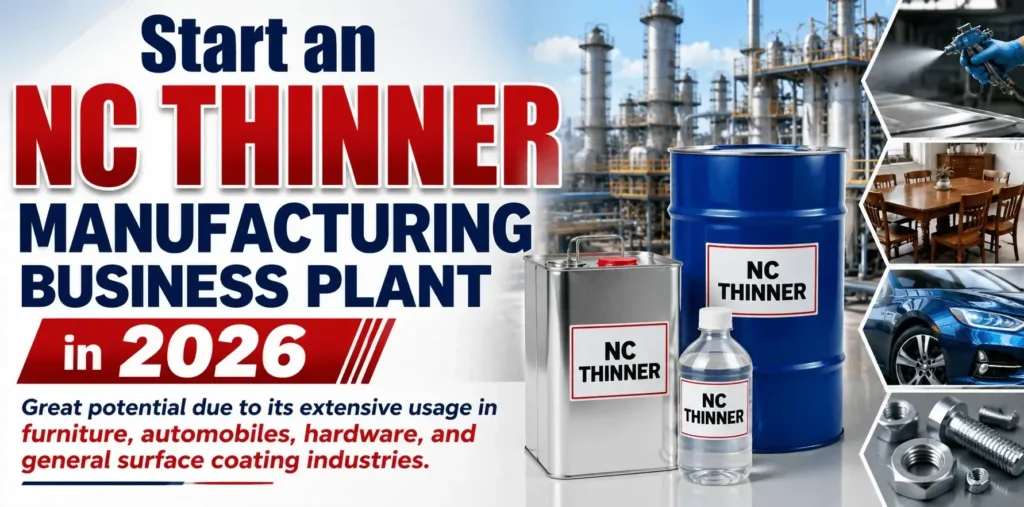
Starting a manufacturing business that caters to the growing demand of the paint and coating industry is a smart entrepreneurial move in today’s rapidly expanding industrial sector. One such high-demand product is NC thinner, which is widely used as a solvent to dilute nitrocellulose-based paints, lacquers, and varnishes. It plays a vital role in achieving the desired viscosity for smooth application and optimal drying time. The NC thinner manufacturing business offers great potential due to its extensive usage in furniture, automobiles, hardware, and general surface coating industries. Why Start an NC Thinner Manufacturing Business? India’s construction and automobile sectors are growing at a substantial rate, and so is the paint and surface finishing industry. This growth has led to increased demand for solvents like NC thinner. Entrepreneurs looking for a cost-effective and scalable business idea should consider entering the NC thinner manufacturing business. The business requires moderate capital investment, a manageable level of technical knowledge, and relatively easy regulatory compliance, making it accessible to new manufacturers. The NC thinner manufacturing business also enjoys an evergreen demand, as its primary application is in finishing products, which are used in new constructions, renovations, and product maintenance. It is also essential for spray painting and brush painting jobs. Additionally, NC thinner acts as a cleaner for paintbrushes and spray equipment, making it a dual-utility product. Market Potential and Industry Demand The NC thinner market is closely tied to the paint and coatings industry, which in India is projected to grow at a CAGR of over 7% in the coming years. With the increase in infrastructure development and housing projects, demand for paints—and therefore, NC thinners—is expected to rise proportionately. Small paint manufacturers, auto workshops, furniture polishers, and general hardware stores are constant buyers of NC thinner. Thus, starting an NC thinner manufacturing business presents an excellent opportunity to tap into this consistent demand. Many businesses seek local suppliers to reduce procurement time and costs, so manufacturing units located in industrial or semi-urban zones often enjoy an edge due to proximity and competitive pricing. Raw Materials and Formulation Process The production of NC thinner primarily involves the blending of various solvents in precise proportions. Common raw materials include: Toluene Acetone Butyl Acetate Methyl Ethyl Ketone (MEK) NC-based Resins (optional) Ethyl Alcohol The process of making NC thinner is relatively straightforward. It involves measuring, blending, and filtering the solvents to achieve a clear and homogeneous solution. The final product must meet the standards of quick drying, proper dilution capability, and low residue after evaporation. A small-scale NC thinner manufacturing business can begin operations with a mixing tank, solvent-resistant containers, measuring equipment, a filtration unit, and appropriate storage infrastructure. All raw materials must be stored safely, considering their flammability. Licensing and Legal Compliance Starting an NC thinner manufacturing business in India involves obtaining several licenses and permissions, especially since the raw materials involved are flammable and fall under hazardous substances. Key requirements include: Company Registration (as LLP, Pvt. Ltd., or Proprietorship) Trade License from local authorities GST Registration Factory License (if operating on a larger scale) No Objection Certificate (NOC) from the State Pollution Control Board Fire Department clearance Explosive License from PESO (Petroleum and Explosives Safety Organization), depending on scale It is highly recommended to consult legal advisors or experts to ensure full compliance with central and state-specific regulations. Setting Up the Manufacturing Unit To start your NC thinner manufacturing business, selecting the right location is crucial. Industrial areas with easy access to transportation and raw material supply chains are ideal. Your unit should have a well-ventilated area for mixing and blending, chemical-resistant flooring, proper drainage systems, and strict safety protocols, including fire extinguishers and spill kits. The equipment required includes: Stainless steel or HDPE mixing tanks Agitators or stirrers Solvent measuring and dispensing system Filtration system Bottling and packaging machinery Storage drums or barrels Staff training is essential to ensure safe handling of solvents. Adequate use of PPE (gloves, safety glasses, aprons) should be mandatory in your manufacturing facility. Cost of Starting the Business The initial investment in an NC thinner manufacturing business depends on the scale of operations. A small unit with a daily capacity of 500–1000 liters may require ?8–15 lakhs, while a medium-scale unit might need up to ?30 lakhs or more. Cost breakup includes: Land/Lease or rent for the factory unit Machinery and equipment Raw materials (initial stock) License and registration fees Safety equipment and fireproof infrastructure Labor and staff salaries Marketing and branding By opting for efficient machinery and locally sourced raw materials, the production cost per liter can be minimized, making the business highly profitable over time. Packaging and Branding The packaging of NC thinner should be both practical and compliant with safety standards. Use high-quality, leak-proof HDPE containers or metal drums of varying sizes (500 ml, 1 liter, 5 liters, 20 liters, etc.). Proper labeling with safety instructions, batch numbers, manufacturing date, and storage guidelines is mandatory. A strong brand presence and product reputation can drive recurring sales. To build brand value in the NC thinner manufacturing business, focus on consistent quality, fast delivery, competitive pricing, and customer service. Offering customization in viscosity or solvent strength for specific clients can also enhance customer loyalty. Marketing and Distribution Strategy Marketing plays a vital role in the success of your NC thinner manufacturing business. Traditional distribution channels such as hardware stores, paint shops, automobile workshops, furniture manufacturers, and wholesalers are your key targets. Strategies to promote your product: Appoint local distributors and retailers Provide trade margins and volume discounts Offer free samples or initial trial packs Create a basic website and list your product on trade portals like IndiaMART, TradeIndia, and Justdial Run local ads in industrial magazines or directories Attend industrial expos or B2B events related to paints and coatings With a well-thought-out marketing strategy, your business can scale quickly, especially if your product proves reliable and cost-effective. Profitability and Growth Potential The NC thinner manufacturing business can be highly profitable due to relatively low production costs
PVC Pipe and Fitting Manufacturing Business
PVC pipe manufacturing is one of the most promising small-to-medium-scale industries in India and globally due to its vast utility in agriculture, construction, and infrastructure projects. The demand for durable, corrosion-resistant, and cost-effective piping solutions continues to grow, making PVC (Polyvinyl Chloride) a popular material for producing pipes and fittings. If you’re planning to start a PVC Pipe Manufacturing business in 2025, you’re entering a market with immense potential for profitability and scalability. Why PVC Pipe Manufacturing is a Profitable Venture in 2025 The construction boom, smart city initiatives, and the agricultural sector’s continuous growth are major driving factors behind the increasing demand for PVC pipes. These pipes are used in water supply systems, drainage, irrigation, and even cable conduits. The versatility and longevity of PVC pipes make them a staple product in infrastructure development. Moreover, the relatively low cost of setting up a plant and easy access to raw materials and technology have made PVC Pipe Manufacturing an attractive business opportunity for entrepreneurs. Market Potential for PVC Pipes The Indian PVC pipe market is expected to cross USD 10 billion by 2027, with an estimated CAGR of 7.5%. Rural water supply schemes, urban drainage systems, and real estate growth have accelerated this demand. Emerging economies, especially in Asia and Africa, are also showing strong signs of growth in this sector. Governments across the globe are actively promoting plastic pipe infrastructure for their numerous advantages such as flexibility, leak-proof joints, and recyclability. Key Components of PVC Pipe Manufacturing Business To begin a successful PVC Pipe Manufacturing unit in 2025, understanding the essential components such as plant setup, machinery, raw materials, and legal compliances is crucial. Below is a step-by-step guide to help you set up your venture efficiently. 1. Business Plan and Market Research Before investing, conduct comprehensive research about the demand in your local and regional markets. Identify your target customers—builders, farmers, government agencies, hardware dealers, etc. Understand the competition and find out which product lines (e.g., agricultural pipes, conduit pipes, sewage pipes) are most profitable in your region. Create a detailed business plan that includes: Budget and funding sources Projected ROI and break-even analysis Marketing strategy Plant layout and manpower requirements Government subsidies and incentives 2. Choose the Right Location Selecting an appropriate location is key to success. The site should be close to raw material suppliers and have access to transportation, electricity, and water. Industrial zones or manufacturing clusters are ideal due to better infrastructure and lower utility costs. 3. Registration and Legal Formalities To operate legally, register your company as an LLP, Private Limited Company, or Proprietorship, depending on your scale and preference. Obtain the following licenses and permits: GST registration Udyam registration (for MSME benefits) NOC from Pollution Control Board Factory License BIS certification (especially IS 4985:2000 for potable water pipes) Legal compliance is vital to avoid any disruptions in production and distribution. 4. Investment and Funding Starting a small-scale PVC Pipe Manufacturing unit requires an initial investment ranging from ?25 lakh to ?1 crore, depending on plant capacity and automation level. Major costs include land, machinery, raw materials, and labor. Funding options include: Bank loans under the CGTMSE scheme SIDBI support Mudra Loans for micro-units Equity investment or partnerships 5. Raw Materials Required PVC resin is the primary raw material, and its quality directly impacts the durability of the pipes. Other materials include: Lubricants Heat stabilizers Fillers like calcium carbonate Processing aids Colorants Sourcing from reputable suppliers ensures consistent quality and compliance with industry standards. 6. Machinery and Technology The manufacturing of PVC pipes involves several machines, and the choice depends on the type and volume of production. A basic setup typically includes: High-speed mixer and cooler Twin-screw extruder Die head Vacuum sizing tank Haul-off unit Cutter Belling machine (for socketing ends) Printing and packaging unit Invest in semi-automatic or fully automatic machines depending on budget and expected output. Automation can reduce labor costs and increase productivity. 7. Manufacturing Process The PVC Pipe Manufacturing process involves the following steps: Mixing: Raw materials are mixed thoroughly using a high-speed mixer. Extrusion: The mixture is fed into an extruder where it melts and is shaped through a die head into a pipe. Sizing: The hot pipe is cooled and sized in a vacuum tank to maintain uniform dimensions. Cutting: Pipes are cut into desired lengths using an automatic cutter. Socketing: One end of the pipe may be socketed or belled for easy joining. Testing & Printing: Quality checks are done, followed by printing brand details on the pipes. Packaging: Pipes are bundled and packed for dispatch. Ensure adherence to quality control at every stage to meet BIS and international standards. 8. Manpower Requirements A small manufacturing unit can start with 10–15 employees, including: Plant manager Skilled machine operators Helpers Quality control technician Accountant/Administrative staff With growth, your workforce can be scaled accordingly. 9. Marketing and Distribution Effective marketing is essential for brand visibility and sales. Focus on the following: Appoint distributors in multiple cities List products on B2B platforms like IndiaMART, TradeIndia Collaborate with construction companies and real estate developers Offer government-tendered supply of water and drainage systems Participate in trade expos and industry conferences Digital marketing and social media can help reach end-users like farmers and home-builders directly. 10. Profit Margins and ROI PVC pipes have decent profit margins, typically ranging between 10% and 20%, depending on product type, size, and quality. With proper planning and marketing, the ROI can be expected within 2–3 years of operation. Economies of scale, low wastage, and raw material cost management can significantly improve profitability. 11. Sustainability and Recycling In 2025, sustainability is more important than ever. Adopting eco-friendly practices like recycling PVC scrap, using lead-free stabilizers, and efficient waste management can give your business a competitive edge. Green manufacturing practices also appeal to environmentally conscious buyers and help in compliance with regulatory norms. Final Thoughts Starting a PVC Pipe Manufacturing business in 2025 is both lucrative and future-proof. With increasing demand in agriculture, infrastructure, and housing sectors,
Acrylic Acid Production from Propylene
Acrylic acid is a critical industrial chemical used in the manufacture of superabsorbent polymers, adhesives, coatings, and textiles. Its growing demand across diverse sectors makes it an essential commodity in the global chemical market. One of the most efficient and widely adopted methods of producing acrylic acid is through the oxidation of propylene. This article provides a comprehensive guide to the entire production process of acrylic acid from propylene, focusing on raw materials, production technology, catalysts, reactor configurations, separation techniques, and environmental management. Overview of Acrylic Acid Manufacturing Process The process of acrylic acid production from propylene involves complex chemical reactions and multiple processing units. It is typically performed in two sequential oxidation stages. In the first stage, propylene is oxidized to acrolein, and in the second stage, acrolein is further oxidized to acrylic acid. These reactions are exothermic and require precise temperature and pressure control to ensure high yield and selectivity. Raw Materials and Feed Preparation Propylene is the primary raw material for the process. It is a by-product of petroleum refining and is available in large quantities. The feedstock must be of high purity to prevent catalyst poisoning. Air or molecular oxygen is used as the oxidizing agent, and in some cases, steam is introduced to control the reaction temperature and reduce hot spots in the reactor. Feed preparation also includes filtering out impurities and adjusting the molar ratios of the reactants. The proper balance of propylene, oxygen, and steam is crucial to achieving high conversion rates and minimizing the formation of unwanted by-products such as carbon dioxide and acetic acid. First Oxidation Stage – Propylene to Acrolein The first reaction in the production of acrylic acid is the partial oxidation of propylene to acrolein. This is typically carried out in a fixed-bed tubular reactor filled with a catalyst containing bismuth molybdate. The reaction takes place at a temperature of around 300–350°C and a pressure of 1–3 atm. The reaction is as follows: C?H? + O? ? C?H?O (Acrolein) + H?O This step is highly exothermic and requires efficient heat removal systems. The catalyst selection is crucial for maintaining high selectivity toward acrolein while minimizing unwanted side products. Second Oxidation Stage – Acrolein to Acrylic Acid In the second stage, acrolein is oxidized further to form acrylic acid. This step also takes place in a fixed-bed reactor with a catalyst based on vanadium and molybdenum oxides. The operating temperature is slightly lower, around 250–300°C. The reaction proceeds as follows: C?H?O (Acrolein) + ½ O? ? C?H?O? (Acrylic Acid) This stage must also be carefully controlled to maximize yield and avoid over-oxidation to carbon oxides. Reactor cooling and optimal catalyst performance are key to achieving efficient production. Product Separation and Purification After the reaction, the product stream contains acrylic acid, unreacted acrolein, water, carbon oxides, and traces of other organics. The stream is first cooled and condensed to separate the liquid and gas phases. The liquid is then subjected to a series of distillation and extraction steps. Water and low-boiling point components are separated out, and acrylic acid is isolated typically using azeotropic distillation or solvent extraction. High-purity acrylic acid (up to 99.5%) is required for polymer-grade applications. The unreacted acrolein and propylene are often recycled back into the system to improve overall efficiency and reduce raw material consumption. Catalysts Used in Acrylic Acid Production Catalysts are central to the efficiency of acrylic acid production. In the first stage, bismuth molybdate catalysts are widely used due to their high selectivity toward acrolein. In the second stage, mixed metal oxide catalysts containing vanadium and molybdenum are employed to promote the conversion of acrolein to acrylic acid. These catalysts must be regenerated periodically to maintain activity. Poisoning by impurities in the feed or side reactions can lead to catalyst deactivation. The catalyst’s physical structure and surface area also influence the reaction performance. Process Equipment and Reactor Design Acrylic acid plants typically use multitubular fixed-bed reactors because they offer efficient heat transfer and temperature control, which are critical in exothermic reactions. The reactors are made of high-alloy materials resistant to corrosion by acidic compounds. Heat generated from the reaction is often recovered in waste heat boilers and used to produce steam, improving the plant’s energy efficiency. Downstream, the plant includes absorbers, separators, distillation columns, and purification units. Process automation and real-time monitoring systems are employed to ensure the entire production line operates within optimal parameters, thus maximizing safety, yield, and product quality. Environmental Considerations Producing acrylic acid involves handling volatile organic compounds and acidic by-products, which pose environmental challenges. Emission control systems such as scrubbers, catalytic oxidizers, and activated carbon beds are used to treat gaseous emissions before discharge. Wastewater treatment is another critical component. Water used in the process may contain dissolved organics and must be treated through biological or chemical means before release or reuse. Spent catalysts and process residues must be disposed of or recycled according to environmental regulations. Economic Aspects and Market Trends The global market for acrylic acid continues to grow, driven by demand from the hygiene products industry (superabsorbent polymers), adhesives, textiles, and paints. Setting up a production facility involves significant capital investment in equipment, infrastructure, and technology. Operational costs depend on feedstock prices (primarily propylene), energy consumption, catalyst life, and maintenance. Innovations such as integrating renewable propylene sources and improving catalyst life cycles are actively being researched to reduce environmental impact and improve profitability. Countries like China, the USA, Germany, and South Korea dominate the acrylic acid manufacturing landscape. However, emerging markets in India and Southeast Asia offer promising opportunities for capacity expansion, driven by the growing domestic demand for end-use products. Safety and Risk Management Handling flammable gases like propylene and oxygen, along with high-temperature exothermic reactions, poses serious risks. Safety measures include automated shutdown systems, explosion-proof equipment, rigorous maintenance protocols, and regular employee training. Proper storage and handling of acrylic acid, which is both corrosive and volatile, are also essential. It must be stored in stainless steel tanks equipped with inert gas
Ball Bearings Production Business
Starting a ball bearings manufacturing business offers a lucrative opportunity in the industrial, automotive, aerospace, and machinery sectors. As global demand for precision-engineered mechanical components continues to grow, investing in this sector can deliver consistent profitability. With the right knowledge, planning, and execution, we can tap into a market that powers every rotating part in machines across industries. Market Potential and Industry Overview The global ball bearings market is projected to surpass USD 40 billion in the next few years, driven by automation, industrial machinery upgrades, and demand for fuel-efficient vehicles. The market is expanding due to the increase in electric vehicles, robotics, and aerospace innovations. The Asia-Pacific region, particularly India and China, is experiencing rapid growth due to expanding infrastructure and domestic production initiatives. Types of Ball Bearings and Their Applications Ball bearings come in various types, each suited for specific functions: Deep groove ball bearings – Most commonly used in electric motors and household appliances. Angular contact ball bearings – Designed to handle both axial and radial loads, ideal for high-speed motors. Self-aligning ball bearings – Used in applications where shaft misalignment is an issue. Thrust ball bearings – Suitable for low-speed, low-weight axial load applications like turntables or car transmissions. Understanding the right type of bearing for target industries helps in product development and marketing. Business Setup and Licensing Requirements To legally start a ball bearings manufacturing business, we need the following registrations and licenses: Company registration (Private Limited/LLP) Factory license under the Factories Act GST registration Pollution Control Board clearance Import-Export Code (IEC) if planning to export Trademark registration for brand protection Securing these certifications builds business credibility and compliance with national industrial regulations. Location and Infrastructure Setup The success of a ball bearings manufacturing unit heavily depends on its infrastructure: Location: Preferably in industrial zones near raw material suppliers and transport hubs. Space Requirements: At least 10,000 to 20,000 sq. ft. for medium-scale production. Utilities: Uninterrupted power supply, water, and waste disposal system. The layout must include space for raw material storage, forging section, machining, assembly, heat treatment, quality control, packaging, and dispatch. Raw Materials Required Key raw materials include: High carbon chromium steel (SUJ2 / AISI 52100) Ceramic balls (for specialized applications) Lubricants and grease Brass or polyamide cages Steel tubes and rings Quality of the raw materials defines the performance and durability of ball bearings, making supplier vetting a crucial process. Machinery and Equipment List To begin a production unit, essential machines include: Turning machines (CNC lathes) Grinding machines (for outer/inner rings) Heat treatment furnaces Centerless grinders Ball making and polishing machines Cage making and assembly machines Quality control and inspection equipment (micrometers, hardness testers, CMM) Automated machinery is preferred for large-scale and consistent manufacturing. A fully equipped line ensures high-precision output. Production Process of Ball Bearings The ball bearings manufacturing process involves several detailed stages: Forging: Cutting and heating steel rods to shape inner and outer rings. Turning: Machining the rings to precise measurements. Heat Treatment: Hardening the rings for durability. Grinding: Final shape and finish for the inner/outer rings. Ball Formation: Balls are made and hardened through grinding and polishing. Assembly: Rings, balls, and cages are assembled with extreme precision. Lubrication: Bearings are lubricated to reduce friction. Sealing and Packaging: Final product is sealed and packed for delivery. Each step must meet strict tolerance levels to ensure product reliability. Workforce and Human Resource Planning For a mid-scale ball bearings manufacturing business, required staff includes: Machine operators Quality inspectors Mechanical engineers Packaging workers Maintenance technicians Administrative and logistics staff Continuous training in safety standards and precision manufacturing is essential to maintain quality and safety. Quality Control and Standards The bearings industry demands adherence to international standards such as: ISO 9001:2015 – Quality Management System ISO/TS 16949 – Automotive sector requirements ISO 281: Bearing life calculations Using non-destructive testing (NDT), surface finish analysis, vibration tests, and endurance tests ensures product excellence. Cost of Starting Ball Bearings Manufacturing Unit An estimated capital breakdown for a medium unit: Land and Building: ?40-60 lakhs (leased/purchased industrial shed) Machinery and Equipment: ?1.5 – 2 crores Raw Material Inventory: ?30 – 50 lakhs Working Capital: ?50 lakhs – 1 crore Licensing, Branding, Marketing: ?10 – 20 lakhs Total investment: Approx ?3 – 4 crores for mid-level unit. Financial planning and cash flow projections are essential. Marketing and Sales Strategy To penetrate the ball bearings market, we must: Participate in B2B expos and trade fairs. Collaborate with distributors and machinery OEMs. Offer product samples and custom manufacturing options. Build a strong online presence with SEO-optimized website. Target sectors like railways, automotive, agriculture, and industrial machinery. Digital marketing, combined with a direct sales force, helps establish industry visibility. Export Potential and Opportunities India’s ball bearings manufacturing sector has strong export potential. Countries in Southeast Asia, the Middle East, Africa, and even Europe seek cost-effective, quality bearings. For export, compliance with global certifications, competitive pricing, and reliable delivery timelines are key. Challenges in Ball Bearings Manufacturing Challenges we must prepare for include: High competition from established global brands Fluctuation in raw material costs Requirement for skilled labor and precision QC Need for constant innovation in product design Customer demands for zero-defect quality By focusing on automation, R&D, and customer support, we can overcome these challenges and position ourselves as a trusted manufacturer. Sustainability and Environmental Responsibility Environmentally responsible production processes involve: Wastewater treatment and recycling Using eco-friendly lubricants Minimizing heat and chemical emissions Energy-efficient machinery adoption Adopting sustainable practices not only helps regulatory compliance but also builds brand trust. Future Scope and Growth Projections With increasing focus on domestic manufacturing, electric vehicles, and advanced engineering applications, the demand for high-quality ball bearings will continue to rise. Integrating IoT and smart monitoring in bearings is a growing trend. We must invest in R&D to create innovative, high-performance bearings that serve futuristic needs, thereby ensuring long-term success and market leadership. Conclusion Setting up a ball bearings manufacturing business is capital-intensive but promises strong long-term returns. With the right combination of precision engineering,
Chlorinated Paraffin Wax (CPW) Manufacturing Business
The Chlorinated Paraffin Wax (CPW) manufacturing industry in India is experiencing notable growth due to its widespread applications in plastic, rubber, paints, sealants, and lubricants industries. With India’s rapid industrial expansion and increased demand for flame retardants and plasticizers, starting a CPW manufacturing unit can be highly lucrative. Understanding the CPW Manufacturing Process and Market Chlorinated Paraffin Wax is a complex chemical product derived from paraffin wax through chlorination. It serves as an excellent plasticizer and flame retardant. As India’s construction, automobile, cable, and plastic industries thrive, the CPW manufacturing sector is poised to become a profitable venture. What is Chlorinated Paraffin Wax (CPW)? CPW is produced by chlorinating straight-chain hydrocarbons. It’s categorized based on carbon chain lengths – short (C10–13), medium (C14–17), and long (C18–30). Medium-chain CPW is the most commonly manufactured and used variety in India due to its balanced properties and regulatory approval. Key Applications of CPW in Indian Industries Plastic Industry: As a secondary plasticizer for PVC compounds. Cable Industry: Fire retardant properties make CPW crucial in wire insulation. Rubber and Leather: Acts as a softening agent and improves chemical resistance. Paints and Coatings: Used for increasing water and chemical resistance. Lubricants: Enhances extreme pressure performance in cutting oils. Step-by-Step Guide to Setting Up a CPW Manufacturing Unit 1. Market Research and Feasibility Study Before investing, conduct in-depth market research. Analyze the demand in target sectors such as plastics, construction, and automotive. Identify your competitors and assess pricing strategies. Determine expected sales volume. Evaluate local and international demand. Review government regulations and restrictions on chlorinated products. 2. Business Registration and Legal Compliance Register your business under the appropriate structure—Private Limited, LLP, or Proprietorship. Obtain essential registrations: GST Registration Factory License NOC from Pollution Control Board Import-Export Code (IEC) (if you plan to export) Udyam/MSME Registration Due to the hazardous nature of chlorine, CPW units must adhere to environmental and safety standards set by the Central and State Pollution Control Boards. 3. Location and Infrastructure Setup Choose a location in an industrial zone with adequate distance from residential areas to comply with environmental norms. The facility should include: Chlorination reactors Cooling systems HCl absorption unit Storage tanks (for paraffin, chlorine, and finished CPW) Packing section Quality control lab Ensure proximity to raw material suppliers and availability of logistics infrastructure. 4. Machinery and Equipment Required You’ll require the following major machinery: Chlorination Reactors (Glass-lined or Stainless Steel) Heat Exchangers Drying Units HCl Absorbers or Scrubbers Centrifuges or Settling Tanks Reactant and Product Storage Tanks Weighing and Packaging Machines Choose semi-automatic or fully automatic systems depending on your investment capacity. 5. Raw Materials and Utility Requirements Main raw materials include: Paraffin Wax (Heavy or Light) Chlorine Gas Stabilizers (such as epoxidized soybean oil) Solvents (optional, for viscosity control) Utility needs: Electricity Cooling Water System Compressed Air Ventilation and Safety Equipment 6. CPW Manufacturing Process Flow Charging: Paraffin wax is charged into a reactor. Chlorination: Dry chlorine gas is bubbled through the molten wax at controlled temperatures. Reaction Control: Temperature and flow rate are maintained to ensure optimal chlorination (typically 30–70% chlorine content). Neutralization: Residual HCl is removed using alkaline scrubbers or absorbed in water. Settling/Centrifugation: Removal of impurities and unreacted materials. Packaging: The product is cooled, tested for viscosity, color, and chlorine content, then packed in HDPE drums. Licenses and Environmental Compliance for CPW Manufacturing Because CPW is a chlorinated hydrocarbon, its production falls under red-category industries. You’ll need: Consent to Establish (CTE) Consent to Operate (CTO) Hazardous Waste Management Permission Fire Safety Clearance Explosive License (if storing chlorine cylinders) Implement proper effluent treatment systems and gas scrubbing to control emissions. Investment and Cost Analysis Initial Investment Breakdown: Land and Building: ?25–40 Lakhs Machinery and Equipment: ?45–70 Lakhs Working Capital: ?20–30 Lakhs Licensing and Regulatory: ?5–10 Lakhs Total Estimated Investment: ?90 Lakhs to ?1.5 Crore (for a medium-scale unit) Manpower Requirements Chemical Engineers (for production and quality control) Skilled Plant Operators Helpers and Maintenance Crew Safety Officer and ETP (Effluent Treatment Plant) Staff Train staff on chlorine handling and emergency protocols. Profit Margin and Return on Investment A well-managed CPW manufacturing unit can expect a gross profit margin of 20–30%. With stable supply contracts and consistent production, you may achieve full ROI within 2–3 years. Marketing and Distribution Strategy Target PVC Compounders, Cable Manufacturers, Paint Industries Partner with chemical distributors and stockists. Attend B2B expos and list your unit on chemical trading portals. Offer customized grades based on client needs. Highlight eco-compliant and stabilized CPW variants in your marketing material to appeal to export markets. Challenges in CPW Manufacturing Fluctuating paraffin and chlorine prices Compliance with environmental regulations Safe handling of chlorine gas Disposal of by-products (especially HCl) Implement quality assurance systems and real-time monitoring to address these effectively. Why Invest in CPW Manufacturing in India? Growing Demand: Driven by infrastructure, automotive, and electrical sectors. Import Substitution: Domestic production reduces dependency on imports. Government Support: MSME incentives, power subsidies, and EPCG schemes. Export Potential: CPW has strong demand in Asia, Africa, and the Middle East. Conclusion Starting a CPW manufacturing unit in India is a capital-intensive but high-reward business opportunity. With strict adherence to regulatory compliance, quality assurance, and effective distribution networks, entrepreneurs can successfully tap into the growing demand for this vital chemical product. The need for safer, cost-effective flame retardants and plasticizers ensures that CPW manufacturing remains a promising venture for years to come. Visit the page Select and Choose the Right Business Startup for You for sorting out the questions arising in your mind before starting any business and know which start-up you can plan. We, at NPCS, endeavor to make business selection a simple and convenient step for any entrepreneur/startup. Our expert team, by capitalizing on its dexterity and decade’s long experience in the field, has created a list of profitable ventures for entrepreneurs who wish to diversify or venture. The list so mentioned is updated regularly to give you a regular dose of new emerging opportunities. Contact Us
Rubber Band Manufacturing Business
Rubber bands are one of the most essential and commonly used products in households, offices, agriculture, and various industries. Their simple design and multifunctionality have made them indispensable in everyday life. As the demand continues to rise, starting a rubber band manufacturing business presents a lucrative opportunity for aspiring entrepreneurs. Whether you’re looking to establish a small-scale unit or a medium enterprise, understanding the production process, raw materials, market, and setup requirements is crucial for long-term success. Overview of Rubber Band Manufacturing Process The rubber band manufacturing process involves converting natural rubber or synthetic rubber into elastic loops of varying sizes and thicknesses. These are produced through molding, extrusion, curing, and cutting operations. The business has low entry barriers and promises decent profit margins with moderate capital investment. Market Potential of Rubber Band Manufacturing The market for rubber bands spans several sectors—stationery, packaging, agriculture, fishing, medical, textiles, and more. Their usage in bundling items, sealing containers, organizing tools, and even in physical therapy increases their versatility. The increasing consumption in India and international markets like Africa, the Middle East, and South Asia boosts the potential for export-oriented units. Additionally, the e-commerce and logistics boom has pushed demand higher as rubber bands play a crucial role in product packaging and handling. Given their non-toxic nature, affordability, and reusability, the consumption curve continues to rise globally, creating ample room for small and mid-size players in the rubber band manufacturing space. Raw Materials Required The primary raw materials used in rubber band manufacturing are: Natural rubber or synthetic rubber: Generally, crepe rubber is used for its elasticity and durability. Sulfur and other chemicals: For vulcanization and curing processes. Pigments and dyes: To color the rubber bands. Talcum powder: To prevent sticking and enhance shelf life. You will also need packaging materials like polybags and cartons for the final product. Machinery and Equipment To begin production, you’ll require the following machines: Rubber mixing mill – Used to blend raw rubber with chemicals. Extruder – Shapes the rubber into tubes. Vulcanizing tank – For heat treatment to strengthen rubber. Cutter – Slices rubber tubes into individual bands. Boiler – Supplies steam for vulcanizing process. Grinding machine – Optional, for recycling rubber scraps. Packaging machine – For final product packing. The cost of machinery can range from ?8 lakhs to ?20 lakhs depending on production capacity and automation. Manufacturing Process Step-by-Step Raw Material PreparationThe crepe rubber is washed and dried. It is then mixed with required chemicals like sulfur, accelerators, and pigments in a mixing mill. ExtrusionThe rubber compound is passed through an extruder to form long tubular shapes. VulcanizationThese rubber tubes are treated in a steam-heated chamber or vulcanizer where the elasticity and strength are improved. Cooling and CuttingThe tubes are cooled, and then cut into small rubber bands using precision cutters. Finishing and DryingThe bands are coated with talcum powder and dried to remove moisture. Inspection and PackagingThe finished rubber bands are sorted by size and weight, checked for quality, and packed in printed polybags for sale. Legal and Regulatory Requirements Starting a rubber band manufacturing business in India requires: Udyam/MSME registration (for availing government benefits) GST registration (mandatory for taxation) Factory license (if applicable) NOC from Pollution Control Board Trade license from the local municipal authority If you’re planning to export, you’ll also need an Import Export Code (IEC) from DGFT. Investment and Profitability The investment in rubber band manufacturing can vary as follows: Small-scale setup: ?6–10 lakhs Medium-scale setup: ?15–30 lakhs Large-scale setup: ?40 lakhs and above Your costs will include: Machinery Raw materials Labor Utilities Packaging Marketing The average profit margin in the rubber band business can range from 20% to 30%. With an efficient setup, breakeven can be achieved within 1 to 2 years, depending on market reach and scale. Location and Infrastructure Choose a location with the following features: Easy access to raw materials and transportation Uninterrupted water and electricity supply Space for storage, processing, and packaging Proximity to target markets For small-scale units, a 1000 sq. ft area might be sufficient, whereas medium or large units may require 2000–5000 sq. ft or more. Manpower and Staffing Depending on your business scale, you’ll need: Machine operators Packaging staff Supervisors Quality control personnel Administrative staff A typical small unit can function with 6–10 workers, while larger units may require 15–30 employees. Training your workforce on machine handling, quality control, and safety is essential to reduce wastage and increase productivity. Marketing and Sales Strategy Success in rubber band manufacturing depends heavily on distribution and marketing. Here are effective channels: Retailers and wholesalers Stationery distributors Packaging companies Export traders E-commerce platforms You can also brand your rubber bands with custom packaging and labels to build identity. Bulk orders and long-term contracts with businesses ensure stability and higher profits. Online marketing, trade exhibitions, and industrial directories are great tools to reach a broader market. Quality Standards To compete effectively, ensure that your rubber bands meet the following quality benchmarks: Consistent elasticity Uniform size and shape Non-toxic and eco-friendly materials Resistance to weather and temperature changes No surface defects or unpleasant odor Implementing a robust quality control system ensures fewer rejections and a stronger reputation in the market. Challenges in the Rubber Band Manufacturing Industry While rubber band manufacturing is relatively simple, entrepreneurs may face the following challenges: Price fluctuations in rubber Stiff competition from established brands Ensuring consistent product quality Skilled labor shortages Compliance with pollution norms To overcome these, keep machinery updated, build a reliable supplier network, and invest in employee training and waste reduction. Sustainability and Waste Management Environmental regulations now require manufacturers to minimize waste and pollution. Adopt eco-friendly practices such as: Recycling scrap rubber Using non-toxic colors and chemicals Reducing water and power consumption Efficient waste disposal Promoting sustainability can also become a unique selling point for your brand, appealing to environmentally conscious consumers. Export Opportunities India has become a significant exporter of rubber products. Countries in Africa, the Middle East, and Southeast Asia show increasing demand for
Hybrid Electric Scooter Assembling Business
The demand for sustainable transportation is increasing rapidly, and hybrid electric scooters are becoming a popular choice among eco-conscious consumers. With rising fuel prices and a shift toward cleaner technologies, starting a Hybrid Electric Scooter assembly business can be a highly lucrative opportunity in 2025 and beyond. Entrepreneurs with a passion for green energy and innovation can tap into this growing market by setting up an efficient and affordable assembly operation. This guide will walk you through everything you need to know to start a successful hybrid electric scooter assembly business, including market potential, setup requirements, investment, profitability, and more. Market Overview and Growth Potential The Hybrid Electric Scooter market in India and across the globe is expanding rapidly due to urbanization, environmental awareness, and government support for electric mobility. Hybrid electric scooters, which combine electric and fuel-powered technologies, provide better mileage, lower emissions, and reduced dependence on fossil fuels. These advantages make them an ideal choice for city commuters, delivery services, and fleet operators. According to industry reports, the Indian electric two-wheeler market is expected to grow at a CAGR of over 40% during the next five years. Within this segment, hybrid models are gaining traction because they offer the flexibility of fuel backup when electric charging stations are not available. As a result, assembling and distributing Hybrid Electric Scooters presents a profitable business model with strong long-term prospects. Why Choose Hybrid Over Fully Electric? While fully electric scooters are environmentally friendly, they are often limited by battery range, charging infrastructure, and longer charging times. Hybrid Electric Scooters offer the best of both worlds — efficient electric performance and the reassurance of a petrol engine. This dual-mode capability reduces range anxiety and increases convenience for users. Moreover, hybrid models are better suited for regions where charging infrastructure is still under development. This makes them particularly attractive in semi-urban and rural areas, expanding your customer base significantly. Step-by-Step Guide to Start Your Hybrid Electric Scooter Assembly Business 1. Market Research and Business Plan Start by analyzing your local and regional market for Hybrid Electric Scooter demand. Identify your target audience, competitors, pricing trends, and distribution networks. A detailed business plan should include investment estimates, break-even analysis, marketing strategies, and scalability plans. 2. Business Registration and Licensing Register your business under an appropriate structure such as a proprietorship, LLP, or private limited company. You’ll also need to obtain the following: GST registration Udyam registration (for MSMEs) NOC from Pollution Control Board (if required) Vehicle Type Approval from ARAI (if you’re launching your own brand) Trade license from local authority 3. Location and Infrastructure You need a well-ventilated and spacious industrial shed or factory space for your assembly unit. An area of 3000–5000 sq. ft. is generally adequate for a small to medium-scale Hybrid Electric Scooter assembly business. The facility should be equipped with proper electricity, workbenches, storage, and safety measures. 4. Machinery and Equipment The following are essential tools and machinery for scooter assembly: Hydraulic lift tables Electric drills and screwdrivers Wheel alignment machines Battery testing equipment Engine installation tools Quality control and diagnostic tools You may also need a conveyor system for streamlined production. Most hybrid scooters arrive as semi-knocked-down (SKD) or completely knocked-down (CKD) kits from manufacturers and are assembled locally. 5. Raw Materials and Components You’ll require a steady supply of major components such as: Hybrid electric scooter kits (chassis, electric motor, petrol engine) Lithium-ion batteries or lead-acid batteries Brake systems Wheels and tyres Controllers and wiring harnesses Speedometers and displays Headlights and indicators It’s advisable to partner with reliable domestic or international component suppliers for consistent quality and pricing. 6. Manpower and Skilled Workforce Hire skilled technicians and engineers experienced in automobile assembly and electrical systems. A team may typically include: Assembly line workers Electrical technicians Quality control inspectors Logistics personnel Office and administrative staff Training your staff on safety protocols and standard assembly procedures is crucial for efficiency and reliability. 7. Branding and Marketing Strategy Develop a strong brand identity and promote your Hybrid Electric Scooter under a recognizable name. Leverage both online and offline marketing channels such as: Social media and digital ads Dealership networks Roadshows and demo events Local newspaper ads and radio Influencer collaborations Highlight your scooter’s unique selling points such as fuel efficiency, low maintenance, and eco-friendliness. Offering test rides and EMI options can help attract more customers. 8. Dealership and Distribution Network To scale your operations, establish a dealer network across cities and towns. Offer attractive margins and training to your dealers. You may also consider an online direct-to-customer (D2C) model with doorstep delivery and service. 9. After-Sales Service and Support Reliable after-sales service is a key differentiator in the auto industry. Set up service centers or tie up with local garages for repairs and maintenance. Offer warranties, easy spare part availability, and customer support to build long-term trust. 10. Legal Compliance and Safety Standards Ensure that your Hybrid Electric Scooter models comply with the safety and emission standards laid out by the Ministry of Road Transport and Highways (MoRTH). You must also conduct regular quality checks and safety audits during production. Investment and Profitability A small to medium-scale Hybrid Electric Scooter assembly business requires an initial investment of ?20–50 lakhs, depending on scale, machinery, and infrastructure. The major cost components include: Factory setup: ?10–15 lakhs Machinery and tools: ?5–10 lakhs Raw materials: ?5–20 lakhs (as per order volume) Salaries and operational costs: ?2–5 lakhs Branding and marketing: ?2–3 lakhs Once operational, the profit margins on hybrid scooters range from ?7,000 to ?15,000 per unit, depending on model and volume. With a monthly production of 100 units, you can generate a profit of ?7–15 lakhs per month. A well-managed business can recover its investment within 1.5 to 2 years. Government Support and Subsidies The Indian government’s Faster Adoption and Manufacturing of Hybrid and Electric Vehicles (FAME) scheme offers subsidies and tax incentives for electric vehicle businesses. You can also avail MSME loans, startup grants, and state-specific EV policy benefits. These