
Our Categories

Our Categories

P.K. Tripathi

P. K. Tripathi is Associate Editor at Entrepreneur India and a seasoned business consultant with over 35 years of experience advising startups and established enterprises across multiple industries. He has worked closely with founders and business leaders, offering strategic guidance on business planning, project execution, and market positioning — helping entrepreneurs transform ideas into viable, scalable ventures. A published author of several business books on startups, manufacturing opportunities, and practical entrepreneurship, P. K. Tripathi is known for his grounded, execution-focused approach that cuts through theory to deliver actionable insights. Through his writing and consulting work, he continues to equip aspiring entrepreneurs with the real-world knowledge, industry intelligence, and practical strategies needed to thrive in competitive markets.

Rising container demand in India’s logistics and freight infrastructure

How India’s New Budget Is Creating a Billion-Dollar Container Manufacturing Opportunity for MSMEs

How India’s New Budget Is Creating a Billion-Dollar Container Manufacturing Opportunity for MSMEs Read More »

Introduction: Container Manufacturing Opportunity in India India’s latest Union Budget has quietly set up one of the most promising manufacturing opportunities for entrepreneurs – seaworthy container manufacturing. With a dedicated government scheme, heavy investments in logistics infrastructure, MSME credit reforms and a growing emphasis on decreasing import dependency, the sector is progressing from a niche industrial activity to a strategic national priority. Shipping containers are no longer merely metal boxes used for the transportation of goods. The present day infrastructure functions as an essential system that supports international trade operations and military supply chains and coastal shipping activities and rail freight transportation and multimodal freight systems. India’s policy push is a sign that it is looking at building domestic capacity rather than heavily relying on imports from countries such as China in the long term.(Container Manufacturing Opportunity in India) For MSME founders, engineers and industrial entrepreneurs, this change presents a rare chance to get into a manufacturing sector that is supported by robust policy support, structural demand growth and financing incentives. Read More: Plastic Battery Containers Manufacturing Business Government Policy Push: What’s Driving Growth on Container Manufacturing The Indian government has launched a Scheme for Container Manufacturing as part of the advanced manufacturing and strategic sector schemes. This puts container production on par with industries such as electronics, semiconductors and infrastructure equipment manufacturing.(Container Manufacturing Opportunity in India) A number of policy reforms make the business environment more attractive: Increased public capital expenditure on freight corridors, ports, logistics parks and water ways. Dedicated Freight Corridors linking mineral areas with industrial ports. Expansion of children’s coastal cargo and inland waterways transportation. The implementation of digital single window customs clearance systems aims to decrease export processing times. The MSME financing system provides funding through three channels which include SME Growth Funds and credit guarantees and TReDS invoice discounting. The initiatives provide entrepreneurs with three essential resources which include demand visibility and operational risk assessment and financial market access to launch their container manufacturing facilities.(Container Manufacturing Opportunity in India) Why Seaworthy Containers is a Strategic Manufacturing Sector The logistics industry in India experiences rapid growth which exceeds normal expansion rates. With the increase in the volume of trade and government investment in multimodal transport networks, it is likely that the demand for containers will grow substantially.(Container Manufacturing Opportunity in India) Major reasons why containers are now strategic infrastructure are: Growth in export import trade that requires standardized transport solutions. Expansion of rail freight and inland waterways. Coal transport is valuable for boosting trade. Around the world, the maritime sector has been impacted in the past three quarters by multiple events that had a positive influence on container liner companies. As India’s aims to be a global manufacturing hub, domestic container production will play a major role in improving the supply chain resilience and reducing the imports. Read More: Business Plans / Project Profiles Business Logic: Why Container Manufacturing Makes Financial Sense 1. Localization Advantage and Demand Growth Historically, container manufacturing was dominated by China because of scale and cost. However, India has a new policy framework which aims to reduce this gap through incentives, cluster-based manufacturing, and better logistics infrastructure.(Container Manufacturing Opportunity in India) Entrepreneurs now have an advantage from: Reduced inland logistics cost. More rapid port turnaround time. Government procurement preferences. Increasing domestic demand of logistics companies and shipping operators. 2. Opportunities for Profitable Product Mix The container manufacturing plant can fulfill product diversification through its capacity to manufacture different product types: The plant produces standard 20ft and 40ft dry containers because they meet the needs of high volume customers. The company generates higher profits through its production of high cube and refrigerated containers. The company produces specialized containers that include three different types flat-rack tank and open-top containers. Custom containers for defence, infrastructure and coastal cargo. Focusing on higher levels of manufacturing technology, such as automated welding, corrosion-resistant coatings, and smart containers enabled with RFI can help greatly improve value addition and profitability.(Container Manufacturing Opportunity in India) Read More: Our Books 3. MSME Friendly Industrial Clusters Government plans to revive legacy industrial clusters give rise to an ecosystem in which container manufacturing units can benefit from: Shared fabrication infrastructure. Skilled welding and engineering man-power Complete access to ancillary suppliers for doors, locks, coatings and hardware. Lower capital investment through the sharing of resources within a cluster. This approach gives the MSMEs an opportunity to start with mid-scale operations and grow gradually as the demand grows.(Container Manufacturing Opportunity in India) Read More: Detailed Project Profiles on Hi-Tech Plastic Products (2nd Revised Edition) Important Business Models That Entrepreneurs Can Explore Standard Container Manufacturing Plants A high-throughput plant which produces ISO-standard containers for logistics companies, rail operators and coastal shipping companies. Success requires the efficient procurement of steel, good buyer relationships, and production scalability. Specialised Container Manufacturing Units Plants that focussed on high margin customised containers for inland waterways or project cargo or hazardous materials. Technical expertise is the differentiator instead of scale alone. Container Refurbishment and Leasing Centres With the growing circulation of containers, much of the rehearsal, repair, and leasing of containers are interesting recurring revenue opportunities. These facilities can also recycle used containers into modular offices, site camps or retail structures.(Container Manufacturing Opportunity in India) Integrated Fabrication Facilities Entrepreneurs can consider manufacturing the containers as well as fabricating the trailers, cargo equipment or steel structures so the machinery can be used better and income can be diversified. Financial Assistance and MSME Incentives The budget provides various financial advantages to container manufacturing MSMEs through its multiple funding mechanisms: SME Growth Funds for equity support of expansion. TReDS platforms for invoice discounting and better cash flow. Credit ensures the minimization of financing risks. Digital customs systems reducing export delays and working capital cycles. These measures are important in enhancing the viability of capital-intensive manufacturing activities. Read More: Empowering Indian Enterprises: The New MSME Definition Explained (2025) Risks That Are Essential for Entrepreneurs to Consider Despite the best of opportunities, promoters should plan for:

Semiconductor business opportunities in India under ISM 2.0

Profitable Semiconductor Business Opportunities in India Under ISM 2.0 (Startup & MSME Guide)

Profitable Semiconductor Business Opportunities in India Under ISM 2.0 (Startup & MSME Guide) Read More »

Semiconductor business opportunities in India are expanding rapidly as the industry moves beyond capital-intensive fabrication plants that once required billions of dollars in investment. However, the Union Budget of India 2026–27, along with the expansion of the India Semiconductor Mission (ISM) 2.0, is changing this narrative. The government’s focus has shifted toward building a complete semiconductor ecosystem, opening the door for startups and MSMEs to participate in one of the world’s most strategic industries. Rather than competing head-on with global chipmakers, Indian entrepreneurs can enter the semiconductor manufacturing supply chain. Incentives such as capital goods duty exemptions, bonded warehousing provisions, deferred duty payments and export facilitation have lowered entry barriers. As a result, startups now have practical possibilities in manufacturing support systems, materials, services and specialised logistics. India’s effort to minimize dependence on imports and increase electronics manufacturing is driving persistent demand for domestic suppliers. Businesses that are about quality, technical capability and disciplined growth can build strong, defensible businesses in this new ecosystem.(Semiconductor business opportunities in India) Read More: Our Books Why ISM 2.0 Is a Real Opportunity for Startups Semiconductors are now one of the strategic manufacturing sectors in India, which translates into long-term policy support and structural support. The latest budget initiatives are aimed at enhancing the financial feasibility and efficiency of operation in industrial ventures. Demand visibility is on the upswing as domestic fabs and electronics manufacturers are interested in local suppliers to minimize the risk and supply chain delays.(Semiconductor business opportunities in India) Startups have several policy benefits that make manufacturing more viable: Duty exemptions on capital goods reduce initial costs of investment Bonded warehousing – inventory storage free of duty payments Deferred duty systems help in reducing the working capital pressure Export facilitation measures ease the international shipping Together these reforms provide a more favourable environment for entrepreneurs who are willing to invest in specialised manufacturing or services. Ancillary Manufacturing: The Hidden Workhorse of Semiconductor Production Ancillary manufacturing is one the easiest ways to enter the semiconductor ecosystem. Fabrication and backend facilities rely on the use of thousands of precision components and consumables which must comply with strict technical and cleanliness standards. These products may not be glamorous, but they are important for daily operations.(Semiconductor business opportunities in India) Because of this tendency among fabs not to switch approved vendors, the ancillary suppliers often have the benefit of long term repeat orders. Profitability, not due to high-volume production, but to consistent quality and process discipline. Typical ancillary manufacturing areas are: Precision machined components for vacuum and process systems Wafer carriers, trays, and handling accessories ESD-safe packaging and cleanroom-compatible products Automation fixtures, enclosures, and thermal management solutions Startups that concentrate on one market segment achieve better results than businesses that try to develop multiple products simultaneously. Read More: Business Plans / Project Profiles Tooling and Equipment: Innovation in Engineering Brings Growth The semiconductor manufacturing process requires various equipment components combined with automated systems. The advanced chipmaking machines used by international companies run the market yet they require specialized tools and support equipment. Indian startups with good engineering skills have the ability to solve specific operational challenges that semiconductor facilities face. The focus of the Union Budget on domestic capital goods manufacturing makes for a robust business case for domestic tooling companies. Import delays and high prices make manufacturers seek out domestic suppliers who can deliver faster and provide technical support.(Semiconductor business opportunities in India) In this segment, success is often achieved through a build-create-qualify-repeat scale. A startup may well start with a single product or engineering solution. Once qualified by a customer, the equipment becomes part of the manufacturing process, which creates stable and long-term revenue opportunities. Examples of possible areas for tooling focus would include automation systems, precision alignment tools, environmental monitoring devices and specialised sub-fab equipment. The main thing is to solve one problem extremely well before going into additional products. Read More: Project Reports & Profiles Chemicals and Materials: Strategic and Technically Demanding The chemicals and materials segment is one of the most sensitive areas of semiconductor manufacturing. Production processes rely on ultra-pure substances and materials with high technology where even the smallest contamination can cause a production failure. As India looks to decrease dependency on imported materials, the local manufacturing of the same is gaining importance.(Semiconductor business opportunities in India) Startups moving into this sector will need to focus on: High level quality control systems Advanced laboratory testing and process validation Strict regulatory compliance & certifications Constant research and product development Although the barrier to entry is high, the rewards are high. Once a material supplier is approved, customer relationships are often long term since fabs are reluctant to switch validated suppliers. Companies that manage to gain credibility in specialty chemicals or advanced products can typically enjoy good margins and stable growth.(Semiconductor business opportunities in India) Testing, Packaging and Semiconductor Logistics: Growth Path Available The backend semiconductor ecosystem provides one of the most realistic places for new businesses to start. Testing and packaging services earn revenue from long-term service contracts instead of huge investments in manufacturing. Because electronics manufacturing in India is growing at a fast rate, the need for reliable backend support is rising further. Testing businesses can specialise in functional testing, reliability testing or failure analysis. Packaging services are adding value by the use of high-tech assembly and chip finishing processes. These segments have higher skill demands and lower capital investment requirements than fabrication facilities.(Semiconductor business opportunities in India) Logistics is another very important part of the semiconductor supply chain. Components need specialised handling to prevent them from being damaged by electrostatics and contamination. Budget reforms like bonded warehousing safe harbour and electronic export sealing are making things much more feasible for logistics startups with semiconductor clients at the centre of their business.(Semiconductor business opportunities in India) Read More: Handbook on Electroplating with Manufacture of Electrochemicals (2nd Edition) Import Substitution and Export Expansion India’s reliance on import of semiconductor inputs opens up immediate opportunities for Indian manufacturers. Startups

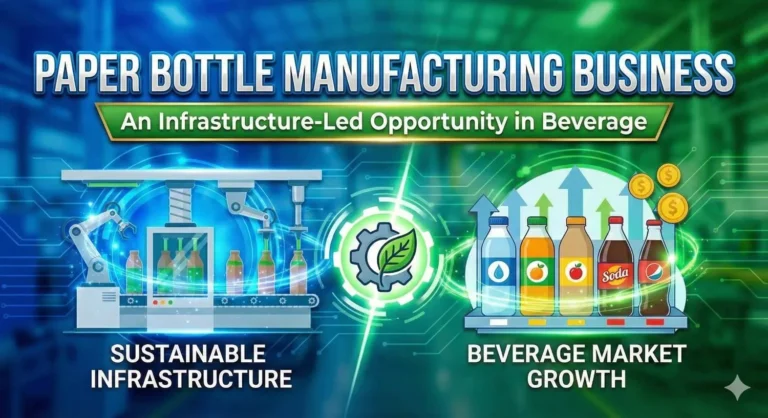
Paper Bottle Manufacturing Business - An Infrastructure-Led Opportunity in Beverage

Paper Bottle Manufacturing Business – An Infrastructure-Led Opportunity in Beverage

Paper Bottle Manufacturing Business – An Infrastructure-Led Opportunity in Beverage Read More »

Packaging Infrastructure: A Better Investment than Consumer Products Paper Bottle Manufacturing Business – An Infrastructure-Led Opportunity in Beverage The majority of startups fail because they are too close to the volatility of consumers. Demand fluctuates, brand costs increase, and pricing power is rapidly eroded. Packaging is a completely different industry. The paper bottle business represents the next step in this logic. The paper bottle is not seen as an eco-friendly product, but rather as the core infrastructure of the future beverage industry. Packaging is upstream and locked in production lines, logistic systems, and long-term supply contracts. Paper bottle production is a rare opportunity for first-generation entrepreneurs, MSME investors, and MSME buyers. Paper bottles are no longer viewed as an innovation in product design, but rather as a necessity. Packaging infrastructure for beverages: New Startups with Infrastructure as the Main Driver. From product thinking to packaging infrastructure thinking Most manufacturing entrepreneurs think in terms of units sold. Infrastructure-led businesses consider: Paper bottles clearly belong to the second category. Switching suppliers is expensive and disruptive for a beverage company that has redesigned its filling lines, branding, compliance systems, and logistics around paper bottles. It creates structural lock-in, which is rare for startups. Paper bottle plants are characterized by: The mindset of the company determines if it will grow or not. Related Article:- Paper Industry Why startups and MSMEs have an advantage in paper bottle production The structure of large packaging companies is slow. Glass and plastic packaging ecosystems are capital-intensive, legacy-driven, and resistant to change. These constraints do not apply to startups. New entrants in the paper bottle business can benefit from: This allows MSME entrepreneurs to compete with established players by focusing on their execution. Paper Bottles: The Engineering Logic Behind Them The paper bottles are effective because they divide functions in a clever way. Outer Paperboard Shell Inner Liner The modular design is important commercially. Paper bottle production, unlike glass or polymer bottle plants, is: This reduces the risk of failure for new manufacturing enterprises. Manufacturing as a service: A smarter revenue model Manufacturing As A Service is one of the packaging models that are underused. Paper bottle manufacturers should not compete on the basis of price per unit but instead, they can be positioned as: Customers do not purchase bottles in this model. Instead, they buy access to capacity. Transactional sales revenue shifts to: This model improves the ability to service debt and stabilises cash flows, which is critical for MSME scale manufacturing. A detailed feasibility and capacity study is a must if you are evaluating paper bottle manufacturing businesses. A professional techno-economic study prevents overcapitalisation and mismatches in demand. View our:- Books First-time manufacturers are favored by capacity economics Paper bottle plants can be compact, modular, and scalable. Parameter Startup Advantage Requirements for Land Small industrial sheds Workforce Manpower shortages Expansion Shift or Lane-Based Downtime Risk Low-modular equipment Break-even Achievable at partial utilisation It allows the founder to validate their operations and expand without affecting cash flow. Multinational beverage brands are not the only drivers of demand It is a common misconception that only the global beverage giants are important. The early demand for paper bottles is driven by: They see sustainable packaging as a differentiation of the brand and not as regulatory compliance. These players are more flexible and quicker in their decision-making. They also welcome long-term partnerships. This demand profile is perfectly aligned with the manufacturing scale of MSMEs. View:- Project Report Export of Empty Bottles and Not Filled Beverages Exporting empty paper bottles is a logistically efficient way to export beverages. The following are some of the advantages: Paper bottle producers can serve as regional hubs for exporting goods to overseas bottlers. This is in line with the Ministry of Commerce and Industry’s export-led manufacturing goals, particularly where sustainability increases global competitiveness. New Startups with Infrastructure as the Main Driver. Learn from Industry Leaders: Control Dependency India’s most successful industrialists didn’t start with consumer brands. You built: The basic principle is straightforward: You can control what others depend on. The same logic applies to the manufacture of paper bottles. Beverage brands can change. Packaging infrastructure does not. Infrastructure-led manufacturing outperforms consumer startups consistently over the long-term. Startup Models that Scale Some of the most viable paper bottle business models are: Regional Packaging Utility Serve all beverage producers in a specified radius. Export-Focused Manufacturing Platform Unfilled bottles can be supplied to international bottlers. Integrated Sustainable Packaging Unit Combining paper bottles with secondary packaging and cartons. Private Label Contract Manufacturing Produce exclusive designs for retail chains. The model’s growth is based on the demand of the customer, and not in advance. Why Feasibility planning is non-negotiable The industry rewards those who are disciplined, not the optimistic. The following are key success factors: Niir Project Consultancy Services’ feasibility studies are based on actual operational economics and not just brochure projections. This improves bankability and prevents capital misallocation. New Startups with Infrastructure as the Main Driver. Last Thought: Build what the industry cannot operate without The paper bottles are changing the way beverages are packaged and distributed. The paper bottles manufacturing business does not appeal to founders who are looking for quick exits or hype cycles. This is for entrepreneurs who want to create manufacturing assets on which the beverage industry can become structurally dependent. Watch:- Youtube Channel How NPCS Can Help NPCS (Niir Project Consultancy Services) provides end-to-end support for entrepreneurs, including: With expert support, your chances of success in this high-growth sector increase significantly. Contact Us Niir Project Consultancy Services 106-E, Kamla Nagar, Opp. Mall ST, New Delhi-110007, India. Email: info@entrepreneurindia.co Mobile: +91-9097075054 Website:https://www.entrepreneurindia.co FAQs Can this be used by first-time entrepreneurs?With professional planning and technical onboarding, yes. Is the business dependent on sustainability subsidies?Sustainability accelerates adoption, but economics drive it. Is it better to have fewer clients than more?No. Anchor clients with a long-term relationship are preferred. Does the technology pose a risk?no. Once it is in operation, the machine will remain mechanically stable. What is the required mindset? Be an infrastructure builder and not a product vendor.

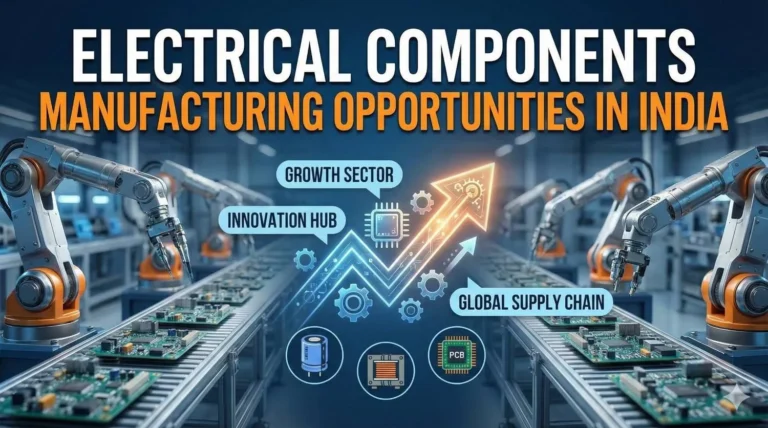
Electrical Components Manufacturing Opportunities in India 2026

Electrical Components Manufacturing Opportunities in India 2026 Read More »

Electrical Components Manufacturing Opportunities in India 2026. India is not “upgrading”, it is rebuilding its power sector at scale. Transmission expansion, renewable infrastructure, smart grids, and metro rail electrification are all converging to create one reality: a sustained demand for electrical component manufacturing. This is not a speculative market. It is infrastructure-backed demand driven by grid expansion, replacement of aging assets, and new energy systems. This sector is a great opportunity for MSMEs and the first generation of manufacturers. It offers predictable volume, repeat procurement, and export viability if you enter with the right product logic. This article explains the real manufacturing opportunities and which product categories are most profitable. It also explains how investors can evaluate their entry, without hype or fluff. Why Manufacturing Electrical Components is a Good Business Decision Now 1. The Growth of Electricity Demand Electricity consumption is on the rise due to urbanization, the adoption of EVs, industrial expansion, and digital infrastructure. Electrical equipment demand increases before electricity consumption peaks, making manufacturers early beneficiaries. 2. Grid modernization is equipment-intensive Continuous procurement is required for: It is not a one-time capital expenditure, but a demand for replacements. 3. Renewable Energy Increases Component Consumption Solar and wind power plants consume more electrical equipment per MW compared to conventional plants, resulting in a higher demand for transformers and cables. 4. Import dependency creates entry gaps India continues to import advanced motors, switchgear components and power electronics. This is a clear indication of production gaps rather than market saturation. Related Article:- Electronic Project Electrical Components Manufacturing Segments with High Demand Segmentation of the Electrical Components Market: INFOGRAPHIC 1. Distribution Transformer Manufacturing (16kVA-2500kVA) India’s electrification campaign is centered around distribution transformers. They are required by every housing cluster, industrial park, renewable plant and substation. Product Scope Business Logic [IMAGE] Distribution Transformer Applications 2. Switchgear Manufacturing (LT & HT). Switchgear demand directly correlates with infrastructure growth. Isolation, protection, and control are essential for every power system, whether industrial or commercial. Manufacturing Scope Why This Segment is Stable View our:- Books 3. Electric Motor Manufacturing and Industrial Drives Motors transform electricity into motion – and India runs on movement. They are essential for pumps, compressors, and HVAC systems, as well as conveyors, automation systems, and EV auxiliaries. Product Categories Export AdvantageThe balance between cost and performance is the reason why Indian cars are popular in Asia, Africa and South America. 4. Power Cable Manufacturing Cables are essential to the operation of any electrical system. Cables are products that are frequently ordered and in high demand. Product Lines Commercial Reality 5. Electrical Control Panels & Automation Systems Control panels are customizable products that are ideal for MSMEs who compete on engineering, service and scale alone. Manufacturing Options Why MSMEs Win HereCustomization is a barrier to entry for mass producers. 6. Solar Electrical Components Manufacturing Demand for electrical components in balance of system systems increases automatically with the growth of renewable capacity. High Demand Products This segment is a beneficiary of ‘s policy continuity and export-relevant. 7. Smart Grid and Metering components India’s move to smarter electricity networks is technology-driven and component-heavy. Startup-Friendly Products This is a technology-manufacturing hybrid–not suitable for everyone, but powerful for capable teams. View:- Project Report 8. Power Distribution Hardware & Accessories Products with low complexity and low demand. Products Why This Work Import Substitution Logic and Export Logic [INFOGRAPHIC: Import and Export Opportunity Map] Imported Export-Ready Products Export acceptance or import gaps can help manufacturers win more quickly. India’s Power Sector Industrial Leaders: Lessons to be Learned India’s power equipment ecosystem was created by long-term planners who understand infrastructure cycles, not short-term profits. Their success confirms a truth: Electrical Manufacturing rewards patience, scale discipline and technical consistency. Watch:- Youtube Channel Conclusion: Electrical Manufacturing is a Wealth Builder for the Long-Term India is building one of the largest and most complicated power systems in the world. This will ensure a sustained demand for: This sector has a lot to offer manufacturers: Electrical component manufacturing is not trendy; it is structural. It works because it is effective. Are you serious about starting a business in the manufacturing of electrical components?The wrong assumption regarding capacity, product mix, or compliance can lead to a loss. Before investing capital, commission a DPR or a study of techno-economic feasibility. Start Your Own Business How NPCS Can Help NPCS (Niir Project Consultancy Services) provides end-to-end support for entrepreneurs, including: With expert support, your chances of success in this high-growth sector increase significantly. Contact Us Niir Project Consultancy Services 106-E, Kamla Nagar, Opp. Mall ST, New Delhi-110007, India. Email: info@entrepreneurindia.co Mobile: +91-9097075054 Website:https://www.entrepreneurindia.co FAQs 1. Which electrical products are easiest for new manufacturers? Cables, control panels, and LT switchgear components offer lower entry barriers. 2. Is export viable for MSMEs? Yes. Transformers, cables, motors, and hardware have strong overseas demand. 3. Typical investment range? ?40–80 lakh for basic units; transformer plants require higher capital. 4. Does policy support exist? Yes. Open FDI, manufacturing incentives, and infrastructure spending support the sector. 5. Can NPCS prepare a DPR for my project? Yes. NPCS delivers complete feasibility and financial reports for electrical manufacturing units.

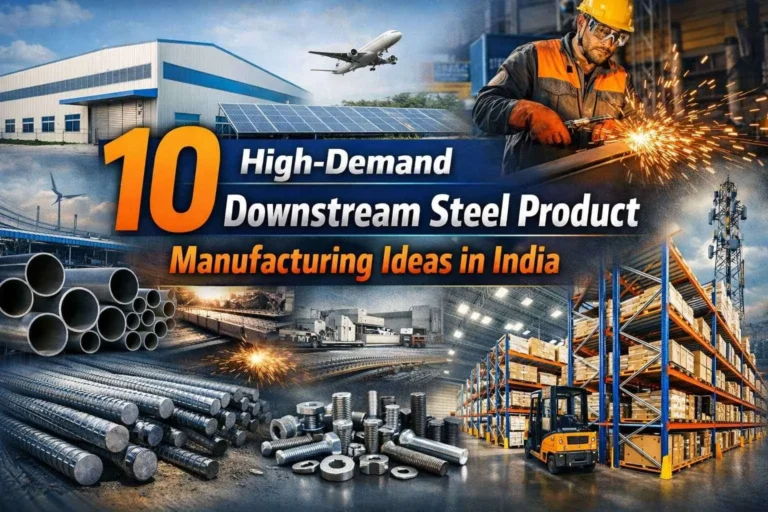
10 High-Demand Downstream Steel Product Manufacturing Ideas in India

10 High-Demand Downstream Steel Product Manufacturing Ideas in India Read More »

Downstream Steel is a Real Manufacturing Opportunity India’s infrastructure cycle does not involve speculation, but rather execution. Mega-programs like PM GatiShakti and renewable energy expansion projects, metro rail, logistics corridors, industrial parks, and other mega-projects are driving finished Steel consumption to sustained double-digit growth. The upstream steel industry is capital-intensive and crowded. Downstream Steel Manufacturing offers MSMEs advantages such as faster entry into the market, regional dominance and import substitution. This article breaks down ten downstream steel product manufacturing concepts which are in high demand and that will continue to grow aggressively until 2026. 1. Manufacturing of Pre-Engineered Building Structures (PEB). PEB is now the standard for all warehouses, factories, and data centers. Why is demand structural Manufacturing scope Business Logic Outlook for 2026: Demand for e-commerce and warehouse storage will grow By 25-30% 2. Solar Module Mounting Structures Manufacturing This segment is the most cleanly produced steel segment available today. Hard facts Products 2026 demand Related Article:- 10 Promising and Innovative Startups for Entrepreneurs 3. Steel Pipes, Tubes & Hollow Sections – ERW / GI /MS India still imports precision and structural pipes. This is both a warning and an opportunity. Applications Manufacturable Products Actionable setup 4. TMT Bars & Construction Steel Products Construction consumes 43 % of India’s. This segment is only worth ignoring if you dislike volume businesses. Products Why HTML0 works Project idea 5. Steel Fabrication for Metro, Railways & Airports India has implemented, not planned, the expansion of airports, railways, and metro Phase-II. Fabricated Products Why MSMEs Win Growth Outlook: 20% growth rate through 2026 View:- Project Report 6. Steel Wire Products Manufacturing Low capital expenditure. High margins. Consistent demand. No drama. Products Demand sectors Clear entry point for MSME. 7. Steel Service Centers Smart entrepreneurs are focusing on this value-adding method that does not involve melting steel. Services End users 2026-ready idea 8. Stainless Steel Products for Urban Infrastructure In India, urban areas are switching from mild steel to stainless for hygiene and durability. Products Why HTML0 works 9. Steel Bolts, Fasteners & High Strength Connectors Fasteners are used in every infrastructure project. Products Strategic edge View our:- Books 10. Steel Storage Systems & Warehouse Infrastructure The demand for warehousing is growing across FMCG and ecommerce. Products Market reality Learn from India’s Steel Leaders Common thread? Execution is more important than optimism. Projects for Downstream Steel Manufacturing in 2026 Conclusion: The brutal truth about downstream steel This is not an industry where you can “get rich fast”. This is a stay disciplined to get rich sector. You can: Over the next 5 to 7 years, downstream steel manufacturing will pay you more than other industrial segments. This is the place to look for serious manufacturers if you are looking for stability, scalability and growth that aligns with policy. Watch:- Youtube Channel How NPCS Can Help NPCS (Niir Project Consultancy Services) provides end-to-end support for entrepreneurs, including: With expert support, your chances of success in this high-growth sector increase significantly. Contact Us Niir Project Consultancy Services 106-E, Kamla Nagar, Opp. Mall ST, New Delhi-110007, India. Email: info@entrepreneurindia.co Mobile: +91-9097075054 Website:https://www.entrepreneurindia.co FAQs What are downstream steel products?Value-added steel products like PEB structures, pipes, solar MMS, fasteners, fabrication, wire products, and storage systems made from finished steel. Is downstream steel manufacturing profitable in India?Yes—if you choose infrastructure-linked products and operate at the right scale. Profit comes from volume, location, and EPC linkage, not speculation. Which downstream steel products are in highest demand (2025–26)?PEB structures, solar MMS, steel pipes & tubes, TMT bars, and warehouse racking systems. Is this suitable for MSMEs?Yes. Most downstream steel segments are MSME-friendly with modular expansion and strong domestic demand. What are the main risks?Wrong product choice, overcapacity, poor location, and weak demand assessment.

rare-earth-magnet-manufacturing-indias-growing-industry

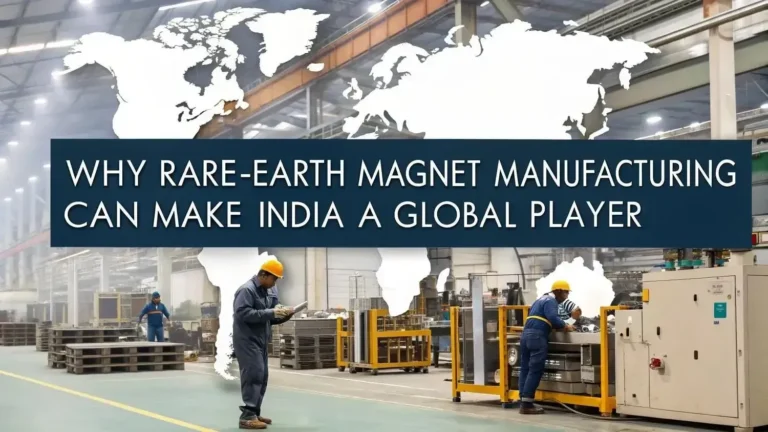
Why Rare-Earth Magnet Manufacturing Can Make India a Global Player

Why Rare-Earth Magnet Manufacturing Can Make India a Global Player Read More »

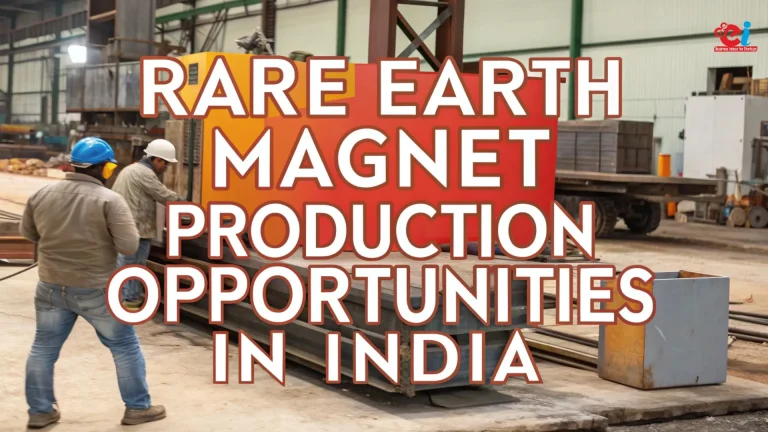
To this day, few might know that rare-earth permanent magnets (REPMs) are now powering the most important industries of the century, from drones and missiles to consumer electronics and robotics, as well as EV engines and wind turbines. The global shift to clean and electric energy has made the need for rare-earth magnets reach unprecedented demand. India starting to manufacture rare-earth magnets and other strategically important magnets—especially with the launch of a ?7,280-crore magnet manufacturing facility—goes far beyond industrial growth. It represents a major geopolitical and supply-chain opportunity, particularly well-suited for bootstrap entrepreneurs. Today, rare earth magnet manufacturing in India is among the fastest-growing yet still underdeveloped sectors, creating a powerful chance for new businesses to enter a high-demand global market. Why Rare-Earth Magnet Manufacturing Matters for India National Security and Supply-Chain Independence At present, India relies solely on one country for REPMs, leading to: 1. Supply chain disruptions 2. Increased costs 3. Geopolitical issues India needs to establish a home-grown ecosystem that guarantees the following: 1. Electric vehicles 2. Renewables 3. Aerospace and defense 4. Electronics and automation This needs to be done, and cannot be postponed. Turning Raw Resources into High-Value Output India has rare-earth resources, but as a result of: 1. Exporting inexpensive oxides 2. Overpaying for magnets India can finally shift policies and move up the value chain. This is where the money is at. Global Export Positioning India’s current position allows it to meet these industries’ needs better than its competitors. Many countries are prioritizing trade relationships with other countries rather than India’s cast competitors with China. Many countries worldwide are diversifying away from traditional rare-earth suppliers. India can fill this gap. India has the ability to meet the needs of: If India plays it right, rare-earth magnets can become its next IT or Pharma-level export success. Inside the 7,280-Crore Government Scheme What the Scheme Enables 1. 6,000 MTPA domestic REPM capacity 2. The first competitors in the market will get the biggest advantages 3. Opening new facilities will also attract capital grants 4. There will be initial grants + performance-based benefits for 5 players 5. All levels of production at the same facility (oxide ? alloy ? magnet) 6. Benefits align with the goals of Make in India & Atmanirbhar Bharat It is much more than just a simple subsidy; it is about ecosystem facilitation. And for the first competitors, it is a permanent advantage. Reasons to Focus on Entrepreneurship Absence of Rivals, Great Need No large-scale magnet manufacturers exist in India. If you step in now, you are not up against competitors; you are seizing an opportunity. Tailwinds in Mobility and Clean Energy Demand drivers continue to grow with: 1.2 and 4-wheeled EVs 2. Generators for wind turbines 3. Robotics and solar tracking 4. Electronic devices 5. Modernization of defense systems The need for these products is not cyclical in nature, hence indispensable. Government-Backed Stability The sector receives assistance through: 1. Import substitution policies 2. Long-term procurement plans 3. Incentives, subsidies, and R&D support This significantly reduces the level of risk for businesses. Multiple Entry Models There is no necessity to begin with a billion-rupee plant. Entry models include: 1.Full REPM manufacturing 2. Alloy/oxide supply .3 Custom magnet production 4. Machining and finishing 5. REPM recycling 6. Magnet-based component manufacturing (EV motors, drone motors) There is a variety of different CapEx and risk levels for each of these. Export-Led Growth With production that meets ESG guidelines and a standardized quality, India is able to connect with: 1. U.S. Inflation Reduction Act supply chains 2. European renewable ecosystems 3. Asian EV manufacturing hubs Strategic Business Models (with CapEx Logic) Model CapEx Level Strategic Fit Target Market Full REPM Manufacturing High Vertical control + import substitution India + global Alloy/Oxide Supplier Medium Critical raw input supply Magnet manufacturers Custom Magnet Manufacturing Medium High-value B2B niche EVs, electronics Magnet Recycling Medium ESG-driven circular economy Magnet plants EV/Defense Component Manufacturing Medium Downstream integration OEMs & Tier-1s Execution Roadmap — 10 Steps to Build a Rare-Earth Magnet Business Step-by-Step Breakdown If you skip even one of these steps, your project will stall.Execute this roadmap with precision. India’s Geopolitical Opportunity Rare-earth magnets are valuable outside industrial use. They are a strategic resource.Countries want supply chains that are: India satisfies all of these. And this positions India like how it went on to dominate IT services and generic pharma as a potential global hub for magnets. FAQs 1. What are rare-earth magnets and why are they important? Rare-earth magnets are powerful permanent magnets used in EVs, electronics, wind turbines, medical devices, and defense systems. Their high strength makes them essential for modern industries. 2. Is India capable of manufacturing rare-earth magnets? Yes. India has significant rare-earth reserves and is now boosting its magnet manufacturing capacity through government schemes, investments, and strategic industry partnerships. 3. What government support is available for rare-earth magnet production? India has launched a ?7,280-crore scheme to promote local magnet manufacturing, encourage private sector participation, and reduce dependence on imports. 4. Why is rare-earth magnet manufacturing considered strategic for India? Because magnets are crucial for energy, technology, and defense industries. Local production strengthens national security, cuts imports, and supports Make-in-India goals. 5. What are the business opportunities in India’s rare-earth magnet sector? Opportunities lie in mining, processing, magnet production, EV supply chains, wind energy components, and advanced electronics manufacturing. How NPCS Can Help You to start Rare-Earth Magnet Manufacturing business in india NPCS (Niir Project Consultancy Services) provides end-to-end support for entrepreneurs, including: With expert support, your chances of success in this high-growth sector increase significantly. Contact Us Niir Project Consultancy Services 106-E, Kamla Nagar, Opp. Mall ST, New Delhi-110007, India. Email: info@entrepreneurindia.co Mobile: +91-9097075054 Website: https://www.entrepreneurindia.co

From Milk to Millions: Dairy Startups in India — Opportunities & Roadmap

From Milk to Millions: Dairy Startups in India — Opportunities & Roadmap Read More »

Dairy Startups in India: From White Revolution to Global Expansion India is more than just the world’s largest milk producer and Dairy Startups in India. It is also a superpower. India produces more than a quarter of the milk consumed in the world, but this is a story that goes beyond volume. This is about rural empowerment, innovation, and a booming startup ecosystem that will take dairy products beyond their traditional forms and markets. India’s dairy industry is one of the most promising for startups. With its growing domestic market, new export channels, and product categories such as fortified milks, probiotic curds, and vegan alternatives. 1. India’s Dairy Landscape at a Glance Production Size Export potential Cultural Depth India’s cultural and culinary identity is deeply rooted in milk, from curd rice to paneer in the North. This emotional connection not only creates a strong demand in India but also gives “original Indian dairy products” a sense of authenticity to global consumers. 2. Why This Industry Matters for Startups a. Massive Domestic Base India’s domestic market for dairy products is a large consumer base, even before exports are considered. b. Untapped Segment of Value-Added Segment The total amount of processed dairy products is less than 20%, so the possibilities for yogurt, cheeses, functional milk drinks, and dairy-based snacks seem endless. c. Export Upside Indian entrepreneurs who invest in infrastructure and branding can reach premium markets throughout the Middle East, Africa, and Southeast Asia. d. Government Support Subventions, export incentives and technical assistance are provided by schemes under the Ministry of Food Processing Industries and APEDA. Related Article:- Most profitable idea for Milk Processing 3. High-Potential Startup Opportunities in the Dairy Sector a. Fortified Milk and Nutraceutical Beverages b. Organic and A2 cow milk c. Ethnic Dairy Products for export d. Plant-based and vegan alternatives e. Dairy Services Driven by Technology 4. NPCS – Your Partner in Building a Dairy Venture We, at Niir project Consultancy services (NPCS), provide professional consulting in the preparation of market survey cum Detailed Techno-Economic Feasibility Reports when setting up new businesses or industries. The following are included in our reports: We aim to assist entrepreneurs in evaluating industrial projects for feasibility, profitability and scalability. Whether you’re planning a fortified dairy plant, an organic A2 milk supply chain, or an export-focused facility for dairy snacks, NPCS will create a roadmap that is tailored to your vision. 5. Import-Export Data and How Startups Can Use It India exported $270 million worth of dairy products, a small fraction of the global trade. This gap presents major opportunities for startups. The government portals www.apeda.gov.in and Spices Board/NDDB Export Statistics provide insights into import-export patterns. This allows startups to identify niches and design products that are export-ready. 6. Government Support Framework Key Agencies Visit: Why This Matters Government support lowers startup capital costs, lowers barriers to entry, and speeds up time-to-market. 7. MSME Success Stories to Inspire New Entrepreneurs Amul-The Cooperative Model Amul turned India’s milk sector from a scarcity into a surplus. Amul’s cooperative model empowered small farmers in millions and showed that scale and inclusivity could coexist. Mother Dairy, Urban Distribution Pioneer Mother Dairy has created one of India’s most reliable cold chains, setting the benchmark for quality and urban reach. Epigamia: Startup disruption in Yogurt Epigamia, a homegrown startup, introduced Greek yogurt, lactose-free products, and expanded into plant-based options. It appeals to health-conscious young people and is expanding its product line. White Cube – Vegan Dairy Challenger White Cub created India’s first plant-based ice-cream brand. It shows how even a niche segment of the dairy industry can be scaled with good branding and online distribution. These stories demonstrate that Indian milk entrepreneurship is not confined to large dairy cooperatives – agile startups and MSMEs are able to innovate, create niches and go global. 8. Business Models for New Entrepreneurs a. Integrated Dairy Plant Establish a factory for the collection of milk, its processing, and production for value-added products (cheese, butter, yogurt). Investment is high, but quality and branding are tightly controlled. b. Contract Processing Offer processing services to brands or farmer cooperatives that lack infrastructure. Low capital costs, stable income, and the potential to scale up gradually. c. Value-Added Line Focused on Export Build a dedicated facility for export with APEDA assistance. d. Dairy-Tech Platform Develop IoT solutions for herd monitoring, milk testing, and traceability. Sell SaaS as a service to private and cooperative dairies. 9. Sector Challenges and How Startups Can Overcome Them 10. Upcoming Trends Reshaping the Dairy Industry a. Technology meets Tradition Dairy operations are being transformed by apps for the health of cattle, IoT sensors to measure milk quality, drones to survey fodder, and blockchain technology for traceability. b. Fortified and functional dairy Fortified and functional dairy product sales will surpass plain milk as global health awareness grows. c. Green Dairy Revolution The use of biogas plants that are powered by cow dung and water reused in the processing units to reduce methane emissions is becoming more common. d. Direct-to-Consumer Models Urban consumers prefer subscription-based delivery of organic or specialty dairy products, which presents an opportunity for startups that can combine logistics and technology. Project Report on:- Dairy Products & Milk  11. Point-Wise Suggested Products and Opportunities 1. Fortified Milk Powder 2. Cheese and Specialty Dairy Products 3. Drinks and Yogurts with Probiotics 4. Vegan Dairy and Plant-Based Alternatives 5. Dairy Snacks & Ready-to-Eat Desserts 12. Action Plan for Aspiring Entrepreneurs Conclusion – The White Wave Is Just Beginning India’s dairy industry has evolved beyond just producing milk. Now, it is a hub for exports, innovation, and entrepreneurship. Indian dairy is a great opportunity for startups to create businesses that are profitable and have a positive social impact. It has a large domestic market and an unmatched raw materials base. Entrepreneurs who enter this market today, whether it’s in the fortified powders, ethnic exports, or dairy-tech platforms, can be pioneers of the future wave of growth. The path to a global brand can be paved by aligning with government initiatives, leveraging NPCS feasibility studies and adopting innovative business model. Watch:- Youtube Channel FAQs:Dairy Startups in India Is dairy a profitable business in India? Yes — with good breeds, efficient feed management and reliable markets, dairy can be profitable (typical net margins

Aluminum and Chitin: The Ultimate Startup Guide for Next-Gen Sustainable Food Packaging - Niir Project Consultancy Services

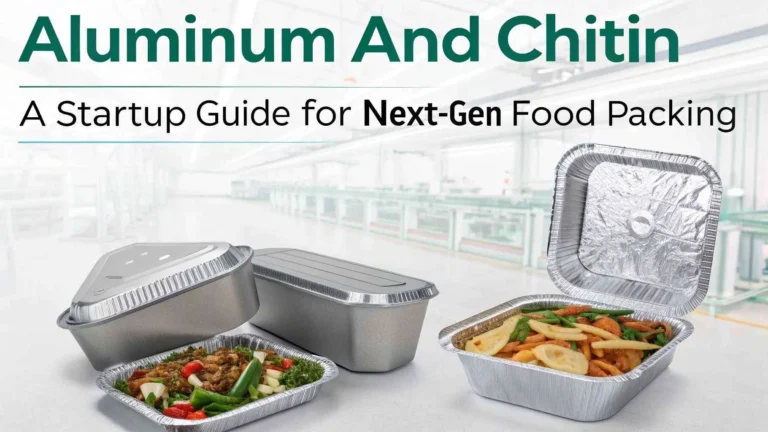
Aluminum and Chitin: The Ultimate Startup Guide for Next-Gen Sustainable Food Packaging

Aluminum and Chitin: The Ultimate Startup Guide for Next-Gen Sustainable Food Packaging Read More »

Food safety and sustainability are no longer optional; instead, they are the two key engines driving innovation in the global packaging sector. In particular, India’s rapidly growing e-commerce market, stricter regulations, and rising consumer expectations are transforming the way food is packaged, preserved, and delivered. Aluminum and Chitin, three emerging technologies are proving to be true game changers — namely, chitin-based biopolymer packaging, lightweight yet durable aluminum packaging, and smart systems such as Modified Atmosphere Packaging (MAP). Together, these innovations mark the dawn of Packaging 2.0 — a decisive shift away from conventional plastics towards intelligent, eco-friendly, and high-performance solutions. Ultimately, this transformation is creating new startup opportunities across the entire value chain. 1. Why Packaging 2.0 Matters for Startups Entrepreneurs are not just concerned with materials. They’re also interested in redefining the way food is transported from farm to table. 2. Market Landscape and Growth Potential Global Market Snapshot India Packaging Sector It is a turning point for startups to enter niche segments with high value rather than compete on low-margin packaging. 3. Technology 1 – Chitin-Based Biopolymer Packaging What Is Chitin Packaging Chitin, a natural polymer, is derived from the shells of crustaceans such as shrimp and crab. Notably, it is both biodegradable and renewable, making it an excellent alternative to conventional plastics. Furthermore, chitin can be processed into thin films and composite materials, which can effectively replace plastics in various food packaging applications. Key Benefits Market Opportunity For Startups Startup Angle 4. Technology 2 – Aluminum-Based Packaging Why Aluminum? Aluminum packaging is lightweight and highly recyclable. It also provides an excellent barrier to light, oxyge,n and moisture, which is critical in extending the shelf-life of processed food. Key Benefits Market Opportunity For Startups Startup Angle Related Article:- The Food Industry Revolution 5. Technology 3 – Modified Atmosphere Packaging (MAP) and Smart Systems What is MAP? Modified Atmosphere packaging replaces the air in a food package with a mixture of gases (like N2, CO2, etc.) to slow down spoilage. Combining sensors and smart labels creates an “intelligent package” that can monitor freshness. Key Benefits Market Opportunity For Startups Startup Angle 6. NPCS – Your Partner in Building a Packaging Venture We, at Niir project Consultancy services (NPCS), provide professional consulting in the preparation of market survey cum Detailed Techno-Economic Feasibility Reports when setting up a new industry or business. The following are included in our reports: We aim to assist entrepreneurs in evaluating industrial projects for feasibility, profitability and scalability. Whether you are planning a chitin film unit, an aluminum tray plant, or a MAP facility, NPCS will design a roadmap that is tailored to your vision. 7. Import-Export Opportunities Chitin-Based Packaging Aluminum Packaging Smart Packaging and MAP The government portals www.apeda.gov.in, www.mofpi.gov.in, and the MSME Minister can help entrepreneurs access incentives and markets Related Book:- Aluminium and Aluminium Products 8. Government Support and Policy Framework Key Agencies Visit: 9. MSME Success Stories to Inspire New Entrepreneurs Uflex, India’s Flexible Packaging Giant As a small packaging films manufacturer, it has grown to become a global leader that supplies major FMCG companies worldwide. The company’s growth shows the importance of export markets and R&D. Tube Packaging Innovator – Essel Propack Developed laminated tubes that are widely used in oral care, cosmetics, and food packaging. Moreover, this article illustrates how niche packaging innovations can be strategically leveraged to create and expand global markets. Marine Bio Solutions Sea6 energy – Marine Bio Solutions It is a documentary that focuses on marine biomass but also shows how ocean resources, such as crustacean shells, can be used to create sustainable industrial products and packaging materials. Tetra Pak India High-Tech Packaging This video demonstrates how the combination of processing and packaging innovations can create food products that are ready for export. In addition, these examples highlight that packaging innovation is not limited to large corporations. On the contrary, agile MSMEs and startups can effectively dominate niche markets by leveraging the right technologies and strategic approaches. 10. Business Models for New Entrepreneurs a. Biopolymer film producer b. Manufacturer of Aluminum Foil and Trays c. MAP Service Provider d. Smart Packaging Startup 11. Sector Challenges and How Startups Can Overcome Them Related project Report:- Aluminium and Aluminium Downstream Projects 12. Upcoming Trends in Packaging a. Active Packaging Antimicrobial agents can be added directly to the film for a longer shelf life. b. Edible Coatings Chitosan-based edible films reduce post-harvest loss on fruits and vegetables. c. QR Code Traceability Smart packaging embedded with QR codes allows consumers to track the origin, freshness and authenticity of products. d. Circular Economy Focus Packaging startups support closed-loop recycling programs and composting. 13. Point-Wise Suggested Products and Opportunities 1. Antimicrobial Films Based on Chitosan 2. Aluminum Meal Trays For Airlines 3. Packaged fresh produce in Modified Atmosphere 4. Smart labels and IoT sensors 5. Composite Packaging Solutions 14. Action Plan for Aspiring Entrepreneurs Conclusion – Seizing the Packaging 2.0 Opportunity India’s packaging industry is on the brink of a major transformation. With this shift, entrepreneurs now have a wide range of opportunities — from smart gas-flushed packages to aluminum foils and crustacean shell-based materials. Furthermore, startups can lead this revolution by prioritizing sustainability and regulatory compliance. In doing so, they will not only supply innovative materials but also develop integrated, end-to-end packaging solutions that enhance food safety, minimize waste, and unlock new export opportunities. Moreover, with the support of government initiatives, guidance from industry institutions, and strategic partnerships — such as those with NPCS, which conduct detailed feasibility studies — entrepreneurs can successfully transform Packaging 2.0 into a profitable and scalable business model.. How NPCS Can Help You NPCS (Niir Project Consultancy Services) provides end-to-end support for entrepreneurs, including: With expert support, your chances of success in this high-growth sector increase significantly. Contact Us Niir Project Consultancy Services 106-E, Kamla Nagar, Opp. Mall ST, New Delhi-110007, India. Email: info@entrepreneurindia.co Mobile: +91-9097075054 Website:https://www.entrepreneurindia.co

Solar Panel Manufacturing

Solar Panel Manufacturing: 10 reasons why it is a game-changer for startups

Solar Panel Manufacturing: 10 reasons why it is a game-changer for startups Read More »

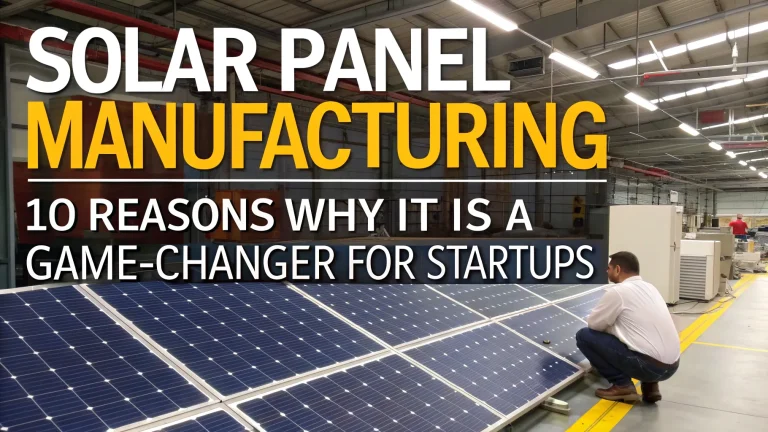
In the 21st century, we are witnessing a massive transformation in the way that energy is produced and consumed around us. Climate change is forcing nations to reduce their reliance on fossil fuels. Renewable energy sources have emerged as the foundation of a sustainable future. Solar panel manufacturing is one of the most important. It is not an alternative, but the future of electric power. Solar panel manufacturing is at the heart of this revolution. This industry has grown exponentially in the last decade. Entering this sector for entrepreneurs and startups is more than just about profit; it’s about being part of a bigger global mission. Solar panel manufacturing is a business opportunity that also has environmental responsibility. It’s one of the best opportunities available in today’s industrial landscape. The top 10 reasons solar panel manufacturing can be a game-changer for startups are explained in depth. 1. Global Markets Explode in Growth Solar energy has grown at a rapid rate in recent years. Market forecasts predict that the global solar market will surpass USD 300 billion in 2032 with a growth rate of almost 10% annually. Solar capacity in India has risen from 2 GW to 80 GW, and is expected to grow to 170+ GW before 2030. The surge in solar energy is a result of several factors, including falling prices for solar panels, an increase in electricity demand and international commitments towards reducing carbon emissions. Solar energy, unlike traditional industries, where demand fluctuates over time, is supported by long-term climate goals and policy frameworks, ensuring steady growth. This creates an environment where startups can thrive, as the risk of saturation in demand is low. By entering the industry now, a company can position itself in one of the most resilient markets and future-proofed in the world.   Related: How to Build a Profitable Solar Panel Manufacturing Plant   2. Strong Government Support and Incentives Renewable energy is one of the few industries that receives as much support from the government as it does. Solar adoption is actively promoted by governments around the world, who recognize its importance in achieving energy security and climate goals. The Production-Linked Incentive Scheme (PLI) in India offers substantial financial support to solar manufacturers. This allows startups to overcome initial obstacles and expand operations more quickly. Tax exemptions for renewable energy equipment, rooftop solar subsidies, and solar parks that are dedicated to manufacturing encourage demand. Globally, countries such as the United States and the European Union invest billions of dollars to boost their domestic solar industries. This creates export opportunities for manufacturers from emerging economies. Aligning with government programs reduces startup costs and ensures a steady demand, especially from large-scale projects. 3. Rising Domestic and Export Demand Solar panels are in demand from both domestic and international markets. India has seen an unprecedented increase in rooftop solar installations, for both households and commercial buildings. Government tenders and private investments are boosting the growth of large-scale utility projects. This ensures a strong market for local manufacturers. Solar power is being used by emerging economies around the world to solve electricity shortages. Solar power is a viable option for these countries, which often do not have large reserves of fossil fuels. Indian manufacturers have more opportunities to export, especially as global supply chains try to reduce their dependence on China. Solar panel manufacturers today can take advantage of both the domestic and global markets, allowing them to scale their business. View Our Handbooks on Solar Products, Renewable Energy, Solar PV Power, Solar Energy, Solar Lighting, Solar Power Plant, Solar Panel, Solar Pump, Solar Photovoltaic Cell, Solar Inverter, Solar Thermal Power Plant, Solar Farm And Solar Cell Modules 4. Declining Manufacturing Costs The dramatic drop in production costs is one of the most important factors that has enabled solar adoption. Solar power was much more expensive a decade ago than conventional electricity. It is now one of the most affordable sources of energy in the world. Solar panel production has benefited from technological advancements and economies of scale, which have led to a significant drop in price. Automation in manufacturing, advances in silicon wafer technologies, and improvements in the efficiency of solar cells have significantly reduced the cost per watt. This trend is a boon for startups as it allows them to enter the market with low prices and still maintain healthy margins. The learning curve effect also means that, as solar manufacturers produce more, unit costs will continue to drop, giving them an advantage over time. Solar panels are a cost-saving alternative to many other traditional manufacturing industries that have seen costs rise. 5. Diverse Product Opportunities Solar panels do not come in one size fits all. Startups in the manufacturing industry have the option to select from a variety of products that are tailored for different markets and applications. Monocrystalline panels are durable and highly efficient, which is why they are often selected by customers who have high standards. Polycrystalline panels tend to be more affordable, and are popular on markets with a high cost-sensitivity. The thin-film panels, which are light and versatile, can be used for industrial or specialized uses such as portable devices. Bifacial solar panels are a more recent innovation that can capture the sun on both sides. This allows for higher energy yields. There are new opportunities for solar power beyond traditional panels. These include floating panels, BIPV (building-integrated photovoltaics) and hybrid systems that use battery storage. These niche markets provide startups with the opportunity to innovate and develop unique value propositions. BIPV, for example, integrates solar panels into windows and walls to transform buildings into power generators. This futuristic concept is already being adopted by Europe and the U.S. The diversity of products allows startups to adapt to the changing preferences of consumers and not be tied to one market segment.   Related:  How to Start a Manufacturing Business of Solar Panels   6. Contribution to Sustainability Goals Today, many entrepreneurs measure success not only by profits, but also

EV Station Franchise

How to Start an EV Station Franchise: A Complete Guide for Entrepreneurs

How to Start an EV Station Franchise: A Complete Guide for Entrepreneurs Read More »

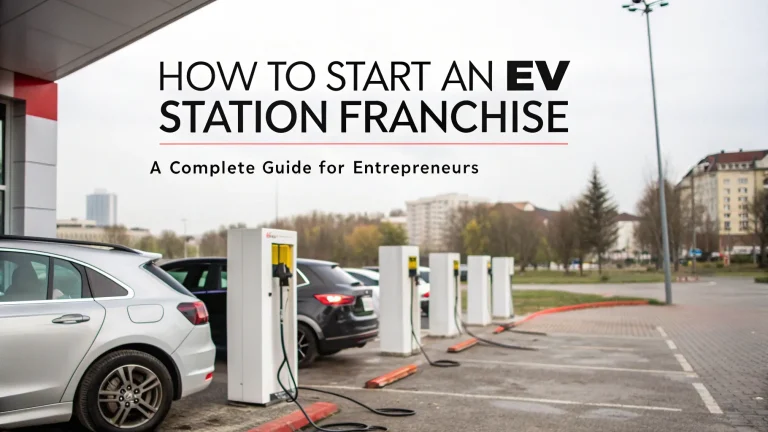
India is accelerating towards adopting electric mobility at an unprecedented rate. The electric vehicle (EV) revolution is no longer an aspiration; it’s in full swing, and entrepreneurs can actively participate in shaping its trajectory. The model of EV Station Franchise is a great entry point to this ecosystem. It allows aspirational industrialists to capitalize on the EV boom without major investments and with ample room for long-term growth. In this post, we cover everything an entrepreneur aspiring to start an EV charging franchise in India needs to know. You will discover the potential the market holds, the key drivers of growth, the underlying business model, its technical requirements, and a strategic outline of the steps to begin. It does not matter if you operate as a solo entrepreneur or as an MSME looking for diversification; this blog aims to guide you towards informed actions in one of the most dynamically evolving industrial sectors today. India’s EV Infrastructure Market: A Sector Accelerating Towards Breakneck Speed In the last five years, the electric vehicle market in India has witnessed unprecedented growth due to government policies, increasing fuel prices, and shifting consumer habits. With the current trend, electric vehicles are expected to account for more than 30% of all vehicle sales in India by 2030. However, the charging infrastructure lags behind in comparison to EV adoption. In lagging charging infrastructure, there lies a paradox: A tremendous market opportunity for the development of charging stations. There is a rampant need for EV charging services in highways, city centers and even in residential and corporate complexes. With projections stating 4.8 million EVs by 2025 and 1 million public chargers needed by 2030, the market still has great potential. Popularity for Franchise-based models stems from their provision of swift, uniform scaling across varied locations, service, and software integration. This is just the start since demand from Tier 2, Tier 3, inter-city routes, and commercial EV fleets further bolster a booming ecosystem.   Related: Build a Profitable EV Station Franchise   Why the EV Franchise Model Works for Entrepreneurs The EV charging sector is quite difficult to break into as a sole entrepreneur. Scaling such a business requires proprietary vendorship, hardware, integration to software systems, user-centered applications, as well as maintenance and billing systems, all while remaining within the bounds of regulatory compliance. This is where the franchise model helps as a simple, less risky method of making a business venture. When you integrate into a recognized brand, there is the advantage of access to the required backend systems, tech, proprietary frameworks, and experience. Usually, the franchise holder gives you the required chargers, software interface, mobile applications, relevant support systems, and training. You, as a business person, acquire the land, infrastructure, and running the business full-time. Under this model, the entrepreneurs do not have to bear the burden of reconstructing a tech-laden service business’s vastly complex system to a level where it is functional. Instead, they begin making money with far less effort. Demand Forecast: A Business Built for the Next Decade The charging infrastructure in India is still new. Per NITI Aayog’s report, India requires over one million public charging stations while currently sitting at a little over 100,000 mark. This is an enormous gap and provides a massive opportunity for carving out a charging infrastructure over the next 5-7 years. Demand for EVs is driven by: Adoption of EVs in two- and three-wheeler vehicles. Growing fleets of electric taxis and delivery vehicles. Automakers and logistics companies facing stricter emissions regulations. Smart city and electric highway infrastructure. Both the central and state governments are offering subsidies, access to land, low-interest loans, and priority power connections. This is one of the rare cases in India where the private sector and the government work in tandem. Franchise Business Models: Choosing the Right Path Within the EV franchise ecosystem, there are various business models, and the best options for you will depend on your capital, location, and goals. The most prevalent model is the ownership-plus-technology model. In this case, the entrepreneur purchases land and builds infrastructure, and the franchise company equips the location with chargers and provides mobile integration and remote monitoring. Revenue is earned for every vehicle charged. Some brands operate a hybrid revenue-sharing model, where space and basic facilities are provided, and the franchise brand operates the equipment in exchange for sharing profits. This is preferred in shopping malls, office and complex buildings, and highway motels where landowners seek passive income. Then there’s the host model, where your land is leased to the franchisor who owns and manages everything. While offering the bare minimum operational control, this model works for landowners who prefer not to engage in active business operations. Technical Summary: An EV Charging Station’s Requirements At a minimum, an EV station includes the charging equipment, a securely accessible and adequately located area, the requisite infrastructure for power supply, safety equipment, and software systems for billing and usage control. Each of these components, however, has distinct requirements that must be understood during the design phase. Your target market determines the type and size of chargers you install. Electric rickshaws and two-wheelers only need low-capacity AC chargers. For four-wheelers and buses, higher-capacity DC fast chargers are required, such as CCS2, CHAdeMO, or GB/T. You will also need sanctioned power loads from the local electricity distribution company, or DISCOM. For larger setups, you may need to apply for a high-tension connection. Most charging stations also include fire safety equipment, as well as surveillance and real-time monitoring systems from the franchise partner. Software integration is an important part of any business. Charging sessions need to be monitored and billed to users through mobile applications, and mobile apps need to be user-friendly. The franchise you choose should provide the full stack, including charger interface, real-time diagnostics, app integration, and customer service backend. View our handbooks on the Electric Vehicle Industry The Breakdown: Step-by-Step to Go Live Setting up your EV charging franchise starts with selecting a reputable franchisor. Focus

Have a business idea? Let's make it happen together-contact us now!


Contact Form Demo

This will close in 0 seconds

Translate »